Maithripala decides not to provide statement in court

Former President Maithripala Sirisena has informed the Maligakanda Magistrate’s Court that he will not provide a confidential statement before the magistrate in connection with his controversial revelation regarding the Easter Sunday attacks.

Court had earlier directed the former President to appear before Court on April 4 following a request by the Criminal Investigations Department (CID).

In a motion before Magistrate Lochani Abeywickrema, a lawyer representing former President Sirisena informed court that his client does not intend to make a confidential statement regarding the Easter Sunday attacks since he has already made a detailed statement to the CID. After hearing the submissions, the Magistrate held that there is no necessity for the former President to appear before court on April 4.

The CID had filed a facts report before Maligakanda Magistrate’s Court regarding the statement the former President had made recently. Minister of Public Security Tiran Alas had instructed the Inspector General of Police to conduct a comprehensive investigation into the statement made by the former President in Kandy that he knew the people involved in the Easter Sunday bomb attacks on 21 April 2019.

Posted in Uncategorized

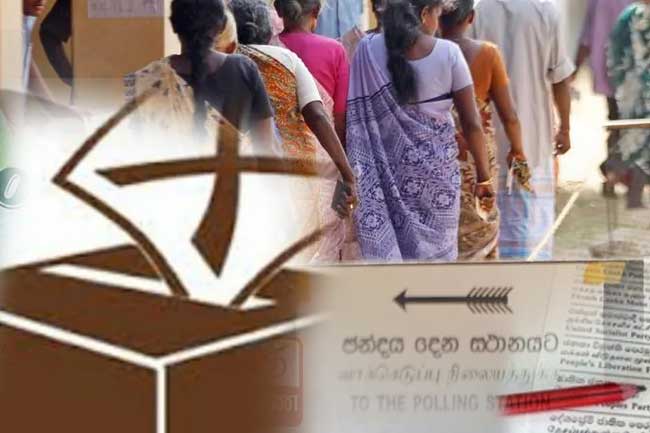
Discussion among officials of the Election Commission was held today

Chairman of the NEC R.M.A.L. Rathnayake says the implementation of the Regulation of Election Expenditure Act was discussed at the meeting.

The Deputy and Assistant Election Commissioners have also been summoned to Colombo tomorrow for a three-day workshop.

It has also been revealed that an expert with international experience on the Regulation of Election Expenditure Act will join the workshop.

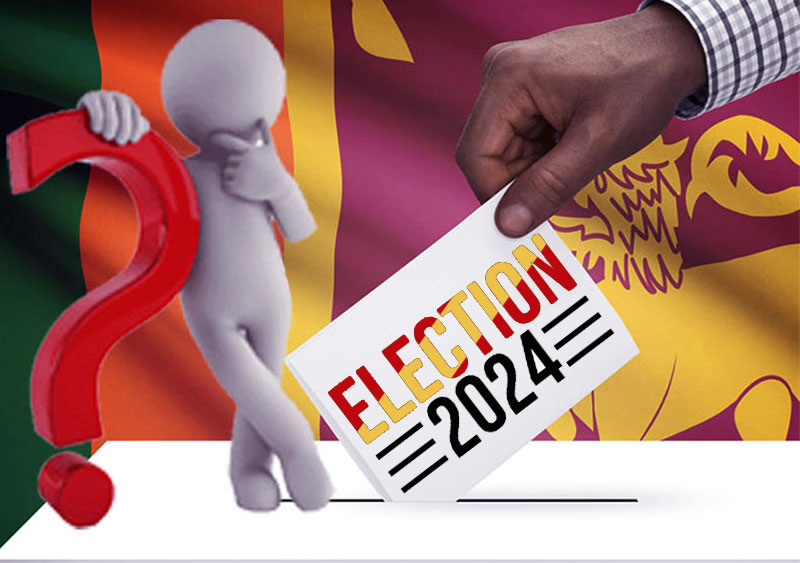
Meanwhile, the Election Commission says that the upcoming presidential election will be officially announced towards the end of July or in early August.

Rathnayake says the presidential election will definitely be held between September 17 and October 17.

India to ask Sri Lanka to allow fishing near Katchatheevu

India is to ask Sri Lanka to allow Indian fishermen to fish near Katchatheevu, India’s External Affair Minister S Jaishankar said.

Amid disclosures through RTI that India did not try hard enough to keep Katchatheevu, External Affairs Minister S Jaishankar said the Indian Government will open negotiations with Sri Lanka over the implementation of the India-Sri Lanka Maritime Boundary Act and a subsequent deal based on which Colombo is stopping Indian fishermen from operating in waters near the island.

“We should get fishing rights. We need to sit with Sri Lankan authorities and sort it out. Even today, our fishermen are being arrested and vessels are being seized. Katchatheevu island was given away in 1974 and fishing rights were given away in 1976,” Jaishankar said as he held Congress and DMK equally responsible for “ceding claim without putting up resistance”.

In past 20 years, 6,184 Indian fishermen have been detained and 1,175 Indian fishing vessels seized, detained or apprehended by Sri Lanka, Jaishankar said as he called out DMK and Congress for making it appear that the issue has emerged out of thin air and they were not responsible for the island being ceded to Sri Lanka.

Former Indian Finance Minister P Chidambaram on Monday defended the agreement to give away the Katchatheevu island to Sri Lanka.

He said this agreement was arrived at in 1974 and 1976 after long negotiations. “PM Modi is referring to a recent RTI reply, he should refer to the RTI reply of January 27, 2015, when I believe EAM S Jaishankar was foreign secretary. That reply clearly says that after negotiations, the island lay on the Srilankan side of the international border,” he said in a video response shared by news agency ANI.

Sri Lanka’s economy shows signs of stabilization, but poverty to remain elevated – World Bank

Sri Lanka’s economy is projected to see moderate growth of 2.2% in 2024, showing signs of stabilization, following the severe economic downturn of 2022. But, the country still faces elevated poverty levels, income inequality, and labor market concerns, says the World Bank’s latest bi-annual update.

Released today, the Sri Lanka Development Update, Bridge to Recovery, highlights that Sri Lanka saw declining inflation, higher revenues on the back of the implementation of new fiscal policies, and a current account surplus for the first time in nearly five decades, buoyed by increased remittances and a rebound in tourism.

However, poverty rates continued to rise for the fourth year in a row, with an estimated 25.9% of Sri Lankans living below the poverty line in 2023. Labor force participation has also seen a decline, particularly among women and in urban areas, exacerbated by the closure of micro, small, and medium-sized enterprises (MSMEs).

Households are grappling with multiple pressures from high prices, income losses, and under employment. This has led to households taking on debt to meet food requirements and maintain spending on health and education.

“Sri Lanka’s economy is on the road to recovery, but sustained efforts to mitigate the impact of the economic crisis on the poor and vulnerable are critical, alongside a continuation of the path of robust and credible structural reforms,” emphasized Faris Hadad-Zervos, World Bank Country Director for Maldives, Nepal and Sri Lanka.

“This involves a two-pronged strategy: first, to maintain reforms that contribute to macroeconomic stability and second, to accelerate reforms to stimulate private investment and capital inflows, which are crucial for economic growth and poverty reduction.”

Looking forward, the report projects a modest pickup in growth of 2.5% in 2025, with a gradual increase in inflation and a small current account surplus. However, high debt service obligations are expected to exert pressure on fiscal balances. Poverty rates are anticipated to remain above 22% until 2026.

Risks to the outlook remain, particularly related to inadequate debt restructuring, reversal of reforms, financial sector vulnerabilities, and the enduring impact of the crisis. The report emphasizes that strong reform implementation will be fundamental to fostering a resilient economy through continued macro-fiscal-financial stability, greater private sector investment, and addressing risks associated with state-owned enterprises.

The Sri Lanka Development Update is a companion piece to the South Asia Development Update, a twice-a-year World Bank report that examines economic developments and prospects in the South Asia region and analyzes policy challenges faced by countries. The April 2024 edition, Jobs for Resilience, projects South Asia to remain the fastest-growing region in the world, with growth projected to be 6.0% in 2024- driven mainly by robust growth in India and recoveries in Pakistan and Sri Lanka. But this strong outlook is deceptive, says the report. For most countries, growth is still below pre-pandemic levels and is reliant on public spending. At the same time, private investment growth has slowed sharply in all South Asian countries and the region is not creating enough jobs to keep pace with its rapidly increasing working-age population. The report recommends a range of policies to spur firm growth and boost employment as well as help lift growth and productivity and free up space for public investments in climate adaptation.

Posted in Uncategorized

Anura ready for public debate with Sajith on economic policies: Handunnetti

The National People’s Power (NPP) today invited Opposition Leader Sajith Premadasa for a public debate on economic policies with NPP leader and presidential candidate Anura Kumara Dissanayake.

NPP politburo member Sunil Handunnetti told a news conference that the NPP was ready to take up SJB MPs Nalin Bandara and Dr. Harsha De Silva‘s challenge to the NPP Economic Council for a public debate on economic policies and requested them to convey it in writing.

He said it was a good move to have a debate on economic policies of the presidential candidates ahead of the polls so that people can know their policies, adding that Anura Kumara Dissanayake was ready for a debate with SJB leader Sajith Premadasa.

“They are contesting the upcoming Presidential election. It is important for the people to know the policies of the Presidential candidates first-hand with some accountability. It is pointless debating with Kabir Hashim, Dr. Harsha De Silva and Eran Wickramaratne as they constantly change their policies. They acted as economic advisors to Ranil Wickremesinghe earlier and now they are with Sajith Premadasa. They may be with Ranil Wickremesinghe at the time of the Presidential election,” he said.

Hadunnetti requested the Samagi Jana Balawegaya to inform in writing if Sajith Premadasa was not willing and unable to do it and added that they could then decide how and with whom it should be done.

“Let’s arrange a date, time and television channel for the debate. Our proposal is to have the debate between Sajith Premadasa and Anura Kumara Dissanayake,” Handunnetti said.

Posted in Uncategorized

Modi questions Congress about island ceded to Sri Lanka

(Reuters) – India’s half-century-old decision to end a territorial dispute with Sri Lanka over a tiny island has become a hot-button election issue, with Prime Minister Narendra Modi’s party accusing the rival Congress of compromising fishermen’s rights.

A 1976 agreement barred Indian fishermen from waters around the 285-acre (115-hectare) island in the Palk Strait that divides the neighbours, two years after a pact on maritime boundaries gave Colombo rights over it.

On Monday, Foreign Minister Subrahmanyam Jaishankar said Sri Lanka had detained more than 6,000 Indian fishermen and 1,175 fishing vessels over the last 20 years, following the 1976 deal on the island, located 33 km (21 miles) off India’s coast.

His comments come a day after Modi accused the Congress of having “callously” given away the island, called Katchatheevu.

“Weakening India’s unity, integrity and interests has been Congress’ way of working for 75 years and counting,” Modi said on social media platform X.

In response, Congress chief Mallikarjun Kharge said the 1974 agreement had been “based on a friendly gesture” and suggested that Modi’s comments came with an eye to general elections set to start on April 19, at which he will seek a rare third term.

Kharge said Modi raised the sensitive issue on the eve of the elections, though his government’s attorney general had told the Supreme Court in 2014 that India would “have to go to war” if it wanted to recover the island from Sri Lanka.

The office of Sri Lanka’s president and its foreign ministry did not immediately respond to requests for comment.

Discontent over the curtailed fishing rights has grown in the southern coastal state of Tamil Nadu neighbouring Sri Lanka, leading to two legal challenges to the agreements during the last two decades that are still pending in the Supreme Court.

Tamil Nadu goes to the polls on April 19, the first phase of seven rounds of voting set to end on June 1.

Modi’s Bharatiya Janata Party is trying to make inroads in the state, where it won none of the state’s 39 seats in India’s 545-member parliament during the last election.

Jaishankar did not comment if the government would seek to alter the status of the island, as the matter was in the Supreme Court.

Uncertainty looms over Presidential Election date amidst IMF program and political demands

The preliminary arrangements required to hold the presidential election have been completed, according to the Election Commission.

Nevertheless, internal sources within the government revealed that President Ranil Wickremesinghe informed the Cabinet of Ministers and the Election Commission that no election will take place before the month of July, as the country’s debt restructuring programme under the International Monetary Fund (IMF) will be in progress until July.

However, the Presidential Election is required to be held within this year, as per the Constitution.

Last week, reports claimed that the presidential election will possibly take place in the period between end-September to early-October this year.

Meanwhile, a member of the Election Commission stated that an amount of Rs. 10 billion has been allocated from the budget for holding the elections this year, and that all Assistant Election Commissioners have been informed regarding the preparation activities to hold the election.

The Sri Lanka Podujana Peramuna (SLPP) had requested the President to hold the general election before the presidential election and if so, the general election would have to be held before the month of August.

Posted in Uncategorized

Katchatheevu neither acquired nor ceded, lies in Sri Lankan maritime area – UBT leader

Adding fuel to the Katchatheevu row, India’s Shiv Sena (UBT) leader Priyanka Chaturvedi shared an RTI reply of 2015 where it was mentioned that the Katchatheevu island was neither acquired nor ceded and that it lies on the Sri Lankan side of the India-Sri Lanka International Maritime Boundary Line.

In a post on ‘X’, Chaturvedi pointed out that the Ministry of External Affairs (MEA) should be able to address the “discrepancies” in its RTI response in 2015 and its position in 2024.

“Maybe @MEAIndia will be able to address these discrepancies in its RTI response in 2015 vis a vis 2024,” Chaturvedi said. “This did not involve either acquiring or ceding of territory belonging to India since the area in question had never been demarcated. Under the Agreements, the Island of Katchatheevu lies on the Sri Lankan side of the India-Sri Lanka International Maritime Boundary Line,” the RTI reply which Chaturvedi said was from the MEA in 2015 read.

Chaturvedi claimed that the RTI reply was given when External Affairs Minister S Jaishankar was serving as the country’s Foreign Secretary. Alleging a difference in opinions she said, “Today the Foreign Minister and yesterday the India PM claimed it has been ‘ceded’ So is the change in stance for their election politics or has Modiji made a case for Sri Lanka?”

Earlier in the day, Jaishankar had criticised the historic attitude of the Congress party towards the Katchatheevu island and said that Prime Minister Jawaharlal Nehru saw it as a ‘nuisance’. “This is an observation by the then Prime Minister Jawaharlal Nehru in May of 1961. He says, he writes, I attach no importance at all to this little island and I would have no hesitation in giving up our claim to it. I do not like matters like this pending. Indefinitely and being raised again and again in parliament. So to Pandit Nehru, this was a little island. It had no importance. He saw it as a nuisance,” EAM Jaishankar said in a press conference.

However on Monday, India’s External affairs minister S Jaishankar lashed out at the Congress and DMK saying that the parties approached the Katchatheevu issue as though they “bear no responsibility”. He emphasized on the matter that the public has the right to know how Katchatheevu was given away.

Addressing a press conference in Delhi, Jaishankar said, “We know who did this, what we don’t know is who hid it. Public has the right to know how Katchatheevu island was given to Sri Lanka, why even the fishing rights of Indian fishermen were also given up in 1976 after giving an assurance to the Parliament that fishing rights of Indians in the 1974 agreement have been safeguarded.”

“In 1974, India and Sri Lanka concluded an agreement where they drew a maritime boundary, and in drawing the maritime boundary, Katchatheevu was put on the Sri Lankan side of the boundary,” he added.

He further said that India needs to sit with Sri Lankan authorities and find a solution.

Highlighting the background of the issue, Jaishankar said, “In the last 20 years, 6184 Indian fishermen have been detained by Sri Lanka and 1175 Indian fishing vessels have been seized, detained, or apprehended by Sri Lanka. This is the background of the issue that we are discussing.”

Calling it a “live issue” and not something that surfaced “suddenly”, Jaishankar said, “The then CM of Tamil Nadu has written to me numerous times. And my record shows that to the current CM, I have replied 21 times on this issue. This is not an issue that has suddenly surfaced. This is a live issue.”

“It is an issue that has been very much debated in parliament and in Tamil Nadu circles. It has been the subject of correspondence between the union government and the state government,” he added.

He also said, “DMK questions handing over Katchatheevu to Sri Lanka, claims Tamil Nadu govt not consulted; fact is it was kept fully informed.”

Lashing out at Congress & DMK for their attitude towards the issue, he said, “Congress & DMK have approached this matter as though they have no responsibility for this.”

“As though the situation is for today’s central government to resolve, there is no history to this, this has just happened, they are the people who are taking up the cause; that is the way they would like to project it,” he added.

Earlier in the day, India PM Modi cited a Times of India report and slammed DMK on the Katchatheevu island issue, saying the new details emerging on the matter have “unmasked” the party’s double standards.

The development comes a day after the Indian PM came down heavily on the Congress party and the DMK for giving away the Katchatheevu island to Sri Lanka during the tenure of the Indira Gandhi government in 1974. On Sunday, Prime Minister Narendra Modi said that the Katchatheevu deal has infuriated people, adding that the Congress can never be trusted.

Source: ANI / Times of India

Visa-free entry extended to visitors from seven countries including India, Russia

The pilot project that allows visa-free entry to visitors from seven countries, which includes India, China and Russia has been extended till April 30, 2024, Minister of Tourism Harin Fernando said.

He said that a final decision regarding the matter will be taken during the next few weeks of the pilot project.

In October last year, the Cabinet approved visa-free entry to visitors from India, China, Russia, Malaysia, Japan, Indonesia and Thailand as a pilot project till 31 March 2024.

Posted in Uncategorized

Why elections for Presidency all political parties have promised to abolish? By Kusal Perera

President Ranil Wickremesinghe is reported to have told the cabinet of ministers, priority has to be given to the IMF program to ensure economic stability and elections will have to be postponed till the IMF program is concluded. One newspaper report had it, the President had in fact informed the Election Commission too about postponing elections.

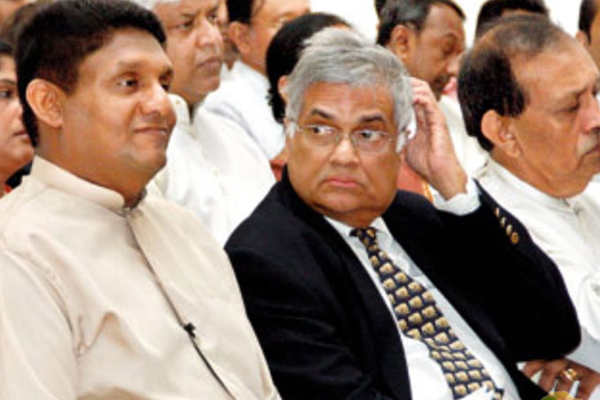
Postponing elections being a far cry, there is now a new debate mainly in Colombo circles, whether Basil’s request for a parliamentary election should precede the constitutionally scheduled Presidential election, or not. President Wickremesinghe is said to have told Basil then, it would be the Presidential election that would be held according to Constitutional provisions, but, if MPs need a parliamentary election sooner, they should have a resolution adopted in Parliament to that effect. This only needs a simple majority. With Mahinda Rajapaksa also endorsing the proposal for a parliamentary election first, Basil no doubt has the political clout to get the SLPP to move a motion in Parliament for a parliamentary election and have it passed. Yet they know, with no presidential candidate of their own, their future electoral politics will be a compromise with Wickremesinghe and they have to maintain space for a consensual path.

The main Opposition in Parliament the SJB, has no intention in supporting Basil’s proposal for a parliamentary election before the presidential election, they have said. They are clear they want the Presidential election first. The JVP/NPP leadership is seriously in for a Presidential election. They are campaigning for the Presidential election with Anura Kumara as the candidate whom they believe has already won the election. All in all, Colombo seem to want a Presidential election for a “complete change” carrying the same rhetoric the “aragalaya” left as political chaos.

Sri Lanka does need a “change”

Fact remains, Sri Lanka does need a “change”. Not just a “complete change” but a huge change with a wholly new Constitution including the overhaul of the entire State apparatus and politics of governance right down to Local Government bodies. That change is not possible with an election for the Executive Presidency. That needs a new parliament, the legislative body for legislating the total change the people need. A change that begins with the abolition of the “Executive” Presidency, and transferring “executive power” back to Parliament.

Abolition of the “Executive” Presidency is a promise, a pledge given to people by all political parties at different elections during the past 30 years. It was the JVP that first demanded the abolition of the executive presidency at the October Presidential elections in 1994. After a bloody ruthless insurgency that was wiped out with equal brutality by State forces in late 1989, scattered remnants of the JVP regrouped and came to open politics at the 1994 August parliamentary elections contesting all districts except Jaffna, Vanni and Batticaloa in collaboration with Ariya Bulegoda’s Sri Lanka People’s Front (SLPF). They polled a mere 01.1 percent though the new leadership it was said, expected a total poll of 5% plus in few districts to be above the cut-off mark. JVP had only Nihal Galappaththi elected as their MP from Hambantota district, who was nominated as their presidential candidate at the 1994 October Presidential election.

After the parliamentary elections they realised, they would not poll even the 01.1% at a presidential election and thus made a compromise with the People’s Alliance (PA) presidential candidate Chandrika Kumaratunge (CBK) who was tipped to win the Presidential election. Negotiated through Minister Mangala Samaraweera, a very close personal ally of CBK, the JVP request of abolishing the Executive Presidency within six months from swearing in as president was conceded in writing and the JVP withdrew their candidate in support of CBK.

Interestingly, then “The Hindu” correspondent in Colombo met former President Jayewardene, the architect of the Executive Presidency and asked him “Sir, you said this executive presidency is so powerful, it cannot only change the gender. PA candidate Chandrika has promised to abolish it. What have you to say on that?” After his usual haughty laugh, Jayewardene had told him “Meet me after it is abolished. I will then tell you”.

No political leader would abolish such power

Jayewardene was certain no political leader would abolish such power in presidency with legal immunity, they are eager to sit with. Since 1994 October, in almost all elections political leaders tried to outmanoeuvre each other by promising total abolition, immediate abolition and even using the election to have the mandate to abolish the executive presidency calling it the sole reason for all evils in the country including mega corruption. We thus had all political parties that usually gain representation in Parliament agreeing to abolish the dangerously authoritative presidency, but none serious about it once elected. The JVP backed presidential candidates from Mahinda Rajapaksa in November 2005 to Maithripala Sirisena in January 2015, guaranteed the presidency would be abolished as the first most important task when elected. It was in fact the JVP who were vociferous about abolishing the presidency in those election campaigns.

What is politically a clear fraud now with JVP is, driving a heavily funded campaign to have their JVP/NPP candidate Anura Kumara Dissanayake (AKD) elected to that same ruthlessly dictatorial executive presidency they condemned and wanted abolished over the past 30 years as the sole reason for mega corruption. They now remain stony silent on abolishing of the presidency. What is more disgracefully hollow is the political narrative they ride on, claiming they would “use the power the People would vest with them in electing AKD as president to create a society with dignity and equality to all”.

Sri Lanka is certainly at crossroads

Sri Lanka is certainly at crossroads and helplessly so. None in mainstream politics would lead this country on a right path to freedom, democracy and an inclusive society with socio-economic and cultural development. These political leaderships simply have no valid “development program” to back their criticism of the past and the present and their request for political power at the next “presidential” election. A larger crisis therefore is the timidity of the educated urban polity that has access to new information, new knowledge and new social discourses beyond geographical boundaries. They need to accept they have a social responsibility in intervening to create a realistic valid social dialogue and to pressure Governments to stay course. Almost a total lack of their independent intervention in social dialogue has allowed political parties with their own sectarian agendas, possibly with laundered black money to manipulate media, especially social media to dominate social thinking in urban circles. What this country immediately needs therefore is an alternative, realistic intervention in deciding how a new and an effective change could be achieved. First it is about creating a social lobby that would independently engage and address the people. Next is about establishing a Government that would be held responsible for the change needed. Thereafter it is about holding that Government responsible for the change and in implementing reforms necessary at every step of the way, without going into the usual selfish life and waking up yet again when elections are called for.

It is therefore not about electing a president once again to the post that had been condemned, had been socially accepted as dictatorial and therefore promised to be abolished, transferring executive power back to Parliament. It is not the president who could abolish the presidency. It is not the president who could legislate reforms necessary. It is not the president who could allocate public funds for social necessities. All that needs a government in parliament with an active social lobby to hold the elected government responsible to the people. Thus, we at crossroads need a new political phenomenon with people deciding on elections, the next Government and most importantly holding that Government responsible in delivery, with the more advantaged urban polity leading the way. Well, they have to accept their social responsibility is far heavier than what they would like to accept.