56 Sri Lankans held as captives by Myanmar terror group

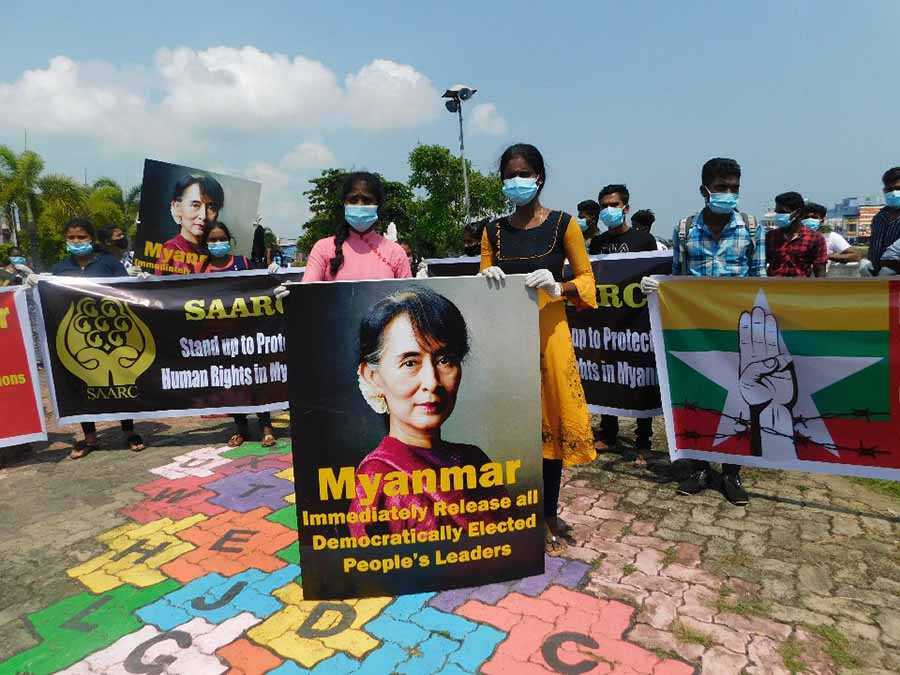
At least 56 Sri Lankans are reportedly held captive by terrorists in Myanmar after leaving for Thailand in search of employment, it was reported.

According to a report by News First, the group had been brought to Thailand for jobs related to the IT Industry.

However, it has been found that they are currently held captive at a camp in the Cyber Criminal area operated by a terrorist group in Myanmar.

The reports reveal that the group of Sri Lankans are being subjected to inhumane treatment by the terrorist group.

The terrorist group is also reportedly demanding US$ 8000 per person for their release.

When inquired in this regard, the Ambassador of Sri Lanka to Myanmar, Janaka Bandara acknowledged that they were aware of this particular situation.

Ambassador Bandara further said that following a discussion with the Myanmar authorities they were able to rescue 32 Sri Lankans who were held captive.

He further said that discussions are underway between Sri Lankan and Myanmar authorities to rescue the remaining 56 Sri Lankans who are currently held captive.

Ambassador Bandara warned Sri Lankans to refrain from attempting to enter Myanmar or Thailand via illegal visas due to such situations.

Relatives of the group of Sri Lankans held captive in Myanmar have requested the Sri Lankan authorities to retrieve their children and bring them back.

Sri Lanka declares pause on foreign research vessels for one year

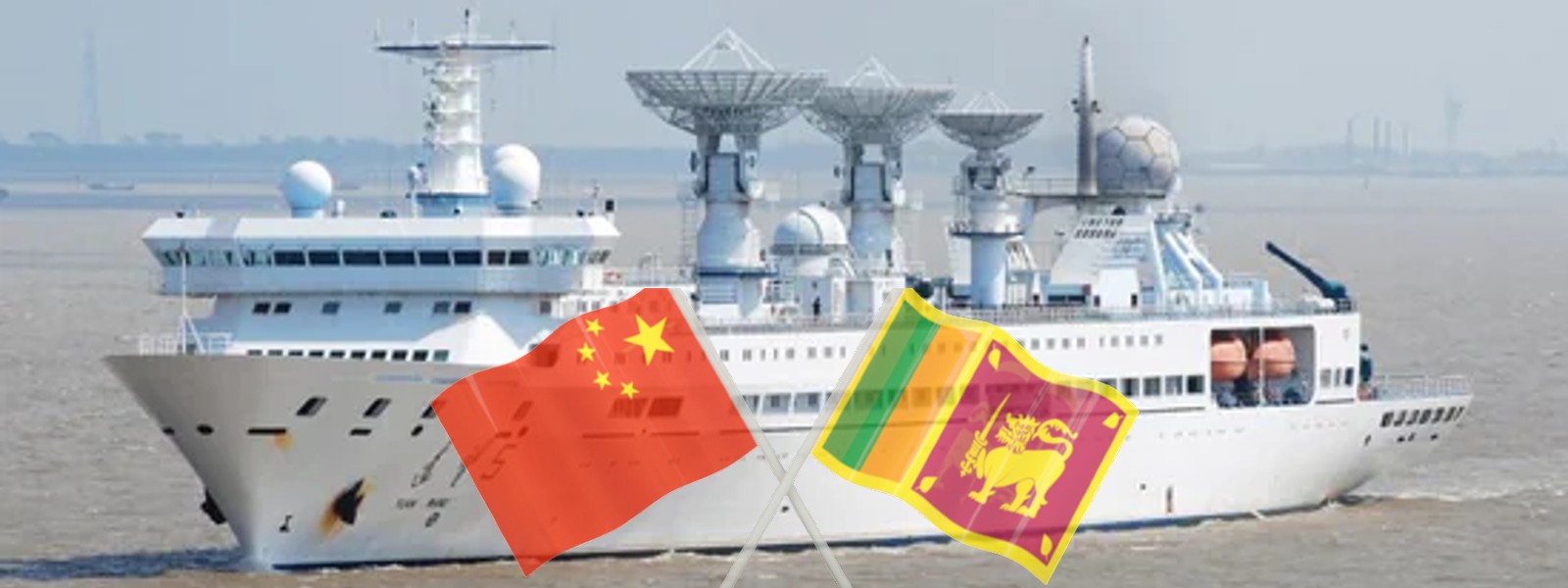
Amid geopolitical strain, Sri Lanka has decided to have a one year moratorium in allowing foreign vessels in conducting research in the country’s territorial waters, a minister said.

The government has taken such a decision and communicated it to the relevant countries. The decision has been taken in the wake of China seeking permission to berth yet another research vessel in Sri Lanka’s waters in January, next year.

Chinese Survey and Research Vessel Shi Yan 6 docked at Sri Lanka’s Colombo port in October despite India’s objection and carried out research activities along with the National Aquatic Resources Research and Development Agency (NARA) on the water column of the Indian Ocean.

Foreign Minister Ali Sabry told Daily Mirror that the government had announced a twelve-month moratorium on research vessels from any country starting from January, next year.

“That is for us to do some capacity development so that we can participate in such research activities as equal partners,” he said.

Sri Lanka is also facing elections next year and seeking to act without antagonizing any country in its dealings with matters of geopolitical significance.

Besides, Sri Lanka has also evolved the Standard Operating Procedure (SOP) for foreign military vessels and aircraft arriving in the country. The minister said the guidelines set under the SOP had been sent all the countries that deployed their vessels to Sri Lankan waters during the last ten years.

Posted in Uncategorized

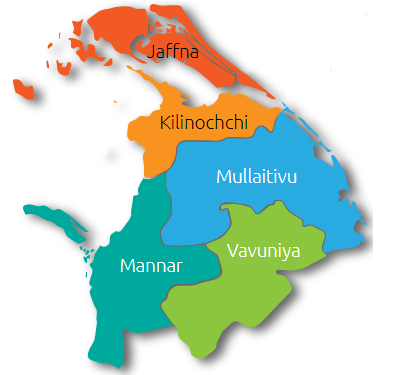
World Bank Aid Rots in Jaffna Warehouse, Leaving Farmers Empty-Handed

Over 21 metric tons of seed potatoes, a World Bank donation meant to revitalize local agriculture, have rotted away in a Jaffna warehouse, raising questions about negligence and jeopardizing the livelihoods of struggling farmers.

Sent with the promise of discounted, high-quality seeds, this Australian import was meant to be a lifeline for Jaffna’s agricultural sector. Yet, before farmers could even consider their purchase, a silent enemy had already taken root – a bacterial blight.

Dr. L. Rajesh Kanna, Assistant Director of the Thirunalveli Agriculture Research Centre, revealed the extent of the damage. “The bacteria was already present when the stock arrived,” he stated, further adding that over 40% of the potatoes were irredeemable by December 12th.

While the Jaffna District Secretary, A. Sivabalasundran, maintains he wasn’t officially informed of the situation, he confirms the stock’s destruction after an inspection and the research center’s findings. He has pledged to report the matter to the Governor and the Ministry of Agriculture.

The rotting potatoes represent more than just wasted food. They are a symbol of broken promises, wasted resources, and potentially lost income for Jaffna’s farmers. This incident raises critical questions about accountability throughout the entire process, from importation to storage.

Farmers, understandably, demand not just answers but guarantees that such a travesty won’t be repeated.

After disqualifying Indian bidders, Sri Lanka hopes to select Digital ID printer by 2024 Q1

Sri Lanka will call for fresh bids to select a service provider to print Unique Digital Identity Cards by the end of this year and hopes to choose the tender winner by the first quarter of next year, Technology Minister Kanaka Herath said.

The call for fresh bids comes after President Ranil Wickremesinghe’s government disqualified the two Indian bidders Madras Security Printers (MSP) and Protein Technologies which tendered in the previous bidding process.

“There were two bidders from India. None of them qualified,” Herath told reporters in Colombo at a media briefing on Monday.

“We had a JPMC (Joint Project Monitoring Committee) meeting last week and what we have decided is to advertise it again,” he said.

“So most probably at the end of this year we will be able to advertise and we will be able to select a bidder most probably in the first quarter of next year.”

Two top state officials have said the government was under “external pressure” to select Madras Security Printers, a company now being alleged of malpractices in several other countries.

Madras Security Printers won the tender to print revenue stickers for bottles of alcohol early this year, but its credibility has been questioned after a massive scam with forged stickers.

Some security analysts have raised concern over data privacy with Indian companies being selected to print the IDs.

However, Minister Herath has said Sri Lanka has already taken measures to ensure the digital security of the IDs.

India has already given an advance aid of 450 million Indian rupees to President Wickremesinghe’s government to fund the digital ID project, which aims to collect biographic and biometric information, including facial, iris, and fingerprint data.

The project is expected to store the personal data of every individual in a centralized system to issue identification cards as per the standards set by the International Civil Aviation Organization (ICAO), government officials have said, to effective and efficient delivery of government services, financial inclusion, and poverty reduction.

The project is being seriously considered to fast track to boost the tax revenue in bankruptcy declared by Sri Lanka with sovereign debt default.

“It will take time,” Herath said when he was asked when people will have their unique digital ID in their hands.

“First of all, you have to have the system and then you have to capture data. These are all in biometrics. It will take at least one-an-a-half year. “

“What we are trying to do now is to parallelly to capture data as well as to collect data.”

Posted in Uncategorized

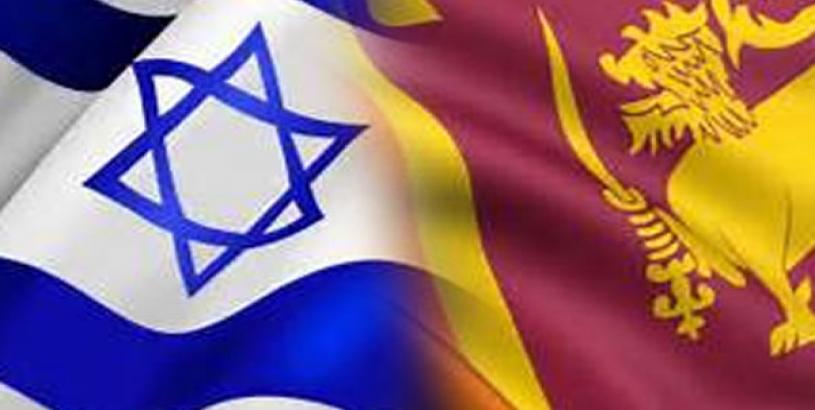
First batch departs for Israeli agricultural jobs

The first group selected for jobs in the Israeli agricultural sector left for Israel from the Katunayake Airport last night (18), the Sri Lanka Bureau of Foreign Employment (SLBFE) said.

Accordingly, thirty persons were included in this group. Another group of twenty will leave for Israel this morning (19), with an additional group of thirty scheduled to be sent to Israel tonight (19).

Air tickets for the first batch of workers were handed over by the Minister at a ceremony held yesterday to mark International Migrant’s Day.

During the event, the Minister stated that according to a bilateral agreement between the two countries, 10,000 workers will be able to fly to Israel in the next few weeks.

The Minister emphasized that there is no need to pay money to any party for these jobs. Therefore, even if it is discovered after going abroad that someone has paid money to obtain these job opportunities, they will be brought back, as both governments have reached an agreement on repatriating those who have paid money.

In addition, the Minister further said that Israel has agreed to hire 2,000 workers for job opportunities in the construction sector.

Posted in Uncategorized

Presidential stakes hot up

The contention to be the elected President of Sri Lanka yesterday got heated up with incumbent Ranil Wickremesinghe’s United National Party expressing confidence of continuity amidst reports of business leader and MP Dhammika Perera being declared as the Sri Lanka Podujana Peramuna (SLPP) candidate.

UNP Chairman Vajira Abey-wardana yesterday expressed confidence that Wickremesinghe will secure a significant victory in the upcoming Presidential election, leading to his reappointment to the position. Addressing a press conference at Sirikotha, Abeywardana predicted that Wickremesinghe would secure 10 million votes, ensuring his victory in the forthcoming Presidential election.

“President Wickremesinghe would secure the Presidential seat once again, surpassing any President in history in terms of votes,” he said. “I express this confidence based on the positive direction we anticipate the country to be in April, thanks to the sound economic policies of President Ranil Wickremesinghe,” he added.

“People should grant the President the mandate to govern the nation for another 12 years. Sri Lanka has the potential to become a powerful nation under Wickremesinghe’s leadership,” he said. Abeywardana warned of potential destruction if this mandate is not extended.

Abeywardana also praised President Ranil Wickremesinghe as an economic expert and highlighted his clear vision and efforts to guide the country’s direction.

“The current Opposition is also ours. The people will choose the real Opposition party in an election,” he said. Abeywardena also claimed all political parties will come together in the final moments leading up to the polls.

Abeywardena’s remarks come amidst unverified reports that Wickremesinghe has decided not to contest the upcoming Presidential polls. Those who are close to Wickremesinghe dismissed the report widely circulated within social media as “hoax” and part of opponents› misleading campaign.

In a related development, there were reports yesterday that the SLPP has decided MP Dhammika Perera will be presented as its candidate at the upcoming presidential election. A group of active SLPPers have also urged prominent businessman – Dhammika Perera to be appointed as the National Organizer of the party.

Speculation rose after incumbent national organiser the US domiciled political maestro Basil Rajapaksa flying back after attending the SLPP 2nd convention over the weekend at which former President and political maestro Mahinda Rajapaksa was re-elected as the leader.

Reports claimed said that Dhammika Perera is the most suitable candidate for the national organiser post as well as presidential nominee

SLPPers is reported to have pointed out that Perera is also well known even in the grassroot levels and it would be instrumental in appointing someone to the post who has the full backing of Basil Rajapaksa, who is known as the ‘vote machine’ of the SLPP. In addition, Perera has also actively contributed to education through the ‘DP Education’ initiative, impacting over 1.5 million school children in Sri Lanka.

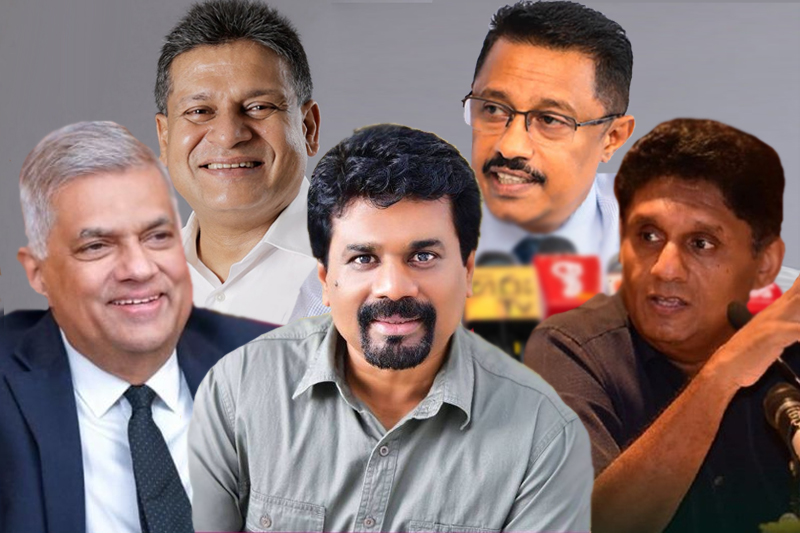
In the Presidential foray include business leader and lawyer Dilith Jayaweera and business tycoon and former Public Utilities Commission Chairman Janaka Ratnayake with the latter having openly declared he will contest. Separately, the main Opposition and SJB leader Sajith Premadasa and NPP leader Anura Kumara Dissanayake are widely speculated to be keen on vying for the presidency.

Posted in Uncategorized

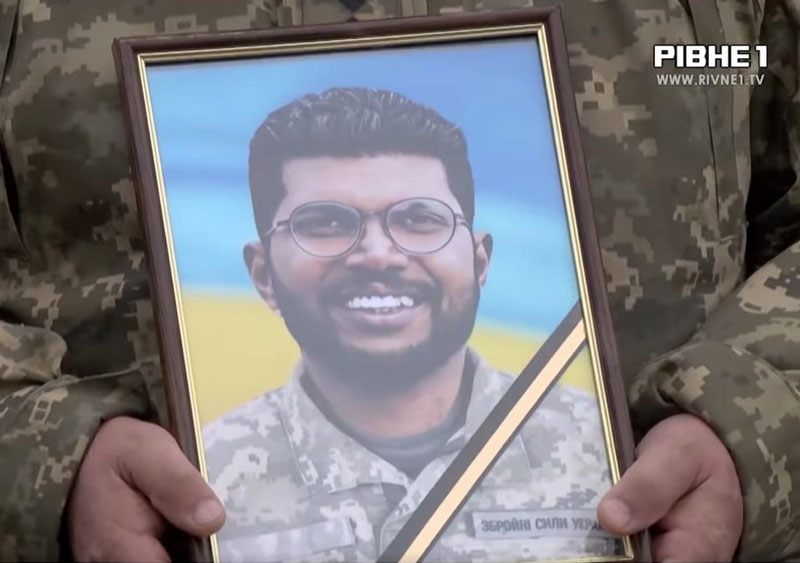
Ranish Hewage buried in Ukraine

Sri Lankan Shehan Ranish Hewage, who died while fighting for Ukraine in the war with Russia, has been buried with military honours, reports ‘Sandeshaya with Saroj’.

The funeral for Ranish and several Ukrainian soldiers took place at Mlynov, 400 kms east of Kiev on Friday.

On the previous day, his mother and sister paid their last respects in the capital.

Ranish, along with colleague Rodney Jayasinghe, died in a shell attack while attempting to recover the body of their countryman, M.M. Priyantha.

The 33-year-old had been known in Ukraine as ‘captain dentist.’

Posted in Uncategorized

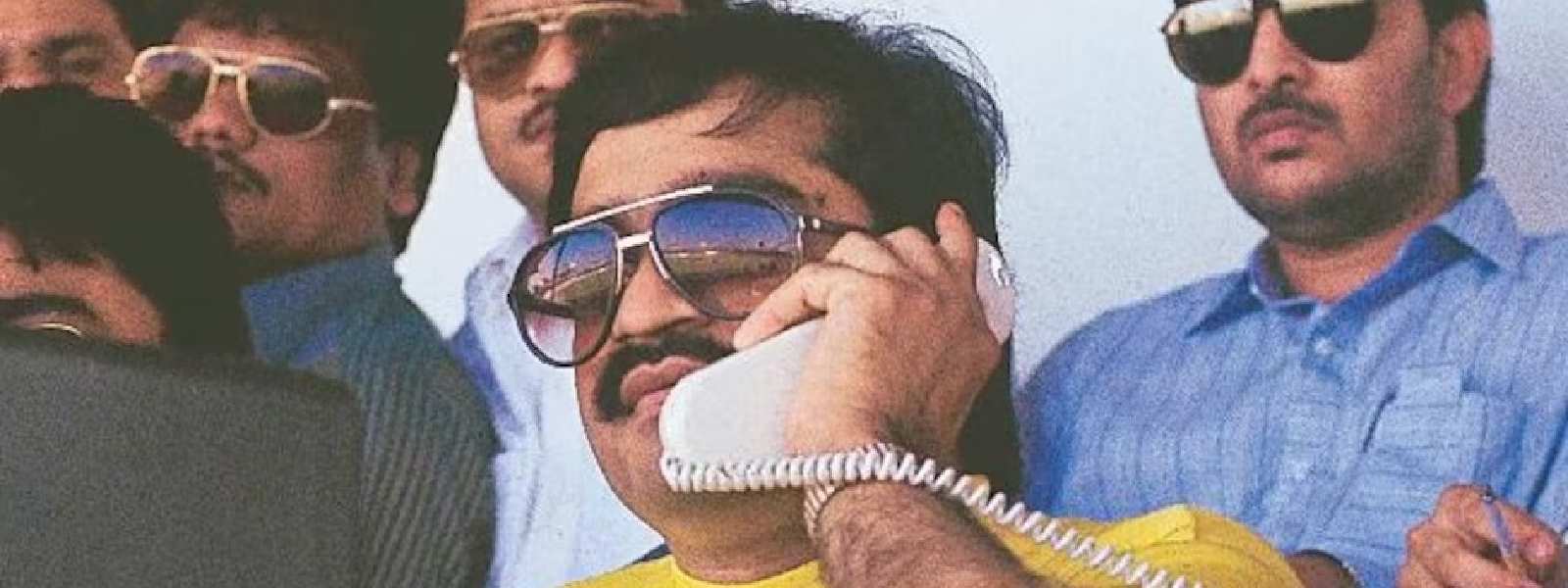
Is Dawood Ibrahim Dead? India’s Most Wanted Terrorist May Have Died After Poisoning Bid In Karachi: Sources

Notorious Indian underworld don Dawood Ibrahim, wanted for masterminding the 1993 Mumbai blasts, has reportedly been hospitalized in Karachi, Pakistan, after being allegedly poisoned.

The news has sparked speculation and intrigue, with Indian authorities calling for his extradition while Pakistan maintains its silence.

Ibrahim, believed to be residing in Karachi’s affluent Clifton area, was reportedly admitted to a hospital two days ago under tight security.

The nature of his illness and the cause of his hospitalization remain shrouded in mystery, as Pakistani authorities have yet to acknowledge his presence or comment on the situation.

Sources claim that Ibrahim is the sole patient occupying the floor where he is admitted, with access restricted to only senior hospital officials and his immediate family.

This heightened security further fuels suspicions about the seriousness of his condition and the circumstances surrounding his hospitalization.

The news of Ibrahim’s hospitalization reignites tensions between India and Pakistan, with New Delhi reiterating its demand for his extradition.

Indian authorities have long accused Pakistan of harboring the fugitive don, charges Islamabad vehemently denies.

In January 2023, Ibrahim’s nephew, Alishah Parkar, revealed to the National Investigation Agency (NIA) that his uncle had remarried in Pakistan and lives with his family in Karachi. This revelation further bolstered India’s claims about Ibrahim’s presence in Pakistan.

Ibrahim, the alleged mastermind of the 1993 Mumbai attacks that claimed over 250 lives and injured thousands, remains a wanted fugitive in India. Both India and the US have designated him a “global terrorist” since 2003.

The D-Company, Ibrahim’s criminal organization, is known for its involvement in drug trafficking, arms smuggling, counterfeiting, and carrying out targeted attacks against prominent figures.

The 10th edition of the Global Terrorism Index (GIT) identifies the D-Company as still wielding significant influence in Mumbai and maintaining links with international terrorist groups like al-Qaida.

Business Tycoon Dhammika Perera Tapped as Presidential Candidate for Sri Lanka Podujana Peramuna

The Sri Lanka Podujana Peramuna (SLPP) has reportedly finalized its decision to field Member of Parliament and renowned business tycoon Dhammika Perera as its candidate for the upcoming presidential election.

The decision was purportedly reached after the SLPP convention held at the Sugathadasa Indoor Stadium, where Perera was a prominent figure.

Dhammika Perera, a familiar face in both business and politics, briefly served as a Cabinet Minister under the administration of President Gotabhaya Rajapaksa.

Sources within the SLPP reveal that Perera’s extensive experience in the corporate sector and his previous stint in the government have positioned him as a formidable candidate for the party.

“India Is Secure When Sri Lanka Is Secure” – Gopal Baglay

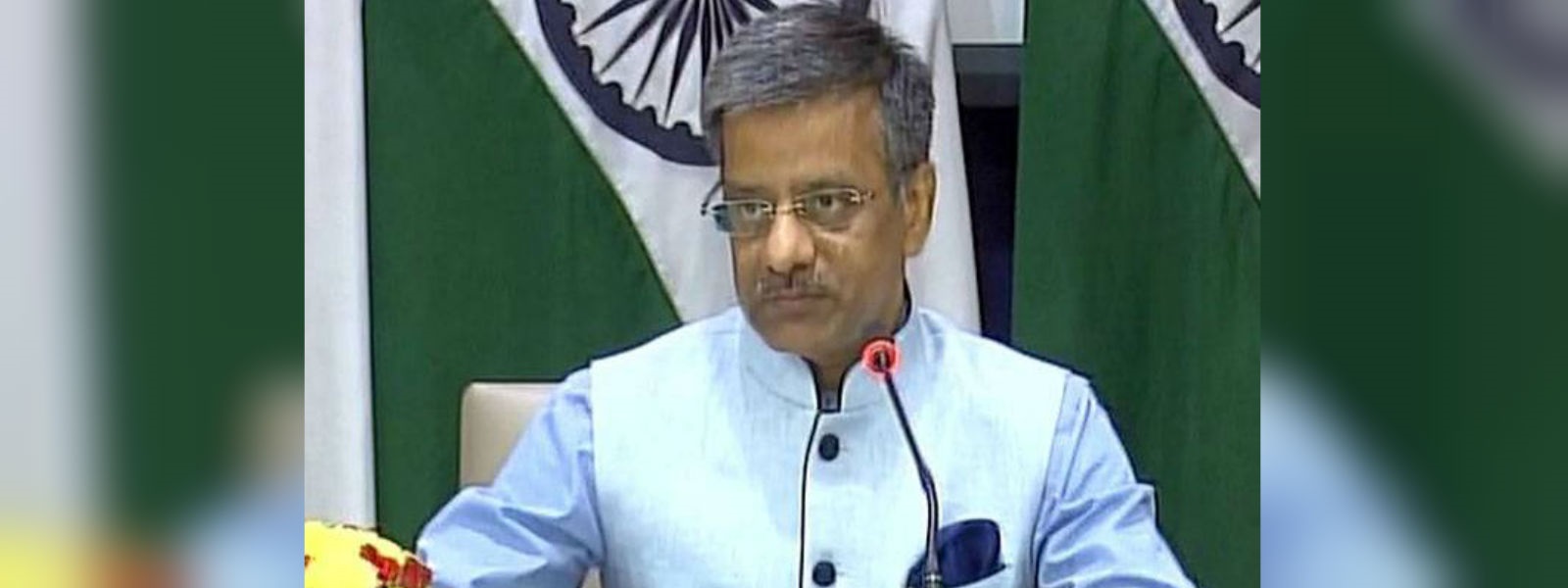
Outgoing Indian High Commissioner, Gopal Baglay, in an interview with Daily Mirror at the end of his three and half year stint in Sri Lanka, shared his views on the development of bilateral ties and what holds for future.

Q You have been here for more than three years. How has your experience in Sri Lanka been?

A: Both professionally and personally, I had the most memorable time of my diplomatic career in Sri Lanka. To represent India in Sri Lanka as the High Commissioner has been an absolute honour. My tenure here coincided with a critical time for Sri Lanka. I say this with great satisfaction that the close friendship between India and Sri Lanka has proved its mettle. I leave Sri Lanka with the sense that India-Sri Lanka ties are poised to scale new heights. Personally, I found the people of Sri Lanka to be extremely warm and hospitable. The affinity between our peoples made me feel at home wherever I went in the country.
I thoroughly enjoyed my tenure here. I would like to believe that during this time, India and Sri Lanka have been able to create new pathways for cooperation. They also decided on a roadmap for the future.

Q What are the most striking commonalities between the two sides?

A: I think the commonalities are many. After all, India and Sri Lanka are civilisational twins. Our relationship is very aptly described with the Sinhala word Sahodara, meaning brothers from the same womb. There are remarkable commonalities in our languages, religions, food, music, literature, arts, etc. We share history and heritage, and are bound to have a common destiny.
We also have commonalities in our aspirations. To me, among the most striking commonalities are the shared values of democracy and diversity that both our peoples celebrate. We have demonstrated that democracy delivers. We have seen that progress and the empowerment of citizens go hand in hand.

Q How would you look at the trajectory of bilateral ties during your term here?

A: Overall, I would say that the trajectory has been positive. We have broken new ground and there is significant potential to further expand our cooperation across areas.
The Virtual Bilateral Summit of 2020 between our two Prime Ministers was a milestone in laying a roadmap for the cooperative agenda for the prosperity of the people of both the countries. The formidable strength of the India-Sri Lanka partnership has been demonstrated in the recent past. Sri Lanka received its very first consignment of COVID-19 vaccines made in India under India’s Vaccine ‘Maitri’ initiative in January 2021, which enabled the roll out of Sri Lanka’s vaccination programme ahead of schedule. In early 2022, when Sri Lanka suffered its worst economic crisis since Independence, India mobilised an unprecedented assistance of over USD 4 billion for food, fuel, fertilisers and currency support to help the people of Sri Lanka. India was the first country to provide financing assurances needed by the IMF to help Sri Lanka. India also played a key role as the co-chair in the Official Creditors Committee in reaching an understanding with the Sri Lankan government on the terms of debt restructuring.

Our bilateral ties were further consolidated during the visit of President Ranil Wickremesinghe to India in July 2023. The Joint Vision statement adopted by our leaders lays out the path to shared prosperity with connectivity as the key enabler.
When I talk to the Sri Lankan people, whether in cities or villages, I feel that they see in India a dependable partner and a reliable friend. Mutual trust and goodwill as well as vast opportunities afforded by India’s sustained high growth have provided a solid platform for our ties to take off.

Q There have been a lot of engagements in the economic sphere in the recent past. How has economic cooperation between the two countries deepened during
your time?

A: In the last few years, economic and commercial ties have deepened and have become the centre-piece of the India-Sri Lanka bilateral partnership. India has emerged as Sri Lanka’s largest trade partner, largest investor and the biggest source of tourist inflow into the country. Despite global headwinds, Sri Lanka’s exports to India have grown year on year. We have resumed the Economic and Technology Cooperation Agreement (ETCA) negotiations, interactions between our trade and industry bodies are closer and more frequent. Indian companies are keen on Sri Lanka and know that Sri Lanka is open for business. There have been some big ticket investments coming in from India, such as the West Container Terminal, solar and wind project in Mannarand Pooneryn of about 500 MW, and the ITC Ratnadeepa Project at Galle Face.
Amongst the various notable achievements in the economic sphere in the recent past, I would like to mention specifically the signing of the lease agreements for the Trincomalee Tank Farms which had been pending for 20 years and cooperation in renewable energy projects.

Q Several connectivity initiatives were announced during the visit of President Ranil Wickremesinghe to India in July 2023. Where do we stand on these initiatives?

A: The India-Sri Lanka Economic Partnership Vision jointly adopted during the visit of the President of Sri Lanka to India in July 2023 is centred on connectivity. Both Governments are working together to transform this vision into reality. As a result, the ferry service between Nagapattinam and Kankesanthurai was launched in October 2023. Productive discussions have been held between the Governments on the connectivity corridor, multi-product pipeline and power grid connectivity. For greater digital connectivity, Lanka Pay from Sri Lanka and NIPL from India will soon be ready to launch a QR based payment system in Sri Lanka benefitting Indian and Sri Lankan tourists.

Q What happened to the India-Sri Lanka ferry service?

A: Given the high demand among the people of both countries and the keen interest in the leadership for an uninterrupted ferry service, both governments are taking steps to select private entities for the operation of the Nagapattinam-Kankesanthurai ferry service. Similarly, discussions are being held to develop relevant infrastructure at Rameswaram and Talaimannar for commencing ferry services suspended for the last four decades.

Q What measures could be adopted to address the on-going fishermen issue, despite attempts being made to resolve the matter for decades?

A: India remains committed to resolve the persistent fishermen issue to our mutual satisfaction. As livelihoods of fishermen on both sides are involved, it has to be addressed in a humanitarian manner with the involvement of all stakeholders including the fishermen communities on both sides. The Government of India has adopted a multipronged approach to resolve the issue, including various initiatives for Indian fishermen to switch over to deep sea fishing. Further, pending the long-lasting solution, India is striving to bring benefits of scientific research and expertise for the commercially sustainable development of fisheries in Sri Lanka so that the benefits can directly reach the fishermen and the common people.

Q There is a perception in Sri Lanka that the implementation period of Indian projects in Sri Lanka is considerably long. Your thoughts?

A: Let me share with your readers that India’s development partnership portfolio with Sri Lanka stands at over US $ 5 billion, including both grants and Lines of Credit. The Indian government’s developmental assistance projects are entirely based on the priorities set out by the government and the people of Sri Lanka. These projects are diverse, both in terms of their subject areas and geographical reach. India is perhaps the only bilateral partner with development projects in each of Sri Lanka’s 25 districts. India’s projects have been well received for their tangible impact on people’s lives, their transparent approach and their implementation in a manner that supports local economies. The assistance specifically focuses on capacity-building, human resources development, uplifting of weaker sections as well as infrastructure development.

It is noteworthy that despite disruptions owing to the COVID-19 pandemic and the economic crises, Indian government-assisted development projects continued to the extent possible. To name a few: the upgrading of the Railway Line from Maho to Omanthai, the supply of buses for public transport, the supply of SUVs to the Ministry of Public Security. And all this is while India assisted Sri Lanka with USD 4 billion, with no strings attached, to ensure that the people of Sri Lanka could face the challenges that had arisen.
Additionally, I would like to underline that GOI-assisted projects are for the people of Sri Lanka and by the people of Sri Lanka. They are implemented via the Sri Lankan government’s concerned line Ministries and local agencies. As and when the concerned Ministries revise the needs and accordingly the scope of the project, we try to quickly adapt and deliver as swiftly as possible in response to the evolving requirements.

Q We see that India has been undertaking several steps to deepen the ties in the sphere of Buddhism. Could you elaborate further on some of these steps?

A: Buddhism imparts an ever present vibrancy to the India-Sri Lanka relationship. Prime Minister Modi’s visits to Sri Lanka in the recent past have exhibited the same. In 2015, he visited the Jaya Sri Mahabodhi temple. In 2017, he was the Chief Guest at the UN Vesak Day celebrations in Colombo. In the Virtual Summit in 2020, he announced a US $ 15 million grant of assistance for the protection and promotion of Buddhist ties between our two countries. We recently signed an MOU with US $ 10 million for solar electrification of temples in Sri Lanka under this grant.
Some other recent steps taken to deepen our ties in the sphere of Buddhism include exposition of the venerated relics of Lord Buddha from Kapilawasthu in Sri Lanka, and the exposition of relics from the Waskaduwe Vihara in India in October 2021. The inaugural flight to the Kushinagar Airport in India was from Sri Lanka. India has organised special pilgrimage trips for Sri Lankan Armed Forces personnel and their families to Bodh Gaya.

Q Can you please give us an overall picture of the India-Sri Lanka defence partnership?

A: Well, the approach to our defence ties with Sri Lanka is premised on India’s philosophy of Vasudaiva Kutumbakam, the world is one family. This is further magnified in Sri Lanka’s case by our policy of “Neighbourhood First”. Just as it is natural for us to ensure that our efforts for peace, prosperity and progress be for the region, we also seek to ensure that the region remains secure. This security depends upon working together as partners to face both conventional and non-conventional common challenges.
Sri Lanka is India’s closest maritime neighbour and a key partner in the Indian Ocean domain. The engagement with Sri Lanka in the defence and security segments is all-encompassing, cutting across the supply of military equipment, joint exercises, high level visits, the deployment of Indian instructors and training teams, staff talks, goodwill visits, etc. In fact, you would like to recall that the Indian Naval Submarine, “Vagir” made its maiden port of call to Colombo earlier this year. Thousands of people including school children, scouts, guides, members of the NCC as well as officers from the Sri Lanka Navy and their family members visited the Submarine, which became famous as the people’s submarine, thus creating an environment of security and trust which continues to be the focal objective of our defence and security cooperation, placing peace, progress and the prosperity of our peoples always at the first place.
Maintaining regional stability, curbing smuggling networks and preventing terrorism and extremist threats in the maritime neighbourhood are common priorities spurring the deepening of naval cooperation. Regional security cooperation initiatives such as the Colombo Security Conclave have also contributed to joint preparedness. Maritime information exchange arrangements are also enabling prompt shared action against illegal activities in the Indian Ocean region. To sum up, actually we see the security of India and Sri Lanka as mutual and indivisible. India is secure when Sri Lanka is secure.

Q India offers numerous scholarships to students and training opportunities to civilians and military personnel. Could you please shed more light on these schemes and their benefits?

A: Correct. India offers over 700 scholarships for students across school level, undergraduate, masters and research programmes. More than 200 of these are fully paid scholarships and fellowships for students to pursue higher education in Indian universities. We also offer 402 fully-funded slots annually under the Indian Technical and Economic Cooperation (ITEC) Program to officials in the Sri Lankan government and also to other citizens. ITEC offers short term training programs in technical and professional disciplines to enhance skill sets and employability. On the defence side, more than 1200 personnel across the army, navy and air force are trained in India each year. Not sure if you know, more than 50 percent of the total defence training slots offered by India are reserved for personnel from Sri Lanka.
It is the training programmes that help deepen the connectivity between the youth of our countries. It is these young minds that will chart the path forward for our countries, and the relationship.

Q How does India view Sri Lanka’s overall approach to ties with China? Is security an important concern in this regard?

A: India’s relationship with Sri Lanka stands on its own and doesn’t depend on third party countries. Sri Lanka’s relations with any third party country are its own sovereign decision. I can talk about India’s relationship with Sri Lanka – which is sui generis. The India-Sri Lanka relationship is unique for its long-standing, deep-rooted and multifaceted civilizational ties. These shared affinities have nurtured interlinks in every sphere of life. Not only can we boast of a wide-ranging bilateral partnership, we are increasingly cooperating in the regional domain as well. India and Sri Lanka work closely on regional platforms like the IORA, BIMSTEC, Colombo Security Conclave, etc with the perspective of One Indian Ocean region, addressing the regional concerns mutually.

Our increasing cooperation in all areas, including security, is intended at enhancing the well-being and prosperity of our peoples. We are confident of Sri Lanka’s wisdom to make the choices that are right for its people in security or any other sphere, serve to fulfill the people’s aspirations, and preserve and promote the value system and millennia-old unparalleled traditions of the people of Sri Lanka.

Q In closing, as someone who has spent more than three years in Sri Lanka, what would be your farewell message to the people of
Sri Lanka?

A: Sri Lanka is the Pearl of the Indian Ocean. It is a country with great potential, for its geo-strategic location next door to the world’s fifth largest economy – India. I know that the people of Sri Lanka have gone through a difficult phase with impressive resilience. I would just like to say that India has always stood with the people of Sri Lanka and we will continue to do so. We firmly believe that blood is thicker than water, and you can definitely count on us.


Posted in Uncategorized