Tamil groups ask Ottawa to bring Sri Lanka officials to International Criminal Court

Tamil diaspora groups are praising Ottawa’s sanctions on Sri Lanka officials, while asking Canada to bring that country to international tribunals.

Canada sanctioned four high-ranking officials earlier this month for alleged human-rights breaches during Sri Lanka’s 26-year civil war with Tamil separatists.

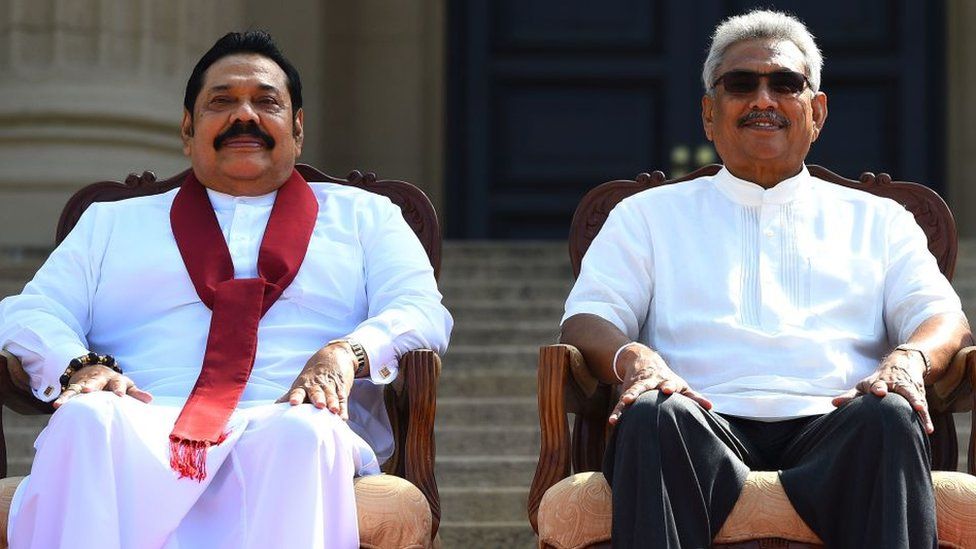
The asset and travel ban included Gotabaya Rajapaksa and his older brother Mahinda Rajapaksa, who are both former presidents.

The Sri Lanka government summoned Canada’s envoy over the move, accusing Ottawa of caving to Tamil diaspora politics.

But Tamil groups say Ottawa has set an example for other countries, and they are asking the Liberals to start a process to bring senior officials to the International Criminal Court.

The U.S. has previously sanctioned senior Sri Lanka officials, but Human Rights Watch says Canada is the only country to list the Rajapaksa brothers.

Source: The Canadian Press

Posted in Uncategorized

Sri Lanka’s SJB supports devolution but position on full 13A still unclear

Sri Lanka’s main opposition the Samagi Jana Balawegaya (SJB), which boycotted a recent all-party conference (APC) on the ethnic issue, says it supports devolution of power, but the party has yet to articulate its position on the full implementation of the 13th amendment to the constitution.

SJB general secretary MP Ranjith Madduma Bandara told EconomyNext on Monday January 30 that President Ranil Wickremesinghe, who convened the APC, must first present the government’s proposals on devolution of power.

“We expressed our consent to power sharing at the first meeting. Instead of talking about this every day, present the government’s set of proposals,” said the MP.

Speaking at the APC, President Wickremesinghe said he wished to fully implement the 13th amendment to the constitution, which was aimed at giving more autonomy to provinces in a bid to solve the island nation’s decades-long ethnic conflict.

The solution is backed by India, which has expressed its support for Sri Lanka’s debt re-structuring plans.

Wickremesinghe, flanked by former presidents Mahinda Rajapaksa and Maithripala Sirisena, told party leaders that, as executive president, he is required to fully implement the amendment.

“If it is not implemented, someone should bring another amendment and abolish it. We cannot stay on the fence saying we will not abolish it and we will not implement it,” he said.

The SJB was conspicuous by its absence at the APC, save for its MP Rajitha Senaratne who had been speculated to join the Wickremesinghe administration but so far remains an opposition legislator. He was heard speaking supportively of the president’s plan to fully implement the 13th amendment.

MP Madduma Bandara, however, insists that the president must present its proposals for devolution.

“We cannot sign a blank document,” he said.

President Wickremesinghe has reiterated his commitment to finding a permanent solution to Sri Lanka’s enduring ethnic issue. He recently told a gathering at the National Thai Pongal Festival in Jaffna that the amendment will be fully implemented and a Social Justice Commission will be established to “build a country where everyone can live in harmony, by solving the problems of the people belonging to all sections of the population.”

The 13th amendment to Sri Lanka’s constitution emerged from the controversial Indo-Lanka Accord of 1987 as a purported solution to the worsening ethnic conflict, four years after war broke out. Provincial councils came in the wake of this amendment, though land and police powers have yet to be devolved to the provinces as originally envisioned. Both Sinhalese and Tamil nationalists have historically opposed the amendment, the former claiming it devolved too much, the latter complaining it didn’t devolve enough.

A full implementation of the amendment will see land and police powers devolved to the provinces, a development that is not likely to garner support from Sri Lanka’s more nationalist-oriented parties including sections of the ruling Sri Lanka Podujana Peramuna (SLPP).

SLPP MPs Gevindu Kumaratunga and Sarath Weerasekara said at the APC that the president lacke the mandate to go that far, a claim that Wickremesinghe defiantly refuted, arguing that as executive president elected by parliament he has the authority to fully implement the constitution.

However, the president said he does not support federalism, a solution which the opposition Tamil National Alliance (TNA) has indicated that it is open to.

Federalism has been a highly controversial and politically inflammable idea in Sri Lanka over the years, with many nationalist or even some moderate parties in the south vehemently opposing the very suggestion of it. It is unclear whether this stance has softened over the 13 years since the end of the war, but to date no Sinhalese-dominated party – the SJB and Janatha Vimukthi Peramuna (JVP) included – has come out in support for it.

Asked if the SJB is open to devolving land and police powers, the party’s general secretary reiterated to EconomyNext that the government hasn’t clearly articulated its proposals.

“[President Wickremesinghe says full 13. [Ex president] Mahinda Rajapaksa said 13 Plus. We need to have some kind of note to look at and discuss,” said Madduma Bandara.

“Tell us what will be implemented in the 13th amendment. DIscussions can only take place around those proposals,” he said.

However, he stressed that the party does support devolution of power.

Does it support full devolution, however?

“Let’s see what the government has to say.”

Asked what form devolution of power would take under an SJB government, the opposition legislator said: “If we had a government, we would inform what form it would take.

Madduma Bandara repeated that the government, which holds parliamentary majority and has the president on its side, must release its proposals.

“No point us asking about our proposals now. Ask after we have been given power,” he said.

Election Chief seeks President’s intervention to conduct LG Election

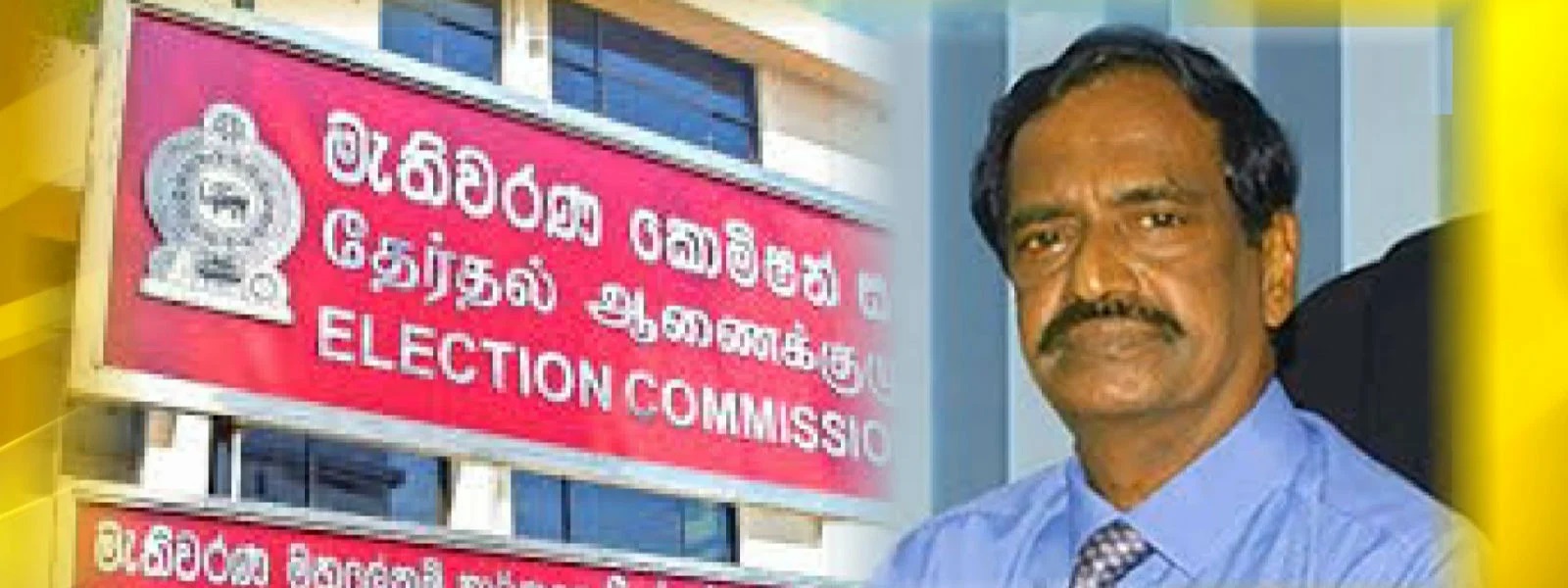
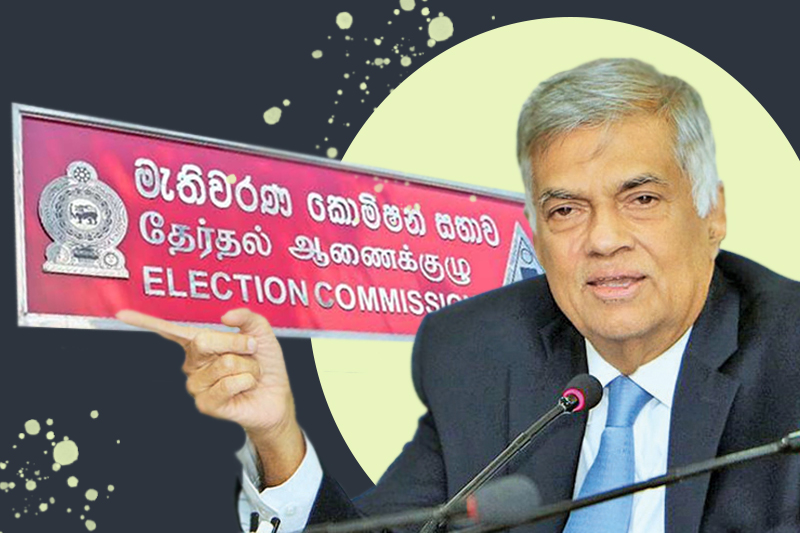
Chairman of the National Election Commission Nimal Punchihewa has requested President Ranil Wickremesinghe to beef up security accorded to the members of the Commission.

The Election Commission Chairman has written to the President following reports of its members receiving death threats.

A senior spokesperson of the Election Commission said the Election Chief also requested the intervention of the President to obtain the support of all state bodies to conduct a free and fair election.

Chairman Nimal Punchihewa is of the view that some state institutions are not fully supporting the efforts of the Commission to conduct the upcoming Local Authorities Election.

Accordingly, Nimal Punchihewa has requested the President to intervene and provide the necessary support for the Commission to conduct the election.

The Election Commission has already announced that it will conduct the Local Authorities Election on the 9th of March.

Posted in Uncategorized

PAFFREL, CAFFE, CMEV to monitor elections

The National Election Commission says that more than four election monitoring bodies will be permitted to monitor the upcoming Local Government elections.

The Chairman of the commission Nimal Punchihewa said that People’s Action for Free & Fair Elections or PAFFREL, Campaign for Free and Fair Elections or CAFFE , Centre for Monitoring Election Violence (CMEV) and other organizations would be given permission to monitor the Local Government Election.

The Chairman of the National Election Commission further added that only two election monitoring bodies are permitted to enter the polling station to monitor the election process.

Executive Director of People’s Action for Free & Fair Elections (PAFFREL) Rohana Hettiarachchi says that around 7,000 independent observers would be deployed for the upcoming local government election.

He added that the number of election monitors deployed at district level would be increased from next week.

Member signatures NOT necessary for LG Poll Gazette – NEC Chairman

The National Election Commission on Monday (30) said that there is no requirement for the members of the NEC to sign the relevant gazette notification to commence the Local Government Election process.

National Election Commission Chairman Attorney Nimal Punchihewa speaking to News 1st said that the District Returning Officers would be issuing a necessary gazette notification.

The National Election Commission said the relevant gazette will be sent for printing on Monday (30) or Tuesday (31).

The Gazette notice with the signatures of the Chairman and other members of the Election Commission required for the commencement of the Local Government Election process had not yet been sent to the Government Press for printing, said the Government Information Department on Sunday (29).

Posted in Uncategorized

Time for Upcountry Tamils to come together By N Sathiya Moorthy

Barring his followers, no one really got to know about the lead of the Tamil Progressive Alliance (TPA) of Upcountry Tamils, Mano Ganesan, abstaining from what passed off for an all-party conference called by President Ranil Wickremesinghe the other day, to discuss and discourse on the ‘National Problem’. No, it is not the economic issues that continue engulf the nation a year after it all began as a rude and unbelievable shock. Instead, it was all about the original ‘National Problem’, namely, the ethnic issue, though no one uses that phrase in that or any context any more.

Mano Ganesan said that they were boycotting the all-party meet because it was not addressing the concerns of the Upcountry Tamils, and instead focussed exclusively on what remains to be focussed on the ethnic issue relating to the Sri Lankan Tamil (SLT) community. Well said, but there is no guarantee that Mano would say such things again and again and again – and chart out a future course of action aimed at the government and the national polity taking the Upcountry Tamils’ cause into reckoning.

It is not unlikely, and mostly likely, his followers too seem to have concluded that Mano Ganesan boycotted the talks because the mainline Opposition SJB too stayed away. Yet, whatever news flowed out of the boycott, it was the SJB’s abstention made the news, and naturally so. Barring a few Tamil newspapers in Jaffna, which looked also at the Tamil politics of capital Colombo, not many reported Mano, even as much as they have done with his periodic statements, which invariably commented on the ethnic issue more than the Upcountry Tamils’ problems.

No, it does not mean that Mano Ganesan has not spoken about his clan. Rather, he has commented on every micro issue that is of concern for the Upcountry Tamils. But overall, his voice was heard more on larger issues, or rather, what others thought as larger issues, where the Upcountry Tamils were deemed to have little or no say.

Twine shall not meet

Maybe, the late veteran Saumiyamoorthy Thondaman or Mano’s late father V P Ganesan, who charted out their own limited courses that was confined to the Upcountry Tamil cause. Thus, Thondaman Sr told off SLT leader and ITAK founder, S J V Chelvanayagam, to mind his business and let him mind his. The logic was simple. The SLT polity was fighting for rights, the Upcountry Tamils were fighting for survival, physical and political. The twine shall not meet, seem to have been his conclusion.

Yes, that’s true. The post-Independence government began their first year in office as far back as 1948 by disenfranchising the Upcountry Tamils and rendering them stateless, for which the pre-SJV kind of SLT too extended its support. Even without it, there is the historic, ‘cultural’ issue of the Upcountry Tamils being the late-comers from the south Indian State of India. In comparison, the SLT people would tell the nation’s Sinhala majority and also the international community that they were a part of the nation’s being from the very beginning. In India and to Indians, they would say that they had umbilical cord links that cannot be cut off.

But in reality, then and now, it has more to do with castes and political power from the side of the SLT, and of jobs and incomes for the Upcountry Tamils. Like the SLT community, the Upcountry Tamils did not lose their well-being to the constitutional rights and political powers, of which the former wanted more and the latter lost even whatever little they have had.

Problem of perception

The problem with the Upcountry Tamils is a problem of perception of its divided polity, and their priorities. After Thondaman Sr, his nephew, the late Arumugan
Thondaman did not measure up, nor could he keep the community united under the larger CWC flag. His ways and waywardness caused constant splits in the party, hence in the community, too, and the results are there for everyone to see.

When not long ago, Mano Ganesan joined and the young inheritor to the CWC flag, Jeevan Thondaman, there were hopes of most, if not all Upcountry Tamil parties, joining hands even if they did not merge. Those hopes have since been belied, or have at least taken a back seat.

So much so, no other Upcountry Tamil leader seems to have congratulated Jeevan becoming the youngest cabinet minister, not only from the community but also from the country as a whole. Among them were many who had done so when he quit the previous Gotabaya Rajapaksa government.

Maybe, it is time veterans like Mano Ganesan, who too has years of politics ahead of him, join hands with the young Jeevan-Senthil duo, and reunited the community and polity to its historic strength. And Mano has to take the initiative as others would be reticent if not diffident, for obvious reasons.

Post-war, when some Good Samaritans tried to bring them all together, that was when Thonda too was around but the present-day duo was not anywhere in the picture, the inherent differences were set out as one of perception and programme. The CWC, like the Tamil-speaking Muslim parties, had concluded since the days of Thondaman Sr, that to obtain benefits for their people, they have to work with the government of the day, not certainly against it.

Failed miserably, yet…

To them, protests against the government was different from protests against estate owners for higher wages. Though some of it has since changed, the underlying spirit has remained. Against this, Mano and the rest had long since concluded that they had to fight for their rights, say, like their SLT brethren, who in the heart of hearts possibly did not consider them as one, then and since.

Did such an initiative flow from Mano Ganesan having to depend on the substantial number of SLT voters in his parliamentary electorate, for him to win/retain his seat in Colombo district? Yes-and-no is the answer. However, his efforts to combine both to identify himself as much a leader of the SLT community in the national capital, which has no SLT party or MP to call its own, have failed miserably, despite repeated attempts. Yet, Mano is not the one to easily give up, not on this count.

In simple terms, Mano Ganesan cannot hope to ride two horses at the time – fill the vacancy at the community’s top on the one hand and arguing the SLT’s case, both inside and outside Parliament, eyeing their votes in his electorate. Last year’s episode where he was called in to sort of arbiter intra-SLT dispute over the latter writing to Indian Prime Minister Narendra Modi. SLMC’s Rauff Hakeem too was similarly roped in.

Both got a bloody nose after someone out there in the SLT told in so many nice words that it was the community’s internal problem, and no just the majority Sinhalas but also other Tamil-speaking community leaders like Mano and Rauff had no business or place in their scheme. Short of being told, not to try and fish in the troubled waters, they were believed to have been told to quit without complaining.

Decent thing to do

The two leaders obliged, not because there was the LTTE-like threat, but because that was the only decent thing to do. A more decent thing would have been for the two not to have got involved in the first place.

It is thus anybody’s guess why Mano did not talk to his SLT compatriots about the plight of the Upcountry Tamils, for enlisting their support. The plain and simple answer is this: One, they are unable to resolve their one internal crisis and then find a political solution in talks with the government over the past several decades.

Two, they would rather go to New Delhi and other global capitals with their woes, but have never ever really approached the Upcountry Tamils and the Muslims – after Thondaman Sr had sort of rebuffed SJV. Plain and simple, the SLT is telling the likes of Mano Ganesan to take care of his community’s issues and not to bother them with his owes, nor interfere with their own problems and concerns.

But then, Mano has offered his voice more frequently and louder, in the cause of the SLT community, the Sinhala masses (‘Aragalaya’ protests, for instance but that wasis not he only one) and everything opposed to the government of the day. His voice is being heard, yes, but has anyone heard him enough, leave alone listened to him?

Thereby hangs a tale, and that is also the bane of the Upcountry Tamils in political terms, today.

(The writer is a policy analyst & political commentator, based in Chennai, India. Email: sathiyam54@nsathiyamoorthy.com)


Posted in Uncategorized

Govt. to submit proposal to postpone LG polls

The government has drafted a proposal to get the Election Commission’s consent for a postponement of the local government polls for a specific duration, highly placed sources said.

The proposal will be made known on February 10, when the Supreme Court takes up a petition seeking an order to postpone the election.

The reasons cited for a postponement include a lack of funding, difficulty in providing police protection, shortages of fuel and electricity, an inconclusive delimitation process and the newly-passed act to regulate election expenditure.

The government proposal is expected to be submitted to the Election Commission in open courts with a request to put off the LG polls for a specific duration.

(Deshaya)

Govt. Printer yet to receive Gazette to commence LG election process

The Department of Government Information (DGI) says that the Gazette notification to commence the Local Government (LG) Election process, with the signatures of the Chairman and other members of the Election Commission, has still not been sent to the Government Printer for publication.

However, the dates have been fixed to hold the 2023 Local Government Election on March 09.

When inquired by Ada Derana, a spokesperson from the Election Commission stated that there is no such requirement for the members of the Election Commission to send a Gazette notification to be published regarding the LG election process.

Furthermore, the Election Commission stated that the relevant Gazette will be issued by the District Returning Officers and that it will be issued in the next two days.

Death threats to Election Commission members: Police say phone calls made from abroad

Sri Lanka Police says investigations have revealed that the death threats to the members of the Election Commission via phone calls have been carried out from a foreign country.

Police Media Spokesperson SSP Nihal Thalduwa said that the Criminal Investigation Department (CID) has initiated an investigation regarding the relevant phone calls.

Three members of the Election Commission have received death threats through phone calls so far, and they have made complaints to the Police regarding the threats.

Furthermore, SSP Nihal Thalduwa mentioned that preliminary investigations have been initiated in accordance with the received complaints.

The Election Commission member M. M. Mohamed, had received death threats over a phone call on January 27, to resign from his position in the Commission.

Meanwhile, Commission Member S. B. Diwaratne, who received such threats earlier this month, was also reportedly threatened once again the same day, demanding the same.

On 18 January, two members of the Election Commission, namely S. B. Diwaratne and K. P. P Pathirana, hadreceived death threats, demanding that they resign from their posts, following which an investigation has already been launched by the Criminal Investigation Department (CID).

They were also provided with the required police protection upon informing the Chairman of the Commission in this regard, while the CID also inspected their residences, and recorded statements from those related.

Moreover, speaking at a press conference held yesterday (Jan. 28), Executive Director of the People’s Action for Free and Fair Election (PAFFREL) Rohana Hettiarachchi noted that all three threats had been made using the same phone number.

Posted in Uncategorized

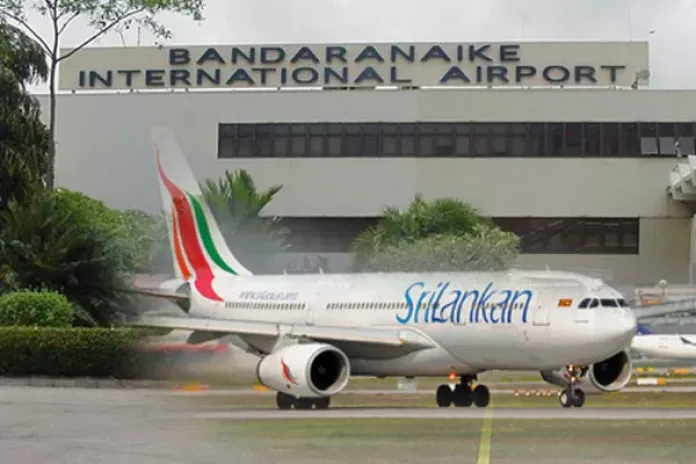
SriLankan Airlines defaults on bond

SriLankan Airlines has in theory defaulted on its $ 175 million international bond following its failure to complete the creditor consent solicitation process to obtain approval to defer coupon payments by 12 months before 25 January.

SriLankan was required to make the coupon payment for its $ 175 million Government-guaranteed bond due in 2024 by 25 December 2022. However, in early December 2022 it commenced a consent solicitation process to obtain bondholder approval for a deferment of the coupon payments and a waiver of ongoing events of default for a 12-month period.

It was reported that SriLankan Airlines had initially hoped to complete the consent solicitation process by 16 January before the end of the 30-day grace period to make its coupon payments expiring on 25 January.

However, speaking to The Sunday Morning Business, a senior official from the Ministry of Finance confirmed that SriLankan Airlines had to date failed to complete its consent solicitation process and that negotiations were still ongoing. He further revealed that no coupon payment had yet been paid to the bondholders.

“SriLankan Airlines has not paid the coupon payment yet and it is also yet to obtain a final decision (from the creditor consultation process). This is how things stand as of now. I believe it has not made the coupon payment because negotiations are still ongoing,” he explained.

In its announcement on 22 December 2022, SriLankan Airlines sought the consent of its bondholders over three proposals. Firstly, SriLankan asked for approval to defer two coupon payments due on 25 December 2022 and 25 June 2023 to be paid in full on 25 December 2023.

Secondly, investors were requested to approve a temporary 12-month waiver of events of default under a second proposal. Thirdly, bondholders were requested to allow a revision in the bond agreement to allow investors holding not less than 50% of the total principal bond amount to instruct the bond trustee to rescind and annul any notice given to the issuer to accelerate the bonds following an event of default.

All attempts by The Sunday Morning Business to contact SriLankan Airlines Chairman Ashok Pathirage and Minister of Ports, Shipping, and Aviation Nimal Siripala de Silva regarding the creditor consultation process proved futile.

While in theory SriLankan has clearly defaulted on its $ 175 million Government-guaranteed bond due in 2024 (ISIN iXS2010609662) with an annual coupon payment of 7% payable semi-annually, it is still possible that the airline may be able to avoid defaulting officially if the creditor consultation process is successful and the bondholders agree to waive the event of default for a 12-month period.

Speaking to The Sunday Morning Business previously, Manjuka Fernandopulle, an Attorney-at-Law specialising in sovereign debt restructuring and complex capital market transactions, stated that the decision of the airline bondholders with regard to the proposals forwarded by SriLankan Airlines would be based on whether they believed that SriLankan would be able to pay the amount due to them by December 2023 following the deferral of coupon payments or if they believed they would be better served by joining the creditor group consisting of the Government’s ISB holders in order to restructure the airline bonds together with the other bonds of the Sri Lankan Government in the ongoing debt restructuring process.

“The question before the airline’s bondholders is whether they are better off varying the terms of the bond and deferring the coupon payments or whether they are better off joining the creditor group of the Government’s ISB holders. Their decision will be based on the assurances provided by SriLankan Airlines regarding its ability to make the payments following the deferral. If they feel that they will get nothing from SriLankan even after the deferral, they will consider entering the creditor group consisting of the Government’s ISB holders and receive a restructured bond issued by the Government of Sri Lanka,” he explained.