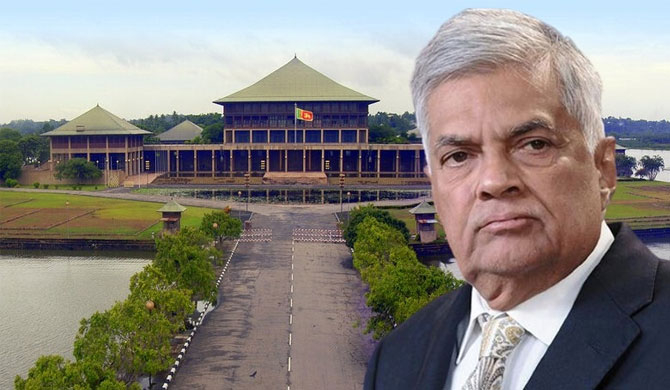
President to intervene on Chinese debt restructuring?

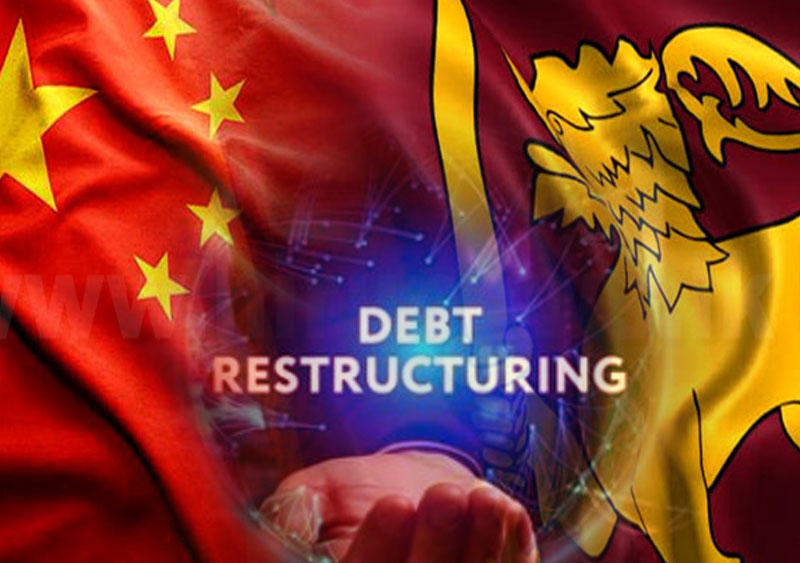
President Ranil Wickremesinghe is expected to open a line of communication with Chinese Government leaders in order to finalise the ongoing debt restructuring negotiations with Sri Lanka’s key bilateral creditors including China, The Sunday Morning learns.

The delay in finalising Sri Lanka’s debt restructuring programme, especially with the key bilateral creditors – Japan, India, and China – has also resulted in the delay in moving ahead with the proposed Extended Fund Facility (EFF) with the International Monetary Fund (IMF).

However, India was the first among Sri Lanka’s creditors to officially communicate to the IMF its support for Sri Lanka’s debt restructuring and financing programme.

Japan last week also expressed support for Sri Lanka’s debt restructuring programme through the Paris Club, leaving only China to make an official statement on the matter.

The Export-Import (Exim) Bank of China recently sent a letter to the Finance Ministry stating that it supported Sri Lanka’s EFF with the IMF and that China could offer a two-year debt moratorium.

A highly-placed Government source told The Sunday Morning that the IMF had however informed the Sri Lankan Government that the Chinese proposal was not adequate to proceed with the fund’s planned programme.

“The IMF has been very clear on its expectations on the debt restructuring programme and it has said that in relation to bilateral creditors, it should be a uniform programme for all such creditors. India and Japan have understood and agreed. But China has not responded as expected,” the source noted.

“China has so far not supported the debt restructuring programme,” the source added.

When asked if President Wickremesinghe would reach out to Chinese Government leaders to reach a consensus on the debt restructuring issues, the Government source explained that the Chinese Government was continuing to direct the Sri Lankan Government to negotiate with the Exim Bank of China on the issue of debt restructuring.

“The President will therefore intervene this week to open a line of communication with Chinese Government leaders in order to reach an agreement on debt restructuring,” the source observed.

“Everything is hanging in the balance until China comes around,” the source noted.

It is also learnt that Paris Club is expected to release a statement this week extending support to Sri Lanka’s debt restructuring programme.

The Paris Club, it is learnt, has proposed a 10-year debt moratorium and 15-year debt restructuring for Sri Lanka, which will provide the country adequate time to get its financial issues in order.

According to the source, several countries outside the Paris Club like Saudi Arabia and Kuwait have also agreed to support Sri Lanka’s debt restructuring programme.

It is in such a backdrop that Central Bank of Sri Lanka (CBSL) Governor Dr. Nandalal Weerasinghe had told a foreign media outlet that he was hopeful of completing debt restructuring negotiations in the next six months.

Posted in Uncategorized

Former UN Secretary General Ban Ki-moon to visit Sri Lanka

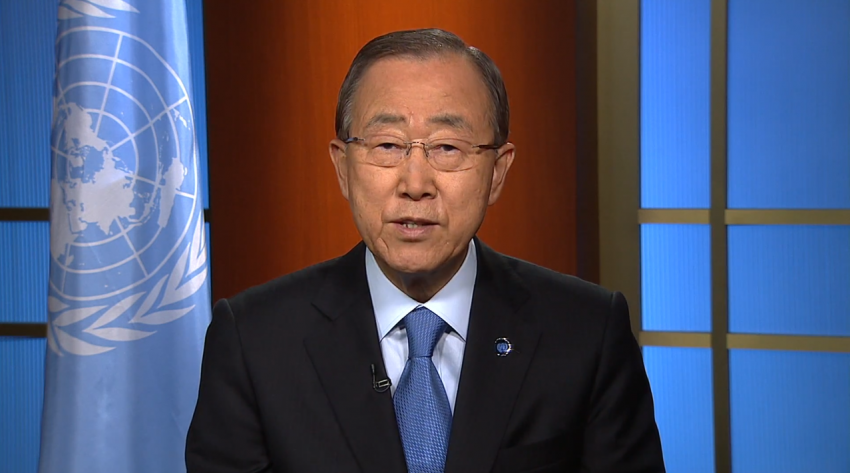
Former Secretary General of the United Nations and Chairman of the Global Green Growth Institute (GGGI) Ban Ki-moon is scheduled to visit Sri Lanka on February 06, President’s Senior Adviser on Climate Change, Ruwan Wijewardena said.

Ban Ki-moon, who is coming to Sri Lanka at the invitation of President Ranil Wickremesinghe, will sign several agreements related to sustainable development in Sri Lanka as well as related to climate change.

The former UN Chief is expected to hold discussions on the climate change university proposed to be established in Sri Lanka.

President Ranil Wickremesinghe proposed to establish an International University on Climate Change in Sri Lanka with the support of the Asian Development Bank (ADB) in order to enable students from any country in the world to engage in educational activities.

Former UN Secretary General is scheduled to meet with President Ranil Wickremesinghe on February 7.

U.S. Under Secretary for Political Affairs, Victoria Nuland to visit Sri Lanka

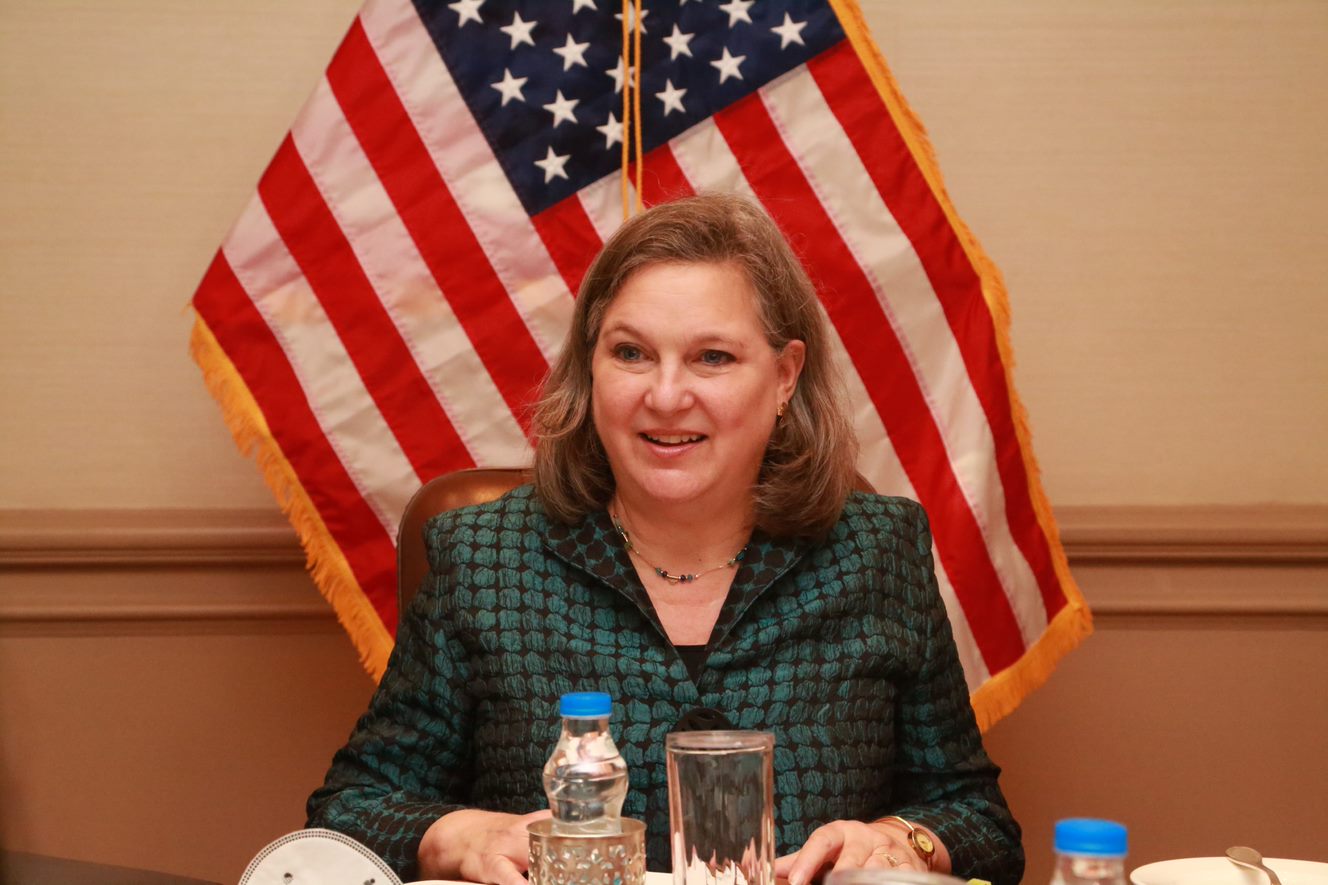
The United States Under Secretary of State for Political Affairs Victoria Nuland will undertake an official visit to Sri Lanka, Nepal, India, and Qatar next week.

The Department of State announced that Under Secretary of State Nuland will travel to Nepal, India, Sri Lanka, and Qatar from January 28 to February 3, 2023.

During her visit to Sri Lanka, Under Secretary Nuland will mark the 75th anniversary of U.S.-Sri Lanka relations which coincides with Sri Lanka’s 75th anniversary of Independence.

Under Secretary Nuland will also offer continued U.S. support for Sri Lanka’s efforts to stabilize the economy, protect human rights, and promote reconciliation, the State Department announcement said.

In Nepal, Under Secretary Nuland will engage with the new government on the broad agenda of the U.S. partnership with Nepal.

While in India, the Under Secretary will lead the U.S.-India annual “Foreign Office Consultations” which cover the full range of bilateral, regional, and global issues. She will also meet with young tech leaders.

And finally, in Qatar, the Under Secretary will discuss global issues under the framework of the U.S.-Qatar Strategic Dialogue.

“She will also engage counterparts on Qatar’s critical support for the relocation of Afghans with ties to the United States and our bilateral arrangement on the protection of U.S. interests in Afghanistan,” the statement added.

Posted in Uncategorized

Death threats again on Election Commission members

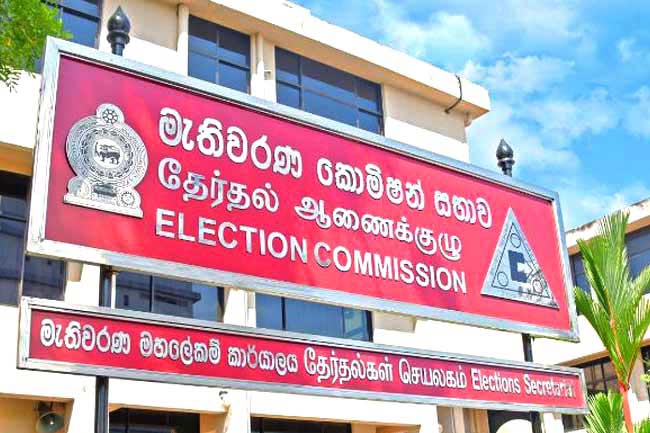
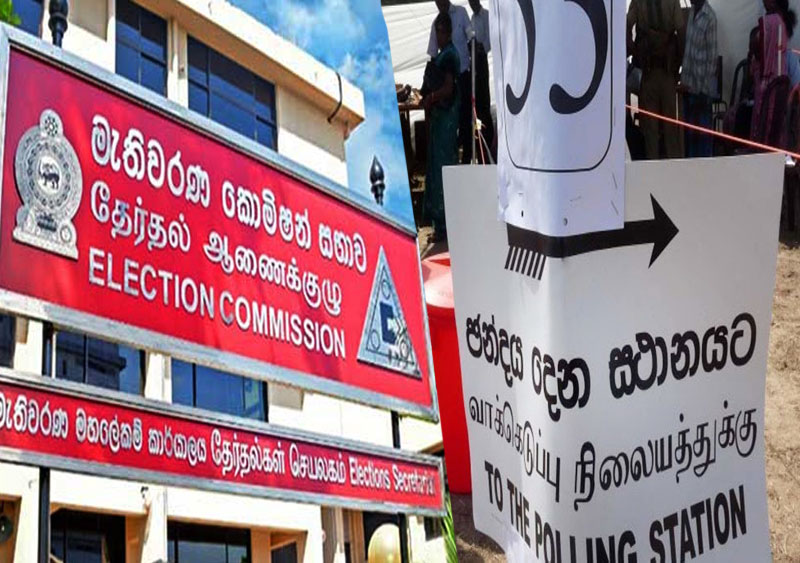
Another member of the Election Commission has reportedly received death threats over the phone last night.

Commission member M.M Mohammed, had been threatened to resign from his post.

Also, Election Commison member S.B. Divaratna who received death threats earlier had received death threats once again yesterday.

Earlier, the Criminal Investigations Department had launched investigations after Commission members K.P.P. Pathirana and S.B. Divaratna were threatened with death if they did not resign from the Commission.

Accordingly, armed police officers have been deployed to provide security to the residences of those two members.

Police said M.M Mohammed reportedly received a threatening call last night while S.B. Divaratna received a threatening text though Whatsapp.

Police said steps were taken to provide necessary police protection to the election commission members.

Prelates implore President to maintain camps in North, East for security

The three Chief Incumbents sending a letter to the President has informed that it is appropriate to maintain the army camps in the vicinity of the temples in the Northern and Eastern provinces as they are for the security of those areas.

This letter has been issued under the signatures of three Mahanayakes Most Ven. Thibbotuwawe Sri Siddhartha Sumangala Thera of the Malwatu Chapter, Most Ven. Warakagoda Sri Gnanarathana Thera of the Asgiri Chapter, Most Ven. Dodampahala Chandrasiri Thera of the Sri Lanka Amarapura Chapter and Most Ven. Makulewe Wimala Thera of the Sri Lanka Ramagna Chapter.

In their letter, they have informed the President that it is appropriate to deploy the security forces personnel assigned to the security and development of Buddhist shrines of special historical importance in the North Eastern provinces as well as other provinces of the country as per the need.

Due to the terror situation that lasted for more than three decades, the Buddhist monks of those provinces sacrificed their lives to protect the historical Buddhist shrines in the northern and eastern provinces. The security forces have been doing a great job for the preservation and maintenance of the historical shrines in the North Eastern Province since then and till today by providing support to the monks who work in the temples.

Currently, there are no Buddhist villages located near Buddhist shrines in the North Eastern Province. Even though a very limited group of contributors work in the vicinity of some temples, many such people who are not rich enough to maintain and feed the temples are provided help by the Maha Sangha who resides in this area.

Also, in the past periods, special contributions were made by the three Armed Forces for the protection and development of temples of special historical importance in other provinces of the island. Withdrawal of security forces from these shrines will hamper development works.Therefore, it is advisable to deploy the security forces personnel assigned to the security and development of the Buddhist shrines of special historical importance in the North Eastern provinces as well as other provinces of the island as per the need of the situation.

Posted in Uncategorized

February 04 declared a ‘black day’ in north & east

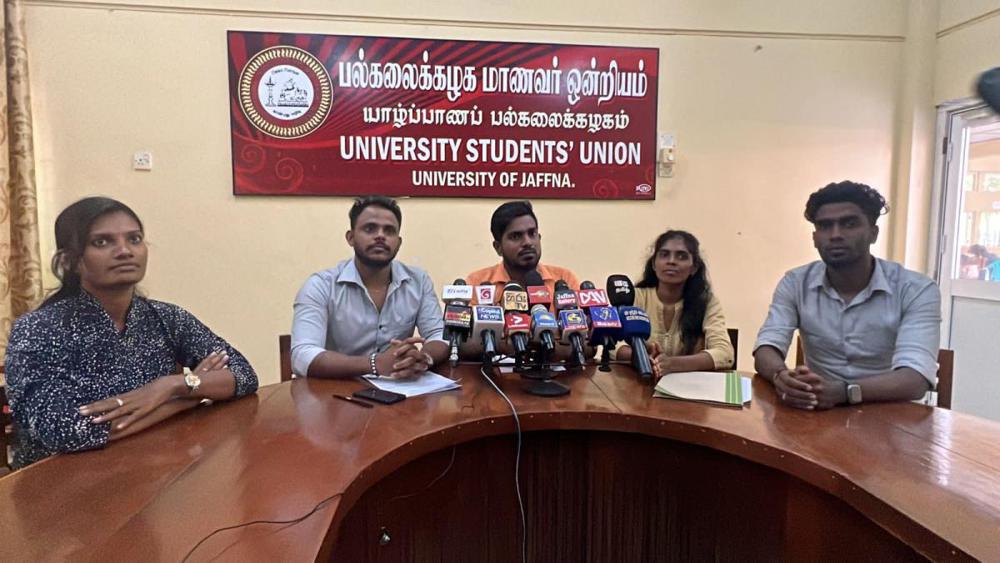
University students in Jaffna have declared a ‘black day’ in the northern and eastern provinces on February 04, when the 75th Independence Day is celebrated.

Their union has urged all those who fight for the rights of Tamils to attend protests in the two provinces on that day.

Speaking to the media, its activists said the reality of the plight of their people should be demonstrated to the world community.

Their rights continue to be curtailed, military grabs their traditional land to build camps and to settle Sinhalese and justice evaded for victims of enforced disappearances, they noted.

Posted in Uncategorized

Cabinet agrees to implement 13A – President

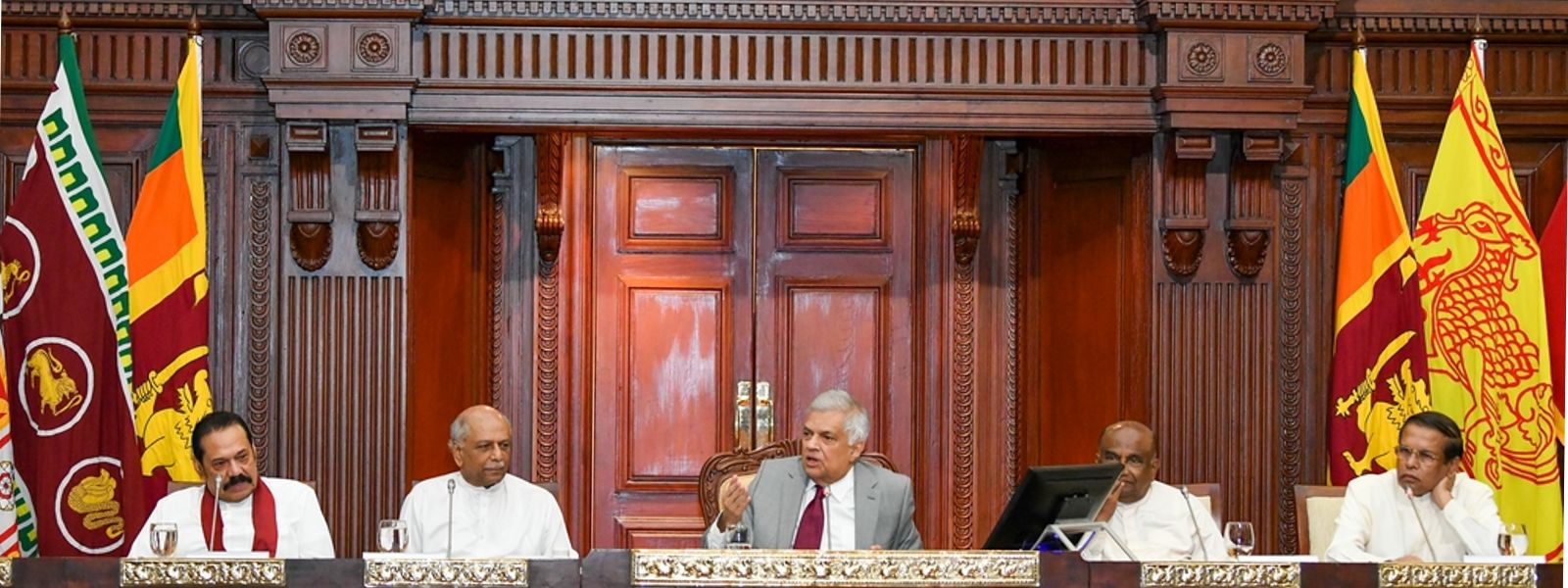
Sri Lankan President Ranil Wickremesinghe has informed the All Party Leaders’ Conference on Reconciliation that the Cabinet was agreeable to fully implementing 13th Amendment, until the Party Leaders decide whether or not to abolish the Amendment.

This was reported by the President’s Media Division on Friday (27).

President Ranil Wickremesinghe had said that he is bound to implement the existing law in accordance with the executive powers of the President.

He had said further that the 13th Amendment to the Constitution is being implemented accordingly or the Parliament should abolish the 13th amendment.

The President Wickremesinghe also pointed out that any parliamentarian could move a private member’s bill to abolish the 13th Amendment to the constitution and the same amendment would have to be implemented provided that the bill was voted against by the majority of the House.

The President stressed that he was not ready to divide the country.

President Wickremesinghe made these remarks at the All-Party Conference, which was held at the President’s Office on Thursday (26) evening.

The statement made by the President is as follows:

It is my responsibility as the Executive to carry out the current law. For approximately 37 years, the 13th Amendment has been a part of the constitution. I must implement or someone has to abolish it by way of a 22nd amendment to the constitution by moving a private member’s bill. If the bill was voted against by the majority in the House, then the 13th amendment would have to be implemented.

“We can’t remain in a middle position saying that either we don’t implement the 13th amendment or abolish it,” President Ranil Wickremesinghe said.

I’m acting in accordance with the decision delivered by the Supreme Court Bench regarding the 13th Amendment, in particular, Chief Justice Palinda Ranasinghe’s ruling. If we stick to that, we might say that we are in a ‘united’ state. I oppose a federal state but devolution of power. The provincial Councils in Sri Lanka have no at least the powers that are vested in the London City Council. Hence we can’t define this as a federal state.

The late President J. R. Jayawardena introduced many clauses along with the attorneys-at-law not to make Sri Lanka a federal State. So far, every President has decided to put this into action. So either we ought to get rid of the 13th amendment or should implement it.

A massive extension of land was under the government by the time the conflict came to an end in 2009 and thereafter most of those lands were released to the public under the reigns of former Presidents Mahinda Rajapaksa and Mithripala Sirisena. The largest extension of lands in Jaffna was issued under the reign of former President Mithripala Sirisena. There is only a land extension of 3000 acres under the government as of now.

The release of that extension land too should be entrusted with the security forces to be done without causing interruption to the security activities. We discuss the release of those lands with the Defence Secretary, the Chief of Defence Staff, and the Commanders of Tri Forces and acted upon their views.

The Land Commission needs to be established immediately. The draft bill in that regard could be moved by March. The Constitution has it that nine representatives from each province should be included while 12 are appointed by the President. Then a national land policy should be formulated. Thereafter the National Land Policy could be put into action by the Land Commission.

Thirty per cent (30%) or more of the country is covered in forest. Here the lands have been allocated suddenly for forests in an unorganized manner. However, we have deforested up-country as well as the areas where the Mahaweli, Kelani and Kalu rivers commence. Somehow, the forest cover should be increased. We should allow the Land Commission to decide on the extension of land required to enhance the forest cover in accordance with the government’s policy up to 30%. I am dedicated in that endeavour too.

If establishment of the National Police Commission instead of a Provincial Police Commission is objected, an amendment should be made. However either should be done.

The measures that would be taken in this regard would be presented to the Parliament on February 08. And if there are any suggestions, they could be made so before February 04th that they may be considered and submitted on February 8th.

Neither any of here nor I am ready to divide our country. We are all Sinhalese who are seating here. These individuals will not betray the Sinhalese. If there are Sinhalese, they should coexist with other ethnic groups such as Tamils, Muslims, and Burghers. I have no doubt that if we protect the notion in the line ‘Children of one mother’ in our national anthem, we could go forward united.

We shall work toward a consensus-based solution for the political and economic issues one step at a time. Let’s solve our political and economic issues step by step in a manner that could be accepted by all.

Let’s act as we agreed earlier without being stuck in this problem. We neither betray any nor divide the country and the country is united today.

Source: PMD

Sri Lanka president suspends parliament till Feb 08

Sri Lanka President Ranil Wickremesinghe has suspended parliament till February 08, according to a gazette notice.

Parliament will re-convene at 1000 am on January 08.

President Wickremesinghe told party leaders that he would make a speech, officially declaring his intention to give effect to the 13th amendment to the constitution on provincial councils.

Provincial councils, a power sharing arrangement backed by India as a solution to the ethnic Tamil have not yet been given police and land powers.

Posted in Uncategorized

Will India be the game changer for RW? BY Dr.Ameer Ali

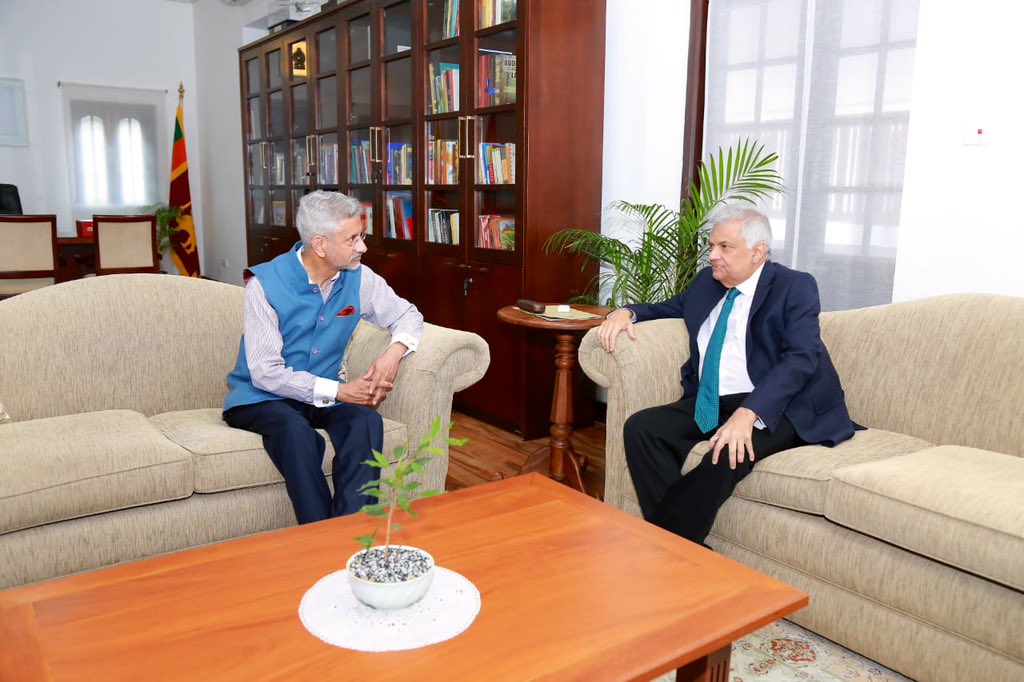
The timing of the arrival of India’s External Affairs Minister Dr. Subrahmanyam Jaishankar carrying an invitation from his Prime Minister to President Ranil Wickremesinghe, and the unpacking of a series of Indian initiatives to help the struggling economy, could be the manna for RW and a game changer to save him politically.

New Delhi had always been supportive of Sri Lanka in times of need; but the assistance promised now and the initiatives announced so far come at a crucial moment when the President and his unpopular parliament are due to face a Local Government Election (LGE), which is almost taking the form of a referendum on RW’s Presidency. Given the delay and uncertainty over the promised emergency funding from IMF, which is also delaying additional funds expected to flow from other sources, all because of difficulties in getting the debt restructure issue resolved, had thrown into doubt whether RW’s economic recovery plan would eventuate at all. Adding to this pessimism are the burden of new and higher rates of taxes introduced in RW’s 2023 budget.

There is therefore widespread discontent over the regime’s pledges and performance, and to conduct LGE in this climate of discontent would, in all probability, spell disaster to the regime. Frantic efforts are therefore underway to get the elections postponed, chiefly on grounds of (a) financial unaffordability and (b) threat to the reforms and revival of the economy. The first of the two reasons appear weak in the face of assurance given by the Election Commissioner that the necessary expense of Rs. 5 billion could be met without a problem. But the second is bound to receive added strength following fresh hopes arising from India’s verve of economic assistance.

At a special press conference in the presence of RW and his Foreign Minister Ali Sabry, the Indian visitor listed a series of proposals that his government would undertake to develop Sri Lanka, such as turning Trincomalee into a renewable energy hub, increasing Indian investment and tourism and promoting infrastructure development. He reiterated his government’s 2022 commitment to grant $ 4 billion worth credit facilities with roll over terms to help Sri Lanka’s import needs.

More importantly and after extending financing assurances to IMF, Dr. Jaishankar urged other creditors to take “proactive steps” to help the island’s economic recovery. He also reminded, perhaps with geopolitical reasons, that all bilateral creditors be treated equally. All this initiative were couched under India’s “Neighbourhood First” policy, which, in relation to Sri Lanka, was deemed a civilisational duty by the Indian Prime Minister in a trilogy of lectures in 2020.

Either coincidentally or as reaction to India’s initiatives the Exim Bank of China, which was accused of dragging its feet over debt restructuring, had written to RW in his capacity as Finance Minister, that the bank had decided to offer two-year moratorium, quipped by some as not “hard assurance”. However, IMF sees this as positive sign. But whether China’s offer be enough for IMF to release the promised $ 2.9 billion is not sure. Yet, India’s proposals and China’s response, would at least help quickening the process. That itself would be good news to RW. All in all, the vigorous Indian initiative looks to be a game changer, and RW and his team would now strengthen their case and argue for the postponement of LGE. It would be interesting to watch how things are going to turn out over the next few weeks.

Outside that special press conference, and in a separate meeting with the President, the Indian minister opened the controversial subject of the 13th Amendment, and urged its “full implementation” followed by Provincial Council Elections. The fact that this subject did not receive any mention at the press conference is significant. Does it convey that its importance been devalued to be raised separately like an addendum to the main text in order to satisfy the Tamil lobby alone?

In this regard, RW’s bold attempt to resolve once and for all the so-called national question before this year’s Independence Day has now been given up, and instead, to satisfy India more than the Tamils he has agreed at a meeting with TNA stalwarts to (a) release five Tamil prisoners held without charges by 4 February, and another 10 against whom charges have not been filed yet to be released once the Attorney General’s Department prepares the necessary documents; (b) allow management of land and police powers by Provincial Councils, once the Land Commission is set up; and (c) permit 9 of the 10 Deputy Inspector Generals to be managed by each Provincial Council.

In the context of a mellowed Sinhala Buddhist electorate which is more concerned with economic issues than communal politics, RW-TNA decisions may have a reasonable chance of being implemented once emergency funds become available and India’s promises are delivered.

Yet, it is needless to stress that it is devolution of power that is at the heart of Tamil demand and of the 13th Amendment. Dr. Jaishankar would have been aware too well how the former president Gotabaya Rajapaksa made a promise to implement that amendment in front of Indian Prime Minister Modi in 2020, and after returning home how he was forced to renege on that promise because of raging anger from his Sinhala Buddhist backyard. Is it therefore any wonder why the visiting diplomat did not open that subject at the special press conference? Diplomacy works in strange ways.

For the moment, if the Indian push comes to shove, moves IMF to release the funds quickly and urges Paris Club members to be proactive over debt restructuring, that would strengthen RW’s case for LGE postponement. But whether, even with that postponement, financial assistance and debt restructuring alone would be sufficient to revive the economy and set on a sustainable growth path is doubtful without system change. There seems to be a general view among most Sri Lankan politicians including RW, and many intellectuals that system change would be easier once growth and prosperity occurs.

This was why former President GR publicly announced that solution to power devolution was economic development. It should be the other way round in Sri Lanka, because it is the system that was put in place after independence, which had been the major contributor to economic slowdown and disaster. Had the system been fair and just there wouldn’t have been a national question today. It was this realisation that made the Aragalaya youth to call for system change.

Finally, while India’s vigorous push and international response to it would make RW’s IMF backed “One Plan Framework” to become operational, the parties in the opposition except NPP are busy forming coalitions to defeat the UNP-PPP at LGE. It is a pity that none of them except NPP has a comprehensive alternative to the IMF model. If India’s initiatives appear to be a game changer to RW politically, NPP’s alternative framework would be the game changer to the country. It is only NPP that is talking about a non-corrupt, transparent, accountable and economic democracy with social protection and inclusive national identity, which in total amounts to system change. But whether that party could sweep the election is the sixty-four thousand dollars question.

(The writer is attached to Murdoch Business School, Murdoch University, Western Australia.)