ECONOMYNEXT – As the sun rose over Colombo on February 28, 2026, the breaking news of a coordinated military strike by the United States and Israel against Iranian strategic assets sent a physical chill through the minds of thousands who are familiar with the economic impacts of such strikes in the past.
For a nation just beginning to breathe after the suffocating economic crisis of 2022, the flames in the Middle East are not a distant fire. They are a direct threat to the fuel, food, and family incomes of 22 million people.
Sri Lanka is currently in a “fragile waiting zone”.
While the latest February inflation data showed a dip to 1.6%, this geopolitical explosion threatens to blow those figures apart.
From the tea estates in the Central district of Nuwara Eliya to the expatriate dormitories of Kuwait, the island is now bracing for a double-edged crisis that could derail its hard-won stability.
Latest from the Middle East
The situation in the Middle East has escalated into uncharted territory.
Following weeks of shadow boxing, the direct kinetic engagement between the U.S.-Israeli coalition and Iranian infrastructure has effectively paralyzed the Strait of Hormuz, the world’s most vital oil artery.
Iran has signaled a crushing response, and proxy groups across Lebanon, Iraq, and Yemen have already begun retaliatory strikes on Western assets.
For Sri Lanka, which maintains delicate diplomatic ties with both Tehran and Washington, the conflict forces a perilous neutral stance while its economy remains highly sensitive to regional volatility.
The current situation in the Middle East has entered a period of unprecedented volatility following the massive, coordinated military operation by the United States and Israel against Iran.
Codenamed “Operation Epic Fury” by the U.S. and “Roaring Lion” by Israel, the strikes targeted several Iranian cities, including Tehran, Isfahan, and Qom.
The assault specifically aimed at dismantling Iran’s nuclear facilities, missile infrastructure, and political leadership.
U.S. President Donald Trump announced that the strikes were a preemptive move to eliminate “imminent threats,” and reports have circulated, though not yet officially corroborated by all agencies, that Iran’s Supreme Leader, Ali Khamenei, was killed during the bombardment of his compound.
In immediate retaliation, Iran launched a wide-ranging wave of ballistic missiles and drones across the region.
Unlike previous conflicts, this response has bypassed traditional red lines, directly targeting not only Israel but also U.S. military bases and civilian infrastructure in Kuwait, Qatar, Bahrain, Saudi Arabia, and the United Arab Emirates.
Reports indicate drone and missile strikes near major transit hubs like Dubai International Airport and Kuwait International Airport, leading to widespread airspace closures and the suspension of commercial flights across the Gulf.
The geopolitical fallout has reached a critical flashpoint with the closure of the Strait of Hormuz, a vital artery through which 20% of the world’s oil supply flows.
International bodies, including the United Nations, have condemned the escalation, warning of a destruction on an unimaginable scale if hostilities do not cease.
For nations like Sri Lanka, this conflict represents a “system shock” that threatens to destabilize energy prices, trade routes, and the safety of millions of expatriate workers stationed throughout the Gulf.
Rising Oil Prices
The most immediate heart attack to the economy came from the energy sector.
Within hours of the attack, global Brent crude prices surged by over 7%, crossing the psychological US$90 barrier.
For the Sri Lankan layman, this translated instantly to the pump.
On February 28, the Ceylon Petroleum Corporation (CPC) announced a price hike: Auto Diesel rose by Rs. 4 and Super Diesel by Rs. 6.
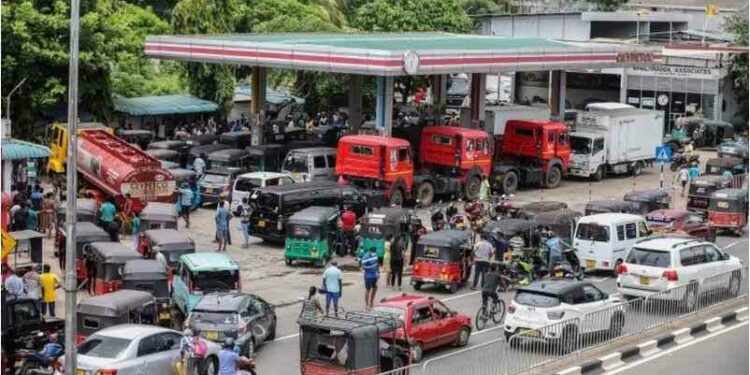
Though the price hike was based on a predetermined fuel price formula and not related to the latest Middle East tension, it led to vehicle queues outside oil retailers in Colombo and some other towns across the country.
For Sri Lanka, the escalating Middle East tension poses a direct threat to national energy security, primarily through its impact on crude oil imports and global pricing structures.
Although Sri Lanka has diversified its sources for refined products like petrol and diesel, increasingly relying on India, Singapore, and Malaysia to reduce freight costs, the state-run Sapugaskanda refinery remains heavily dependent on Middle Eastern crude oil to maintain domestic production.
Any disruption to the Strait of Hormuz, a critical chokepoint through, would immediately jeopardize these shipments, potentially forcing the refinery to halt operations within approximately a month once existing reserves are exhausted.
While the Sri Lankan government claims to have 37 days of fuel stocks, the geopolitical risk premium means the next shipment will be exponentially more expensive.
This triggers a domino effect: when diesel prices rise, the cost of transporting vegetables from Dambulla to Colombo rises, and the proposed electricity tariff cuts for households are suddenly in jeopardy.
The Non-Food inflation, which was already creeping up at 2.3% in February, could spike now.
Beyond the physical supply of oil, the economic fallout for the average Sri Lankan is driven by the geopolitical risk premium that inflates global benchmark prices like Brent crude.
When global prices surge due to conflict, the state-owned CPC is often forced to implement price hikes to manage its import bills.
For a country already navigating a delicate post-crisis recovery, these external shocks threaten to reignite inflation and diminish the living standards of households that were just beginning to see price stability.
Booming Trade Threatened
Sri Lanka’s export sector, the engine of its recovery, is facing a logistical nightmare.
The escalating tension in the Middle East poses a significant threat to Sri Lanka’s trade balance, specifically affecting key commodities that serve as the backbone of its foreign exchange and domestic food security.
Because the Middle East is both a primary destination for Sri Lankan exports and a vital source of essential imports, any disruption to the safety of the Indian Ocean shipping lanes or the Strait of Hormuz acts as a tax on every transaction.
Tea is Sri Lanka’s most critical agricultural export to the Middle East.
Iran, Iraq, and the UAE are among the top buyers of low-grown tea, which is prized in the region for its strong flavor.
The conflict has caused the Iranian Rial to plummet and led to a freeze in new orders as Middle Eastern buyers face banking hurdles and currency instability.
If the Middle Eastern market contracts, thousands of smallholder tea farmers in southern Sri Lanka will face a collapse in prices, as there is no immediate alternative market capable of absorbing such high volumes of these specific tea grades.
As the most critical import, crude oil and refined petroleum products are the first to feel the geopolitical risk premium.
With likely increased war risk surcharges, the government will be forced to spend more of its limited foreign exchange reserves on oil, which in turn leads to domestic fuel price hikes, fueling inflation across all sectors.
Sri Lanka imports significant quantities of bitumen used for road construction) and other petroleum-based industrial chemicals from the UAE.
Regional instability threatens the logistics of these heavy commodities, which are expensive to transport.
Disruptions in importing these materials could stall national infrastructure projects and increase the cost of maintaining the country’s road network, further straining the national budget.
Beyond specific goods, the tension affects the Suez Canal route, which connects Sri Lanka to its major markets in Europe and the US.
As shipping companies reroute vessels around the Cape of Good Hope to avoid the combat zone, transit times for Sri Lankan apparel and rubber exports increase by 10 to 14 days.
These delays, combined with higher freight rates, make Sri Lankan products less competitive on the global stage, threatening the island’s hard-won export-led recovery.
Shrinking Job Markets
For decades, the Middle East has been the safety valve for Sri Lankan unemployment.
The escalating Middle East tension could cast a shadow of uncertainty over the Gulf region, which has traditionally served as the primary safety valve for Sri Lanka’s labour market.
With over 1.5 million Sri Lankans currently employed in the Gulf Cooperation Council (GCC) countries, the region is the single largest destination for the island’s migrant workforce.
A full-scale regional conflict, particularly one involving direct strikes on infrastructure in countries like Kuwait, Qatar, and the UAE, would likely lead to a hiring freeze as private sector projects stall and governments of these countries divert budgets toward defense and emergency readiness.
For many prospective Sri Lankan migrants, this means the petro-dollar dream is effectively on hold, as recruitment agencies in Colombo likely to report a sharp decline in new job orders from Gulf-based employers.
For Sri Lanka’s domestic economy, a contraction in Gulf job opportunities translates into a direct surge in youth unemployment.
The island’s youth already face significantly higher unemployment rates than the national average, and the ability to export this labour surplus has been crucial for maintaining social stability.
If the Gulf exit remains blocked, thousands of school leavers and graduates will be forced into a saturated domestic job market that is still in the early stages of recovery.
This bottleneck creates a pressure cooker effect; without the prospect of high-paying overseas work, the risk of brain drain to other regions increases, and social frustrations among the youth could reignite, potentially leading to the kind of civil unrest seen during previous economic downturns.
Furthermore, the tension threatens the re-integration of returning workers.
Should the conflict necessitate the mass evacuation of citizens, similar to the 1990 Gulf War crisis, Sri Lanka would face a double-edged crisis: the sudden loss of billions in remittances and the immediate need to provide jobs for hundreds of thousands of returning workers.
Many of these returnees possess specialized skills in construction, hospitality, and domestic services that the current Sri Lankan economy may not be able to absorb.
Consequently, the Middle East tension isn’t just a threat to those currently abroad; it is a structural threat to the career aspirations of an entire generation of Sri Lankans who view the Gulf as their primary path to financial independence and upward mobility.
If the conflict widens to include direct strikes on Gulf infrastructure, the massive labour market that absorbs nearly 200,000 Sri Lankans annually could contract overnight, leaving thousands of youth without the petro-dollar dream.
Remittances at Stake
Remittances are the lifeblood of the Sri Lankan economy, bringing in over US$6 billion annually. In 2025, it recorded a record over US$8 billion.
This money doesn’t just sit in banks; it builds houses in rural villages and pays for local school fees.
The risk here is humanitarian and economic.
The escalating tension poses a systemic threat to Sri Lanka’s economic recovery, primarily through the potential disruption of worker remittances.
If the conflict escalates, the primary concern shifts from sending money to saving lives.
Any large-scale evacuation of Sri Lankan workers from the Gulf would not only cost the state millions in repatriation expenses but would also permanently sever the monthly cash flow that keeps the Rupee stable against the U.S. dollar.
Currently, over 1.5 million Sri Lankans (nearly 7 percent of the population) are employed in the Gulf region, and the money they send home is the single most important source of foreign exchange for the island.
If the conflict widens to include direct strikes on infrastructure in countries like Kuwait, Qatar, and the UAE, it could lead to a massive displacement of these workers.
In a worst-case scenario, Sri Lanka would face a dual humanitarian and economic crisis: the need to evacuate hundreds of thousands of citizens and the simultaneous, permanent loss of the monthly cash inflows that sustain millions of rural households.
For the broader Sri Lankan economy, a sharp drop in remittances would be catastrophic for the post-2022 recovery.
Remittances act as a buffer that stabilizes the Sri Lankan rupee against the U.S. dollar.
Without this steady supply of foreign currency, the rupee would likely depreciate rapidly, making essential imports like fuel, medicine, and food exponentially more expensive.
This would reignite the cost-of-living crisis, undoing the progress seen in February 2026 where headline inflation had dipped to a manageable 1.6%.
The impact on debt repayment is equally severe.
Sri Lanka is currently navigating a delicate debt restructuring process under an IMF-supported program, which requires the country to maintain a specific level of foreign exchange reserves.
If remittance inflows, a primary pillar of these reserves, are severed or significantly reduced due to Middle East instability, the government may struggle to meet its international obligations.
A shortfall in foreign exchange would not only jeopardize future debt servicing but could also lead to a funding gap that delays the release of IMF tranches, potentially pushing the country back toward the brink of another sovereign default.
Tourism Could Suffer
Foreign travelers, especially from the West, are often deterred by regional instability, even if the conflict is thousands of miles away from Colombo.
The escalating Middle East tension could become a significant threat to Sri Lanka’s tourism industry, which has become the primary engine of its post-crisis economic recovery.
The Gulf region, specifically hubs like Dubai, Doha, and Abu Dhabi, serves as the critical transit point for over 60% of Sri Lanka’s high-spending tourists from Europe and North America.
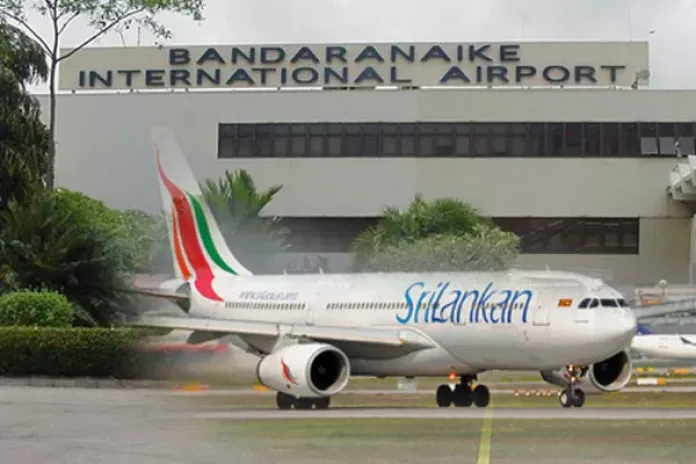
With the closure of Iranian and Iraqi airspace and the suspension of flights by major carriers like Emirates, Qatar Airways, and Etihad due to safety concerns, the bridge connecting the West to the island is effectively broken.
For a tourist in London or Berlin, a flight that once took 11 hours with a seamless connection now faces indefinite delays or complex rerouting, leading to a wave of cancellations during what was expected to be a record-breaking winter season.
Beyond the logistics of transit, the tension impacts the high-spending segment directly.
Travelers from the Middle East itself, particularly from Saudi Arabia and the UAE, represent a lucrative market for Sri Lanka’s luxury villas and wellness retreats.
During times of regional conflict, these travelers tend to stay home or travel to ultra-safe short-haul destinations.
Furthermore, the global perception of regional instability often spills over; even though Sri Lanka is thousands of miles from the combat zone, Western travelers frequently perceive the entire Indian Ocean and Middle Eastern belt as a single risk zone.
This guilt by association can lead to a sharp decline in arrivals, regardless of the actual safety levels on the ground in Colombo or Galle.
The economic consequences of a tourism slump are immediate and severe.
Tourism is a fast-cash industry that brings in vital foreign exchange daily.
A drop in arrivals means lower occupancy for hotels, reduced income for thousands of tour drivers, and a decline in the Non-Food inflation relief the country was beginning to see.
As analyzed in the February 2026 inflation report, the economy is in a fragile waiting zone.
If the tourism sector, the country’s third-largest foreign exchange earner, stalls due to Middle East hostilities, the government will find it increasingly difficult to maintain the Rupee’s stability and fund essential imports, potentially sliding the country back into a cycle of scarcity and high prices.
Economic Slowdown
Ultimately, the Middle East tension represents a tax on recovery.
The Middle East tension threatens to derail Sri Lanka’s fragile economic recovery.
For a nation that recently emerged from a sovereign default, the Middle East is not just a geographical region; it is the primary source of its energy, the destination for its surplus labour, and a critical buyer of its exports.
The conflict acts as a multifaceted tax on the Sri Lankan economy, creating a perfect storm where rising import costs for oil and essential goods meet a sudden contraction in foreign exchange inflows from remittances and tea exports.
This imbalance puts immediate pressure on the Sri Lankan rupee, threatening to undo the price stability achieved in early 2026 and reigniting the cost-of-living crisis for millions of households.
From a growth perspective, the tension stifles both domestic consumption and international investment.
As the Central Bank observed in its February inflation 2026 report, core inflation was already trending upward at 3.7%.
The Middle East crisis accelerates this by forcing the government to maintain high interest rates to combat imported inflation, which in turn discourages local businesses from borrowing and expanding.
Furthermore, the global perception of regional instability often leads to a flight to safety by international investors, who may pause their commitments to Sri Lankan infrastructure and capital markets.
This environment of uncertainty makes it increasingly difficult for the country to meet the ambitious growth targets set under its IMF-supported recovery program.
Perhaps the most significant long-term risk to growth is the potential disruption to the Indian Ocean Trade Corridor.
As shipping companies reroute vessels to avoid the combat zone or face skyrocketing insurance premiums, Sri Lanka’s position as a maritime hub is challenged.
Delays in the arrival of raw materials and the export of finished garments make the manufacturing sector less efficient and more expensive. If the conflict remains protracted, the resulting economic friction could lead to a permanent loss of competitiveness, forcing Sri Lanka into a period of stagnation just as it was beginning to find its footing on the global stage.
For the layman, President Anura Kumara Dissanayake government’s promise of “system change” is being tested by a system shock from abroad.
Living standards, which were just beginning to plateau after years of decline, are once again under threat.
Sri Lanka is now in a defensive crouch, hoping that diplomacy can extinguish the fires in the Middle East before they burn through the island’s hard-won economic progress.
While the government cannot control the missiles in the Middle East, its ability to manage the secondary explosion of local prices will define the next year of Sri Lankan life.
It is a time for cautious budgeting and national resilience.