SL Govt trying to keep the upcountry workers as daily labourers for another 100 years: MP Mano Ganesan

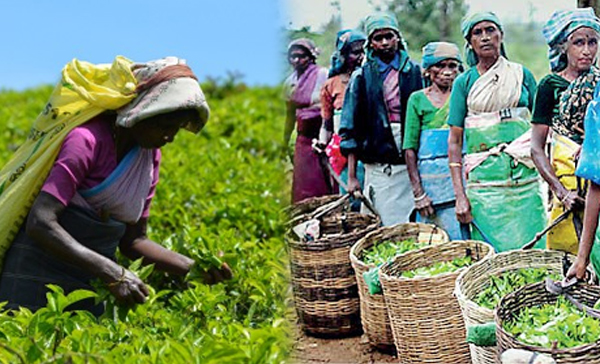
Tamil Progressive Alliance leader and Member of Parliament Mano Ganesan accused that the Sri Lankan government has allocated 1,100 acres of plantation lands to local and foreign private companies under the guise of increasing milk production, but refused to give lands for the plantation workers to increase the milk production through home based farms.

“While 31 dairy farms are under the government’s National Livestock Development Board to produce milk, the government is trying to give thousands of acres of plantation land to local and foreign private companies under the guise of increasing milk production without developing the government’s farms.”

“This government is trying to keep the upcountry workers as daily wage labourers for another hundred years. The Ceylon Workers’ Congress is silently supporting this. We cannot allow this,” Mano Ganesan said.

UNHRC should maintain rigorous scrutiny on Sri Lanka – HRW

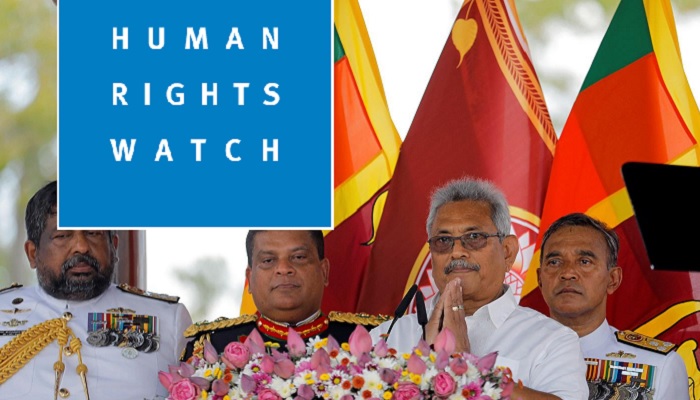
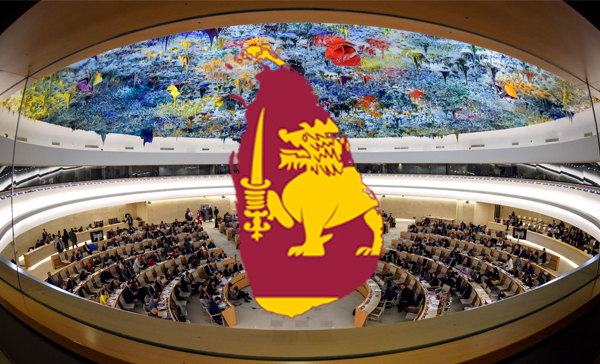
The United Nations Human Rights Council should maintain its rigorous scrutiny of Sri Lanka’s worsening human rights situation and press for genuine improvements, Human Rights Watch (HRW) said today.

At the Council’s upcoming session, which begins on September 13, 2021, UN member countries should express their alarm about the allegations on abuse and the weakening of independent governmental institutions, civilian governance, and the rule of law, the HRW stated further in its statement. “These countries should demonstrate their willingness to press the Sri Lankan government to meet its international human rights obligations.”

Speaking in this regard, Meenakshi Ganguly, the South Asia director at HRW said, “Since Gotabaya Rajapaksa took office in 2019, the limited progress Sri Lanka had made in addressing past atrocities and ending abuses has been disastrously reversed.

“Continued international attention and pressure can help reduce the risks faced by minority communities, activists, and journalists, who live in heightened fear of the authorities.”

Earlier in 2021, the Human Rights Council adopted an important resolution, 46/1, to advance accountability for alleged past rights violations and war crimes committed in Sri Lanka and the resolution also mandated regular reporting by the UN High Commissioner for Human Rights, the HRW added, noting that the Rajapaksa administration, in 2020, had renounced the previous administration’s commitments to the Human Rights Council to provide justice and end abuses.

The New York-based non-governmental organization alleged that the administration is using its security and intelligence agencies to surveil and intimidate the families of abuse victims and others who are seeking to uphold human rights.

The statement further claimed that the authorities are using arrests and threats issued under the “draconian” Prevention of Terrorism Act (PTA) to silence calls for justice in the Tamil majority north and east, and to arbitrarily detain Muslims in counterterrorism operations.

Foreign governments should take firm and coordinated action to press the Sri Lankan government to reverse course, the HRW emphasized. “The European Union should insist that Sri Lanka complies with its human rights obligations to maintain tariff free market access under GSP+, as should the United Kingdom under its similar program. Donor governments and multilateral agencies, such as the UN Office on Drugs and Crime, should immediately withhold support for Sri Lankan security forces until they take steps to halt and address violations, in compliance with UN due diligence standards.”

The HRW went on to stress that governments should also consider imposing targeted sanctions on senior figures implicated in alleged abuses, and pursue prosecutions under universal jurisdiction, as recommended by the UN human rights chief, Michele Bachelet, earlier this year.

“No one should be in any doubt that Sri Lanka’s human rights situation is deeply alarming and getting worse,” Ganguly said. “UN member states should recognize that the government is sensitive to international pressure, and make the protection of human rights in Sri Lanka their priority.”

Posted in Uncategorized

131 COVID deaths confirmed for Thursday (9); Total Fatalities increase to 10,995

A total of 131 more COVID-19 related deaths that occurred yesterday (09) were confirmed by the Director-General of Health Services today pushing the death toll to 10,995.

According to the Government Information Department, 58 females and 73 males are among the deceased.

A total of 110 people who are above 60 years of age are among the deceased while 20 of them are between 30 and 59 years of age.

One death has been reported below 30 years of age.

Posted in Uncategorized

Sri Lankan detainees tortured while in custody, rights group alleges

(Reuters) – Political detainees in Sri Lanka are being tortured while in police and military custody, a human rights lawyer who wrote a report on alleged abuses said on Friday, days ahead of a U.N. human rights summit.

The International Truth and Justice Project (ITJP), a rights group documenting alleged abuses in Sri Lanka, gave details in its report of 15 members of the minority Tamil community, who said they were beaten, burnt, suffocated and sexually assaulted by authorities over the past two years.

Together, their testimony is the most detailed account of alleged new abuses in the island nation since former wartime defence chief Gotabaya Rajapaksa became president in 2019.

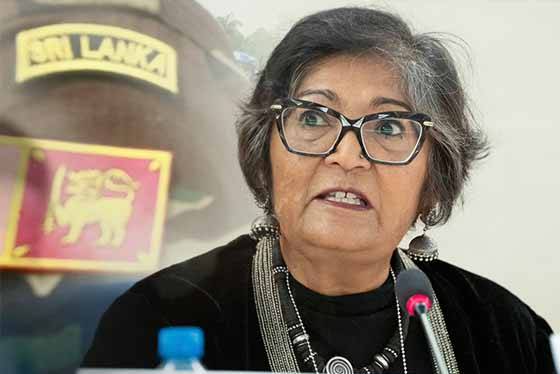
“We are dealing with a country where torture is savage, and there is no inclination on the part of the government to do anything about it,” Yasmin Sooka, a rights lawyer who co-authored the report, told Reuters.

“What you have is a kind of tacit approval, really, of those at the highest levels who condone what is happening.”

The government denied the accusations.

“We completely refute the allegations in this report,” Keheliya Rambukwella, the health minister who also serves as a senior government spokesman, told Reuters.

Some previous allegations of kidnapping and torture had been made by “vested interests” and later proven to be false, he said, without elaborating.

Spokespeople for Sri Lanka’s military and police declined to comment on the report.

GOVERNMENT CRITICS

Sri Lanka ended a 25-year civil war between separatist insurgents from the ethnic Tamil minority and government forces in 2009. Rights groups accused both sides of abuses during the war.

The 15 – one woman and 14 men – were not identified in the report. They had taken part in commemorations for people killed in the war, worked as volunteers for Tamil political parties or received funds from abroad on behalf of people under surveillance.

Three of the 15 were members of the Liberation Tigers of Tamil Eelam, the main group that fought the government during the war, though many were children at the time.

After being detained, the alleged victims said they were subjected to treatment including being suffocated with petrol-soaked plastic bags and penetrated with an iron rod.

The alleged victims, who fled Sri Lanka are now seeking asylum in Britain, all took part in interviews over the course of several days with lawyers and human rights investigators.

Nine of the 15 cases had supporting medical reports compiled by independent experts confirming torture, the ITJP said.

Those that had not been medically examined were photographed to show their scars.

None was charged with any crime.

UN SCRUTINY

The report has been released ahead of a session of the United Nations Human Rights Council (UNHRC), which begins on Monday and will look at Sri Lanka.

The United Nations has given its human rights boss, Michelle Bachelet, a mandate to collect evidence of crimes against humanity committed during the civil war. read more

Rajapaka has put at least 28 serving or retired military and intelligence figures in key administrative posts, including some mentioned in U.N. reports on alleged war crimes and crimes against humanity, Bachelet said in January. read more

“Sri Lanka will present its point of view at the upcoming United Nations Human Rights Council sessions later this month and show the progress that has been made in taking forward reconciliation,” Rambukwella said.

The ITJP has previously assisted in two civil lawsuits against Rajapaksa, proceedings for one of which were served in a California parking lot in 2019. Rajapaksa was a U.S. citizen at the time.

Both cases were withdrawn after Rajapaksa was granted diplomatic immunity upon becoming president later that year.

Reporting by Alasdair Pal in New Delhi and Uditha Jayasinghe in Colombo; Editing by Robert Birsel


Island-wide lockdown extended till 4.00 am Sept. 21

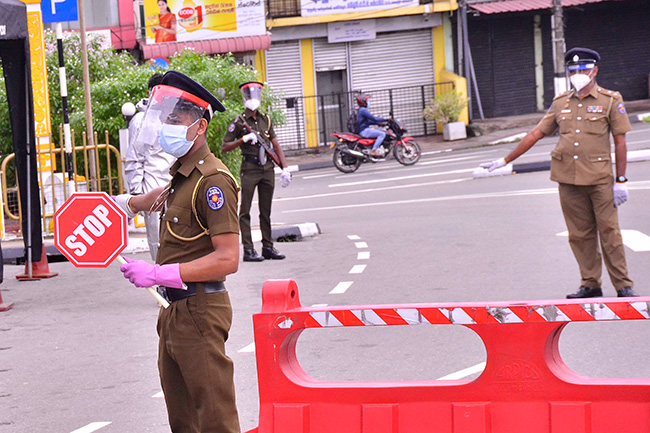
The ongoing island-wide quarantine curfew orders will stay in effect for another week, the Cabinet Spokesman, Minister of Health Keheliya Rambukwella announced today.

Accordingly, the restrictions will be effective until 4.00 a.m. on September 21 (Tuesday).

The decision to further extend the quarantine curfew was taken during the meeting of the Special Committee on COVID-19 Control convened under the patronage of President Gotabaya Rajapaksa this morning (Sep. 10).

“With COVID-19 figures steadily declining, the government is confident that Sri Lanka will once again be able to reopen without risk,” the health minister said in a tweet.

He appealed to the members of the public to adhere to health regulations and to use the locked-down period to get themselves vaccinated against the novel coronavirus.

A ten-day island-wide quarantine curfew was first imposed on August 20, however, the restrictions were rolled over twice in a bid to mitigate the spread of the virus and to ramp up the vaccination process.

Posted in Uncategorized

Sri Lanka President to join the 76th session of the United Nations General Assembly

Sri Lanka President Gotabhaya Rajapaksa will attend the 76th session of the United Nations General Assembly, which begins in New York on September 21, President’s Media Division announced.

This is the first time the President will be addressing the UN General Assembly and is attending a foreign conference outside the country.

During his visit, President Rajapaksa is scheduled to hold bilateral discussions with a number of Heads of State on a multitude of areas, including the economy, education and agriculture.

Foreign Minister Prof. GL Peiris, Chief Adviser to the President Lalith Weeratunga and Foreign Secretary Admiral Prof. Jayanath Colombage will accompany the President on the visit.

Considering his personal policy and the current situation in the country, the President has decided to make the visit with the participation of a minimum number of delegates.

Accordingly, this is the lowest number of Sri Lankan delegates to the UN General Assembly in recent history, and First Lady Ioma Rajapaksa will join the tour at her own expense.

Posted in Uncategorized

India offers scholarships to Sri Lankan students for higher education in India

The High Commission of India Colombo has announced scholarships to Sri Lankan nationals under the Ayush Scholarship Scheme for UG/PG/PhD courses in Ayurveda, Yoga, Unani, Siddha and Homeopathy for the academic year 2021-22.

The Government of India selects meritorious Sri Lankan nationals for award of these scholarships in consultation with the Ministry of Education (MoE), Government of Sri Lanka.

These scholarships cover full tuition fees and a monthly sustenance allowance for the entire duration of the course. The scholarship also covers accommodation allowance and an annual grant. Besides, all ICCR scholars in India are provided full healthcare facilities.

The necessary details will be available in the website of Ministry of Education at www.mohe.gov.lk.

For any additional information the interested candidates may also contact High Commission of India, Colombo (E-mail- eduwing.colombo@mea.gov.in /0112421605, 0112422788 ext-605).

Posted in Uncategorized

Sri Lanka slaps 100-pct LC margin to discourage consumer imports amid money printing

Sri Lanka has imposed a 100 percent cash margin when opening letters of credit on over 600 items ranging from chocolates and wine to raincoats and carpets to discourage imports as the country faced foreign exchange shortages as large volumes of money were printed.

Banks have also been barred from giving credit for importers to meet the margins.

Licensed Commercial Banks “shall not grant any advances to their customers for the purpose of enabling such customers to meet the minimum cash margin deposit,” the direction said.

A direction issued to licensed commercial banks by the Central Bank said the margin requirement was effective from September 08.

Sri Lanka has place price controls on government bond auctions discouraging bids and the central bank has taken them to its balance sheet giving new money which then lead to a foreign reserve loss when

The direction described 693 items through customs codes including, chocolates, spaghetti, apple juice, wine, oats, soya milk, dairy goods, lipsticks, carpets, coats anoraks and electronic goods.

Download Order LC-Margin-Sep09

Sri Lanka has a habit of blocking what bureaucrats claim to be ‘non-essential’ or ‘luxury’ goods whenever money printing hits the island’s non-credible peg.

The curbs on chocolates and lipsticks came after 39 billion rupees was printed last Friday to control the 12-month Treasury bill yield.

Sri Lanka’s rupee has fallen from 4.70 to below 200 due to frequent liquidity injections.

Analysts have urged authorities to lift price controls rupee bond auction to channel savings of the public to the deficit, reduce consumption and imports and the erosion of foreign reserves and possible default on foreign debt.

Posted in Uncategorized

UN Special Rapporteurs recommend to review PTA

In a joint communication, United Nations (UN) Special Rapporteurs have recommended to review the Prevention of Terrorism Act (PTA) in Sri Lanka to bring it in line with international human rights standards.

In a communication, seven UN rapporteurs including Mary Lawlor, the Special Rapporteur on the situation of human rights defenders have expressed their deep concern at Attorney-at-law Hejaaz Hizbullah’s detention which they believe may have been used as a means to prevent him from further engaging with ongoing human rights cases in relation to rising hate speech, violence and discrimination against the Muslim minority in Sri Lanka.

The Special Rapporteurs have expressed further concern at the reported irregularities in due process, partly facilitated by the Prevention of Terrorism Act which allowed Hizbullah to be held without charge for almost a year with severely restricted access to lawyers.

Seven UN Special Rapporteurs including Special Rapporteur on the independence of judges and lawyers, Special Rapporteur on the promotion and protection of the right to freedom of opinion and expression, Special Rapporteur on minority issues were signatories to this joint communication.

According to the joint communication, on 19 August 2020, the Criminal Investigations Department (CID) filed a report regarding an ongoing investigation into Hizbullah’s activities. The report allegedly claimed that Hizbullah had acted as counsel on several occasions for individuals involved in terrorism and unlawful activity, and that he had been collecting data and information on various attacks on Muslims.

The evidence allegedly incriminating Hizbullah was related to phone calls he made with a suicide bomber at the Easter Sunday attacks. It has been alleged that Hizbullah made 14 phone calls to this individual over a period of five years, being his legal representative in a civil property dispute cases.

Central Bank imposes import limitations on non-essential goods

The Central Bank of Sri Lanka has imposed import limitations on non-essential goods.

The Monetary Board of the Central Bank of Sri Lanka has decided to impose a 100 per cent cash margin deposit requirement against the importation of selected goods of non-essential/non-urgent nature made under Letters of Credit and Documents against Acceptance terms with Licensed Commercial Banks and National Savings Bank, with immediate effect.

The decision to impose the cash margin deposit requirement is expected to support the ongoing efforts to preserve the stability of the exchange rate and foreign currency market liquidity, particularly by discouraging excessive imports of speculative nature.

The goods on which import limitations have been enforced include telecommunication devices (such as mobile telephones and fixed telephones), home appliances (such as fans, TVs, refrigerators, washing machines, digital cameras, hair clips, heaters, lamps, ovens), clothing and accessories (such as babies’ garments, hosiery, jerseys, nightdresses and pyjamas, overcoats, shirts and blouses, suits, track suits and swimwear, T-shirts, underwear, footwear, watches, sunglasses, other accessories), household and furniture items (such as furniture, lamp and lighting fittings, ornamental products, tableware and kitchenware, bed linen), air conditioners and cosmetics and toiletries.