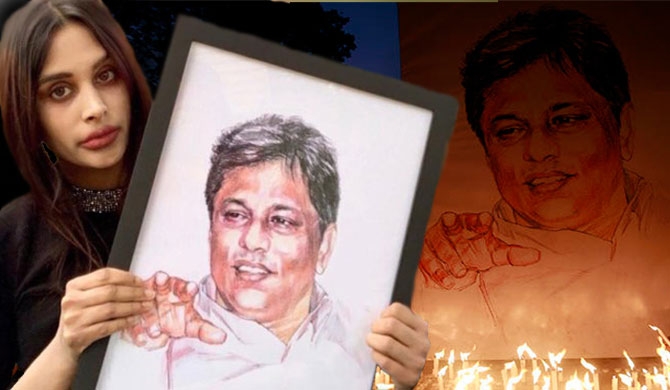
Appointment Of Ex-IGP Who Concealed Evidence In Journalist’s Murder Probe To Missing Persons Office A Blow To Victims Says Ahimsa

Victims and rights activists including the daughter of slain Sunday Leader Editor Lasantha Wickrematunge are dismayed by President Gotabaya Rajapaksa’s decision to name former IGP Jayantha Wickramaratne as Commissioner to the Office of Missing Persons.

This is the second highly problematic appointment to the Office mandated to investigate the truth about thousands of persons missing and disappeared in Sri Lanka.

On May 20, the Parliamentary Council, which ratifies President Rajapaksa’s nominees to so-called independent commissions, recommended the former IGP as a member of the Office of Missing Person (OMP).

Wickramaratne has been linked to the conspiracy to conceal vital evidence in the Lasantha Wickrematunge murder investigation. The former IGP was questioned by the CID in connection with efforts to derail the Lasantha Wickrematunge murder investigation in 2009, after three police officers provided statements alleging as IGP, Wickramaratne had directed officers from the Mount Lavinia police to deliberately conceal evidence including the slain journalist’s notebook, found inside his car after he was murdered.

Tweeting about the appointment on Sunday (30), Ahimsa Wickrematunge, daughter of the slain Sunday Leader Editor said the appointment proved President Gotabaya Rajapaksa’s contempt for victims of atrocities. As IGP, Wickramaratne had “derailed investigations” into her father’s murder, Wickrematunge claimed.
Image

“Heartbreaking for victims of enforced disappearances Sandya Ekneligoda and others still seeking answers,” Wickrematunge’s daughter tweeted.

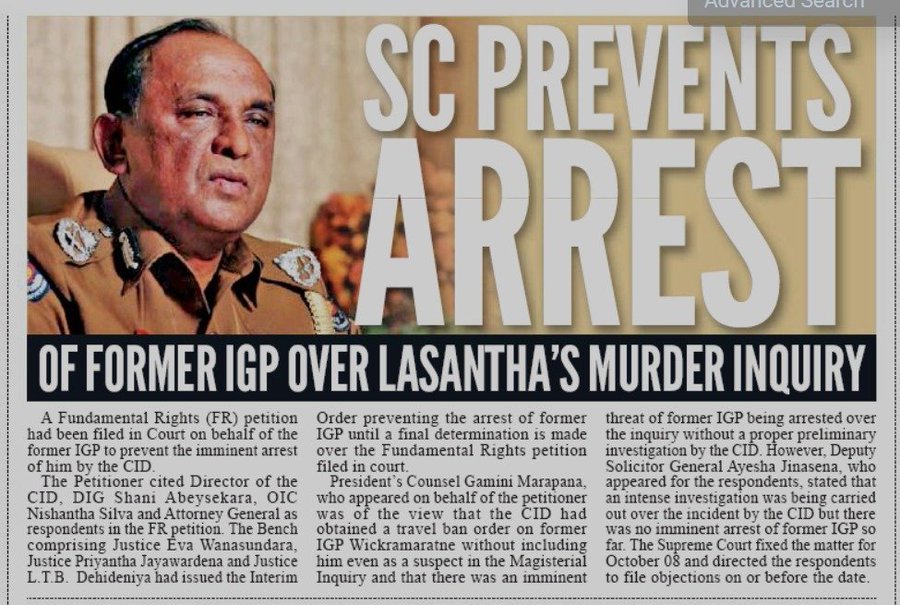
Wickramaratne went to Supreme Court to pre-empt his arrest after he was questioned by the CID about the whereabouts of Lasantha Wickrematunge’s notebook found inside the journalist’s car after the murder. In March 2018, former IGP Jayantha Wickremaratne received a stay order against his arrest by the CID from the Supreme Court.

The former Police Chief became a person of interest in the CID’s Lasantha Wickrematunge murder investigation after statements were made by three police officers, including a former DIG, that evidence had been concealed or destroyed to botch the investigation into the journalist’s murder on Wickremaratne’s directive.

An interim order staying the former IGP’s arrest by the CID was granted by former Supreme Court Justice Eva Wanasundera.

Former Justice Wanasundera was the senior judge on the bench that issued a stay order against Gotabaya Rajapaksa’s arrest by the FCID in connection with the 2006 MiG-27 deal. Details about the corrupt military procurement was extensively reported in Wickrematunge’s Sunday Leader newspaper when Gotabaya Rajapaksa held office as Defence Secretary.

The 20th Amendment was enacted, granting the Head of State untrammelled executive control, President Gotabaya Rajapaksa has actively undermined independent commissions and state agencies tasked with delivering on accountability and reconciliation by appointing tainted officials to lead them.

In July 2021, President Gotabaya Rajapaksa appointed Wanasundara Chairperson of the Bribery Commission.

President Gotabaya Rajapaksa named former Supreme Court Justice Upali Abeyratne OMP Chairman in December 2020.

The appointment was made after Abeyratne, in his capacity as Chairman of the Presidential Commission investigating political victimization determined that several military officers indicted by the Attorney General on charges of abduction and murder should be exonerated and were victims of a political witch-hunt.

Among the accused Abeyratne exonerated were Wasantha Karannagoda and dozens of former Navy officers indicted for the abduction and murder of 11 Tamil boys in 2009 and military intelligence officers, including Lt. Col. Shammi Kumararatne who are indicated on charges of abduction and conspiracy to murder journalist Prageeth Eknaligoda.

Both the Navy Abductions and the Eknaligoda disappearance are emblematic cases before the Office of Missing Persons that Abeyratne now chairs.

Activists fear this latest inclusion of Wickramaratne as commissioner at the Office, will not only ensure OMP investigations reach a dead end, but will also endanger witnesses and victims who have provided sworn statements and testimony to the formerly independent office, activists fear.

The OMP, which has functioned nominally since the election of Gotabaya Rajapaksa in 2019, formed the cornerstone of the Government’s assertions at the UN Human Rights Council (UNHRC) in Geneva that Sri Lanka had the domestic capacity to pursue truth and justice for victims of the 26-year civil war and two violent insurrections.

The caseload of missing persons complaints before the OMP is in the tens of thousands. Under the Chairmanship of President’s Counsel Saliya Peiris the OMP made several proactive interventions, including by funding the excavation and investigation of a mass gravesite in Mannar.

Sri Lanka’s disappearances caseload is the second larges before the UN Working Group on Enforced Disappearances. Cycles of political violence have established a clear pattern of enforced disappearance being used a tool of state terror and repression against critics and dissidents, rights groups say.

In March, the Government insisted that as a sovereign nation, it must be permitted to pursue reconciliation and accountability strategies to reckon with the legacy of war nationally, through agencies tasked with truth-seeking and reparations like the OMP and the Office of Reparations. Both offices were established by the Sirisena-Wickremesinghe Government, in line with its post-war transitional justice commitments to the UN and other international partners. The SLPP-led Opposition opposed the establishment of both offices when they were being enacted by statute of Parliament.
Posted in Uncategorized

With Rajapaksa Clan in Full Control, Chinese Grip Over Sri Lanka is Getting Tighter

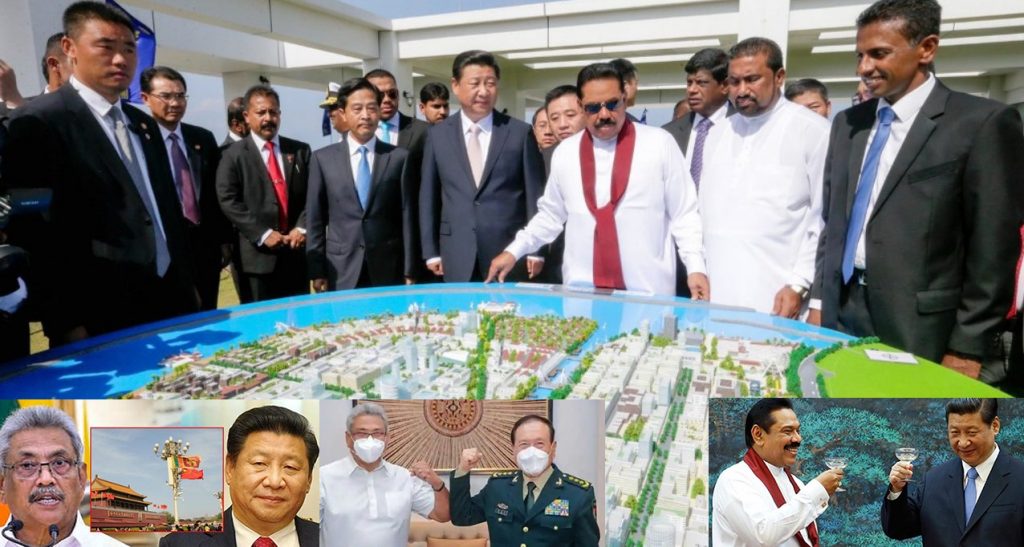
Chinese Defence Minister Gen. Wei Fenghe was in Sri Lanka last week seeking to shore up support for Chinese projects at a time when new faultlines have emerged in the island nation on China’s growing footprint. This was the second high profile Chinese visit to Sri Lanka after the one by Yang Jiechi, Director of the Office of the Central Commission for Foreign Affairs of the ruling Communist Party, in October last year. Even during the pandemic, Beijing’s overtures to Sri Lanka have continued unabated with an awareness that perhaps this a unique moment to push Chinese influence as the Rajapaksa clan is in full control. The Chinese embassy in Sri Lanka has taken an unusually high profile role in pushing the cause of the Chinese-built Port City in Colombo.

The Colombo Port City project is important for China as a key node in its Maritime Silk Road in the Indian Ocean and so it is to be expected that Beijing will go all out in ensuring its finalisation. Sri Lanka is touting this $1.4 billion project as the single largest private sector development ever in the island nation in an attempt to justify bending the domestic laws in its favour. And this has generated a massive outcry from various groups in the country who see this as a violation of Sri Lankan sovereignty.

Apart from President Rajapaksa Gotabaya’s ruling party—Sri Lanka Podujana Peramuna—most other political stakeholders, including the Buddhist monks, have opposed this contentious project. Despite this hue and cry, the Colombo Port City Economic Commission Act is now effective with its validation by the Speaker of the Sri Lankan Parliament. It is likely to give China unfettered control over some prime real estate, with the Sri Lankan government’s authority becoming marginal even when issues of movement of people and use of Yuan are concerned.

China’s growing economic footprint in Sri Lanka in recent years is no longer news as more than $8 billion worth of infrastructure projects have been undertaken by Beijing. But the costs have been rising as was reflected most categorically in the case of Hambantota port which despite its unwillingness, Rajapaksa’s successor was forced to hand over to China in 2017 on a 99 years lease. It was Mahinda Rajapaksa who had signed the Hambantota deal with Sri Lanka to begin with and today once again the Colombo Port project is being pushed by the Rajapaksas without any suggestion that past behaviour of China has been taken into account. Today, Chinese influence is so palpable that in place of Tamil, it is Mandarin is being included in the signboards of government projects in contravention of the official trilingual policy in the country wherein Sinhala, Tamil and English are used.

China had used the previous term of the Rajapaksas to its advantage and this time around it’s looking to be the same story. Beijing’s foothold is getting firmer by the day and it is ordinary Sri Lankans that will have to bear the brunt of Rajapaksa largesse eventually. After an initial positive outreach to India, the Rajapaksa’s famous tilt to China is back.

Earlier this year, Sri Lanka cancelled its $500 million agreement with India and Japan to develop the East Container Terminal (ECT) project under the pretext of local opposition. It changed tack and sought investments from the two countries for the West Container Terminal of the Port of Colombo under a public-private partnership model. Where the Rajapaksa government has had no compunction in pushing through a highly unpopular Colombo Port City Project under the Chinese influence, it decided to give India and Japan short shrift.

Amidst rapidly shifting geopolitical trends in the Indo-Pacific, Sri Lanka understands that it will be much sought after and has suggested that it is “observing the rise of Quad as an exclusive military alliance.” This is a sentiment in tune with the Chinese worldview. How this can be reconciled with Sri Lanka’s Foreign Secretary Jayanth Colombage’s remarks that “we will not, we cannot be, we should not be a strategic security concern to India” remains to be seen.

Chinese grip over Sri Lanka is getting tighter and the challenges for India will continue to mount. President Gotabaya has made it clear that Sri Lanka wanted to learn from the Chinese Communist Party’s “governance experience.” This learning has so far entailed ‘white elephant’ infrastructure projects being pursued that had only enriched the Rajapaksas even while severely indebting the nation.

At a time when several nations around the world are reassessing Chinese investments and its model of economic partnership, Sri Lanka under the Rajapaksas has decided to double down on their economic engagement with China. This economic engagement is already having a strategic fallout by enhancing the ability of the Chinese Navy to project power in the waters of the Indian Ocean. India-Sri Lanka ties seem to be entering turbulent waters and the Rajapaksas are making it clear that for all their rhetoric, they are not really interested in balancing between New Delhi and Beijing.

This article was first published by CNBC TV18

Chinese scientists help Sri Lanka cope with marine disasters, climate change

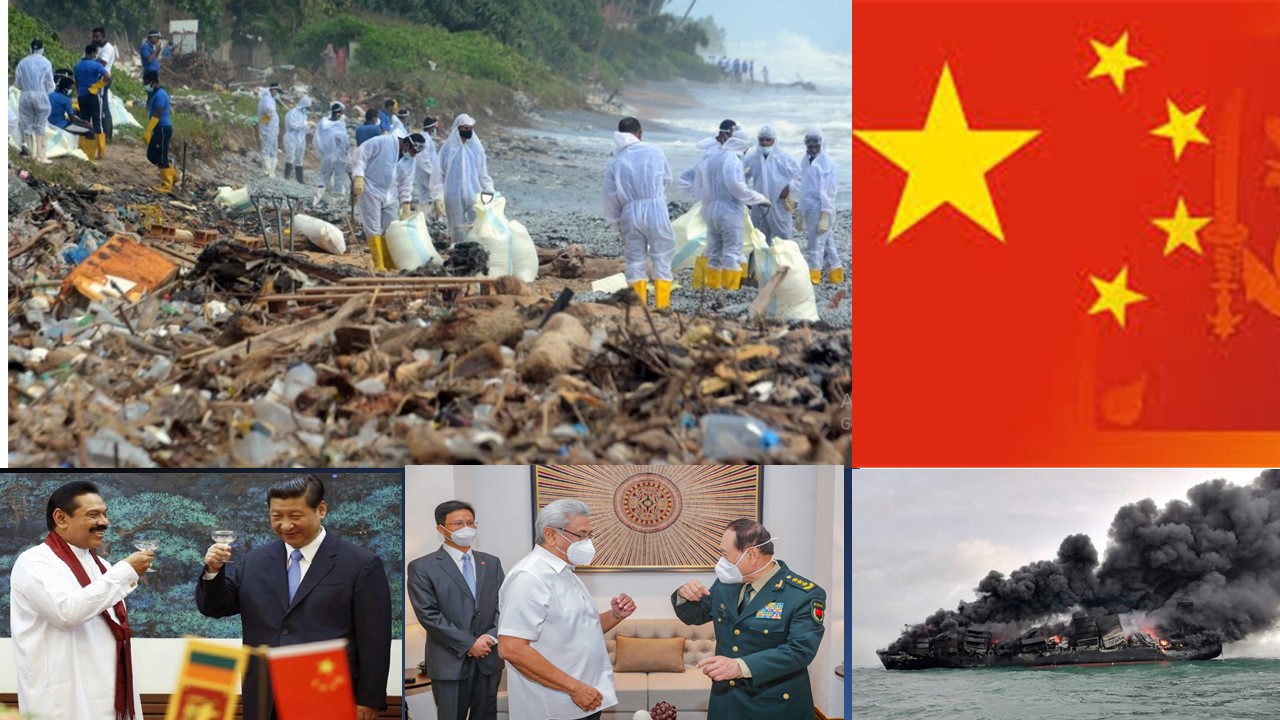
On June 2, hundreds of security personnel in COVID-19 protective clothing were busy removing tons of chemical pollutants and plastic from a beach in Colombo. About 9.5 nautical miles into the sea, they could see the charred remains of a foreign vessel swaying in the gusty monsoon wind.

On May 20, the X Press Pearl container vessel loaded with chemicals exploded and caught fire off Colombo Port. Many of the containers and other polluting materials on board fell into the sea and were being washed ashore, posing a serious threat to the environment.

On day two after the explosion, Chinese experts from the China-Sri Lanka Joint Center for Education and Research (CSL-CER) received a request from Sri Lanka’s National Aquatic Resources Research and Development Agency (NARA), the principal national institute responsible for safeguarding aquatic resources in the country.

Through a forecast model, the CSL-CER helped evaluate the scale of the pollution caused by the debris and the extent to which the chemicals could spread.

The southwest monsoon makes frequent landfall in Sri Lanka in May. At the observation site of the CSL-CER based on the campus of the University of Ruhuna in the south of the island nation, an Automatic Weather Station (AWS) has been recently updated to study the effects of the monsoon outbreak.

Luo Yao, associate professor at the CSL-CER, told Xinhua that the AWS can improve the accuracy of forecasting models, and it can forecast marine environmental disasters caused by the burnt cargo ship.

“The AWS can monitor the atmospheric pressure, wind speed and direction, solar radiation and other marine atmospheric parameters. The accumulated data through long-term observations can be used to study the impact of climate change, sea level rise and other issues in the Indian Ocean and surrounding areas,” Luo said.

Sri Lanka is located in an area with warm currents between the Indian Ocean and Pacific Ocean and is one of the most active regions on the path of the monsoon, with frequent marine meteorological disasters. Due to the shortage of marine scientific research personnel and the lack of a mature monsoon climate forecast system, Sri Lanka is vulnerable to marine disasters.

Enomous amount of debris was cleared by the Lankan armed forces personnel. Photo:.Gayan Sameera/Xinhua
In order to strengthen the capacity to cope with climate change, the CSL-CER was established in 2015 at the University of Ruhuna, the only university in Sri Lanka with a faculty of fisheries and marine sciences.

Gamini Zoysa, former Sri Lankan minister of fisheries, once spoke highly of the observation network, saying that “the network has provided scientific and technological support for the development of the marine economy in Sri Lanka and the reduction of marine meteorological disasters caused by extreme weather such as tsunamis and storms, which are related to people’s livelihood and economic development.”

Although the COVID-19 pandemic has caused some difficulties for personnel exchanges at the center, it has not stopped its activities. In March this year, the China-Sri Lanka Joint Workshop on Monsoon Climate and Marine Environmental Resource was held as scheduled in both China and Sri Lanka simultaneously by combining online and offline methods.

“As an island country, Sri Lanka is particularly concerned about the monsoon. The enhanced cooperation between China and Sri Lanka on the monsoon issue will enable us to better understand the impact of the monsoon on the environment and reduce disasters caused by climate change,” said Tilak Gamage, co-director of the CSL-CER.

“The successive bilateral seminars on the ocean and climate have greatly enhanced Sri Lanka’s capacity to address climate issues and influence in the international arena,” Gamage said.

Zhang Changsheng, director of the CSL-CER, told Xinhua that since its establishment, the CSL-CER has not only done research but also paid attention to cultivating marine science talent in Sri Lanka.

The center has trained about 30 Sri Lankan graduate students in the fields of marine science and environmental science. They have later engaged in further scientific research in Sri Lanka.

The center has also conducted hydrological training for Sri Lankan institutions and trained personnel for meteorological observation, instrument use, and maintenance.

Charith Madusaka, a research fellow currently employed by both the CSL-CER and his alma mater the University of Ruhuna, is the first China-trained master’s degree student in oceanography from Sri Lanka.

Madusaka said, “Since I went to China, many of my classmates have turned to China.”

Nalin Wikramanayake, a senior Sri Lankan oceanographer, told Xinhua that the CSL-CER has made a major contribution to marine sciences and oceanography in Sri Lanka. Enditem

Source:Xinhua

Posted in Uncategorized

CID summons ITSSL Chairman over statement on govt. websites under cyber attack

The Criminal Investigation Division has summoned the Chairman of the Information Technology Society of Sri Lanka Yasith Kuruwita due to the statement released by the society alleging that many government websites have been subjected to a mass cyber attack.

Information Technology Society Sri Lanka (ITSSL) said that several other government websites, including the official website of the Presidential Secretariat, came under cyber attacks, earlier today.

However, cyber security experts denied that such a cyber crime had taken place as all the information that was initially in the website is still present.

Sajith And Sirisena Indicate Likely Political Alliance

Speculation is rife that Opposition Leader Sajith Premadasa will enter into a political alliance with former President Maithripala Sirisena, informed political sources said.

This development has taken place against the backdrop of rising tensions between the SLPP and the SLFP within the ruling alliance.

Both Premadasa and Sirisena have expressed their admiration for each other in public and this has given strong indications that a political allince between the two is being discussd.

However, Sirisena’s possible affiliation with the SJB-led opposition has been greeted with mixed reactions among parliamentary group members of the party.

Some even fear that Sirisena will be offered the premiership in a future SJB government.

Meanwhile, opposition stalwart Sarath Fonseka’s supporters have launched a campaign indicating that the former Army Commander will be appointed the Prime Minister under Premadasa’s presidency.

This campaign has also sparked concerns among some senior members of the SJB who are of the view that it is “inappropriate” to talk about the premiership at this point.

Posted in Uncategorized

JVP calls for independent probe on allowing MV X-press Pearl

The Janatha Vimukthi Peramuna (JVP) today urged the government to initiate an independent investigation into allowing the MV X-press Pearl vessel that caught fire in Sri Lankan waters, claiming that the whole episode involving the ship was suspicious.

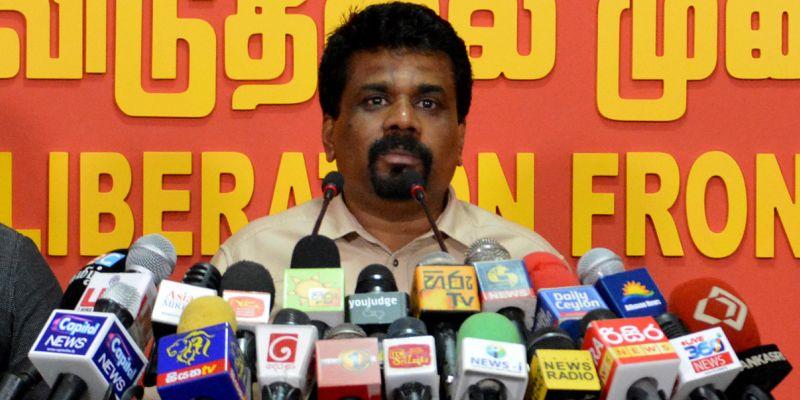
JVP Leader Anura Kumara Dissanayake told a news conference that the government should reveal all the facts with regard to this whole incident involving the ship to the people and take proper action against the political authority and the officials responsible for the disaster, one of the worst the country had faced.

“It is reported that there was some smoke in the ship when it reached Sri Lankan waters. The ship has been denied entry to two other ports. It is suspicious that who gave permission to the ship to enter Sri Lankan marine territory. What are the reasons for making such a decision,” he asked.

MP Dissanayake said it was suspicious that why the authorities failed to douse the fire or tow it to deep seas before it sank and added that all these issues should not be allowed to submerge with the ship.

“There was a time when ships carrying hazardous substances and waste were sunk in African seas with the support of corrupt rulers of some African countries. People raise doubts whether the same thing is happening in Sri Lanka. We heard one minister saying that Sri Lanka would receive compensation. We doubt if the government has made it a source to earn dollars by sinking ships. The government should give a clear response to this issue,” he said.

He said a huge damage has been caused to the marine environment that could not be restored or repaired for decades and the fishery industry is also in deep crisis due to this disaster.

Posted in Uncategorized

UK adds seven countries to travel ’’red list’’ including Sri Lanka

Britain added seven countries, including Egypt and Sri Lanka, to its “red list” of destinations that require hotel quarantine on return to England on Thursday, in a review that also saw Portugal move from “green” to “amber”.

No countries were added to the quarantine-free green list.

The full list of countries added to the “red list” is: Afghanistan, Bahrain, Costa Rica, Egypt, Sri Lanka, Sudan, and Trinidad & Tobago.

All changes to the lists will come into effect at 0400 (0300 GMT) on June 8, the government said.

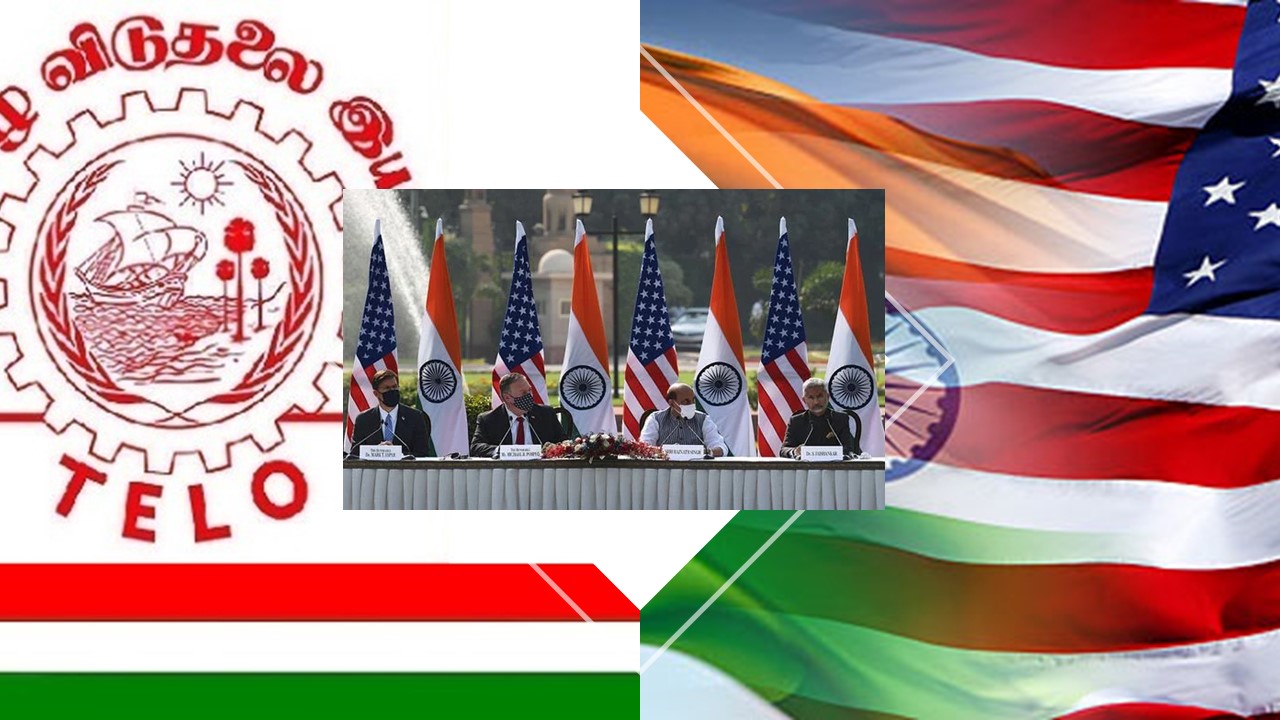
We welcome America’s recognition of Tamil Homeland doctrine, said Surenthiran, Official Spokesman TELO- TNA

We welcome the position of the US Congress recognizing the North Eastern Provinces of Sri Lanka as the Traditional Tamil Homeland of the Sri Lankan Tamils.

Recently, a resolution was prepared and submitted to the Foreign Relations Committee by the US Congress senators that the northern and eastern parts of Sri Lanka be recognized as the traditional homeland of the Tamils. There is a great opportunity for it to be adopted at the Senate if submitted.

We observe this position of the United States as a means of recognizing the traditional homeland ideology of the Sri Lankan Tamils ​​in the international arena and of helping the gradual victory of the political demands of our people.

This step can be attributed to the recent resolution 46/1 adopted at the UNHRC stressing for provincial council elections to be held on the basis of the 13th Amendment to the Constitution.

Tamil parties cannot underestimate the importance of the 1987 constitutional amendment in the global politics, made possible by the Indo-Lanka Accord, which emphasized the unified Northeast. This agreement, adopted by the Government of Sri Lanka, accepting that the united North and East as the historical or traditional habitats of the Sri Lankan Tamils, has today paved the way for the United States to recognize the North East as the Traditional homeland of Sri Lankan Tamils, especially in the international arena.

We are confident that the resolution will be successfully adopted by the US Senate with the approval of the Foreign Relations Committee.

This will no doubt reinforce the Tamils demand for a united North-East homeland and a political solution based on it.

Moreover, the decision of the US State Committee heavily depends on India’s position. We, the Tamil parties in domestic politics, must work with a united voice to strengthen the efforts of the US and international community.

We have recently emphasized the need for the unity of the Tamil parties to harness the geo political developments and make it favorable to our people. We have also commenced the initial phase of discussions with parties.
If we fail to work together for the benefit of our people to harness the international political environment at this moment, considering our positions, electoral motives, party interests and personal pride, we are, beyond any justification, committing a grave historical betrayal to our community.

Surenthiran
Official Spokesman- TELO
Tamil National Alliance TNA

Tamil youth beaten to death by Sri Lankan Intelligence officials

A young Tamil man, who was arrested by the Sri Lankan Intelligence Division last night at a house in East Iruthayapuram, Batticaloa, has died in detention this morning.

The body of Chandran Vithusan, 22, who was arrested outside his house in East Iruthayapuram by people who identified themselves as intelligence officers at 10.30pm last night, has been handed over this morning.

Vithusan came out last night when a friend called him over the phone and asked him to come out. The young man was then arrested by the so-called intelligence officials who were standing in the street.

According to the people of the area, the youth was severely beaten by the officials.

The parents were informed this morning that Vithusan had died of an illness. However, relatives insist the young man was beaten to death by the officials.

A probe has been launched into the death of a 22-year-old suspect who had fallen ill while in the custody of the Batticaloa Police.

An officer attached to the Batticaloa Police told Colombo Gazette that the suspect was arrested at 02 am today.

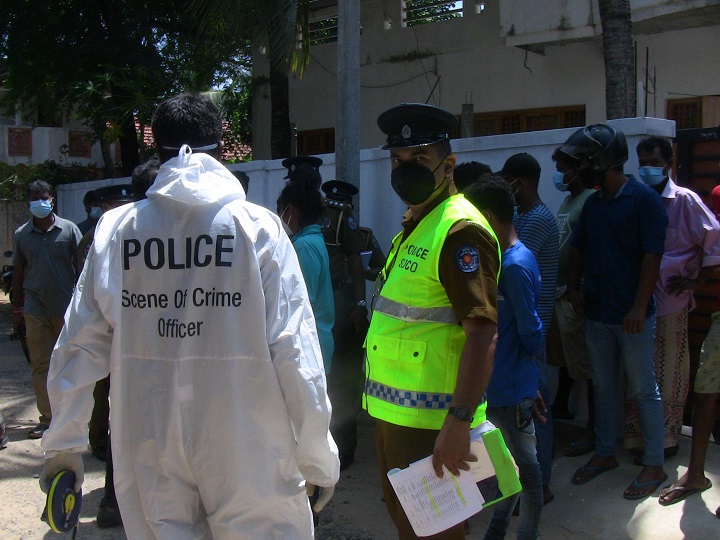
Batticaloa Deputy Superintendent of Police, L.R. Kumarasiri, who arrived at the scene of the incident, began the investigation into the death. Eravur Circuit Magistrates Court Judge, Jeevarani Karuppaiyapillai, has began conducting a murder investigation into the death.

A police team was formed today, led by Eravur Police Station Officer-in-Charge, SW Jayantha, who are currently investigating the incident.

The Batticaloa Forensics Team is conducting inquiries and the body is being kept at the Batticaloa Teaching Hospital for an autopsy report.

Posted in Uncategorized

USAID airlifts emergency COVID-19 supplies to Sri Lanka, other South Asian countries

The United States government, through the US Agency for International Development (USAID), has airlifted 880,000 pieces of personal protective equipment (PPEs) and 1,200 pulse oximeters to COVID-hit Sri Lanka, the USAID website said.

The donation is part of US efforts to send emergency medical supplies the Maldives, Pakistan, and Sri Lanka to help save lives, stop the spread of COVID-19, and continue to meet the urgent health needs across South Asia, the agency said.

This new airlift follows three shipments of COVID-19 relief supplies by the U.S. Government to Nepal and the delivery of seven emergency air shipments to India to help contain the COVID-19 pandemic, it added.

“In Sri Lanka, this assistance includes 880,000 vital pieces of personal protective equipment and 1,200 pulse oximeters to support frontline healthcare workers and others most affected by the current outbreak. The United States and Sri Lanka have worked closely together to respond to the COVID-19 pandemic since its outset, and USAID’s assistance has benefited millions of people in all 25 districts and nine provinces across the country, providing life-saving treatments, strengthening clinical care, and mobilizing critical supplies to bolster the response. The U.S. Government has previously provided $11.3 million to assist Sri Lanka’s COVID-19 response and recovery, including a donation of 200 ventilators to care for critically ill patients.”

This airlift exemplifies the United States’ whole-of-government response to ensure assistance reaches people who need it quickly. The State of California’s Office of Emergency Services generously donated commodities, USAID sourced PPE from the Federal Emergency Management Agency and the Department of State procured the aircraft being used for transport.

USAID is coordinating additional shipments for South Asia in the coming weeks.

USAID is also working closely with the private sector to help address the immediate health needs in the region. USAID will leverage its experience with a range of private sector partners—from manufacturers to investors, from multinational companies to small- and medium-sized enterprises—to meet the critical needs arising from the COVID-19 pandemic.