PM’s official website hacked

The official website of Prime Minister Mahinda Rajapaksa, www.mahindarajapaksa.lk reported to have been hacked yesterday (June 2), Information Technology Society of Sri Lanka (ITSSL) President Rajiv Yasiru Kuruwitage said.

He said the website domain (.lk) was hacked into and redirected to a website called decentralized digital currency Bitcoin (₿).

When visiting the Premier’s official site, it was directed to content related to Bitcoin and again grant access to another web page.

Mr Kuruwitage said they had identified that the cyber attackers had to have an automatic downloading path to the web contents to computers or mobile phones.

However, he claimed that the www.mahindarajapaksa.lk website is now restored.

No foreign languages in foreign-funded projects: Goverment

Funding a construction project in Sri Lanka does not permit the funding country to use its language in connection with the said project, as the national official languages policy permits only the use of Sinhala and Tamil as the official languages and English as the link language, the Government noted.

Ministry of Public Services, Provincial Councils, and Local Government Secretary J.J. Rathnasiri, when queried by The Morning on whether the language of another country could be used in a construction project funded by that country in Sri Lanka, in addition to the Sinhala and Tamil and English languages, said that there was no such possibility.

“Such grants come to the Treasury. Therefore, it is not possible to use the languages of those countries. At the ministry level, instructions have been given to use all three languages – Sinhala, Tamil, and English – for communication purposes,” he said.

Furthermore, Rathnasiri added that all government agencies have been instructed to implement the national official languages policy properly.

He made this explanation in relation to allegations levelled against several institutions, including the Attorney General’s (AG’s) Department, that it has acted in a manner that is in violation of the national official languages policy.

A plaque was recently unveiled at the opening of the smart library at the AG’s Department which only contained a script in the Sinhala, English, and Mandarin (Chinese) languages, and not Tamil, which is an official language. The Chinese Government had sponsored the establishment of the said library and the then AG, President’s Counsel (PC) Dappula de Livera, and the Chinese Ambassador to Sri Lanka were also present during the inauguration. The incident caused much controversy and former AG’s Co-ordinating Officer State Counsel Nishara Jayaratne said that the plaque, which had not contained the Tamil script, was inadvertent and that steps had been taken to replace it.

Meanwhile, when queried as to whether the Ministry of Justice had conducted an investigation into the incident at the AG’s Department at the ministry level, Ministry Secretary P.K. Mayadunne said that such an investigation was not carried out, as it was an independent institution. However, he said that all government institutions are bound to abide by the national official languages policy.

Recently, a photograph of a nameboard which did not contain Tamil at the Colombo Port City was shared on social media claiming that the Tamil language has been replaced by Mandarin. Later, the Colombo Port City, in a media release, stated that the said signboard had been removed from the site long before the photograph had started to circulate on social media and that it was an old photo.

Attempts to contact the Official Languages Commission of Sri Lanka and the Department of Official Languages to inquire as to whether they have taken any action with regard to the said incidents proved futile.

Posted in Uncategorized

Fonterra clarifies concerns over Anchor butter not having Tamil wording

Fonterra Brands Lanka has clarified the reason behind Anchor butter not having Tamil wording.

The company said that Anchor butter product packaging is fully compliant with the packaging regulations of Sri Lanka.

“We understand and empathise with the recent concerns regarding the languages used on the pack,” Fonterra Brands Lanka said.

Fonterra Brands Lanka noted that Anchor butter is a multi-market product, made, packaged and exported from New Zealand to multiple countries in East and South East Asia.

“The same pack is made available to Sri Lanka. Hence, the product packaging includes the commonly spoken language in these respective countries. We respect diversity and place our customer requirements at the highest importance,” Fonterra Brands Lanka said.

Meanwhile, the Consumer Affairs Authority (CAA) of Sri Lanka said there was no complaint over the label displayed on the Anchor butter product.

The Chairman of the Consumer Affairs Authority Shantha Dissanayake said that if there is a complaint then the matter can be looked into.

An image of the product was shared on social media drawing strong criticism

Health, PCs & Sathosa declared as essential services

An extraordinary gazette notification has been issued declaring services offered by Lanka Sathosa & Co-operative Wholesale Establishment, duties that come under Provincial Councils and all health services as essential services.

According to the gazette issued by the Secretary to the President, all services necessary or required to be carried out in connection with the supply, storage, distribution and regulatory activities of food, beverages including all other essential consumable items to the general public that are performed by Lanka Sathosa Ltd, Co-operative Wholesale Establishment, Food Commissioner Department, Department of Cooperative Development and Cooperative Societies, all services that are performed by or required by government offices under the Provincial Councils and all services to be performed or required in connection with health services have been declared as essential services.

The gazette has been issued on the directive of President Gotabaya Rajapaksa in order to prevent any hindrances or disruptions for the conduct of ordinary daily life.

Posted in Uncategorized

President instructs officials to ensure economy does not collapse

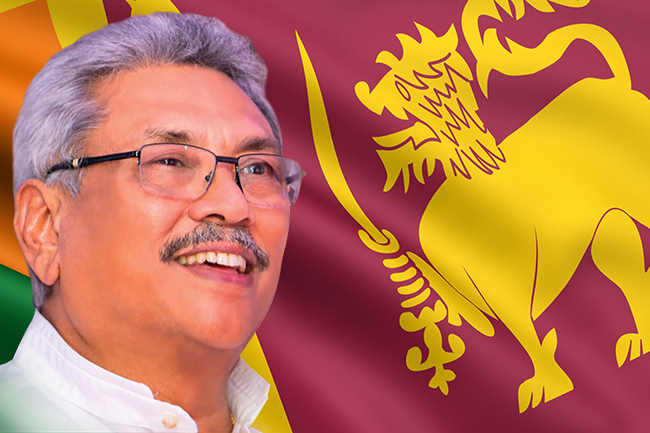
President Gotabaya Rajapaksa has instructed officials to ensure the economy does not collapse.

He called on the Governors and District Secretaries to extend their fullest support to the continuation of the operations at factories and development projects.

The President also said that Governors and District Secretaries should personally intervene to maintain essential services and prevent any disruption to the lives of the people.

The President expressed these views at the monthly meeting held with the Governors and District Secretaries at the Presidential Secretariat this morning (02).

The President pointed out the importance of looking into the possibility of operating a factory or carrying out a development project uninterrupted in compliance with health recommendations instead of shutting them down at once when an infected person is detected at a factory or a project premises.

The challenges and problems faced by the public in the face of travel restrictions was discussed at length at the meeting.

President Rajapaksa said that although the Government had given instructions to maintain industries and essential services in compliance with proper health recommendations, there were shortcomings in the implementation of this initiative at divisional level.

The President instructed that the mechanism for distributing surplus fruits and vegetables purchased from the farmers at the divisional level should be properly implemented. He stressed that it was the responsibility of all stakeholders not to allow the agrarian economy to collapse.

He said that projects that are being implemented with local funds and foreign loan assistance should meet the relevant targets properly.

The President also instructed the Governors and District Secretaries to maintain direct contacts with State Ministers and relevant Secretaries in order to ensure the implementation of Government launched projects including the rehabilitation of 10,000 tanks, development of 100,000 kms of rural roads, establishment of 1,000 National Schools and housing, regional hospital, drinking water supply and renewable energy development projects.

President Rajapaksa also noted that the vaccination process is currently being executed in a scientific and sophisticated manner and added that he expects further support from the political authorities as well as the Governors and all public officials when facilitating necessary assistance to the health sector to run the operation smoothly and swiftly avoiding any inconvenience to the people.

President Rajapaksa said that the Government has decided to provide organic fertilizer to farmers free of cost and requested the Governors to provide necessary assistance to overcome the challenges in promoting organic farming. It was also stated that the government has planned to provide aid and facilitate loans at a concessionary interest rate via state banks to small-scale businesses and farmers’ associations for the production of organic fertilizer.

The Governors commended the commitment of the Government led by the President in efforts to contain the current pandemic while safeguarding the lives of the people and in making the country’s future successful despite overwhelming odds.

The District Secretaries pointed out that the gazetting of ports, railways, customs, fuel supply, public transport services, banks and local government bodies as essential services has greatly assisted them to carry out their duties.

The Governors of the Provinces, Secretary to the President P. B. Jayasundera, Principal Advisor to the President Lalith Weeratunga and Government officials were also present at the discussion.

Posted in Uncategorized

Sooka questions appointment of former IGP to OMP

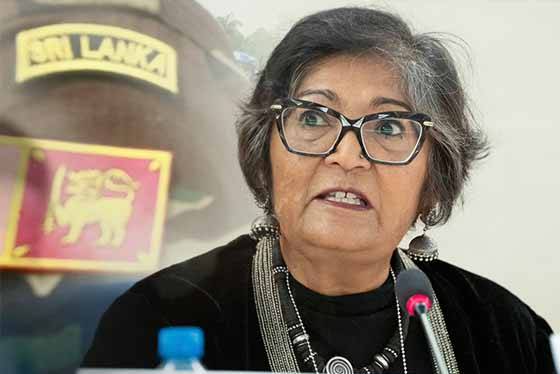
A former member of a UN expert panel on Sri Lanka, Yasmin Sooka, has questioned the appointment of former Inspector General of Police (IGP), Jayantha Wickremaratne to the Office on Missing Persons (OMP).

Sooka alleged that the appointment of the war-time police chief to the Office on Missing Persons in Sri Lanka completes the militarisation of the transitional justice mechanism established under the previous government.

“It is hard to make this up – the man who was in charge of three police units named by the United Nations investigation as involved in mass enforced disappearances at the end of the war is now investigating the disappearances himself,” Sooka, who is now the Executive Director of the International Truth and Justice Project, said.

The Office on Missing Persons is charged with investigating the fate of tens of thousands of missing and enforced disappeared in a country said to have the second largest case numbers in the world.

“We will be writing to the UN Peacebuilding Fund and international donors asking them not to fund such a body that has become so compromised and also sending relevant United Nations entities and member states a confidential dossier on the problematic appointments,” Sooka said.

She also urged victim communities inside and outside Sri Lanka to write to the UN and other donors to urge them not to use their tax money to finance what she says has become a vehicle for impunity designed to cover up the Sri Lankan government’s past crimes.

Posted in Uncategorized

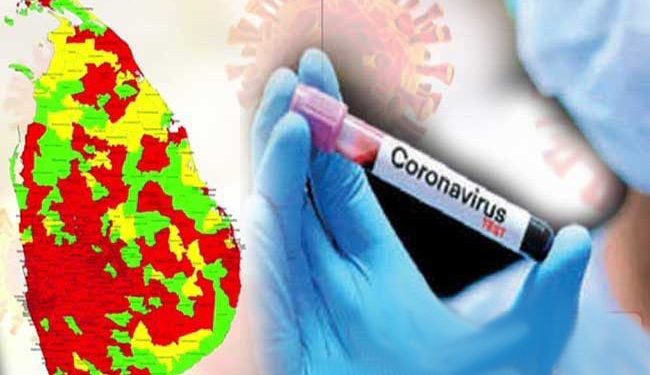
Sri Lanka confirms another 39 Covid-19 deaths Wednesday, toll rises to 1,566

Thirty-nine more deaths in Sri Lanka have been attributed to the novel coronavirus infection, Director-General of Health Services confirmed today (June 02).

The latest fatalities have moved the country’s death toll to 1,566, according to Epidemiology Unit data.

The deaths have taken place between May 17 and June 01, the Department of Government Information stated.

Reportedly, 27 of them were over the age of 60.

The deceased – 19 females and 20 males – were identified as residents of Moratuwa, Muwandeniya, Matale, Borella, Badulla, Jaffna, Wahamalgollewa, Trincomalee, Gampola, Kotmale, Vavuniya, Kelaniya, Waththegama, Badalkumbura, Elpitiya, Dompe, Kattankudy 02, Wellampitiya, Wattala, Horana, Bandaragama, Maskeliya, Hatton, Watawala, Nawalapitiya, Hapugasthalawa, Kurunegala, Gampaha, Gelioya, Bogawanthalawa and Medawachchiya.

COVID pneumonia was recorded as the cause of death of majority of the victims.

Posted in Uncategorized

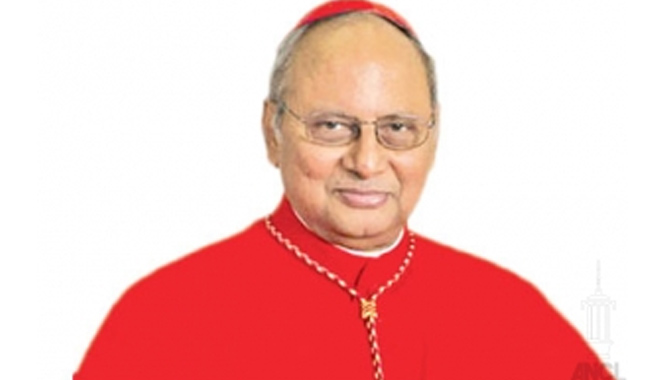
People disappointed with the govt -Cardinal

Archbishop of Colombo Cardinal Malcolm Ranjith says those who came to power pledging to safeguard the country, are now dragging the country towards destitution.

Speaking during a media briefing in Colombo today, Cardinal Malcolm Ranjith said the present administration has failed to fulfil the aspirations of the people who voted for a new government to usher in a new era.

The Cardinal said they are disappointed in many aspects and the way in which the country is being governed.

He said they have serious concerns where the country is heading at present.

Cardinal Malcolm Ranjith noted millions of people wanted to change the path the country was heading adding however now they are even more disappointed.

The Cardinal said the present administration must take decisions that are favourable to the people and not just to a selected group.

Cardinal Malcolm Ranjith said at present, the people are struggling to carry out their day-to-day activities due to financial difficulties.

He said the government is also struggling to procure vaccine doses needed to end the COVID-19 crisis, due to lack of funds.

The Cardinal said the people did not vote for the government to merely initiate development projects and to sell state assets.

He said therefore the government must renew its policies concerning religion, culture, economy and other matters that concern the general public.

Archbishop of Colombo Cardinal Malcolm Ranjith also noted that the Attorney General had claimed that there was a conspiracy behind the 2019 Easter Sunday Attacks and therefore such matters must be investigated thoroughly.

Cardinal Malcolm Ranjith added that the government must make a concerted effort to punish all perpetrators behind the Easter Attacks instead of staging media spectacles.

Sri Lanka’s unofficial COVID-19 lockdown extended to June 14

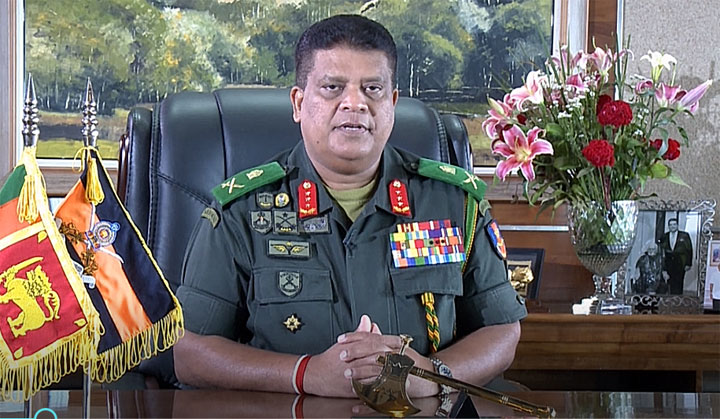
Sri Lanka’s ongoing COVID-19 movement restrictions that were to be lifted at 4am June 07 have been extended till 4am June 14, the Government Information Department quoting Army Commander Gen Shavendra Silva said.

Authorities had imposed curfew-style islandwide travel restrictions from 11pm May 21 to 4am June 07 in an effort to contain rapidly rising daily COVID-19 cases.

The island-wide unofficial lockdown was previously set to include a 19-hour window on May 31 and June 04 for the public to purchase essentials, but this concession was scrapped on May 28 following a discussion with President Gotabaya Rajapaksa, the army chief said at the time.

Silva further said on May 28 that divisional secretaries have been instructed to coordinate the delivery of essential items to households across the island. It is assumed that this will continue till June 14.

Sri Lanka’s daily COVID-19 cases continue to surge past 2,500 despite the unofficial lockdown amid dropping PCR tests, though authorities have predicted a decline in the coming weeks.

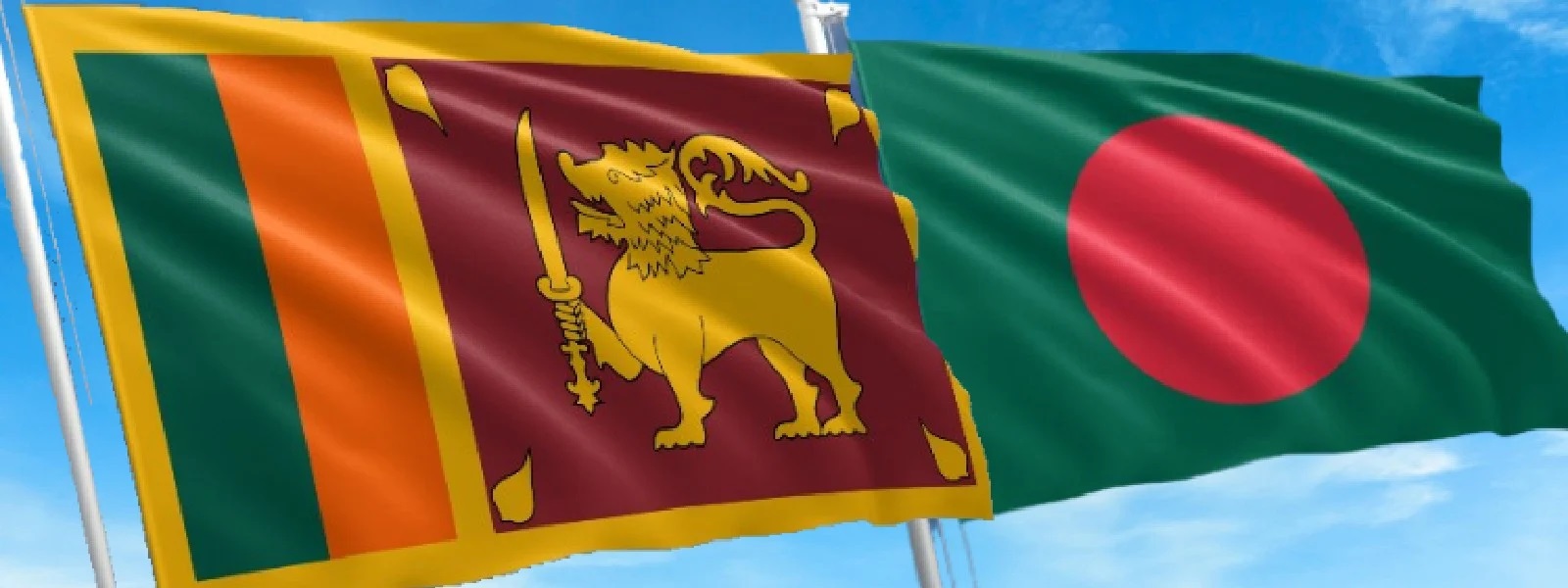
The currency swap deal from Bangladesh – FT.LK

Four days ago (28 May) I read a news item that appeared in the Daily FT of which the heading was ‘Bangladesh became a lender for first time thanks to SL’. This news item took me to my banking career of 1970/80s, which reminded me of the credit norms that we were practicing in the bank, as credit officers when a customer requested for a credit facility or a loan.

On receipt of the loan application, we evaluated the financial healthiness of the borrower to ensure whether the borrower possessed a sound repayment capacity. Then we weighed up the borrowing records through various sources available, to ensure whether he was a defaulted borrower and was he in a position to financially breathe well irrespective of unaffordable debt burden.

If response for those two were positive, then we sought for any security which in case to be used to recover the loan if the loan was not repaid as expected due to the reasons beyond the control of the borrower.

If the repayment capacity is not sound or if it proved that the borrower was not in a position to repay the loan, irrespective of the security he offered we refused to grant the loan. In case the repayment capacity was sound but his past borrowing records were not satisfactory or he was reported as a defaulted borrower, we directly refused to grant the loan unless he proved satisfactory arrangements that he had made with those creditors to repay those defaulted loans. Security was not considered as vital to grant the loan if those factors mentioned above were not satisfactory.

When the bank refused a loan based on the above norms, the borrower has a propensity to look for the assistance of ‘Private Money Lenders’ (PML) at an exorbitant interest rate. When the borrower is unable to repay the loan with a normal rate of interest, how he pays at an exorbitant rate was not a matter to PML since such lenders used unethical ways to recover the loan.

As reported in the above news item, Bangladesh grants this loan of $ 200 million to our country from its foreign reserves and this is the first time that Bangladesh is going to make such an investment in a country through a currency swap deal. I do hope the lender Bangladesh should have definitely evaluated the repayment capacity of the borrower that is Sri Lanka and its past and present borrowing records. In order to assess the repayment capacity, the lender would have used the global ratings.

S&P a world’s rating agency has cut Sri Lanka’s long-term foreign currency credit rating to ‘CCC+ from B-’ for 2020, which exposed the risk of default. Another global rating agency Moody also downgraded Sri Lanka’s credit ratings to ‘Caa1 from B2’ in September last year. No doubt this fragile situation of Sri Lanka would have now significantly weakened, as consequence to the present rapid outbreak of COVID-19.

Further it is reported that Bangladesh is going to grant this loan deviating its Internal Treasury Investment Guidelines since the borrower does not comply with the standard rating requirements.

As I stated above, if the borrower does not possess a sound repayment capacity and the borrower’s past and present borrowing records are very bad, no lender will choose such a borrower to grant a loan involving an intolerable high risk. Knowing well that Sri Lanka is a debt-ridden country and presently the repayment capacity is not sound, with no way of repaying the said loan without new borrowings, one would wonder what made the Bangladesh Central Bank (BCB) opt for this loan even deviating from its own Internal Treasury Investment Guideline as the borrowing country does not comply with the standard rating requirement.

Has Sri Lanka offered any valuable security to moderate the high risk? As reported, the agreed security was ‘to exchange our currency with Bangladesh Bank equivalent to the amount of dollars they will be given and the Guarantee of SL Government’. It seems the borrower’s guarantee has been taken as security to secure a high-risk loan granted to the same borrower violating their own (BCB) guidelines.

However, it appears one plus point for the lender (BCB). That was the high rate of interest applied.

The BCB will grant this facility at 2% interest, which is higher than other current global rates. However, charging a comparatively higher rate of interest will pose another issue. A borrower who shows a poor repayment capacity to pay a loan with a lower rate of interest (market rate), how can he pay such a loan when the interest was increased?

As reported this facility will be for one year during which the fund will be provided. After getting the fund, Sri Lanka will have to repay it by three months. Does the BCB anticipate that Sri Lanka would be in a position to re-pay this within three months from the date of grant?

The history of Sri Lanka is intertwined with the history of the broader Indian subcontinent. The historical period begins roughly in the 3rd century, based on Pali chronicles like the Mahawansa, Deepawansa, and the Choolavansa. The first Sri Lankan ruler of the Anuradhapura Kingdom was Pandukabhaya is recorded for the 4th century BCE.

From the 16th century, some coastal areas of the country were also controlled by the Portuguese, Dutch and British.

The ancient Romans called Sri Lanka ‘Taprobane,’ while Arab sailors knew it as ‘Serendib.’ Then we have been named as ‘Ceylon’ and then Sri Lanka.

Independence was finally gifted in 1948 but the country remained a dominion of the British Empire until 1972. In 1972 Sri Lanka assumed the status of a Republic. A Constitution was introduced in 1978 which made the Executive President, the head of state.

Such a country with such proud history is today looking for financial assistance from the country, Bangladesh.

The borders of modern Bangladesh were established with the separation of Bengal and India in August 1947. Proclamation of Bangladeshi independence in March 1971 led to the nine-month-long Bangladesh Liberation War that culminated with East Pakistan emerging as the People’s Republic of Bangladesh. After independence, Bangladesh also endured famine, natural disasters and widespread poverty, as well as political turmoil and military coups. The restoration of democracy in 1991 has been followed by relative calm and rapid economic progress.

Within such a short period Bangladesh courageously came to the present position to grant a credit facility of $ 200 million to a country which had the proudest history and abundant natural resources. Who brought Bangladesh to this emerging situation? No one else other than the inspirational leaders who loved the country while ruling the country during a very short period of five decades. We had a period that foreign leaders who visited our country have been inspired and wanted to be like us. But where are we today?

Most of the people in our country view this borrowing, as a nature sarcasm caused due to robbing the State funds by those who ruled the country since independence.

The expectation was not to underestimate the emerging Bangladesh but to highlight the weaknesses of our past and present leaders who were not matured and didn’t have required revolutionary strength and visionary forward look to lead our beautiful country despite all the resources gifted by nature. It is not only one leader or one party that ruled this country who is responsible. But all those who ruled or rather ruined the country since independence is responsible for this heartbreaking situation. With greatest reluctance we have to accept without any iota of doubt, all those who ruled this country are individually and collectively responsible. We pray for a better Sri Lanka although no visionary leaders are at least to be imagined.

(The writer is a former banker. He is an Associate of the Institute of Bankers and a

Fellow of the Institute of Credit Management Sri Lanka and currently serves as a visiting (online) lecturer of the Institute of Credit Management, Sri Lanka. He could be reached via wimaleb@gmail.com.)


Posted in Uncategorized