China denies reports claiming SL paid more for Sinopharm jab

The Chinese Embassy in Colombo has denied reports citing that Sri Lanka is paying $5 more for a Sinopharm vaccine compared to Bangladesh.

In a Tweet, the embassy has said that they had checked with the Chinese embassy in Dhaka as well as with the Sinopharm group.

“FYI: Bangladesh Health Minister has clarifed last week that their procurement agreement including pricing is not finalized yet. The fake news on social media has already disturbed their ongoing negotiation,” the Tweet added.

Social media was all abuzz after ‘Lanka C News’ had reported that Sri Lanka is purchasing the Sinopharm vaccine at a unit price of US$ 15 while Bangladesh is purchasing it at US$10.

The back story

Earlier, Bangladesh media had reported that the country would purchase the vaccine at a unit price of US$10.

The Bangladesh English daily ‘The Daily Star’ had said that the Cabinet Committee on Government Purchase on Thursday (27) had approved a proposal for buying 1.5 crore doses of Sinopharm’s Covid-19 vaccine, paving the way for the final agreement.

“Immediately after the meeting, chaired by Finance Minister AHM Mustafa Kamal, a Cabinet Division official told reporters at a briefing that they were purchasing the vaccine at $10 per dose,” it added.

“However, as the news spread online through different media outlets, including The Daily Star, ministry officials contested the disclosure saying that the price had not been approved yet,” it further said.

‘The Daily Star’ had further reported :

A finance ministry official sent a text to the messenger group of reporters covering the ministry, requesting the media not to mention the price for the “greater interest of the country”.

Contacted, Health Minister Zahid Maleque declined to disclose the price of the vaccine.

“As the purchase committee has approved the proposal, we hope that the procurement agreement between the two countries will be signed very soon,” he said.

Price ranges

According to the prices of COVID-19 vaccines as mentioned in the ‘COVID-19 Vaccine Market Dashboard’ published on unicef.org, all vaccines have different price ranges across different regions in the world.

CE 700px 21 05 29

Posted in Uncategorized

Government reiterates giving Hambantota Port to China was wrong

he Government today reiterated that giving the Hambantota Port to China was a wrong move.

State Minister of Finance and Capital Markets and Public Enterprise Reforms Ajith Nivard Cabraal told reporters today that the Hambantota Port was given to China by the former Government.

He said the former Government claimed it had no choice but to give the port because it was caught in a debt trap.

However, Cabraal said that the current Government feels the decision taken on the Hambantota Port was a wrong move and it will not follow a similar policy.

Cabraal was speaking at a virtual media conference on the Colombo Port City.

This is not the first time that the Government has been critical of the decision to give the Hambantota Port to China.

President Gotabaya Rajapaksa had also been critical of the move and had even considered renegotiating the deal with China.

Cabraal said that the Colombo Port City land belongs to Sri Lanka and only a part of it has been given to China on a 99-year lease.

Speaker Mahinda Yapa Abeywardane signed and validated the Colombo Port City Economic Commission Bill this week.

Thereby the Colombo Port City Economic Commission Act will be implemented in full from this week.

Explained: What Bangla-Lanka currency swap means

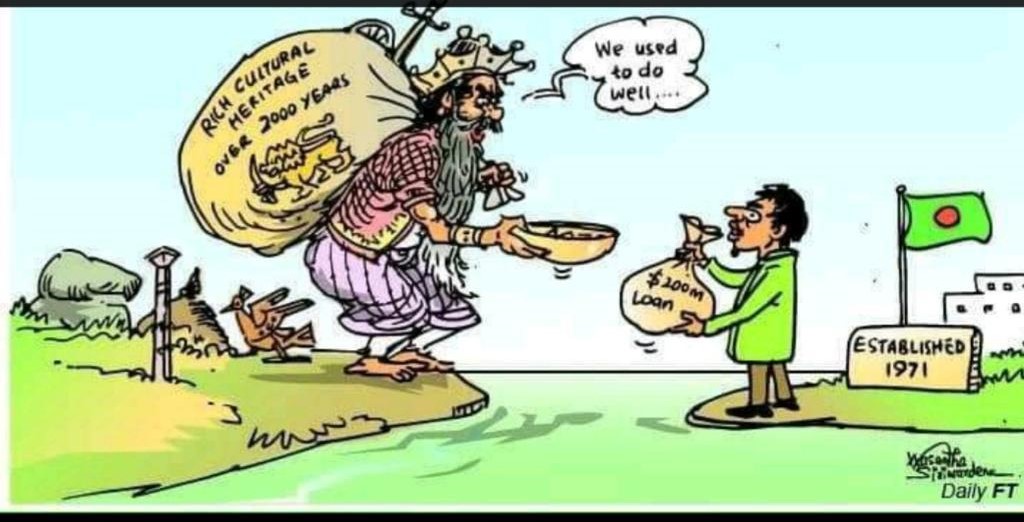
Bangladesh’s central bank has approved a $200 million currency swap facility to Sri Lanka. What does this mean and why is it significant?

What is the arrangement?

Bangladesh Bank, Bangladesh’s central bank, has in principle approved a $200 million currency swap agreement with Sri Lanka, which will help Colombo tide over its foreign exchange crisis, according to media reports from Bangladesh, quoting the bank’s spokesman.


Sri Lanka, staring at an external debt repayment schedule of $4.05 million this year, is in urgent need of foreign exchange. Its own foreign exchange reserves in March year stood at $4 million.

The two sides have to formalise an agreement to operationalise the facility approved by Bangladesh Bank. Dhaka decided to extend the facility after a request by Sri Lankan Prime Minister Mahinda Rajapaksa to Bangladesh’s Prime Minister Sheikh Hasina.

What is a currency swap?

In this context, a currency swap is effectively a loan that Bangladesh will give to Sri Lanka in dollars, with an agreement that the debt will be repaid with interest in Sri Lankan rupees. For Sri Lanka, this is cheaper than borrowing from the market, and a lifeline as is it struggles to maintain adequate forex reserves even as repayment of its external debts looms. The period of the currency swap will be specified in the agreement.

Isn’t it unusual for Bangladesh to do this?

Bangladesh has not been viewed so far as a provider of financial assistance to other countries. It has been among the most impoverished countries of the world, and still receives billions of dollars in financial aid. But over the last two decades, its economy has pulled itself up literally by the bootstraps, and in 2020, was the fastest growing in South Asia.

Bangladesh’s economy grew by 5.2 per cent in 2020, and is expected to grow by 6.8 per cent in 2021. The country has managed to pull millions out of poverty. Its per capita income just overtook India’s.

This may be the first time that Bangladesh is extending a helping hand to another country, so this is a landmark of sorts.

Bangladesh’s forex reserves in May were a healthy $45 billion. In 2020, despite fears that the pandemic would hit remittances, Bangladeshis living abroad sent over $21 billion. It is also the first time that Sri Lanka is borrowing from a SAARC country other than India.

Why didn’t Sri Lanka approach India, the biggest economy in the region?

It did, but did not get a reply from Delhi. Last year year, President Gotabaya Rajapaksa knocked on Prime Minister Narendra Modi’s door for a $1 billion credit swap, and separately, a moratorium on debts that the country has to repay to India. But India-Sri Lanka relations have been tense over Colombo’s decision to cancel a valued container terminal project at Colombo Port.

India put off the decision, but Colombo no longer has the luxury of time. With the tourism industry destroyed since the 2019 Easter attacks, Sri Lanka had lost one of its top foreign exchange pullers even before the pandemic. The tea and garment industries have also been hit by the pandemic affecting exports. Remittances increased in 2020, but are not sufficient to pull Sri Lanka out of its crisis.

The country is already deep in debt to China. In April, Beijing gave Sri Lanka a $1.5 billion currency swap facility. Separately, China, which had extended a $1 billion loan to Sri Lanka last year, extended the second $500 million tranche of that loan. According to media reports, Sri Lanka’s owes China up to $5 billion.

What about last year’s credit swap facility that India gave Sri Lanka?

Last July, the Reserve Bank of India did extend a $400 million credit swap facility to Sri Lanka, which Central Bank of Sri Lanka settled in February. The arrangement was not extended.

RBI has a framework under which it can offer credit swap facilities to SAARC countries within an overall corpus of $2 billion. According to RBI, the SAARC currency swap facility came into operation in November 2012 with the aim of providing to smaller countries in the region “a backstop line of funding for short-term foreign exchange liquidity requirements or balance of payment crisis till longer term arrangements are made”.

The presumption was that only India, as the regional group’s largest economy, could do this. The Bangladesh-Sri Lanka arrangement shows that is no longer valid.

Source:Indian Express

A Ceylonese ‘Princess’ in China, Internet Erupts in Anger and Dismay in Sri Lanka

Atweet by BRISL (an Organisation covering news, analysis & research on Belt & Road Initiative from a Sri Lankan perspective), claiming the “Lanka Princess” Xu Shi Yin’e attended this year’s Vesak celebrations at the Sri Lankan Embassy in Beijing on May 26 and she is a 19th generation descendant of a prince from the court of King Parakramabahu VI of Kotte, has set the internet on fire across Sri Lanka and its diaspora all over the World.

Many Sri Lankans who are already wary of the growing presence of China and Chinese nationals across the Indian Ocean island nation have taken to social media platforms to question and ridicule these claims. Some are expressing anger and dismay over the brazenness of China.

According to Sri Lankan mythology, a 15th-century Sinhalese prince had stayed back in China after he married a Chinese girl. Chinese media and officials claim Xu Shi Yin’e is a direct descendant of that prince.

In the 1990s, her identity came to light when a development project threatened to destroy her family’s burial tombs in Shijia Tomb on Mt. Qingyuan. Hence, the history of the Ceylon Prince in Quanzhou was unveiled. Legends state that a Ceylon prince visiting China was not able to return to his country because of a cousin who had usurped his father’s throne at Kotte (more or less, the present-day Colombo) and killed his brothers. So, he stayed in China, married and settled down, taking up the name of ‘Shi’. According to Yin’e, the reason he did not return is not political but simply love. Some even argue that the prince was Alakeshvara, the brave king of Kotte who was abducted and taken to China by the generals of Ming dynasty. After pardoning him, the Ming emperor had installed Parakramabahu VI as the new king in Sri Lanka.

All these stories are shrouded in mystery and no one is ready to authenticate them.

According to Sasanka Perara of South Asian University, there is a deafening silence on the Chinese belligerence in the 15th century even though there are adequate references to the incident from records of the time as well as from the work of latter-day scholars such as Edward Dreyer, Louise Levathes, Senarath Paranavitana and others. All these sources collectively offer a reasonable sense of what happened not only in Lanka but the overall contexts and politics of Chinese naval expansion in the 15th century.

The latest claims are being dubbed as a Chinese joke on Sri Lankan history. Some are even calling it a Chinese psychological operation to capture Sri Lanka by planting such “nonsensical” stories to establish an ancient link.

Philip Friedrich, a historian and researcher, rubbishes the Ceylonese prince theory. He said, “The Mahavamsa and Sinhala vamsas (texts like the Rajavaliya and Rajaratnakaraya) don’t offer a clear genealogy of Parakramabahu VI’s royal household. This whole period is a historiographic morass”.

In a series of tweets, he has tried to debunk the Ceylonese “princess” story.

“I don’t know what the intentions behind the ‘Ceylon Princess’ story are – if it’s part of long-con, Chinese influence operation in SL, at least they got the Quanzhou part right! But one thing that the story can’t offer is an unmediated link to an ‘authentic’ Sinhala sovereignty,” he said.

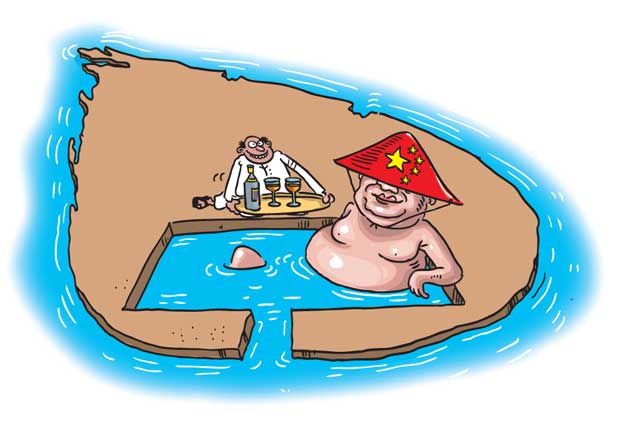
China has invested heavily in Sri Lanka and the island nation has borrowed billions of dollars from it in the last 10 years to take up huge infrastructure projects. China already controls the Hambantota port in the south and is building an international port city right next to the Sri Lankan President’s official residence on the land reclaimed from the Indian Ocean. This port city will be like a Chinese colony in the Sri Lankan capital, allege many locals.

Though the Sri Lankan government is not commenting on the newly-found Ceylonese “princess” in China, the public mood is more or less against it.

Posted in Uncategorized

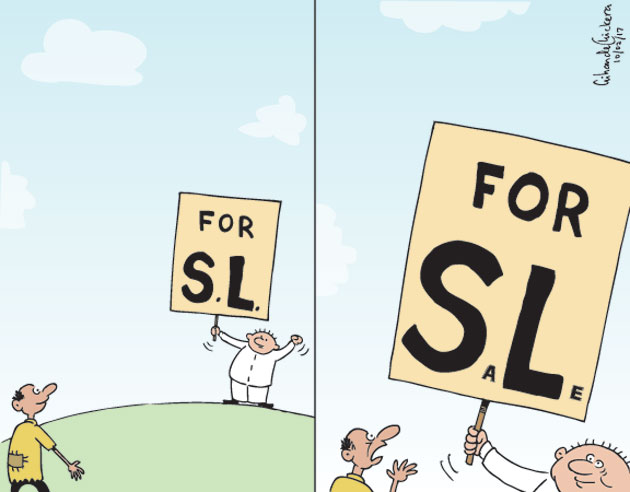
After Port City, Gota Set To Sell Colombo Fort, Slave Island Heritage Buildings To China-Backed Firms

The Government of President Nandasena Gotabaya Rajapaksa looks set to sell hundred acres of prime land to Chinese companies in the Colombo Fort and Slave Island areas, as Beijing continues to seize strategic control of Sri Lanka’s capital city, its major highways, and ports, Colombo Telegraph learns.

China Harbour Engineering Corporation (CHEC) is the company that built and now has virtually complete management, administration and jurisdiction of the Colombo Port City, the reclaimed landmass that was annexed to Sri Lanka’s territory.

This week in a brazen move, the Nandasena Government which is already under fire for rushing through the Port City Bill in the middle of a major coronavirus outbreak, handed over an elevated highway project to CHEC. The Cabinet of Ministers decided to award the contract to build the 17 km Kelaniya-Athurugiriya elevated highway to the Chinese state-owned CHEC sans a competitive bidding process. By winning the bid worth USD 1 billion, CHEC will become the first foreign company to own a major highway in Sri Lanka on which it will operate a toll.

CHEC will operate the New Kelaniya Bridge highway for 15 years, during which it will earn revenue. In 18 years, the Highway will be transferred back to Government of Sri Lanka ownership, Cabinet Spokesman Udaya Gammanpila said. The Cabinet made the decision to hand the project over to CHEC on the basis that the company would take the least amount of time to complete the project and the shortest period by which it will recover the cost, Gammanpila said, without elaborating on a transparent bidding process.

The Company was exposed by a 2018 New York Times investigation for “donating” over Rs 800 million to Mahinda Rajapaksa’s presidential re-election campaign in 2014/2015 through its Standard Chartered Bank account in Colombo. The payments were made from a subaccount controlled by CHEC named the HPDP Phase 2, shorthand for “Hambantota Port Development Project”, the New York Times revealed in its report. In 2011, the World Bank officially blacklisted China Communications Construction Company and all its subsidiaries after an investigation into fraudulent practices in a Phillipines Highway project. CCCC is CHEC’s parent company.

CHEC has reaped massive returns after the Rajapaksa family was returned to power in November 2019 but the procurement of thousands of acres of land in Colombo City would be essentially a seizure of Sri Lanka’s most strategic landmass by China. Beijing is vying for geo-political influence with other foreign powers including the US, Japan and India and Sri Lanka has become an important linchpin in this process.

But the Gotabaya Rajapaksa Administration has much bigger plans for CHEC, a company that has a reputation for oiling the palms of corrupt politicians world over.

Over the next two years, the Government plans to sell hundreds of acres of prime state-owned land in Colombo Fort and its adjacent Slave Island area, including property currently being used by the Sri Lanka Air Force and Sri Lanka Army. Colombo Telegraph learns that the bulk of these properties have been reserved for China Harbour Engineering Corporation, through an intermediary local firm created specifically for the purpose of easing the path for transfer to the Beijing-owned entity and other affiliated investors.

Many of these properties were already listed for diversification by the Yahapalanaya Government and other administrations who hoped to transform Colombo City into a commercial and financial capital and move the state administrative headquarters inland. However, that diversification was to be streamlined under a competitive bidding process for interested investors.

Selendiva Investments Limited in which the Treasury holds 100 percent of shares was established last year.

According to a Cabinet Paper submitted on May 17 by Prime Minister Mahinda Rajapaksa, in his capacity as Urban Development Minister Selendiva Investments has been tasked with transforming several underperforming state-owned assets into “viable, profitable and marketable” assets. Selendiva Investments is empowered to enter into long-term lease agreements with commercial entities about any land owned by the UDA. With private investors in these UDA properties and holdings, Selendiva will “smooth the way” for easy approvals from the state sector.

Based on the proposal now before Cabinet Selendiva Investments will set up Special Purpose Vehicles for specific investments.

According to the Cabinet Paper, the UDA is seeking approval to move ahead with three investment portfolios – namely: The Colombo Fort Heritage Square, The Immovable Property Development and The Government-owned Hospitality Sector under Selendiva Investments.

The proposal seeks to open multiple state-owned properties and UDA holdings for investment.

Ear-marked for “investment” under these portfolios are the Grand Oriental Hotel (GOH), the Gafoor Building, York Building, Republic Building (Ministry of Foreign Affairs), the General Post Office building (Slave Island), Hilton Hotel, Water’s Edge Hotel, Cey Nor Restaurant (Slave Island), International Coordination Centre, Kankesanthurai (Jaffna), and Grand Hyatt Colombo.

Colombo Telegraph learns that the second phase of this Rajapaksa leasing/selling spree will include the Sri Lanka Air Force HQ, SLAF Grounds, other military holdings including the FCID headquarters on Chatham Street where CHEC already has its plush offices in Colombo.

The moves are especially ironic for the Government that swept to power on the basis that the previous Sirisena-Wickremesinghe administration was selling national assets.

Colombo Telegraph learns that the Chinese Government hopes the transactions will be complete by 2022. Chinese firms are often preferred investment partners for the ruling Rajapaksa family because of the potential for massive kickbacks.

Spearheading the work for this major acquisition by the Beijing owned company is Urban Development Authority Secretary Siri Nimal Perera.

Perera was reportedly instrumental in securing the former Army Headquarters in Galle Face for sale to the Hong-Kong based Shangri-La corporation without a tender process on a free hold basis. Perera held office as Chairman of UDA when President Mahinda Rajapaksa was in power.

When the Rajapakasa were last in power, China built a port, an airport, a cricket stadium and a series of other white elephant constructions in the Hambantota region.

Eight years later, with the Government having changed and struggling to pay back massive foreign loans due to Beijing, China wrested control and operation of the Hambantota Port, the most strategically important of the Rajapaksa vanity projects it had bank-rolled when Mahinda Rajapaksa was president of Sri Lanka. Of Sri Lanka’s deep-water ports, Hambantota lies closes to the busiest international east-west shipping lane.

The Rajapaksas are engaged in a sustained effort to make their political survival in Sri Lanka, Beijing’s official business, a foreign policy analyst told Colombo Telegraph.

Unseating the Rajapaksas will be a herculean task, with any Government that hopes to succeed this one likely to be compelled to pledge fealty to Sri Lanka’s overlords in Beijing, the analyst noted.

“By the time Gotabaya Rajapaksa concludes the first term of his presidency, China will have wrested control of several ports in the island and strategic inland property. It will own the bulk of Sri Lanka’s debt, as Colombo repeatedly leans on President Xi Jingping for bailouts amidst a serious debt crisis. Any Government that follows this regime will be saddled with this economic and strategic subjugation – there will almost be no way out,” the analyst, who did not wish to be named, told Colombo Telegraph.

Colombo was already behaving like a vassal state, with the President himself or five-man ministerial delegations going to the airport to accept delivery of the Sinopharm vaccines being donated by Beijing, the analyst pointed out. “There is no question that with every move it makes, the Rajapaksa administration making it known that it is a willing client of the Chinese Government and a supporter of Beijing’s expansion in the Indian Ocean,” the analyst told Colombo Telegraph.

As it expands its strategic advantage in Sri Lanka, Beijing has been careful to invest in all influential sections of society in the island – Buddhist temples and their chief incumbents, senior journalists and media houses, powerful trade unions in the port and medical sectors and local politicians, Colombo Telegraph learns authoritatively. Beijing also has assets situated in senior levels of the ruling Gotabaya Rajapaksa administration that are constantly looking out for China’s interests in all matters, it is learnt. Beijing’s cyber-intrusion into Sri Lanka’s social media landscape has also been noteworthy, and seen an escalation in recent months it is learnt.

It was the determination to create a monopoly on the island’s ports that led to Beijing’s mobilisation of monks and trade unions and other stakeholders to staunchly oppose the lease of the East Container Terminal in the Colombo Port to an India-Japan led joint venture, the analyst explained.

“The west terminal of the Colombo Port is very different – there is nothing there yet in terms of infrastructure, and the way the deal was manoeuvred to be handed over to the Adhani Group of India, it doesn’t look like the Indian Government will have a major role to play in the transaction,” the analyst noted. In the coming years, Sri Lanka’s national electoral battles will also become a form of proxy war between Beijing Vs. The Quad. We saw some measure of that in the 2015 presidential election when the Chinese Ambassador in Colombo himself became a canvasser of votes for the sitting President. We should expect to see this on a much bigger scale in the future,” the analyst added. (By Nimal Ratnaweera)


Posted in Uncategorized

Covid death toll in Sri Lanka rises to 1,363

The coronavirus death toll in Sri Lanka rose to 1,363 today.

The Ministry of Health said that another 38 deaths linked to the virus were confirmed today.

Another 602 COVID-19 cases have been detected today in the country, raising the number of confirmed infections to 177,706.

Accordingly, 2,845 coronavirus cases have been detected in Sri Lanka today.

The Epidemiology Unit of the Ministry of Health said 30,019 persons are currently receiving treatment for coronavirus at several facilities across the country.

Earlier today, 2,573 persons who recovered from COVID-19 were discharged from hospitals, raising the number of recoveries in the country to 146,362.

1,452 suspected COVID-19 cases are also under medical observation at present.

India keeping an eye on China-backed Colombo Port City project

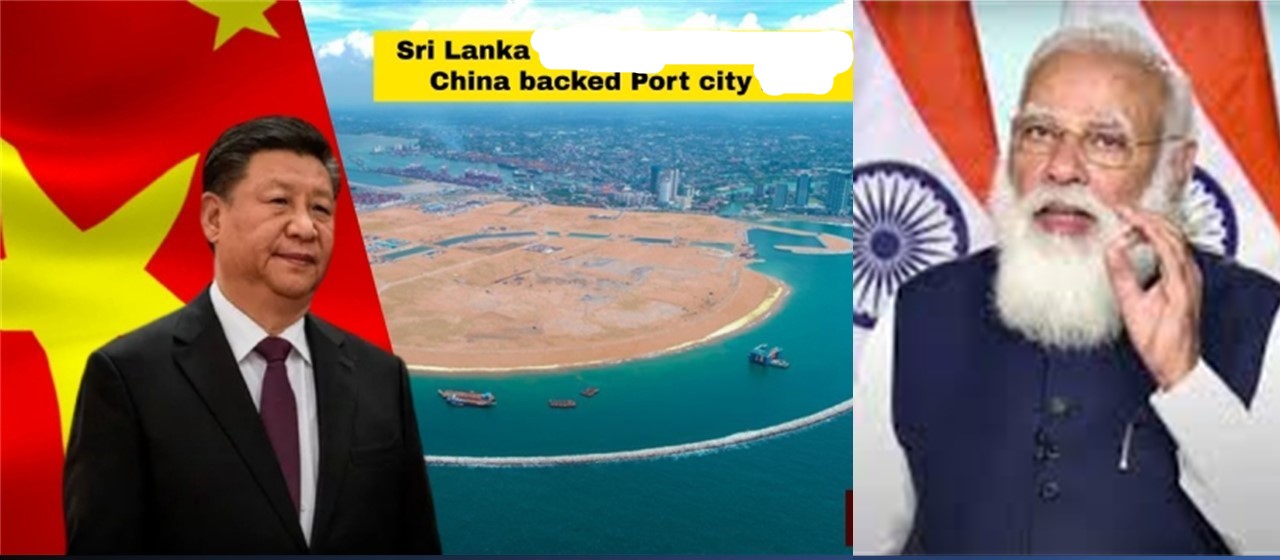
India has said it is keeping an eye on the China-backed Colombo Port City project in Sri Lanka that is being touted as a big ticket investment drawing scheme which would boost the island nation’s economy, Live Mint reported.

The project has been in the works for a while but this week, the Sri Lankan parliament approved the Colombo Port City Economic Commission Bill after a two-day debate on it. The Opposition parties in Sri Lanka are against the bill which they say will lead to the creation of a Chinese colony in Sri Lanka. The 225-member Sri Lankan Parliament approved the bill 148-59, according to news reports.

“I don’t think we have formally raised this issue” with the Sri Lankan government, a person familiar with the matter said on Thursday. “But our concerns on this matter are evident,” the person said against the backdrop of reports that the Chinese backed project was at a distance of about 300 kilometers from India. India views China as a strategic rival and the project in India’s sphere of influence – ie within South Asia that New Delhi considers its backyard – is a matter of concern for India.

“We have certain benchmarks – it should be transparent, there is talk of who will it benefit, is it China….we hope that the concerns that the Sri Lankans have themselves raised are addressed within the framework of the Sri Lankan democracy and that if there are other issues to it, it should follow the principles of openness, transparency and financial responsibility,” the person said. “And of course that respects the sovereignty and territorial integrity” of Sri Lanka.

“So I think those elements are important that it (the project) should be following internationally recognised norms… and any development that happens so near to our country we will of course keep a very close eye on that, on whether in any way it impacts our security. But at this point I think there are discussions within Sri Lanka, queries and questions, what are the implications of this for Sri Lanka itself,” the person said.

“If it is commercial venture only, then we don’t have much to say, thats their choice. But if there are other elements we will certainly have a look at it,” the person said.

The $ 1.4-billion Colombo Port City project is expected to play a key role in China’s ambitious ‘Maritime Silk Road’ project in India’s backyard. It is also said to be the single largest private sector development in Sri Lanka. China has built the port city on reclaimed sea, adjoining the Port of Colombo.

The Port city bill aims to provide for a special economic zone to establish a commission to grant registrations, licenses, authorisations and other approvals to operate business in such economic zones. On the importance of the bill, the Sri Lankan government on Wednesday said the port city would attract foreign direct investment, giving the much-needed impetus to the economy. Sri Lanka’s Minister for Capital Markets Ajith Cabraal projected that the initial construction of the port city would bring in investment of $ 15 billion, creating over 200,000 jobs. Sri Lanka, in recent years, has carried out various development projects with an estimated $ 8-billion in loans.

India views China’s Belt and Road Initiative and Maritime Silk Route as ventures of Beijing to boost its own influence in the world and saddle countries, taking China’s loans for the projects within the initiatives, with debt. New Delhi has also objected to the environmental costs of the projects.

Posted in Uncategorized

CB lifts limits on short-term forex borrowing by banks

Central Bank has decided to revoke the limits set for short-term foreign currency borrowings for one year.

The previous limits as a percentage of total assets ranged from 1.5% (for banks with credit rating of BBB+ to BBB- or equivalent or Below BBB-) to 2.5% for banks with higher credit rating. Short-term means one year (remaining term of maturity).

The new move is whilst requiring banks to maintain the existing total foreign currency borrowing limit up to 10%. The latter is subject to banks ensuring through appropriate risk mitigation practices that such foreign currency borrowings do not give rise to any excessive forex risk. Banks are also required to inform the Central Bank prior to undertaking any borrowings.

The Central Bank said the new move is after considering the need to stimulate capital formation within the real economy and supplement foreign currency needs of the country.

Banks also have been asked to report their total foreign currency borrowings position at the end of each month within 15 working days starting from 30 June.

The latest stance by the Central Bank will encourage banks to tap more foreign sources to secure short-term funding which is easily available as opposed to long-term.

Some of the banks which had raised funds via foreign sources since last year include Bank of Ceylon, People›s Bank, National Savings Bank, Commercial Bank, Nations Trust Bank, Pan Asia Bank, Sanasa Development Bank etc. Commercial Bank and NDB managed to attract equity investment from abroad as well. Several finance companies too have raised funding from overseas.

“Banks have been regularly sourcing foreign funding both short and long-term. The removal of short-term limit is a big boost,” a senior banker told the Daily FT yesterday.

The relaxation will also help Sri Lanka enhance its forex reserves amidst the challenge of substantial foreign debt servicing and the COVID-19 pandemic.

As of end-April, gross official reserves were estimated at $ 4.5 billion, equivalent to 3.2 months of imports. This does not include the bilateral currency swap facility (worth 10 billion yuan) with the People’s Bank of China (PBoC).

Last year eight companies, mainly banks, had 16 listed debenture issues raising Rs. 22 billion, whilst in 2019, the amount raised was Rs. 58 billion. So far this year, several banks have opted for the same. Sampath Bank raised Rs. 6 billion in April, whilst Commercial Bank has announced a Rs. 10 billion debenture issue. Banks also rely on public deposits to boost their liquidity levels.

In 2020, despite the challenging business environment, off-balance sheet exposures reported a growth of 16.1% (Rs. 675.2 billion) compared to a negative growth of 5.3% (decrease of Rs. 233.5 billion) during 2019. The main increases during 2020 were in undrawn credit lines (Rs. 279.9 billion), FX exposures (Rs. 278.3 billion) and guarantees and bonds (Rs. 66.8 billion).

The net foreign currency exposure as a percentage of banks’ on-balance sheet foreign currency assets stood at 0.3% as at end-2020, decreasing from 1.1% at end-2019.

During 2020, on-balance sheet foreign currency assets increased mainly due to the increase in placements with banks and investments, while the increase in off-balance sheet assets was from forward purchases and other derivative products.

The increase in on-balance sheet foreign currency liabilities was attributed to the increase in customer deposits while the increase in off-balance sheet liabilities was mainly from forward sales.

In 2018, the limits were set based on the maximum outstanding amount of foreign currency borrowings obtained by a licensed bank shall be determined as a percentage of total assets as per the latest annual audited accounts or interim accounts certified by the External Auditor of the licensed bank.

The percentage of foreign currency borrowings of a licensed bank was based on the sum of scores assigned for each licensed bank based on the external long-term credit rating and the total capital adequacy ratio of the bank.

In its original November 2018 direction to set limits, the rationale was that though forex borrowings are an important source of funding for banks, excessive and unregulated foreign capital flows were likely to cause unwarranted macroeconomic and financial stability concerns.

At that time, the Monetary Board introduced a policy framework for foreign currency borrowings of licensed banks with the objectives of addressing the high dependence on foreign currency borrowings and the resulting exposure of licensed banks to foreign exchange risk and minimising the pressure on the reserves and exchange rate of the country arising from large borrowings in foreign currency.

In 2018, off-balance sheet exposures of banks grew significantly by 14.7% (Rs. 569.4 billion) compared to the growth of 5.3% (Rs. 194.6 billion) during 2017.

Undrawn credit lines accounted for the largest share of off-balance sheet exposures with a share of 27.8% at end-2018.

Foreign exchange (FX) exposures accounted for 32.5% of the total off-balance sheet exposure and was caused mainly by unsettled FX purchases (16.8%) and FX sales (15.7%).

The net foreign currency exposure as a percentage of banks› on-balance sheet foreign currency assets stood at 0.8% at end 2018. The banking sector reported a long foreign currency position of Rs. 11.7 billion in 2018 in comparison to a long position of Rs. 19.9 billion in 2017.

X-Press Pearl came to China run terminal, SLPA says rendered all assistance

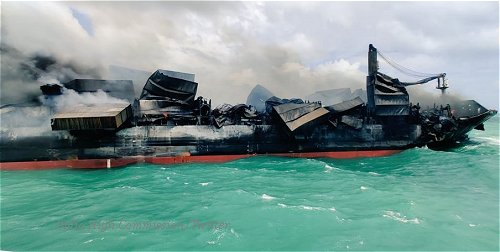
State-run Sri Lanka Ports Authority said the MV X-Press Pearl which caught fire came to China-run Colombo International Container Terminals (CICT) and the port rendered all possible assistance to the distressed vessel when made aware of the fire.

It is customary among seafarers in particular to give whatever possible help to distressed vessels at sea.

No prior notice was given of an acid leak, the SLPA said.

SLPA said the following sequence of events took place.

*The crew on board the vessel through radio on 19th the May 2021, had informed the SLPA controls that the vessel would arrive the waters of the Port of Colombo on mid-night and that she would call at the port control area during early dawn.

*As the berth was not ready at that time, the vessel was permitted to remain anchored in the harbor waters, as is usually the process during container operations.

*At that time SLPA had not been informed of any specific event or occurrence verbally or in writing by the vessel.

*The vessel was scheduled to be called at the Port after 23 hours. The Harbor Master only then received an email from the ship’s agent requesting permission to unload and reassemble a TEU containing leaking nitric acid.

*At noon that day, the port control room was notified that there was smoke inside the ship. A few minutes later, the ship’s administration had informed the port control of the SLPA that the vessel itself suppressed the situation.

*However, then two hours later, the vessel again informed of a smoke out of the ship and Sri Lanka Ports Authority (SLPA) taking prompt action at this point, deployed the services of its Fire Brigade at the distressed vessel within a short period of an hour.

X-Press Feeders, the vessels owners said request to offload the cargo at Hamad Port and Hazira Port had been denied and it proceeded to the next port of call, which was Colombo.

The two ports had said they lacked the facilities to do it.

Posted in Uncategorized

Travel restrictions NOT lifted on May 31 & June 04 – Army Chief

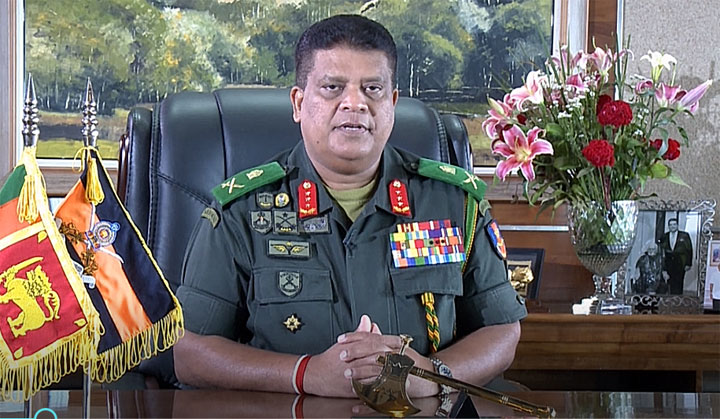
The ongoing travel restrictions will continue until June 7 and will not be relaxed on May 31st and June 4, Army Commander General Shavendra Silva said.

He said the decision was taken during a meeting held with the President and the COVID-19 task force this morning.

Earlier, the Government said travel restrictions will be relaxed on the 25th, 31st May and June 4 to allow people to pick up essential items during the travel period extended for June 07.

General Silva said that essential items will be delivered through the cordination with divisional secretariat.

Meanwhile, it was also decided to distribute Rs.5,000 to the low-income families