No decision yet on extending Sri Lanka’s unofficial lockdown: army chief

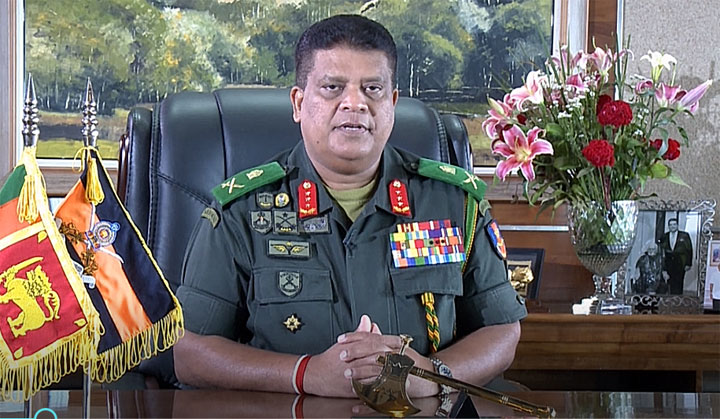
No decision has been taken yet to extend the ongoing movement restrictions in Sri Lanka beyond June 07 but it may be decided at any point until then, Army Commander Gen Shavendra Silva said.

Silva told the state-run Independent Television Network (ITN) on May 31 that there is no truth to reports circulating on social media that the unofficial lockdown has been extended.

Any decision regarding the restrictions will be informed to the public through an official press conference that will be organised by the Government Information Department, he said.

“It won’t come as a WhatsApp message,” he added.

Silva said decisions regarding movement restrictions are taken after consulting experts across multiple sectors, subject to the president’s approval.

“We will consider every recommendation from each party, and a decision may be made any day from now to June 07,” he added.

With the restrictions in place, the army chief said, health authorities have been able to COVID-19 identify patients and direct them to treatment or to quarantine centres.

“We won’t see the results of the ongoing controls right away, but we will after mid June,” he said.

Public Health Inspectors (PHI) Union Chairman Upul Rohana told the privately owned Derana TV that tracing and quarantining close contacts of COVID-19 patients were carried out successfully as a result of the restrictions.

“These restrictions helped us in a very big way to trace contacts and quarantine people. PCR tests results are now issued within three days,” he said.

However the number of PCR tests has dropped significantly, from 25,000 to 15,000, said Rohana.

Health authorities have suspended random PCR tests and are testing only close contacts of confirmed cases, he added.

Posted in Uncategorized

Sri Lanka facing its ‘worst beach pollution’ from burning ship

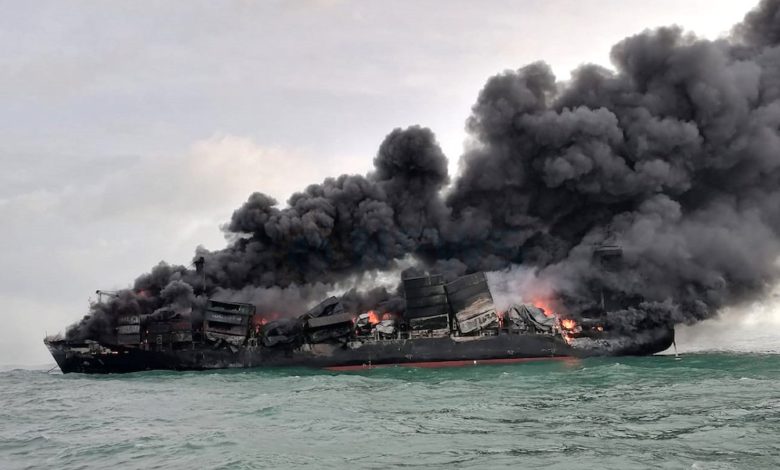
Sri Lanka is facing its worst beach pollution crisis as tonnes of plastic waste from a burning container ship wash ashore, a senior environment official said Saturday.

Fishermen have been banned from an 80-kilometre (50-mile) stretch of coast near the Singapore-registered MV X-Press Pearl as an international firefighting operation went into a 10th day.

“There is smoke and intermittent flames seen from the ship,” navy spokesman Captain Indika de Silva told AFP. “However, the vessel is stable and it is still in anchorage.”

Authorities are more worried about millions of polyethylene pellets washing up on beaches and threatening fish-breeding shallow waters.

The affected seafront is known for its crabs and jumbo prawns as well as its tourist beaches.

“This is probably the worst beach pollution in our history,” said Dharshani Lahandapura, head of Sri Lanka’s Marine Environment and Protection Authority (MEPA).

Thousands of military and security personnel in hazmat suits are cleaning the beaches of plastic waste and other debris from the ship, which caught fire on May 20.

The impact on mangroves, lagoons and marine wildlife in the region was being assessed.

The jobs of thousands of fishermen are at risk, according to authorities, and the MEPA said a possible oil leak would only add to the devastation.

Much of the ship’s cargo, including 25 tonnes of nitric acid, sodium hydroxide, lubricants and other chemicals, appeared to have been destroyed in the fire, officials said.

The X-Press Pearl caught fire as it waited to enter Colombo harbour and remains anchored just outside the port.

Authorities believe the fire was caused by a nitric acid leak that the crew had been aware of since May 11. The 25-member crew were evacuated after an explosion on the vessel.

Four Indian ships have joined Sri Lanka’s navy in the battle to contain the fire. Two vessels were equipped to deal with an oil slick, officials said.

Salvage operations are being led by the Dutch company SMIT, which has sent specialist fire-fighting tugs.

SMIT was also involved in dousing a burning oil tanker off Sri Lanka’s east coast last September after an engine room explosion that killed a crew member.

The fire on the New Diamond tanker took more than a week to put out and left a 40-kilometre (25-mile) long oil spill. Sri Lanka has demanded the owners pay $17 million for the clean-up.

Source: AFP

China’s urban waste is Sri Lanka’s organic fertilizer?

The JVP alleged that the government is attempting to import China’s urban waste labeling it as Organic Fertilizer.

JVPs Vijitha Herath on Sunday (30) said the government is paving the way for business associates to achieve various objectives through this scheme.

Vijith Herath said that the garbage that is to be imported from China is currently being exported to other countries under the guise of organic fertilizer.

“This will pose a serious threat to cultivations, and would be severe than the destruction caused by chemical fertilizer,” he said.

On the 11th of May 2021, President Gotabaya Rajapaksa appointed a Presidential Task Force to transform Sri Lanka’s economy into a green socio-economy with sustainable solutions to climate change.

A main responsibility of the task force is to prepare a roadmap for the complete transition from chemical farming to organic farming using organic fertiliser products instead of chemical fertilisers, pesticides and herbicides.

British tribunal recognises the risk of torture for Tamil political activists in Sri Lanka

In a landmark decision, the British Upper Tribunal has recognised the risk of arrest and torture Tamil activists face in Sri Lanka in a judgement granting an appeal to two Tamil asylum seekers in the case known as KK & RS vs the Home Secretary.

The case centred on the asylum appeal of two Tamil refugees who were detained by Sri Lanka’s security forces and subject to torture. The Home Office rejected their claims and alleged that they were not at risk of abuse upon returning to Sri Lanka as they were not high-profile figures. The tribunal rejected this claim.

The International Truth and Justice Project (ITJP) has documented 178 credible cases of torture from 2015-2018, excluding 22 individuals abroad who reported torture following the UN special investigation. A further 5 cases have been documented since Gotabaya Rajapaksa came to power with the ITJP noting that, “this likely represents the tip of the iceberg”.

The tribunal further defined the Government of Sri Lanka (GoSL) as “an authoritarian regime with a poor human rights record and a hostile attitude towards Tamil separatism”.

In this judgement, the tribunal noted that the Government of Sri Lanka (GoSL) drew “no material distinction between, on the one hand, the avowedly violent means of the LTTE in furtherance of Tamil Eelam, and non-violent political advocacy for that result on the other” and viewed separatist demands as “a threat to the integrity of the Sri Lankan state”. The judgement further noted that the GoSL maintains, “extensive intelligence-gathering regime” which has engaged in infiltrating Tamil groups, photographing demonstrations, and monitoring social media.

Expert evidence

In making this judgment the tribunal took into consideration the expert witness statements of Dr Sutha Nadarajah of SOAS and independent analyst Dr Chris Smith and Professor Rohan Gunaratne.

In his submission, Smith maintained that Sri Lanka viewed all Tamil diaspora sur place activities are political and in opposition to GoSL and further stated that it was very unlikely “for an individual to engage in political separatist activities within Sri Lanka without being detained and ill-treated”.

He further notes that the GoSL was unlikely to “differentiate between a person advocating federalism and one who urged confederalism” as both were seen as “two sides of the same coin.”

Smith further highlights not only the death threat protesters faced by former Defence Attaché, Brigadier Priyanka Fernando in February 2018 but case studies of family members in Sri Lanka who “had been harassed (or worse) by the authorities on account of a relative engaging in diaspora activities”.

In addition, Nadarajah, notes the wide-ranging proscription of hundreds of individuals and several Tamil diaspora organisations in March of this year. The ostensible purpose behind this was to enable authorities to take action against suspected members or supporters under Sri Lanka’s draconian Prevention of Terrorism Act. This act has been widely condemned by the international community as it permits Sri Lankan authorities to detain individuals without charge and has been linked to torture. In March Sri Lanka expanded upon this legislation despite having previously claimed a commitment to repeal it.

The Tribunal further upheld the “HJ Iran principle” which maintains that people can’t be expected to abandon their political activities so as to avoid persecution. The report notes,

“RS is aware of this risk and we have found that at least a material reason for her concealing her separatist beliefs would be to avoid being ill-treated”.

Posted in Uncategorized

China backed Port City told to comply with Sri Lanka language policy: Minister Peiris

Sri Lanka has officially informed a state enterprise of China that reclaimed Colombo Port City to adhere to language policy of the country following controversy over a name board, though it was not a matter for concern Education Minister G L Peiris said.

“We have officially informed them,” Minister Peiris told reporters. “That is not a matter which is cause for concern. That has been corrected.

“That has been brought to the notice of the relevant people and adherence to the language policy of the country will be mandatory.”

The Port City firm ran into a social media storm after a picture of a sign board with English, Chinese and Sinhala started circulating.

The Port City said the sign had been erected by a contractor.

“Port City Colombo is still under construction and all signboards erected by the contractor within the site re for the benefit of site employees or authorised visitor,” the firm said in a statement.

“Although construction sites do not require to have temporary signboards in all official languages, as the majority of employees are locals, the contractor had use Sinhala for the signboards while also using English and Chinese, as there are a considerable number of foreign workers also at the site.”

The Port City firm said it requested the contractor to remove the signboards and “follow standard signboards within the site.”

“There has to be compulsory compliance with the language policy of this country,” Minister Peiris said.

“The language policy, Sinhala, Tamil and English. There is going to be no departure from that.

“Port City Project any other project will obviously have to comply.”

The comments came shortly after Sri Lanka’s Attorney General unveiled plaque involving a Chinese funded project which had also replaced Tamil with Chinese.

The AG’s office told reporters that he was unaware of the lack of Tamil until it was unveiled and was taking steps to add Tamil.

Before chauvinism given legal effect through nationalist legislation in a law-making assembly inherited from the British, such as through the ‘Sinhala only law’, Sri Lanka’s ancient rulers had used Tamil in many surviving stone inscriptions.

Posted in Uncategorized

Sri Lanka confirms another 36 Covid-19 deaths Sunday, toll rises to 1,441

Sri Lanka confirmed 36 deaths due to COVID-19 on Sunday, May 30, 2021.

The Director General of Health Services Sunday confirmed 36 deaths that included seven deaths that occurred on Sunday and 29 deaths occurred from 02nd May to 29th May due to Covid-19 virus infection.

The total number of deaths due to Covid-19 infection in Sri Lanka is 1,441 by now.

Daily COVID-19 cases count moved to 2,849 on Sunday (May 30) as 663 more people were tested positive for the virus in Sri Lanka.

This brings the total number of confirmed cases of coronavirus reported in the country to 183,442.

China gives one dose of Sinopharm vaccine at higher price to Sri Lanka?

Responding to reports that China has given one dose of Sinopharm vaccine at a higher price ($15) to Sri Lanka than it has given to Bangladesh ($10), Production, Supply and Regulation of Pharmaceuticals State Minister Professor Channa Jayasuma said there is no such an agreement to give the vaccine at $10 for Bangladesh.

He said they had been informed by the Chinese Embassy and the Sinopharm company that there is no such an agreement to give the vaccine at $10 for Bangladesh.

The State Minister said the procurement agreement of Bangladesh is still under discussion.

A stock of 20 million of China’s Sinopharm vaccines is expected to arrive in Sri Lanka next month. It is reported that Sri Lanka has purchased one dose of the vaccines at $15.

However, Sri Lanka is reported to have purchased one dose of AstraZeneca vaccine for $5.50.

Meanwhile, Director-General of Health Services Dr Asela Gunawardena said they had obtained the Sinopharm vaccines at the minimum cost.

He said they had procured the vaccines under the due tender procedure and after meetings held via zoom technology with relevant officials.

“We have procured the vaccines with the minimum cost we could and at a competitive price,” he said.

“The prices of COVID-19 vaccines ranges from $18 to $40. The prices are subject to changes due to numerous reasons,” the Health DG underlined.

Meanwhile, referring to social media reports, the Chinese Embassy of Sri Lanka said the Bangladesh has not yet finalized their procurement agreement including pricing.

“We checked with Chinese Embassy in Dhaka as well as #Sinopharm group. Bangladesh Health Minister has clarified last week that their procurement agreement including pricing is not finalized yet. The fake news on social media has already disturbed their ongoing negotiation,” the Chinese Embassy said.

https://www.unicef.org/supply/covid-19-vaccine-market-dashboard

Posted in Uncategorized

China’s Sri Lankan port grab adds a pearl to its string – Mint

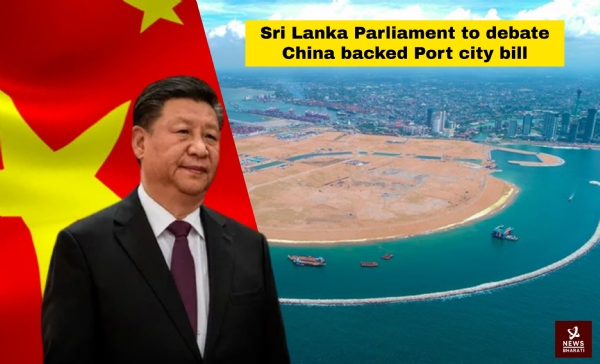
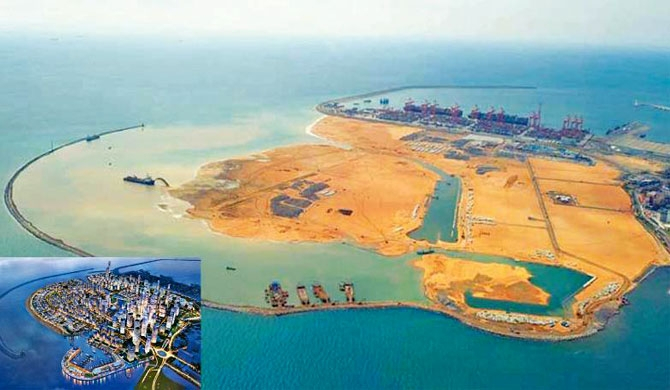
On 20 May, the Sri Lankan parliament passed the Colombo Port City Economic Commission Bill that lays out the country’s legal framework governing the China-financed project built on land reclaimed from the Sri Lankan capital’s seafront, adjoining Colombo’s port. The bill effectively turns these 660 acres into Chinese sovereign territory.

But this should not come as a surprise. China’s shadow seems to loom dark over Sri Lanka whenever the Rajapaksa brothers—Mahinda and Gotabaya—win elections and come to power. Mahinda Rajapaksa is currently prime minister and minister for finance. He was president from 2005 to 2015, when Gotabaya served as defence minister. Today, Gotabaya is president; the Rajapaksas returned to power after the 2019 elections.

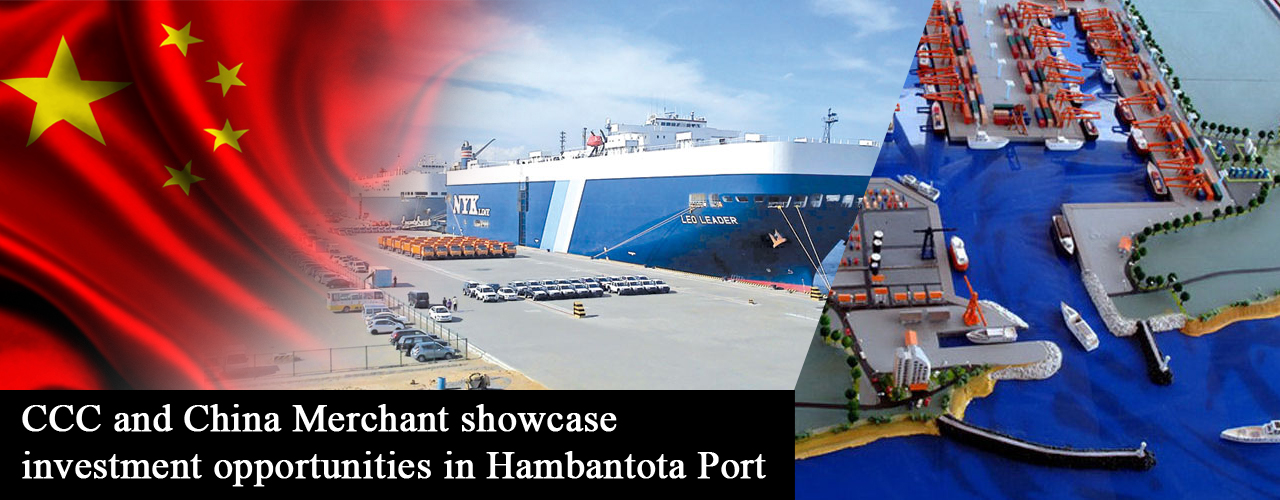
The previous Rajapaksa government had revelled in Chinese loans and projects, most famously the ambitious port built at Hambantota. Even though feasibility studies warned against it, the port was built by a Chinese state-owned enterprise with Chinese money. As expected, the port failed spectacularly. And the Chinese came to collect on their debt.

This was transparently the debt-trap-foreign-policy that has marked China’s world-girdling Belt and Road Initiative. Lend a country money to build infrastructure, get it constructed by Chinese companies, then, as per the not-so-fine print on the contract, take over the infrastructure built after the country fails to pay its Chinese debt. Sri Lanka fell for it. Or more likely, the Rajapaksas knew exactly what was going to happen, and were quite okay with it.

A New York Times report published in June 2018 after a months-long investigation alleged that the Chinese had paid the Rajapaksas substantial sums to see the project through. The NYT even listed specific details of how China Harbour, the company that had built the port, supposedly financed the brothers’ campaign during the country’s 2015 parliamentary election, from hard cash to saris for prospective supporters. The Rajapaksas lost those polls, but China’s plan would succeed anyway.

The new government struggled to service the debt the Rajapaksas had taken on. Repayments ballooned to nearly 85% of revenues. In 2017, a hapless Sri Lanka handed over Hambantota and 15,000 acres of nearby land to China on a 99-year-lease that was modelled, ironically, on the 19th-century concession for Hong Kong that Britain had extracted from China.

The port-grab had been China’s objective from day one. It now owns strategic territory only a few hundred kilometres from India. Chinese military submarines have been docking at Hambantota, which is today a key part of China’s ‘string of pearls’ strategy to encircle India somehow. And with Colombo Port City, Beijing is closer than ever to Kanyakumari.

In the meantime, China has also been active in other areas proximate to India. A recent report in Foreign Policy magazine reveals that Beijing has built at least three villages inside Bhutan, south of the Tibet border. The villages are served by more than 100km of new roads, a hydropower station, two Chinese Communist Party administrative centres, a signals and satellite communications base and military outposts.

The villages are part of a project to build hundreds of settlements along Tibet’s border. The residents, who are termed “soldiers without uniforms”, are exhorted to make “every village a fortress and every household a watchpost”. Their primary task is to guard China’s border and catch Tibetans attempting to flee to India or Nepal. Foreign Policy sees the Chinese moves as a shift from “nibbling at a neighbour’s territory to swallowing portions of it wholesale”. The message to Bhutan is clear: “Cut your ties with India, or else…”

And on 27 May, Chinese state media CGTN carried an article by a Pakistani scholar that claimed that “the China-Nepal relationship is taller than Mount Everest”.

Elsewhere in the Himalayas, the deadlock on the military de-escalation in Ladakh continues. China appears to be relying on its well-worn but effective playbook of dragging on negotiations endlessly, while the People’s Liberation Army (PLA) builds roads and permanent structures on the disputed land and its soldiers make themselves at home. The PLA appears to have settled in for the long haul all along the Ladakh border.

It is essential for India to recognize that being nice and hospitable to China does not work. Beijing almost certainly interpreted India’s past civility as simply a weakness of resolve. China is a civilizational state that operates with a strong sense of manifest destiny. That destiny, it believes, is tianxia, ‘all under heaven’ coexisting harmoniously. Harmony, however, means living by the rules that China and its ‘son of heaven’ emperor—a role that Xi Jinping has cast himself in—lay down. For three decades, China followed Deng Xiaoping’s ‘tao guang yang hui’ policy—conceal ambitions, hide your claws. Xi thinks that the time to maintain a low profile is past, and China can pursue its hegemonic goals openly and unabashedly. In fact, the word ‘hegemony’ barely describes what China thinks is its rightful place in the world—or rather above it.

India no longer has the excuse that China lied to us. Today, Beijing sees no need for subterfuge or camouflage. It’s all out there in plain sight. India must shed those shibboleths of the world being one family and act in unhesitant self-interest.

Sandipan Deb is a former editor of ‘Financial Express’, and founder-editor of ‘Open’ and ‘Swarajya’ magazines

The Colombo Port City – The Island Editorial

However hard the government tries to claim that it won a famous victory in getting through the legislature the controversial Colombo Port City Bill, now an Act of Parliament following its certification last week by Speaker Mahinda Yapa Abeywardena, the fact remains that the Supreme Court (SC) found as many as 25 of its 74 clauses in conflict with the constitution. This is more than a third of the Bill that was originally presented and has been described as a “stinging rebuke” by critics. The SC held that many of the clauses, if not amended, required a two thirds majority of the House for their enactment; and there were others that required both the special majority plus the people’s consent at a referendum. It goes unsaid that the government will under no circumstances wade into a referendum. If we by some miracle have one, people will not bother about any Port City question that is put. They will vote on whether they do or do not want the incumbent government to remain in office. That is reason enough for any government to avoid referendums like the plague.

As promised, the impugned clauses were amended in line with SC guidelines to pass muster. After that, there was no need for the two thirds majority – which the government failed to get by a single vote – or any referendum. Readers will remember the one referendum we had was when the J.R. Jayewardene government asked the people to vote for either the ‘pot’ or the ‘lamp’ to indicate whether they consented to extend the massive mandate JRJ won in 1977. He asked for authority to continue to hold, without an election, the five sixths majority he won in that unprecedented landslide. That was in 1982 and the then incumbent Parliament got six more years without an election. There were numerous allegations that the referendum was rigged but nothing was proved. But it was as clear as daylight to anybody with eyes to see that the prohibition on the display of symbols was flagrantly violated.

It is true that JRJ applied some whitewash over this highly undemocratic act of canceling an election. He did that by requiring sitting ruling party MPs who could not carry their constituencies when he sought re-election (actually a misnomer as we will presently explain) in 1982 and the referendum that followed some weeks later. The misnomer is that he was not elected president in 1977. He was elected prime minister and was later “deemed” president by his 1978 constitution creating the executive presidency. Even in the whitewashing, there was dilution. Then Finance Minister Ronnie de Mel was exempted from facing a by-election and moved from Devinuwara to Bulathsinhala and no by-election was held at Panadura, out of the fear of Dr. Neville Fernando elected on the UNP ticket in 1977, who later resigned from Parliament following differences of opinion with the president.

We have been told by government MPs that there was a miscount in the parliamentary voting on the Bill and an inquiry of whether this was so would be held. Although there were different tallies, none of them hit the magic 150 number which constitutes the two thirds majority in the 225-member legislature. Voting in Parliament is now electronic and not physical. Gone are the days of voice votes of ‘ayes’ and ‘noes’, MPs standing at their seats for physical counts, or the calling of names where a vote by name is called for. Mr. Dhammika Kitulgoda, a former Secretary General of Parliament had been appointed as inquirer into this matter but had not begun his inquiry as this is being written. However the government’s Information and Communication Technology Agency (ICTA) was called to investigate and a report, not yet published or publicized, had been presented. Readers will agree that if the finding was in favour of the government contention, this would not have been the case.

We run in this issue a call by Mr. Chandra Jayaratne, a former Chairman of the Ceylon Chamber of Commerce who headed the CTC Eagle Insurance Company when the Ceylon Tobacco Company was in the insurance business, calling for the creation of an Independent Parliamentary Counsel in this country. This institution exists in the United Kingdom and Australia and Jayaratne, a civil society activist sees the Port City Bill (now Act) as a good reason for Sri Lanka too setting up such an institution to carry out the duties now undertaken by the Legal Draftsman. The people of this country will join him is asking how a Bill, with more than a third of its clauses in variance with the Constitution, could have in the first place been gazetted and then presented to Parliament with such defects. It presumably went through the Legal Draftsman, Attorney General, Ministry of Justice and the Cabinet before it came to Parliament. In fact the state-controlled Daily News reported over a month ago that AG had informed the Secretary to the President that “provisions of the Bill are not inconsistent with the Constitution. The Bill is not subject to any prohibitions or restrictions imposed by the 13th Amendment to the Constitution and may be enacted by Parliament.” Thereafter when the various unconstitutional defects were being pointed by counsel supporting the 19 petitions before the SC, a series of intended amendments were presented.

We are all familiar with the police arresting suspects on Friday evenings so that they can be held in custody until Monday morning without being produced before a Magistrate. The Port City Bill was presented to Parliament in the middle of the New Year holiday season limiting the time-frame open for citizen to challenge it. Nevertheless 19 petitions were filed and considered by a five-judge bench of the SC that made a unanimous determination. Whether the creation of the institution promoted by Jayaratne will make any difference to mala fide acts of governments seeking political advantages, we doubt. Perhaps the Port City will make a difference to the economy of our country. But that is no excuse for attempting to push through legislation that is bad in law.

Posted in Uncategorized

The Bangladeshi example – The Morning Editorial

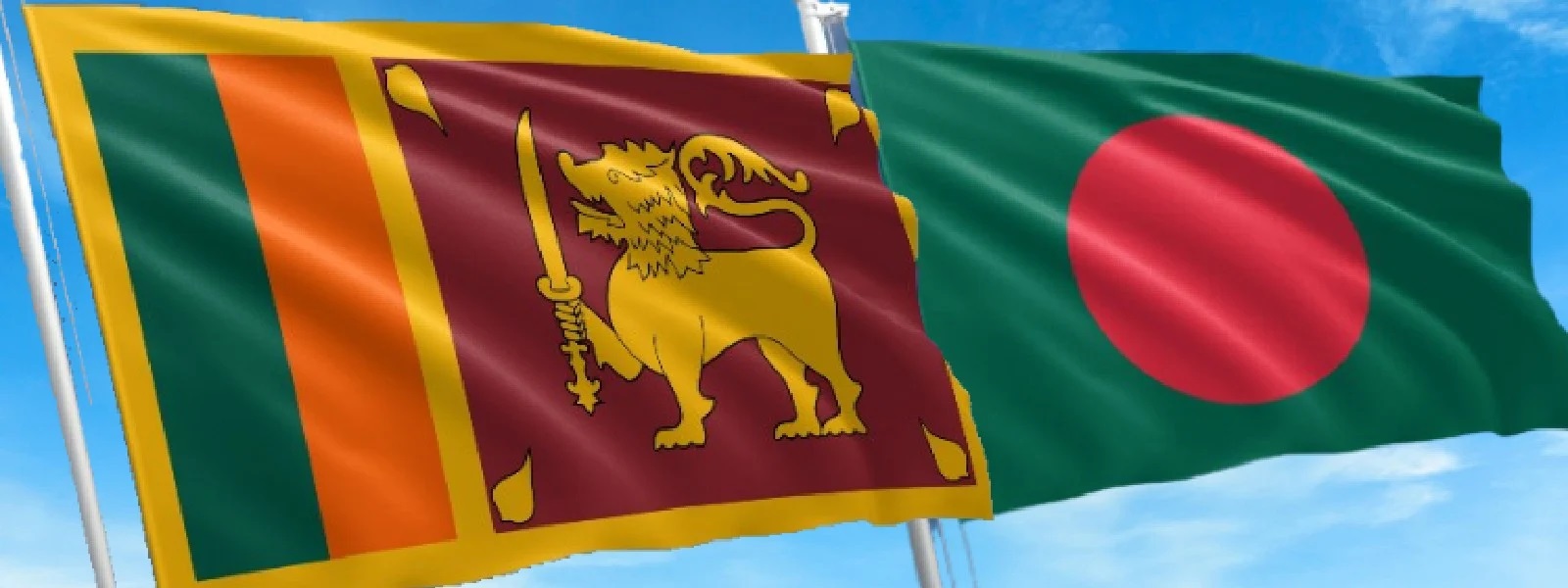
Even though the Government and Central Bank of Sri Lanka have to date remained mum on the matter, Bangladeshi media has been making a song and dance about that country now assuming the mantle of a monetary lender, thereby joining a select group of nations to achieve that status. That “achievement” comes at the expense of its South Asian compatriot, Sri Lanka, which had sought assistance to overcome its worsening financial headaches.

Sri Lanka is a country that boasts of a written history spanning 2,500-plus years while Bangladesh will be commemorating 50 years since its founding in 1971. Bangladesh was born out of what used to be East Pakistan, as a new nation that had to start basically everything from scratch, following the genocide unleashed by Pakistani forces that led to the creation of the country. Therefore, Sri Lanka is the more senior of the two nations, and was way ahead on economic terms when Bangladesh was born. But today, the senior has gone crawling to the newborn, seeking a bailout from its financial woes.

More than the fact that Sri Lanka has had to obtain a three-month currency swap facility from Bangladesh, what has got eyebrows raised is the quantum of the facility – $ 200 million, which is equivalent to a day’s GDP output. Could Sri Lanka be that desperate, is the unspoken question lingering in many an economist’s mind. The Bangladesh facility comes on the back of two similar facilities obtained from two other Asian countries in the past two months, namely South Korea and China, each of whom have committed to disbursing $ 500 million loans.

While the Korean facility is more accommodative, with a 40-year repayment period at a concessionary interest rate of 0.20 and inclusive of a 10-year grace period, not so with China, which has been only too happy to lend all the money that Sri Lanka wants, but on “competitive terms” – which in effect is a pseudonym for commercial terms, meaning that this particular Chinese loan has to be paid back in 10 years. This comes on the back of a credit swap with China to the tune of $ 1.5 billion, which deal was inked just this February in order to overcome an acute foreign exchange crisis, the worst since 2008, that also sent the rupee crashing.

While Chinese funds are there for the asking, the caveat is that if and when Sri Lanka fails to repay, they will walk away with an asset of equal or greater value in lieu of the funds. And that in essence is how the now-infamous Chinese debt trap ensnares its victims, a system that has worked well for Beijing across many third world nations from Asia to Africa, including Sri Lanka, where the Hambantota Port became the first of such acquisitions.

So how is it that a country that shares many similarities of a South Asian nation, and has been on the world map for a mere 50 years, today boasts of being a frontier global market and one of the top 10 fastest-growing economies in the world, with ten times the foreign reserves of Sri Lanka, which from an economic perspective should be the one doing better? The answer must surely lie in the quality of leadership in the two nations, whose peoples and economies share many parallels.

Bangladesh’s phoenix-like growth in the last decade can be attributed to enlightened and astute leadership. A clear roadmap for growth and stability, relentlessly pursued by successive governments, has placed the country on a firm foundation for economic take-off. Today, Bangladesh is the new darling of the global apparel trade and Sri Lanka risks losing out on its breadwinner if it fails to get its act together, quickly. Already, there are reports of some of the bigger apparel producers based here shifting production to Bangladesh, if for no other reason than its investment-friendly, pro-business operating environment.

Not so long ago, Bangladesh used to be considered the laughing stock in this part of the world due to what seemed like perennial political problems, but all that is now history. That same joke is now on us. Today, the only companies that see investment potential in Sri Lanka seem to be the ones from China. The big boys from the West are flocking to places like Bangladesh, Vietnam, Thailand, etc., and the reasons are not that hard to fathom.

Our politicians have refused to see the writing on the wall, simply because they have been unable to see beyond their collective noses. It is unfortunate that “visions” and “missions” that abound during election time go no further once elected. The disconnect that occurs from one elected government to the other is another issue. The other danger lies in getting the investment mix wrong, because it could potentially affect export revenue. China does not import anything significant from Sri Lanka; 90% of Sri Lanka’s exports head to the West, not the East. Therefore, it is important to keep this equation in mind for obvious reasons.

The fact of the matter is that Sri Lanka’s economy shrank by 3.6% last year, the biggest contraction since the Central Bank began keeping records in 1950. While the pandemic is naturally at the root of it, it is noteworthy that the slide began before the pandemic kicked in, pointing to bigger, systemic issues. The end result has been a foreign exchange crunch that has had far-reaching implications on every aspect of the economy.

Notwithstanding this reality, prominent Cabinet Ministers have gone on record in the past few days that the Treasury has enough and more cash to purchase whatever it deems necessary, be it luxury vehicles for MPs, or vaccines to fight Covid-19. It is regrettable that despite the ministerial bombast, much of the vaccination that has taken place so far has been due to donations received from India, China, Russia, and the WHO’s Covax. Only 500,000 of the vaccines actually purchased have arrived in the country, while the millions that have supposedly been purchased remain mere orders on paper. To add to the contradictions, we have some other ministers directly appealing to the people for private funds.

Be that as it may, the controversy surrounding the utilisation of funds from the Government’s official Covid response fund, Itukama, has not helped the cause either, with the Government, by its own admission, stating that Rs. 1.3 billion from the fund remains unutilised, while the limited amount spent has also been shrouded in controversy. The contradictions don’t end there. Last week, a key Covid Task Force media briefing was presided by the Highways and Tourism Ministers, while the three health ministers were conspicuous by their absence.

The time has come to focus on substance rather than the superfluous to keep the masses happy. It is this recipe that has resulted in Sri Lanka Inc. becoming an underperforming asset and a liability for its 21 million citizens, who now have a debt exceeding Rs. 700,000 on each of their heads.

Politicians will come and politicians will go, but it is the people that have to face the consequences of their short-sighted actions for generations to come. Playing to the gallery is not going to bring in investors or pay back loans. For that to happen, the economic fundamentals need to be strengthened – and the only way to do that is to let professionals do what they do best while politicians take a backseat.

The need of the hour is to strengthen and ensure the independence of public institutions, which in the end, is the only thing that will create confidence for investors, not incentives. That is the only way the rule of law can be ensured, and the only way that progressive nations have succeeded. The Shipping Minister “issuing instructions” to port officials on extinguishing the fire on board the X-Press Pearl no sooner the fire began, is a moot point. The rest is now dark history in the making.

In short, if this country is to come out of the hole it has dug for itself, politics will have to take a backseat. That is what the people voted for at the last presidential election.