Colombo, clothing sector in crisis: 50,000 workers laid off -AsiaNews

There are 300 manufacturing companies that employ 350 thousand workers and produce garments for dozens of major international brands. Trade unions: the companies ‘have also closed entire facilities without even paying the paltry compensation recommended by the government’. The industry accounts for more than 50 per cent of total national export revenue.

About 50 thousand garment workers have lost their jobs due to the economic crisis. The country is home to more or less 300 manufacturing companies that employ 350 thousand workers, who in turn support an estimated 700 thousand family members.

These companies produce garments for dozens of major international brands based in the US and Europe, including Victoria’s Secret, Marks & Spencer, GAP, Tommy Hilfiger and VanHeusen.

Senior manager Nilantha Kaluarachchi, an employee of Export Processing Zone ‘A’ in Biyagama, explained to AsiaNews that ‘several Sri Lankan garment factory owners have not only cut jobs and wages, but also closed down entire facilities without even paying the paltry compensation recommended by the government.

The basic monthly income of many workers struggling with hyperinflation has fallen to around 25 thousand rupees [US]’.

According to the secretary of the Manufacturers’ Association, Dhammika Fernando, ‘there is a reduction of workers in the factories and some companies have downsized their operations, while companies with 400-500 workers are open four days a week. The workers in these factories have to work 10 hours a day without overdoing it’.

“At the last meeting of the National Labour Council it was decided to allow a five-day working week for the rest of the year, provided that no one can be employed on Saturdays. But the garment industry wants to get permission for employees to work on Saturdays,’ Fernando added.

According to the joint secretary of the Free Trade Zone and General Services Employees’ Union, Anton Marcus, ’employers are expecting a series of labour reforms that worry the unions: increasing the number of overtime hours per month from 60 to 75 hours and increasing night shifts for women from 10 to 15 days. This would prevent companies from hiring more workers by making the most of their labour force’.

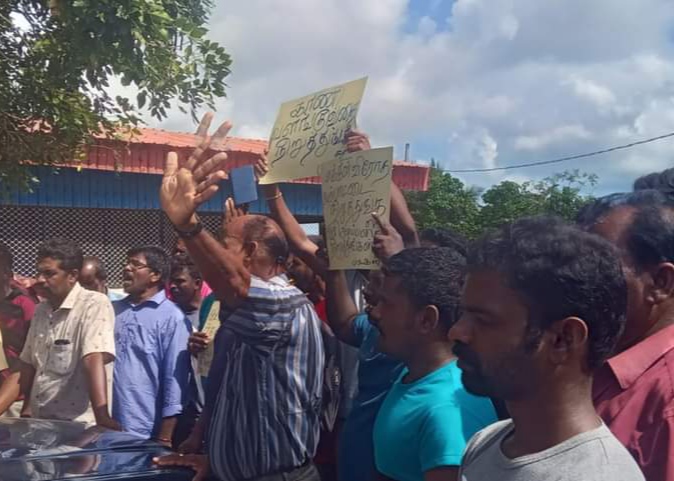
“About 50 thousand employees in the garment sector have been laid off, their wages vanished overnight after a rapid currency devaluation, even though their work continues to enrich the country’s three major garment factory conglomerates and their important customers, including major international brands,” Anton pointed out.

Most of the workers are also not paid the minimum ’emergency allowance’ of 10 thousand rupees (USD 27), intended to help them overcome the crisis, despite the fact that the current basic wages are heavily devalued. Anton explains that all brands that source in Sri Lanka have been asked to guarantee the monthly payment of the emergency allowance to their supply chain workers.

The operations manager at the Katunayaka Free Trade Zone factory, Dasun Amaranayake, said that ‘some factories give their employees extra support, such as a monthly bonus of 500 rupees (.37) or a food parcel if they have never taken a day off. With wage and benefit adjustments, workers receive between 20,000 and 23,500 rupees (-65) monthly. However, this is an insufficient amount considering that, before the economic crisis, employees’ wages were barely at subsistence level and were then worth between 0 and 5 per month’.

“Employees in the garment sector, mostly women, have migrated from their villages to support their families, and are the basis of an industry that accounts for more than 50 per cent of Sri Lanka’s total export earnings. Yet they have suffered from all the crises that have hit the country in recent years: during the Covid-19 pandemic, the income from this industry was deemed too important to let the workers shut themselves away, causing mass outbreaks in factories and workers’ homes. In the first three months of the pandemic, garment workers lost around 40% of their wages. The government meanwhile is not interested in dialogue between social partners,’ Dasun pointed out.

Posted in Uncategorized

Attorney General recommendation on tenure of LG bodies expected on Monday (20)

State Minister of Provincial Councils and Local Government, Janaka Wakkumbura said the Attorney General’s recommendation on whether the tenure of the local government institutions will be extended, is expected today (20).

The tenure of 340 Local Government Institutions lapsed on Sunday (19) night, and the matter of extending the tenure was referred to the Attorney General.

The official term of 340 local government institutions ended at midnight on Sunday (19).

Accordingly the tenure of 29 municipal councils, 36 urban councils and 275 pradeshiya sabhas ceased from midnight on Sunday (19).

The tenure of the members of the 340 Local Government Institutions commenced on the 20th of March 2018, after the Local Government Election held on 10th February that year.

The Elpitiya Pradeshiya Sabyha held a separate election and as a result, their official term began in October 2018.

Although the official term of 340 local government institutions was supposed to end on the 20th of March last year, the Minister in charge used his authority in order to extend the term by a year to end in 2023.

Accordingly, the official term of 340 local government institutions ceased on Sunday (19).

The State Minister of Provincial Councils and Local Government Janaka Wakkumbura says that thereafter, all administrative activities of these institutions will be handed over to the commissioners or secretaries.

This is as per the provisions set out in the Local Authorities Elections Ordinance.

Sri Lanka China Business Council office bearers elected

Sri Lanka China Business Council said members had elected Chaminda Perera, the Co-Founder and Director of Deranya as President and Minidi Gamalath of Sudath Perera Associates, as Vice President for the year 2022 – 2023.

Haroun Cader of the Sinwa Holdings was elected as the Senior Vice President

Aruna Perera will serve on the Committee as the Immediate Past President.

Other Business Council members: Acorn Aviation Private Ltd., Bank of China Colombo Branch, David Peiris Motor Company, Ernst & Young, Heritage Teas, Prima Ceylon, Singer Sri Lanka, Spillburg Holdings, South Asia Gateway Terminals, and Sunshine Tea were elected as Committee Members for the year 2022-2023.

The Sri Lanka China Business Council which operates under the aegis of the Ceylon Chamber of Commerce with the main objective of promoting trade, investment, services and tourism between Sri Lanka and China.

Posted in Uncategorized

Thus spake Wimal Weerawansa By N Sathiya Moorthy

At a time when parent JVP is running high in opinion polls month after month in the post-Aragalaya period, NFF founder Wimal Weerawansa has been beating what seems to be a dead electoral horse that his one-time SLPP alliance leader has supposedly become.

His recent ‘revelation’ that Namal Rajapaksa was a political burden (to put it mildly) and inducting into politics was his father Mahinda Rajapaksa’s first blunder, to say the least, is crying over spilt milk. Rather, it is milk that the likes of him had spilt and spoilt (or spoilt first and then spilled) in the first place.

The reasons are not far to seek. Ever since he walked out of the JVP when it quit the first Mahinda government (2005-10) with 10 of the party’s 39 MPs in the 225-member Parliament, he was among the greatest of Rajapaksa defenders. He was the JVP’s spokesperson and the best of public speakers when the party walked out the Rajapaksa government.

In a way, the JVP had set the process in motion after contesting the 2006 local government elections independent of the then SLFP-led UPA combine under President Mahinda – and losing miserably, nation-wide. In just six months, Mahinda had simply devoured the JVP’s purported 10-plus per cent vote-share, which had earlier tempted him to continue the inherited alliance, which the Rajapaksas otherwise reportedly felt uncomfortable with.

In the years that followed and given the party’s hugely accepted clean image, the JVP was also finding itself increasingly embarrassed by corruption charges against the ruling Rajapaksa clan, whose ministries controlled nearly 80 per cent of all annual budgetary allocations. Yet, when he walked out of the JVP, Weerawansa had no qualms defending the Rajapaksas inside and outside Parliament, whatever the truth behind those allegations.

Weerawansa could now argue that he had backed Mahinda and other Rajapaksas at the time only in larger national interest, as the armed forces under their collective leadership was tasting victory after victory against the dreaded LTTE. Yet, for more than 10 years after the conclusive and victorious war, he and others were in the very same Rajapaksas, company, whether or not the latter were in power or out of it. In the second Mahinda term and the more recent failed and aborted presidency of younger brother Gotabaya Rasjapaksa, Namal was a Cabinet minister, with Wimal sitting in his company.

Dual citizenship

The truth is that the likes of Weerawansa and also Udaya Gammanpilla, founder of the centre-right PHU, the breakaway faction in turn of the JHU, had had the best of all worlds in the company of the Rajapaksas. Their electoral acumen should still be appreciated, but they are all in the past. They were among the first in the Rajapajksas’ company to turn against the family when continuing in President Gota’s Cabinet with Mahinda as Prime Minister, another brother Basil as Finance Minister later on, not to leave out Chamal, Namal and the former’s son Shasheendra, who was only a junior minister.

Yet, when the two of them began targeting Basil and the Finance Ministry under their care, only the traditional critics of the Rajapaksas, smiled. Others began wondering what had piqued them both, after decades of association. During that period, they along with other SLPP partners had taken orders from the very same man, who was the party’s national organiser.

At no point then or later did any of them question the ‘nationalist’ credentials of Gota and Bail, as they wanted to have the best of dual citizenship, in Sri Lanka and the US. Gota at least reluctantly gave up his American citizenship after he became convinced that he would after all be Mahinda’s (equally reluctant) choice as the SLPP presidential candidate in 2019, with realistic hopes of victory.

Basil, instead, would want to be Sri Lanka’s Finance Minister and also a dual citizen, something that the Supreme Court had ruled out in the ‘Geetha Kumarasinghe case’ as far back as 2017. For Basil, the Gota-Mahinda duo got Parliament to amend the law, rather than asking their dear brother to make his choice. It was incidental that Wimal, Udaya and the traditional Left, or whatever was left of it, had begun turning against Basil.

Credibility and consistency

One does not look for credibility and consistency from politicians, anywhere. It is worse in Sri Lanka, and more so in recent years. Mahinda and his 40-plus MPs had no problem serving in Parliament on the pre-split SLFP ticket, with estranged President Maithripala Sirisena as party chief – and criticising the government, both within and outside the House. Maithiri, for his part, when relationship with Prime Minister Ranil Wickremesinghe became too hot to handle, had no hesitation in making Mahinda PM – only to be over-ruled by the Supreme Court, and thankfully so.

Sajith Premadasa and his present-day SJB colleagues were all praise for Ranil when he was their leader, and are now critical of all wrong things from the past, when they were all his comrades-in-arms, or were eating their political meal out of his arms. Ranil and Mahinda, who were always civil to each other but still came from ideologically and socially different backgrounds, are today the best political buddies in the country.

Yet, Wimal and the like should realise, at least now, that their game is up and they all too might have been rendered irrelevant in the politics of the future – possibly more than the Rajapaksas themselves. They wanted to be seen as rebelling against the Rajapaksas and steal their thunder in future elections. Thus, they waited until Gota sacked them from the ministry after Wimal, Udaya and fellow Cabinet Minister Vasudeva Nanayakara went to court against letting an American firm, New Fortress Energy to purchase 40-per cent stake in the Kerawalapitya / Yugadanavi power station in 2021.

If any or all of them thought that such antics would help them in their political future, they too were short-sighted enough not to foresee President Gota’s ability to wreck the boat from within, more than the rest combined. Yes, the Aragalaya protests were unprecedented and thus they too could not have foreseen it – But they, it may have also washed away their individual political future as it might have done it to the Rajapaksas as a clan.

(The writer is a policy analyst & political commentator, based in Chennai, India. Email: sathiyam54@nsathiyamoorthy.com)

Posted in Uncategorized

LG Polls: Time runs out for Postal Ballot

The deadline set by the Election Commission to receive postal ballot papers for the local government elections (LG) will expire tomorrow (21), with no sign that the Government Printer will be able to supply the required postal ballots by then, The Daily Morning learns.

The EC had earlier stated that postal voting of the LG elections would be held on scheduled dates which are from 28 to 31 March. However, Government Printer, Gangani Liyanage said that it was totally impossible for the ballot papers to be handed over to the EC before then, given that the Treasury had not released the required funds as of yesterday (19).

This in the backdrop of, the Finance Ministry, which is yet to release the required funds for the holding of the Local Government (LG) elections, has informed the Mass Media Media Ministry under which the Government Printing Department comes, in writing, that requests made by the latter Department for the release of the necessary funds had been forwarded to Finance Minister, President Ranil Wickremesinghe.

Following a meeting with the Elections Commission (EC) on 7 March, Government Printer, Gangani Liyanage had requested the Treasury Operations Department under the Finance Ministry to release required funds for printing ballot papers for the LG election. As there had been no response from the said Department to the initial request, she had again made a request last week, with copies to the EC.

Accordingly, The Daily Morning contacted Liyanage and queried as to whether she had received any funds or response from the Finance Ministry as of yesterday (19).

Responding to the query, she said: “We have not received any money. Finance, Economic Stabilisation and National Policies Ministry and Treasury Secretary, Mahinda Siriwardana had informed the Mass Media Ministry Secretary that our request had been forwarded to the subject Minister (Wickremesinghe).”

The Daily Morning also asked State Minister of Finance, Ranjith Siyambalapitiya regarding the latest situation with regard to the release of funds for the LG elections, and he replied: “I am not aware of it as of now. This is a matter to which I should respond responsibly, and I will be able to make a comment tomorrow (20).”

Posted in Uncategorized

BASL vows to fight country’s executive to preserve judiciary’s independence

The Bar Association of Sri Lanka (BASL) is to wage a battle to preserve the independence of judiciary from the pressure being asserted from the nation’s executive, said the legal body’s chairman Saliya Peiris on Sunday, emphaising that attempts were being made to systematically ignore court rulings.

Speaking during a seminar held in the southern town of Weligama, Peiris said that the legal fraternity should now allow the executives to put the judges under stress.

“We have seen that the executive is unwilling to obey court orders and attempts are being made to systematically ignore court rulings,” Peiris said.

“We must not allow the executive to put the judges under stress,” Peiris further stressed in a reference to the ongoing spat over the non holding of the local council elections.

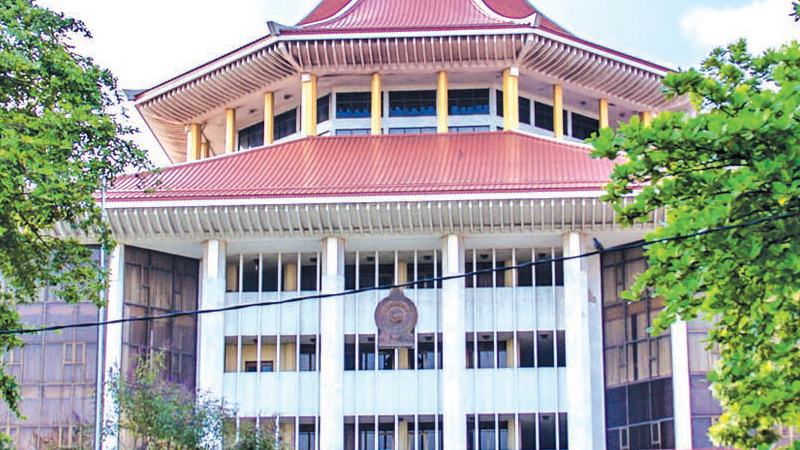
The Supreme Court earlier this month issued an interim order asking the state officials not to hinder the election by not releasing the funds.

At least two government parliamentarians had raised a privileges issue in parliament over the interim order which they claimed was an abuse of parliamentary privileges.

Peiris said that the executive meaning the President Ranil Wickremesinghe’s decision to not conduct the election was unacceptable and the use of parliament to bring pressure on the judiciary was an unhealthy development.

“All of us must fight against it,” Peiris was quoted as saying by PTI.

Source: PTI

Freedom of the World Report 2023 downgrades Sri Lanka

The Freedom of the World Report 2023 has downgraded Sri Lanka in terms of democratic hallmarks. Sri Lanka has got an overall score of 53/100. Last year’s overall score was 55/100. But this year, as well as last year, its status is the same, namely, “Partly Free”.

In 2023, in terms of “political rights” it has got 22/40, and in terms of “civil liberties”, it has got 31/60.

Here are the main observations:

A culture of impunity regarding official corruption appears to exist in Sri Lanka, in which politicians do not prosecute political opponents on corruption allegations lest they risk scrutiny in the future. Corruption has also impacted the delivery of vital goods; a former chief executive of state-owned Litro Gas noted that corruption was rampant in that sector. In May 2022, Australian and Indian news outlets reported that Namal Rajapaksa, a scion of the Rajapaksa family, was linked to a money laundering scheme along with an Australian company and a Sri Lankan firm owned by a family associate.

In 2020, Gotabaya Rajapaksa established the Presidential Commission of Inquiry to Investigate Allegations of Political Victimization, which opposition leaders and rights groups said helped the Rajapaksa family and their associates evade criminal investigations and prosecution. In an October 2022 report, the UN High Commissioner for Human Rights reported that the inquiry had “actively intervened in police investigations and court proceedings in several high-profile human rights cases.”

Transparency is lacking in procurement and contracting decisions, including for large contracts with Chinese and other foreign companies. The auditor general in recent years has also noted major discrepancies in the government’s assessments of public debt.

Following the end of the civil war in 2009, the military presence in the Tamil-populated areas of the north and east increased. The creation of the Presidential Task Force for Archeological Heritage Management in the Eastern Province in 2020 led to concerns that the government would employ the military to back claims pertaining to Buddhist heritage, to further change the region’s demographics.

Civil Liberties

Media were critical when reporting on the 2022 anti-government protests, but journalists faced arrest and physical assault while covering them. In March, police and security forces arrested journalists who covered a protest near Gotabaya Rajapaksa’s home. On July 9, paramilitary forces attacked a team of reporters near the then prime minister Ranil Wickremesinghe’s home. Later that month, security forces assaulted journalists who were covering a raid on a Colombo protest site.

The Roman Catholic clergy has criticized the government for perceived faults in the official investigation into the 2019 Easter terrorist bombings, which had targeted three Christian churches.

Academic freedom is generally respected, but students and faculty feel pressure to avoid discussing sensitive topics, including alleged war crimes, human rights for marginalized groups, Islamophobia, or extremist activities by Buddhist clergy.

The civil war remains a sensitive topic. Awareness of state officials’ harassment of civil society activists working on human rights issues in the north and east has deterred open discussion of such subjects among ordinary citizens. Even anti-government protesters active in 2022 reportedly avoided those issues and discouraged discourse on those subjects.

In April, an activist who administered a Facebook group called “Go Home Gota” was arrested. The Aragalaya protests, which were prompted by the country’s severe economic difficulties, government mismanagement, and corruption, were held for much of 2022. The protests escalated on March 31, when protesters set fire to an army vehicle near Gotabaya Rajapaksa’s private residence and authorities responded with force. Rajapaksa declared a state of emergency and imposed a curfew days later.

On May 9, the day Mahinda Rajapaksa resigned as prime minister, SLPP supporters attacked antigovernment demonstrators in Colombo, injuring at least 20 people. Anti-government protesters also targeted Sri Lanka Podujana Peramuna (SLPP) members, with several lawmakers’ homes and vehicles being destroyed. In total, 5 people were reportedly killed from clashes on May 9, while 150 were injured.

On July 9, protesters occupied the presidential mansion forcing Gotabaya Rajapaksa to flee the country. Wickremesinghe’s home and several other buildings were destroyed by protesters that day.

The government maintained a crackdown on the Aragalaya evenafter Gotabaya Rajapaksa’s resignation. Soldiers dismantled a Colombo protest camp on July 21; over 50 people were reportedly injured during the operation. Authorities also targeted perceived Aragalaya participants, with over 100 people being arrested by early August. Also in August, three student activists were arrested under the Prevention of Terrorism Act (PTA). In September, the government used the Official Secrets Act to briefly restrict assembly rights in parts of Colombo, which were declared “high security zones.”

Nongovernmental organizations (NGOs) are generally free to operate without interference, but some NGOs and activists—particularly those in the north and east that focus on sensitive topics such as military impunity—have been subjected to denial of registration, surveillance, harassment, and assaults. Intelligence personnel have attended civil society meetings and questioned NGOs about their personnel and funding sources. Trade unions protested the government’s handling of the country’s economic crisis throughout much of 2021 and 2022.

Due process rights are undermined by the PTA, which was expanded in 2021 to allow suspects to be detained for up to two years without trial. The law has been used to hold perceived enemies of the government, particularly Tamils. Many detained under the PTA’s provisions have been kept in custody for longer than the law allows. Following the 2019 Easter Sunday bombings, hundreds of Muslim suspects were arrested under the act, while Sinhalese anti-Muslim rioters were charged under standard civilian statutes that allowed bail.

The government amended the PTA in March 2022 through an accelerated parliamentary process. But UN human rights experts warned that the legislation’s most severe provisions remained. The PTA has since been used against antigovernment protesters, with three student activists being detained under the law in August.

Military personnel accused of committing war crimes during the civil war later held prominent government roles, while others remain in senior military posts. Police and security forces have engaged in extrajudicial executions, forced disappearances, custodial rape, and torture, all of which disproportionately affect Tamils. Aragalaya protesters who were arrested were reportedly tortured while in custody.

Tamils report systematic discrimination in areas including government employment, university education, and access to justice. Ethnic and religious minorities are vulnerable to violence and mistreatment by security forces and Sinhalese Buddhist extremists.

Ongoing occupations and other forms of land grabbing remain serious problems, especially for Tamils in the northeast. Members of minority groups have been targeted by criminals using forged land deeds in Colombo, leading to an investigation in October 2022.

Rape of women and children and domestic violence remain serious problems, and perpetrators often act with impunity. Some very young girls are forced into marriages under Islamic personal law, which the Gotabaya Rajapaksa government sought to change by altering the Muslim Marriage and Divorce Act (MMDA). However, the government was criticized for attempting to revise the MMDA without adequate input from the Muslim community. In 2021, the All Ceylon Jamiyyathul Ulama objected to the cabinet’s decision to amend the MMDA, in part because it would ban polygamous marriages for Muslims.

While most of the mainly Tamil workers on tea plantations are unionized, employers routinely violate their rights.

Posted in Uncategorized

Sri Lanka’s world-beating bonds pin hopes on IMF’s billions – Bloomberg

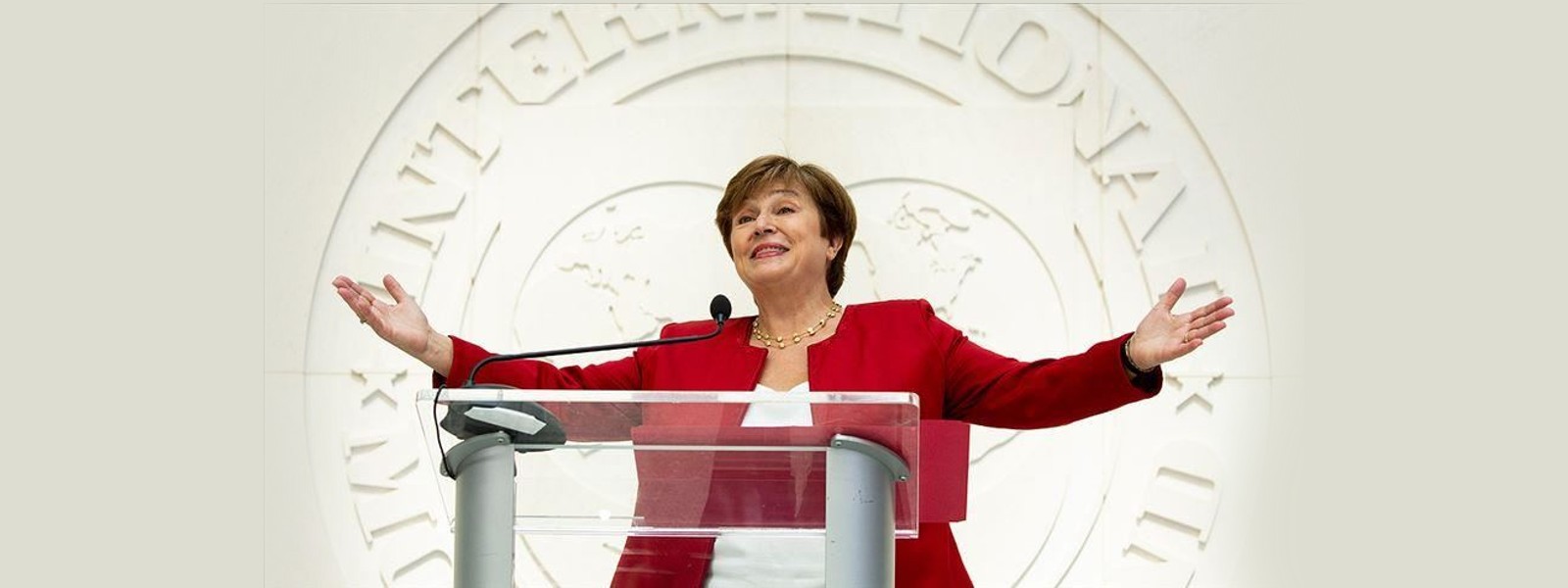
Investors are betting that Sri Lanka will win final approval for about $2.9 billion bailout from the International Monetary Fund on Monday, a key step for the bankrupt nation to revive its economy from the worst crisis in decades.

The South Asian nation’s dollar bonds have returned 20% this year, the top performers in the world. The local currency surged 8% and stocks climbed 5% this month, beating their Asian peers on anticipation of billions of dollars in financing trickling in. The rupee fell 45% last year, while the CSE All-share index declined more than 30% in 2022.

The funds are crucial to restore stability and debt sustainability for an economy mired in a recession. Through 2022, shortages of essential goods from fuel to medicines loomed large, stoking Asia’s fastest inflation and depleting funds.

Since defaulting on its dollar debt in May, Sri Lanka has taken tough measures to put its economy back on a steadier path, including cutting subsidies, raising taxes and loosening its control on the currency. It also increased borrowing cost to the most since 2001.

Sri Lanka also secured debt assurances from bilateral creditors including India, China and Paris Club nations and initiated good-faith negotiations with private bondholders as pre-requisites to getting the bailout.

“The pathway appears to have been gradually cleared for the IMF board to sign off on the program,” said Esther Law, senior investment manager for emerging-markets debt at Amundi SA in London. “One would expect the bonds move up slightly in price the moment the IMF program is announced.”

Debt due in 2030 has risen to about 36 cents on the dollar from 21 cents in November. The IMF bailout will help support bond prices at current levels while more gains will depend on how successful the nation is in raising revenue, said Edwin Gutierrez, London-based head of emerging-market sovereign debt at abrdn plc.

Foreign investors are also expected to boost their holdings of Sri Lanka’s government bonds on bets a bailout would unlock more funding to stabilize the nation’s finances. “You can’t wait until the debt restructuring is over, after that the price points will be very different,” said Bingumal Thewarathanthri, the chief executive officer for Standard Chartered Plc in Sri Lanka.

The island nation has a long track record with the IMF. It secured 16 bailouts since the 1960s with the last one in 2016. Disbursements by the Washington-based lender are spread across the duration of the program and tied to reviews, while an initial amount is released subsequent to board approval.

Debt Talks

Focus will turn next to the debt talks, which Fitch Ratings said may drag on for a long time as creditors debate on whether to include local-currency sovereign borrowings in the restructuring. The rating company cut its score on rupee debt in December, as it viewed a default probable.

“The prospects for a deal with creditors remain unclear for now,” said Sagarika Chandra, Hong Kong-based associate director. Fitch cited the case of Zambia, which received an IMF bailout in August and where debt restructuring talks are still ongoing.

Tellimer expects the recovery value of Sri Lanka’s bonds to be at 40 cents, with some upside possible as the nation’s debt targets imply less need for small haircut, said Patrick Curran, a senior economist.

Sri Lanka is showing some signs of a turnaround. Reserves rebounded 29% to $2.2 billion in the four months through February, inflation is easing and daily power cuts have ended.

“IMF aid will be a relief for the country, but the road ahead is not easy,” said Ankur Shukla, an economist at Bloomberg Economics in Mumbai. “Debt restructuring could take time to complete and this will keep the country locked out of markets. It will also not be politically easy to continue with harsh reforms demanded by the IMF.”

Source – Bloomberg

United States Government-Funded 36,000 MT of TSP Fertilizer Arrives in Sri Lanka: Paddy Farmers to Receive TSP in Time for Yala Cultivation

COLOMBO, SRI LANKA

19 March 2023

More than a million Sri Lankan paddy farmers in all 25 districts will get vital assistance through a shipment of over 36,000 metric tons of fertilizer handed over today by the United States to the Ministry of Agriculture.

The shipment of Triple Super Phosphate (TSP) was funded by the United States Agency for International Development (USAID) and procured by the Food and Agriculture Organization of the United Nations (FAO) for distribution free-of-charge to farmers. This second shipment of USAID-supported fertilizer is delivered on a promise USAID Administrator Samantha Power made last September in response to Sri Lanka’s food security challenges. It brings the total of USAID-supported TSP and urea fertilizer to more than 45,000MT over the last year.

U.S. Ambassador Julie Chung said, “Farmers are working hard to maximize rice production and meet the country’s food needs under difficult circumstances, and the United States is committed to assisting. This year we celebrate 75 years of bilateral relations between Sri Lanka and the United States. Our story is one focused on people, progress, and partnership, and our commitment to supporting the people of Sri Lanka in good times and bad will not waiver.

Ambassador Chung added, “Today’s fertilizer donation is a demonstration of America’s enduring goodwill and commitment to the people of Sri Lanka. It comes without strings attached and it is a testament to how the American people stand with the people of Sri Lanka.”

The United States, through USAID, provided $46 million in funding to procure essential fertilizer, providing much-needed nutrients to paddy crops, helping increase paddy production, and averting a food crisis. This funding also provided cash assistance to small-holder farmers who were affected by low yields over the past few agricultural seasons and on account of the prevailing economic crisis. The program is being implemented by UN FAO with oversight provisions to ensure transparency and accountability.

Speaking at the handover Minister of Agriculture, Hon. Mahinda Amaraweera expressed his gratitude to the people of America and FAO for providing timely support to reinvigorate the local agricultural sector. “Through this support, we are certain the yield of the upcoming harvesting seasons will improve steadily. Our eventual aim is to minimize dependency on rice imports and further empower Sri Lankan paddy farmers,” Minister Amaraweera added.

“Fertilizer will help local farmers boost their production so that the country is food secure. Most importantly, this also can jump-start market-driven agricultural production and potentially lead to Sri Lanka becoming a food exporter,” said USAID Mission Director for Sri Lanka and Maldives, Gabriel Grau.

In the last year, the United States has provided more than $270 million in new support to Sri Lankans amid the ongoing economic crisis. In addition, the U.S. the largest donor to the UN Humanitarian Needs Plan for Sri Lanka.

“We thank the U.S. government for the support extended at a critical juncture, enabling this consignment of TSP fertilizer, the first to arrive in the country in two years, which will be distributed to all paddy farmers based on the extent of their cultivation and the advised application for each of the agricultural zones through the support of the Ministry of Agriculture,” said FAO Representative for Sri Lanka and the Maldives, Mr Vimlendra Sharan.

Minister Amaraweera and FAO Representative Sharan joined Ambassador Chung and USAID Mission Director Grau at today’s handover ceremony.

This assistance is one component of the United States’ long-standing partnership with the Sri Lankan people to promote a healthy, educated, and employed population. To find out more about USAID’s work, please see usaid.gov/sri-lanka and follow us on Twitter @USAIDSriLanka and Facebook @USAIDSriLankaMaldives.

FAO leads international efforts to defeat hunger. It helps countries modernize and strengthen agriculture, forestry, and fisheries practices, making them more sustainable and ensuring food security and nutrition for all. For more information visit: www.fao.org or follow FAO on Twitter @FAOSriLanka and @FAONews.

By U.S. Embassy Colombo | 19 March, 2023 | Topics: Agriculture, News, Press Releases, U.S. & Sri Lanka, U.S. Agencies

IMF bailout package: president to inform House on March 21

The International Monetary Fund (IMF) will announce its decision with regard to the USD 2.9 billion bailout package for Sri Lanka following a meeting of its executive board on March 20, said state minister of finance Ranjith Siyambalapitiya.

The official announcement will come at a media briefing on the following day, at 8.00 am Sri Lanka time on March 21, to which Sri Lanka too, will join in via Zoom technology, he said.

Senior officials Peter Brewer and Masahiro Nozaki will address the media on behalf of the IMF.

Sri Lanka will receive the credit facility from March 22 in eight instalments, said Siyambalapitiya.

The agreement with the IMF will be placed before parliament by president Ranil Wickremesinghe as the finance minister, he also said.

His speech to the House will come on March 21, government sources said.