Sri Lanka to import fertilizer again from Qingdao?

The government is preparing to import fertilizer again from China’s Qingdao Seawin Biotech Group.

A stock of fertilizer sent by the Chinese fertilizer company was rejected earlier, for containing harmful pathogens.

However, the government eventually paid 6.9 million US dollars Qingdao Seawin Biotech Group for the rejected shipment.

Now the Sri Lanka Standards Institute is preparing new standards for special types of fertilizer.

Its Senior Deputy Director K.A. Anil said initial work is being done to prepare the new standards.

Agriculture minister Mahindananda Aluthgamage said the ministry had requested the SLSI to prepare new standards for liquid biofertilizer and solid fertilizers.

He noted that the previous standards did not allow the importation of fertilizer containing bacteria.

The minister said that authorities would not allow fertilizer containing harmful bacteria into the country.

The Sri Lanka Standards Institute says it would not set standards targetting Chinese fertilizer.

Senior Deputy Director K.A. Anil who is attached to the SLSI’s Agriculture Section said the new standards will cover compound fertilizer.

He said the standards will apply to the fertilizer from the Chinese company if it confirms that the organic fertilizer has special compounds.

Methsiri Wijegunawardana, the chairman of Colombo Commercial Fertilizers Ltd., says the agriculture ministry has appointed a special committee to implement the agreements reached with the Chinese fertilizer company.

He noted that Sri Lanka hopes to import fertilizer in February or March from the Chinese company from which the initial fertilizer stock was rejected.

President Reverses Basils’s Decision To Remove Litro Chairman: Directs Finance Min. Secretary To Withdraw Letter

In an interesting turn of events, President Gotabhaya Rajapaksa has personally intervened to reverse the made by Finance Minister Basil Rajapaksa to remove Litro Gas Chairman Theshara Jayasinghe.

President Rajapaksa has informed the Finance Ministry Secretary to withdraw the letter appointing Renuka Perera as the new Chairman of Litro Gas.

Accordingly, Jayasinghe will continue to function as the Chairman of the gas company.

Perera, an associate of Basil Rajapaksa, is the administrative Secretary of the Sri Lanka Podujana Party.

Posted in Uncategorized

Sri Lanka’s Jaffna is not the south of a third country: China envoy

China’s Ambassador to Colombo, Qi Zhenhong dismissed speculation about a recent visit to the northern Jaffna peninsula saying the journey was without any ‘hidden agenda’ to a part of Sri Lanka.

Ambassador Qi Zhenhong visited Jaffna’s Point Pedro, the northernmost end of Sri Lanka and Mannar from where a land bridge is thought to have existed at one time to Rameswaram in India.

“Jaffna is a city in Sri Lanka in the north of the island. It is not a city in the south of any other country,” Qi Zhenhong said when he was asked about his visit to Jaffna and his message to Jaffna people at a media briefing on Sunday.

“It is actually my duty to travel to different parts of this country as an ambassador of China to Sri Lanka. It is because of Covid-19 that I could not visit. I had a much earlier plan to visit different parts of the country.”

The visit came against a backdrop of suspended Chinese power projects in three islands off Jaffna after India had raised security concerns, government officials have said.

Qi Zhenhong’s visit to Jaffna had raised concerns as he distributed compensation for Sri Lanka’s northern fishermen who had been facing a lack of fish catch mainly due to Indian bottom trawling.

Some observers had characterized the visit as “provocative”.

China had been eyeing infrastructure projects in Sri Lanka’s war-torn north and east, but it hardly got any because of India’s dominant role in the region, Sri Lankan government officials have said.

“I know that it is a very important city in the north. It is a city of minority ethnicity and also after almost the end of three decades of war,” Qi Zhenhong said.

“I would like to see how the situation is and how the people there are. I would like to see what we can do as the Chinese government or Chinese embassy, what we can do to help local people and help development.”

“It is a very simple and open visit without any private or hidden agenda.”

Ganesan refuses to sign PCoI’s Sinhala document

Leader of Tamil Progressive Alliance (TPA) MP Mano Ganesan refused to sign the final document of the Special Presidential Commission of Inquiry (PCoI) yesterday (12) as the document was in Sinhala. Citing his Constitutional right, he told investigators that his testimony, although translated from Tamil to Sinhala and from Sinhala to Tamil, must be written in Tamil if it is to be signed. He asked them to call him back when the final document is ready in Tamil.

The MP was summoned to the Special PCoI investigating ‘how corruption ministers were prosecuted in the previous government’ late last year when the MP received a summons in Sinhala from his local Police Station. He returned the summons written in Sinhala, requesting it be sent in Tamil. He accepted the summons once it was translated but later refused to sign when the Special PCoI presented a Sinhala document to sign, citing a legal problem because it was not in Tamil.

“I was the cabinet minister responsible for the country’s language law and language policy. Do I have to break the language policy?” he queried. When the trial was adjourned and set to take place on another day, he said, “We will be back in power soon, so finish all these investigation as soon as possible, ” the MP told Media.

“Under Article 22 of Chapter 4 of the Constitution of Sri Lanka, every citizen has the right to receive oral and written answers in any of the national languages; Sinhala, Tamil and English. When I went to the hearings today, the parliamentary oral interpreter was there. They were doing it because I had returned the Sinhala invitation. He did the text translation between me and the investigators. My confession was typed in Sinhala. But in the middle of the hearing I asked: ‘do I have to sign my confession?’ to which they said, ‘Yes’. Then I said, ‘Then prepare the document in Tamil’ ”.

Any law, including criminal law, must be enacted under the Constitution of the country. Interpretation is different from translation, he said alleging that the Special PCoI was silent when he mentioned his right to receive both documents in his mother tongue under Article 22 of Article 4 of the Constitution.

Posted in Uncategorized

Former LTTE intelligence operative had close links with Sri Lankan don Angoda Lokka, aides: Police

Former intelligence operative of the Liberation Tamil Tigers Eelam (LTTE) Satkunam alias Sabesan (47), who was arrested by the National Investigation Agency (NIA) from Chennai in October 2021 for alleged involvement in the smuggling of drugs and arms from Pakistan to Sri Lanka, had close links with Sri Lankan don Angoda Lokka and his aides, according to the investigation by the Tamil Nadu Crime Branch CID (CB-CID).

The CB-CID, which is investigating the death and illegal stay of Lokka in disguise in Coimbatore, recently arrested Sabesan and two others Chinnasuresh (35), also from Sri Lanka, and Soundararajan (25) of Chennai.

The CB-CID team led by Deputy Superintendent of Police P. Sivakumar interrogated the trio and found they were closely associated with Lokka and his confidanteChanuka Thananayake alias Ladiya.

According to investigators, Sabesan and Chinnasuresh had left Sri Lanka following crimes there and to escape from a rival gang. Lokka and Ladiya had also shifted base to India for the same reason. Lokka died under suspicious circumstances while hiding in Coimbatore as Pradeep Singh in July 2020, following which the CB-CID launched an investigation.

Investigators had arrested Ladiya and T. Gopalakrishnan alias Jayaprakash, who sheltered the former in Bengaluru, in November 2021.The duo during interrogation disclosed to the CB-CID about their links with Sabesan,Chinnasureshand Soundararajan.

Prior to the CB-CID arresting the trio, the NIA had arrested Sabesan,Chinnasureshand Soundararajanfor their alleged involvement in the Vizhinjam arms case wherein six Sri Lankan nationals were arrested by the Coast Guard off Minicoy coast in March 18, 2021. The Coast Guard had seized five AK 47 rifles, 1,000 live rounds and 300 kg of heroin from three fishing vessels. The NIA took over the investigation and later arrested Sabesan,ChinnasureshandSoundararajanfor alleged involvement.The CB-CID formally recorded the arrest of the trio when they were in judicial remand in the NIA case and later interrogated them in custody.

The CB-CID suspects Lokka and Ladiya were into drugs business while hiding in India. Ladiya took over the control after the death of Lokka,said an investigator.

“Lokka and Ladiya were into drug dealing in Sri Lanka. The investigation has found out that they were doing the same from India through supporters in Sri Lanka and Tamil Nadu. The entire network seems to have been smuggling drugs and arms from Pakistan to Sri Lanka. Sabesan played a key role in reaching smuggled items in Sri Lanka. The money from the illegal dealings reached Lokka and Ladiya through hawala transactions operated by Jayaprakash,” the officer said.

According to the NIA, Sabesan was the key conspirator in the Vizhinjam arms case. The agency said in a release on Sabesan’s arrestthat theproceeds from the arms and drugs trafficking fromPakistanto Sri Lanka was for the revival of the LTTE. It said that he organised conspiracy meetings of LTTE sympathisers in India.

Pistol seized

The CB-CID has recently a pistol which Lokka’s another aide D. Sivakamasundari, an advocate from Madurai whose father is also an LTTE sympathiser, had procured for him. Sivakamasundari had buried it in a deserted area after the death of Lokka. The weapon has been sent for ballistic examination.

Posted in Uncategorized

Opposition orientations: Anura, Suma and Sajith

“For AKD to flatly proclaim there is ‘no room…no possibility’ of such an outcome, is to demobilise rather than alert the public. That, together with his spurning of a political united front of democratic or even Left (JVP+FSP) forces, encourages rather than deters military-dominated rule”

Bullock-drawn kerosene carts are back in Colombo, a scene I last saw 60 years ago. Ubiquitous queues we saw 45 years ago. Patchy, yellowed fields we never saw. Symbols of a Great Leap Backward.

President GR recently visited Ruvanwelisaya in the company of Army chief General Shavendra Silva. Dutugemunu began his victorious long march only after ascertaining that his kingdom’s granaries were full of rice. With this President’s policies, the harvest won’t produce full granaries.

Here’s his silver bullet: “The Army has been sent in to implement government policy on organic farming by monitoring and educating farmers on the job they have to do.” (ST, 9 Jan. 2022)

Low Marx

JVP-NPP leader Anura Kumara Dissanayake’s deficiency as a serious Left leader in a time of complex crisis is evident in his answer to a crucial question about the dangers of a repressive militarist response, outcome or interlude:

“…Not only the Rajapaksas, but no one else could lead this country to such suppressive rule…There is no room for a military regime in Sri Lanka…there is no possibility of that.” (DM 5 Jan. 2022)

UN Human Rights High Commissioner Michelle Bachelet, a Chilean Socialist leader, ex-President, ex-Defence Minister and former fighter against Pinochet’s dictatorship, whose father, an Air Force General died under torture by the military junta, has consistently spotlighted the accelerated growth of militarisation in Sri Lanka. How long till metastasis and how to prevent it?

For AKD to flatly proclaim there is “no room…no possibility” of such an outcome, is to demobilise rather than alert the public. That, together with his spurning of a political united front of democratic or even Left (JVP+FSP) forces, encourages rather than deters military-dominated rule.

Tamil testament

The Tamil parties of the north and east finally signed a text that represents a consensus. Let’s begin with the downside. ‘Bloat’ turned a parsimonious one-page draft agreed upon by convening parties and the SLMC, into a seven-page dossier, embedding at the ITAK’s insistence every promise reneged on by every Sri Lankan government since 1987.

The historical truth is that while those offers were on the table throughout the war, the ITAK/TULF never took them up. When CBK’s August 2000 draft Constitution made it to parliament, Sampanthan broke his promise to Lakshman Kadirgamar and declined to vote for it. In 2011 when war-winning President Mahinda Rajapaksa sat down to negotiate with the TNA which had backed the losing side in a long civil war, the TNA refused to take the 13th amendment as the framework or baseline for negotiations.

The consolidated Tamil text has a commitment to federalism and to “self-determination” within a united country. Most federal systems make no reference to self-determination, with India, the USA and Australia being examples. Ethiopia did, and look how that’s gone. India will be wary because ‘self-determination’ is a keyword for the Kashmiri cause and Pakistan’s discourse.

Such loaded terms in an appeal for the full implementation of the 13th amendment play into the hands of Sinhala hardliners who allege that 13A is a transit-lounge for federalism and self-determination.

The recent interview given to an English-language Sunday paper by the ITAK’s M.A. Sumanthiran helps the regime’s hawks:

“…we are seeking meaningful sharing of powers of governance; and that it can only happen within a federal framework. Whatever you want to call it, it must have the features of a federal constitution…it is not the mandate the TNA received from our people, nor is it the legitimate political aspiration of our people to have 13A implemented…” (SM, 9 Jan 2022)

When 13A is itself in danger, Sumanthiran’s federalist fundamentalism raises questions whether the goal is an achievable, tangible politico-institutional space for the Tamil people/areas, or a mirage that can endure and ensure a political lifetime.

Surreally, Sumanthiran is betting on the USA acting through the agency of the UNHRC to facilitate federalism in Sri Lanka claiming that in recent discussions in DC he was given favourable signals.

Foreign Minister Wang Yi doubtless diligently noted Sumanthiran’s ultimatum that the Chinese should get out of Dodge: “We have clearly stated that the Chinese are not welcome in the North or the East. I have given reasons for that.” (ibid)

Sumanthiran’s bombastic exegetical bluster apart, what makes the joint letter, a TELO initiative, a historically significant achievement are three facets. Firstly, the addressee: India’s Prime Minister Narendra Modi. Secondly, the signatories, the broadest ingathering for decades, covering almost the full spectrum of Tamil politics in the north and east. Thirdly, the operative part of the letter, an appeal to the Indian PM:

“In this situation, we appeal to Your Excellency to urge the Government of Sri Lanka to keep its promises to:

(i)fully implement the provisions of the Thirteenth Amendment to the Constitution

(ii)implement the clear commitments made by all sections of government from 1987 onwards…”

“In November 2019 when Gotabaya Rajapaksa was at the unassailable zenith of his popularity, Anura Kumara didn’t dare enter the ring. Sajith Premadasa did, without the leadership of his party, only after Gotabaya had done several laps as Pohottuwa candidate in the company of Mahinda Rajapaksa. The gap between GR and Sajith was only 10%. Sajith missed the magic 50% mark by 8%. Today, how many voters regret not opting for Sajith in November 2019 and voting for GR instead?”

Rajapaksanomics and Ranilnomics

The Trincomalee oil tank farm deal confirms that contemporary (post-MR) Rajapaksanomics – Gotanomics, Basilnomics or Pohottunomics – and Ranilnomics are on a continuum.

The Trinco deal mirrors on a more modest scale, the Hambantota deal of Prime Minister Wickremesinghe. The Chinese got a chunk in Hambantota; the Indians a smaller chunk in Trinco. Having started by arrogantly pulling the plug on the Port City and all Chinese projects, Ranil gave the Chinese a bigger footprint in Hambantota than they had been given by President Mahinda Rajapaksa.

The ruling SLPP, which contains many who participated in the JVP-inspired protests against the Indo-Sri Lanka accord, has given India far more than was contained in the Accord as pertains to Trincomalee. Ranilnomics opened the portal.

“… According to Article 2 (iii) of the letter exchanged between the Prime Minister of India and Sri Lanka President on 29 July 1987, the Trincomalee Oil Tank Group agreed to operate as a joint venture between India and Sri Lanka.

Under an agreement signed on 7 February 2003, all 99 tanks at the Trincomalee Tank Complex were handed over to the LIOC on a 35-year lease basis…

In 2017, the Government agreed to lease all 99 tanks to India on a 99-year lease basis under the Malik-Sushma Memorandum of Understanding (MoU)…” (Daily FT)

Who in 2003 and 2017 drove these giveaways; this shift from the more favourable “joint venture” of 1987? Prime Minister Ranil Wickremesinghe. Who gave the Chinese a bigger chunk of Hambantota than did President Mahinda Rajapaksa, thereby motivating and activating India’s push for approximate symmetry in the form of a Trincomalee re-set? Again, Ranil Wickremesinghe.

The excuse that Wickremesinghe was hoping to deter the LTTE by leasing the tanks to India in 2003 is lamentably lame. The report of the United States Pacific Command (PACOM) had highlighted how vulnerable Trincomalee, including the harbour, had become to LTTE artillery emplacements under the Ceasefire Agreement (CFA). Milinda Moragoda had arranged for the PACOM team’s visit. Ranil buried the PACOM report. Iqbal Athas of the Sunday Times scooped it. President Kumaratunga and Lakshman Kadirgamar flew to Delhi with the PACOM report and briefed Prime Minister Manmohan Singh of the danger to Sri Lanka and India.

Gotabaya Rajapaksa as Secretary/Defence fed the recommendations of the PACOM report into the war-winning Sri Lankan strategy.

Wickremesinghe’s supposedly sagacious leasing of the oil tanks to Trincomalee to deter the LTTE in 2003, doesn’t explain the content and intent of the 2017 MoU. In terms of foreignisation, today’s Rajapaksanomics is next-level Ranilnomics.

“When 13A is itself in danger, Sumanthiran’s federalist fundamentalism raises questions whether the goal is an achievable, tangible politico-institutional space for the Tamil people/areas, or a mirage that can endure and ensure a political lifetime”

NPPnomics

The JVP-NPP’s critique of Pohottunomics is limited to two dimensions: Corruption and foreignisation. But there is a third dimension which is both empirical and doctrinal/paradigmatic: the rejection of an Open Economy, and the identification the introduction of the Open Economy in 1977 as the ‘Great Fall’. Here, the GR-SLPP Establishment and the JVP-NPP alternative share common ground.

The JVP-NPP has yet to criticise the state-capitalist closed economy model of 1970-1977 that led to destitution and malnutrition to the point of semi-starvation. It does not critically note any homology between today’s Gotanomics or a core aspect of it, and the Sirimavo-NM model of 1970-’77.

Today the citizenry is suffering unprecedentedly, not from the Open Economy but its opposite; its closure and wrecking.

NPPnomics is ‘red Gotanomics’. The opening up of the economy in 1977 represented progressive modernisation in relation to the preceding economy of closure, scarcity and backwardness. As it became entrenched though, the 1977 Open Economy was reactionary in relation to what it should and could be. That latter potential was realised and a better, different, much more equitable model operationalised for the few short years he was in office, by President Ranasinghe Premadasa.

What must be rejected is neoliberal globalism/free-market fundamentalism, not globalisation as such, still less an open economy. Sri Lanka needs an East Asian model open economy with a strategic role for the state, as the mainframe supporting a Western-style social democracy—underpinning and guaranteeing social sustainability and the stability of the open economy itself.

While SL-born Prof. Howard Nicholas remains our most intellectually formidable scholar on political economy and comparative international development, Dr. Nishan de Mel, our most compellingly lucid mind on economic policy, has illumined the minefield of the debt crisis and led social opinion against the 18 January payout.

“What must be rejected is neoliberal globalism/free-market fundamentalism, not globalisation as such, still less an open economy. Sri Lanka needs an East Asian model open economy with a strategic role for the state, as the mainframe supporting a Western-style social democracy—underpinning and guaranteeing social sustainability and the stability of the open economy itself”

Opposition’s options and openings

There is hostility in some ex-UNP and civil society circles towards my long-standing insistence that the defence of liberal democracy requires a strategic shift involving the incorporation of populism, so as to win over the bulk of Pohottuwa voters.

Now, the latest issue of Foreign Affairs, the flagship of scholarly journals on international relations and foreign policy (which first published, in 1947, George Kennan’s famous foundational essay on the doctrine of Containment) features a piece with the strap ‘Why Protecting Liberalism Will Require a Dose of Populism’ entitled ‘January 6th and the Paradoxes of America’s Democracy Agenda’.

It is authored by Larry Diamond, Senior Fellow at the Hoover Institution and Senior Fellow in Global Democracy at Stanford University’s Institute for International Studies. Grappling with how to defeat autocrats, Diamond nails it, using real-world examples:

– “…Political forces seeking to defend or renew democracy must speak to other issues, in particular the economy, and they must craft the broadest possible coalitions in doing so. This requires going against the trend of polarisation by showing respect for the concerns of people who previously backed illiberal options. In the 2019 municipal elections in Turkey, the opposition made stunning gains against the ruling authoritarian party by crafting just such an inclusive campaign…In Hungary, in the recent primary to nominate a candidate to face Prime Minister Viktor Orban…the country’s disparate, six-party opposition coalition took a similar approach, choosing the centrist outsider Peter Marki-Zay, the mayor of a small provincial city. Marki-Zay is promising a return to Europe and accountable government—but with a populist edge.”
– “…It takes a dose of populism to fight populism… Democracy’s defenders… should try to energise voters by expressing moral outrage and empathy for people’s insecurity and loss and, when possible, by putting forward charismatic candidates who embody a message of change. Such a strategy lifted the environmental activist Zuzana Caputova to the presidency of Slovakia in 2019, and it now gives opposition parties a fighting chance of winning…in Hungary, Poland, and Turkey.”
– “…elections must be squarely focused on the question of which party offers the people a fairer economic deal…It would require a disciplined focus on job creation, childcare support, early childhood education, health-care expansion, infrastructure investment, the new green economy, and bringing manufacturing jobs back… The three Democratic presidents who managed to serve two full terms in the last century—Franklin Roosevelt, Bill Clinton, and Barack Obama—all understood the need for a message of hope and optimism focused on bread-and-butter economic issues. Democratic success might also require a presidential candidate who can craft an outsider, anti-elite image more authentic and persuasive than the one Trump has perfected—but shorn of illiberal tendencies…”

Diamond calls for a liberal-centrist-populism/populist, as exemplified by the most successful US Democrat trio, Roosevelt-Clinton-Obama.

AKD and the JVP-NPP are no liberal-centrists, still less do they fit the US Democrat template. Nor do they declare themselves social democrats.

Sajith story at 55

Son of a martyred populist President, Mill Hill School and LSE-educated Sajith Premadasa who interned with Senator Larry Pressler (R), former chair of the powerful US Senate Foreign Relations Committee, already fits Larry Diamond’s bill.

When his father was blown up on the city’s streets while leading a May 1st demonstration in 1993 by a suicide-bomber, Sajith didn’t stay on in the USA until the trauma abated. He came back and plunged into politics in 1994, not in Colombo which his father represented, but in the Deep South, Hambantota.

A few years before, Sajith had been billed to speak on a party platform in the Western Province. His father lost his cool, berated the local organiser and admonitorily advised his son: “If you want to enter politics, first do your academic studies and then come in through a place like Hambantota, even contesting a Pradesheeya Sabha.” Not many knew of his late father’s emphatic counsel; I heard it from President Premadasa.

Sajith honoured his assassinated father’s wishes and took the road less travelled.

In Hambantota, Sajith fought Mahinda Rajapaksa, beating him in early encounters. After Ranil Wickremesinghe signed the Ceasefire Agreement (CFA) with Prabhakaran, the UNP was finished in the Deep South – the historical Ruhuna – but Sajith stayed on for 20 years waging “battles won or lost – but fought – against the enemy” (Che Guevara) gaining more political battlefield experience against the Rajapaksa oligarchy in the Sinhala heartland than any other political leader.

In November 2019 when Gotabaya Rajapaksa was at the unassailable zenith of his popularity, Anura Kumara didn’t dare enter the ring. Sajith Premadasa did, without the leadership of his party, only after Gotabaya had done several laps as Pohottuwa candidate in the company of Mahinda Rajapaksa. The gap between GR and Sajith was only 10%. Sajith missed the magic 50% mark by 8%. Today, how many voters regret not opting for Sajith in November 2019 and voting for GR instead?

Now he has returned to the city where his father rose, ruled and died.

In the Netflix series Jennifer Jones, the protagonist’s mother rebuts her self-deprecatory disclaimer that she is no hero: “A hero is someone who gives a f**k and does something about it”. Sajith’s donor-driven gifts of high-tech equipment to under-equipped hospitals and for smart classrooms in underprivileged areas, while he is Opposition Leader, not a Minister, and which funds he could have used for party activities, shows me he measures up.

Sajith Premadasa, together with his wife Jalani, took off to the island’s north and east (including Kilinochchi-Mullaitivu) – from where the suicide-bomber who assassinated his father came—on a packed program a week before his birthday. He donated medical equipment in his father’s memory to the hospital in Velvettiturai, the hometown of Prabhakaran, who sent the suicide-bomber. Sajith Premadasa turned 55 in Jaffna with no election in sight.

Posted in Uncategorized

China to revise Lankan loans repayment schedules

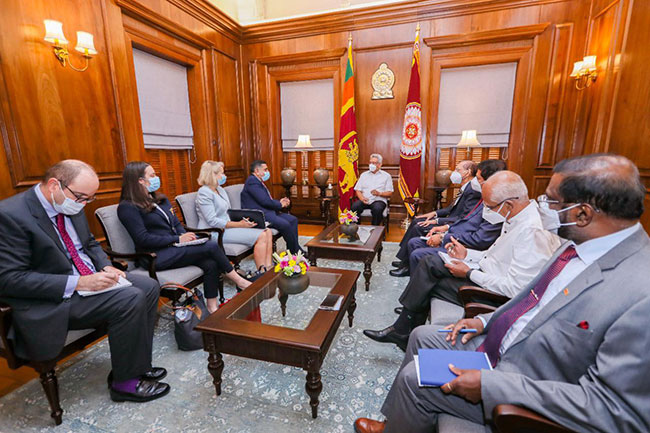
China has plans to revise schedules for the repayment of loans given to Sri Lanka, in response to the request made by the Lankan President Gotabaya Rajapaksa during his meeting with the visiting Chinese Foreign Minister Wang Yi here on January 9, the Global Times said.

The Communist Party-run Global Times quoted Song Wei, a research fellow at the Chinese Academy of International Trade and Economic Cooperation, as saying that the interest-free loans offered by the Chinese government are applicable for debt relief while the concessional loans raised through the market cannot be written off.

“It is likely that China may exempt part of the interest-free loans to Sri Lanka. And for preference loans that are not eligible for debt relief, China may work with Sri Lanka through negotiations, equity cooperation and rescheduling,” Song said.

China will actively respond to Sri Lanka’s request like what it did to African countries, Chinese observers added. After the outbreak of the COVID-19 pandemic, China announced the cancellation of 15 African countries’ debt in the form of interest-free government loans that were due to mature by the end of 2020, Global Times said.

According to data from Sri Lanka’s Department of External Resources, China only accounts for about 10% of Sri Lanka’s U$35 billion foreign debt as of April 2021. Japan also accounted for about 10% of Sri Lanka’s foreign debt.

Other Countries Should Cooperate

Long Xingchun, a senior research fellow at the Academy of Regional and Global Governance of the Beijing Foreign Studies University, said that only restructuring loans with China is not enough to help the island nation tide over its difficulty, which needs a package plan with other involved parties.

“Sri Lanka’s crisis is also a test to countries like Japan, India and the US on how much help they would offer, but what we see now is that they are standing by and even defaming China which is truly helping the country,” Long said.

White Elephants?

The island nation is gripped by one of the worst economic crises, and several credit rating agencies including Moody’s and Fitch downgraded its credit rating from B to C.

Global Times noted that some foreign media mentioned nothing about other involved parties’ responsibility but claimed that Sri Lanka’s economic crisis was partly due to “Beijing-financed projects that don’t generate revenue.”

Many infrastructure projects China and Sri Lanka worked together on, including ports and highways, require large amounts of investments and a long construction period, which shows returns of up to 20 to 30 years. Hyping their returns when the projects just started was unprofessional and had ulterior motives.

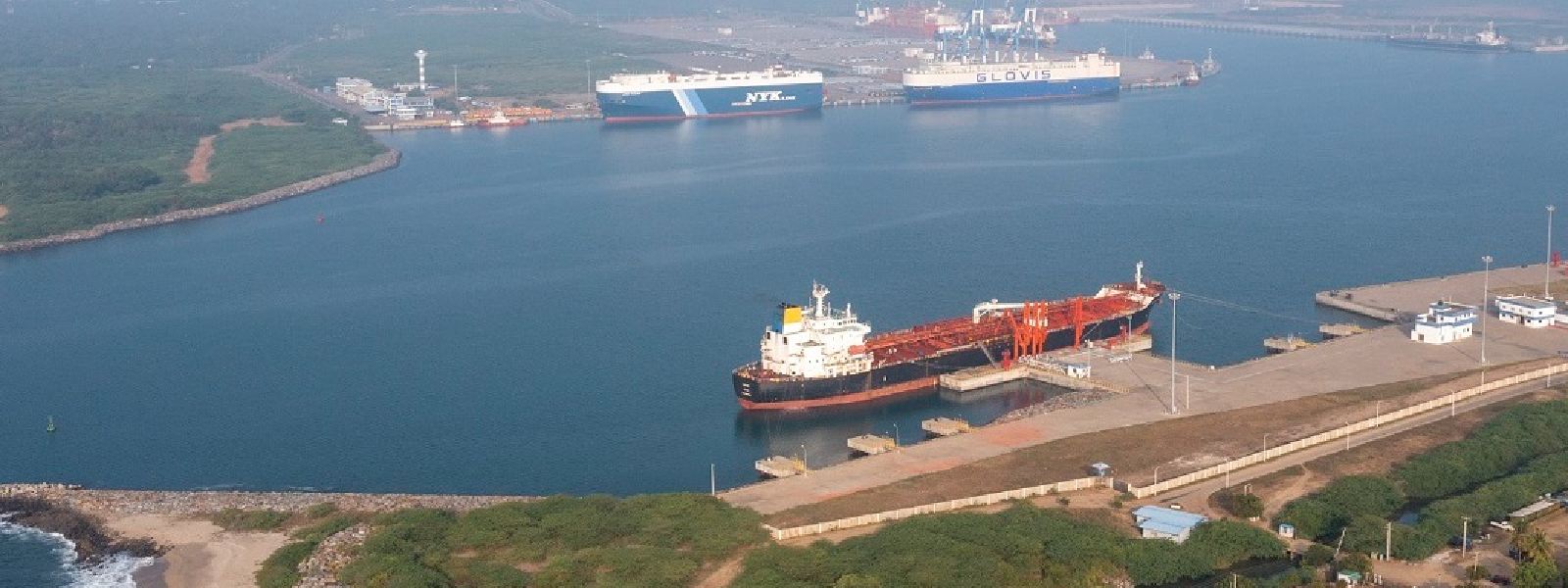
During a meeting with Sri Lankan President Gotabaya Rajapaksa in Colombo on Sunday, Foreign Minister Wang Yi called on China and Sri Lanka to discuss the restart of talks on free trade agreement by tapping the opportunities of the Regional Comprehensive Economic Partnership (RCEP) agreement and China’s vast market. Wang said the Colombo Port City and Hambantota Port projects could be engines for pushing forward bilateral cooperation.

Posted in Uncategorized

We don’t need Maithripala Sirisena’s support -SLPP

The Sri Lanka Podujana Peramuna says it did not seek the support of former President Maithripala Sirisena to form the present government.

Speaking during a media briefing in Colombo today Administrative Secretary of the party Renuka Perera said the SLPP does not need any support from the former President at present as well.

Perera said several factions have shown an interest in toppling the government adding that former President Sirisena recently claimed that he will form a government with an alliance.

He noted the next Presidential Election will be held after the 19th of November in 2024 and a Parliamentary Election will be held in 2025.

Renuka Perera claimed former President Sirisena came after the SLPP to join the party and even resorted to contacting Minister Basil Rajapaksa through a Chief Prelate.

He said former President Sirisena should leave the present administration if he wants to, and questioned why he isn’t leaving.

Commenting on the postponement of the Local Authorities Election, Renuka Perera revealed the SLPP requested the President to postpone the election as local authorities were unable to serve the public over the past two years.

However, he noted the election may be held within a year. Perera said the SLPP does not agree with postponing elections adding that the country’s economy has weakened at present.

He noted the country’s dollar reserves are being gradually increased, adding if an election is announced now, tourist arrivals will come to a halt and the foreign income will drop again.

Renuka Perera said all matters were taken into consideration when the request was made from the President, and the government reached the relevant decision accordingly.

He reiterated however that the SLPP is prepared to conduct the election at the earliest if the country’s economy stabilizes.

India begins teaching Sri Lanka Police Hindi

India has begun teaching the Sri Lanka Police Hindi, the Indian High Commission in Colombo said.

The High Commission of India launched a ‘Hindi Proficiency Course’ for Sri Lanka Police personnel on the occasion of the World Hindi Day on January 10, 2022.

The launch event was held at the Swami Vivekananda Cultural Centre (SVCC), the cultural arm of the High Commission and was attended by Major General (Retd.) Jagath Alwis, Secretary, Ministry of Public Security as the Chief Guest and Mr. C.D. Wickramaratne, Inspector General of Police as the Guest of Honour. Mr. Vinod K. Jacob, Acting High Commissioner of India to Sri Lanka also graced the occasion. The program was attended by 70 senior Police officers and officials of the Sri Lanka Police services.

During the event, Acting High Commissioner read out special messages of the Prime Minister of India, Shri Narendra Modi and the Minister of External Affairs Dr. S. Jaishankar. Video messages of Minister of State for External Affairs and Culture, Mrs. Meenakshi Lekhi, and the High Commissioner of India to Sri Lanka, Shri Gopal Baglay, were also shared with the audience.

In his message, extending his wishes on the World Hindi Day, Prime Minister Shri Narendra Modi highlighted the popularity of Hindi language and its increasing usage in Information and Communication technology. Minister of External Affairs, Dr. S. Jaishankar also extended his good wishes and expressed happiness on the organization of various events by Indian Missions abroad commemorating the World Hindi Day. MoS Mrs. Meenakshi Lekhi underlined that Hindi, as a language of peace and compassion, plays an important role in connecting India with other countries and their people. Through his special video message, High Commissioner Shri Gopal Baglay, greeted Major General (Retd.) Jagath Alwis, Mr. C.D. Wickramaratne and other distinguished officers and staff of Sri Lanka Police. He expressed happiness on Sri Lanka Police personnel’s enthusiasm in learning Hindi language, both for their official work as well as personal interest.

Speaking on the occasion, Acting High Commissioner Shri Vinod K. Jacob recalled that the cultural and linguistic relations of Sri Lanka and India date back to more than two millennia, and in contemporary times, Hindi further strengthens these relations.

He underscored that every year a large number of scholarships are offered by the Government of India to students of Sri Lanka to pursue their Hindi studies in reputed institutions and universities of India. SVCC plays a vital role in promotion of Hindi language all over the island.

He also highlighted that Hindi is being taught in about 10 universities and 80 Government schools in Sri Lanka. He recalled that recently, late Professor Indra Dassanayake was posthumously honoured with a “Padma Shri” award, one of the highest civilian honours of India, by the President of India in recognition for her contribution to the dissemination of Hindi language and literature in Sri Lanka. This reiterates the importance the Government of India attaches to its cultural ties with Sri Lanka and indicates its commitment to strengthen the India-Sri Lanka people-to-people bond.

Major General (Retd.) Jagath Alwis, Secretary, Ministry of Public Security, expressed his happiness at the launch of the Hindi Course for Sri Lanka Police to mark the World Hindi Day. He thanked the Government of India and the High Commission of India for the assistance provided to the Sri Lanka Police from time to time. He also highlighted that the special Hindi course will help in strengthening the cultural relations between the two countries and also in promotion of tourism between the two countries.

The Hindi students of SVCC presented a cultural program at the event and sang popular Hindi and Sinhala songs. The inaugural program was followed by the first lecture of the Hindi course for Sri Lanka Police personnel. (Colombo Gazette)

Sri Lanka to negotiate new loan from China

The Governor of the Central Bank Ajith Nivard Cabraal says that Sri Lanka would try to negotiate a new loan from China to cushion the effects of the country’s debt repayments to China itself.

Responding to a question from journalists at a press briefing in Colombo today (12), he said that Sri Lanka has a very good understanding with China about its debt and debt repayment as well as investments.

“In this instance the assistance that has been sought may have been connected to the debt repayments that we are having. But it is only with regard to China,” he said, adding that Sri Lanka has an understanding with China that they would assist the island nation in making the repayments in that form.

“So maybe there is a possibility that we would have a new loan coming from China in order to cushion the effects of our debt repayments to China itself. That’s something we would like to explore and maybe we would do that in the future as well.”

He said it is to cushion the debt repayments to China that Sri Lank would try to negotiate a new loan for that purpose as well as for any other purposes. “As you know China is one country that we import heavily from. China and we have a good understanding as far as imports our concerned.”

The central bank governor said that Sri Lanka is also negotiating USD 1 billion facility with India to import goods from the neighboring nation.

“India is another country that we have a lot of imports from. We are also negotiating with India to have a USD 1 billion facility with India in order to import goods from India,” Mr. Cabraal said.

It’s a kind of an arraignment that would encourage us as well as help us to make repayments to those countries and at the same time promote more trade between the two countries as well.

He said that countries normally do that in the midst of changing circumstances in the economy and that’s the type of discussion they have had with China as well as India. He said those talks are at reasonable levels of advanced negotiations and they are looking forward to seeing some breakthrough in those as well.

Pressed on the actual amount of the loan facilities, he said it will be announced in due course after the negotiations as well as discussions reach a reasonable level of fruition.

Posted in Uncategorized