Tamil Nadu Police warn fishermen of attacks in Sri Lankan waters

The Tamil Nadu Police have warned fishermen that they could come under attack if they cross into Sri Lankan waters.

According to The Hindu newspaper law-enforcing agencies along the coastal districts have been advised to sensitise the fishing community to the risks, in the backdrop of simmering differences between the fishermen of India and Sri Lanka over catching fish in the Katchatheevu area.

Mechanised boats fishermen in Rameswaram were on a week-long protest demanding that the Central and State governments permit fishermen of India and Sri Lanka to fish in the Katchatheevu sea area. They also demanded suitable compensation for the boats seized by the Sri Lankan Navy.

The Coastal Security Group of the Tamil Nadu Police issued an alert stating that the possibility of an attack on Tamil Nadu fishermen by Sri Lankan fishermen could not be ruled out.

Additional Director-General of Police, Coastal Security Group Sandeep Mittal told The Hindu that the Indian Navy and Coast Guard had been alerted to provide enhanced security in vulnerable areas.

Posted in Uncategorized

New Constitution draft to Parliament in January

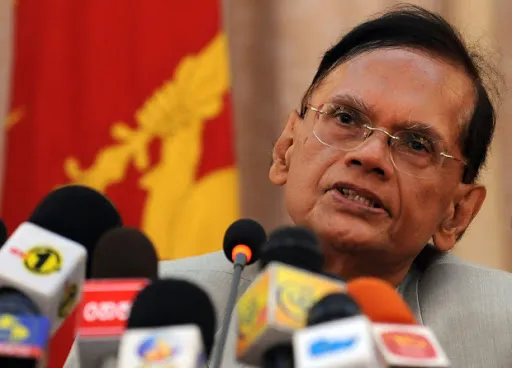
Foreign Minister Prof. G.L. Peiris said yesterday (18) that the work on the proposed new Constitution has been finalised by the experts committee chaired by Romesh De Silva PC, and that a draft of the new Constitution will be presented to Parliament in January 2022.

“President Gotabaya Rajapaksa, in his ‘Vistas of Prosperity and Splendour’ policy statement, has clearly stated that he will bring in a new Constitution. The current Constitution was created during the era of President J.R.

Jayewardene in 1978, 43 years ago. During those 43 years, Sri Lanka has faced several changes in various aspects. The Constitution is the supreme law of the country, but it is not engraved in stone. It should change according to new social needs and dynamics. President Rajapaksa appointed a committee composed of the most famous lawyers to do this and it was led by De Silva PC. This committee has finished its work,” Prof. Peiris told the media at a Sri Lanka Podujana Peramuna (SLPP) press conference held yesterday.

Attorney General (AG) Sanjay Rajaratnam PC has sent the draft compiled by the committee to the Legal Draftsman’s Department for the compilation of the final document, noted Prof. Peiris.

“We hope that we can present it to the Government towards the end of this year. Finance Minister Basil Rajapaksa’s inaugural Budget will be read in Parliament on 12 November 2021, and the vote on it will be taken on 10 December 2021. Thus, in January 2022, the Parliament will have the opportunity to focus on the new Constitution.”

The nine-member expert committee was appointed in September last year. Led by De Silva PC, its other members include, among others, Gamini Marapana PC, Manohara de Silva PC, Sanjeeva Jayawardena PC, Samantha Ratwatte PC, Dr. A .Sarveswaran, Prof. Wasantha Seneviratne, and Prof. G.H. Peiris.

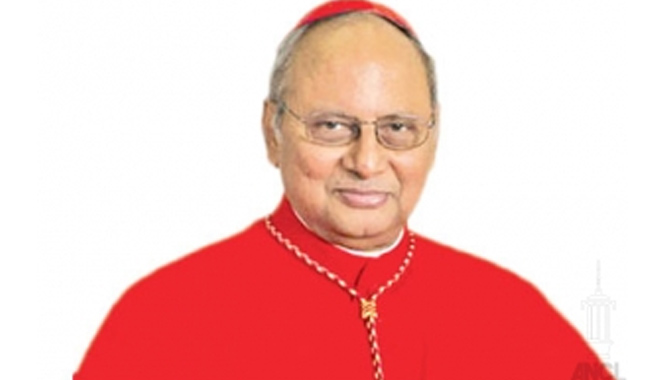
Cardinal Malcolm Ranjith and Elle Gunawansa Thera file FR

Colombo Archbishop Malcolm Cardinal Ranjith and Ven. Elle Gunawansa Thero today filed a Fundamental Rights petition in the Supreme Court seeking an order staying the operation of all agreements entered between the Government of Sri Lanka and New Fortress Energy Inc in relation to the sale of 40% of the shares of the West Coast Power (Private) Limited held by the Government of Sri Lanka to a US company.

The petitioners had named Cabinet of Ministers, New Fortress Energy Inc, West Coast Power (Private) Limited, Attorney General and several others as respondents in the petition.

The petitioners said signing of a “Definitive Agreement” on 21st September 2021 by between the Government of Sri
Lanka and the New Fortress Energy Inc is contrary to the law, arbitrary and infringement of their Fundamental Rights
guaranteed under Article 12(1) of the Constitution.

The petitioners alleged that the respondents have failed to give due consideration to the fact that the acceptance of the 53rd Respondent’s New Fortress Energy Inc unsolicited proposal to purchase 40% of the shares in the West Coast Power (Private) Limited is contrary to the National Energy Policy and Strategies (2019).

The petitioners are further seeking an interim order staying the operation of all
agreements entered into by and between the Government of Sri Lanka and New Fortress Energy Inc in relation to the supply of Liquefied Natural Gas or the deployment of a FSRU or construction of a R-LNG
Pipeline by the New Fortress Energy Inc to the Government of Sri Lanka.

This petition had been filed through Attorney-at-law Manjula Balasooriya.

Posted in Uncategorized

President rejects request from allied parties to discuss Yugadanavi Power Plant deal

President Gotabhaya Rajapaksa has rejected a request made by 11 allied parties of the government for a discussion on the agreement signed between the Sri Lankan government and an American company regarding the Yugadanavi LNG power plant in Kerawalapitiya.

Many quarters including the opposition as well as ruling party members had expressed objections to the agreement signed with the US-based New Fortress Energy to handover a 40% stake in West Coast Power Limited, the company that owns the power plant to New Fortress Energy.

It is against such a backdrop that 11 government parties made a written request to the President to provide an opportunity to discuss the matter.

The request had been made by the Democratic Left Front (DLF), the Lanka Sama Samaja Party (LSSP), the National Freedom Front (NFF), the Pivithuru Hela Urumaya (PHU), Ape Jana Bala Pakshaya, Sri Lanka Freedom Party (SLFP), National Congress, Eksath Mahajana Party, Sri Lanka Communist Party, the Sri Lanka Mahajana Pakshaya and the Yuthukama National Organization.

The letter requested the President to reconsider the agreement to hand over 40% of the Yugadanavi power plant to an American company and to implement the agreement following a proper tender procedure after a formal study.

The letter further stated that the monopoly of one company to generate electricity from gas through the agreement is a danger to the independence of the country.

However, President Gotabaya Rajapaksa has given a written response to the representatives of the allied political parties stating that it would be more appropriate to discuss this matter in the Cabinet or at a government party meeting.

However, President Rajapaksa has responded in writing to the representatives of those political parties stating that it would be more appropriate to discuss the matter in the Cabinet meeting or the ruling party meeting.

Furthermore, the letter states that the Secretary to the Finance Ministry and CEB officials would be instructed to brief them on this.

Meanwhile the President has also states that if there is any issue with the political decisions of the Sri Lanka Podujana Peramuna (SLPP) they should take it up with either party leader Prime Minister Mahinda Rajapaksa or national organizer Minister Basil Rajapaksa.

Accordingly, the party leaders have decided to meet on October 23 to discuss the meetings with the Premier and Finance Minister.

New Fortress Energy Inc. and the Government last month executed a definitive agreement for New Fortress’ investment in West Coast Power Limited (WCP), the owner of the 310 MW Yugadanavi Power Plant based in Colombo, along with the rights to develop a new Liquefied Natural Gas (LNG) Terminal off the coast of Colombo, the capital city.

Under the deal, New Fortress will acquire a 40% ownership stake of the power plant and plans to build an offshore liquefied natural gas (LNG) receiving, storage and regasification terminal located off the coast of Colombo.

According to Sri Lanka’s Marxist party, Janatha Vimukthi Peramuna (JVP), a contract has been awarded to New Fortress Energy without a tender to supply LNG for 10 years at a cost of US$ 6 billion. Under the agreement Sri Lanka has to pay whether it buys the gas or not.

Posted in Uncategorized

Sri Lanka: Authorities must end violence and discrimination against Muslims

Sri Lanka’s Muslim community has suffered consistent discrimination, harassment and violence since 2013, culminating in the adoption of government policies explicitly targeting the minority group, said Amnesty International, in a new report published today.

From Burning Houses to Burning Bodies: Anti-Muslim Harassment, Discrimination and Violence in Sri Lanka, traces the development of anti-Muslim sentiment in Sri Lanka since 2013 amid surging Sinhala-Buddhist nationalism. This discrimination has evolved from a rising series of mob attacks committed with impunity, into government policies explicitly discriminating against Muslims, including the forced cremation of Muslim Covid-19 victims and current proposals to ban both the niqab (face veil) and madrasas (religious schools).

“While anti-Muslim sentiment in Sri Lanka is nothing new, the situation has regressed sharply in recent years. Incidents of violence against Muslims, committed with the tacit approval of the authorities, have occurred with alarming frequency. This has been accompanied by the adoption by the current government of rhetoric and policies that have been openly hostile to Muslims,” said Kyle Ward, Amnesty International’s Deputy Secretary General.

“The Sri Lankan authorities must break this alarming trend and uphold their duty to protect Muslims from further attacks, hold perpetrators accountable and end the use of government policies to target, harass and discriminate against the Muslim community.”

Rising hostility towards Muslims

Incidents of violence towards Muslims have risen in frequency and intensity since 2013, with a series of flashpoints in which attackers and those responsible for hate speech have enjoyed impunity for their actions.

This escalating hostility began with the anti-halal campaign of that year, when Sinhala Buddhist nationalist groups successfully lobbied to end the halal certification of food, which demarks food permissible for consumption by Muslims, in accordance with Islamic scripture and customs. The campaign gave rise to a number of attacks on mosques and Muslim businesses, with the lack of accountability for those responsible acting as a signal to others that acts of violence against Muslims could be committed with impunity.

The following year, anti-Muslim riots in the southern coastal town of Aluthgama began after a Sinhala Buddhist nationalist group held a rally in the town. Here too, perpetrators of violence enjoyed impunity and authorities failed to deliver justice to victims.

Despite a new government in 2015, which promised justice and accountability for ethnic and religious minorities, attacks against Muslims continued to occur. Shortly after the election, anti-Muslim mob violence flared in the southern coastal town of Ginthota in 2017, while similar violence was seen in 2018 in Digana and Ampara, towns in the central and eastern provinces respectively. Not only did perpetrators escape accountability, victims and witnesses alleged the police and armed forces did not offer sufficient protection or act to prevent the violence.

Escalation since 2019 Easter Sunday attacks

Hostility towards Muslims increased markedly after more than 250 people were killed in coordinated suicide attacks committed by a local Islamist group and claimed by the Islamic State on Easter Sunday 2019.

Following these attacks, on 13 May 2019, Muslims in several towns in the North-Western Province of Sri Lanka came under attack during Ramadan, one of the holiest months in the Muslim calendar. Mosques across the country were also attacked and a spate of ‘hate speech’ posts and anti-Muslim vitriol was seen on social media. Emergency regulations rushed through by the authorities were also used to arbitrarily arrest hundreds of Muslims in the wake of the attacks.

Since taking office, the current government has continued to target and scapegoat the Muslim population to distract from political and economic issues.

This was evident in the mandatory cremation policy on the disposal of the bodies of Covid-19 victims, which was implemented despite cremation being expressly forbidden in Islam, and a lack of scientific evidence to substantiate the claims that burying victims would further the spread of the disease.

Government policies targeting Muslims

While the forced cremation policy has been reversed after the government succumbed to international pressure ahead of a vote on Sri Lanka at the UN Human Rights Council, the authorities are still seeking to implement discriminatory legislation, including a niqab ban and a ban on madrasas. If adopted, these restrictions would violate the freedom from discrimination based on religion guaranteed and safeguarded by Sri Lanka’s Constitution, and international human rights law which Sri Lanka is bound by.

The authorities have used existing legislation to target Muslims, including the Prevention of Terrorism Act (PTA), which permits suspects to be detained without charge for up to 90 days, and without being produced before a court. This is in addition to the misuse of the ICCPR Act, a law intended to prohibit the propagation of racial or religious hatred, amounting to incitement to discrimination, hostility or violence.

The report documents several cases in which these laws have been abused to target individuals, including Hejaaz Hizbullah, a lawyer and activist who has been detained for more than 15 months, and Ahnaf Jazeem, a poet and teacher, who was arrested on 16 May 2020 following unsubstantiated claims about his Tamil language poetry.

“From anti-terrorism laws and forced cremations to niqabs and madrasas, the Sri Lankan government has pursued a blatantly discriminatory policy agenda against Muslims. We urge the authorities to reconsider the proposals currently under consideration, and for the international community to monitor and take measures to ensure the freedom and protection of minority communities in Sri Lanka,” said Kyle Ward.


Posted in Uncategorized

Sri Lanka reports 23 Covid-19 deaths on Monday, toll rises to 13,507

Sri Lanka Monday reported 23 deaths due to COVID-19 after the figures were confirmed by the Director General of Health Services on Sunday, October 17.

Among the deaths reported today, 10 are of males and 13 of females. The majority of deaths – 21 – are of elderly people in the 60 years and above age group.

According to the data reported by the Government Information Department, the total deaths due to Covid-19 since the pandemic began last year has now risen to 13,507.

World Bank says extensive school closures had significant impact in Sri Lanka

The World Bank says extensive school closures had a significant impact in Sri Lanka.

According to the World Bank, extensive school closures led to significant learnings losses and widened disparities in human capital that could undermine growth and lower social mobility in the long term.

As Sri Lanka emerges from the crisis, the World Bank said that economic growth will be critical to restore livelihoods.

Latest projections indicate that growth will recover to 3.3 percent and poverty will fall to 10.9 percent in 2021—the latter still above pre-pandemic levels.

The World Bank said that considerations are needed to help the poor and vulnerable get back on their feet and prevent long-term scarring.

A new World Bank report, Sri Lanka Poverty Assessment: Accelerating Economic Transformation, unpacks the drivers of the success behind Sri Lanka’s recent efforts to improve the livelihoods of its people. It also carefully analyzes the initial impact of the COVID-19 crisis on livelihoods and poverty. The report highlights four priorities for Sri Lanka to further transform its economy, create more jobs and achieve a sustainable trajectory toward poverty reduction and shared prosperity.

The first priority is to increase agricultural productivity and earnings.Structural transformation is happening, but rather slowly. Supporting farmers’ transition toward higher-value, export-oriented crop mixes will be important given that farmers are significantly more likely to be poor. The sector could also benefit from a mix of programs that support the adoption of climate-smart technologies, improved agro-logistics, or expanded access to value chains.

The second priority is to address the constraints to accessing remunerative nonfarm jobs in rural areas. Nonfarm activities are an increasingly important and potentially productive source of livelihoods. Education plays a key role when it comes to livelihoods decisions: the more educated are significantly more likely to work in nonfarm sectors over farm sectors, and within nonfarm sectors, in more remunerative jobs. This implies that diversifying into low-return activities will not help increase incomes. While the nonfarm sector is diverse, strategic investments in tourism could support rural income growth, given its job creation potential for low-skilled and vulnerable groups.

The third priority is to support broader reforms to increase labor productivity and create jobs which could ultimately help improve the quality of jobs. In Sri Lanka, informality is widespread, estimated at around 70 percent, and strongly associated with inferior working conditions, limited job security, and heightened risk of poverty due to low earnings. In line with international evidence, reforms could aim to address the causes and consequences of informality rather than target informality itself.

The final priority is to promote spatial transformation and strengthen inclusion. This includes priorities to close spatial disparities and improve access to basic services. “Investments in human capital—health, education and social protection—are key to unlocking the potential of Sri Lankan children and boosting future productivity and economic growth,”says Chiyo Kanda, Country Manager for Sri Lanka and Maldives.

The World Bank noted that COVID-19 led to an abrupt halt to years of progress as the economy suffered its worst contraction on record. Jobs and earnings losses were widespread in the immediate aftermath of the outbreak. The Government acted swiftly to contain the pandemic and buffer the economic shock, but the measures were not sufficient to offset the full-blown impact. The share of $3.20 poor is estimated to have increased to 11.7 percent in 2020, or by over half a million people—a huge setback equivalent to five years’ worth of progress. Vulnerability was high among the workforce due to high informality and weak safety nets, which reduces their capacity to cope with shocks. Inequality is poised to increase as well.

Posted in Uncategorized

Sri Lanka seeks $500 mn loan from India for fuel purchase – report

Sri Lanka has sought a USD 500 million credit line from India to pay for its crude oil purchases amid a severe foreign exchange crisis in the island nation, PTI reported.

The move came few days after energy minister Udaya Gammanpila warned that the current availability of fuel in the country can be guaranteed only till next January.

The state-run Ceylon Petroleum Corporation (CPC) owes nearly USD 3.3 billion to the two main government banks — Bank of Ceylon and People’s Bank. The state oil distributors imports crude from the Middle East and refined products from other areas, including Singapore.

“We are currently engaged with the Indian High Commission here to obtain the facility (USD 500 million credit line) under the India-Sri Lanka economic partnership arrangement,” CPC Chairman Sumith Wijesinghe was quoted as saying by local news website newsfirst.lk.

He said the facility would be utilized for purchasing petrol and diesel requirements.

The energy secretaries of both India and Lanka are expected to sign an agreement for the loan soon, the report quoted Finance Secretary S R Attygalle as saying.

The government has put on hold the expected retail price hike of fuel despite the last week’s increase in cooking gas and other essentials.

The price hike in the global oil prices has forced Lanka to spend more on oil imports this year. The country’s oil bill has jumped 41.5 per cent to USD 2 billion in the first seven months of this year, compared to last year.

Lanka is facing a severe foreign exchange crisis after the pandemic hit the nation’s earnings from tourism and remittances, Finance Minister Basil Rajapaksa had said last month.

The country’s Its GDP contracted by a record 3.6 per cent in 2020 and its foreign exchange reserves plunged by over a half in one year through July to just USD 2.8 billion. This has led to a 9 percent depreciation of the Sri Lankan rupee against the dollar over the past one year, making imports more expensive.

Cardinal “shocked and horrified” over Govt.’s attitude to Easter attacks

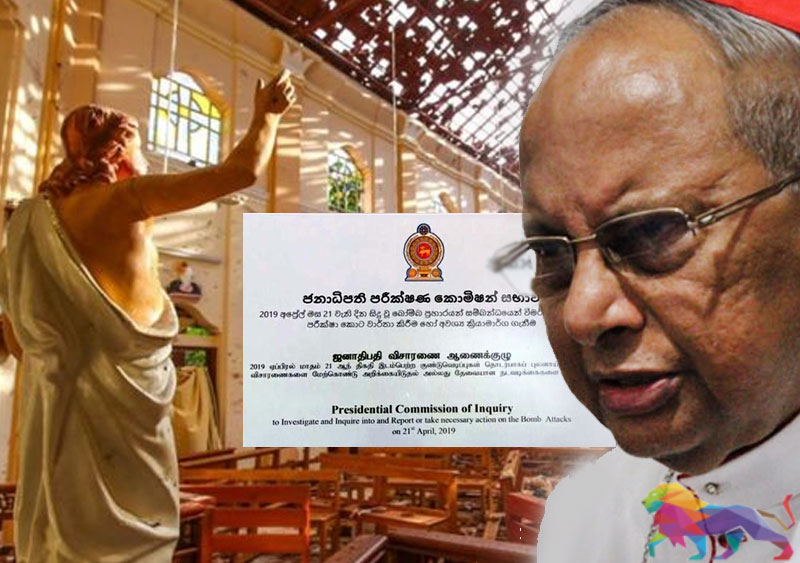
While expressing that the Catholic church is “shocked and horrified” over the Government’s attitude towards the investigations into the Easter Sunday terror attacks, Archbishop of Colombo his eminence Malcolm Cardinal Ranjith called on the international community for assistance in order to understand what really happened.

“We have been let down very badly by the present Government. We are absolutely shocked and horrified about this attitude and we want the international community to back us in this struggle to find out what really happened. Who really did it? Who made use of those characters in order to achieve political aims?” the Cardinal questioned during a webinar held yesterday (16).

He also expressed that it was clear that the attacks were not carried out by a few extremists. Instead he stated that there was something bigger behind it.

“We want to know what is behind this attack. Until we know that we will not be satisfied,” he warned.

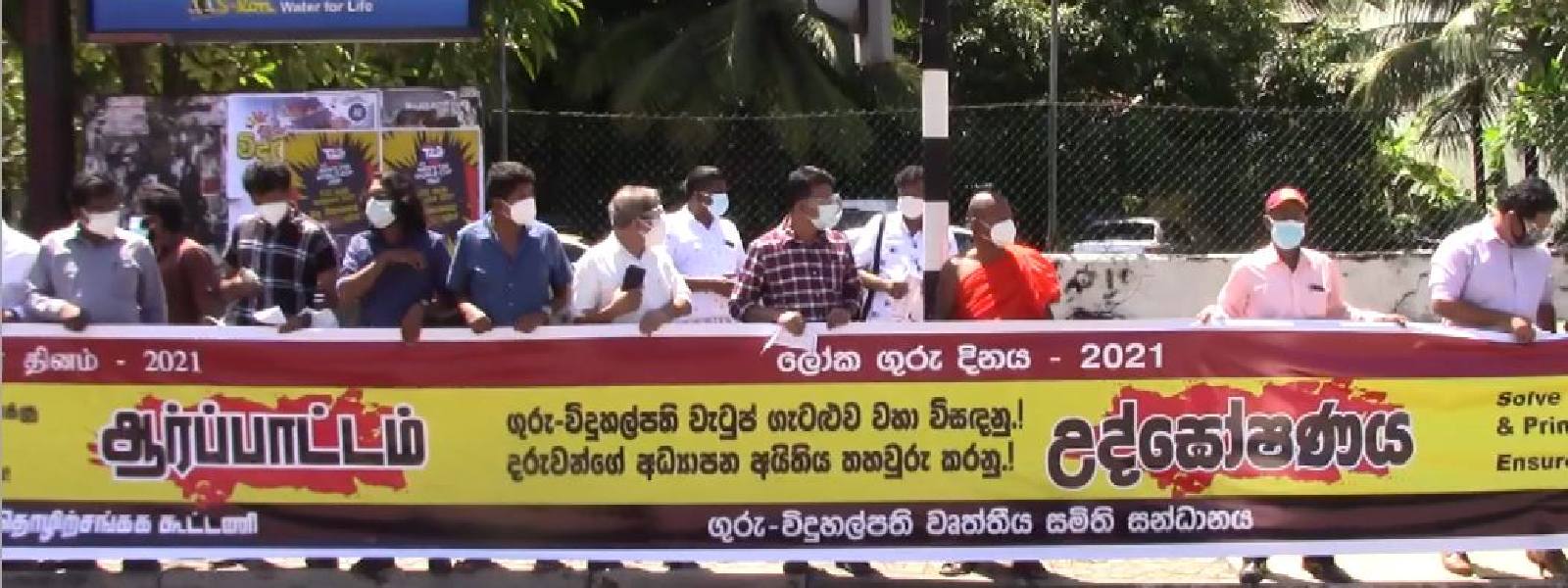
Politicians now threatening principals, alleges Trade Union Leader

The Secretary-General of the Ceylon Teacher’s Union, Joseph Starlin says that politicians are attempting to takeover the school keys from the hands of principals.

Recalling that there were several incidents of politicians calling principals of schools with less than 200 pupils, Starlin said that the politicians have threatened these principals, asking whether they are going to resume academic activities on 21 October or not.

Meanwhile, SLPP MP Dilan Perera speaking to media said that the teachers unions are attempting to launch a mud slingling campaign on the Government through their protests.

The State Minister of Transportation Dilum Amunugama emphasized that the Government has already accepted that the teachers have an issue and have promised to solve this issue by next year. He also requested the unions to not to think as teachers, but as public servants.

” When public servants have been called for work, and they do not comply then there is a big issue,” he said.

Amunugama further stated that if any of the teachers who will be engaging in academic activities after 21 October are threatened, action will be taken against them.

State Minister Dayasiri Jayasekara said that those who are threatening teachers and are issuing warnings against them are people who have never stepped inside a classroom.

Speaking to media today (16), Jayasekara said that while understanding that teachers should be respected, the unions should also consider the Government’s proposal to put an end to the protest by granting their demands in two stages.