Strikes across the country urging the international community to take Sri Lanka before the ICC continue

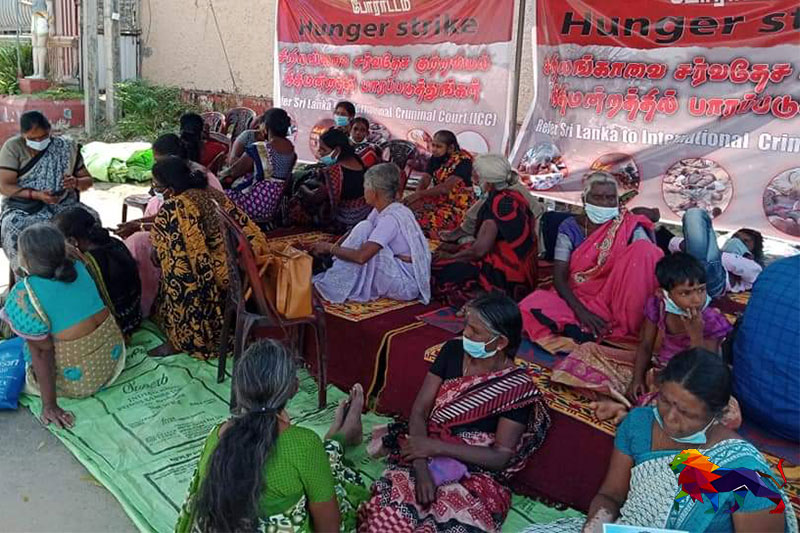
The hunger strike launched by the Tamil community to urge the international community to take the Sri Lankan government before the International Criminal Court (ICC) continues ​​in three locations in the North and East.

Religious leaders, university students and civil society activists began a hunger strike in front of the Nallur Kandaswamy Kovil in Jaffna on Sunday, February 28, demanding that all war criminals in Sri Lanka be brought before the International Criminal Court and that justice be done to the Tamil people.

While the Police attempted to prevent the fast, they later had to leave the location following the intervention of the organisers.

The fast commenced by the people of the East in front of the Mamangam Pulleyar Kovil in Batticaloa on Tuesday, March 2 continues for the sixth day today, while the fast started in front of the Draupadi Devalaya in Kalmunai, Ampara has completed five days today.

According to provincial correspondents, the Tamil people hope to continue the fast until March 23.

While the 46th session of the UN Human Rights Council (UNHRC) is currently underway in Geneva, protesters called on countries led by the UK that brought the resolution against Sri Lanka to refer Sri Lanka to the International Criminal Court.

Foremost among their demands is that justice should be done to the Tamil people in the North and East who have become victims of war crimes.

Journalists in Jaffna say that groups of university students will support the fast, which has been going on in Jaffna for more than three weeks.

At a press conference in the capital, several Sri Lankan civil society organisations recently called for all war criminals in Sri Lanka to be brought before the International Criminal Court and brought to justice.

United Nations High Commissioner for Human Rights Michelle Bachelet, in a recent report, has widely accused Sri Lanka of “grave human rights abuses” and called for accountability for war crimes.

“The time has come to take international action to bring justice to international crimes,” the High Commissioner said in her 17-page report.

‘This is a test of moral authority’ – UK Shadow Minister calls for a comprehensive rewrite of UN resolution

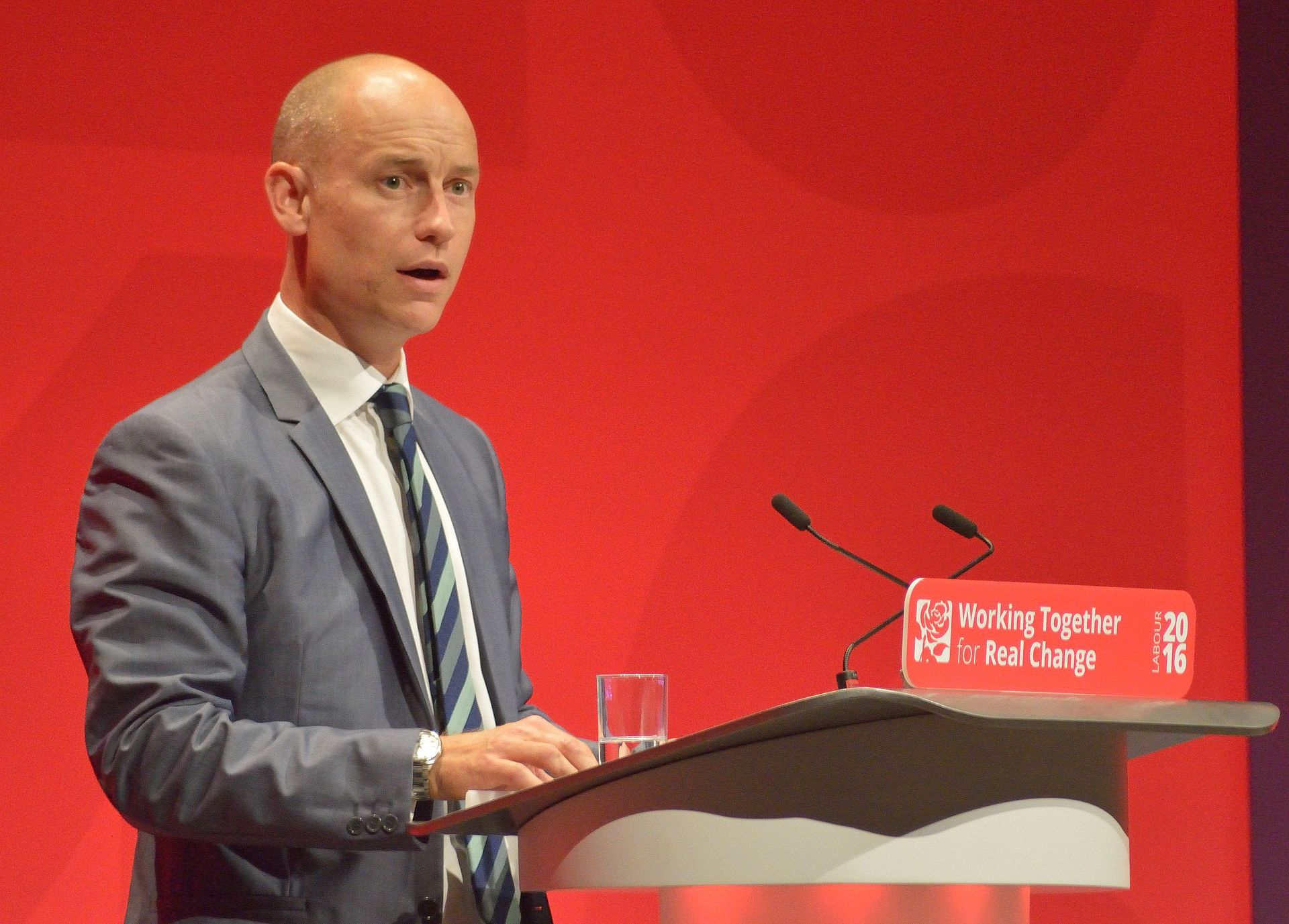
Writing to Minister of State for Asia, Nigel Adams, UK Shadow Minister for Asia and the Pacific, Stephen Kinnock, has called on the government to ‘comprehensively rewrite’ the current proposed UN resolution and questioned why the government’s review of its Global Human Rights sanctions regime does not include “a single senior Sri Lankan government minister, official or military officer”.

In his statement Kinnock criticised the government’s refusal to consider referring Sri Lanka to the ICC, maintain that Britain’s position, “should not be determined simply by the veto-wielding intentions of two of its permanent members”. Britain’s refusal to refer Sri Lanka to the ICC has sparked a great deal of criticism from human rights defenders and Tamil activists.

Failing to rise to the challenge

In his statement, Kinnock, slammed the government’s response maintain that “the UK government has a particular responsibility to demonstrate moral and political leadership on this matter, but unfortunately it is clear judging by this drafting resolution that you are failing to rise to the challenge”.

Kinnock criticised the resolution noting that it was “too vague and insufficiently robust”. Thus failing “to reflect the extent of the devasting impact of the human rights abuses that have been perpetrated in Sri Lanka”. He further maintains that it “falls far short of what is required in terms of tangible action”.

In his statement, Kinnock raised five specific concerns with the resolution

  1. Kinnock notes that Britain should support the High Commissioner’s call for the application of universal jurisprudence noting that “it is beyond doubt that the Sri Lankan government and military will continue to deny, delay and evade accountability”. He calls on the British government to confirm that the principle of universal jurisdiction must be applied to the actions of the Sri Lankan government and military
  2. The resolution is also criticised as it fails to recommend the establishment of an International Independent Investigative mechanism (IIIM). Kinnock criticises the vague reference in the resolution to strengthening evidence gathering and collation, maintain that the resolution should emphasis that a III-M is required.
  3. He also notes that whilst there would be opposition to Sri Lanka being referred to the International Criminal Court, “it is not an acceptable argument against trying”. He emphasises that the UK’s position “should not be determined simply by the veto-wielding intentions of two of its permanent members”.
  4. Kinnock highlights that there is nothing in the draft resolution about prevention and asks the government what steps it will take “to ensure that this resolution leads to tangible measures to protect human rights defenders on the ground from the increasingly aggressive actions of the Sri Lankan authorities?”
  5. Kinnock also criticises the piece noting that the time scale given for considering accountability options, “18 months”, is “unacceptably long”. The evidence is clear and the UNHRC needs to take action now, rather than allowing the Sri Lankan government yet more time to obstruct and obfuscate”. He calls for this timescale to be amended to “6 months”.

Magnitsky sanctions

Commenting on the UK’s sanction regime, he notes that the UK has not included “a single senior Sri Lankan government minister, official or military officer”. He further notes that Lord Ahmad’s claim that the government is keeping “all evidence and potential listing under review”. Responding to this he asks why “this review is taking so long, given the extent of the detailed evidence that is already widely available about the gross human rights violations that have taken place there?”

Kinnock emphasises “that the chances of the resolution being approved by the UNHRC on 24 March will be enhanced if it is made more robust and substantial”. He further warns that the UK governments’ draft resolution could be rejected “if its too weak and lacks substance”.

He concludes by emphasising that the UK “owes it to the victims and survivors of the atrocities that have taken place in Sri Lanka to ensure that it rises to the occasion and shows the moral courage and leadership that is so urgently needed”.

Posted in Uncategorized

BBS calls for Chief Prelates stance on Easter PCoI

The Bodu Bala Sena organisation has requested the Chief Prelates of the three chapters to issue a joint statement pertaining to their stance on the report by the Presidential Commission of Inquiry that probed the Easter Sunday attacks.

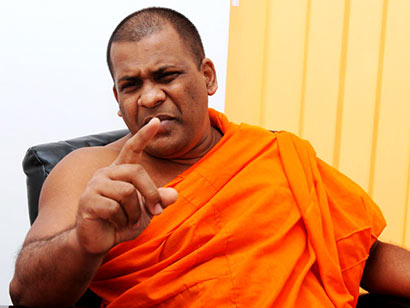
Speaking to media after calling on the Chief Prelates in Kandy today General Secretary of the Bodu Bala Sena organisation venerable Galagodaththe Gnanasara thera said the report by the Commission is warped and claimed they will launch a satyagraha campaign in protest.

Gnanasara thera said discussions were held regarding the report with the Chief Prelates.

Gnanasara thera said the Chief prelates fulfilled their duty in every occasion in the country, adding that although they don’t comment on every matter, they are closely monitoring all incidents and are notifying relevant persons when required.

The thera said a negative fate has befallen the Buddhist community through the warped report, adding that Bodu Bala Sena organisation will take the lead in uplifting the country from the disaster it fell into as a result of extremism.

Northern province goes dark due to technical issue

The entire northern province is experiencing an electricity disruption following a technical issue at the Anuradhapura New Grid Sub-station.

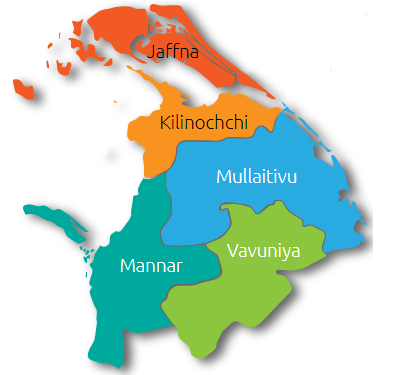
The spokesperson for the Ministry of Power Sulakshana Jayawardena speaking to News 1st said several other areas which receive electricity from the Valachchenai, Habarana, Polonnaruwa, and Vavuniya Grid Sub-Station too are experiencing a power-cut.

Both the Anuradhapura and Polonnaruwa districts are also in the dark, he added.

Posted in Uncategorized

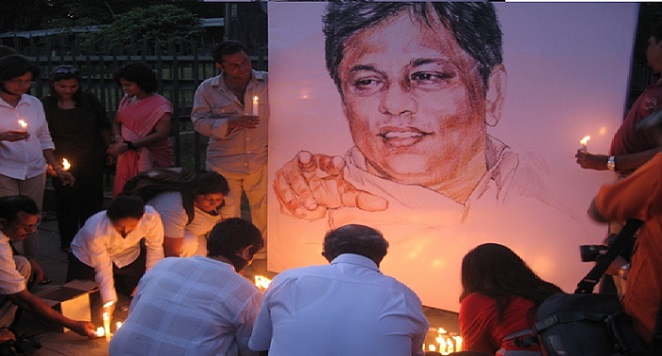
12 years later; Lasantha’s killers still at large

The suspects linked to the murder of The former Editor of The Sunday Leader Lasantha Wickrematunge are yet to be identified, 12 years since the horrific incident took place in broad daylight.

Last night we focused on the broad scope and state of the investigations, following Lasantha’s daughter, Ahimsa Wickramatunge’s Opinion Piece to The Washington Post.

How was the murder carried out?

At the time, the judicial medical officer of the Kalubowila Teaching Hospital claimed that Lasantha Wickrematunga had sustained 12 gunshot injuries.

But the Government Analyst as well as the Professor who performed the surgery on the journalist ruled out shooting in their reports.

When Lasantha’s remains were exhumed on the 27th of September 2016, it was confirmed that he had not died of gunshot injuries.

Question Number 1: Were the weapons used in the murder recovered during investigations?

On the 27th of January 2009, a motorcycle belonging to a resident of Vavuniya, believed to be used in the killing, was recovered from a swamp in Attidiya.

At the time of recovery, it had been more than a week since two individuals, including the motorcycle owner, had been abducted and murdered.

Question Number 2: How can the mystery of the motorcycle and its owners be explained?

03. The notebook containing vital evidence

Lasantha Wickrematunge’s notebook, where he allegedly noted down the number of the motorcycle that had been following him on that fateful day, was transferred from the possession of the Officer-In-Charge of the Mt. Lavinia Police Crimes Branch of a Deputy Police Chief in the area at that time.

Both officers were arrested in February 2018 over charges of concealing evidence but were granted bail on the 2nd of July in the same year.

Question Number 3: What happened to the notebook and the vital piece of evidence?

04. Telephone records

Investigations carried out by the Terrorism Investigation Division revealed five telephone numbers believed to be linked to the killing.

A resident of Nuwara Eliya, identified as the bearer of the National Identity Card registered to these numbers, was arrested along with an army intelligence officer.

But the owner of these numbers had died in prison on the 13th of October 2011, while the intelligence officer had been released from charges due to lack of evidence on the 6th of September 2013.

Question Number 4: What happened to the telephone records?

05. Investigations carried out by various units.

On the 25th of November 2009, investigations launched by the Crimes Branch of the Mount Lavinia Police into the incident had been transferred to the Criminal Investigations Department.

These investigations were passed on to the Terrorism Investigation Division following the presidential election in 2010.

The Officer-In-Charge of the Terrorism Investigation Division is now serving as its director.

In 2015, the task of carrying out the investigations, which bore no result, had been entrusted with the Criminal Investigations Department.

The Criminal Investigation Department director who uncovered several vital pieces of evidence at that time is now in prison.

Assistant Police Superintendent Sisira Tissera, who was also part of the investigations, has been given a transfer while Police Inspector Nishantha de Silva had fled the country.

Question Number 5: Why were there so many changes to the investigative team?

In addition to being the Editor of The Sunday Leader, Lasantha Wickrematunge was a member of the MTV/MBC/News 1st Media Network and a trusted colleague.

12 Years have passed since his murder. His daughter, Ahimsa, recently put down her anguish in an opinion piece, published in The Washington Post.

The Truth can at times be hidden, blocked or suppressed. It can even be twisted.

But just like the sun rises each morning and dispels the darkness, so will the Truth rise with absolute certainty and expose lies and deceit.

There is NO escape from the Truth.

Source:NewsFirst.lk

Posted in Uncategorized

Canadian Diplomat asks if he is under surveillance in Sri lanka

The Canadian diplomat was concerned how the private meeting got media coverage when there was no media outside the residence at the time

Aforeign diplomat in Colombo has asked if he is under surveillance after details of some visitors to his official residence were exposed in the media.

Canada’s High Commissioner to Sri Lanka, David Mckinnon tweeted asking if he was under surveillance after at least two newspapers published details of visitors to Canada House in Colombo 07.

Two newspapers had reported over the weekend that Bangladesh’s High Commissioner Tareq Ariful Islam had met David Mckinnon at Canada House.

While the diplomat refused to comment, sources told Daily Mirror the Canadian diplomat was concerned that the private meeting got media coverage when there was no media outside the residence at the time.

Local media had also reported that the British High Commissioner to Sri Lanka Sarah Hulton had met South Korean Ambassador Woonjin Jeong.

Both Bangladesh and South Korea are members of the UN Human Rights Council.

The UN Human Rights Council will be taking a vote on a resolution on Sri Lanka later this month. Canada and the UK are part of a Core Group on Sri Lanka which is seeking support for the resolution.

Just recently the European Union (EU) had raised concerns in Geneva over intensified surveillance in Sri Lanka.

In a statement made at the UN Human Rights Council during the ongoing 46th Session, the EU said it was concerned about intensified surveillance and intimidation, particularly of human rights defenders and victims

Posted in Uncategorized

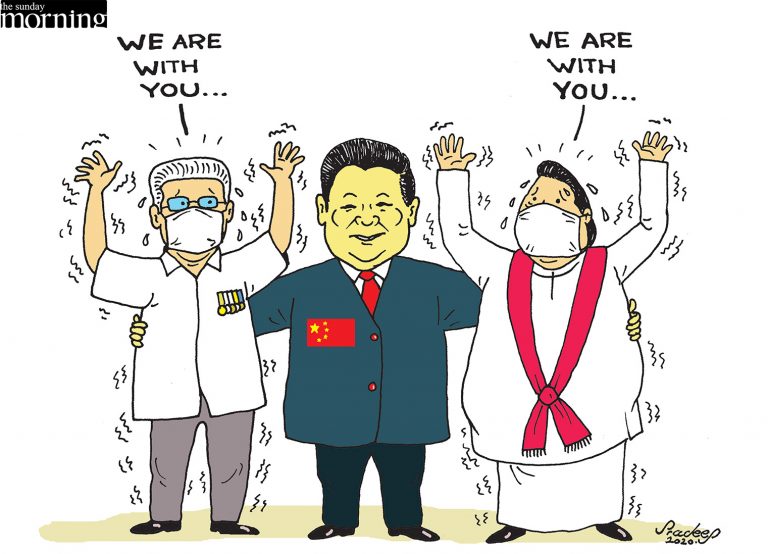
Sri Lanka and China stand shoulder to shoulder at UNHRC

Following the unequivocal support extended by China to Sri Lanka on the Core Group’s draft resolution at the UN Human Rights Council (UNHRC), Sri Lanka questioned the reliability of the data in the report of the Special Rapporteur, Ahmed Shaheed, on the Uighur Muslims of China.

Sri Lanka’s representative C.A.Chandraprema strongly defended China’s treatment of the Uighur Muslims in the Xinjiang province of China in the Interactive Dialogue on March 4.

Chandraprema said that Special Rapporteur Shaheed’s claims about discrimination against the Uighurs were based only on biased and sensational reporting in the Western media.

Problems facing the Muslims community in Sri Lanka received a brief reference in Shaheed’s report, specifically referring to mob attacks against Muslims in which the police appeared to be complicit. In reply to Shaheed, Chandraprema said that the Sri Lankan Constitution upholds the right to freedom of religion and denied violence and discrimination against Muslims following the Easter Sunday bombings in April 2019.

Focus On Defending China

Having said that Ambassador Chandraprema quickly switched focus to the UN Special Rapporteur’s findings on the treatment of the Uighurs in China’s Xingjiang province. He said Shaheed’s report on the Uighurs had quoted “various Western media outlets” that had made “various sensational claims” about issues encountered by the Muslims in China.

“We have serious concerns about the credibility of these sources. We note that the policy of freedom of religion has been fully implemented in the Xinxiang province,” he said.

In a broadside against Western countries, the Sri Lankan Envoy said: “Many Muslim countries have been destroyed in the past two decades in the guise of promoting democracy. However, Xinxiang has been at peace and has enjoyed democracy with the rest of China during this period.”

Shaheed had also been critical of the Indian Government in his Islamophobia report which drew a harsh response from New Delhi’s representative participating in the Interactive Dialogue. But the Lankan Ambassador did not make a reference to the allegations against India during his intervention.

Colombage Defends China

Sri Lanka’s Envoy’s remarks came in Beijing’s defense came in the wake of Foreign Secretary Adm. Prof. Jayanath Colambage’s assertion that he had “seen no evidence” to suggest genocide in Xinjiang.

The Foreign Secretary had called the Government of China “guardians” of the people of Xinjiang. Colambage’s interview was widely circulated in the form of a promotional video by the Chinese State media.

China Backed Lanka

China had earlier strongly backed Sri Lanka over the Core Group’s draft resolution on the human rights situation in Sri Lanka and the war crimes charges against its armed forces.

Chinese envoy Chen Xu had said: “The proposed targeted sanctions contained in the OHCHR’s report are clear interference in the internal affairs of Sri Lanka and exceed the mandate of the OHCHR. We hope that the HRC and the OHCHR will strictly follow impartiality, objectivity, non-selectivity and non-politicisation principles, respect the sovereignty and political independence of all nations, respect the efforts of the nations for the protection and promotion of human rights, advocate constructive dialogue and cooperation, and abandon the practice of interfering in the internal affairs of other countries and exerting political pressure.”

UN View on Uighurs

Draft UN experts and activists claim that one million Muslim Uighurs are detained in camps in Xinjiang Province. Last week, UN Human Rights Chief Michelle Bachelet decried the ill-treatment of the community and demanded access into the region.

In February, the Dutch Parliament passed a non-binding motion saying the treatment of the Muslim Uighur minority in China amounted to genocide, the first such move by a European country.

Chinese Envoy Reprimanded

During Thursday’s Dialogue with the Special Rapporteur, China was reprimanded by the Chair for using its time to launch a scathing attack on Shaheed. The Chinese Delegation said Shaheed had relied “only on BBC and New York Times” to slander and smear China.

The Special Rapporteur was “wantonly” spreading false information, the Chinese representative said, adding that Shaheed lacked “basic professional ethics and serves as a political tool for Western countries”.

The Chair said: “I would like to remind the speaker that I cannot allow derogatory or inflammatory remarks to be made against a special rapporteur. That is not allowed by the rules. No personal attacks should be made.”

Ahmed Shaheed’s Report

Introducing his damning report about Islamophobia world over at the UN Human Rights Council on Thursday, Shaheed said institutional suspicion and fear of Muslims and those perceived to be Muslim have escalated to “epidemic proportions.”

The UN Special Rapporteur said that “numerous” States, regional and international bodies were to blame. In a report to the Council, he cited European surveys in 2018 and 2019 that showed that nearly four in 10 people held unfavourable views about Muslims.

In 2017, 30% of Americans viewed Muslims “in a negative light”, the Special Rapporteur added.

Source:https:Newsin.asia

Posted in Uncategorized

Sri Lanka in February: A month of forgettable performance by Col R Hariharan

Sri Lanka is worried about the new draft resolution put forward by the Core Group led by UK, which would be voted on March 22.

Overview

If the happenings during the month in Sri Lanka are any indication, the government of President Gotabaya Rajapaksa, voted to power by 6.9 million Sinhalas to restore Sinhala pride and Buddha Sasana as he claims, did not cover itself with glory. This was evident in the government conduct on three issues which peaked during the month – troubled ethnic relations, the handling of the United Nations Human Rights Council (UNHRC) meeting on Sri Lanka’s human rights accountability, and challenges of governance. Perhaps, the bonhomie showed by visiting Pakistan Prime Minister Imran Khan, despite accusations of Islamophobia voiced by Muslim minority, was the only moment of cheer for the government.

Significance of P2P march

Perhaps for the first time since the 70s, Tamils of all hues – Jaffna and Easterners, Muslims and Tamils of Indian origin (Up country Tamils) – came together, across political affiliations, to march peacefully for five days to voice their demands. They covered a distance of 750 km from the eastern town of Pottuvil to Polikandy in Jaffna in the North, to draw attention to demands, ignored by successive governments, as well as concerns on current issues.

The march held from February 3 to 9, now embedded in Tamil lore as P2P, did not draw much attention in mainstream media, though Tamil media estimated the participation of a thousand people. Apparently, it was timed to draw international attention on the eve of the UNHRC meeting slated to discuss Sri Lanka’s human rights accountability issue. The proceedings of the UNHRC session, so far, indicates they had achieved their aim.

The P2P march is a watershed moment for a number of reasons. For the first time, besides Tamils from north and east, plantation Tamils and Muslims had joined hands to project their demands peacefully. It was led by civil society organisations, with Tamil and Muslim political parties taking a back seat.

Slogans raised at the march voiced, much more than longstanding demands of Tamils of North and East, like forcibly disappeared, vacation of land under occupation of security forces and release of LTTE suspects still in custody without due legal process. They also protested against denial of burial rites to Muslim victims of Covid pandemic, continued recourse to Prevention of Terrorism Act (PTA), denial of minimum wage of Rs 1000 per day to plantation Tamils and aberrations of Sinhala majoritarian rule against minorities. This would indicate, the patience of minority population is wearing thin over the government’s continued indifference to their grievances. This increases the likelihood of minority politicians coming together for making common cause to build upon the Tamil idiom to further their political aspirations.

Two mainstream political parties the SJB (clone of its parent UNP) and the JVP – came out in support of the Tamil marchers. Prime Minister Mahinda Rajapaksa who is politically savvy, would remember that the P2P was reminiscent of the early 70s, when Tamils started projecting their demands for autonomy peacefully. It later snowballed into satyagraha movement under Dr SJV Chelvanayakam’s leadership and opened the gates for Tamil separatist struggle.

Wasted opportunity at UNHRC

The four-week long 48th session of the UNHRC conducted virtually, has so far gone according to script. HR Commissioner Michelle Bechelet’s report (analysed last month in Sri Lanka Security Trends) was taken up for discussion, with 40 countries presenting their views in the interactive dialogue that followed.

Foreign Minister Dinesh Gunawardane’s address was largely defensive, trying to counter Ms Bechelet’s report with recycled arguments, rather than breaking new ground to tone down the damage caused by the report. He said her report has “unjustifiably broadened its mandate and scope” to incorporate many issues of governance and matters that are essentially domestic, and dismissed the previous resolutions brought at the UNHRC as politically motivated. Few would be convinced by his argument that the former Sri Lanka government decision to co-sponsor UNHRC Resolution 30/1 resulted in compromising national security, which eventually led to the Easter attacks of 2019.

Representatives of the UK, Germany, Canada, Norway and the US shared the concerns raised by the OCHR and called upon Sri Lanka to share a time table for the implementation of the recommendations mentioned in the report.

India did not allow the recent hiccups in its relations with Sri Lanka to highlight the core aspects of Sri Lanka’s human rights issue. India’s Permanent Representative, Indra Mani Pandey, noted that India was an active participant in the discussions on the seven resolutions on the question of human rights in Sri Lanka since 2009 and Sri Lanka remained a close friend and immediate neighbour.

“We believe that respecting the rights of the Tamil community through meaningful devolution contributes directly to the unity and integrity of Sri Lanka.” Therefore, she added India advocated “delivering on the legitimate aspirations of the Tamil community is in the best interest of Sri Lanka.” India called upon Sri Lanka to take steps to address such aspirations through reconciliation and full implementation of the 13th Amendment to the Constitution.

Sri Lanka is worried about the new draft resolution put forward by the Core Group led by UK, which would be voted on March 22. Sri Lanka would consider certain comments and clauses of the draft resolution as provocative. For instance, it takes note of the passage and operationalisation of the 20th Amendment to the Constitution, counsels the government to respect local governance including holding of elections to provincial councils and ensure they are able to operate effectively, in accordance with the 13th Amendment.

It asks Sri Lanka to provide sufficient resources and technical means for effective functioning of the Office on Missing Persons and the Office for Reparations and stresses the importance of maintaining support to these institutions, “safeguarding their independent functioning.”

It expresses serious concern over emerging trends over the past year, which “represent clearly early warning signs of a deteriorating human rights situation in Sri Lanka, including the accelerating militarization of civilian functions, erosion of the independence of the judiciary and key institutions responsible for the promotion and protection of human rights, ongoing impunity and political obstruction of accountability for crimes and human rights violations in emblematic cases.”

Presumably, the draft resolution would be toned down in its final form; but the writing on the wall is clear – Sri Lanka cannot do business as usual, if it wants to maintain its win-win relations with its traditional Western allies. India in 2010 had provided valuable support to Sri Lanka in the UNHRC in shaping the final resolution. With China assuring Sri Lanka its support in international forums, how would India handle Sri Lanka’s request for help in the UNHRC, remains to be seen when the final resolution takes shape.

Future

Alan Keenan of the International Crisis Group summed up the situation in Sri Lanka in his paper, “The Rajapaksa family’s return to government has put an end to tentative efforts to address the legacy of civil war and brought in more centralised, militarised government, anchored in Sinhala majoritarianism. As Sri Lanka’s longstanding ethno-religious tensions continue to linger, the presence of hard-line Sinhala nationalists in power rules out any accommodation of Tamil political claims. Once-fringe ideas of militant Buddhist groups regarding violence and hate speech against Muslims are increasingly being adopted as government policy.”

The Rajapaksa government has so far shown neither the willingness, nor the ability, to tackle these issues dispassionately. The Rajapaksas weakest link is the ineptitude in handling foreign relations, which has caused maximum damage to the country. This was seen in all critical situations: continued insensitivity in handling India’s concerns, embarrassing the new US administration by undiplomatic comments, and clumsiness in handling Prime Minister Imran Khan’s visit to Colombo and the inability to strategize the approach to the UNHRC session. The after effects of this weakness is likely to impact the country in the coming months.

[Col R Hariharan, a retire MI specialist on South Asia and terrorism, served as the head of intelligence of the Indian Peace Keeping Force in Sri Lanka 1987-90. E-mail: colhar@gmail.com Website: https://col.hariharan.info]


‘Collective decision will be taken over PC Election’

State Minister of Provincial Councils & Local Government Roshan Ranasinghe says a collective decision will be reached pertaining to the conduct of the Provincial Council Election.

Speaking to media in Kandy the State Minister said Provincial Councils exist at present without public representatives, adding that activities and productivity is minimal.

State Minister Ranasinghe added concerns will arise if officials engaging in management duties resort to fulfilling duties that a politician is expected to execute.

He therefore highlighted the importance of public representatives to Provincial Councils.

The State Minister charged that elections were delayed by the good governance government and vowed to ensure the conduct of elections as a government on the directives of the President and Prime Minister.

On a separate note State Minister Roshan Ranasinghe said the former government came into power labelling the then government as thieves, and charged the good governance government of causing the controversial Treasury bond transactions and other financial malpractices.

He also claimed that national security was compromised under the former government.

The State Minister said the economy that was at a 7.2% growth rate when being handed over by the Mahinda Rajapaksa led government, was handed back in 2019 having dropped to 2.7%.

He charged the good governance government of being one of the worst governments to date.

State Minister Ranasinghe also claimed the Leader of the Opposition should have inquired into public grievances during his term as a Minister adding that the public is fully aware of his pretences.

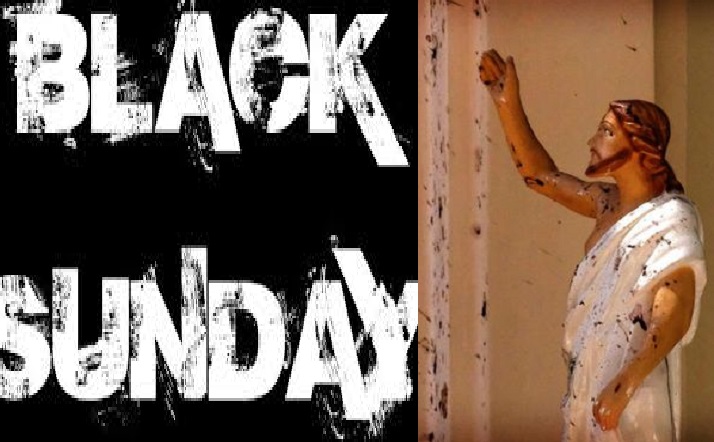
Catholics in Sri Lanka mark ‘Black Sunday’ as mark of protest

Catholics in Sri Lanka today marked ‘Black Sunday’ as a mark of protest over the failure to find those linked to the Easter Sunday attacks.

Worshippers wore black face masks when attending mass today while some were dressed in black.

Religious leaders from the Buddhist and Muslim faiths also supported the protest by attending some of the services.

Cardinal Malcolm Ranjith demanded that the Government find the main perpetrators of the deadly attacks.

“Our effort is to establish who was actually behind the attacks,” Cardinal Malcolm Ranjith said in a statement.

Ranjith told a press conference last week that he was unhappy with the lack of progress in the inquiry, and laid out an ultimatum.

“If the authorities fail to come up with answers as to who was behind the attacks by the second anniversary of the bombings, we will call for a nationwide black-flag campaign,” he said.

The campaign would involve Sri Lankans flying a black flag above their homes as a sign of protest, the cardinal added.

The US Justice Department in January charged three Sri Lankans with supporting terrorism for their alleged participation in the attacks, which were claimed by the Islamic State group.

All three are in custody in Sri Lanka but have not been charged locally. The Justice Department said it would support their prosecution in the country.

At least 45 foreigners, including five Americans, were among those killed.

Posted in Uncategorized