Post-war reconciliation: Govt. ponders judicial powers for TRC, special court

Director General of the Interim Secretariat for the Truth and Reconciliation Mechanism (ISTRM), Dr. Asanga Gunawansa, PC, says the draft of the law to establish a Commission for Truth, Unity and Reconciliation in Sri Lanka can be amended to enable the proposed Commission for Truth, Unity and Reconciliation (CTUR) to have prosecutorial and/or judicial powers. Otherwise, a special court could be established to address the need, Dr. Gunawansa told The Island.

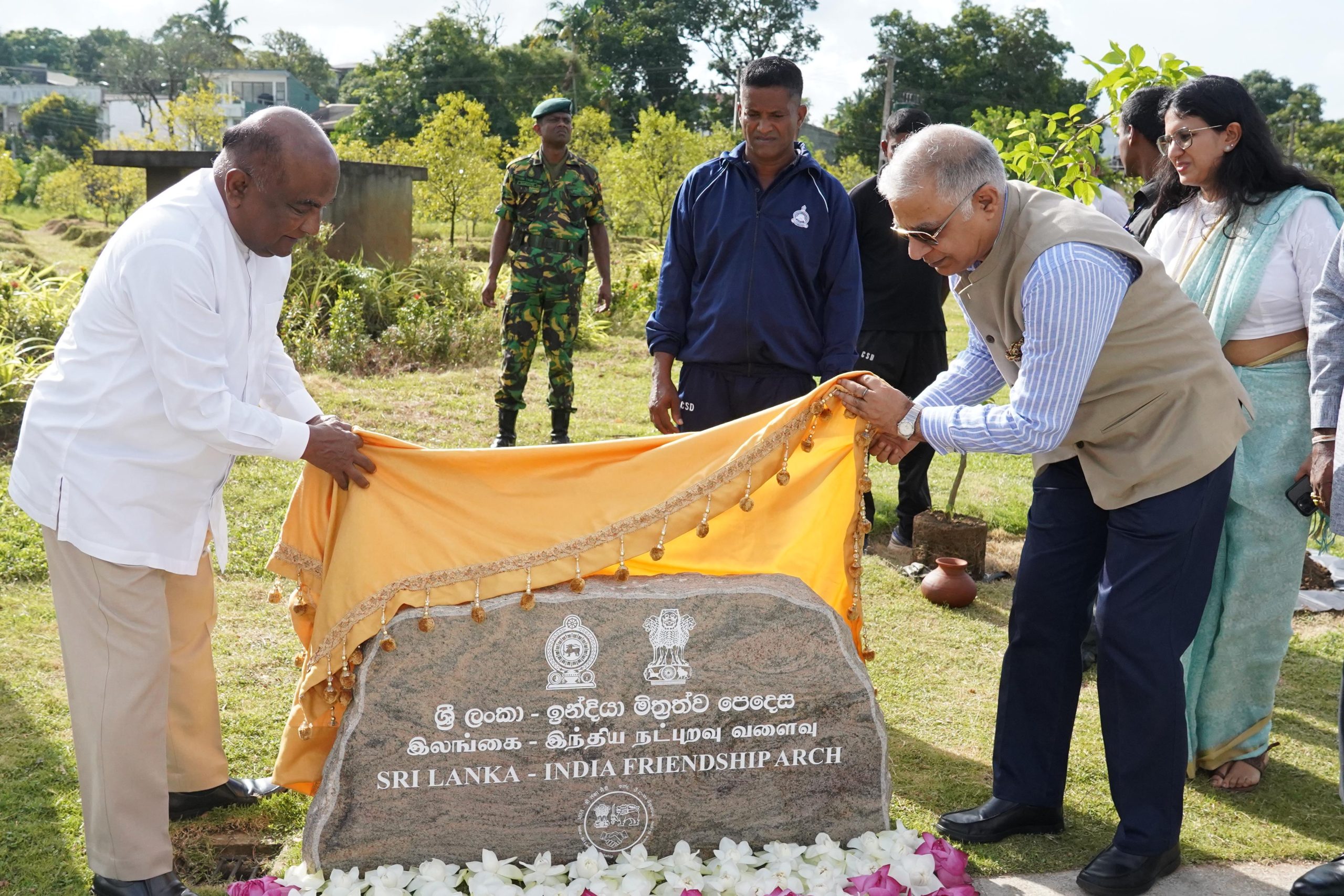
The top official said so in response to our query based on President Ranil Wickremesinghe’s recent declaration at the inauguration of the Clinical Training and Research Block at the Faculty of Medicine, University of Jaffna that his government was considering whether the TRC should wield judicial authority or a separate court should be set up based on TRC recommendations.

The President’s Media Division (PMD) quoted Wickremesinghe as having said he had tasked the relevant ministers in consultation with parliamentarians and ambassadors to draft legislation for parliamentary review. The President declared that the decision on prosecutorial and/or judicial powers for CTUR or special court was of paramount importance. Among those present on the occasion were Tamil National Alliance (TNA) lawmakers, M. A. Sumanthiran, PC, and Dharmalingham Siddharthan representing the Illankai Thamil Arasu Kachchi and People’s Liberation of Organization for Tamil Eelam (PLOTE), respectively. Eelam People’s Democratic Party (EPDP) leader Douglas Devananda was also present.

Asked to explain the status of the ongoing deliberations on the issues pertaining to prosecutorial and/or judicial powers for CTUR or establishment of a special court, Dr. Gunawansa said this was a matter that should be decided by the government.

The President’s Counsel said: “As any law to come into operation required the approval of the Parliament, it is eventually up to the Parliament to decide whether the proposed law should have provisions which enabled the CTUR to wield judicial power or for that purpose or the establishment of a special court. If a special court is to be established, then the relevant articles in the Constitution as well as the Judicature Act amongst other relevant laws may have to be carefully considered.”

Dr. Gunawansa added: “The objectives of any system of transitional justice are to provide for a platform for establishing truth, reconciliation, reparation for victims, taking measures for non-recurrence of violence and abuse of human rights and enabling legal action against abusers of human rights and criminal offenders.”

Responding to another query, the ISTRM Chief disclosed that the current draft of the proposed law that has been gazetted did not go as far as establishing a separate court. However, it included provisions which enabled the relevant competent authorities such as the Attorney General and the Police to consider criminal action pursuant to investigations based on information revealed during the truth-seeking process followed by the Commission and on the recommendations made by the Commission, Dr. Gunawansa said.

However, as the President declared in Jaffna, if pursuant to the consolations and discussions with the relevant stakeholders if it is felt that the proposed commission should have prosecutorial and/or judicial powers or in the alternative, a special court should be established for such purpose, then provisions can be introduced to the current draft of the law before it is presented to the Parliament, the official said.

Pointing out that the current draft of the proposed law had been initially developed over a period of time immensely aided by more than 7000 consultations conducted by the Consultations Task Force on Reconciliation Mechanisms (CTFRM) that was headed by the late Manouri Muttetuwegama. The CTFRM’s final report was presented in Nov 2016.

Since the establishment of the ISTRM in September 2023, under Dr. Gunawansa’s leadership the outfit has carried out approximately 65 consultations with the stakeholders and organized three discussion forums to engage with the interested parties to seek their views on the draft bill and the need for establishing a credible truth-seeking mechanism. ISTRM in line with its overall strategy has given a series of interviews to present the key features of the draft bill to the public.

Commenting on President Wickremesinghe declaration that the issues at hand were complex therefore demanded collective cooperation and engagement from all stakeholders and he discussed this matter with the members of Parliament from the North and the East, Dr. Gunawansa said that establishment of a system of transitional justice focusing inter alia on reconciliation and non-recurrence of violence required consensus amongst all stakeholders.

The armed forces brought the war to a successful conclusion in May 2009.

Dr. Gunawansa said; The ethnic issue and the related violence and civil war like situation that prevailed in the island during the period 1983 to 2009 has several root causes that needs careful consideration and they need to be addressed by implementing measures acceptable to all stakeholders. Even though we feel that there is peace in the island, especially in the north and the East since 2009, there are victims of violence and war from all races and ethnicities of our country spread out all over the island and these victims have continuing grievances which need to be addressed.

“It is in order to address the aforesaid concerns that the Cabinet under the guidance of the President has decided to present a law to establish a Commission for Truth, Unity and Reconciliation in Sri Lanka, to the Parliament for consideration and approval by the Parliament. This law is currently ready as a concept paper and has been Gazetted in all three languages to bring it into public domain so that all relevant stakeholders, including victims, civil society organisations, and politicians could examine it, comment on it and make suggestions.”

Referring to President Wickremesinghe reference to economic hardships and the failure on the part of successive governments to allocate required funds for the post-war reconciliation process, Dr. Gunawansa said in spite of difficulties the government established ISTRM to lay the foundation for setting up the CTUR, subject to the proposed law being approved by the Parliament.Dr. Gunawansa appreciated the support extended by President Wickremesinghe, Foreign Minister Ali Sabry, PC, and Justice Minister Dr. Wijeyadasa Rajapakshe, PC.

Posted in Uncategorized

Severe weather claims 15 lives, affects thousands countrywide

The Disaster Management Centre (DMC) yesterday announced that severe weather conditions have resulted in 15 deaths and 23 injuries across the Sabaragamuwa, Northern, Western, Southern, North Western, Central, North Central, Uva and Eastern provinces.

A total of 3,727 families, comprising 11,864 individuals, have been impacted by the adverse weather.

In response, 2,611 people have been relocated to 21 designated safety locations.

The DMC evacuated residents from flood-prone areas along the Kalu, Gin, Nilwala and Kelani Rivers to safer places.

“General public is kindly requested to take adequate precautions to minimise damages caused by temporary localised strong winds and lightning during thundershowers,” the DMC noted in its general weather forecast.

Maximum rainfall 436.5 mm reported from Eheliyagoda area. The CEB said flood-affected area electricity supply was suspended as a precautionary measure.

The Meteorology Department has issued a ‘Red Alert’ for heavy rainfall, predicting showers exceeding 150 mm in the Western, Sabaragamuwa and North Western provinces, as well as in the Galle and Matara districts.

Consequently, the Education Ministry announced the closure of schools countrywide today (3).

The National Building Research Organisation (NBRO) issued a ‘Red Alert’ for landslides in Colombo, Ratnapura and Kalutara districts, insisting residents in identified areas to safer places.

Police Media Spokesman Nihal Thalduwa announced the establishment of a Special Operations Room with hotlines 0112-421820 and 0112-421111 for affected residents to seek assistance and coordinate with disaster relief groups.

President Ranil Wickremesinghe yesterday directed the Finance Ministry Secretary to promptly allocate funds to the District Secretaries to provide urgent assistance to those impacted by the adverse weather.

He also instructed relevant officials to collaborate with the Tri-Forces and Police to reconstruct all houses completely destroyed due to adverse weather, utilising Government funds, within the next two months.

The Irrigation Department issued flood warnings for several areas due to significant rainfall in the catchment areas of major rivers. Specific flood warnings include:

Kalu Ganga – Pelmadulla, Nivithigala, Elapatha, Kuruvita, Ratnapura, Ayagama, Ingiriya, Horana, Dodangoda and Millaniya DS areas.

Nilwala River – Pasgoda, Kotapola, Pitabeddara, Akuressa, Athuraliya, Malimbada, Kamburupitiya, Thihagoda, Matara and Devinuwara DS areas.

Kelani River – Dehiowita, Ruwanwella, Seethawaka, Dompe, Homagama, Kaduwela, Biyagama, Kolonnawa and Wattala DS areas.

Gin Ganga – Neluwa, Thawalama, Nagoda, Niyagama, Welivitiya-Divithura, Elpitiya, Akmeemana, Baddegama and Bope-Poddala DS areas.

Sri Lanka Railways reported that train services on the Kelani Valley line are limited to Waga railway station due to a bridge collapse between Waga and Kosgama, further complicating transportation amid the ongoing weather crisis.

Posted in Uncategorized

Schools across Sri Lanka closed owing to adverse weather

Schools across Sri Lanka were instructed to be closed, Monday, owing to adverse weather.

Flash floods wreaked havoc across Sri Lanka, Sunday, killing 14 people, with rivers overflowing and major cities, including parts of Colombo being inundated.

Among those killed were three people of the same family in Puwakpitiya.

The Department of Meteorology said that over 400 mm of rain was experienced in some parts of the country.

History in flames: remembering the burning of Jaffna Library

At midnight on May 31, 1981, the Jaffna Public Library, the crucible of Tamil literature and heritage, was set ablaze by Sri Lankan security forces and state-sponsored mobs. The burning has since been marked by Eelam Tamils as an act of genocide.

Over 97,000 unique and irreplaceable Tamil palm leaves (ola), manuscripts, parchments, books, magazines and newspapers, housed within an impressive building inspired by ancient Dravidian architecture, were destroyed during the burning. Some texts that were kept in the library, such as the Yalpanam Vaipavamalai (a history of Jaffna), were literally irreplaceable, being the only copies in existence. It was one of the largest libraries in Asia.

The destruction took place under the rule of the UNP at a time when District Development Council elections were underway, and two notorious Sinhala chauvinist cabinet ministers – Cyril Mathew and Gamini Dissanayake – were in Jaffna. Earlier on in the day, three Sinhalese police officers were killed during a rally by the TULF (Tamil United Liberation Front).

Nancy Murray, a western author, wrote at the time ”uniformed security men and plainclothes thugs carried out some well organised acts of destruction”.

“They burned to the ground certain chosen targets – including the Jaffna Public Library, with its 95,000 volumes and priceless manuscripts…no mention of this appeared in the national newspapers, not even the burning of the library, the symbol of Tamils’ cultural identity. The government delayed bringing in emergency rule until 2 June, by which time the key targets had been destroyed.”

The burning continued unchecked for two nights.

Homes and shops across Jaffna town were also set alight by the mob, including the TULF headquarters and the offices of the Eelanadu newspaper.

Virginia Leary wrote in Ethnic Conflict and Violence in Sri Lanka – Report of a Mission to Sri Lanka on behalf of the International Commission of Jurists, July/August 1981, that “the destruction of the Jaffna Public Library was the incident, which appeared to cause the most distress to the people of Jaffna.”

The Movement for Inter-racial Justice and Equality said in a report, after sending a delegation to Jaffna,

“If the Delegation were asked which act of destruction had the greatest impact on the people of Jaffna, the answer would be the savage attack on this monument to the learning and culture and the desire for learning and culture of the people of Jaffna… There is no doubt that the destruction of the Library will leave bitter memories behind for many years.”

The scholar and community leader, Reverend Father David reportedly died from shock days after the incineration of his beloved institution. While his statue in the library courtyard is surrounded now by the spirit-soothing greens of local flora, his demise epitomises the loss suffered by every member of the Tamil nation alive on that day, and each generation born afterwards: the irrevocable loss of memories, of the lives and deaths of our predecessors, of the beauty they created as well as of the destruction they may have wreaked.

In 2001, then mayor of Jaffna Nadarajah Raviraj stated that the burning “is in my memory”. ”Still I feel like crying after 20 years,” he said. Mr Raviraj was assassinated in Colombo in November 2006. Still no-one has been held accountable for his murder.

Posted in Uncategorized

Indian police uncover plot to murder Salman Khan and escape to Sri Lanka

AK-47 and M-16 rifles from Pakistan, minor sharpshooters and an escape plan to Sri Lanka – Indian police have uncovered chilling details of an assassination plot to kill Bollywood actor Salman Khan.

The Lawrence Bishnoi gang had allegedly conspired to strike Mr Khan’s car in Maharashtra’s Panvel, armed with weapons sourced from a Pakistani arms supplier.

The intricate plan, allegedly hatched by the Lawrence Bishnoi gang, involved a sophisticated network of operatives and a cache of high-powered weapons. According to Navi Mumbai police sources, the gang enlisted the help of 60 to 70 individuals, each assigned specific roles in the execution of the diabolical plot.

Central to the scheme was the use of minors as shooters. The plan aimed to strike at Mr Khan’s vehicle in Panvel or target his secluded farmhouse.

Among those arrested in connection with this are Dhananjay Tapesingh alias Ajay Kashyap, Gaurav Bhatia alias Nahvi, Vapsi Khan alias Waseem Chikna, and Rizwan Khan, each believed to have played a key role in the plot. Lawrence Bishnoi, who is currently in jail, his cousin Anmol Bishnoi, and associate Goldie Brar, allegedly facilitated the acquisition of the deadly weapons from the Pakistani dealer known only as Dogar.

Kashyap, a key member of the Bishnoi gang, lived in Navi Mumbai’s Kalamboli. He was in touch with a person identified as Sukha Shooter, who has Bishnoi’s photo as his profile picture. Kashyap and his cohorts held clandestine meetings in strategic locations such as the Panvel bus stand and railway station, plotting to execute their plans, including reconnaissance of Salman Khan’s properties.

Their footprint extends across multiple states and borders, with Kashyap’s trail leading to illegal arms depots in Kashmir, Ganganagar, and even the Pakistan border.

Following the execution of the attack, the attackers were instructed to flee to Kanyakumari in Tamil Nadu, where they would be ferried by sea to Sri Lanka. From there, arrangements were in place for their safe passage to another country, facilitated by Anmol Bishnoi, based in Canada.

Further investigations uncovered the gang’s collaboration with other criminal outfits, notably with the organisation formerly led by gangster Anand Pal, now overseen by his daughter Chinu.

On April 14, when two bike-borne men opened fire outside Mr Khan’s residence in Mumbai’s Bandra. After the incident, police arrested four suspects: Vicky Gupta and Sagar Pal, who were apprehended in Gujarat, while Anuj Thapan and another individual were detained in Punjab on April 26. In total, six arrests have been made, although Anuj Thapan died in police custody.

Source: NDTV

Posted in Uncategorized

Whose ‘Trust’ Is Ranil After? By N Sathiya Moorthy

Ruling (?) UNP General Secretary Palitha Range Bandara’s suggestion to hold a national Referendum for postponing the Presidential and Parliamentary Elections reads typically Ranil. The suggestion or proposal comes just in the footsteps of incumbent Ranil Wickremesinghe’s public declaration that the Presidential Polls this year – as if he did not entertain the SLPP ally’s purported demand for him to order the Parliamentary Elections first.

According to Bandara, this Government and President Ranil require two more years to set the economy in order. He holds out the carrot, if it is one, that the Government needed further time to fulfil the Agreement with the IMF. He talked about a return to the 2022 situation, when the nation, both the Government and the People alike, went into a panic mode – and for the very right reasons and causes.

Whatever the outcome of the UNP’s proposal, the very fact that the Party has taken the courage to come out in the open with what to many would read like a preposterous proposition is only a reflection of Ranil’s current mood and self-confidence. When he feels secure of his position, and only then, has he played his game of confusing his friends and foes alike. Some games he won, some he lost – but in the final tally, the losses were too huge for him to manage.

Typically, there is this split in the UNP, where rival Sajith Premadasa walked out of the Party to form the SJB, which is since, the more popular of the two. Not every other UNP leader who walked out with Sajith trusted him to win elections for the Party, which Ranil had failed for years, but they trusted the other, even as a man, even less.

Right Man at the Right Place…

Ranil acolytes will have to only recall how at the end of the 2020 Parliamentary Polls, the nation’s GOP created history by not winning a single elected Seat. It managed to be allotted a lone Seat because of the prevailing PR system, not otherwise.

Ranil needed months to convince his even more ambitious colleagues, for him to be named to that sole Seat that the Party could manage. There was thus a period in the nation’s Parliamentary history when the UNP, for the very first time, did not have representation inside the House even when it had an allotted seat.

Ranil’s Prime Ministerial post first and the current Presidency, both through the back door, if in political terms, but mandated by the Constitution, owes to his grabbing the UNP’s solitary Seat in Parliament. That he did not divine the events and developments leading up to the Aragalaya protests and the forced resignation of President Gotabaya Rajapaksa goes without saying.

He was the right man at the right place at the right time. In comparison, his bête noire Sajith P was at the right place at the right time but proved to be the wrong man. When President Gota offered him the Prime Minister’s job after forcing his elder brother and political mentor Mahinda Rajapaksa to vacate the seat, Sajith dithered.

Sajith might have later said that he wanted power only with the people’s mandate. But his advisors seemed to have concluded that without the ability to break the SLPP’s parliamentary majority, he did not stand a chance to enjoy and enforce that power – first as Prime Minister, or whatever power he would get, and then the Presidency if at all it came his way.

A thinking /cunning Ranil concluded that he only needed to grab the Presidency and hand over a fait accompli to the SLPP Members of Parliament and through them the Rajapaksa leadership of the Party. He calculated, rightly, that no MP, especially from the SLPP, wanted to face the voter for a long, long time to come and pressure the Party leadership to toe the Ranil line. The Rajapaksas were thus left with no choice, or that seemed to have been Ranil’s early conclusion. He was proved right.

Single-window Source

It is this kind of conclusion that is hidden behind the current UNP proposal for a Referendum on postponing Parliamentary Elections by two years, so the SLPP Parliamentarians would be induced to pressure the leadership. The alternative would be for them to swell the Ranil ranks, but only if the incumbent could win the Referendum for them. That looks doubtful, especially if the Rajapaksas go their way and use the occasion to walk out of the coalition.

Will such a course end in Ranil losing Parliamentary support? Already, the SLPP Parliamentary group is split with supposedly a dozen MPs at the very least backing Ranil. The UNP expectation might be that at the appropriate time, the President could split the SJB comfortably. He may begin on a twin path, splitting the core Southern Party on the one hand and its minority allies from the Muslim and Upcountry Tamil community, on the other.

The question especially for Ranil is whether the SJB Parliamentarians would want to cross over if the President had become weak following the SLPP walk-out. The question is whether all of them could give the numbers that the SLPP is offering Ranil as a single-window source.

Fundamental Principles

For the SLPP, national organiser, Namal Rajapaksa lost no time in criticising the UNP’s Referendum talk. “Postponing Elections is not healthy for any Democracy. Extending the terms of the President and Parliament undermines the fundamental principles of a democratic society. Stability should come through the will of the people, not by delaying their voice,” he said on X.

Strong words, these, coming especially from a Rajapaksa. Whether true or not, it also shows the confident side of the clan, that they are ready to face the electorate, whatever the outcome. It thus makes the UNP, as the only Party to have proposed or enforced Referendums of this kind. In his time, JRJ got Parliament’s term extended by a year through a Referendum.

The question is simple. If the President is confident that the people would give a definite 50-plus vote for a Referendum proposed by him, won’t they vote him in for a longer, five-year, settled term, too?

On the reverse, will the people lose their ‘faith’ in the man whom they are possibly learning to ‘trust’ as their saviour in their hour of ‘national crisis’ – and Ranil may lose the personal constituency that he seldom had in his four-decades long political career but may have built up in the past two years of economic crisis? It’s a question that has no definite answers like the ‘Referendum’ proposal.

Spanner in the ‘Tamil’ works

What is not unsurprising in the melee is the way Ranil threw the spanner in the works of Tamil Parties in the North and the East to field a ‘Common Candidate’ for the Presidential Election. On a two-day trip to Jaffna and its neighbourhood, he is believed to have discussed the matter with former TNA Chief Minister Wigneswaran while calling on the ailing Tamil leader. It is another matter that Ranil is not known to have called on TNA veteran R Sampanthan, who too has been ailing and for a longer period – and stays only in the Capital, Colombo.

Prima facie, Ranil should be happy if the Tamils field a common candidate, but only if he is in the company of the Rajapaksas, whom the Tamils despise. Maybe, he is working the other way around to ensure at least a substantial share of the Tamil votes, common candidate or not, before deciding the SLPP’s line of thinking on the Referendum and early Parliamentary Polls – and thus the Rajapaksas, too.

Tamil parties having failed to come to a conclusion on the common candidate are set to discuss the matter at an open meeting called by ITAK Parliamentarian Sumanthiran, on 9 June. It is a personal initiative, so to say, but is worth the try.

Incidentally, Sumanthiran, who, like Sampanthan, is opposed to the idea of a ‘Common Candidate’, is not alone. Others like TELO’s Selvam Adaikalanathan and PLOTE’s Sitharthan too were present at the official functions of the President in their bastions. If that said something, Sumanthiran sharing the dais with Ranil, after having run him down completely since his becoming President, may be saying something even more.

About the Author:

The writer is a Chennai-based Policy Analyst/Political Commentator. Email: sathiyam54@nsathiyamoorthy.com)

CID arrests suspected ISIS terrorist coordinator

The Criminal Investigation Department arrested a wanted suspect, Gerard Pushparaja Osman Gerard, suspected to be the person who co-ordinated the sending of the four alleged ISIS terrorists from Sri Lanka to India and who were arrested in India.

Earlier, the CID announced a reward of Rs. 2 million for information leading to the arrest of the suspect.

The suspect was arrested in a joint operaion conducted by the police in Colombo.

Sri Lankan security forces suspect that the 46-year-old suspect acted as a handler of the four Sri Lankan nationals who were arrested at Ahmedabad airport in India last week for suspected links with the banned Islamic State (ISIS) outfit.

The Gujarat Anti-Terrorist Squad (ATS) on May 19 arrested four Sri Lankans with links to the ISIS at the Sardar Vallabhai Patel airport in Ahmedabad. The ATS also seized three pistols and cartridges abandoned at a location in Ahmedabad based on geo-coordinates and seized a mobile phone from their possession.

Posted in Uncategorized

Range Bandara’s “Loud Thinking” and Ranil’s election campaign By D.B.S.Jeyaraj

The essence of what Palitha Range Bandara proposed was this -. Ranil Wickremesinghe took over the country’s leadership at a time of a great economic crisis

The Range Bandara proposal provided further ammunition to those critics of Ranil who opined that he would not hold a presidential election

Many in the media expected an official statement to be issued by the Government distancing itself from Range Bandara’s views

Range Bandara had discussed his fears and concerns with Ranil Wickremesinghe and proposed that the elections be postponed and the presidential and Parliamentary terms be extended by two years at least. Ranil had responded by saying that he was committed to a presidential election followed by a Parliamentary poll

Sri Lanka’s political stage was enlivened last week by the solo performance of United National Party (UNP) General Secretary Palitha Range Bandara. Addressing a media briefing on May 28, the policeman-turned-politician came out with a suggestion that the presidential election due this year and the Parliamentary election scheduled for next year should be postponed while the terms of office for both should be extended by two more years. The former Puttalam district and ex-state minister wanted a resolution passed by Parliament to that effect and ratified by the people at a referendum.

The essence of what Palitha Range Bandara proposed was this -. Ranil Wickremesinghe took over the country’s leadership at a time of a great economic crisis. Considerable progress has been achieved by the Wickremesinghe Government to remedy the situation. A degree of economic stability has been established but more time is needed to ensure greater economic stability.

Presidential elections are due this year and parliamentary polls next year. These elections along with the election campaigns could affect the current momentum of economic recovery. The steady progress of economic growth could be disrupted. As such both elections should be postponed so as to continue with the journey towards greater economic stability and growth.

The current terms of office of the President and Parliament should be extended by two more years for both. A proposal to this effect should be presented in Parliament as a resolution and passed by all political parties together and followed up by a referendum to get the people’s support and endorsement. Thus the president and Government could continue unfettered for two more years and achieve economic stability for Sri Lanka.

Non-Starter

The above in essence was Range Bandara’s suggestion as revealed to the media. Whatever the merits or otherwise of the proposal, it was obvious from the start that Palitha’s project was a non-starter. In the first place, it was unclear as to whether he envisaged postponements and extensions of the terms of office were constitutionally feasible. Even if it were so, gaining two-thirds support in Parliament was hardly possible. Furthermore obtaining the people’s endorsement at a referendum was virtually impossible.

Range Bandara’s suggestion was nothing new. The UNP Chairman and sole National List MP Vajira Abeywardena has been saying frequently that all political parties should get together and enable President Wickremesinghe to stay in power longer so that he could lead the country on the road to economic recovery. However, when the UNP Gen Secy stated the same sentiments in a more crystallised form, it was viewed differently and more definitively.
Even though Range Bandara’s proposal was his personal point of view and only a suggestion, it was not perceived as such. Sections of the media and social media along with Opposition political parties treated it as an official Government announcement.

Moreover it was regarded or depicted as a concrete proposal of the UNP and not as an idea being floated by the party general secretary on his initiative.

“His Master’s Voice”

Furthermore the authenticity of Range Bandara’s proposal was seriously doubted. It was seen as having emanated from President and UNP Leader Ranil Wickremesinghe. Just as SLPP Secretary Sagara Kariyawasam’s pronouncements and statements are laid at the door of Basil Rajapaksa, Range Bandara was suspected of being a mouthpiece for Ranil Wickremesinghe.The irrepressible leader of the TPA, Mano Ganesan stated openly that Range Bandara was ‘his master’s voice” and that the “master” was none other than the president himself. The general impression was that Wickremesinghe after confirming earlier that the presidential poll will be held was now trying to scuttle it through the party secretary.
So it was open season on Range Bandara and by extension Ranil Wickremesinghe. Various political parties opened fire. As was to be expected, there was strong criticism of Range Bandara’s proposal. Vehement opposition to the proposal was expressed by many. Some even threatened to take to the streets and revive the “Aragalaya” protests if the Government went ahead with the proposal. Few bothered to note that neither the President nor the Government had endorsed or approved Range Bandara’s proposal openly or officially.
A contributory factor to this state of affairs was the approach of Ranil Wickremesinghe himself. Everyone knew he was contesting the presidential elections and that an electoral campaign in his support was on. Yet Wickremesinghe had not officially announced that he was going to contest. When asked at media briefings he would evade giving a direct reply. Ranil would talk about the economy and avoid talking about elections.

Attack on Two Counts

This seeming reluctance on the part of Ranil has enabled his opponents to attack him on two points. One was to allege that Ranil was afraid to face elections because he would lose and therefore will not contest polls. The other was to accuse Wickremesinghe of conspiring to put off the presidential elections and remain in power as president “by hook or by crook”.
The Range Bandara proposal provided further ammunition to those critics of Ranil who opined that he would not hold a presidential election. Wickremesinghe was now attacked as plotting to avoid a presidential poll he was sure to lose by extending the presidential term through a referendum. What many of those subscribing to this allegation failed to take note of was the inherent contradiction in the charge. If Ranil was going to lose at a presidential poll then how could he win a referendum? If on the other hand Ranil could win a referendum then why can’t he win a presidential election?

Damage Control

While the Opposition parties were having a field day lambasting Range and Ranil on the one hand and re-iterating their commitment to electoral democracy on the other, the UNP itself was in an unenviable situation. Many in the party were themselves surprised by the proposal of the party general secretary. Some engaged in damage control.
Chief among them was former Cabinet minister Ravi Karunanayake. It is an open secret in UNP circles that Ravi has been eyeing the Gen Secy post held by Range for long. “It was nothing but a personal statement by Range Bandara. This is not the decision of the President,” Ravi Karunanayake told the “Daily Mirror.” Karunanayake asserted that the presidential election would be held as scheduled in October, followed by the general election.

PM Dinesh Gunawardena

Many in the media expected an official statement to be issued by the Government distancing itself from Range Bandara’s views. A press release from the President’s media division was eagerly awaited. However in an unexpected twist, the official communique dated May 29th was issued by Prime Minister Dinesh Gunawardena’s media division. Here are a few relevant excerpts –
“Prime Minister Dinesh Gunawardena emphatically said that the Presidential Election will be held this year in accordance with the constitutional provisions as already announced by the Elections Commission. He pointed out that the Election Commission has already made an announcement that the Presidential Election would be held between September 15 and October 17 this year.”
“Speaking to journalists after attending the inauguration of Martin Wickramasinghe’s Life and Literature Section at the National Libraries Board in Colombo on May 29, he dismissed the suggestions about the postponement of the Presidential elections and General elections. The Prime Minister said it was wrong to make proposals that have not been discussed by the government or the ruling alliance at any time.”
“The government’s stand on the election has already been announced. The Election Commission declared that the presidential election will be held in accordance with the provisions in the constitution. They have announced that it will be scheduled between the months of September and October. The government’s stand on the election has already been announced, the Prime Minister said.”
“The Prime Minister stated that after the presidential election, it will be the general election. He added that attention has been paid on holding provincial council and local government elections on the same day. “Some people declare various things without responsibility. I am telling the countrymen that a democratic government or parliament will not allow the government to make sudden announcements about something that has not been discussed in any situation and to create unrest in the country irresponsibly,” he said.”

June 3 Press Conference

In view of what had happened, there was a general expectation that the Wickremesinghe Governmentt would disassociate itself from Palitha Range Bandara. That has not happened. He was neither abandoned nor thrown to the wolves. Instead Range Bandara has proclaimed that he would convene a press conference on June 3rd and explain in detail the reasons behind his proposal. He is also scheduled to appear in several TV shows next week.

Range Bandara and Ranil

When some UNP seniors and party office-bearers met to discuss the situation Range Bandara in his capacity as Gen Secy was also present. Some of those present began to criticise Range and blame him for bringing the Government into disrepute. Ranil Wickremesinghe however intervened and put a stop to “Bandara baiting”. He said that the UNP Gen Secy had merely expressed his thoughts on the matter and made some suggestions personally. He (Range) had not stated those views were those of the Government or party. Therefore Range Bandara was entitled to his own opinion and none should criticize him stated Wickremesinghe.
I was unable to speak directly with Palitha Range Bandara on this matter but was able to communicate with informed sources close to the UNP Gen Secy. According to these circles Range Bandara had been extremely worried that conducting the presidential and Parliament elections,one after the other, would take up too much time and transform the prevailing situation. “Election fever” would disrupt the current course of life for many weeks and even months. As such the on-going journey towards economic emancipation would be affected.
Range Bandara had discussed his fears and concerns with Ranil Wickremesinghe and proposed that the elections be postponed and the presidential and Parliamentary terms be extended by two years at least. Ranil had responded by saying that he was committed to a presidential election followed by a Parliamentary poll. However Range Bandara could make his ideas on the matter public if he so desired. Stating your thoughts publicly would be a way to test political and public opinion on this issue , pointed out Ranil. The choice was left to Range.

Wigneswaran’s Support

Hence Range Bandara had gone ahead and articulated his ideas openly. Even though Political party leaders and sections of the media have been critical, a few MPs are said to have quietly supported Range Bandara on this issue. Former Supreme Court Judge and Jaffna district Parliamentarian CV Wigneswaran has openly welcomed the suggestion made by Palitha.
Notwithstanding the support in certain quarters for postponement of elections and extension of electoral terms, the people on the whole would be against the idea. If there are attempts to implement these ideas, the emergence of spontaneous mass protests cannot be ruled out. Besides in fairness to President Wickremesinghe, he too is keen on contesting and winning the presidential poll. In the final analysis, Range Bandara’s “loud thinking” has proved that the Presidential election cannot be postponed.

Election Campaign

At the same time this distracting exercise has to some extent damaged Ranil Wickremesinghe’s election campaign in the short term. Ranil’s image has been somewhat tarnished and campaign dented at least for now. Also the plan to deplete the SJB of MPs through the campaign code named “Operation Sajaba” will be affected. MPs planning to cross over may have second thoughts now.
However, this temporary setback can be overcome with the passage of time. Once it becomes obvious that Ranil has no intention of postponing elections and poll dates are announced the climate would change. Once Wickremesinghe’s official election campaign gets underway in a big way the dynamics of electioneering would have a transforming effect. The Range Bandara affair would pale into insignificance.

Not Postpone But Win Poll

The loud thinking of Range Bandara about elections affecting the country’s economic recovery are quite valid. The best way to address them is not to postpone polls but to ensure that the poll is won. What the supporters and allies of Ranil Wickremesinghe could and should do is to conduct a powerful election campaign that would result in the incumbent president successfully tasting the fruits of victory.

D.B.S.Jeyaraj can be reached at dbsjeyaraj@yahoo.com

Russia and Sri Lanka discuss issue related to Sri Lankans in Ukraine war

Sri Lanka’s Foreign Minister Ali Sabry and Russian Ambassador Levan S Dzhagaryan had talks, Wednesday, related to Sri Lankans engaged in the Russia – Ukraine conflict.

The meeting was subsequent to the previous meeting held with the Russian Ambassador on 07 May 2024, the Sri Lanka Foreign Ministry said.

The Minister of Foreign Affairs informed the Russian Ambassador of the decision taken by President Ranil Wickremesinghe to nominate a high-level delegation led by State Minister of Foreign Affairs, Tharaka Balasuriya to visit the Russian Federation to engage in discussions with the Russian authorities.

The Minister of Foreign Affairs also informed Ambassador Dzhagaryan of the action taken by the Sri Lanka Embassy in the Russian Federation seeking the relevant appointments for the Sri Lanka delegation.

The Russian Ambassador shared the concerns of the Sri Lanka side regarding the welfare of its nationals and assured the Minister that all efforts will be made to facilitate the visiting delegation.

The Minister of Foreign Affairs also informed the Russian Ambassador that a senior Foreign Service officer Ambassador P M Amza will assume duties with immediate effect as Charge d’Affaires of the Sri Lanka Embassy in Moscow.

In view of the urgency of the situation, Ambassador Dzhagaryan expressed his support to work closely with Sri Lanka to resolve this matter.

As an immediate step, Ambassador Dzhagaryan informed that henceforth Russia will do more thorough visa interviews before the issuance of visit visas for ex-servicemen as it is observed that many of those who left for Russia have travelled on visit visas.

Minister Sabry also reiterated that Sri Lankan authorities have repeated their appeal to the public not to fall victim to human traffickers and to refrain from engaging with illegal channels of employment.

Prior to meeting the Russian Ambassador, the Foreign Minister also held a discussion with the families of Sri Lankans engaged as combatants in the Russia – Ukraine conflict in the presence of parliamentarians Dayasiri Jayasekara and Gamini Waleboda at the Ministry of Foreign Affairs on 28th May 2024 and expressed the Government’s commitment to ensuring their well-being and safe return.

In parallel, the Ministry of Foreign Affairs has reached out to the Ukraine authorities in discussing assistance, release and safe return of the Sri Lankans allegedly deployed in the Ukraine army.

Victim of 2019 Easter Attacks Dies Five Years After; Cardinal Ranjith Pays Final Respects

His Eminence, Malcolm Cardinal Ranjith, the Archbishop of Colombo, solemnly paid his respects to Tilina Harshani, a victim of the tragic Easter Sunday terror attack on Katuwapitiya Church in 2019, who succumbed to her injuries five years after the incident.

The 2019 attack, which targeted multiple locations and shocked the nation, claimed numerous lives and left many families devastated. Harshani, a devoted mother of three, was severely injured in the bombing, which also took the life of one of her children who was with her at the church.

Cardinal Ranjith visited Harshani’s home last night to offer condolences and express solidarity with her grieving family. He provided comfort and support during this difficult time, emphasizing the community’s shared sorrow and resilience.

Today, family, friends, and community members will gather to bid farewell to Harshani, whose life was tragically cut short by senseless violence. The last rites will be held, marking a poignant moment of mourning and reflection for all those affected by the 2019 Easter attacks.