China’s threat to India would come from Sri Lanka, warns Vaiko

India’s MDMK general secretary and Rajya Sabha member Vaiko on Tuesday urged the Indian government to handle its relationship with Sri Lanka, considering the threat posed by China’s entry into the island nation.

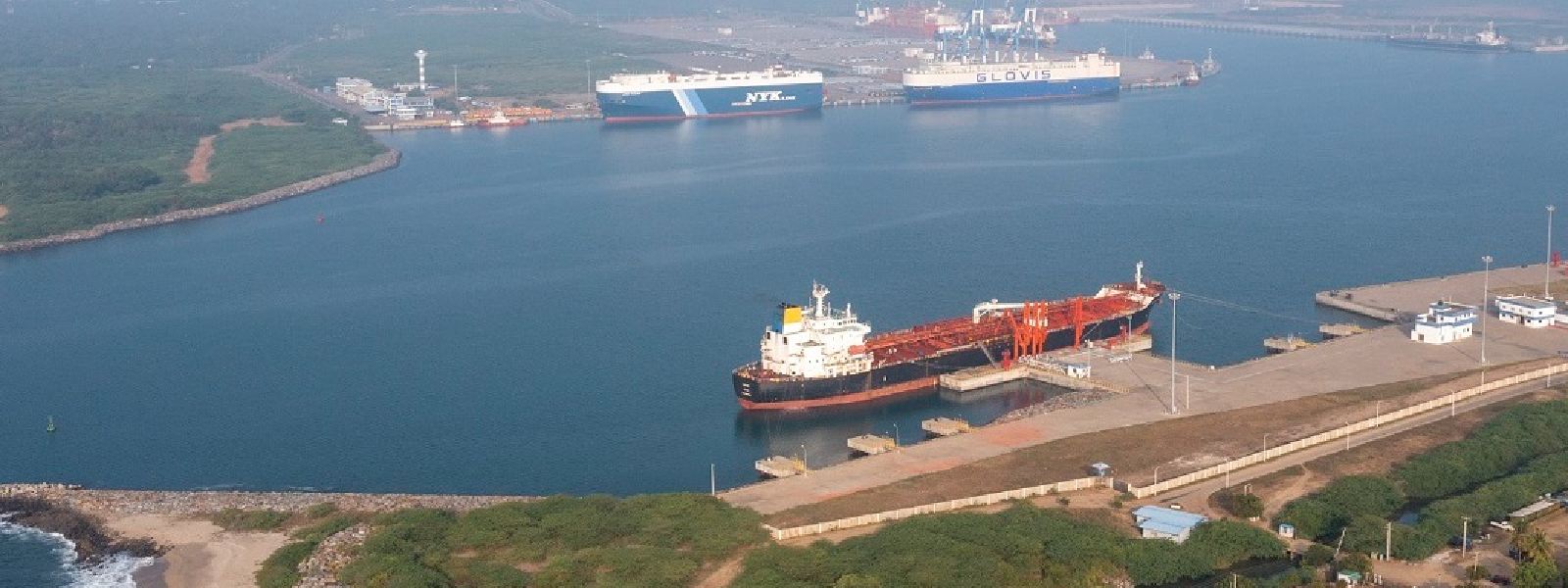
Addressing an all-party meeting chaired by Defence Minister Rajnath Singh in New Delhi, Mr. Vaiko said China had constructed a port in Hambantota and the Indian government should realise that the threat to the country from China would emerge first from the south.

A statement from the party said that he also drew Mr. Rajnath Singh’s attention to the alleged attack on Tamil fishermen by the Sri Lankan Navy, claiming that “over 800 fishermen had been killed so far” and there was no protection to their lives and belongings. He also used the occasion to launch an attack on Tamil Nadu Governor R.N. Ravi, accusing him of “blabbering on one issue or another.”

When Mr. Vaiko said Mr. Ravi had remarked that the country attained Independence because of Subhas Chandra Bose, Parliamentary Affairs Minister Prahalad Joshi said that the Governor had clarified his comments. “His comments have appeared in all newspapers and other media. Probably, the Minister has not read them,” Mr Vaiko said.

He further said that the Indian democracy was facing a major threat and would die if “Hindutva forces” succeeded in implementing one country, one election, one language and one religion.

Source: The Hindu

Posted in Uncategorized

Presidential candidates: IUSF opposes meetings in unis.

The Inter University Students’ Federation (IUSF) said that it is against any kind of political meeting held within university premises with the participation of Presidential candidates of any party.

Speaking to The Daily Morning yesterday (30), IUSF Convenor Madushan Chandrajith said that the IUSF would not endorse any political meeting organised by Presidential candidates of any party and would not let the university premises be a platform where rallies of political parties are held ahead of the Presidential Election.

State Minister of Higher Education Dr. Suren Raghavan, alleged that some universities are planning to invite politicians and Presidential candidates to universities, opining that such moves should be stopped.

“I am informed that some State universities are making plans to invite politicians and Presidential candidates to universities. This should be stopped completely. Universities are solely for academic activities. Politics must be kept away from university premises,” Raghavan said.

Chandrajith stated that the recent protest that took place on Monday (29) at the University of Kelaniya was launched against the attendance of President Ranil Wickremesinghe at the University. He claimed that the Government is trying to use universities as a part of Wickremesinghe’s Presidential campaign, adding that the students’ protest was therefore a good example for those who are planning to do the same.

Moreover, Chandrajith noted that no politician has the moral right to come to universities at a time when the continuous grievances of the students are being neglected by the political elite. He said that the IUSF would not let any Presidential candidate hold meetings inside the universities, despite his or her political leanings.

He said that students as individuals have the right to hold any political view inside the universities and that student activism is always promoted by the IUSF. “But, politicians are not allowed to hold meetings. They don’t have a right to do so. They have not addressed any of the issues that we raised. Yesterday (29), several students were attacked during the protest. First, they have to be patient enough to tolerate our opinions,” he added.

The University Grants Commission Chairman Prof. Sampath Amaratunge and the Spokesperson of the Federation of University Teachers’ Associations, Senior Lecturer Charudaththa Illangasinghe were unavailable for comment.

Sarath Fonseka slams Sajith Premadasa over alliance with Daya Ratnayake

In the wake of Samagi Jana Balawegaya (SJB) leader Sajith Premadasa accepting the support of former Army Commander (Retired) General Daya Ratnayake, Field Marshal Sarath Fonseka expressed his strong displeasure over the move.

Field Marshal Sarath Fonseka made these remarks during his participation in the protest organized by the SJB in Colombo yesterday.

Sarath Fonseka disclosed Ratnayake’s significant involvement in his imprisonment back in 2010 under the administration of former President Mahinda Rajapaksa.

Expressing his concerns, Fonseka emphasized that Ratnayake’s allegiance to the SJB, particularly given his past affiliations, raises questions about the party’s direction and principles.

He went on to suggest that by embracing Ratnayake, the SJB risks aligning itself with the former President, implying a compromise of its political stance.

Retired General Ratnayake, known for his prominent roles during the tenure of former President Gotabaya Rajapaksa, recently aligned himself with the SJB.

Indian High Commissioner calls for Tamil parties to have unified stance on political rights

New Indian High Commissioner Santosh Jha, in his maiden interaction with the representatives of the mainstream Tamil parties in the north recently, is reported to have emphasized the need for them to have a unified position on their collective demand for a political solution.

However, Tamil National People’s Front (TNPF) led by MP Gajendrakumar Ponnambalam defied it and said his party could not align with other Tamil parties on this matter.

India has been consistent that a solution to what is called ‘Tamil national question’ should be implemented based on the 13th Amendment to the Constitution introduced consequent to the 1987 Indo-Lanka Accord.

The Indian High Commissioner reportedly underscored the importance of having a unified stance on their demand. He said India stands for the political rights of Tamil people. He also briefed them about steps being taken by India as a country to help develop the Sri Lankan economy, including the financial assistance amounting to nearly US $ 4 billion during the crisis time. He highlighted that key Indian investments in Sri Lanka are located in the Northern and Eastern Provinces.

The Indian envoy referred to the Palali Airport, the implementation of the Trincomalee mega city project and the renewable energy project on the coast of Mannar.

Referring to the call for a unified stance on political rights, Mr. Ponnambalam is reported to have said his party is not for a solution based on the 13th Amendment. Citing it as something unworkable, he said he would not agree with his colleagues in other parties on this matter, and therefore a unified stand would not be possible.

The Indian envoy is reported to have said, though differences are all right, it is advisable to have a unified position.

Former MP Suresh Premachandran who attended the meeting representing the newly formed Democratic Tamil National Alliance (DTNA) said there are around 900,000 Tamil votes in the north and the east, and the Tamil parties should not deliver these votes to any presidential candidate from the south without a commitment to resolve the Tamil national question.

Sajith kicks off presidential election campaign with protest rally

The Samagi Jana Balawegaya kicks off its presidential election campaign with a protest rally in Colombo this afternoon (30).

‘A year for a change’ is the theme of the campaign that will be launched with the participation of supporters from across the country, said the SJB.

General secretary Ranjith Madduma Bandara told the media the protest would demand easing the economic burden among other issues.

Posted in Uncategorized

Sri Lanka delegation in China discuss investment opportunities, export of water

A Sri Lankan delegation in China has met with Chinese businessmen to discuss ‘environmentally friendly investment programs’ in Sri Lanka.

Minister of State for Sports and Youth Affairs Rohana Dissanayake visited China recently for a Sri Lanka-China trade investment program, the Department of Government Information said in a statement.

Possibilities discussed were “the importation of electric cars, electric motorcycles and three-wheelers, light lorries based on the business environment for the purpose of government employees, or investments in starting factories for production in Sri Lanka,” the statement read.

The introduction of modern machinery and farming equipment was also discussed, as cutting down production cost and increasing harvests was a problem for Sri Lankan farmers.

Chinese businessmen expressed interest in investing in the installation of solar panels and wind power, and the export of bottled drinking water, king coconut, spices, tea and coffee, according to the statement.

Dissanayake is said to have met the Chinese and Russian Chamber of Commerce representatives during the visit: “The Chairman of the Chinese and Russian Chamber of Commerce said that he is ready to provide all necessary support for the trilateral market and invited the minister to participate in the trade fair held in Russia next month.”

Posted in Uncategorized

Second court order issued against SJB rally, barring entrance to parts of Colombo

Another court order was issued this morning (30 Jan.), preventing the Samagi Jana Balawegaya (SJB) supporters from entering parts of Colombo during its political rally due to be held later today.

The relevant order was issued by the Colombo Fort Magistrate’s Court against the political party.

As per the court order, the SJB rally from entering several areas in Colombo, including the Finance Ministry, the Presidential Secretariat, President’s House and Galle Face Green this evening.

Earlier today, the Colombo Chief Magistrate issued an order against SJB Leader Sajith Premadasa, SJB General Secretary Ranjith Madduma Bandara, former MP Mujibur Rahman and several others, barring them from inconveniencing the public and pedestrians in parts of the Maligawatte police area during the planned political rally.

Posted in Uncategorized

PA/UPFA: SLFP-led alliance leader to have executive powers

A future Sri Lanka Freedom Party (SLFP) alliance will be headed by the party Chairman, with executive powers, as per the alliance’s constitution, the party said yesterday (29).

This, despite former President Chandrika Bandaranaike Kumaratunga’s name has been suggested as the leader of the new political alliance which is to be formed under the leadership of the Sri Lanka Freedom Party (SLFP), The Daily Morning learns.

The SLFP’s incumbent President is Opposition Parliamentarian and former President Maithripala Sirisena.

In the wake of several media reports being circulated suggesting that Kumaratunga was to lead the new SLFP-led political alliance, SLFP Senior Vice President Prof. Rohana Luxman Piyadasa yesterday (29) told The Daily Morning that her name had been suggested as the leader of the alliance, but that her position would not have executive powers within the alliance, unlike the SLFP leadership.

Prof. Piyadasa also said that Kumaratunga’s name was suggested for the position as they wanted to unite all breakaway groups and political groups with different political opinions. “Kumaratunga’s name was suggested for the leadership of the alliance. But that position does not have executive powers. There is a separate Chairperson of the alliance who has the power as per the constitution of the alliance.

“The constitution says that the Chairperson and the General Secretary of the alliance should be members of the SLFP. Therefore, the alliance’s Chairperson will have the executive power within the alliance,” he also noted, adding that the SLFP would contest any upcoming election either as the People’s Alliance (PA) or the United People’s Freedom Alliance (UPFA).

In this context, Prof. Piyadasa recently told The Daily Morning that Sirisena would be the presidential candidate of the alliance that is being formed under the leadership of the SLFP targeting the upcoming elections. He also stated that this had been agreed upon by the party’s Central Working Committee, while the party’s All-Island Working Committee had also proposed and seconded the same.

He also reiterated that the party was not planning to ally with either the main Parliamentary Opposition party, the Samagi Jana Balawegaya or the ruling governing parties, the Sri Lanka Podujana Peramuna and the United National Party.

State’s role in the development of Buddhism in Sri Lanka By P.K.Balachandran

:It is by now well established that for any religious faith to be developed and accepted by the generality of the population, has to have State backing. “Convert the king and the population will follow suit,” had been a belief among missionaries other than those who chose to target the poor mainly.

At any rate, experience says that State power is essential for any faith to develop its doctrine, sustain it and ensure fealty to it. Conversely, any weakening of the State due to economic distress, alien hegemony, wars or economic distress will have a deleterious effect on the faith and its following.

The role of the State in the growth or decline of Buddhism in Sri Lanka from the days of the kings to those of the colonial powers is described by Prof. Kitisiri Malalgoda, Professor of Sociology in the University of Auckland in his book: “Buddhism in Sinhalese Society 1750-1900: A Study of Religious Revival and Change” (Tambapani Academic Publishers, Colombo, 2023).

It was due to the patronage of Emperor Asoka (268 – 232 BC) that Buddhism spread across the length and breadth of India. In Sri Lanka, the first convert was king Tissa (250-210 BC) and because of that Buddhism began to be accepted in the island. Prof. Malalgoda describes Tissa’s conversion as an event of great importance in the religious and political history of Sri Lanka.

Tissa’s rule also signified the beginning of the culture of kingship in Sri Lanka. Political centralization and the ritual, pomp and ceremony surrounding kingship came into vogue. The Indian tradition of performing Abhiseka or consecration was adopted as a rite of passage for kingship in the island.

Tissa and his successors also assumed the Mauryan (Asokan) title of Devanampiya (beloved of the Gods). Thus kingship combined the political and the spiritual to make it a powerful institution, which enabled the propagation of Buddhism.

Prof. Malalgoda says that the institution of kingship and its adoption of Buddhism enabled the formation of large and integrated territorial groups bound by a single ideology (Buddhism). Before this, territorial units were small, scatted and unconnected to a single framework. The belief systems were many and diverse. There was no ideological unity. But kingship and one faith, Buddhism, enabled State formation in Sri Lanka.

Be that as it may, there existed a dichotomy in religious beliefs and practices, he points out. People living in isolated village communities were heir to a variety of beliefs and practices of diverse origin and these continued to exist. Prof.Malalgoda calls these “Little Traditions” and Buddhism, the “Great Tradition.”

Notwithstanding the practice of Little Traditions, people supported the Great Tradition of Buddhism and practiced it to the extent possible. They venerated the symbols of the Great Tradition like the Bodhi tree, the Chetiyas (where the corporeal relics of the Buddha were kept) and the Tooth Relic.

The Tooth Relic was brought to Sri Lanka in the reign of King Sirimeghavanna (304–332 AD) with much pomp and ceremony. Later, it became the symbol of sovereignty. One who possessed it was the sovereign. The Tooth Relic was the centre and symbol of Sinhalese Buddhist polity.

The conspicuous role played by the King himself in ceremonies around the Tooth Relic was ample evidence of its political cum ideological significance. These ceremonies around a particular sacred object were necessary for Sinhalese society to express their collective identity apart from their particular identities.

Did these rituals and ceremonies clash with the pristine ideas of Buddhism? Did not Buddhism emphasise renunciation rather than pompous display? According to Prof.Malalgoda there was no contradiction as Sinhalese Buddhist society had a subordinate ideology wherein merit could be garnered by performing meritorious acts which included the performance of rituals (barring a few which were deemed to be evil). The belief was that meritorious deeds would give the performer a better birth in the cycle of births and deaths perfectly legitimate goals.

Giving alms to the Sangha was one of the chief meritorious deeds. The Sangha was called the Punnya Khetta (Field of Merit) sowing seeds in which would enable one to reap a rich harvest of merit and ensure a better life in the births to come. One way of serving the Sangha was to assign them lands so that they could live on their produce. The kings did this to earn merit.

There was a distinction between Pariyatti (the theoretical teachings of the Buddha) and Paṭipatti (practice of the Buddha’s teachings). Some members of the Sangha took to renunciation and others taught the theory and became guides to societies. There was a distinction between Aranyavasis and Gamavasis, the former lived outside society and the latter within society. The Gamavasis became society’s intellectuals and therefore indispensable.

The learning of Pali enabled Sri Lankan monks to communicate with Theravada monks in other countries. The Sutta Pitaka was translated into Sinhala under the patronage of King Buddhadasa (337-365 AD) to popularise the doctrine.

Plebeian religious practices and beliefs were not discouraged as they served a felt need. But those entertaining these beliefs accepted pristine Buddhism and its ideals as being superior. They knew that the Buddha did not grant favours and that for favours they should worship other local or Hindu deities and use charms and magic etc. But they knew that, powerful as these gods might be, they were subordinate to the Buddha. Their task was to safeguard Buddhism.

The Buddha was not a saviour but a Devatideva (Deity of deities). The gods derived their power (Varan) from the Devatideva, the Buddha.

When “evil sciences”” like astrology became too widespread or when monks were breaking the Vinaya (their code of conduct), the kings used to initiate regulative acts known as Dhamma Kamma performed by the Sangha. When performed without royal authority Dhamma Kamma would not be productive. The only magical practice that was allowed in Buddhism proper, was the Paritta (protection) performed to mitigate public calamities or private distress.

Enter Europeans

When the Portuguese established their hegemony in the maritime provinces in the 16th.Century, and the Dutch took over from them in the 17 th,Century, Buddhism was thrown into a crisis as these two foreign powers were inflicting Catholicism and Protestantism on Buddhists.

In this period, Buddhism lacked State patronage except in Kandy. Buddhists had lost the Kelaniya temple as the Kotte king Dharmapala, a Catholic convert, had gifted it to the Portuguese who passed it on to the Dutch later.

The Dutch used various coercive ways to convert Buddhists to Calvinism. They made baptism and Christian marriage compulsory. Conversion was mandatory to get a government job. All schools were religious schools.

But to their dismay, they found that the conversions were mostly formal. In the villages and homes, the converts followed Buddhism and native practices. The Portuguese and the Dutch were divided between the clergy, who wanted the administration to use its full power to get converts, and the civil servants and merchants who wanted to make govern or make money without alienating the population through coercive conversion. Buddhism survived in Sri Lanka due to the lack of unity in the Administration of the Portuguese and the Dutch.

Because of the hilly terrain of Kandy, European powers were unable to seize it and therefore Kandy remained a Buddhist kingdom till 1815. According to Prof. Malalgoda, Buddhist monks of Kandy took an active part in the administration of Kandy, especially that of king Vimaladharmasuriya II (1687–1707).

But such lay pursuits led to corruption and non-observance of Vinaya, he points out. The kings also spoilt the monks by allotting lands to them on an individual basis, which resulted in lands being passed on to their families through an improper system of recruitment to the order.

King Vimaladharmasuriya I (1591 -1604) and king Vimaladarmasuriya II (1687-1707) used their power and their Dutch connections to get down from Burma monks to improve Sri Lankan monks’ religious education and also to carry out proper ordinations. In the reign of Kirti Sri Rajasimha (1747-1782) again Dutch help was sought to bring Siamese monks to improve standards in the Buddha Sasana. They made the Buddha and not the other deities the centre of the Perheras. Siamese monks improved the religious behaviour of laymen as well.

When the kingdom of Kandy was handed over to British in 1815, the chiefs got a promise that the British would protect Buddhism. And the British deemed the Tooth Relic there as a symbol of their sovereign power.

Posted in Uncategorized

Indonesia stops Maldives-bound controversial Chinese vessel

The Indonesian Coast Guard (ICG) stopped a Male-bound Chinese research vessel as it had turned off its automated information system, Maldives-based Adhadhu reported on Sunday. The Indonesian authority’s move came after the ship, while traveling through the country’s waters, turned off the transponder three times between January 8 and 12.

The US Naval Institute said the Chinese government vessel “XIANG YANG HONG 03” was stopped by the ICG on January 11 in the Sunda Strait area, the report said, adding that the crew on the vessel denied turning off the transponder and claimed that it was broken.

The automatic identification systems transponders are designed to be capable of providing position, identification, and other information about the ship to other ships and coastal authorities automatically.

The ICG did not attempt to board the Chinese ship but asked it to leave the country’s exclusive economic zone, reported The Asia Times. As per international maritime law, all vessels navigating the archipelagic sea lanes in Indonesian waters are required to have working transponders.

Adhadhu reported that sites that track marine traffic showed the vessel’s location on January 22 in the Java Sea and its present location was unknown.

Earlier this month, the Center for Strategic and International Studies (CSIS) published a paper titled: “China’s Dual-Use Research Operations in the Indian Ocean. The paper mentions that China’s vessels go dark for some hours or days while near PLA installations.

“Behavior at sea can also raise red flags. Repeated instances of “spoofing” (providing falsified identification information) or “going dark” (turning off automatic identification system signals for extended periods) are important warning signs. Data from Windward indicates these activities occur frequently—sometimes near foreign military facilities,” the paper states.

The paper also says that to survey the Earth’s oceans, China has developed the world’s largest fleet of civilian research vessels. While these ships support scientific and commercial objectives, it adds, they are also being used to advance Beijing’s strategic ambitions. Hidden Reach, a special initiative of CSIS, identified 64 active research and survey vessels. Of the 64 active vessels, over 80 per cent have demonstrated suspect behavior, the paper states.

On January 22, weeks after Maldivian President Mohamed Muizzu returned from China, Damien Symon, an open-source intelligence researcher, said China’s research vessel – XIANG YANG HONG 03 – was heading towards Male.

Just a day after this, the Maldives Foreign Ministry confirmed the development but said the Chinese vessel would not conduct research in Maldivian territory. However, India’s geostrategist Brahma Chellaney said Male’s claim that the ship won’t conduct any research was “laughable”.

“The Muizzu government claim that the PLA-linked ship would not conduct oceanographic research in the Maldivian waters is laughable as the Maldives has zero capability to detect such activity,” the geostrategist said.

Chellaney said China is aggressively engaged in mapping the Indian Ocean bed and collecting seismic and bathymetric data to facilitate submarine operations in India’s maritime backyard. “And the Maldives, under its new Islamist-leaning, pro-China president, is becoming an enabler,” he said.

Maldives to Buy Turkish Drones

The Maldives under pro-China President Mohamed Muizzu has signed a deal with Turkey to buy drones to patrol its exclusive economic zone waters. So far, New Delhi and Male jointly patrolled this region in the Indian Ocean.

Maldives-based Adhadhu on Tuesday reported that Male had signed an agreement with a Turkish company to purchase military drones to patrol the country’s waters. It has allocated $37 million from the state’s contingency budget to the Maldives National Defence Force (MNDF).

The deal comes just days after the Maldives asked India to withdraw its troops stationed there by March 15. New Delhi has 88 or so military personnel in the Maldives to operate and maintain India-sponsored radar stations and surveillance aircraft, including the Dornier plane and two Dhruv helicopters gifted to Male over the past decade.

India enjoyed a good relationship with Male during Mohamed Nasheed’s presidency from 2008 to 2013 and then Ibrahim Mohamed Solih’s stint from 2018 to 2023. From 2013 to 2018, Abdulla Yameen, who was also pro-China, ruled the island country.

In 2018, once Yameen was replaced by Solih, the Indian Navy deployed an offshore Patrol Vessel (OPV) – Sumedha – to carry out surveillance of the exclusive economic waters of Maldives with the Maldivian military. The elite Marine commandos of the Indian Navy were in Maldives to train the Maldivian military on asymmetric warfare.

However, equations have changed under Muizzu, who came to power on the plank of the ‘India-out’ campaign. Muizzu, who assumed power in November 2023, has so far made two foreign visits – Turkey and China. His five-day visit to China last week was also seen as a snub to New Delhi as the tradition so far was that the Maldivian always visited India before Beijing.

The relationship also deteriorated after three Maldivian deputy ministers made derogatory remarks against Prime Minister Narendra Modi following his visit to the Indian islands of Lakshadweep earlier this month.

For decades, India and China have been competing with each other for influence in Maldives, which is a few hundred nautical miles from Kerala and whose strategic location makes it important for both Asian powers.

On January 13, in an apparent reference to India, Muizzu said that the Maldives was not located in the backyard of any country. “Even though our islands are small, we are a huge country with a very large exclusive economic zone of nine lakh square kilometers,” he said. “Maldives is one country that holds the largest proportion of this ocean. This ocean is not the property of a specific country.”

Muizzu then said that Maldives had begun the work to build its power and capacity to do continuous surveillance of the nine lakh square kilometer exclusive economic zone. “Hopefully, soon we will establish our capacity to manage this vast area.”