‘Let This Christmas Be Different”: Cardinal’s Powerful Appeal

His Eminence Malcolm Cardinal Ranjith, the Archbishop of Colombo, spoke out on the pressing issue of poverty in Sri Lanka, urging for compassion and action during the Christmas season.

In a heartfelt address, Cardinal Ranjith highlighted the plight of millions struggling to meet their basic needs. He cited alarming statistics, emphasizing that nearly 8 million Sri Lankans face daily food insecurity and countless others endure hardships like rising taxes, unemployment, and healthcare access limitations.

“The shattered dreams of our people,” Cardinal Ranjith proclaimed, “are compounded by the burden of debt, the anguish of sacrificing children’s needs for their own survival, and the sorrow of witnessing rampant corruption.”

He expressed dismay at Sri Lanka’s position among the world’s most corrupt nations and criticized the government’s perceived protection of those involved. “This Christmas,” the Cardinal asserted, “must be a turning point. Let us not be trapped by a system that exploits and disregards its own people.”

Instead of succumbing to despair, Cardinal Ranjith offered a message of hope and solidarity. He emphasized the universal call for compassion, regardless of faith. “This Christmas,” he declared, “let us transcend differences and extend a helping hand to those in need.”

Foreign Ministry Hard-Pressed With Insufficient Workforce – Ali Sabry

Foreign minister ali sabry responds to questions about the current direction of the country’s foreign policy and plans for the future.

Excerpts of the interview:

Q What is the next direction of our foreign policy?

A: The next direction is to create a platform for all the countries in the world to come and invest in Sri Lanka. That is to make Sri Lanka a hub for tourism, aviation, investment and shipping. That is how we can create partnerships, and get the know-how. To finalize debt restructuring, we are yet to finalize work with private bond holders. Our focus, as a country, is to complete it within the first quarter of next year.

Q What is the role of the Foreign Ministry in this case?

We work with the Finance Ministry and President Ranil Wickremesinghe. Once we agree on the direction, our Ministry, along with the embassies, will engage with them to get the support required. Based on what is prepared by the Finance Ministry, we sometimes brief the ambassadors based in Colombo. We sometimes brief the relevant countries through our embassies. It is a big role. We are proud that we manage to play that role in debt restructuring.
As far as private bond holders are concerned, the Finance Ministry is handling it through our legal; and financial advisors. The Foreign Ministry has nothing to do with it.
The Paris Club, India and China came on board in debt restructuring. It is a historical achievement for the country. In relatively a small period of time, we managed to get assurances from them.

Can Sri Lanka join BRICS?

Q The next year is going to be an election year. How challenging is the implementation of economic adjustments?

It is definitely going to be challenging. Whoever comes from whatever party, Sri Lanka’s economic interests should be kept in mind instead of making electoral promises that cannot be fulfilled. We must learn from the past. If you look at the last election, both the parties gave promises economically unsustainable. former President Gotabaya Rajapaksa had to execute them. Ultimately, it contributed to the collapse of the economy. The prospective candidates must act with responsibility and only share what could be realized within the economic plan.

Q In your budget speech, you mention about Sri Lanka’s plan to join BRICS (Brazil, Russia, India, China, and South Africa). How far have you progressed in
this case?

We have got a note from the Sectoral Oversight Committee of Parliament on Foreign Relations. Internally, there is a team engaged in research into this matter. It will be presented to the Cabinet early next year.

What will happen to Sri Lanka’s missions closed due to economic crisis?

Q What prompted you to take such an initiative?

Several parties brought it to our attention. Some MPs also brought this to our attention. The realization of these initiatives will take time. It cannot happen overnight. We will seek the direction of the Cabinet.

Q How advantageous is it for us to team up with BRICS?

It is a good thing. It is definitely going to be a multi-polar world. I think a few countries have had a monopoly over world affairs for a period too long. That is why the members of the global south got together and took the initiative to form BRICS. It is a good initiative in the long run. The countries like Sri Lanka will take a long time to get in. The gap between the global south and the global north need to be bridged. It is unfair for a few countries to call the shots in the world’s economic affairs. It is good to have a diverse pool of countries in this regard. In that sense, BRICS is a good edition. We hope it will succeed.

Does Iraq matter to Sri Lanka?

Will UAE, as a Muslim country, allow a Buddhist Cultural Centre?

Q How far have you progressed in terms of the evolution of the Standard Operating Procedure (SOP) for foreign vessels and aircrafts engaging in any operation in Sri Lankan territory?

We have prepared it and shared it with the countries that sent their vessels to Sri Lanka during the last ten years. They are aware of our SOP now. As far as research vessels are concerned, we are going to have a moratorium for the next 12 months. That is for us to build our own capacity to participate in such research activities as equal partners.
Standard military vessels have been coming to Colombo since time immemorial. We will continue to welcome them. There is no issue with it. For research, we need to build our own capacity to deal with it as an equal partner.
The SOP applies to all vessels and aircrafts.

Q Why is it not put in the public domain?

We have basically given it to people who matter. It is not a matter meant for everybody. The Cabinet has decided to share it with those countries that sent vessels during the last ten years. We have not discriminated against any country in sharing it. We have looked at the last ten years.

How will the mission in New Zealand be advantageous?

Q What is your reading on follow-up development on connectivity projects agreed upon with India?

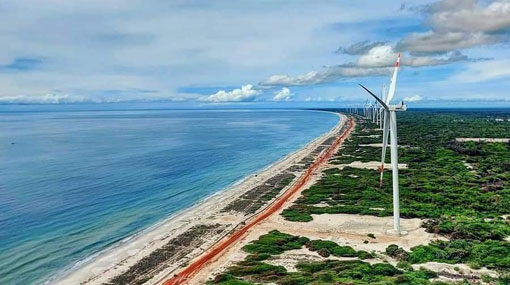
The line Ministries are doing follow-up work. Adani group is working on port development. The Power and Energy Ministry is working on renewable energy projects. We are also in the process of discussing grid connectivity. I think there is progress on that. We are finalizing the programme for the Trincomalee district development.

Q There are reports that the Foreign Ministry is hamstrung in the discharge of duties due to lack of human resources. How are you going to address it?

That is a huge problem as I told in Parliament. We have an approved cadre of 264 members of the Sri Lanka Foreign Service. This is in addition to the supportive staff. We have only 168 diplomatic officers to man 55 missions abroad as well 24 divisions in the Ministry. This is not easy. We have sought permission to recruit the next batch. We are in the final stage. We hope to recruit 25 diplomatic officers. We also invest on digitalizing our consular work. We are doing it step by step. We have integrated with the Department of Examination on Ordinary Level and Advanced Level Examinations. As far as these two examinations are concerned, one does not need to come even. We need to introduce this all over the world at our missions. For that, you need manpower and investments. We find trouble now in the Information Technology (IT) sector in particular. The salaries offered by the government are not attractive at all. We are now going to get some support from outside on voluntary basis.
In the meantime, I will seek Cabinet approval to restart some of the missions we closed, like Cyprus and Frankfort in Germany. Also, we want to restart our embassy in Iraq where there is a huge market for our tea. Besides, we are going to open a new mission in New Zealand.

What are the new plans to for the extradition of criminals absconding abroad?

Q What is the rationale behind the move to open a mission in New Zealand?

There are Sri Lankans living there. Also, we import a lot of dairy products from New Zealand. We also see it as a market. There are tourists coming from there. Also, it is far for our diplomats in Canberra to look into New Zealand.

Q Sri Lanka’s presence in Africa is not sufficient enough. What are your plans?

We are also looking at it. We have to start missions in Morocco and Rwanda. Later we have to expand it to Central Asia. There is not a single presence there. We are looking at Kazakhstan to start off.

Q What about the countries sharing Theravada Buddhist traditions with Sri Lanka?

We will look at it. We have missions in Thailand, Vietnam, Malaysia and Indonesia. They oversee the countries in the region. In the long run, Cambodia is an important country.

How will the lack of resources that you speak of at the Foreign Ministry be addressed?

Q You have taken initiatives to put up a Buddhist Cultural Centre in the United Arab Emirates (UAE)?

There were a lot of requests from Buddhists who lived there. There are 340,000 Sri Lankans living there. That is the largest Sri Lankan community outside the country and a majority of them are Buddhists. In the meantime, there are Buddhists from other countries living there. Dubai has become cosmopolitan. They allow multi-faith religious activities. Sri Lankans have made this request. It is a fair request. I took it up with the UAE Foreign Minister who was receptive to the idea.

Q What are the new plans to expedite the capture and extradition of Sri Lankan criminals hiding abroad?

We cannot personally go and nab them. We have to work with their police. We have to work through Interpol. There has been progress. There are a few still operating from places like Dubai. The police have made requests to expedite work related to their arrests and extraditions. The Foreign Ministry will coordinate it on behalf of the Sri Lanka Police.

Can the challenge of implementing economic adjustments be met with during the forthcoming year which is an election year?

Dozens of Tamil civil society organisations join condemnation of ‘Himalaya Declaration’

Almost 70 Tamil civil society organisations and individuals based in the North-East have released a statement that “totally rejects” the ‘Himalaya Declaration’, an initiative started by the Global Tamil Forum and a group of Sinhala Buddhist monks that has come under widespread criticism.

The joint statement, signed by religious leaders, civil society activists, and organisations said the initiative was an “attempt to sustain the politics of tyranny”.

“Sinhala Buddhism is the focal point of political power on the island of Sri Lanka,” it noted, stating that “government structures based on Sinhalese Buddhist hegemony and culture, and the resultant political and economic crisis, cannot be corrected by acts that are based on those very structures and bend over backwards to pander to them”.

“On the contrary, a solution to these difficulties should be approached from the point of view of the oppressed communities where their status is recognised,” it continued.

“The Tamil people, a community of oppressed people, are themselves a nation recognized as a race and make political arrangements based on it. We have been demanding our political rights through democratic and other means for over seven decades.”

“The Thimpu Principles form the basis of these demands,” it added, noting that “the price paid by the Tamil people for continuing the struggle that upheld these principles has been enormous”.

The organisations said the GTF agreement with Sinhala Buddhist monks “completely ignores the above and shows a lack of understanding of the issues, trying to portray them simply as a case of misunderstanding between peoples and an individual group-based human rights issue”.

“They attempt to delineate justice and politics from our people’s problems, with designs instead only to prove tolerable to the Sinhala Buddhist hegemony.”

The statement went on to critique both the Sinhala Buddhist clergy, as well as the GTF.

“The SBSL hasn’t expressed any joint regret at the great destruction caused to date through Sinhala Buddhist hegemonist concepts and the Sri Lanka governments acts,” it said. “Likewise, The Sangha for Better Sri Lanka (SBSL) maintains a heavy silence on matters on archeological work undertaken at present by Sinhalese Buddhist institutions, such as the Kurunthur Hill matter or the troubles in Mayilattamadu.”

“The GTF did not at any point take into account Tamil people’s burning issues at the inception of this dialogue and ask the opposing party to make goodwill gestures in relation to these, such as the matter of the forcibly disappeared, incarceration of political prisoners, sustained use of the Prevention of Terrorism Act and the denial of our right to remember our dead.”

“Our people continue to be the subjects of destruction and oppression during the times of war and the subsequent 15 years so far. There is a need to give a voice for them and to enable the ground conditions for a solution for. Many diaspora organisations are doing good and honest work for this cause. But, the moral right to speak for the people of our homelands rests solely with a broad coalition of organisations based here, and here only.”

The Sri Lankan government-approved initiative has seen Canadian Tamil Congress (CTC) and Global Tamil Forum (GTF) members tour the island, following the signing of the agreementy. The so-called “Himalaya Declaration”, made up of six brief statements, has come under widespread criticism. In the North-East, Tamil families of the disappeared, women’s organisations, students and clergy rejected it, accusing it of “totally ignoring Tamil grievances and the pain and suffering Tamils have undergone since independence”. Elected Tamil parliamentarians refused to meet with them, whilst dozens of diaspora organisations denounced the initiative, accusing it of undermining calls for an international justice and accountability process.

Earlier this week, Tamil Canadians across the political spectrum, and the country, vented their frustration to the Tamil Guardian.

See the full list of signatories of the latest statement below.

Signed by:

Reverend Agathiyar adikal, Then Kaliyai Chapter, Trincomalee

Bishop of Trincomalee

SDP Selvan. Jaffna Chapter. Ceylon chamber of bishops. Colombo district

Rev PJ Jebaratnam, Jaffna Catholic Diocese

Old Semmalai Pillayar Temple

Vedukkunaari Aathilikeshwarar Temple

Akaram People’s Centre

Adayalam Centre for Policy Research

Amparai District Civil Societies Alliance

Aran, Trinco

Aanaikkottai Mahajana Library

Aanaikkottai Women’s Village Development Centre

Ceylon Teachers Union

United Women’s Voice, Trinco

Rural Workers Union

Eastern University Tamil Students Union

Kumaran Community Centre and Sports Club

Voice of the Voiceless

Kurinji Kumaran Community Centre, Kupplilan

Kaithady Southeast Community Centre

Kaidhaty Southeast Women’s Rural Development Centre

Kaithady Northwest Women’s Rural Development Centre

Kaithady Navatkuli Selva Community Centre

Kaithady Public Interest Protection Trust

Coalition of Kaithady Women’s Organisations

Santhirapuram Women’s Development Union

Social Science Research Centre

Siththi Vinayagar Youth Centre, Aanaikottai

Suyampu – Arts and Cultural Enablement Centre, Jaffna

Independent Tamil Youth Organisation, Vavuniya

Sevakam Women’s Centre

Forum for Tamils Legal Rights

Tamil Social Activists Federation

Tamil Lawyers Federation

Tamil Civil Societies Centre

Tamil National Rights Organisation

Thalam

Homeland Jananam Foundation

Thaavady North Women’s Development Centre

National Fishmermen’s Coorperative Network, Mullaitivu

Navasakthi Community Centre

Navali Women’s Rural Development Centre

Navaaliyur Somasunthara Poet’s Charitable Trust

Justice and Peace Commission, Jaffna

Hindu Priests and Bishops Group for Justice and Peace, North East

Centre for Peace and Change, Trinco

People’s Forum, Mannar

Puluthi – Centre for Social Justice

Public Organisations Centre, Mannar

Batticaloa Media Centre

Mannar Social Economic Development Company

Minnoli Community Centre, Women’s Development Centre and Sports Club

Mullaitivu Media Centre

Coalition of Fishermen’s Cooperatives, Mullaitivu District

Muthur Hindu Youth Centre

Jaffna Press Centre

Jaffna District Association

Jaffna District Women’s Society

Jaffna University Workers Union

Jaffna University Students Union

Jaffna Economists Union

Vadamaradchi East Citizens Groups Association

Union for the Forcibly Disappeared, North and East

Vavuniya Media Centre

Valarmathy Madduvil Community Centre

Vilichitty Community Centre

Prof K T Ganeshalingam, Dean of the Department of Politics, University of Jaffna

Dr A Saravanapavan, Senior Lecturer, University of Jaffna

Dr V Sritharan, Senior Lecturer, University of Jaffna

Mr S Sivakanthan, Senior Lecturer, University of Jaffna

Mr S Suriyakumar, Senior Lecturer, University of Jaffna

Posted in Uncategorized

Sajith empowered with forming SJB-led alliance!

The SJB has empowered its leader Sajith Premadasa with forming a common alliance to face elections next year, said its national organizer Tissa Attanayake.

Meeting yesterday (22), the party’s working committee also discussed the measures finalized to resolve public issues, he also said.

He said no agreement has been reached with regard to a proposal to offer the prime ministership of a SJB government to Prof. G.L. Peiris.

The working committee also unanimously approved the expulsion of a SJB organizer for Kurunegala, Amitha Bandara, after the police nabbed him with heroin.

Meanwhile, a party frontliner Dr. Harsha de Silva said all affiliates to a SJB-led alliance should adopt his party’s economic policy.

“Anyone with fraud and corruption accusations will not be accepted into the SJB alliance,” he said.

The media has reported that Prof. Peiris and several other FPC MPs are due to sign a MoU with the SJB in the coming week.

New Indian envoy Santosh Jha presents his credentials to President Wickremesinghe

Mr. Santosh Jha presented his credentials to Sri Lankan President Ranil Wickremesinghe on 22 December at a ceremony held at the Presidential Secretariat and assumed charge as the High Commissioner of India to Sri Lanka.

A senior Indian diplomat, High Commissioner Jha was India’s Ambassador to the European Union, Belgium & Luxembourg before taking up his assignment in Colombo.

He had earlier served as Ambassador of India to Uzbekistan from 2019-2020, and as the Deputy Chief of Mission at the Indian Embassy in Washington DC from 2017-2019.

He has held key positions in the Ministry of External Affairs in New Delhi, including as head of Division for Human Resources and Management Affairs, Division for relations with Western Europe and the European Union, and the Policy Planning Division.

High Commissioner Jha had also served in Colombo from 2007-2010 as Counsellor at the High Commission, handling work related to commercial and economic matters. During this period, in particular, he was pivotal in building the architecture of India-Sri Lanka development cooperation.

He is married to Smt. Tanuja Jha and has a daughter and a son.

Posted in Uncategorized

Indo-Lanka grid connectivity: Two countries agree on submarine cable

Sri Lanka and India have agreed on a submarine cable to connect the power grids instead is laying overhead transmission lines, a top official said.

The official said the CEB and the Power Grid Corporation of India Ltd finalized the technical report to be forwarded to the joint working group headed by the secretaries of the line ministries of the two countries to work out modalities for the implementation of the grid connectivity project.

The official who wished to remain anonymous said the CEB had a virtual discussion with the Indian authorities earlier this week and completed the technical report with the agreement on an undersea cable to connect the two grids. He said overhead transmission lines involves additional costs for maintenance in the future. Also, he said there are difficulties involved in the construction of pylons mid-sea.

The business modality is yet to be worked out for the execution of the project.

Posted in Uncategorized

Russia Floats Potential JV with India to Operate Sri Lanka’s Mattala

Russian Ambassador to Sri Lanka, Levan S. Dzhagaryan, signaled Russia’s potential interest in a joint venture with India to operate Mattala Rajapaksa International Airport.

While not confirming imminent involvement, Dzhagaryan acknowledged ongoing discussions and underscored the importance of Russian tourism for Sri Lanka.

“There were different ideas, different proposals, and just to also express ours, it’s under consideration,” Dzhagaryan stated, emphasizing Sri Lanka’s ultimate decision-making authority.

He highlighted the significant number of Russian tourists visiting Sri Lanka, citing it as a key factor in their interest in Mattala’s potential.

Dzhagaryan noted Russia’s position as Sri Lanka’s second-largest source of tourists, following India, with expectations of up to 1.2 million Russian visitors in 2024.

The Mattala Rajapaksa International Airport, located in Hambantota, has struggled to attract regular traffic since its opening in 2013. The proposed joint venture with India and Russia presents a potential opportunity to revitalize the airport and boost tourism in the region.

Posted in Uncategorized

President, Tamil MPs discuss Sri Lanka refugees in India

The plight of Sri Lankans in Indian refugee camps was discussed during a meeting between the president and leaders of the North and East, at the Presidential Secretariat on Thursday (21).

ITAK Members of Parliament R Sampanthan,ITAK S Rasamanickam,TELO G Karunakaran,ITAK T Kalaiarasan and EPDP Kulasingham Dileepan were present at the discussion which focused on the provision of land rights for the people in the Northern and Eastern Provinces, the implementation of laws related to resettlement and reconciliation, and issues concerning district development, in addition to the challenges faced by Sri Lankans in refugee camps in India.

Though Sri Lankan politicians have pledged to address the larger concerns pertaining to Tamil populations, such as reconciliation, resettlement, and rehabilitation in the past, the matter of Sri Lankan Tamil refugees in Indian camps has yet to be addressed by a Sri Lankan head of state.

Successive Sri Lankan administrations have had differing repatriation and reintegration plans. Direct concerns over safety, lands, housing, livelihood, and reconciliation have been reported as reasons why refugees refuse to return to Sri Lanka.

Protests, political declarations, and calls for the Indian central government to be more aggressive in safeguarding the safety and well-being of Sri Lankan Tamils in India and Sri Lanka have occurred in the past.

However, interventions and actions taken by the Tamil Nadu government regarding Sri Lankan refugees have been sporadic and influenced by political dynamics, with changes in leadership, and the evolving relationships between India and Sri Lanka.

Since 2022, Sri Lanka has experienced its worst economic crisis as a result of a number of issues including the COVID-19 pandemic, dwindling tourism, the fuel crisis, a shortage of basic commodities, and soaring debt.

This has led to a rise in migration with illegal methods including ferries being used by migrants to get to Dhanushkodi in Tamil Nadu, which has become a viable destination.

The federal government has given Sri Lanka financial assistance totaling 3.5 billion dollars since the crisis and has allotted financial aid of 80 crore in 2021 and 2022 for welfare of Sri Lankan Tamils in refugee camps, along with cash assistance, subsidised rice and free clothes.

Posted in Uncategorized

The Dilemma of the UNP and the SLPP BY M.S.M .Ayub

The solitary member of the United National Party (UNP) in Parliament, Vajira Abeywardena seems to be clever in grabbing and holding media attention but sometimes in wrong ways – in most occasions damaging his own image.
In recent months, he had made statements – all in respect of the next Presidential Election – for which the media had given wide coverage. In April this year, he said, since possible rival candidates of President Ranil Wickremesinghe could not even think of how to resuscitate the economy and make Sri Lanka a country to be reckoned with in the global context, Wickremesinghe should be elected uncontested for another term.

Meanwhile, Abeywardena suggested at a district conclave of the UNP in the south on June 14, to conduct a referendum in place of the next Presidential Election requesting the people’s approval for his leader to run the country for 12 more years. To justify his suggestion, he reminded that Sri Lanka’s first and only referendum in 1982 was also held in order to postpone a national level election.

Again, on October 24, the UNP Chairman stated that the estimated cost of a Presidential Election, which amounts to Rs. 13 billion could be directed towards reducing electricity tariffs and providing much needed relief to the people, if a national consensus is reached to name President Wickremesinghe as the sole candidate for the position. Abeywardena suggested that individuals who plan to run for the Presidential Election should abstain from submitting their candidacy applications (nominations) as they lack the ability to lead the country’s rebuilding efforts.

All these suggestions on being elected uncontested, holding referendums and withdrawing nominations were aimed at avoiding the Presidential Election, apparently for fear of defeat. And this is sometimes not his own line of thinking, as his leader has been using him to test the public response to these ideas. However, he boasted last Monday that President Wickremesinghe will win the next Presidential Election with 100 lakhs (10 Million) votes. “I am saying this because we are confident of the place this country will be in April with the economic policies of President Wickremesinghe.” He further said, the people should give Mr. Wickremesinghe to govern the nation for 12 more years from 2024, predicting that Sri Lanka would become a powerful country if he is allowed to do so.
Has the UNP which obtained less than 300,000 votes island wide and failed to win a single seat at district level at the General Election three years ago become so popular for its leader to obtain 10 million votes at the next Presidential Election, as Abeywardena observes? The party’s continued hesitation to hold the Local Government Election which had been scheduled to be held on March 9 indicates the opposite.

Besides, in a survey – “Sri Lanka Opinion Poll Survey” – conducted in October by the Institute of Health Policy (IHP), the UNP leader could secure only 13 percent of votes, while Anura Kumara Dissanayake of the National People’s Power (NPP) and Samagi Jana Balawegaya (SJB) leader Sajith Premadasa were predicted to obtain 51 percent and 30 percent of votes, respectively. The outcome of the survey might not be realistic numerically, but it seems to be not so far from the situation on the ground, given the sufferings the ordinary people undergo and the social media trends.

The leaders of the UNP and the SLPP attempt to convince the people that the country that was engulfed in the worst economic crisis in its history is now out of the woods, and the people endorse the government’s current policies and activities.

Needless to say, with fresh loans from the International Monetary Fund (IMF), World Bank and the Asian Development Bank (ADB) and strict import control rules under a programme sponsored by the IMF, the government has been able to ease some of the harshest effects of the recent economic crisis such as miles-long and days-long queues for fuel and cooking gas. However, to portray that situation as economic recovery or progress is unrealistic and self-deceptive, since people still suffer from the effects of the crisis.

To put the gravity of the situation in simple terms, the income of the majority of people has halved while the expenses have gone threefold up compared to the early period of the COVID 19 pandemic. Ruined lives and shattered dreams have not been restored. The statistics of the Central Bank or any other state institution do not matter for the people who gauge the situation from what they encounter. And the crisis has unprecedentedly severed people’s traditional political affiliations which had thus far ridiculously undermined their own sufferings. They now look for remedies from the government, and especially from the President in power failing which they turn to others. Thus the JVP/NPP is capitalizing on the situation, as shown by the above survey.

In about a week, the recently adopted Value Added Tax – VAT (Amendment) Act will come into force impacting every aspect of life, and people might respond to it politically at elections, as protests are being crushed. People are not seen divided along party lines on economic issues such as the new VAT amendments, as the case had been during the pre-crisis period.

Against this backdrop, it would be very difficult for the UNP to win an election unless it forms a coalition with strong contenders. Teaming up with seeming powerhouses, the NPP and the SJB is out of the question, as they have rejected the idea, but the UNP and the SLPP are two parties that are on the same wavelength on economy, governance and human rights. And there are several SLPP ministers who have become very close to the President. Yet, SLPP, according to the recent opinion polls is far behind even the UNP. Besides, the general perception that the SLPP is highly corrupt and responsible for the destruction of the economy has further been validated in the minds of the people by the recent Supreme Court ruling on the economic crisis.

Along with these drawbacks, the visible physical weakness of aging SLPP leader Mahinda Rajapaksa seems to have contributed to such a leadership crisis in that party. Secretary Sagara Kariyawasam announced this week that they were considering four names to be their Presidential candidate, including renowned Business tycoon, Dammika Perera. Does this indicate that the SLPP is not prepared to consider Wickremesinghe as their candidate? They might not be happy with him as he did not budge despite their continued heavy pressure to offer ministerial portfolios to some of their district leaders. They failed to keep him under their control, in spite of them being his political strength in the government. It is justifiable if they fear that the SLPP would ultimately be swallowed by the UNP if the government is under him with their support, for another five years.

Now, Mahinda Rajapaksa is attempting to hold the so-called Yahapalana Government responsible for the economic crisis, forgetting that they made Wickremesinghe the President claiming that only he can save the country from the current economic mess. Also, this week, he had criticized Wickremesinghe’s tax policy, including the VAT (Amendment) Act, amusingly after he and his party having adopted the VAT (Amendment) Bill in Parliament, days ago.
It is against this backdrop the country is going to face a national level election – Presidential or Parliamentary. Since the country is still reeling from the economic crisis and the resultant political uncertainties it is difficult to read all undercurrents yet.

New Indian High Commissioner Santosh Jha arrives in Colombo

Ambassador Santosh Jha arrived in Colombo on Wednesday and took charge at the Indian High Commission here. After presentation of credentials, he will assume his new responsibilities as High Commissioner of India in Sri Lanka.

He had served in Colombo earlier as Counselor Economic Affairs.