The government must inform Parliament wether the statement made by Tourism Minister Harin Fernando in India that Sri Lanka was part of India was the government’s official stance or his personal opinion, Parliamentarian Wimal Weerawansa said.
He told Parliament that the Minister had stated in India that Sri Lanka was a part of India and the three airports will be given to India.
“The govenment must reveal if the Minister’s statement is the official stance of the government or the collective stance of the Cabinet or the Minister’s personal opinion. “Can a Minister make such a statement while represnting a country?” he asked.
Chief Government Whip Prasanna Ranatunga said the Cabinet had not discussed any such matter and said the Minister concerned will make a statement in Parliament.
Minister Manusha Nanayakkara said social media had twisted the Minister’s statement and said if someone listens to his full statment, his idea would become clear.
“The Minister requested the Indians to visit Sri Lanka while pointing out the historical and traditional relationship between the two countries,” he said.
Weerawansa said the Minister had not refuted his statement and said he should make an official statement regarding his remarks made in India.
(Bloomberg) – Sri Lanka sent a new restructuring proposal to dollar bondholders through its adviser Lazard as the South Asian nation seeks to complete overhauling its defaulted debt, according to people familiar with the matter.
A counter proposal to a bondholder group’s offer in October for a 20% haircut and the issuance of macro-linked bonds was conveyed through Lazard, the people said, declining to be named because negotiations are private. They did not elaborate on the details of the offer. Government representatives may travel to London soon to meet Sri Lanka’s commercial creditors, one of the people said.
Completing the overhaul of Sri Lanka’s $27 billion of foreign debt is critical to ensure financing from the International Monetary Fund bailout keeps flowing. President Ranil Wickremesinghe said this month that authorities expect to complete the restructuring within the first six months of the year.
Calls to Sri Lanka’s treasury secretary, junior finance minister and central bank governor went unanswered. Representatives of the bondholder group and Lazard weren’t immediately available for comment.
The government had already struck restructuring deals with official creditors, including China, India and the Paris Club as well as with holders of its local debt.
Sri Lanka and India are planning to conclude the Economic and Technology Cooperation Agreement (ETCA) soon, according to media reports. The news about attempts being made to sign the controversial agreement expeditiously could not have come at a worse time for the JVP, which is mending fences with New Delhi and crowing about its leader Anura Kumara Dissanayake’s recent India visit.
ETCA had to be shelved previously owing to vehement protests from Sri Lankan professional associations, civil society groups and political parties. Prominent among them was the JVP, which demonised ETCA, claiming that, if implemented, it would sound the death knell for Sri Lanka’s IT industry, etc.
There is said to be no such thing as a free lunch, and an all-expenses-paid junket is more so. One may argue that the invitation New Delhi extended to the JVP-led NPP, making the latter feel important, was aimed at furthering India’s economic interests more than anything else, given the JVP’s considerable trade union strength in the key sectors Indian ventures already have a presence in or are eyeing, such as ports, airports, power, energy and telecommunication and dairy farming. By smoothing over differences with the JVP, India has apparently sought to neutralise trade union resistance to the big fire sale the Rajapaksa-Wickremesinghe government is holding to dispose of Sri Lanka’s state assets that Indian business magnates, especially Prime Minister Narendra Modi’s Rockefeller, Gautam Adani, have evinced a keen interest in acquiring.
Big powers have weaponised trade and commerce to further their expansionist interests. They also use chequebook diplomacy for that purpose. The JVP is trying to obfuscate the issue of its past terror campaign against what it termed Indian expansionism. Its current leaders have claimed no knowledge of their party’s initiating lecture on Indian expansionism! But in the late 1980s, the JVP brutally murdered quite a few traders for selling ‘Bombay’ onions in defiance of its blanket ban on goods imported from India so much so that the then Trade Minister Lalith Athulathmudali was compelled to rename Bombay onions ‘Lanka loku loonu’ (‘Lanka big onions’) to save lives. One may argue that those unfortunate incidents happened several decades ago, and the world has since changed. But the JVP’s opposition to ETCA cannot be dismissed as history.
Making a fiery speech at a seminar, ‘Trading, Sacrifice and ETCA’, in Colombo, on 20 Sept., 2016, JVP Leader Dissanayake said ETCA would pave the way for an influx of low-grade IT professional from India, causing the Sri Lankan youth to lose employment opportunities. He warned that if ETCA was signed, the future of the Sri Lankan youth would be in jeopardy. The JVP had launched a struggle to defeat the Yahapalana government’s efforts to sign ETCA, he said, vowing to go all out to achieve that goal.
The JVP claims to have a considerable following among the Sri Lankan youth, many of whom are employed in the IT sector, and therefore it will have to reveal its position on ETCA, which it considers a danger to Sri Lanka’s IT industry as well as other vital sectors.
What has become of the JVP’s struggle against ETCA? It will be interesting to see the JVP’s reaction to the signing of ETCA on the cards. Will the JVP leaders go all out to scuttle it in keeping with their pledge to do so, or will they choose to soft-pedal the issue lest they should antagonise India, which they are ingratiating themselves with? The possibility of the JVP putting up some resistance to ETCA half-heartedly and allowing the government to go ahead with the signing of the controversial agreement, cannot be ruled out.
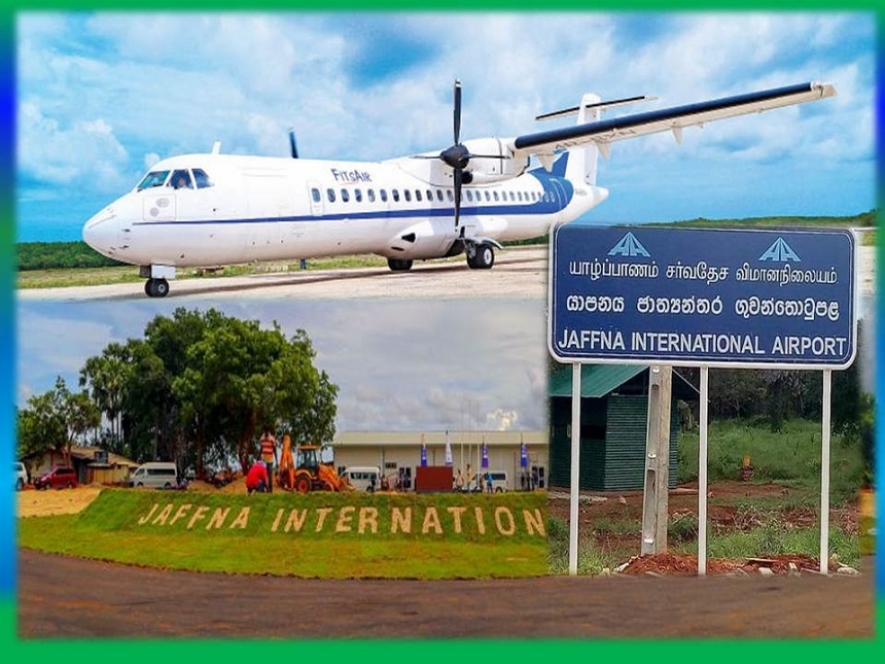
Sri Lanka’s North will witness a boost in connectivity, with efforts to upgrade Jaffna International Airport (JIA) kicking off.
The Airport & Aviation Services on Monday called for Expressions of Interest (EOIs) for enhancing facilities, infrastructure and capabilities of JIA. As per a notice, the EOIs were called by the Cabinet-Appointed Negotiation Committee, on behalf of Airport & Aviation Services.
“The objective is to enable the operation of wide-bodied aircraft, specifically designed of A330, through the mode of design, build, finance, operate and transfer approach.”
Interested parties are required to meet the minimum criteria of having an average annual turnover of at least US$ 50 million or equivalent in any other currency, in the immediate past five years, as at the date of the opening of the EOIs. In addition to having sufficient bank credit line facilities (at least equal to project cost) as proof of credit, those interested must also have an audited balance sheet, with minimum US$ 20 million of net assets for the last financial year.
The deadline to submit proposals is April 3, 2024.
In October last year, Aviation Minister Nimal Siripala de Silva announced JIA would receive a Rs.200 million upgrade, so that it can increase flight operations to India.
Sinhala extremist lawmaker Udaya Gammanpila submitted a Private Members Bill to the Sri Lankan Parliament, which seeks to remove police powers that should be granted to provinces under the 13th Amendment to the constitution, warning that “foreign nations” may end up funding “Tamil separatists” if it was enacted.
Gammanpila, an ultra-nationalist told reporters in Colombo last week that the biggest threat “to national security is the provision of police power to the provinces.”
The 13th Amendment was established in 1987 as part of the Indo-Lanka accord and created the system of Provincial Councils, promising greater devolution of land and police powers to a merged North-East. However, Sri Lanka has failed to implement the accord.
“If there is a separatist war in the future, it will be between the police force in the North and the Sri Lankan army,” Gammanpila who sits in the Opposition said. “Both will be legitimate defense forces.”
Elaborating further Gammanpila stated that during the armed conflict with the Liberation of Tamil Tigers Eelam (LTTE), the movement was supported by various countries financially, through the supply of weapons and recognition of the struggle.
“All of this was done secretly,” he said. “But in future foreign nations that wish to support another armed struggle, can do so openly and publicly without hear of reprisal or hesitation.”
He went on to tell reporters that although this issue had been discussed in the past, no one had come forward with a suggestion of this nature and through this means. The Government Printing Department on Tuesday (13) gazetted the Private Members Bill, accessible here. The Bill will be presented to parliament on February 20 and thereafter two weeks will be devoted to receive objections.
“I am sure there will be members of the Tamil community who will wish to challenge this bill,” he said. “However once we have the approval of the judiciary, we will finalize this bill, which will be a permanent solution to a long-standing issue in this country.”
Reporters asked the MP if this bill would secure a two-thirds majority in parliament, to which he said that it would test the parliament’s resolve to pass such a bill.
“This is something that the whole country has been asking for, except for the Tamil separatists. Through this bill, we will know if we have more patriots or separatists in this country,” he said.
Gammanpila added that there have been calls to remove police powers from provincial councils as provided for by the India-backed 13th Amendment. However, the provision exists only on paper as the 13th Amendment has yet to be implemented in full. “Even President Ranil Wickremesinghe is supportive of an amendment to the constitution.”
In August last year, Minister of Foreign Affairs Ali Sabry speaking on the issue of granting police powers to the provinces said the Sri Lankan president is committed to the full implementation of the 13th Amendment, except for police powers.
Minister of Foreign Affairs M. U. M. Ali Sabry said that the government is looking to offer a solution which is fair for all citizens of the country. The Minister made these comments referring to the 13th Amendment to the Constitution and the devolution of Police powers. pic.twitter.com/nTqCCkbYVA
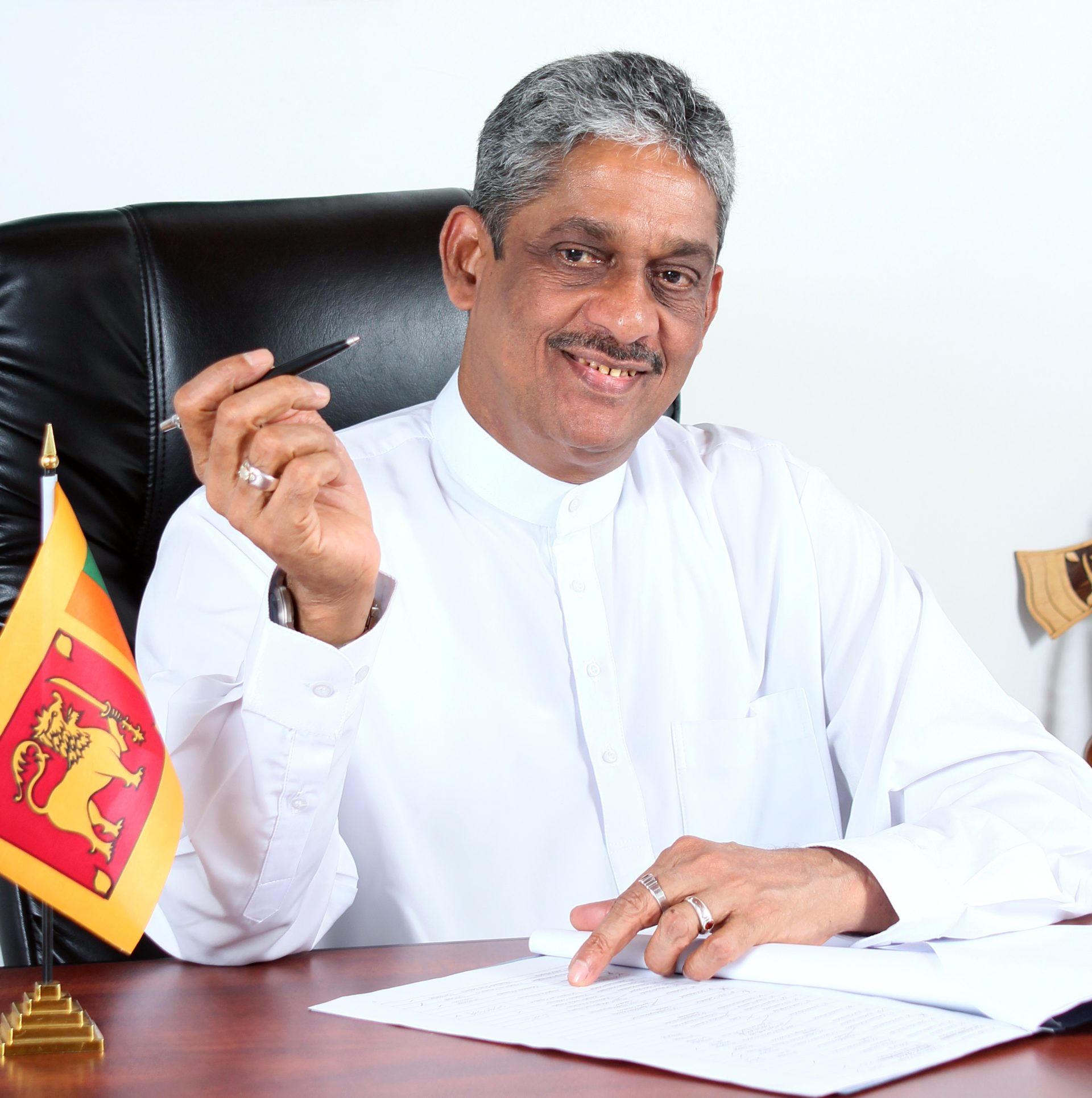
he Colombo District Court today issued an enjoining order preventing the Samagi Jana Balawegaya (SJB) from removing Field Marshal Sarath Fonseka from the party positions.
The District Court made this order pursuant to a plaint filed by Field Marshal Sarath Fonseka against SJB office bearers.
Mahanayake theros of the three sects. have written to President Ranil Wickramasinghe expressing concern that privatizing public resources could jeopardize social stability.
In a letter to President Ranil Wickremesinghe, the Mahanayake theros advocated for a robust mechanism to safeguard public welfare.
They urge the government to prevent political interference, misuse of resources, corruption, and fraud in public affairs through effective oversight.
However, the letter raises concerns regarding the potential impact of privatizing state enterprises on the Buddhist Sangha’s autonomy.
They question the extent to which such privatization might subject the Sangha to excessive government regulation.
The letter adds that privatizing government institutions like Sri Lanka Telecom and the Ceylon Electricity Board, which are already financially struggling and critical to the national economy, to foreign companies solely focused on profit risks creating significant social, economic, and political instability in the future.
This letter highlights concerns from prominent individuals about the potential consequences of such privatization.
The Mahanayake theros urge the President to consider these matters carefully and refrain from making decisions that could jeopardize public welfare or create national security concerns.
The letter further emphasizes the need to restructure government institutions, arguing that such reforms are crucial for building public trust and securing a positive future for the country.
The Verité Research report, titled “Backwards in Blacklisting: Gaps in Sri Lanka’s Procurement Framework Enable Corruption,” exposes two key vulnerabilities in the country’s approach to tackling corruption in this critical area.
The report highlights that Sri Lanka’s procurement guidelines, established in 2006, lack crucial provisions. Unlike other South Asian countries, these guidelines do not recognize “engaging in corrupt and fraudulent activities during procurement” as a valid reason for blacklisting contractors. This significant gap leaves the door open for corrupt practices to go unpunished.
The report finds a lack of compliance with existing regulations, even where provisions exist. Despite having rules in place to blacklist contractors who default on their contractual obligations, Sri Lanka has failed to do so in any instances. The Department of Public Finance’s online database for publishing the names of such contractors remains empty, while neighboring countries like Nepal and Bangladesh maintain well-populated databases.
This concerning situation underlines the high levels of corruption present in Sri Lanka’s public procurement system, a finding echoed by both the civil society governance diagnostic and the International Monetary Fund (IMF) governance diagnostic.
The IMF has even emphasized the need for Sri Lanka to enact a public procurement law by December 2024, aligning it with international best practices.
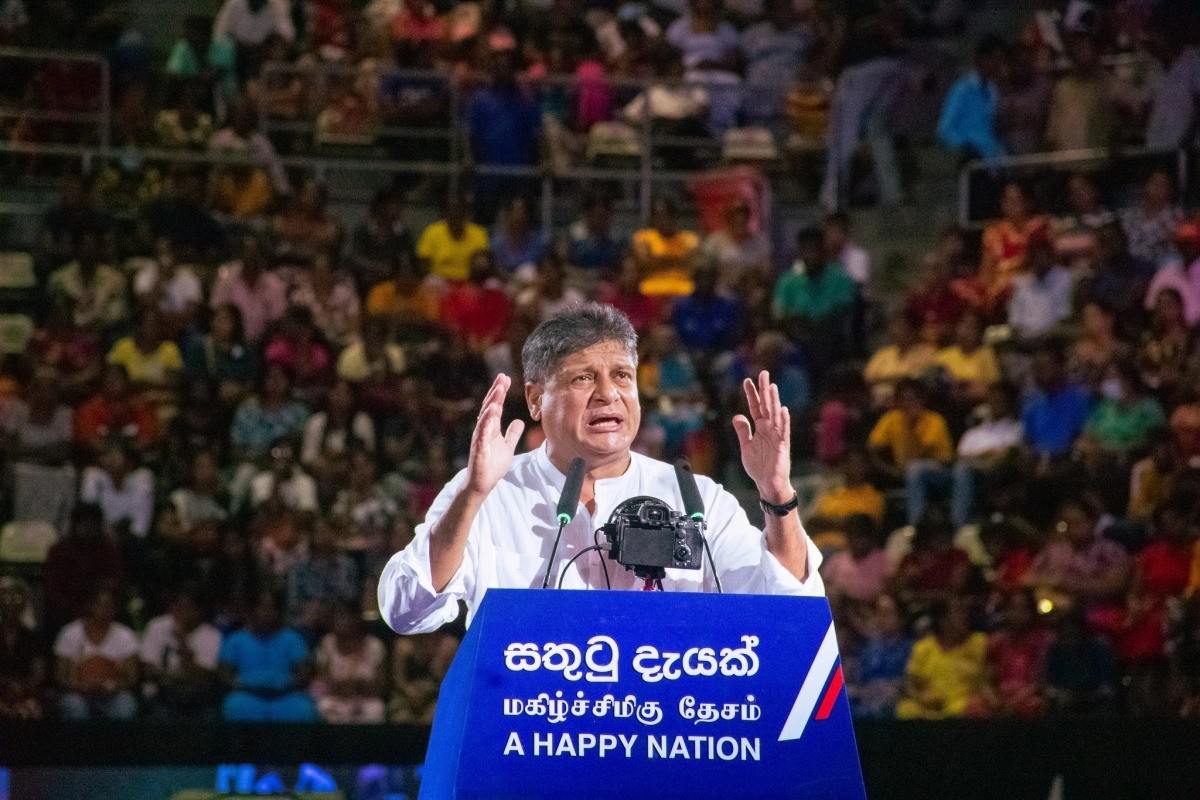
Businessman Dilith Jayaweera, the leader of the Mawbima Janatha Party (MJP), delivered a call to action at the party’s district conference held at the Sugathadasa Indoor Stadium in Colombo on Saturday.
In his address, Jayaweera declared that the time had come to break free from the “shackles of traditional politics and usher in a new era of governance” in Sri Lanka.
“I am not someone who expected to get into politics,” Jayaweera said. “But after years of hoping for change from existing political parties and figures, only to be continuously let down, we have decided to take matters into our own hands. We are here to make that change.”
The conference drew notable figures , including former Governor of the Eastern Province Anuradha Yahampath, Deputy Chairman of the Communist Party of Sri Lanka MP Weerasumana Weerasinghe, former MP Piyasiri Wijenayake, diplomat Palitha Kohona, Sri Lankan racing champion Dilantha Malagamuwa, and former sprinter Shehan Ambepitiya.
He emphasized the need to prioritize the interests of the people above partisan politics and special interests, promising to enact meaningful reforms that would address the pressing challenges facing the nation.
“We cannot afford to remain trapped in the cycle of corruption and inefficiency that has plagued our political system for far too long,” Jayaweera declared, eliciting applause from the audience. “Together, we can build a brighter future for Sri Lanka, one that is built on integrity, innovation, and compassion.”
The Human Rights Watch organization has issued a stark warning, asserting that Sri Lanka is regressing in terms of human rights and social justice standards. Blaming misgovernance and a lack of accountability for the country’s ongoing economic crisis, Human Rights Watch criticizes the government, led by President Ranil Wickremesinghe, for prioritizing the suppression of dissent over addressing critical issues.
Meenakshi Ganguly, Deputy Asian Director at Human Rights Watch, expresses deep concern over Sri Lanka’s trajectory under the Wickremesinghe administration, citing a pattern of regressive policies and increasing repression.
As Sri Lanka prepares for a presidential election later this year, the report highlights President Wickremesinghe’s implementation of new laws aimed at curbing criticism and stifling dissent. Human Rights Watch underscores the urgent need for attention to human rights and social justice in Sri Lanka, urging the government to prioritize accountability and transparency to address the country’s challenges effectively.
For further details, refer to the full announcement on Human Rights Watch’s website: https://www.hrw.org/news/2024/02/14/under-ranil-wickremesinghe-sri-lanka-going-fast-reverse