Opposition MPs to hold talks with Election Commission

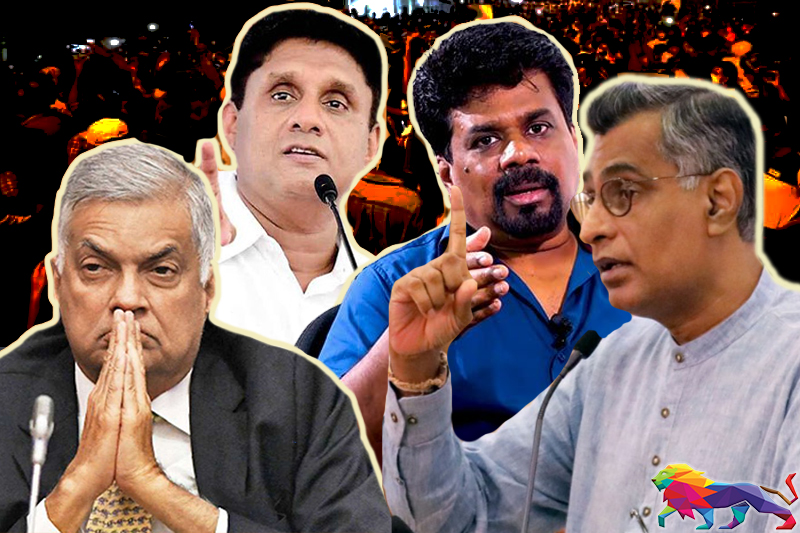
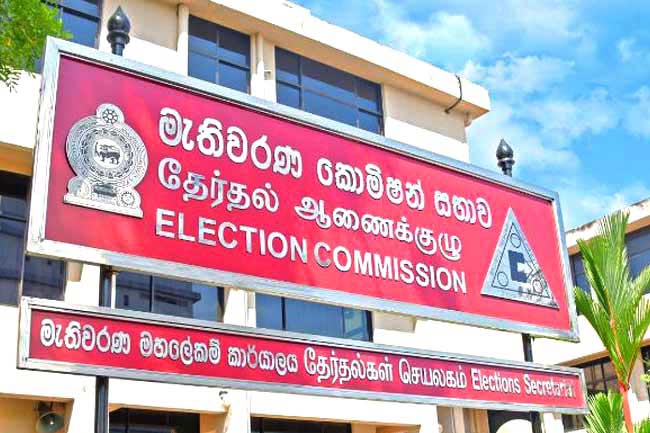
A group of opposition Parliamentarian are due to discuss the date related to the Local Government Election with members of the Election Commission tomorrow (7).

A letter in this regard signed by nine MPs was directed to the Chairman of the Commission.

The opposition MPs have requested the Election Commission to take prompt measures to conduct the election in line with the determination by the Supreme Court on the 3rd of March.

The letter has been signed by MPs Vijitha Herath, GL Peiris, Mano Ganesan, Rishad Bathuideen, Ranjith Madduma Bandara, Rauff Hakeem, Shanakiyan Rasamanickam, MA Sumanthiran and Dayasiri Jayasekera.

The MPs have called for the Local Government Election to be held before the 20th of March.

The letter accordingly called for a round of discussions in this regard to be held at 9am tomorrow at the Election Secretariat.

Meanwhile, the Secretary of the Ministry of Finance, the Government Printer and the Inspector General of Police have been summoned before the Election Commission to discuss the conduct of the Local Government Election.

Members of the Election Commission are also due to hold a round of talks tomorrow (7).

Major trains cancelled for the first time in history due to lack of crew

Major train services in remote areas are now in the process of being cancelled for the first time in history, Locomotive Engineering Operators’ Union Chairman K. A. U. Konthasinghe said.

He told the media that major trains in Maho, Gal Oya, Trincomalee, and Batticolia in the eastern zone, especially in remote areas, have been affected due to a lack of staff.

“Every essential grade in the Railways Department had been affected by the lack of staff. More than 90 locomotive drivers in rank three of the railway services have not been elevated to rank two position yet. Due to that, they are unable to operate locomotives,” Konthasinghe said.

Meanwhile, there is a delay in receiving the confirmation for the persons who are attached to the railway under the contract basis until the proper admissions take place, he said.

“For the reasons stated above, the number of train cancellations have increased. Therefore, we have to cancel the train that runs between Colombo Fort and Batticoloa for the first time in the history of the railway,” he said.

If this practice continues, the trains will either be delayed or cancelled. If the government does not take any action, the union will take trade union action to protect the railway department, Konthasinghe added.

Local council polls delay leaves more than 3,000 public servants jobless

The Election Commission (EC) is unable to offer relief to more than 3000 public servants contesting the local council elections and who are now in severe financial distress owing to uncertainty over the polls date.

In line with the election law, the employees have taken no-pay leave from their workplaces to contest the upcoming election as candidates. With the EC no longer able to hold the election as scheduled on March 9, many of these candidates are facing a difficult situation as they are prohibited from returning to their jobs given that the election process is ongoing.

The EC could not provide any relief to these candidates given that while the elections could not be held as scheduled on March 9, the electoral process had not stopped, Commission Chairman Nimal Punchihewa told the Sunday Times.

If the Supreme Court had issued an order restraining the EC from conducting the elections, the Commission could recommend to the Public Administration Ministry to submit a Cabinet proposal to pay the basic salaries of these employees. But the Court has not issued any such order and has asked the EC to continue with the elections. Therefore, the Commission could not make such a recommendation, the EC chief said.

A senior Public Administration Ministry official said the ministry could not legally accommodate requests from any state employee contesting the elections to be allowed to return to work until they received official communication from the EC that the election had either been put off or concluded. “Since the electoral process is ongoing, there is nothing anyone can do,” the official said.

The inability to hold the election on March 9 has also posed a headache to the Commission with regard to the ceiling it has imposed on candidates to spend on each voter.

The EC had earlier calculated the maximum amount a candidate could spend over a 49-day campaign period.

Since the EC is now set to announce a new poll date, candidates would ask for the spending limit to be raised given that the campaign period would also be extended, an EC source said.

Meanwhile, the EC will meet Finance Ministry officials and the Government Printer next week to ask them when funds can be released for the elections and when printing work related to the elections can be concluded.

Mr. Punchihewa said once these government agencies explained their position to the EC, the Commission would announce a fresh date for the elections.

The EC chairman expressed confidence that a new date for the poll could be announced before March 9.

Posted in Uncategorized

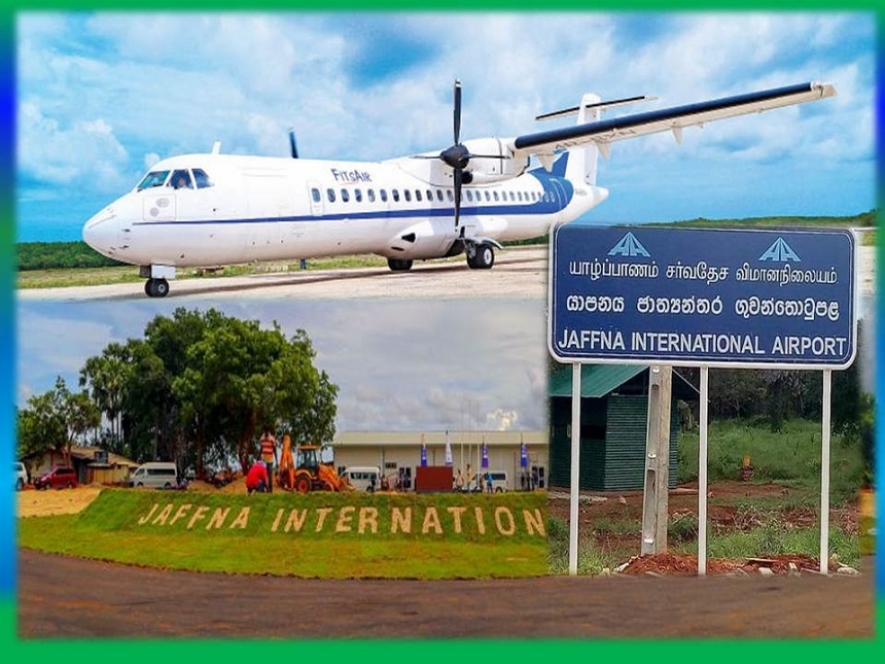
More Indian airlines keen to add Jaffna to their radar

Several new Indian airlines are ready to operate flights to Jaffna from new destinations, said Consul General of India in Jaffna Raakesh Nattaj on the sidelines of the 13th Edition of the Jaffna International Trade Fair which began at the Muttraweli Grounds, adjoining the Jaffna Fort.

The event is organised by Lanka Exhibition and Conference Services (Pvt) Ltd (LECS), in association with the Chamber of Commerce and Industries of Yarlpanam (CCIY).

It concludes today, March 5.

He said that Alliance Air operates four flights per week to Jaffna from Chennai and all the flights are full. “We wish to promote flights from other destinations in India such as Colombathurai and Bangalore to fly to Jaffna and this is expected mid this year.”

New Indian airlines too have expressed interest in adding Jaffna to their radar. However, only a small 75-seater plane could land in Jaffna.

The Consul General said they are also issuing visas to fly to Jaffna and there is an increase in this segment as well.

An airline cargo service too is expected to be launched.

President Yalpanam Chamber of Commerce, K. Vignesh said the exhibition had been a platform to promote entrepreneurship to the North east soon after the war ended.

He said that the exhibition has also paved the way for SMEs to find new markets as well.

Since the first edition in 2002 JITF has evolved into an annual trade platform.

The event is a multi-trade affair featuring industries, products and services in the Agriculture, Hospitality, Education, Food, Machinery, Construction, Consumer, Electronics, Power, Textile, IT and Real estate sectors.

High Municipal taxes

An official of the Yalpanam Chamber of Commerce lashed out at the Jaffna Municipality and said that though the JITF is the gateway to North and opening new vistas for businessmen in North, the Municipality charges exorbitant taxes when hosting this event for the past three years.

“Each year this amount is increasing and this year the organisers had paid over Rs. 3 million to host this event and this is more than what Colombo Municipality charges.”

JITF is a major event in the MICE event calendar of Sri Lanka. The three-day exhibition provides a major boost to the Hospitality Industry and economy in Jaffna, due to the large number of exhibitors and visitors who travel to the region during the event.

“They even charge other payments from stallholders for displaying their hoardings.”

An official of the Jaffna Municipality said that overheads are increasing and this is the reason for the high taxes.

Sri Lanka tells UNHRC it will not accept Resolution 51/1

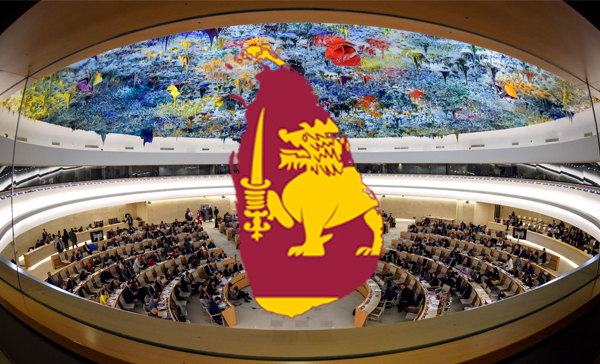
Sri Lanka has reiterated to the UN Human Rights Council (UNHRC) it will not accept Resolution 51/1 which was passed by the Council last year.

The Permanent Representative of Sri Lanka to the UN in Geneva, Himalee Arunatilaka, told the 52nd Regular Session of the Human Rights Council that a series of unhelpful resolutions had been adopted by the HRC, the latest being Resolution 51/1, without Sri Lanka’s consent as the country concerned.

“I reiterate Sri Lanka´s position, which was stated by the Minister of Foreign Affairs last October, that we reject this resolution, which will extend and reinforce the so-called external evidence gathering mechanism on Sri Lanka established by the OHCHR in line with its own interpretation of Resolution 46/1. These resolutions are unhelpful to the people of my country, will polarize Sri Lankan society, and do not serve the objective of promoting reconciliation in Sri Lanka. We are of the view that this is an unproductive drain on the scarce resources of UN Member States which can be productively deployed elsewhere,” Arunatilaka told the Council.

She said that steps must be taken to depoliticize human rights and find solutions to concerns through dialogue and multilateral cooperation rather than through confrontation, selectivity and unilateralism.

Arunatilaka said that the domestic institutions for reconciliation and accountability in Sri Lanka continue to carry out their work towards achieving important post-conflict recovery and healing.

“A Cabinet Sub-Committee has been established under the Chairmanship of the President, to promote reconciliation among different communities and to address and resolve matters relating to issues encountered by the peoples of the Northern and Eastern Provinces. The Committee has identified issues to be addressed expeditiously, including, developing a truth-seeking mechanism, drafting a new counter-terrorism law, establishing an office for overseas Sri Lankans, preparing a Rapid Development Plan for the North and the East, and addressing matters related in particular to missing persons, resettlement and land,” she said.

Arunatilaka said that discussions are in progress relating to a Truth-Seeking Mechanism within the framework of the Constitution while the contours of a model that would suit Sri Lanka are currently being assessed.

“The 21st Amendment to the Constitution of Sri Lanka, passed by Parliament in October 2022, provides for further strengthening of democratic governance, independent oversight of key institutions, the composition of the Constitutional Council and independent commissions,” Arunatilaka said.

She also noted that a Cabinet appointed Sub-Committee is developing legislation on counterterrorism that balances national security concerns with international standards and best practices.

Arunatilaka also said that work is under way to operationalize an Office for Overseas Sri Lankan Affairs to facilitate more vigorous engagement with expatriate Sri Lankans encompassing all communities and generations.

The diplomat said that despite the current socio-economic challenges and constraints, Sri Lanka’s resolve to the promotion and protection of human rights and fundamental freedoms of its people remains steadfast and determined.

Posted in Uncategorized

NPP requests election commission to set fresh date for LG election

The National People’s Power (NPP) has requested the Election Commission in writing to immediately set a date to hold the 2023 Local Government (LG) election.

In a letter to the Chairman of the Election Commission, the NPP says that although the LG election was previously announced to be held on March 09, the Election Commission had later notified that the election would not be held on the aforementioned date as a result of the lack of funds to carry out election-related tasks.

However, the NPP’s letter to the commission mentions that the Supreme Court has recently issued an order preventing the Secretary of the Ministry of Finance from withholding the funds allocated for the LG polls through the 2023 Budget.

Accordingly, the Supreme Court has acted considering the importance of holding the Local Government election as a basic human right, NPP General Secretary, Dr. Nihal Abeysinghe said in the letter.

Therefore, the party has requested the Election Commission to make the necessary arrangements to hold the LG election as soon as possible, conforming to the order of the Supreme Court.

Posted in Uncategorized

Sabry & Jaishankar hold talks on SL economic recovery

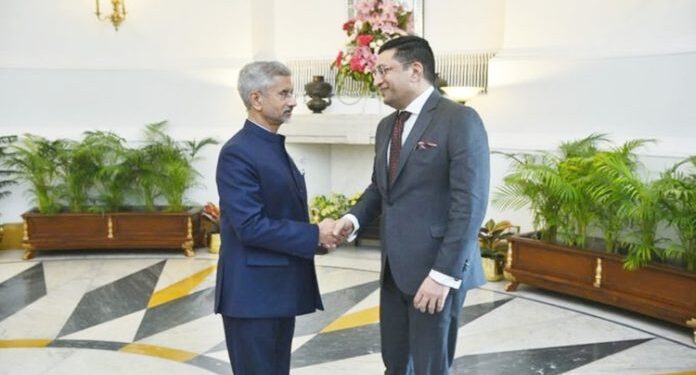
Indian External Affairs Minister S Jaishankar today (4) held wide-ranging talks with his Sri Lankan counterpart Ali Sabry focusing on facilitating Sri Lanka’s economic recovery as well boosting bilateral trade.

India extended financial assistance worth around USD 4 billion to Sri Lanka, including lines of credit for purchases of food and fuel, last year when it was reeling under a severe economic crisis.

New Delhi also provided guarantees to the International Monetary Fund (IMF) to help the country secure a USD 2.9 billion bailout package.

“Nice to catch up FM @alisabrypc of Sri Lanka. Thank him for his #RaisinaDialogue2023 participation”, Jaishankar said on Twitter.

“We took stock of our cooperation that is focused on facilitating Sri Lanka’s economic recovery. Discussions covered investment, trade and development partnership,” he said.

Sabry described the meeting as ”constructive”.

I met with @DrSJaishankar, Minister of External Affairs of India at Hyderabad House during my official visit to New Delhi. We had a constructive bilateral meeting and reviewed the current status of Indo-Lanka relations”, he said.

Sabry was in New Delhi to attend the Raisina Dialogue.

Posted in Uncategorized

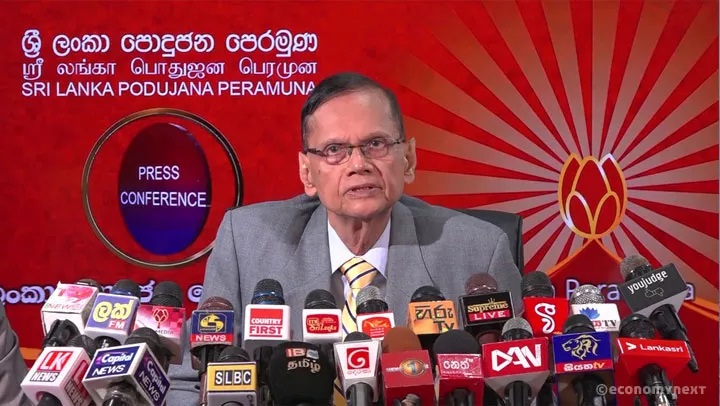
SLPP sacks party Chairman Prof. G. L. Peiris

The Sri Lanka Podujana Peramuna (SLPP) has sacked party Chairman Prof. G. L. Peiris from his post.

SLPP General Secretary Sagara Kariyawasam said the Executive Committee of the SLPP took a unanimous decision to remove Prof. G. L. Peiris from the post of Chairman.

Kariyawasam said that Prof. G. L. Peiris was invited to attend the meeting but he did not attend.

The SLPP is now considering a suitable person for the post.

Prof. G. L. Peiris was Chairman of the SLPP from the day the party was formed.

However, last year Prof. G. L. Peiris and a group of SLPP members crossed over to the opposition benches and sat as Independent MPs in Parliament.

Posted in Uncategorized

LG polls : State Finance Minister responds to interim court order

State Minister assures Finance Ministry will by abide by Supreme Court order
State Minister of Finance Ranjith Siyambalapitiya has assured that the order issued by the Supreme Court barring the withholding of funds allocated for the 2023 Local Government (LG) election.

The Supreme Court yesterday (03 March) issued an interim order preventing the Secretary to the Ministry of Finance form withholding the funds allocated through the 2023 Budget for the LG polls.

The court also issued another interim order preventing the retention of funds allocated for the Department of Government Printing, for the purpose of printing ballot papers.

Meanwhile, the Election Commission of Sri Lanka has decided to convene a special meeting on 07 March in order to reach conclusive date on which the 2023 polls will be held.

Accordingly, all relevant officials including the Secretary to the Ministry of Finance, the Government Printer and the Inspector General of Police (IGP) have been informed to attend the meeting, following an order issued by the Supreme Court instructing that a date for the election be announced before 09 March – the date on which the polls were initially scheduled to be held. .

Why Is Trincomalee Port Still Undeveloped? By P.K. Balachandran/The Diplomat

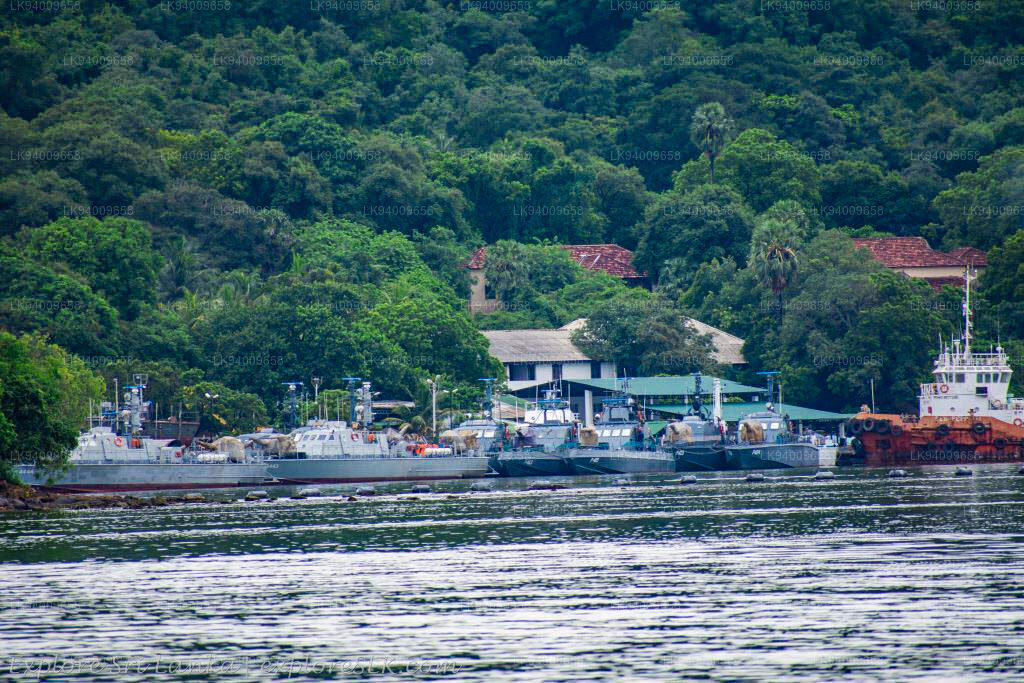
The natural endowments and strategic value of Trincomalee harbor in eastern Sri Lanka have been well known for a long time. Yet, to date, very little concrete action has been taken to develop and use the port. There has been no dearth of reports and plans, but – except for the partial development of the giant oil tanks in collaboration with India – there has been no development of the port and the hinterland.

According to an Asian Development Bank report, Trincomalee is a large natural harbor with water depths ranging from CD -20 m to CD -40 m. It is also the only entirely sheltered natural harbor in the South Asian subcontinent.

In the Polonnaruwa era of Sri Lankan history (1055-1232 CE) it was a major commercial port. The Western powers sensed Trincomalee’s strategic value in the 18th century. British Prime Minister William Pitt the Younger (1759-1806) said that Trincomalee was “the most valuable colonial possession on the globe” as it gave Britain’s Indian Empire a kind of security that “it had not enjoyed since the Empire’s establishment.” When the British took over Trincomalee in 1796 from the Dutch, Napoleon remarked: “He who controls Trincomalee controls the Indian Ocean.”

The first Indian to write about the strategic importance of Trincomalee for India was the historian and diplomat K.M. Panikkar. In his seminal work “India and the Indian Ocean: an essay on the influence of sea power on Indian history,” published in the 1940s, he stressed the importance of Colombo and Trincomalee ports for the defense of India.

As war clouds gathered in the 1930s, the British turned Trincomalee into an energy hub and built 101 giant oil tanks. Wanting to retain their security assets on the island even after Sri Lanka’s independence, they took the precaution of entering into a Defense Pact in 1947. After these assets were taken back by the nationalist government of S.W.R.D. Bandaranaike in 1957, Trincomalee port and the oil tanks fell into disuse. Successive Sri Lankan governments concentrated on the development of the western coast and the Colombo port for political and logistical reasons.

However, in the 1980s, Trincomalee again attracted the West’s attention. According to Port to Port, a high-level U.N. committee reported that Trincomalee port has “controllable space for the creation of a Free Port” and made recommendations for its use. The Overseas Coastal Area Development Institute of Japan (OCDI) submitted a similar report in 1984, entitled “Master Plan and Development project of Trincomalee Port,” which suggested a container trans-shipment facility and a berth for passenger cruise liners. In 1986, Sri Lanka’s National Aquatic Resources Agency (NARA) also recommended the development of the port.

But in the 1980s, geopolitical factors came into play. A reference in a 1981 Pentagon map to the possibility of a U.S. naval base in Trincomalee raised hackles in New Delhi. India was pro-Soviet and anti-U.S. at that time. When Sri Lanka called for worldwide tenders for the development of the Trincomalee oil tanks in 1982, India suspected that the deal favored bidders with links to the U.S. Navy. The tender was canceled.

In letters exchanged between Indian Prime Minister Rajiv Gandhi and Sri Lankan President J. R. Jayewardene as part of the India-Sri Lanka Accord of 1987, it was stated that Trincomalee (or any other port in Sri Lanka) will not be made available for military use by any country in a manner prejudicial to India’s interests. It was also stipulated that the restoration of the Trincomalee oil tanks will be undertaken by an Indo-Lankan joint venture.

However, due to nationalist opposition to the Accord, it was only in 2003 that the 99 surviving oil tanks were given to the Indian company Lanka Indian Oil Corporation (LIOC) on a 35-year lease. Fifteen of the 99 tanks were refurbished and put to use. But it was not until 2015 that LIOC started its bunkering business at Trincomalee port. Questions over the legality of the 2003 deal, the issue of land rights, the 30-year war, and calls by nationalists to take over the tanks stymied further development.

In 2022, another deal was signed according to which the Ceylon Petroleum Corporation (CPC) got 24 tanks, the joint India-Lankan venture Trinco Petroleum Terminal (TPT) got 61 tanks, and the LIOC got 14. However, in the context of the ongoing financial crisis in Sri Lanka, implementation faces a fresh challenge.

As for Trincomalee port, the Ministry of Shipping and Ports had proposed the creation of ship repair and ship-building and bunkering facilities. An ADB report noted that Trincomalee’s “sheltered bay is ideal for calm water vessel operations such as ship-to-ship transfer, lay-up of vessels, loading and discharging submersible structures and other shipping-related services.” There is no shipbuilding yet, but the “afloat repair service” of the Colombo Dockyard Co. was extended to Trincomalee in 2021.

Facilities in the port badly need to be upgraded. “Due to a lack of adequate lights, buoys, and lighthouses, vessels are only allowed to enter and exit the port during daytime,” the ADB pointed out. But night navigation has now been installed at the Trincomalee harbor, with the assistance of Japan through a 1 billion yen grant.

Rohan Samarajiva of the Colombo-based think tank LIRNEasia wrote in a paper on the Trincomalee port in 2017 that the port has been in the doldrums partly because the Bay of Bengal has not been a hotspot of maritime trade, given the state of economic development of the littoral states (such as Sri Lanka, Bangladesh, and Myanmar). But he saw bright prospects with south India and Bangladesh developing fast. Myanmar’s Sitwe and Kyaukphyu ports should also boost prospects for Bay of Bengal trade, but for this, the security situation in Myanmar’s Rakhine State would need to improve, he cautioned.

Sri Lankan President Ranil Wickremesinghe said in 2022 that it would take another 10 to 15 years for economic activity in the littoral states of the Bay of Bengal to pick up.

Wickremesinghe’s immediate plan is to develop Trincomalee as an energy hub with Indian help. To begin with, Sampur will have a 100 MW solar plant. To develop the hinterland, he has roped in Singapore’s urban development organization Surbana Jurong. He plans to integrate Trincomalee with the North Central and Northern provinces, which have agricultural export potential.

Samarajiva envisioned Trincomalee port developing as a “secondary port” of Sri Lanka along with Hambantota. Colombo will continue to be Sri Lanka’s principal port given its established facilities and the more developed hinterland, which accounts for 42 percent of Sri Lanka’s GDP as against 5.8 percent contributed by Eastern Province, in which Trincomalee is located.

But even to be a secondary port, Trincomalee will have to have better connectivity with Colombo, Samarajiva wrote. In 2018, the ADB had initiated a comprehensive development plan for the Colombo-Trincomalee Economic Corridor (CTEC), but there has been no progress on the modernization of the railway. The port has no railyard of its own.

Samarajiva suggested connectivity in the form of a “dry canal,” or a seamless container rail line between Colombo and Trincomalee. Samarajiva also suggested upgrading the China Bay airport in Trincomalee to serve as a civil airport.

Trincomalee is not located in an arid zone, as it gets more than 50 inches of annual rainfall, Samarajiva pointed out. But as a port and industrial zone, it will have to have a lot of water, he warned. It will also require adequate social infrastructure in terms of housing, educational and medical facilities for the large number of Sri Lankan and foreign personnel who will congregate there as development gets underway.

Even as it faces these problems, another obstacle has come to light, namely, the rumor that the United States and India are aiming to establish a naval base in Trincomalee, triggered by the sudden visit of U.S. Principal Deputy Assistant Secretary of Defense for Indo-Pacific Security Affairs Jedidiah Royal. Though baseless, the rumor has the potential to stall Trincomalee port’s development – as has happened so many times in the past.