Time for new solutions for Sri Lanka: Fight for private creditor debt cancellation

With the whole world watching the deteriorating political, economic and humanitarian situation unfolding in Sri Lanka, and while we pray for swift solutions to food, fuel and medical shortages, there is now an opportunity to reinvent how countries like ours recover from crippling debt and re-emerge as healthy, functioning economies.

Sri Lanka is in a difficult position. Corrupt governments have mismanaged the nation’s finances and agreed to predatory loans with exploitive interest rates. Having absconded from the country they ravaged, they have now left millions of everyday Sri Lankans on the hook for their crimes and ineptitude.

In the case of Sri Lanka, the country has external borrowings of over $ 50 billion (60% of GDP) that it cannot service, crucially over 40% of that is to private creditors, many of whom are charging predatory interest rates. The loans from multilateral institutions (over 20% of external debt) and bilateral arrangements (30%) are on more concessionary payment terms.

The traditional solution, to turn to the IMF, will likely result in crippling austerity measures and the selling off of our national assets and resources, leaving us even less able to revive our economy on our own steam. This is unacceptable and I would suggest not inevitable.

Sri Lanka is not the only country in this position. It is the canary in the coal mine. The pandemic, the war in Ukraine and resulting inflation have hamstrung several nations in the global south who may soon be facing their own disasters. The instability this will cause will be detrimental to global politics and economies writ large. Problems like these are not isolated and do not stay put. They travel, taking their consequences with them across the planet.

The solutions to these troubles are as unique and complicated as each individual country, but what they all share is some measure of debt cancellation and delayed or restructured repayment. I am not suggesting Sri Lanka default on its external loans to other governments or multilateral institutions.

I am suggesting that instead of thinking in the short-term and selling off our assets, the very things that could be used to revive the economy, we declare null and void the remainder of the debt to extortionary private lenders, and instead create a plan for how Sri Lanka’s people and resources can work to revive the economy and repay those restructured multilateral loans and bilateral loans from our allies. Taking a genuinely non-aligned position in the geopolitical battles between larger nations is a prerequisite to request assistance from across the world.

The benefits to this are myriad. First and foremost, it gives Sri Lankans a chance at long-term independence and prosperity, and shields against climate change. There have been 16 rounds of standard IMF bailout packages since 1965 and they have all failed to deliver sustainable solutions. The current model of prioritising benefits to lenders rather than local populations is wrongheaded and it simply doesn’t work.

The IMF should bail out people, not accommodate corporations. If they did, the people would, in time, be able to pay back their loans. Sri Lanka is rich in resources and assets which can be leveraged to create a booming economy. The issue is not insolvency, it is illiquidity.

Secondly, we must take a progressive stand against the ability of exploitative private creditors to make deals with corrupt leaders who ultimately are not held responsible for the outcomes.

By including private creditors, such as world’s largest asset manager, Black Rock, in IMF debt restructuring negotiations, they are being rewarded for their destructive lending practices, and are encouraged to continue, causing generations-worth of economic damage to struggling nations. Sri Lanka should default on loans to predatory private creditors, and it should do so jointly with other low-income countries.

Yes, the lenders will sue. There is no international court that can force countries to pay them back, but the loans are subject to the laws in which the lenders are based, most often New York and London, and they may pursue claims to overseas assets. This is our opportunity to mobilise for greater economic fairness and to campaign for changes to these laws for the better.

Currently countries in economic hardship do not have the bankruptcy protections granted to businesses. If the owners of a company that cannot pay its bills can be shielded from its creditors to avoid destitution, then surely a country that supports the lives and welfare of millions of people should be entitled to the same protections.

If low-income countries default together, we shine a light on this issue and put pressure on the United States and United Kingdom Governments to enact legislation that will protect distressed governments. The change required is systemic and necessitates that we stand together and that new models work for the people. Yes, this will be a fight, but a fight worth engaging in, and one in which there will be support from around the world.

Debt cancellation is not a fairy tale. It can and has happened, to greater and lesser extents, and it can happen for Sri Lanka, but the call needs to come from the people. The current Government will not engage in this type of structural change without pressure. The people need to demand it. They need to demand fairness and the opportunity to thrive.

Debt cancellation in these circumstances is justice. I would encourage every Sri Lankan, and every citizen of countries in similar straits, to consider the idea. Talk about it with your friends and family. Discuss it within Sri Lankan civil society. Demand that our leaders fight for it. The diaspora wants to help and will speak up within their countries calling for their governments to support these ideas. If Sri Lankans ask for it, organisations like Debt Justice UK, Asian Peoples’ Movement on Debt and Development, Jubilee USA, and others, can support the fight.

The whole planet is in recovery mode. Now is the time for large-scale change based on reframing what economic justice looks like. Debt is not a moral issue. Allowing people to suffer and die is a moral issue.

Written by Charith Gunawardena
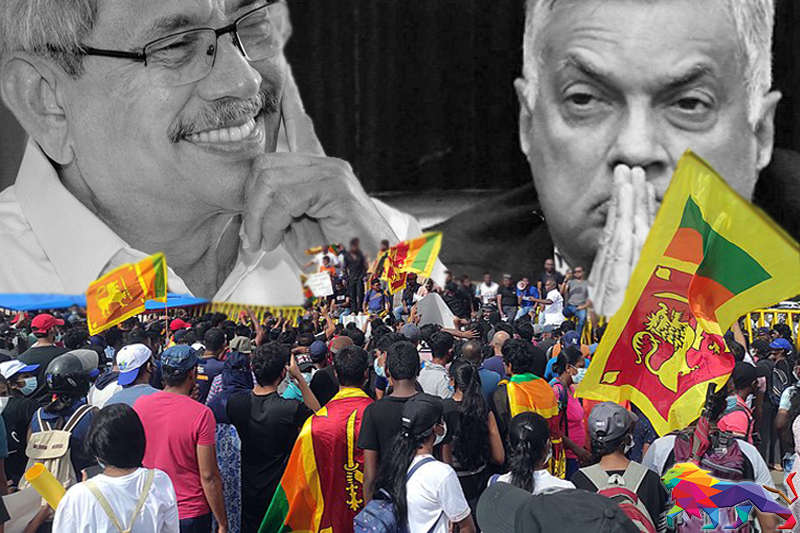
‘A moment of opportunity’: fall of Sri Lankan president raises victims’ hopes -UK Guardian

It was a warm April day in 2019 and Gotabaya Rajapaksa was enjoying the afternoon with his family in an affluent suburb of Los Angeles. Rajapaksa, relaxed in his chinos and polo shirt as he strolled through the car park of the popular American supermarket Trader Joe’s, looked surprised when a woman sidled up and shoved a brown envelope into his hands. “You’ve been served,” said the private investigator before rushing away.

The charges inside that brown envelope, a civil suit alleging complicity in torture and killings, would not make it far in the courts. Seven months later Rajapaksa, a member of Sri Lanka’s most powerful political dynasty, would be elected president, and be granted immunity from prosecution.

But since Rajapaksa’s presidency came to an abrupt end this month as he fled abroad and resigned in disgrace, accused of bankrupting Sri Lanka, lawyers, activists and victims around the world have swung into action. Stripped of the protections of his office, many believe that, finally, this could be an opportunity for justice.

On Sunday, the International Truth and Justice Project (ITJP), which has spent more than a decade doggedly collecting evidence on Rajapaksa and brought the initial 2019 US civil suit, filed a criminal complaint with the attorney general in Singapore, where he is hiding out. It is seeking his arrest for alleged war crimes under the country’s Geneva conventions act. Lawyers say other lawsuits may soon follow.

“We are excited, this is a moment of opportunity,” said Yasmin Sooka, a human rights lawyer with the ITJP. “We’ve spent years collating an extensive dossier on Gotabaya and a pattern of international violations going back to 1989. Now he no longer has immunity, we are confident we have a credible case he has to answer.”

The message it sent to victims, added Sooka, was “very powerful; the idea that this man, who was known in Sri Lanka as ‘The Terminator’, can be finally held accountable”.

Though rare, there have been cases where war criminals who escaped abroad have been prosecuted and sentenced under universal jurisdiction. Sooka confirmed the ITJP was also considering re-filing the US civil case and would be pushing for foreign governments to place sanctions on Rajapaksa’s assets.

The accusations against Rajapaksa date from late 2008 onwards, when he was defence secretary and head of the armed forces in Sri Lanka. It was during this time, when his older brother Mahinda was president, that he oversaw the ending of Sri Lanka’s 26-year-long civil war between the Tamil separatist militant group known as the Tamil Tigers and Sri Lankan government forces.

Barbaric methods were allegedly used and approved by Rajapaksa. According the UN, backed up by witness accounts and video footage, there were “credible allegations of war crimes and crimes against humanity”, including systematic murder, torture and sexual violence against tens of thousands of Tamil civilians and the summary execution of prisoners by government forces.

Citizens were enticed to safe no-fire zones in the Tamil-controlled areas in the north, only to be bombarded by deadly shelling from government forces, with dozens of hospitals and humanitarian facilities targeted. Thousands who surrendered were taken in and never seen again. In those final phases of the war, estimates of the dead range from 40,000-100,000. Even in the years that followed, thousands more were subjected to enforced disappearances and white van abductions, where they were often tortured and rarely returned. According to the ITJP and others, the responsibility and chain of command for these actions ended directly with Rajapaksa. He denies all the allegations.

Yet despite numerous damning reports, UN resolutions and recommendations and an international outcry, Rajapaksa never faced a domestic or international courtroom. After his brother lost power in 2015, Rajapaksa moved freely to the US, gaining citizenship. In 2019, still heralded as a war hero by Sri Lanka’s Sinhalese Buddhist majority, he returned to Sri Lanka and was voted in as president. The limited progress towards wartime justice and reconciliation was halted, military generals who had faced convictions for war crimes were pardoned and the persecution of Tamils escalated.

But with Rajapaksa’s dramatic fall from grace has come a new appetite for accountability. While the overwhelming cry from protesters on the streets in Colombo has been a call for him and his family to face corruption charges, human rights organisations and victims have begun vocally pushing for investigations to look beyond financial crime and extend to Rajapaksa’s persecution of the Tamil and Muslim minorities, who are mainly concentrated in Sri Lanka’s northern and eastern provinces, as well as activists, journalists and political opponents.

“We never dreamed this would become a possibility, where President Rajapaksa had to run away for his own safety,” said Leeladevi Aanandarajah, 70, whose son Aanandanadarasa Anura was taken into military custody in the Tamil region of Vavuniya in 2009 and never seen again.

Alongside hundreds of other Tamil mothers, Aanandarajah has spent years trying to find answers about her son, including testifying before police and commissions. Yet their calls for justice have consistently been ignored and she has faced constant harassment, surveillance and abuse from the authorities and military. Many of the mothers of the disappeared are now dying before they get answers.

Like most in the north and east, her hopes now rest on the international community stepping in. “With President Rajapaksa’s resignation, now we are hopeful of pursuing all available avenues with the support of our diaspora communities abroad to bring him before the international criminal court in order to ensure justice is provided to us,” she said. “What we demand is justice for our children, nothing else.”

The ITJP is not the only group looking at renewed legal action against Rajapaksa. In 2019, a US civil action was brought against Rajapaksa for his alleged role in the murder of Lasantha Wickrematunge, a journalist who reported on Rajapaksa’s alleged involvement in corruption and was subsequently killed by a military hit squad directly under his command. More than a dozen other critical journalists were killed during that time in similar circumstances.

Nushin Sarkarati, a lawyer with the Center for Justice and Accountability in the US, who filed the case on behalf of Wickrematunge’s daughter but had to withdraw it after Rajapaksa became president, said this felt like “a new moment of opportunity”, one they intended to seize.

“We’re in discussion with the family about what the next steps are: whether civil litigation is still the right way forward or is there more fervour to push for criminal action against Gotabaya?” said Sarkarati.

Previous pleas by the UN human rights commissioner for members states to open up investigations into war crimes in Sri Lanka in their own countries, and then seek Rajapaksa’s arrest under universal jurisdiction, have come to nothing.

But Sarkarati said that with the “groundswell of support and calls for justice for the myriad abuses that he’s been linked to”, several human rights groups were now pushing governments, including the US, to reopen old criminal investigations into Rajapaksa. “A government like the US could open an investigation and then seek his extradition,” said Sarkarati.

Nonetheless, the pathway to Rajapaksa facing trial is riddled with uncertainty. If the authorities in Singapore let him freely leave after his visitor visa expires in early August, a cabinet minister has indicated that Rajapaksa intends to return to Sri Lanka.

KS Ratnavale, a senior lawyer who has worked on hundreds of cases of enforced disappearances and massacre victims, said there remained little likelihood of Rajapaksa facing trial for war crimes within Sri Lanka where all domestic accountability mechanisms had so far failed and Rajapaksa’s political allies were still running the country.

The new president, Ranil Wickremesinghe, is among those accused of protecting the Rajapaksa family in the past and of complicity in obstructing civil war justice. When he was prime minister, from 2015-2019, Wickremesinghe never set up the promised hybrid courts – intended to put leaders on both sides on trial for grave violations of human rights in the civil war – and had refused to dismantle the military units in the north accused by Tamils of committing the worst war crimes.

Wickremesinghe’s actions since becoming president this month, including reappointing Kamal Gunaratne, a former commander of the 53 Division of the Sri Lankan army accused of committing alleged war crimes, as secretary to the ministry of defence, have also not inspired confidence among Tamil groups calling for justice.

“Whatever government comes to power, it covers up the atrocities and crimes committed against civilians and unarmed personnel and entrenched immunity is given to armed forces and paramilitary groups,” said Ratnavale. “That’s why victims are demanding an international probe.”

For the mothers of the disappeared who are still waiting for justice, the fall of Rajapaksa, while a symbolic victory, was not enough to convince them that they would finally be granted the accountability and answers they have craved for 13 years.

Kathirkamanathan Kokilavani, 52, from Kilinochchi, lost her 18-year-old son as they were escaping from heavy shelling and barrel bombing, and never saw him again. “I don’t believe whoever comes into power will give us answers, because they are scared of the truth,” she said. “The Rajapaksas made our children disappear; now they have disappeared from politics.”

Merchandise trade balance records a surplus for first time in nearly 20 years

The merchandise trade balance recorded a surplus in June 2022 for the first time since August 2002, reflecting the impact of historically high monthly export earnings and the continued decline in import expenditure, says the Central Bank of Sri Lanka (CBSL).

The balance in the merchandise trade account in June 2022 recorded a surplus of US dollars 21 million, compared to the deficit of US dollars 652 million recorded in June 2021, and for the first time since August 2002, where a trade surplus of US dollars 110 million was recorded.

Meanwhile, the cumulative deficit in the trade account during January-June 2022 narrowed to US dollars 3,514 million from US dollars 4,316 million recorded over the same period in 2021.

Earnings from tourism recorded an increase in June 2022 (year-on-year) from the low base, despite the negative sentiments associated with travel advisories and the ongoing shortage of fuel and resultant transportation difficulties, the CBSL said.

Workers’ remittances moderated in June 2022, compared to May 2022, reflecting an increase of grey market activity of foreign exchange transactions, according to data on the External Sector Performance for June 2022.

Foreign investment in the government securities market recorded a marginal net inflow, while that in the Colombo Stock Exchange (CSE) recorded a marginal net outflow during June 2022.

The Central Bank says it continued to provide forex liquidity to finance essential imports, exhausting the usable level of gross official reserves.

Meanwhile, the weighted average spot exchange rate in the interbank market remained around Rs. 360 per US dollar during the month.

Posted in Uncategorized

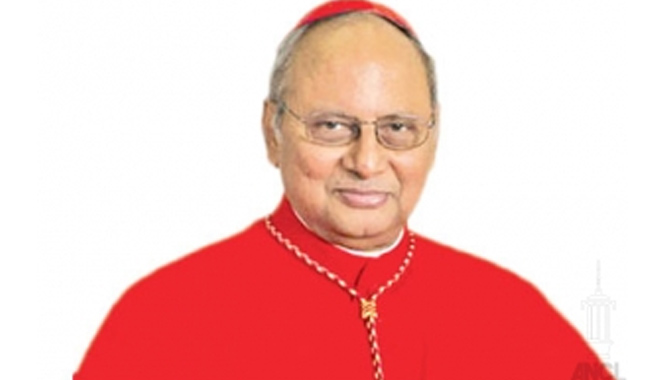
No rule of law in the country: Cardinal Malcolm Ranjith

The Archbishop of Colombo, Rev. Malcolm Cardinal Ranjith commented on the fate of the rule of law in the country today.

His Eminence Malcolm Cardinal Ranjith, speaking at the mass held for the 150th Jubilee of the Church of the Holy Apostles in Modara, demanded for the public to look at the fate of the rule of law within the country.

Rev. Malcolm Ranjith pointed out that the country has fallen into an abyss due to people who are greedy for power and wealth and betray the policies agreed upon by all.

Speaking further, the Archbishop of Colombo said that religion is not just about coming for the Sunday Mass, but one must also live within religion. However, despite calling Sri Lanka a ‘Dharmadweepa’ (A land of religion), he requested others to see what has become of the country today.

Citing the incident of a bomb being found at a Church in Borella, His Eminence Malcolm Cardinal Rajith stated that several people inside the church were arrested, and were subsequently locked up for more than a month, when the fault lay with the security services, and not with the innocents.

Till today, there has been no investigation initiated into it, he said, adding that however, those who discovered the bomb were kept imprisoned for over a month, only to be later released due to zero evidence.

“Those suspects were beaten. They were forced to sign documents. No justice was done for them. That bomb was powerful. It was the power of the former Government. To this day, this case remains completely under the carpet,” he said.

Referring the Easter Sunday Attack in 2019 when 269 people died in Katuwapitiya, Kochikade and several other places, His Eminence Malcolm Cardinal Ranjith said that to this date, no justice has been served over them, which illustrates the power of the powerful in the country.

“We should be ashamed before the world. There is no law in the country. There is no room for justice. There is only lawlessness and the law of the powerful in the country. No matter how much we asked for an independent investigation, the law of our country did not do anything to prosecute those who have been identified as the culprits,” he said.

The Archibishop of Colombo continued, pointing out that to this date, they live freely and are able to engage in political activities and hold positions. His Eminence Malcolm Cardinal Ranjith called for the people to live a princpled life instead.

Indian Navy monitoring Chinese research vessel headed for Sri Lanka’s Hambantota port – report

The Indian navy is monitoring the movements of a Chinese research vessel that is bound for Sri Lanka’s Hambantota port, Indian online newspaper ThePrint reported quoting sources in the defense and security establishment.

The vessel is scheduled to dock at Hambantota port in mid-August, ThePrint has learnt. However, the exact purpose of the vessel’s visit to Hambantota is unclear. It remains to be seen whether it is going to the port for turnaround, replenishment, logistics, or signaling, according to sources.

The sources also explained that such vessels start their movement when China or any other country is carrying out missile tests, adding: “It is not a military vessel though. Such Chinese vessels have operated in the area before, and we have always monitored their activity.”

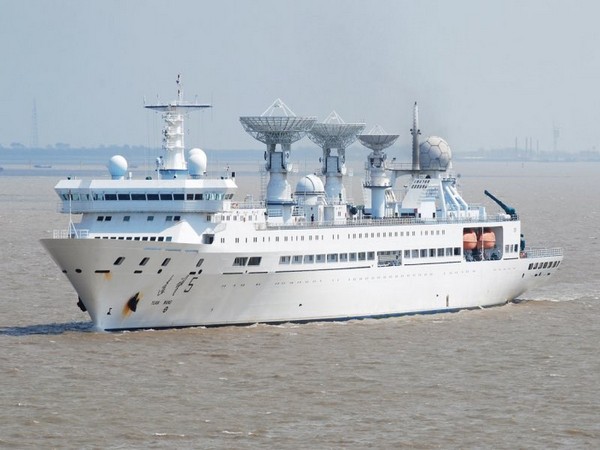
The Chinese research vessel — called the Yuan Wang 5 — is reportedly involved in space and satellite tracking. After first denying reports of its expected arrival at Hambantota port, Sri Lanka’s Defense Ministry confirmed Saturday that the vessel would be docking at the port between 11 and 17 August.

This came after Arindam Bagchi, spokesperson of India’s external affairs ministry, alluded to the Chinese vessel while telling the media Thursday that India “carefully monitors any development having a bearing on its security and economic interests”.

Consequently, Reuters reported that China Friday said that it hoped “relevant parties” would refrain from interfering with its “legitimate maritime activities”. According to the report, the “Yuan Wang 5 is one of China’s latest generation space-tracking ships, used to monitor satellite, rocket and intercontinental ballistic missile launches”.

The Yuan Wang 5 is a third generation vessel in the Yuan Wang class series and entered service in 2007. It has a displacement of 25,000 tonnes and can hold out against a maximum wind scale of 12. The Yuan Wang 5 was built by the state-owned Jiangnan Shipyard in Shanghai. It reportedly also has an aerial reach of 750 km. The Yuan Wang 5s are operated by the Strategic Support Force of the People’s Liberation Army (PLA).

Posted in Uncategorized

Minority parties likely to join all-party govt

Several opposition parties representing minority communities are considering joining an all-party government proposed by President Ranil Wickremesinghe.

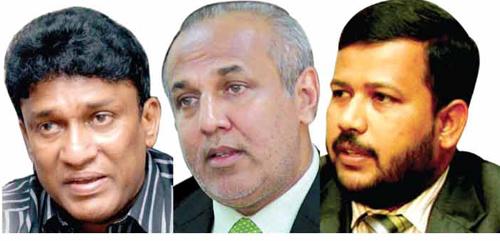
The Democratic People’s Front (DPF) led by Mano Ganesan, All Ceylon Makkal Congress (ACMC) under Rishad Bathiudeen and the Sri Lanka Muslim Congress (SLMC) led by Rauff Hakeem are considering the proposal, party representatives confirmed.

President Wickremesinghe wrote to MPs on Friday requesting them to join a national all-party programme to “create economic and social stability.”

DPF Leader Mano Ganesan told the Sunday Times they had received the invitation and were considering the matter. He said the party believed it was not the time to topple the government given the present economic difficulties.

The ACMC’s politburo will discuss the President’s proposal and a decision will be taken by its central committee, General Secretary Ameer Ali said.

SLMC Chairman Nizam Kariapper said his party was closely monitoring steps being taken by the President and would take a decision soon.

In his letter to MPs, President Wickremesinghe proposed to initiate a broad dialogue to discuss steps including the reintroduction of the 19th amendment and the Parliamentary Oversight Committee System.

Posted in Uncategorized

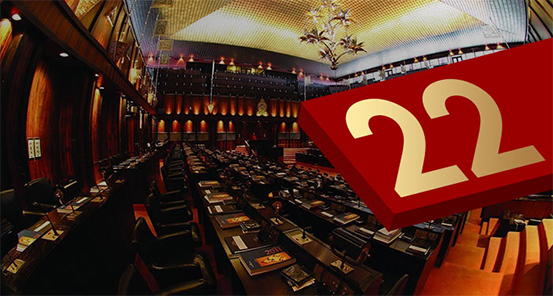
Constitutional amendment: New 22A draft Bill in Cabinet tomorrow

A new draft Bill of the Government’s proposed 22nd Amendment to the Constitution is to be taken up for discussion at the Cabinet meeting tomorrow (1 August), The Sunday Morning learns.

The Justice Ministry last week sent the new draft Bill to the Cabinet Secretary to be included in the agenda of Monday’s Cabinet meeting to be taken up for discussion and decision.

Justice Minister Dr. Wijeyadasa Rajapakshe told The Sunday Morning that the new draft 22nd Amendment would be gazetted once the Cabinet granted approval and presented it to Parliament seven days after the gazette was issued.

When asked about the provisos that were included in the previous 22nd Amendment draft Bill during President Gotabaya Rajapaksa’s tenure, the Minister noted that all provisos that were included in the previous draft Bill due to the former President’s request had now been completely removed.

Therefore, the new draft Bill will reflect the 19th Amendment to the Constitution and will go even beyond that, according to Rajapakshe.

He explained that the new draft Bill contained more features that empowered the Parliament as well as mechanisms to counter bribery and corruption. “It is, therefore, a 19th Amendment Plus scenario,” the Minister added.

The draft Bill of the 22nd Amendment that was earlier presented to Parliament was terminated following the prorogation of Parliament until Wednesday (3 August) last week.

In the previous 22nd Amendment draft Bill, former President Rajapaksa requested certain powers vested with the Executive Presidency to remain during the period of the incumbent Parliament.

Among the clauses that the provisos requested were the ones on the President’s power to appoint members to the Cabinet and ministry secretaries, the holding of Cabinet portfolios, and the President’s power to remove a prime minister.

Posted in Uncategorized

Sri Lanka DFCC Bank rating watch negative kept in soft-peg collapse: Fitch

Fitch Ratings said it was keeping a Rating Watch negative on Sri Lanka’s DFCC Bank amid a currency crisis that has triggered dollar shortages and sovereign default while there are also mounting bad loans.

The Rating Watch Negative “reflects the potential for the bank’s creditworthiness to deteriorate relative to other entities on our Sri Lankan national rating scale,” Fitch said.

“This is because of heightened stress on the bank’s funding and liquidity, and its exposure to the sovereign via investment in foreign-currency instruments that raise risks to its overall credit profile.

“We believe that the sharp rise in inflation, depreciation of the local currency, and other factors can distort the bank’s underlying financial position in the current operating environment.”

Sri Lanka is gripped by the worst currency crisis in the history of the island’s intermediate regime central bank. Sri Lanka’s economists got the ability to trigger a balance of payments deficits and currency crises with the setting up of a soft-pegged central bank in 1950.

In 2022 the rupee collapsed to 360 to the US dollar from 200 as an attempt was made to float the currency with a surrender rule.

Fitch said the bank’s foreign-currency funding and liquidity position was significantly challenged and vulnerable to sudden shocks amid weaker credit sentiment though the bank was successful in securing USD150 million of term funding in 2021, Fitch said.

“We believe further access to such funding would be difficult, similarly to peers, given the sovereign’s debilitated credit profile,” the agency said.

As customer repayment capacity weakens due to the economic conditions Fitch said, it expects DFCC’s impaired (stage 3) loan ratio to increase in the near to medium term.

” Impaired loans at end-2021 were 6.2% of total assets together with a further 2.2% of assets in US dollar-denominated sovereign bonds and Sri Lanka Development bonds, the share of which is estimated to have reduced in 1H22,” the rating agency said.

The agency said that sovereign default together with increasing economic challenges poses significant downside risks to DFCC’s profitability, to the extent that the bank may become structurally unprofitable.

“Earnings pressure is already evident in the bank’s operating profit/risk-weighted asset ratio that declined to 0.6% by end-1Q22 (end-2021: 1.7%) as credit costs eroded 83% of the bank’s pre- impairment profits”

The full statement is reproduced below:

Fitch Maintains DFCC Bank’s National Rating of ‘A+(lka)’ on Watch Negative

Fitch Ratings – Colombo – 28 Jul 2022: Fitch Ratings has maintained DFCC Bank PLC’s National Long-Term Rating of ‘A+(lka)’ on Rating Watch Negative (RWN). Fitch has also maintained DFCC’s senior and subordinated debt ratings of ‘A+(lka)’ and ‘A-(lka)’, respectively, on RWN.

KEY RATING DRIVERS

RWN Maintained: The RWN on DFCC’s National Long-Term Rating reflects the potential for the bank’s creditworthiness to deteriorate relative to other entities on our Sri Lankan national rating scale. This is because of heightened stress on the bank’s funding and liquidity, and its exposure to the sovereign via investment in foreign-currency instruments that raise risks to its overall credit profile.

We believe that the sharp rise in inflation, depreciation of the local currency, and other factors can distort the bank’s underlying financial position in the current operating environment.

Foreign Currency Liquidity Constraints: We believe DFCC’s foreign-currency funding and liquidity position is significantly challenged and vulnerable to sudden shocks amid weaker credit sentiment. The bank was successful in securing USD150 million of term funding in 2021, but we believe further access to such funding would be difficult, similarly to peers, given the sovereign’s debilitated credit profile.

Weakening Operating Environment: Our assessment of Sri Lankan banks’ operating environment (OE) reflects the pressure on the banks’ already stressed credit profile following the sovereign’s default on its foreign-currency obligations. It also captures the rapid deterioration in the broader economy, including increased interest rates, high inflation, and acute currency depreciation. The economic slump has limited DFCC’s operational flexibility.

Increasing Asset-Quality Pressure: Fitch expects DFCC’s impaired (stage 3) loans ratio to increase in the near to medium term as borrower repayment capacity weakens due to the rapidly deteriorating economic conditions. The bank’s exposure to the government’s foreign currency-denominated instruments, although small relative to peers, adds to asset-quality pressure. Impaired loans at end-2021 were 6.2% of total assets together with a further 2.2% of assets in US dollar-denominated sovereign bonds and Sri Lanka Development bonds, the share of which is estimated to have reduced in 1H22.

Capital Buffers Under Pressure: Fitch expects increased asset-quality risks, and weaker earnings retention alongside bloated risk-weighted assets from the Sri Lankan rupee’s sustained depreciation, which will exert significant pressure on the bank’s capitalisation metrics in the near term. This is despite the bank’s lower exposure to foreign currency-denominated government securities than that of peers. Capital raising continues to be a challenge for the bank, as seen in its recently concluded rights issue that was undersubscribed.

Credit Costs to Erode Earnings: We believe that sovereign default together with increasing economic challenges poses significant downside risks to DFCC’s profitability, to the extent that the bank may become structurally unprofitable. Earnings pressure is already evident in the bank’s operating profit/risk-weighted asset ratio that declined to0.6% by end-1Q22 (end-2021: 1.7%) as credit costs eroded 83% of the bank’s pre-impairment profits.

Economic Volatility Weighs on Business Model: We believe that DFCC’s business profile, like most domestic peers, is highly vulnerable to the intensifying risks in the domestic market, given the high concentration of its business profile on the weak and unstable Sri Lankan economy. This could limit the bank’s ability to generate and defend business volume. The rapidly deteriorating OE is likely to derail the bank’s aspiration of reaching LKR1 trillion asset base by 2025.

High-Risk Profile: DFCC’s elevated risk profile, similar to local peers, stems from its main exposure to high-risk customer segments with weak credit quality, as reflected in the ‘ccc’/negative OE.

This is further exacerbated by DFCC’s exposure to the government’s foreign currency-denominated instruments, albeit lower relative to peers, making the bank vulnerable to the sovereign’s repayment capacity and liquidity position.

RATING SENSITIVITIES

Factors that could, individually or collectively, lead to negative rating action/downgrade:

The RWN reflects rising risks to the bank’s rating from funding stresses, which could lead to a multiple-notch downgrade. We expect to resolve the RWN when the impact on the issuer’s credit profile becomes more apparent, which may take more than six months.

Developments that could lead to a multiple-notch downgrade include:

– funding stress that impedes DFCC’s repayment ability;

– significant banking-sector intervention by authorities that constrains the bank’s ability to service its obligations;

– a temporary negotiated waiver or standstill agreement following a payment default on a material financial obligation;

– Fitch’s belief is that DFCC has entered into a grace or cure period following non-payment of a material financial obligation.

A downgrade of the sovereign’s Long-Term Local-Currency Issuer Default Rating (CCC)could also lead to a downgrade of the bank’s rating.

Factors that could, individually or collectively, lead to positive rating action/upgrade:

There is limited scope for upward rating action given the RWN

OTHER DEBT AND ISSUER RATINGS: KEY RATING DRIVERS

SENIOR DEBT

DFCC’s outstanding senior unsecured debentures are rated at the same level as its National Long-Term Rating under Fitch’s criteria. This is because the debt ranks equally with the claims of the bank’s other senior unsecured creditors.

SUBORDINATED DEBT

DFCC’s Basel II- and Basel III-compliant Sri Lankan rupee subordinated debt is rated two notches below the National Long-Term Rating anchor. This reflects Fitch’s baseline notching for loss severity for this type of debt and our expectations of poor recoveries.

There is no additional notching for non-performance risks, as the notes do not incorporate going-concern loss-absorption features.

OTHER DEBT AND ISSUER RATINGS: RATING SENSITIVITIES

The senior and subordinated debt ratings will move in tandem with the bank’s National Long-Term Rating.

Source: Economy Next

Posted in Uncategorized

Sri Lanka loses Norway shipbuilding deal over sovereign default

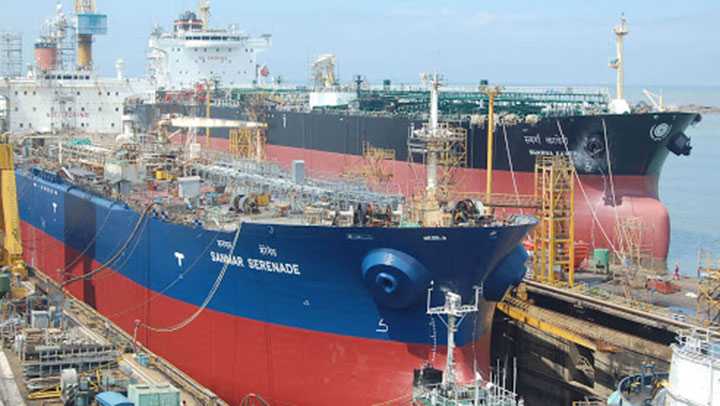
Sri Lanka’s Colombo Dockyard, a unit of Japan’s Onomichi Dockyard said it had lost a shipbuilding contract after the Indian Ocean Island’s government defaulted on its foreign debt.

Sri Lanka was downgraded to selective default by rating agencies after it stopped paying foreign debt of commercial and bi-lateral lenders.

Colombo Dockyard said a contract to build two Commissioning Support Operation Vessels (CSOVs) for Norway’s Edda Wind AS was “mutually cancelled” following the downgrade.

“This decision had to be arrived solely due to the prevailing unstable economic and financial situation of the country” Colombo Dockyard said in a stock exchange filing.

“Due to the poor credit rating of SD “Selective Default” and significant scarcity of foreign currency liquidity in the country, it was impossible to issue required guarantees continuously and to receive the milestone payments from the buyer.

Colombo Dockyard said in order to retain the contract efforts were taken by involving the top level government authorities, both local and international banks and financial institutions and relevant diplomatic missions.

However, it said, a solution in the near future to regain the contracts is not possible.

“Considering the facts that the projects are still at their infant stage while foreseeing the greater risks for CDPLC in pursuing the projects, CDPLC’s Board has decided that a mutual cancellation was the most prudent option at this point”

Despite the cancellation of the Norway contract, seven shipbuilding projects for existing European and Scandinavian clients are progressing without any interference.

“With a high demand of ship-repair, and afloat repairs utilizing main port facilities in Sri Lanka ensure its business stability,” Colombo Dockyard said.

Colombo Dockyard said, even though the cancellation has a modest negative impact on the 2022’s financial performance, CDPLS’s growth concern remains intact, and the Board of CDPLC is confident that CDPLC can successfully manage the current projects in hand together with ship repairs and focusing on new avenues.

Source: Economy Next

President’s Media Division chief speaks to protesters

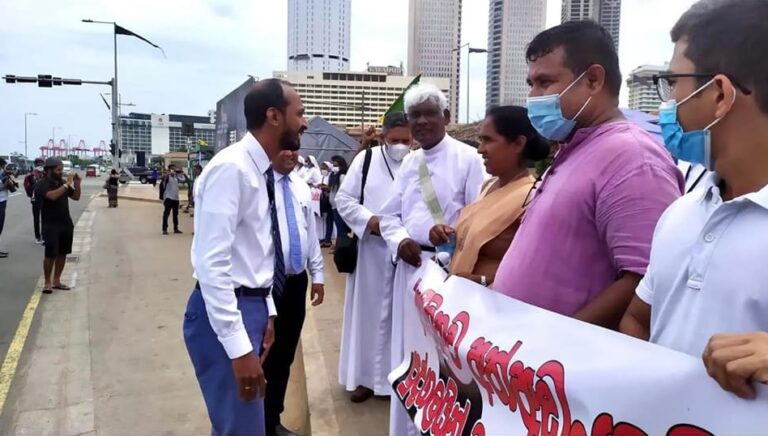
The head of the President’s Media Division had a brief discussion with protesters at Galle Face today, in a personal capacity.

The Director General of the President’s Media Division Dhanushka Ramanayake, who was appointed to the post just this week, met the protesters while on his way to the Presidential Secretariat.

Ramanayake was passing Galle Face when he recognised some of those protesting at the Galle Face protest site today.

He had stepped out of his vehicle and spoke to some of the protesters.

Ramanayake had made inquiries about the demands of the protesters, which included some clergy.

Dhanushka Ramanayake had attended some of the protests staged at Galle Face against former President Gotabaya Rajapaksa.

Source: Colombo Gazette