Oil and gas exploration delays in Mannar basin to cost SL over US $ 1bn in FDI

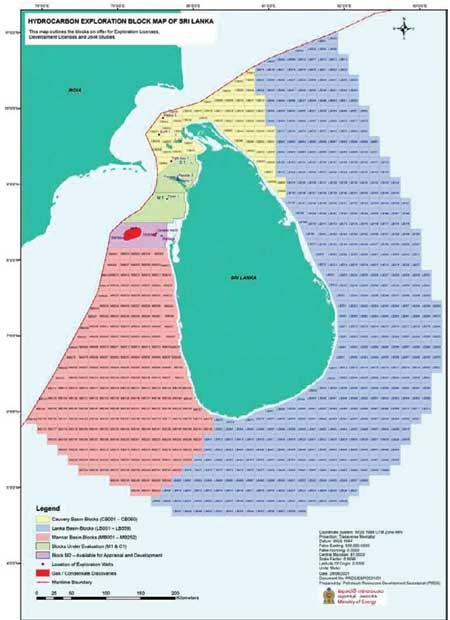
The long-delayed Mannar basin M2 block (exploration and production) tender and commencement of exploration work by the selected bidder for the M1 and C1 July 2019 tender could cost Sri Lanka over a billion dollars in foreign direct investment (FDI).

Moreover, the delays conducting a marketing campaign to attract further investment while the oil and gas prices have been at historically high levels could be foregoing
billions more.

Cairn India drilled three completed exploratory wells between 2011 and 2013. Two of the wells, Barracuda and Dorado, contain gas estimated to be 1.8 TCF and 300 BCF, respectively. While they were not commercially viable when the oil and gas prices collapsed in 2014, there is a strong possibility they will be at today’s prices. There are technologies that have reduced capital expenditure such as gas-to-wire power generation that help make the economic case for production of these
gas finds.

Cairn India has invested nearly US $ 200 million in Sri Lanka but it would require an investment of over US $ 1 billion to build production infrastructure. Therefore, it is vital to urgently attract as many investors as possible for exploration and production to maximise the benefits to Sri Lanka – especially in light of the global energy crisis and concomitant energy price increases, which have enhanced investor appetite.

While one must drill to ascertain the actual existence and quantity of resources, seismic studies estimate nine TCF of gas and several billion barrels of oil in the Mannar basin.

This could fulfil several decades of the country’s energy needs while potentially saving US $ 6-7 billion p.a. in expenditure on energy. It also opens opportunities for Sri Lanka to earn revenue through production sharing agreements with investors, who take 100 percent of the risk.

The industry, which holds the potential to contribute crucial foreign exchange, both in terms of investment and possible future revenue from production, has largely been ignored or mismanaged in recent times. It is imperative that Sri Lanka does not miss the small window of opportunity available with high prices and supply pressures, fast-disappearing internal combustion engines as well as the displacement of fossil fuels with the advent of ‘net zero’.

Source: Daily Mirror
‘Next breaking point would be messier’: Sri Lanka’s protesters retreating but demands for reforms remain

There is a sense of calm on the streets of Colombo this week. Looking at the business district along the scenic Galle Face promenade, once a magnificent venue for horse racing during British rule, one might think that order has returned to the island nation.

But just a few weeks ago, angry protesters stormed the presidential palace and his ocean-front office, demanding the resignation of then-president Gotabaya Rajapaksa. The latter fled to the Maldives on a military aircraft, before flying to Singapore and submitting his resignation letter.

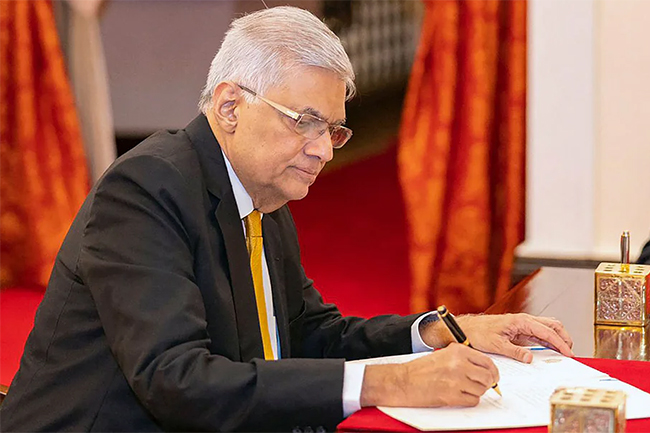
Today, the country has a new president named Ranil Wickremesinghe, who was sworn in last week after winning a parliamentary election.

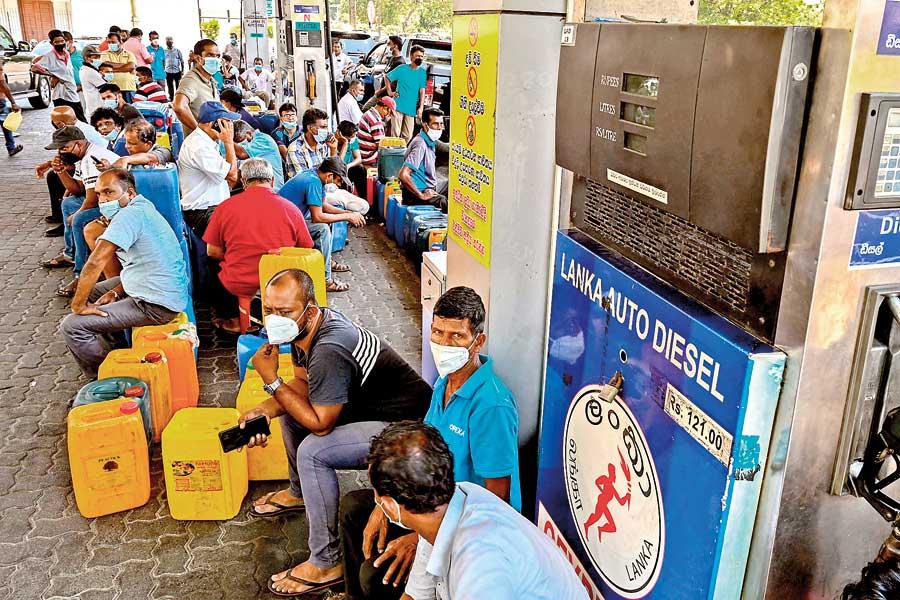
On the streets, most of the demonstrators have gone home. Yet underneath the calm surface, anger continues to bubble amid arrests of anti-government protesters and continued shortages of food and fuel.

“A great suppression is going on against all the protesters, all the organisers and everyone who supported and took part in the protests,” Buddhi Prabodha Karunaratne claimed.

He is a spokesperson for the Black Cap Movement, which forms part of the anti-government protests against the Rajapaksa regime.

Mr Karunaratne spoke to CNA through the phone from an undisclosed location. At least seven political activists have been arrested recently so far, according to local media.

On Thursday (Jul 28), the parliament extended the state of emergency initially declared on Jul 17 by then acting president Mr Wickremesinghe to restore order in the country.

The emergency laws give the police and the military powers to search, arrest and detain people for up to 72 hours before they are produced before a court, if they are believed to have committed or been involved with certain offences.

The recent arrests have instilled fear into many prominent protesters as they could be held in detention without the public knowing their whereabouts or well-being for days.

“It is scary … If they do it legally – like take a warrant, arrest them and bring them to court – then it’s completely fine. We can answer for the things we did,” Mr Karunaratne said, adding that there are fears that activists may be detained without the public being informed.

Most of the demonstrators have left the protest site in Galle Face in Colombo. Still, their demands for crisis management, reforms and general elections remain.

On Wednesday, Mr Wickremesinghe, the new president, acknowledged the protesters’ call for change while addressing the staff at his United National Party headquarters.

“The president mentioned that everyone is allowed to engage in peaceful protests according to the law of the country. Those who were involved in the struggle also have the same right and he saw the participation of young people with different talents,” the presidential office said in a statement on Jul 27.

However, with the state of emergency in effect, non-peaceful activities are not likely to be tolerated.

Source: Channel News Asia

Posted in Uncategorized

SLFP presents nine-point proposal for formation of National Government

The Sri Lanka Freedom Party submitted a nine-point proposal to President Ranil Wickremesinghe setting out the structure for a future National Government. The proposal was presented to the President during the meeting held yesterday with former President Maithripala Sirisena and several members of the SLFP at the Ministry of Finance.

Among the proposals set out, the SLFP has suggested the establishment of a Crisis Management Cabinet and the inclusion of all Members of Parliament in the attached committees for Ministries, as well as the appointment of an Advisory Committee consisting of experts and intellectuals to each Ministry. In a release, the party said it also presented its stance about the structure and responsibilities of the National Assembly to be established in the Parliament.

Representatives of the SLFP said the President appeared favourable to the proposals presented and he suggested that several rounds of discussions should take place in this regard. “The economic and political programs of a National Government were widely discussed, and an agreement is expected to be reached in the next few days,” the release said.

Accordingly, discussions are set to be held in the next few days between a group of representatives of the Sri Lanka Freedom Party and a group of Government representatives. This will be followed by another meeting between President Wickremesinghe and former President Maithripala Sirisena.

Source: Daily FT

Posted in Uncategorized

Talks with the IMF have gained progress-PMD

The President’s Media Division says discussions with the International Monetary Fund with the aim of obtaining support in order to alleviate the economic crisis in the country and establish positive economic practices have gained progress.

The PMD issuing a statement said in order to achieve progress with the IMF, a formal plan on debt sustainability must be presented.

The Media Division said progress of negotiations has stalled due to the recent political instability and the former government’s political hard-line that they will not work with the IMF.

The PMD added a government has been formed under President Ranil Wickremesinghe with complete political stability while discussions are underway to form an all-party government.

Accordingly, the PMD said it is the government’s stance that negotiations with the International Monetary Fund can be successfully completed while initial steps required can be taken to create financial stability.

Posted in Uncategorized

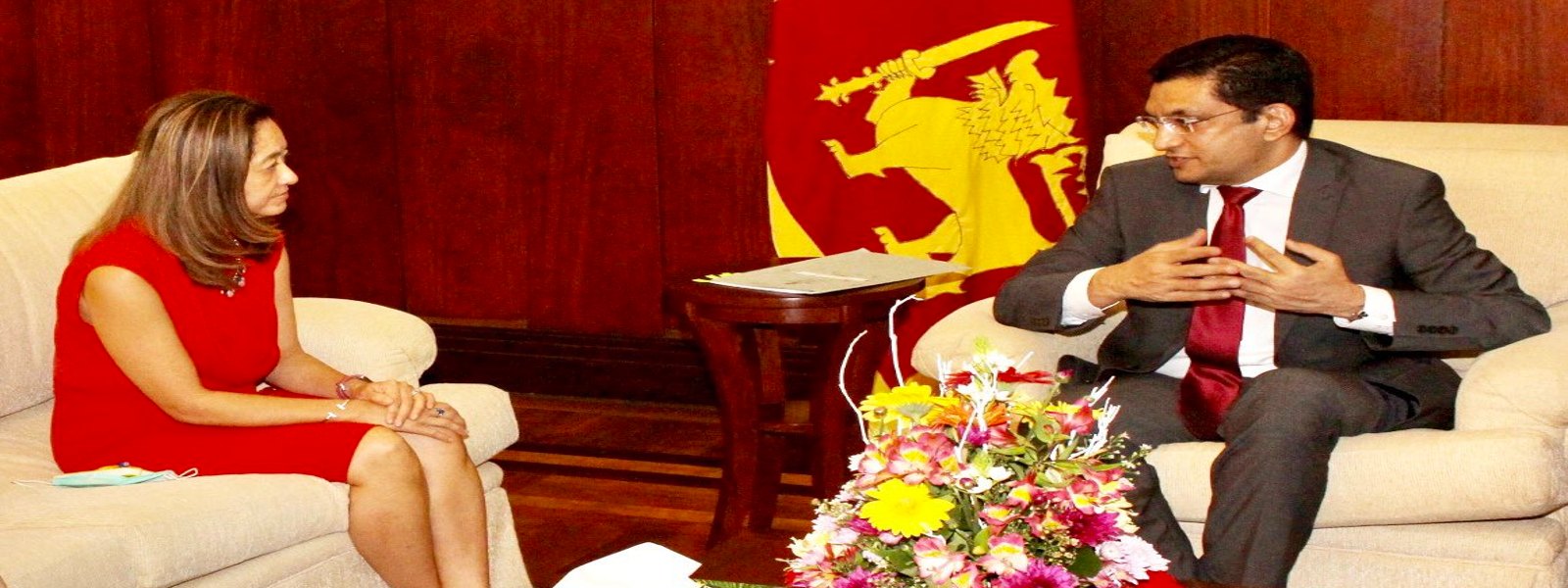
US Ambassador meets Foreign Minister

The US Ambassador to Sri Lanka Julie J. Chung met the Minister of Foreign Affairs Ali Sabry on Friday (29) for talks.

In a tweet, she said that the US looks forward to strengthening & growing bilateral relationships between Sri Lanka and the US, and the US shared commitments to democratic governance, investment & trade, as well as ongoing assistance to meet the urgent needs of the Sri Lankan people.

Posted in Uncategorized

Sri Lanka crisis raises alarm about further unrest in APAC region

Developments in Sri Lanka underline the risk of destabilising social and labour unrest throughout Asia-Pacific because of rising living costs impacting the region, S&P Global Market Intelligence said.

Countries with similarly weak economic fundamentals and/ or poor economic policies have reduced resilience to external shocks, such as the COVID-19 pandemic, the Russia-Ukraine conflict, high oil prices and inflation and therefore are more likely to experience sustained and politically de-stabilising social unrest. Pakistan, Nepal, Bangladesh and Laos, for example, are particularly vulnerable to similar crises, but to varying extremes.

Sri Lanka’s parliament on 20 July elected acting President and Prime Minister Ranil Wickremesinghe as the interim president to lead an all-party interim government. The government has since March 2022 faced mass public protests driven by the country’s economic collapse. The resultant shortages of essential commodities – including food, fuel, and medicine – along with extreme inflation (which IHS Markit expects to exceed 45% over 2022) triggered a near total erosion of public confidence in the government of former president Gotabaya Rajapaksa.

Sri Lanka’s new interim government will almost certainly seek to focus short-term efforts towards securing external funding – principally through the IMF and the other multilateral lenders but also from close strategic partners, including China and India – as well as concluding debt rescheduling negotiations. While IHS Markit assesses that an IMF programme is likely, disbursement of funds and therefore an improvement in domestic social conditions is unlikely till 2023. Beyond this, political instability is likely to continue, with parliamentary elections likely once economics stabilisation has taken place.

Sri Lanka’s economic weakness has been the primary driver of the country’s ongoing crisis. Foreign exchange reserves have decreased over the past three years, in part due to a decline in revenue triggered by fiscal policies under Rajapaksa’s government and its resistance to negotiating a bailout with the IMF. Tax revenue fell to 7.3% of GDP in the third quarter of 2021 versus 12.8% in the equivalent period of 2019, just before the government introduced a series of tax cuts.

External factors have also had a compounding effect, with the COVID-19 pandemic undermining the tourism sector, the third largest foreign currency earning sector in the country, and the Russia-Ukraine conflict driving already high food and fuel prices. With debt servicing payments upcoming, the government was forced to declare a moratorium on its external debt obligations in April 2022. The government has allowed the rupee to free float, causing a severe depreciation in the exchange rate, which is projected to depreciate 82.3% against the US dollar by end-2022, and exacerbating inflation caused by shortages of imported goods and global inflationary pressures.

Pakistan, the fragile external position, exacerbated by soaring global commodity prices, has already led to a rapid depletion of foreign exchange reserves, sharply rising inflation, and a sudden change of government in April 2022 with a strong possibility of snap elections in the next year. Recent deregulation of domestic fuel and electricity prices as part of IMF bailout conditions further elevate the risk of social and labour unrest in the next year.

While Bangladesh and Laos are vulnerable, they have mitigating factors that set them apart from Sri Lanka, Pakistan and Nepal. Bangladesh has strong foreign exchange reserves allowing it to better weather economic pressures and reduces the risk of mass anti-government unrest. In Laos, rising living costs and fuel shortages have led to anger against the government on social media but large-scale anti-government protests are unlikely due to the Lao People’s Revolutionary Party’s restrictive security regime.

Other countries in APAC are likely to be more resilient to government instability as rising inflation and living costs drive unrest. Protests for example are particularly likely in Indonesia, India, Thailand and the Philippines although we do not expect changes in government leaderships as a result. Labour unrest is also likely to be significant in South Korea, India, and Bangladesh, driving supply chain risks in their garments and electronics sectors, as well as to ports and domestic cargo industries.

Posted in Uncategorized

Why has Lankan President Wickremesinghe prorogued parliament? By P.K.Balachandran

Sri Lankan President Ranil Wickremesinghe has prorogued parliament till August 3. According to informed sources, the prorogation would enable him to reconstitute the various parliamentary committees and appoint suitable chairmen for them in the light of the new alignment of political forces in parliament after the exit of President Gotabaya Rajapaksa and Prime Minister Mahinda Rajapaksa and his own election as President.

The prorogation also enables him to formally address parliament as the new President of Sri Lanka. He would be delivering the equivalent of the “Throne Speech” in the UK parliament. The speech will have the mark of authority of the county’s President and also his view of the state of the country and its outlook for the future.

According to www.parliament.lk, the website of the parliament of Sri Lanka, prorogation is a temporary recess of parliament, which should not extend to a period of more than two months. However, such date for summoning parliament may be advanced by another Presidential Proclamation provided it is summoned for a date not less than three days from the date of such fresh proclamation.

Constitutional Provisions

During the prorogation, the Speaker continues to function and the Members retain their membership even though they do not attend parliament. The effect of a prorogation is to suspend all current business before the House. All proceedings pending at the time are quashed except impeachments. But they can be revived at the next session.

Paragraph (4) of Article 70 of the Constitution states: “All matters which having been duly brought before parliament, have not been disposed of at the time of the prorogation of parliament, may be proceeded with during the next session.”

At the beginning of a new session, all items of business which were in the Order Paper of Parliament need to be re-listed, if it is desired to continue with them.

Committees of Parliament

In terms of the Standing Orders of Parliament No. 114, the Committee of Selection has to be appointed and therefore, all the following Committees for Special Purposes cease to function during the recess or the prorogation of Parliament and all of them have to be re-constituted at the commencement of each session of Parliament except the Committee on High Posts, Sectoral Oversight Committees and Select Committees of Parliament as per provisions of Standing Order of Parliament Nos. 124(5), 111(2) and 109 respectively.

At the end of a prorogation, a new session begins and is ceremonially declared open by the President. He is empowered under the Constitution to make a Statement of Government Policy in parliament at the commencement of each Session of parliament and to preside at ceremonial sittings of parliament in terms of the provisions stipulated in Paragraph (2) of Article 33 of the Constitution.

Posted in Uncategorized

World Bank does not plan to offer new financing to Sri Lanka until an adequate macroeconomic policy framework is in place

The World Bank Group expressing deep concern about the dire economic situation and its impact on the people of Sri Lanka yesterday said it does not plan to offer new financing to Sri Lanka until an adequate macroeconomic policy framework is in place.

Issuing a statement, the World Bank Group said it is repurposing resources under existing loans in its portfolio to help alleviate severe shortages of essential items such as medicines, cooking gas, fertilizer, meals for school children and cash transfers for poor and vulnerable households.

To date, the World Bank has disbursed about US$160 million of these funds to meet urgent needs. In addition, other ongoing projects continue to support basic services, the delivery of medicine and medical supplies, school meals and tuition waivers.

“We are working closely with implementing agencies to establish robust controls and fiduciary oversight to ensure these resources reach the poorest and most vulnerable,” the global lender said.

“We will continue to monitor this closely. We are also coordinating closely with other development partners to maximize the impact of our support for the people of Sri Lanka.”

Until an adequate macroeconomic policy framework is in place, the World Bank does not plan to offer new financing to Sri Lanka, the statement affirmed.

“This requires deep structural reforms that focus on economic stabilization, and also on addressing the root structural causes that created this crisis to ensure that Sri Lanka’s future recovery and development is resilient and inclusive,” the World Bank Group said.

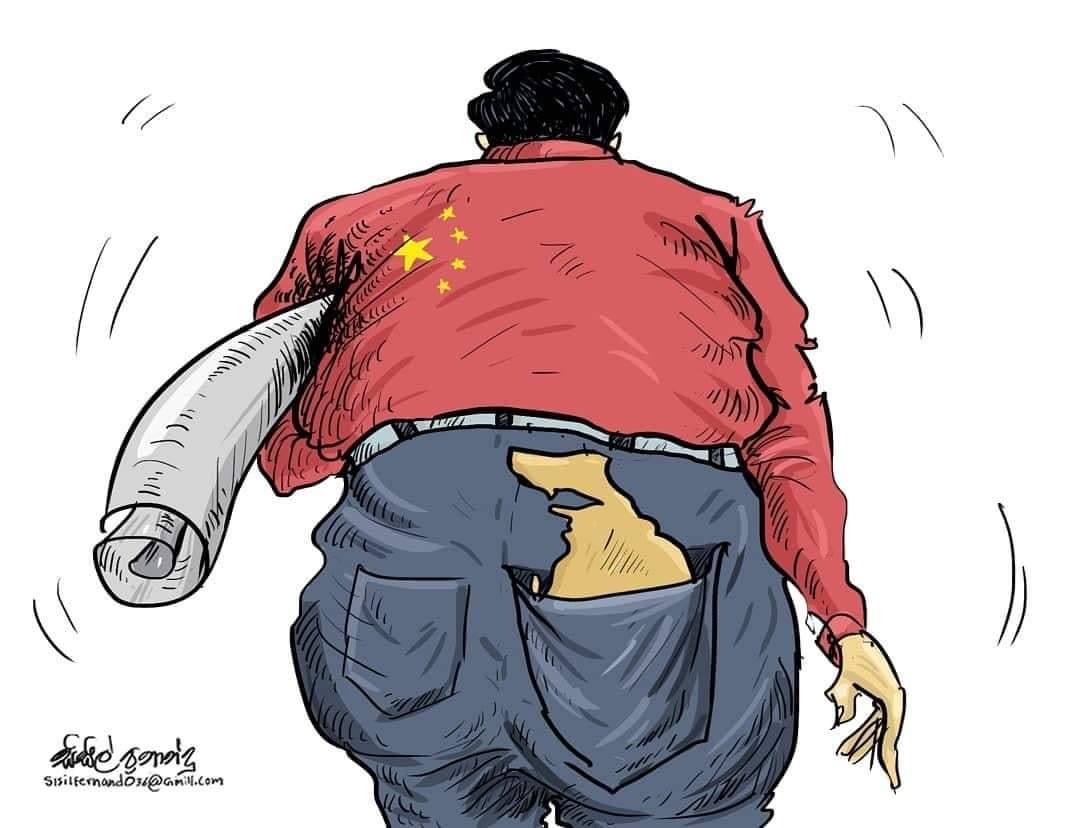
China says its massive loans, projects did not push Sri Lanka to bankruptcy

China on Thursday defended its massive infrastructure ventures and investments in crisis-hit Sri Lanka and said that they have “boosted” its economic development, amid criticism from the US of Beijing’s unproductive projects and opaque loan deals among the reasons for the country’s bankruptcy.

“The China-Sri Lanka practical cooperation has always been led by Sri Lanka with scientific planning and thorough verification with no strings attached,” Chinese Foreign Ministry spokesman Zhao Lijian told a media briefing here.

“Chinese projects have boosted Sri Lanka’s economic development, and brought tangible benefits to the Sri Lankan people,” he said while responding to a question on the criticism of China’s projects and policies towards Sri Lanka by the USAID administrator Samantha Power.

Speaking in New Delhi on Wednesday, Power said India reacted “really swiftly” with an absolutely critical set of measures to help Sri Lanka tide over its economic crisis, but calls to China to provide significant relief have gone unanswered.

Power said China became one of Sri Lanka’s “biggest creditors” offering often “opaque loan” deals at higher interest rates than other lenders and wondered whether Beijing would restructure the debt to help the island nation.

Refuting her allegations, Zhao said “there are multiple components to Sri Lanka’s foreign debt, where China-related debts take far less share than the international capital market and multilateral development banks.”

“Besides what China provides for Sri Lanka almost preferential loans with low-interest rates and long terms, which have played a positive part in improving Sri Lanka’s infrastructure and livelihood,” he said.

China’s unproductive projects in Sri Lanka, including the Hambantota port, which Beijing took over on a 99-year lease as a debt swap, has come under sharp criticism.

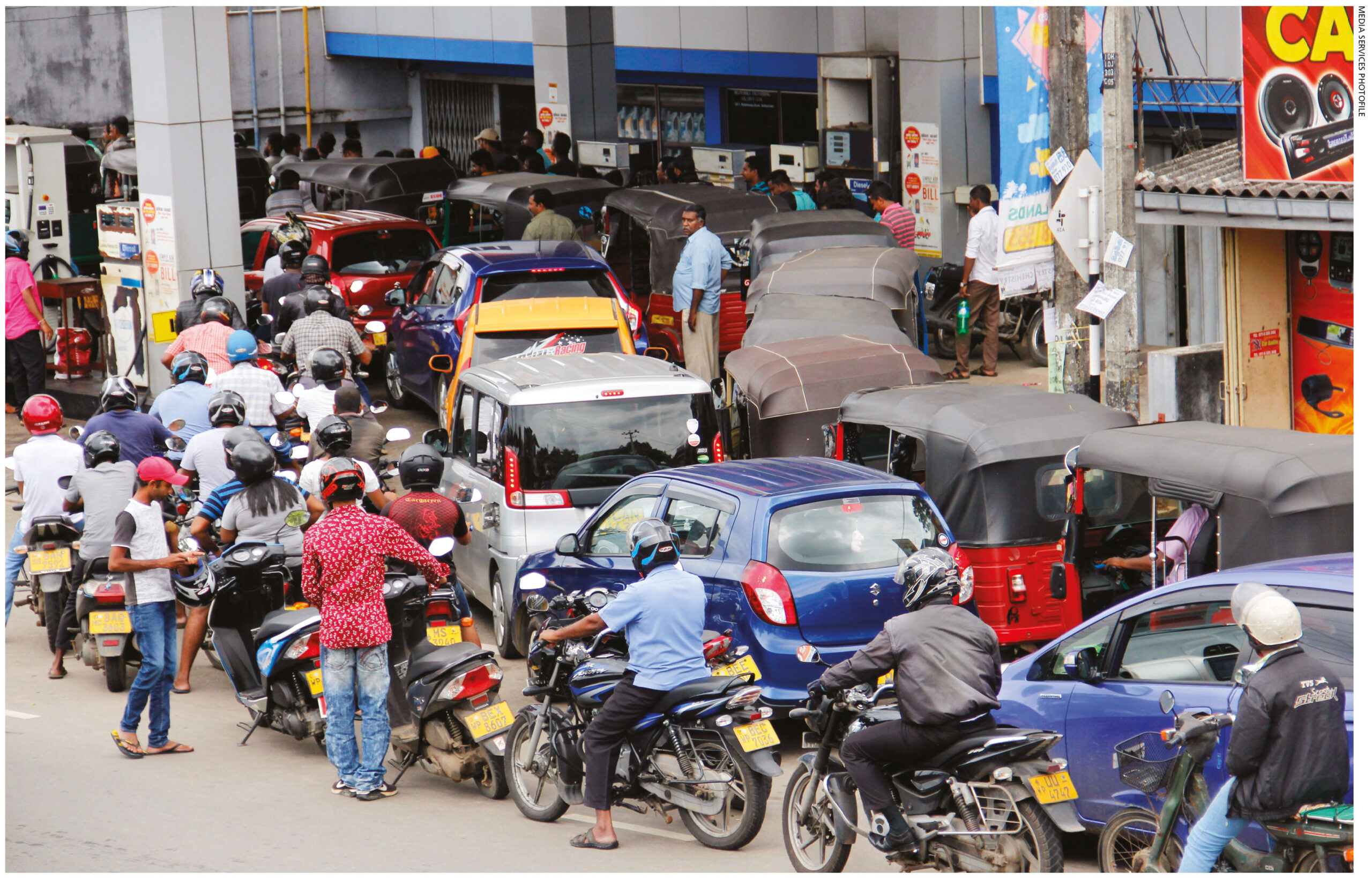
The unprecedented economic crisis faced by Sri Lanka has led to severe shortages of fuel, cooking gas and medicine and long lines for essential supplies, which led to massive anti-government protests and the ouster of President Gotabaya Rajapaksa this month.

China, which accounts for 10 per cent of Sri Lanka’s debt, is reported to have resisted offering a debt cut.

He also sought to blame the US policies including the interest rate hikes, unilateral sanctions and massive stimulus policies which had seriously impacted many developing countries like Sri Lanka.

“I want to stress that the global economic and financial markets have taken a heavy toll as the US’s recent sudden interest rate hikes and balance sheet reduction has siphoned off dollars more rapidly, reverse from the long-running quantitative easing policy and irresponsible massive stimulus,” he said.

Without referring to the Russia-Ukraine war, Zhao also blamed the US sanctions.

“The US’s unilateral sanctions and tariff barriers have undermined the security of industrial chains and have worsened the price surge of energy, food and other commodities. This has further aggravated the financial and economic situation of many developing countries,including Sri Lanka,” he said.

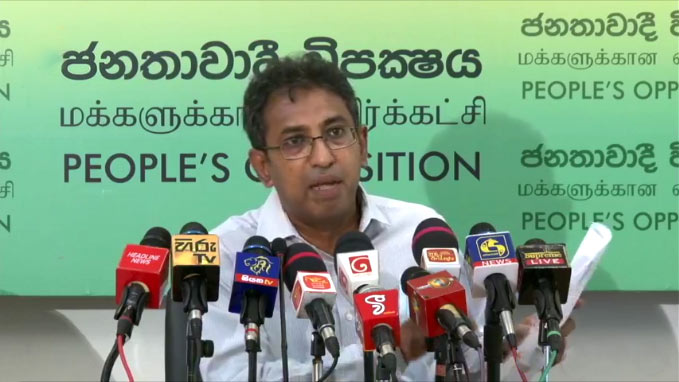
SJB MP Dr. Harsha de Silva stresses need for all party government

While calling for an all party or multi party government, Samagi Jana Balawegaya (SJB) MP Dr.Harsha de Silva today said Sri Lanka’ will slide further as a nation.

“I have urged from day one that we must establish an all or multi party government. My reasoning has always been that without broad support we will NOT be able to undertake the deep and comprehensive structural economic reforms needed to get us out of this mess. Today even the World Bank had said without such reform no money will come. That is true. But even before that without reform we cannot get IMF agreement nor deal with our creditors Dr. De Silva said when Daily Mirror inquired from him on the reports which said he is to be appointed as the minister of finance.

“Most politicians either don’t understand the depth of the economic crisis we are in or they are not interested in resolving the crisis. It is my view that unless such a government is setup and reforms commenced we will slide further as a nation and get closer to an implosion. Of course such a government must be interim, short term. The current Parliament does not reflect the peoples mandate. It is completely distorted. Thus if such a multi party government is to established then we must agree to elections at the earliest possible time,” he added.

Posted in Uncategorized