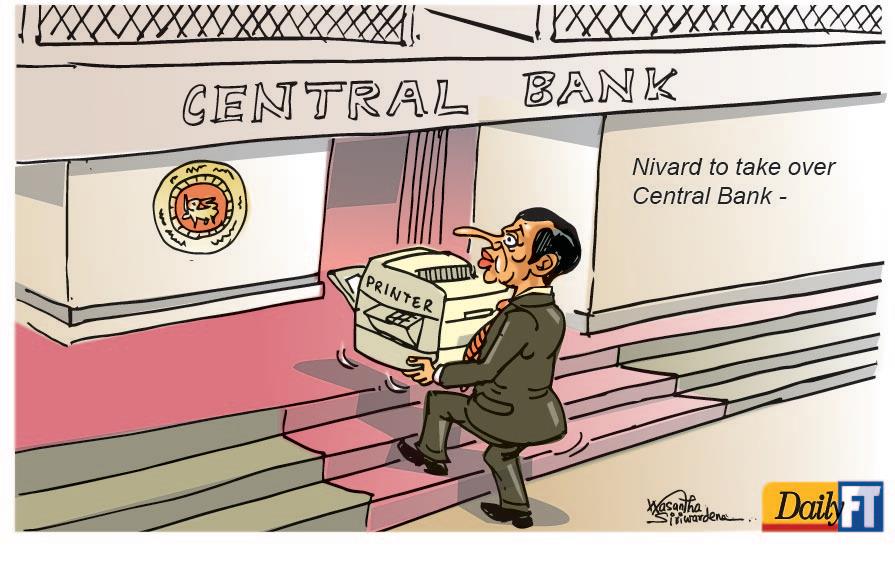
The vote on the resolution on Sri Lanka in the United Nations Human Rights Council in Geneva will be a true test of the decades-old UNP proposition that the superior strength of President Ranil Wickremesinghe is that he can count on widespread international support. Ranil and his fans seem to believe that external support for him is axiomatic to the degree that unelected and devoid of a popular mandate though he is, he can do and attempt anything and everything autocratic and repressive locally, and yet be endorsed and supported globally.
The lawyer in President Ranil Wickremesinghe kicked-in on the High Security Zones ‘surge’ around the same time he figured that the Supreme Court may kick it out. His retreat on this issue is welcome but the damage has been done: intentionality has been revealed. He revoked it because he didn’t think he could get away with it legally.
To say he signed off on the HSZ gazette because he was in haste to emplane is silly, because as an experienced Cabinet Minister and lawyer, his first question would have been “what does the A-G say?” and if the answer was that it had not yet been shown to the Attorney-General, he should have tossed back the document insisting that it be done before sending it to him for signature, or should await his return.
The Securocrats
The Sunday papers named the initiators of the HSZ declaration and in so doing, revealed the site of the totalitarian dark heart of the regime: “Public Security Minister Alles and Defence Secretary Gunaratna prepared the document without consulting the Attorney General.”
The HSZ move confirmed the emphasis of former UN High Commissioner for Human Rights Michelle Bachelet on the danger of ongoing militarisation in Sri Lanka which she continued to track through the Ranil Wickremesinghe incumbency in her final report. Militarisation continues to figure in the draft UNHRC Resolution.
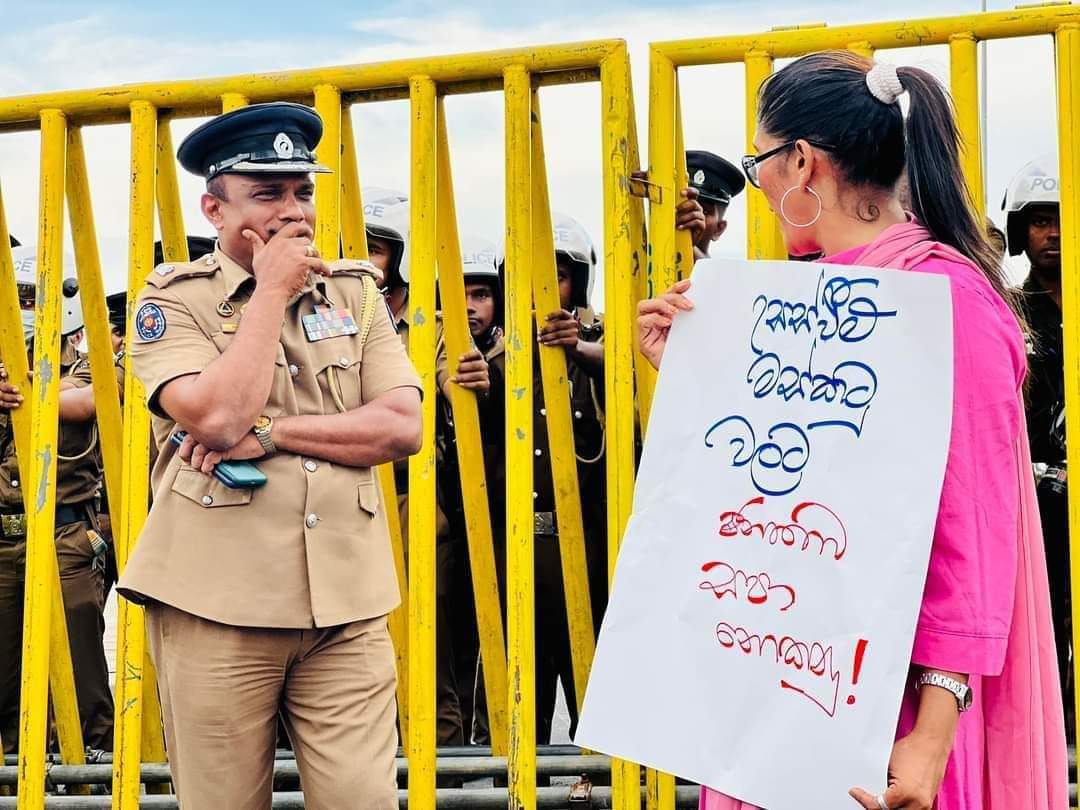
One would have thought that the regime would have been more careful with the UNHRC vote in the offing, but the arrogant folly of the two repressive centres, the Ministry of Defence and of Public Security, was manifested in the timing of the HSZ move, coming on the heels of the detention under the Prevention of Terrorism Act (PTA) of university student leader Wasantha Mudalige, when no act of terrorism had been committed anywhere since Easter Sunday 2019. The revocation of permission granted for an IUSF-trade union rally in Kiribathgoda, 4 October and the dispersal of the student marchers by water-cannon, was just days before the Geneva vote.
Shavendra Silva’s strategy and tactics
There are two key texts which mark its present stage of militarisation and militarism. One is not in the public domain, the other is. The text which is not (yet) publicly known is the report of the panel of retired military brass headed by Admiral Wasantha Karannagoda, on possible lapses, mainly on the part of General Shavendra Silva, in the maintenance and/or restoration of security during the Aragalaya which ousted President Gotabaya.
How much of President Ranil Wickremesinghe’s repressive agenda derives from or corresponds to the contents and recommendations of the report? The report may serve as a doctrinal policy document of the ex-military brass which constituted the real nucleus of the Gotabaya Rajapaksa administration and is now one leg of the bipod on which the Ranil presidency rests (the other being the Rajapaksas’ SLPP).
The critique of General Shavendra Silva derives from two quarters: the Rajapaksa cartel and its SLPP barons who argue that he should have cracked down bloodily on the Aragalaya but didn’t, and the ex-military brass including the current securocracy, which also thinks that he should have opened fire on the protestors, but avoided giving that order or impeded it.
Shooting into unarmed crowds would have fractured the ranks of the armed forces—a fissure had probably already opened with the fertiliser disaster—resulting in the possibility of a significant percentage joining the Aragalaya with or without weapons in hand. This would have turned the Aragalaya into what it was not, though the SLPP and Ranil say it was: a violent rebellion.
The SLPP and the ex-military hawks wanted to give the Aragalaya the Rathupaswela treatment to save Rajapaksa-rule. Given the public retaliation on 9 May in Colombo and in the provinces after the pro-Rajapaksa attack on GotaGoGama and MynahGoGama, any deaths by Police, STF, military or security contractor gunfire on the most decisive day 9 July, with almost a million people marching into Colombo, and corporate establishments, Lotus Tower, Port City and all centres of state power would have been on fire as darkness fell. The night of 9 May outside Temple Trees and in the provinces would have been replayed citywide and even island-wide. It would have been a socioeconomic (not ethnic/ethno-religious) July ‘83.
Gen. Shavendra Silva did the right thing because he did the smart thing. He (a) protected the unity of the armed forces and (b) preserved its rear base of social support, while (c) remotely regulating the Aragalaya, managing its parameters by not provoking it; keeping it this side of a violent revolt.
What are the threats that Kamal Gunaratna is talking about “that may impact the implied economic revival”?” Strikes? Pickets? In short, rights enshrined in the Constitution and labour laws? Who gave him the mandate and what credentials does he have to assess what is and isn’t important to “the effective functioning of Sri Lankan society”?
Generally-speaking General
I referred earlier to two texts, one of which is in the public domain. This is the address of (retired) General Kamal Gunaratne, Secretary Ministry of Defence, to the 15th International Research Conference of the Kotelawela Defence University (KDU), an establishment that has achieved commendable academic recognition in a fairly short period.
The speech shows firstly, what Kamal Gunaratne thinks, which counts only because he heads the massively funded Ministry of Defence which controls over quarter of a million men under arms. Secondly, the speech shows who and what Kamal Gunaratne thinks he is.
“…As per my belief, given the importance of certain sectors to the effective functioning of the Sri Lankan society, the said need for a deeper conceptual understanding of the threats that may impact the implied economic revival and sustainability in all aspects…” (General Sir John Kotelawala Defence University 15th International Research Conference – YouTube)
What are the threats that Kamal Gunaratna is talking about “that may impact the implied economic revival”?” Strikes? Pickets? In short, rights enshrined in the Constitution and labour laws? Who gave him the mandate and what credentials does he have to assess what is and isn’t important to “the effective functioning of Sri Lankan society”?
He seems to be oblivious to the fact that by all expert assessments, the ‘effective functioning’ of ‘certain sectors’ which are important, such as education and higher education, is impeded by the starvation of resources partly due to the hypertrophy of defence expenditure at a time of peace. A swollen defence expenditure is classified by professional economists here and overseas as a ‘threat’ to the ‘implied economic revival and sustainability’.
“Further, he [the Chief Guest, General Kamal Gunaratne] opined that from a strategic standpoint, keeping the past and also most recent lessons learnt in mind, with the new found leadership of the present government, Sri Lanka (SL) should call for a national determination where all sectors of SL society including civil organisations, security institutions, political entities, and business associations come together to discuss fundamental issues such as national identity, national reconciliation, transitional justice, governance structure and economic revival.” “This is a fundamental step towards building consensus and re-legitimising state institutions and private organisations in the country towards a common goal”, he added.” (15th International Research Conference General Sir John Kotelawala Defence University 29th – 30th September 2022 – KDU)
“…With the new found leadership of the present government, Sri Lanka should call…”? It is not part of the job description of Kamal Gunaratne or anyone who occupies the post of the Secretary/Ministry of Defence to pronounce publicly on what Sri Lanka “should” or should not do.
Nor it is within his remit or that of anyone who occupies his post, to publicly prescribe what is or is not “a fundamental step towards building consensus and re-legitimising state institutions and private organisations in the country towards a common goal”. Whether or not “state institutions and private organisations in the country” require “re-legitimising” is also not within his competence to pronounce upon.
“…Furthermore, giving high priority to giving solutions to the country’s most pressing matters of concern to improve the world’s image on the Sri Lankan society, the Sri Lankan government must take every step to recover high priority initiatives in the fields of the economy, institution-building, and political reform.”
General Sir John Kotelawala Defence University 15th International Research Conference – YouTube
“The Sri Lankan Government must take every step…” Who or what gives Kamal Gunaratne as Secretary/MoD the right to tell the Sri Lankan Government publicly, what it “must” do and its “high” priorities should be?
How can he as Secretary to the MoD, invade the realm of foreign relations and diplomacy – “to improve the world’s image on the Sri Lankan society” (sic)—especially when his counterpart in the Foreign Ministry is a far more educated and experienced official than he could ever aspire to be?
General Kamal Gunaratne’s speech could not have been made by someone occupying the same post, whatever his/her military credentials, anywhere in the world, from the USA to China, without losing his/her job.
What the speech shows is that Kamal Gunaratna thinks that as the top bureaucrat of the MoD, and with a war record, he has the stewardship of the nation and custodianship of the national policy direction. He doesn’t. As Shakespeare’s Julius Caesar reflected, “Such men are dangerous.” Of course, unlike the lean and hungry Cassius, it is not that Kamal Gunaratna “thinks too much”; it is that he thinks too much of himself.
He is displaying the same delusion that Gotabaya had, fed by the same generation of retired fellow-officers, many of whom went to the same schools and some of whom served in the same regiment.
Gotabaya won an election and therefore had a legitimate right to publicly articulate his delusions. When he translated them into policy practice though, the people who elected him threw him out. But who elected Kamal Gunaratne?
Whatever he thinks he is running for, he must surely know that after the Gotabaya trauma, there’s no way the voters will opt for yet another Rajarata Rifles-Gajaba Regiment-Anandian with zero political experience, as the country’s leader. If they want someone with political experience and the most impressive military record of all, there’s Field Marshal Sarath Fonseka. The combination of Sajith Premadasa and Sarath Fonseka gives the SJB a broad-spectrum national electoral appeal that no other political party has. But maybe General Kamal Gunaratne isn’t running on the electoral track.
General Kamal Gunaratne already has a target painted on his back internationally. If he makes himself a hate-symbol locally, he’ll become a target homed-in on by two legal laser range-finder beams, international and national, not just one.
The real Ranil-Rajapaksa relationship
President Ranil Wickremesinghe is no liberal who has fallen into the clutches of the illiberal Rajapaksas and their SLPP and needs rescue.
Those who’ve known his track record as a cabinet minister from 1977 would never confuse him for a ‘liberal’ in the American sense or even in the British. His tyrannical party Constitution and death-grip on the UNP prove he is no democrat either. Ranil is no liberal-democrat and has never been one.
There has also been a functional political alliance between Ranil Wickremesinghe and the Rajapaksas, first manifested in 2011, in President MR’s notorious ‘asphalt-paving’ and Police road-blocks which cut-off access to the UNP headquarters Sri Kotha during an inner-party reformist upsurge in support of Karu Jayasuriya and Sajith Premadasa.
True, Gotabaya Rajapaksa made Ranil Wickremesinghe the Prime Minister in 2022, and Mahinda and Basil Rajapaksa made him the President by swinging the parliamentary vote for him while backstabbing Mahinda’s righthand man for over a decade, Dullas Alahapperuma and bypassing SLPP chairman G.L. Peiris. But Ranil Wickremesinghe helped Gotabaya Rajapaksa be elected President in 2019, and also helped secure the SLPP a two-thirds majority in Parliament in 2020.
When Gotabaya Rajapaksa’s candidacy had been announced at a public ceremony and he had already done a lap or two of his campaign, UNP leader Ranil Wickremesinghe was refusing to do what his uncle J.R. Jayewardene had done in similar circumstances against Madam Sirimavo Bandaranaike in 1988: unleash a populist Premadasa, hand over all power over the campaign and stay out of the way.
When Ranil reluctantly conceded the candidacy to Sajith Premadasa, he simultaneously passed a resolution that allowed him to remain as UNP leader for six years more. He kept the campaign divided between Siri Kotha and Sajith’s campaign headquarters; blocked Sajith’s policy manifesto which had been drafted by 50 PhDs under Sajith’s chairmanship over months and substituted a manifesto infused with neoliberalism through his minions; cluttered Sajith’s stage by getting on it as J.R. Jayewardene never did Ranasinghe Premadasa’s in 1988; and declared that he would be PM if Sajith were elected President—a ghastly prospect that few voters wanted to risk. In short he actively sabotaged Sajith’s, i.e., the UNP’s Presidential bid of 2019.
Gen. Shavendra Silva did the right thing because he did the smart thing. He (a) protected the unity of the armed forces and (b) preserved its rear base of social support, while (c) remotely regulating the Aragalaya, managing its parameters by not provoking it; keeping it this side of a violent revolt
Despite this, Sajith fell short of the 50% mark by only 8%. Had he made it, there would have been no mega tax cuts, insane overnight ban on fertiliser or Dhammika Paniya. Instead, the airport would’ve been shut, masks ordered and worn early, and vaccines ordered early. We simply would not have been in the abyss in which we find ourselves today. Ranil helped trip us into it.
Even if Sajith had got 45%-47% instead of the impressive 42% he clocked, that would have meant that Gotabaya would have just scraped through, and the SLPP wouldn’t have won a two-thirds majority at the Parliamentary election of 2020, which in turn permitted the hyper-centralist 20th Amendment. Moreover, had Ranil transferred UNP leadership to Sajith after his creditable November 2019 performance, the SLPP’s two-thirds majority could have been thwarted.
Ranil’s political behaviour of active delay, dissonance and disruption guaranteed Gotabaya’s victory or at least his convincing margin of victory, and the two-thirds majority at the parliamentary election for the Pohottuwa, downstream.
By his calculated sins of omission and commission, Ranil proved that he preferred Gota over Sajith (the UNP candidate) as President in November 2019.
In 2020 he preferred the UNP to be run into the ground rather than give his leadership over to Sajith, the young man who had the guts to go up against Gota at his zenith.
No wonder then that Gota chose Ranil over Sajith as PM, and the Rajapaksa-run SLPP chose Ranil over Dullas as President.
In consequence, Sri Lanka is in the most grotesquely distorted place it has ever been in 75 years. Hard power is shared by President Ranil Wickremesinghe and Secretary/Defence (retd) General Kamal Gunaratne, neither of whom are elected. We are effectively ruled by a duumvirate with no popular mandate. The core of the power-structure has a vacuum where popular consent and legitimacy should be.
Source:FT.LK