Parliament to debate attack on protesters

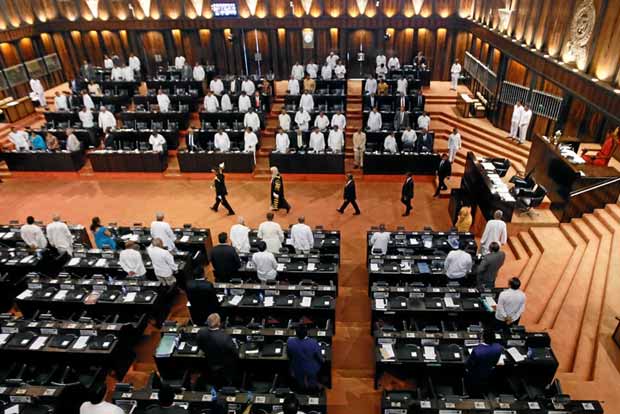
The parliamentary debate regarding the incident of attacking protesters and removing them from the protest grounds is scheduled to be held the day after tomorrow (July 27).

The Chief Opposition Whip, MP Lakshman Kiriella, had requested Prime Minister Dinesh Gunawardena for a parliamentary debate on the incident.

Although a request had been made to hold the debate today (25), due to the impact of the fuel crisis in convening parliament today and calling MPs, the government has decided to hold the debate on the date of the next parliamentary session.

Posted in Uncategorized

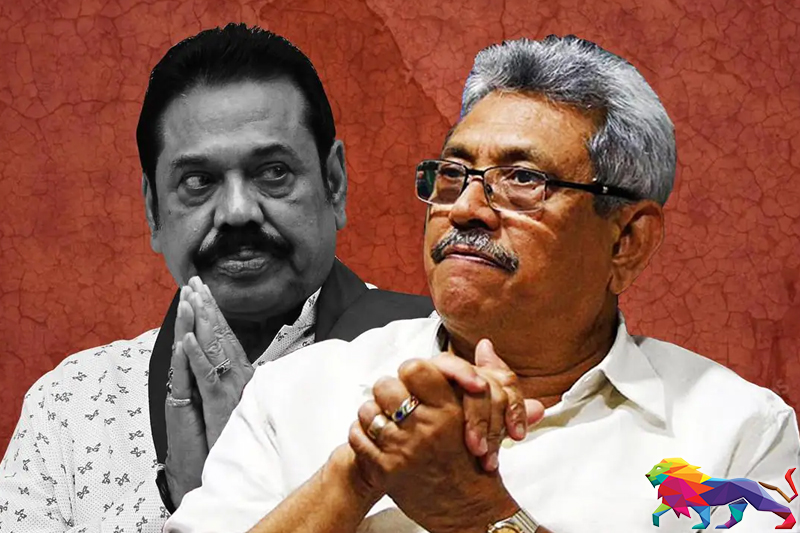
Rights group seeks arrest of Gotabaya Rajapaksa in Singapore

A rights group documenting alleged abuses in Sri Lanka has filed a criminal complaint with Singapore’s attorney general, seeking the arrest of former President Gotabaya Rajapaksa for his role in the South Asian nation’s decades-long civil war.

The International Truth and Justice Project (ITJP) said Rajapaksa committed grave breaches of the Geneva Conventions during the civil war in 2009 when he was country’s defence chief, according to a copy of the complaint seen by Reuters.

“The criminal complaint that has been filed is (based on) verifiable information on both the crimes that have been committed, but also on evidence really linking the individual in question, who is now in Singapore,” Alexandra Lily Kather, one of the lawyers that drafted the complaint, told Reuters by telephone from Berlin.

“Singapore really has a unique opportunity with this complaint, with its own law and with its own policy, to speak truth to power.”

Rajapaksa could not be reached for comment through Sri Lanka’s High Commission in Singapore. He has previously strenuously denied allegations he was responsible for rights abuses during the war.

In response to questions from Reuters, a spokesperson for the Attorney-General’s Chambers said it had received a letter from the ITJP on July 23.

“We are not able to comment further on this matter,” the spokesperson said.

The country’s foreign ministry has said Rajapaksa entered the Southeast Asian city-state on a private visit and had not sought or been granted asylum.

Shubhankar Dam, a professor at the University of Portsmouth School of Law in Britain, who has taught in Singapore, said while its courts were able to try alleged war crimes, genocide, and torture, it has repeatedly stated that such jurisdiction should only be invoked as a last resort.

“While neutrality is not officially enshrined in Singapore’s foreign policy, it has long cultivated a form of even-handedness,” Dam said.

“Any decision to prosecute a former foreign head of state has to be balanced against its foreign policy objectives.”

Sri Lanka ended a 25-year civil war between separatist insurgents from the ethnic Tamil minority and government forces in 2009. Rights groups accused both sides of abuses during the war.

The ITJP assisted in two civil lawsuits against Rajapaksa, proceedings for one of which were served in a California parking lot in 2019. Rajapaksa was a U.S. citizen at the time.

Both cases were withdrawn after Rajapaksa was granted diplomatic immunity upon becoming president later that year.

Posted in Uncategorized

Schools in South to reopen from 25th

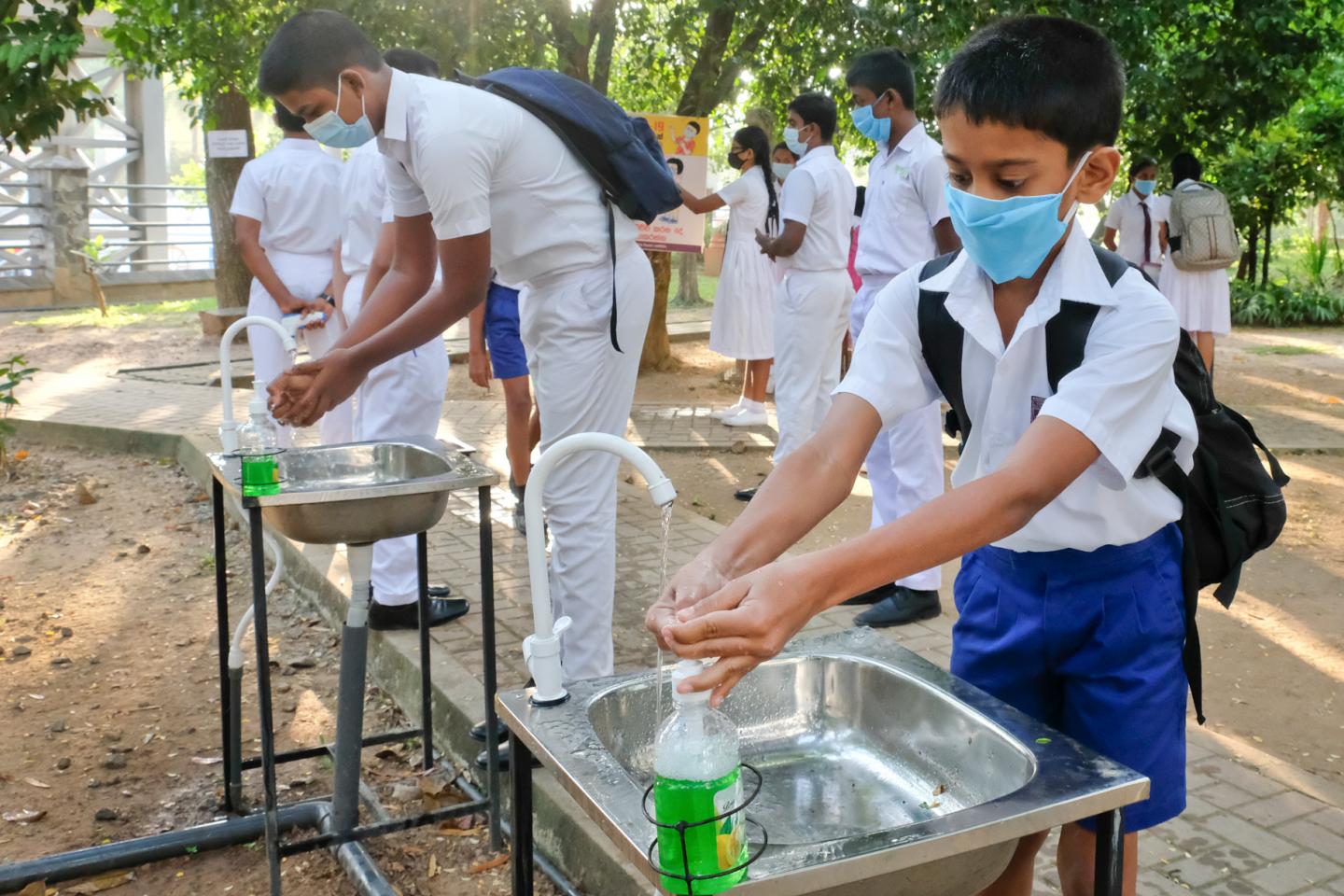
It has been decided to conduct academic activities at all schools belonging to the Southern Provincial Council from tomorrow (25) until 29th of July, on all five days of the week.

The decision has been reached during a meeting held with the participation of the Southern Province education authorities.

However, if principals, teachers and non-academic staff members are unable to attend due to transportation difficulties, prior approval must be obtained.

The Department of Education of the Southern Province stated that special holidays will be given for such approved days so that personal holidays of teachers will not be affected.

22nd Amendment to the Constitution will be presented in Parliament on the 27th

Minister of Justice, Prison Affairs and Constitutional Reforms said that the 22nd constitutional amendment bill, which was prepared by repealing the 20th amendment and incorporating the positive clauses of the 19th amendment, will be submitted to the parliament on the 27th, Wednesday.

Thus, according to parliamentary standing orders, the bill can be debated one week after the first reading if it is not challenged before the Supreme Court.

The cabinet has approved the 22nd constitutional amendment bill. After that, the bill was published in a gazette on 24th June.

The ability of a person holding dual citizenship to be involved in governance activities has been blocked by this constitutional amendment bill. The amendment also states that a Sri Lankan citizen who is a citizen of another country should not be elected to the Parliament by popular vote.

It also states that if the Prime Minister resigns by sending a letter to the President with his own signature or if he is no longer a Member of Parliament, he is not eligible to hold his office.

The 22nd Amendment bill states that the Prime Minister will hold his position as long as the Cabinet remains active.

It also states that if the President is of the opinion that Parliament has lost confidence in the Prime Minister during the period starting from the effective date of this Act and when the Parliament is to be dissolved, the Prime Minister can be removed from office.

The 22nd Amendment states that the President should not make any appointment or assign or change subjects and tasks without consulting the Prime Minister.

It is stated that a minister can be removed by a letter sent under the signature of the President on the advice of the Prime Minister and any minister can resign from office by a letter with his signature sent to the President.

Chief Organizer of the ruling party, Minister Prasanna Ranatunga, has said that President Ranil Wickramasinghe has instructed to submit the 22nd constitutional amendment to Parliament.

Accordingly, he said that the draft bill will be included in the parliamentary agenda.

Posted in Uncategorized

Kurundumale archaeological site: Court reverses decision; conservation to continue

The Archaeology Department is continuing its work at the temple ruins in Kurundumale in Mullaitivu following a reversal of a Court decision issued last week, The Sunday Morning learns.

“The Judge reversed his judgement as he saw that we were only doing conservation activities and nothing more. He came with us to the site and observed that there were no new construction activities. He understood that we were only doing preservation work,” Archaeological Department Director General Anura Manatunga told The Sunday Morning.

Earlier last week the Mullaitivu Magistrate’s Court ordered the suspension of any new construction activities at the Kurundumale ancient holy site. The location holds remnants of a Buddhist shrine as well as those of a Hindu kovil.

The conservation work at the site has drawn criticism from local residents and activists, who claim that Hindu devotees have been restricted from entering the site.

Meanwhile, Tamil National Alliance (TNA) MP M.A. Sumanthiran told The Sunday Morning that he had filed a Fundamental Rights (FR) petition at the Supreme Court over the prevention of Tamil devotees worshipping at the location as well as the damage being done to the Hindu kovil.

“The Hindu worshippers had a trident, which has been broken and thrown away somewhere. In addition, the Hindu worshippers have been prevented from going there. I’m handling this FR case and it is to be taken up next week. Now the worshippers have been allowed in after the case was filed, but we may request that the trident be replaced as well,” Sumanthiran said.

Several civil society groups raised concerns about a social media video released by a young Buddhist monk last week critiquing the Court’s decision to halt construction activities on the controversial site.

Posted in Uncategorized

Tamil Nadu sends another shipment of relief goods to Sri Lanka

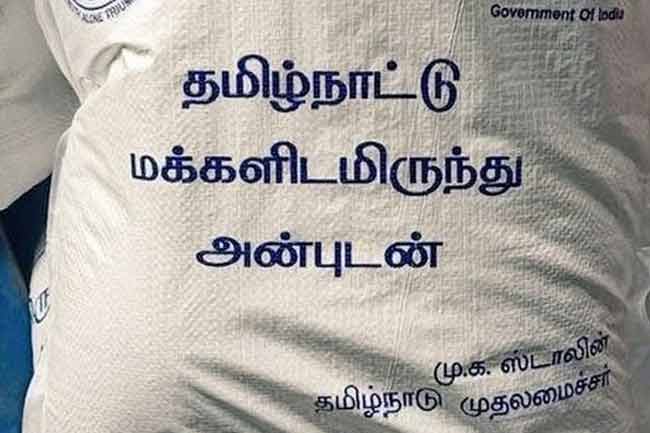
The Tamil Nadu government dispatched the third tranche of relief material to crisis-hit Sri Lanka. With this, the total aid from MK Stalin’s government has crossed 40,000 tonnes of relief material.

Stalin had earlier moved a resolution in the Tamil Nadu Assembly to send humanitarian aid to Sri Lanka. The first tranche was sent in May and the second in June.

DMK MP Kanimozhi flagged off the third tranche on Saturday, comprising of 16,595 tonnes of the items, through the sea route from the VOC Port in Tuticorin in the presence of state ministers.

An official release in Chennai recalled Stalin earlier moving the Assembly resolution to provide 40,000 tonnes of rice, 500 tonnes of milk powder and 102 tonnes life-saving drugs to Sri Lanka. It said rfforts were made to identify the type of rice consumed by the Lankan people and the same was procured from 85 rice mills in the state.

With Saturday’s shipment, the state has sent 40,000 tonnes of rice, 500 tonnes of milk powder and 102 tonnes of life-saving drugs, with the government allocating a total of Rs 196.83 crore towards this exercise, including cost of transportation by ships.

Of this, Rs 8.22 crore was allocated from the contributions received to the Chief Minister’s Public Relief Fund and the rest was state allocation, it added.

Sri Lanka has been experiencing its worst economic crisis in the country’s history. The acute foreign exchange crisis means the country cannot import even essentials, leading to acute shortage of several essentials such as foodstuff, cooking gas, vehicular fuel, medicines, etc. As there is acute shortage of items, prices have also skyrocketed in recent months.

The Union government has so far sent $3.8 billion-worth of relief material to Sri Lanka since the beginning of the current crisis. India has sent fuel shipments, foodstuff, medicines, etc. to Sri Lanka.

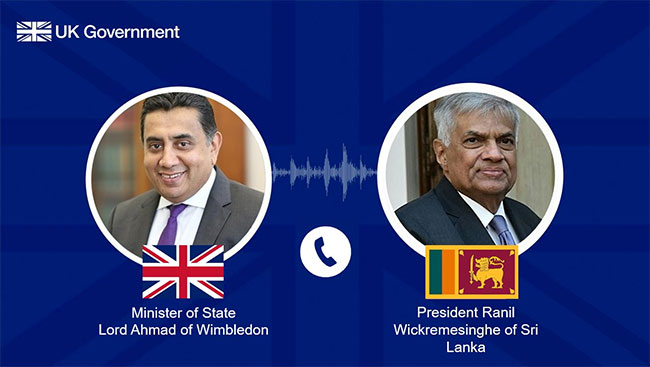
UK Minister calls Sri Lankan President to discuss security and economic situation in Sri Lanka

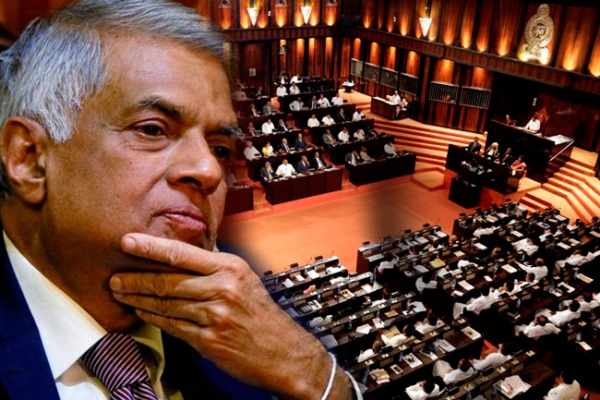
UK’s Minister for South Asia, United Nations and the Commonwealth, Lord Tariq Ahmad has spoken to newly-appointed President Ranil Wickremesinghe regarding the concerning security and economic situation in Sri Lanka.

In a tweet, the UK State Minister said he had a “constructive call” with President Ranil Wickremesinghe about the concerning security and economic situation in Sri Lanka.

He said the over the phone discussion also focused on the rights to peaceful protest, media freedom, human rights and justice.

The United Kingdom will continue to support Sri Lanka through these challenges, he said.

“Constructive call with President Ranil Wickremesinghe today about the concerning security & economic situation in Sri Lanka. Also focused on rights to peaceful protest, media freedom, human rights & justice. UK will continue to support Sri Lanka through these challenges,” the twitter message said.

Posted in Uncategorized

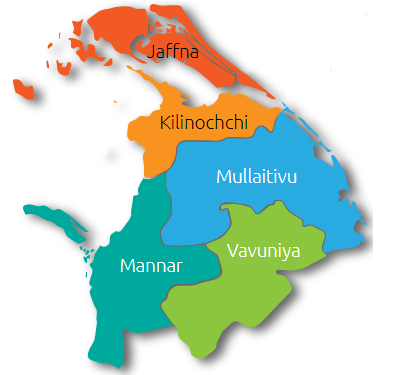
Economic crisis, an added burden for Northerners – Jaffna Chamber Chief

The Chamber of Commerce and Industries of Jaffna is in a constant battle with the authorities to secure fuel for the agriculture and fisheries sectors and essential commodities for people hit by the economic crisis, the Jaffna Chamber Chairman Vignesh Kularatnam told the Sunday Observer Business last week.

We have been having discussions with the Governor of the Northern Province and the Ceylon Petroleum Corporation and the LIOC to set up consumer points for fuel distribution, he said.

According to the chamber head many large scale industries have closed down due to operations coming to a standstill.

Most industries are unable to sustain operations due to cash flow issues and payment of salaries to employees for the past four months, Kularatnam said.

According to media reports there had been a surge in the number of people in the North and the East taking refuge in South India during the past months. Many had to pay a huge amount to cross the Palk Straight through boats.

Jaffna is home to a large segment of the population who earn a living either in the fisheries or agriculture sector. Around one-third of the families of the Northern province depend on agriculture including livestock and home gardening.

The Jaffna chamber is grateful to chambers in Colombo and many concerned people who always inquire about the people in the North and are willing to extend a helping hand, Kularatnam said.

The situation in the country today is nothing new to the people in the North East who had gone through enormous struggles for over three decades during the battle against terrorism but the crisis is adding on to the misery of people who had not been able to raise their head even after a decade since the end of terrorism, said the Past Chairman of the Chamber K. Poornachandran.

He said around 60 percent of businesses operate and added that if the situation worsens there would be a complete shutdown.

The tourism industry, another vital sector that provided employment to youth has been adversely affected by the crisis.

He said people in the North and East have been used to tough situations and learnt to live a simple life from the decades-long terrorist activities that forced them to such a lifestyle.

Transportation has not been an issue as young and the old cycle to work and school. Most people here neither had fuel nor electricity during the battle against terrorism.

They had to put up with either lamps or candles. Many could not afford kerosene due to the high prices and it was in short supply, he said.

However, the chamber officials said they are one with the people in the South going through unprecedented problems.

We have always been in solidarity with the rest of the country whenever there has been problems and this time to feel with them, Poornachandarn said.

Sri Lanka Crisis LIVE Updates: Soldiers Demolish Main Protest Camp; Two More Die Waiting in Queue for Fuel

Sri Lanka Crisis LIVE Updates: Hours before Sri Lanka appointed Dinesh Gunawardena as the country’s Prime Minister, security forces on Friday demolished the main anti-government protest camp in the capital and evicted activists. The raid came a day after veteran politician Ranil Wickremesinghe was sworn in as the crisis-hit country’s new leader, replacing Gotabaya Rajapaksa, who fled and resigned after protesters overran his palace.

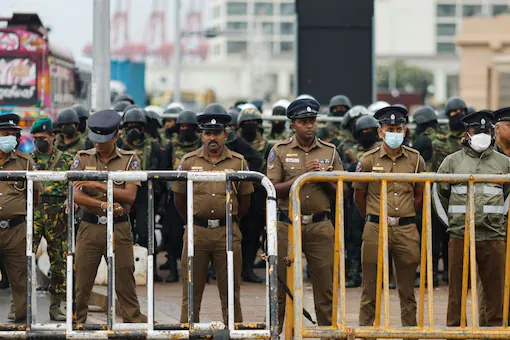
Troops and police Special Task Force commandos armed with batons and automatic assault rifles swooped in on protesters blocking the capital’s Presidential Secretariat hours before they were due to vacate the area.

Hundreds of soldiers removed barricades set up by protesters blocking the main gate of the sea-front building, which demonstrators had partly overrun earlier this month. An armoured personnel carrier was also seen in the area. Activists had announced they planned to hand over the building, a symbol of state authority, on Friday afternoon, after a cabinet was sworn in by Wickremesinghe.

– Two men died in cash-strapped Sri Lanka on Friday while waiting in serpentine queues to purchase fuel as widespread shortages and soaring inflation levels continue to heap misery on citizens. The two deaths were reported on a day when newly-elected President Ranil Wickremesinghe on Friday appointed Dinesh Gunawardena as the Prime Minister in a bid to restore political stability and mitigate the worst economic crisis that has virtually bankrupted the island nation.

– Sri Lanka’s newly-elected President Ranil Wickremesinghe on Friday appointed Dinesh Gunawardena, a loyalist of the Rajapaksa family, as the Prime Minister in a bid to restore political stability and rebuild the country’s bankrupt economy. The formation of the new government by Wickremesinghe took place hours after Sri Lankan troops and police armed with assault rifles and batons forcibly removed anti-government protesters camped outside the presidential office here in a pre-dawn raid.

– CIA chief Bill Burns on Wednesday blamed “dumb bets” on high-debt Chinese investment as a factor in Sri Lanka’s economic collapse, saying it should serve as a warning to other nations. “The Chinese have a lot of weight to throw around and they can make a very appealing case for their investments,” Burns said at the Aspen Security Forum.

– Chinese President Xi Jinping congratulated Ranil Wickremesinghe on his election as Sri Lankan President and offered to provide support as his capacity allows to Colombo, amid Beijing’s concerns over billions of dollars of Chinese investments and defaulted loans in the economically bankrupt island nation. President Xi said he attaches great importance to the development of China-Sri Lanka relations and would like to provide support and assistance as his capacity allows to Wickremesinghe and the Sri Lankan people.

– The top UN official in Sri Lanka has called on all stakeholders in the country to engage in broad and inclusive consultations to resolve the current economic crisis and the grievances of the people, according to a senior official representing the UN chief. Deputy Spokesperson for UN Secretary-General Antonio Guterres, Farhan Haq, said at the daily news briefing here on Thursday that UN Resident Coordinator in Sri Lanka, Hanaa Singer-Hamdy, “acknowledged the constitutional transfer of power to a new President.

– The US on Friday denounced Sri Lankan security forces’ overnight crackdown on anti-government protestors as its envoy met newly-elected President Ranil Wickremesinghe and expressed grave concern over the unnecessary and deeply troubling” escalation of violence.

Source: News 18

How Rajapaksa Clan And Chinese Loans Put Sri Lanka on Expressway of Economic Collapse

IA chief Bill Burns has rightly defined the reason behind Sri Lanka’s current economic crisis. Burns says Sri Lanka made dumb bets on China, and when we see Sri Lanka’s financial past, we find his statement has elements of gravity.

In fact, China was not alone. It was the Rajapaksa-China combined push that forced Sri Lanka to see this day when public protests after the economic collapse forced the fall of the Gotabaya Rajapaksa government. People of the nation are so angry that they are not ready to accept even the next government and its president Ranil Wickremesinghe as he is considered very close to the Rajapaksa clan.

The Rajapaksa clan, which has been ruling Sri Lanka since 2005, first wanted to make the country another Singapore and then a Dubai-like financial powerhouse. It saw easy loans from China as a quick fix for its infrastructure dreams and greener pastures ahead, while easily forgetting the fact that Sri Lanka’s imports were significantly higher than its exports and it needed a safe zone of foreign currency reserve to remain economically viable whenever it faced some tough times as it happened with the Covid crisis. The pandemic affected the country badly, hitting its two major foreign currency earners, tourism and remittances, leading to an economic default.

In the name of upgrading the country to become an infrastructure role model, the Sri Lankan government led by the Rajapaksa clan started developing the southern province, even as the western province with capital Colombo was seen as the nation’s political and financial core.

The Hambantota district in the southern province is the native place of the Rajapaksa clan and Mahinda Rajapaksa wanted to transform the city into the next Colombo, the next political and financial hub, even if feasibility studies didn’t permit such projects.

Built with much hype, the projects ultimately proved to be absolute financial disasters. Clearly, the Sri Lankan approach under the Rajapaksas can be summed up as “dumb bets”, as Burns says. His reaction in fact captures the essence when he counts high-debt Chinese investments as a major factor behind Sri Lanka’s economic collapse.

The above chart clearly puts the economic crisis in perspective of what went wrong. The chart carries data for 2005 to 2011 from the World Bank and from the Central Bank of Sri Lanka from 2012 onwards. The Rajapaksa clan, which has become more or less a political dynasty now with dozens of family members and relatives given government positions when it was in power, had its first family member, Mahinda Rajapaksa, as Sri Lanka’s president in 2005.

His main aim was to end the Sri Lankan civil war with the Tamil militant group LTTE. For that, Sri Lanka needed military support on arms and ammunition and foreign currency to purchase lethal weapons from other countries. No country including India came forward to help Sri Lanka get lethal weapons, except China.

During those four years of civil war under the Mahinda Rajapaksa regime, Sri Lanka’s gross external debt went up by 72%, from $11.3 billion in 2005 to $19.5 billion in 2009, the year of the decisive victory over the LTTE.

Buoyed by the win in the civil war that had crippled life on the island nation for decades, the next stage for Mahinda Rajapaksa was to make Sri Lanka an economic powerhouse like Singapore. He needed financial support for this, which was not available in his nation torn by decades of civil war.

Mahinda Rajapaksa found a solution with China again coming to help. But Beijing came with its own designs of pushing China’s economic colonisation in Sri Lanka under its Belt and Road Initiative (BRI). The country certainly needed infrastructure growth but China even pushed for projects that were expected to be commercially unviable in the long run, like the Hambantota deep sea port and Mattala airport in the Hambantota district.

Both of these projects are white elephants, not generating any significant revenue. Hambantota port in fact went under Chinese control for 99 years in 2017 after Sri Lanka was unable to pay the $1.4 billion bill on it. China also got control of 15,000 acres of land surrounding the airport. It was the first success story of China’s economic colonisation process in Sri Lanka.

Mattala international airport with a capacity to handle one million passengers annually is also called the world’s emptiest airport. It was opened for operations in March 2013. As per Sri Lankan media reports, at times, the airport is not even able to earn enough to pay for its electricity cost. The striking point is the fact that the $210 million airport was made on high-interest commercial loans from China. The government-to-government loans from China to Sri Lanka come at a 2% interest rate but commercial loans are given at much higher interest rates.

Hambantota also saw an international connection centre opened in November 2013, another investment from a Korean loan that has failed to generate any revenue.

While the two big projects mentioned above already failed, the Rajapaksas and China decided to build another, an artificial island built on 269 hectares of land reclaimed from the sea. Loaned and being built by China and called Sri Lanka’s economic game changer, the Colombo Port City project is expected to be the next success story of China’s economic colonisation in Sri Lanka with the country already having defaulted on debt payments.

Under Gotabaya Rajapaksa, Sri Lanka passed the Colombo Port City Economic Commission Bill in May 2021. The legislation gave China absolute authority in an area that is just 700 km away from Chennai in India. Opposition parties in Sri Lanka alleged that the bill was intended to undermine the country’s sovereignty and create a Chinese colony. Sri Lanka’s Supreme Court, while hearing petitions against the bill, also said that certain provisions of it were unconstitutional. China can launch its own currency in the Colombo Port City area.

Why Chinese loan is the main factor

According to the Sri Lankan government’s Department of External Resources (ERD), 47% of the Chinese loans are in the form of external market borrowings. Sri Lanka, in 2007, started issuing international sovereign bonds to tap loans from the global financial markets. These market borrowings are usually short-term loans, with 5 to 10 years of life, and come at a higher interest rate, around 6%. 13% of the Sri Lankan loans are from the Asian Development Bank. China and Japan, as per the government data, sit in third place with 10% of the loans.

But when we go deeper into the details, we find that Chinese loans constitute a much higher proportion of Sri Lankan loans. According to a news analysis published in The Diplomat, China accounted for 20% of Sri Lankan loans at the end of 2021. Out of this 20%, 14% was Chinese debt stock while 6% was in term loan facilities.

If we correlate this figure to the current gross external debt of Sri Lanka, it comes out to be $10.144 billion with $3 billion in the form of term loan facilities. Most of this loan amount from China came after 2005 and it can be confirmed by an official Sri Lankan government statement. According to ERD, “The amount of loan funds obtained from China from 1971 to 2004 was very marginal and it significantly increased after 2005.”

In the last 16 years, Sri Lanka has taken loans worth $40 billion and almost a fourth of it is from China. True, Sri Lanka needs infrastructure projects to boost the country’s economy, but the failure of large-scale infrastructure projects loaned and built by China in fact has eclipsed any good effect on other projects as well, particularly when the country was hit hard by the pandemic.

Chinese approach and the $25 billion miscalculation

An easy approach from China to Sri Lanka’s regular requests for loans and its promise to build massive infrastructure projects to change the Sri Lankan destiny made the Mahinda Rajapaksa government overconfident. It started pushing for loans from other sources as well, mostly in the form of short-term market borrowings or ISBs.

These market borrowings now cost almost half of total Sri Lankan loans, at $25 billion. In January 2022, Sri Lanka, somehow, paid a $500 million bond on its maturity. The country had to pay $1 billion on bond payments this month but it defaulted in May and had to suspend further debt repayments.

Source: News 18