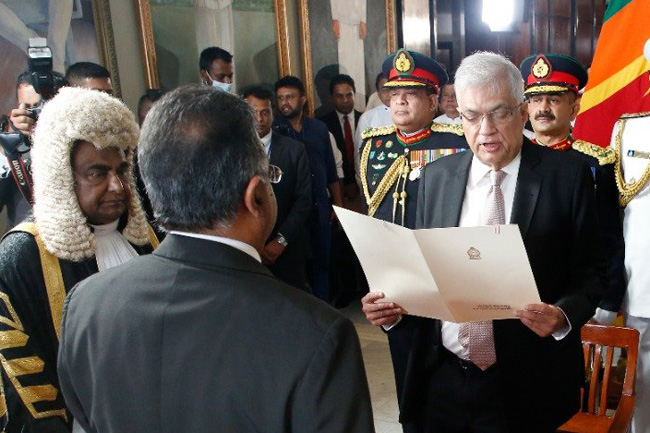
President Gotabaya to step down on July 13

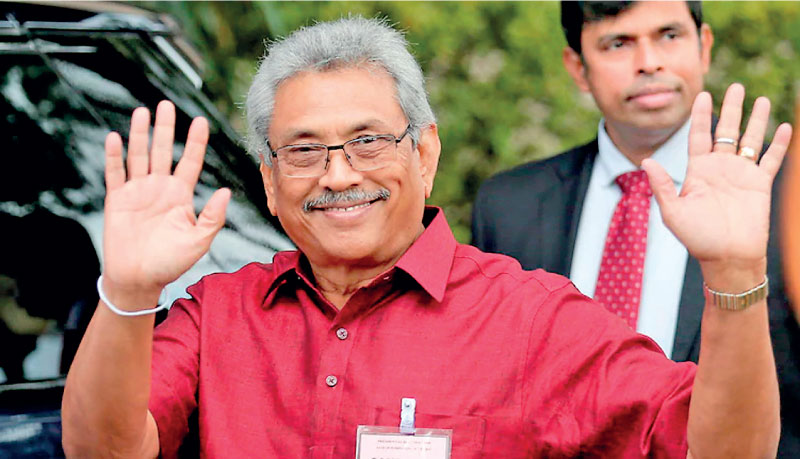
President Gotabaya Rajapaksa has informed that he would step down from the presidency on July 13 (Wednesday), Speaker of Parliament Mahinda Yapa Abeywardena says.

The announcement came hours after people, calling for the resignation of the President and his government, stormed into the President’s House in Colombo Fort earlier today.

They had pushed through barricades at entry roads to the President’s House to reach the premises and occupied the premises.

The Speaker, in a video statement released a short while ago, stated that the President has agreed to implement the decisions taken by the political party leaders this evening. At the meeting, chaired by the Speaker, the party leaders came to the consensus that the President and the Prime Minister must resign immediately.

The President has told the Speaker that he would vacate his position on July 13 to allow a peaceful handover of power.

Speaker Abeywardena appealed to the members of the public to remain peaceful and advised public servants to ensure the smooth functioning of day-to-day life.

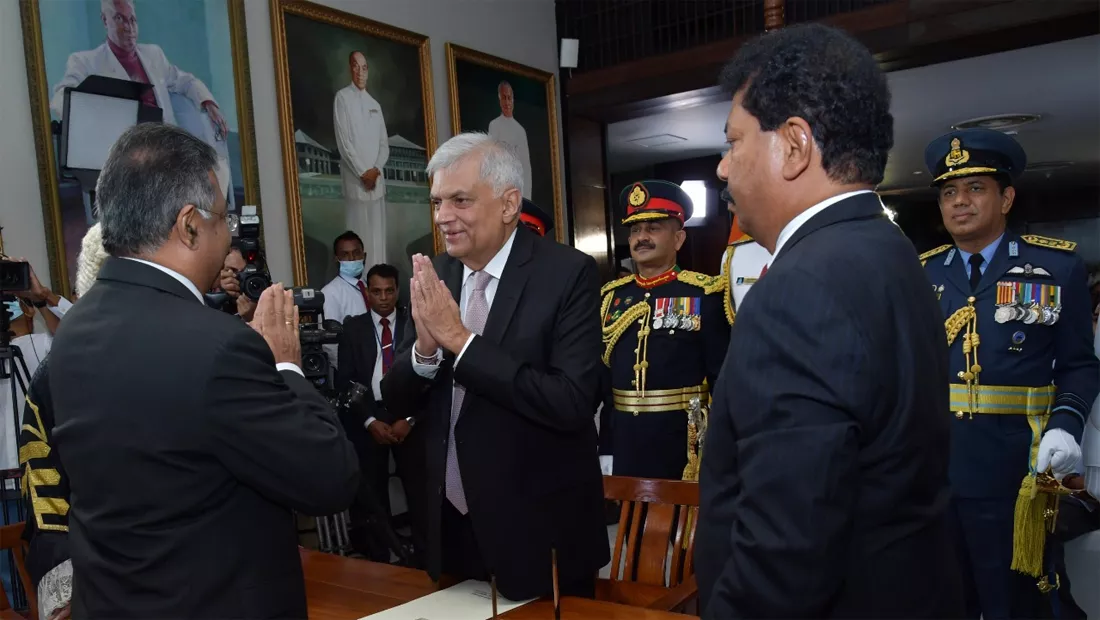
Meanwhile, PM Ranil Wickremesinghe has announced that he would resign from his position after an all-party government is established.

PM Wickremesinghe offers to resign: A timeline of Sri Lanka’s crisis

Sri Lanka is mired in a deep political and economic crisis and on Saturday (July 9), the country’s president was forced to flee his residence not long before it was stormed by a huge crowd of protesters.

The island nation of 22 million people has suffered months of lengthy blackouts, acute food and fuel shortages and galloping inflation in its most painful downturn on record.

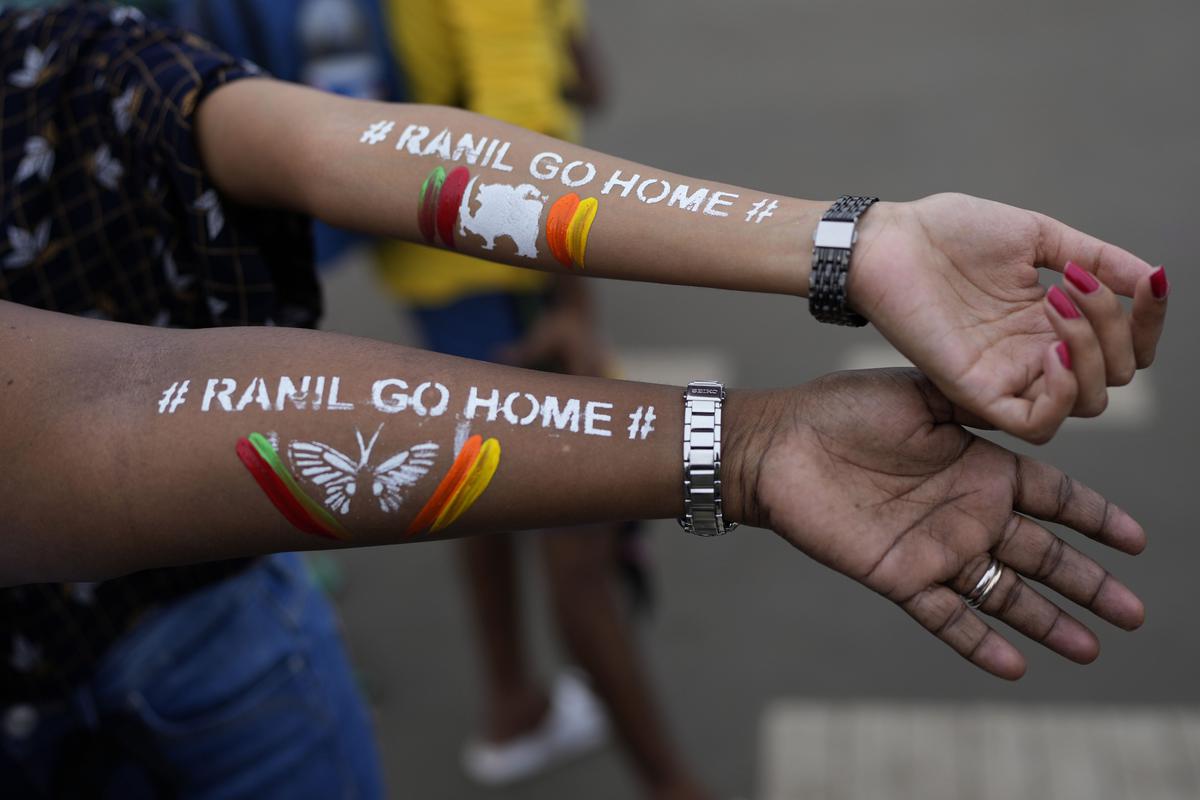
Months of protests have demanded the resignation of President Gotabaya Rajapaksa, whose government has been blamed for chronic mismanagement of the country’s finances.

The South Asian country emerged from a devastating civil war in 2009, only to be rocked by Islamist bombings in 2019, before being hit hard the following year by the Covid-19 pandemic which left the island bereft of tourists.

Here is a look back at how the crisis has unfolded.

April 1, 2022: State of emergency
Mr Rajapaksa declares a temporary state of emergency, giving security forces sweeping powers to arrest and detain suspects, after a spate of protests.

April 3: Cabinet resigns
Almost all of Sri Lanka’s Cabinet resigns at a late-night meeting, leaving Mr Rajapaksa and his brother Mahinda – the prime minister – isolated.

The governor of the central bank, having resisted calls to seek a bailout from the International Monetary Fund (IMF), announces his resignation a day later.

April 5: President loses majority
President Rajapaksa’s problems deepen as finance minister Ali Sabry resigns just a day after he was appointed.

The embattled leader loses his parliamentary majority as former allies urge him to quit. He lifts the state of emergency.

April 10: Medicine shortages
Sri Lanka’s doctors say they are nearly out of life-saving medicines, warning that the crisis could end up killing more than the coronavirus pandemic.

April 19: First casualty
Police kill a protester, the first casualty of several weeks of anti-government protests.

The next day the IMF says it has asked Sri Lanka to restructure its colossal external debt before a rescue package can be agreed.

May 9: Day of violence

Demonstrators and government supporters clash outside the residence of Sri Lanka’s Prime Minister Mahinda Rajapaksa, in Colombo on May 9,

Nine people are killed and hundreds more injured in the reprisal attacks that follow, with crowds targeting those responsible for the violence and setting fire to the homes of lawmakers.

Mr Mahinda Rajapaksa resigns as prime minister, and has to be rescued by troops after thousands of protesters storm his residence in Colombo.

He is replaced by Mr Ranil Wickremesinghe, a political veteran who had already served several terms as premier.

May 10: Shoot-to-kill orders
The defence ministry orders troops to shoot on sight anyone involved in looting or “causing harm to life”.

But protesters defy a fresh government curfew, which is rolled back at the end of the week.

The top police officer in Colombo is assaulted and his vehicle set ablaze.

June 10: ‘Humanitarian emergency’
The United Nations warns that Sri Lanka is facing a dire humanitarian crisis, with millions already in need of aid.

More than three-quarters of the population had reduced their food intake due to the country’s severe food shortages, the UN says.

June 27: Fuel sales suspended

People stand outside a closed fuel station that ran out of gasoline in Colombo on June 27, 2022. PHOTO: AFP
The government says Sri Lanka is nearly out of fuel and halts all petrol sales except for essential services.

July 1: New inflation record
The government publishes data showing inflation has hit a record high for the ninth consecutive month, a day after the IMF asks Sri Lanka to rein in high prices and galloping inflation.

July 9: President’s home stormed

President Rajapaksa flees his official residence in Colombo with the assistance of troops, shortly before demonstrators storm the compound, and he is taken to an undisclosed location.

Footage from inside the residence shows jubilant protesters jumping in the pool and exploring its stately bedrooms.

Source: The Straits Times

Posted in Uncategorized

Call for restraint ahead of Sri Lanka protest

Ahead of what is expected to be a large demonstration in Colombo on Saturday, 9 July, we urge Sri Lankan authorities to show restraint in the policing of assemblies and ensure every necessary effort to prevent violence.

At the same time, we appeal to the organisers of the protests and their supporters to engage in peaceful means of protest and not to impede essential medical or humanitarian services.

We also call on the authorities to give clear instructions to the security forces that human rights defenders and journalists have a right to monitor and report on the demonstrations and therefore should be protected in the exercise of these functions and not obstructed in any way.

The worsening economic situation has led to increasing tensions in the last weeks. Reports have been received of several confrontations between individuals and members of the police force and the armed forces at fuel stations where thousands of desperate members of the public have queued for hours and sometimes days.

Police have used tear gas and water cannon at times in an unnecessary and disproportionate manner. On occasions, armed forces have also fired live ammunition. All Sri Lankans have the right of freedom of expression, peaceful assembly and the right to participate in public affairs, which are particularly important in critical phases of the nation’s life. Under applicable international law, gatherings can only be dispersed in exceptional cases, with use of force a last resort where absolutely necessary and proportionate.

While we recognise the challenges that the police and armed forces face – including instances of attack on themselves – the Government needs to give strict instructions to the police and armed forces to desist from violence in dealing with the public and to act with utmost restraint.

As a general rule, the military should not be used to police assemblies. Where, in exceptional circumstances, members of the military carry out law enforcement functions they are bound by international norms and standards and must remain fully subordinate to civilian authorities and accountable under civilian law.

The people of Sri Lanka are already suffering enormously and live in continuing uncertainty of how they can meet their basic needs including access to the right to food, health and education. They have a right to peacefully protest to demand a better life and an end to economic and social hardship.

We also repeat the High Commissioner’s call for open and genuine dialogue to address the root causes of the crisis and grievances of the population.

Source: United Nations Human Rights Office of the High Commissioner

Posted in Uncategorized

BREAKING: Police curfew for multiple areas in Colombo

Sri Lanka has imposed police curfew with effect from 9 PM today for several police divisions in the Western Province. This will be in effect until further notice.

These areas are:

Negombo Division
Kelaniya Division
Nugegoda Division
Mount Lavinia Division
Colombo (North) Division
Colombo (South) Division
Colombo (Central) Division.

Sri Lanka Police said that people living in the said police areas MUST remain indoors during the period of the Police Curfew.

Source: News 1st

Posted in Uncategorized

SLPP MP opens fire into the air after heated argument

Sri Lanka Podujana Peramuna Parliamentarian Lalith Warnakumara had opened fire into the air following a heated argument on Thursday (7) night.

Sri Lanka Police said that the incident took place in Anguruwatota, Kalutara at a house where a religious event had taken place.

A senior police officer said that following a heated argument, the MP has opened fire into the air.

Source: News 1st

Posted in Uncategorized

Galle Face demonstrators hold talks with SLMC

A group of demonstrators from Gota Go Gama (GGG) in Galle Face had talks with the Sri Lanka Muslim Congress (SLMC).

The SLMC said that the meeting took place at the SLMC party headquarters.

SLMC Leader Rauff Hakeem and party secretary Nizam Kariappar, PC, attended the meeting.

The Galle Face protesters had explained the focus of the mass protest to be staged against President Gotabaya Rajapaksa tomorrow (Saturday).

Similar talks had taken place between other opposition party representatives and the GGG protesters earlier.

Source: Colombo Gazette

Posted in Uncategorized

MP tops Rs 3 trillion for 2nd time

Government of Sri Lanka’s (GoSL) demand pull inflationary face value money printing (FVMP) debt increased by Rs 4,326 million on Wednesday (6), due to a perennial lack of revenue.

Consequently, GoSL’s FVMP debt as a whole increased by 1.06 per cent (Rs 31,755.04 million) to Rs 3,025,057.15 million (Rs 3.0251 trillion) on Wednesday, being only the second time that GoSL’s FVMP debt has crossed the three trillion-rupee mark. The first time it crossed three trillion rupees was on 28 June (last Tuesday), with a figure of Rs 3.16 trillion.

Subsequently, the country’s foreign reserves bled by USD 76.24 million (Rs 27,429.04 million) led by the settlement in respect of payments made in relation to ‘essential’ imports on Wednesday. Conversions are based on the administered ‘spot’ value as at Monday which was Rs 359.79 to the US dollar.

GoSL’s MP borrowing costs (BCs) relative to the increase in its FVMP debt accelerated by 102 per cent (Rs 107,095.68 million) to Rs 212,091.80 million on Wednesday due to selling pressure of Treasury (T) Bills and T Bonds to reinvest in the day’s Rs 70 billion T Bill auction for higher returns, where weighted average yields across the board increased by over 400 basis points. The Market was short for a record 201 market days to Wednesday, though this shortfall decreased by 0.67 per cent (Rs 4,326 million) to 645,753 million, Central Bank of Sri Lanka (CBSL) data showed. GoSL’s highest to the 205th highest FVMP debt has been registered for a record 205 market days to Wednesday. GoSL’s FVMP debt has been over two trillion rupees for a record 111 consecutive market days to Wednesday due to an almost perennial lack of revenue.

Source: Ceylon Today

Posted in Uncategorized

Sri Lanka top five SOEs lose Rs931bn amid monetary instability

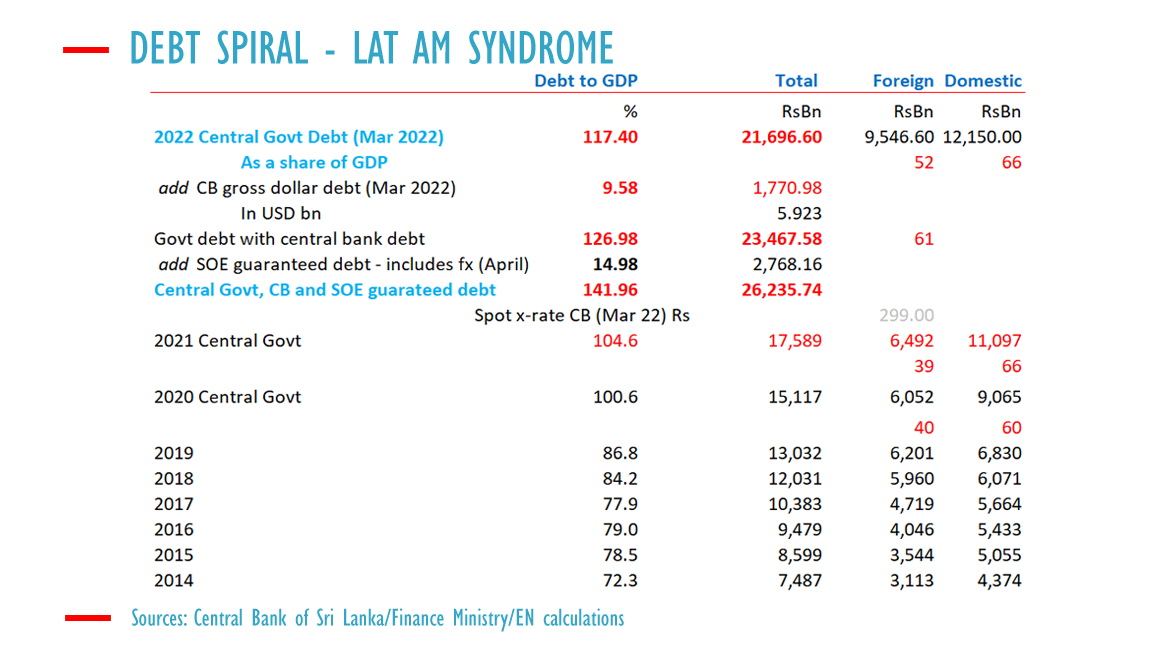
Sri Lanka’s top five state enterprises have lost 931 billion rupees in the first four months of 2022, official data shows, with a collapse of a soft-peg due to aggressive open market operations of the central bank contributing to most losses.

The Ceylon Petroleum Corporation lost 628 billion rupees, with 541 billion rupees of the gap coming from a foreign exchange loss as a soft-peg operated by the central bank collapsed steeply after two years of money printing.

The forex loans were also taken to buy oil when the central bank created forex shortages through aggressive open market operations during the current and past currency crises.

Currency crises and forex shortages are a problem associated with soft pegs where money and exchange policies conflict.

Once a clean floating regime or a hard peg is adopted forex shortages disappear as if by magic.

The CPC also assumes the losses of the Ceylon Electricity Board indirectly by giving fuel on credit and taking loans to fund its own cash flow shortages due to delays by the Public Utilities Commission of Sri Lanka to grant it price increases.

The prices are hurriedly raised under an IMF program. CEB prices were raised through an IMF program in 2012, prior to a float of the currency, but it was later reversed as a China-funded coal plant came online and a price increase was not granted despite several requests.

The Finance Ministry implemented a price formula for CPC under an IMF program in 2018 as a structural benchmark as prices were directly under political controls but the CEB which was under regulation missed structural benchmarks and indicative targets.

“Ceylon Electricity Board (CEB) continued to record losses throughout 2019H1 (-0.5 percent of GDP), due to hydropower shortages, high generation costs, and lack of adjustments in retail prices,” an IMF staff report said in 2019 at the tail end of the last program.

“The end-June and end-September ITs on Non-Commercial Obligations of CPC and CEB were
both missed.”

Sri Lanka re-nationalized state enterprises like Sri Lankan Airlines and Litro Gas under then-President Mahinda Rajapaksa and his economic advisors who advocated state expansion and the next administration which critics say had policy fright did not privatize a single entity.

Both Sri Lanka and Pakistan which have the worst central banks in South Asia have severe problems with SOE losses, mostly coming from currency depreciation.

In Sri Lanka the classical economic principle of sound money has been discarded in favor of Mercantilism and monetary instability which became popular in Western academic circles in the wake of the Great Depression in general and up to 1971 in particular.

Dual anchor conflicts, which did not exist in South Asia when it was in the Sterling Area under British rule, burst forth under the post-World War II failed Bretton Woods system, leading to forex shortages, trade, and exchange controls.

Western nations exited dual anchor conflicting soft-peg in 1971 (Japan, Germany, Singapore, Thailand, Hong Kong, kept highly consistent pegs under the Bretton Woods and after) with the collapse of the Bretton Woods.

Soft pegs continue to be peddled to and embraced in South Asia under ‘monetary reform’ ‘monetary policy modernization’ and ‘central bank independence’, critics say.

Sri Lanka’s ‘economists’ favor currency depreciation based on a neo-Mercantilist belief that undermining a sound monetary system to tilt the playing field towards exporters at the expense of their workers profiting from a delay in wage catch-up, will make the country an export powerhouse, despite the policy creating industrial unrest and civil strife for over half a century.

“The days are gone in which most persons in authority considered the stability of foreign exchange rates to be an advantage,” explained classical economist Ludwig von Mises. “Devaluation of a country’s currency has now become a regular means of restricting imports and expropriating foreign capital.

“It is one of the methods of economic nationalism. Few people now wish for stable foreign exchange rates for their own countries.

“The more fateful results of inflation derive from the fact that the rise in prices and wages which it causes occurs at different times and in different measures for various kinds of commodities
and labor.

“Some classes of prices and wages rise more quickly and to a higher level than others. While inflation is under way, some people enjoy the benefit of higher prices on the goods and services they sell, while the prices of goods and services they buy have not yet risen at all or not to the same extent.

“These people profiteer by virtue of their fortunate position. For them, inflation is good business. Their gains are derived from the losses of other sections of the population.

“Modern monetary theory has provided us with the irrefutable demonstration that this disproportion and non-simultaneousness are inevitable features of every change in the quantity of money and credit.”

In 2022, unrest is not only be found in Sri Lanka. Strikes are spreading and incumbent rulers are losing office in Europe and elsewhere after the Federal Reserve, the European Central Bank, and the Bank of England also printed money to ‘create jobs in 2020 and 2021.

Source: Economy Next

Private Member Bills tabled to amend the electoral system

Parliamentarian Imthiaz Bakeer Markar has presented three Private Member’s Bills in Parliament that includes proposals to amend laws and regulations pertaining to the country’s electoral system.

Accordingly, a Bill to amend the Parliamentary Elections Act No.1 of 1981, a Bill to amend the Provincial Council Elections Act No.2 of 1988 and a Bill to amend the Local Government Elections Ordinance No.53 of 1946 were presented.

The proposals calls for the need to provide youth below the age of 35 the opportunity to represent institutions.

The proposals also include that during a General Election, a Provincial Council Election, and a Local Authorities Election when political parties and independent groups submit nominations, not less than one-fourth of the number of candidates in a relevant district should be youth.

Sri Lanka hikes interest rates 100bp amid galloping inflation

Sri Lanka’s central bank has has raised interest rate at which overnight money is printed for banks by 100 basis points to 15.5 percent as the country was gripped by galloping inflation and depreciation.

“Having noted the higher than expected escalation of headline inflation recently and the increased persistence of high inflation in the period ahead, the Board was of the view that a further monetary policy tightening would be necessary to contain any build-up of adverse inflation expectations,” the central bank said in its June monetary policy review.

“In arriving at this decision, the Board weighed the impact of tighter monetary conditions on overall economic activity, including the micro, small, and medium scale businesses, and the financial sector performance, among others, against far reaching adverse consequences of any escalation of price pressures across all sectors of the economy in the near term.

“On balance, the Board was of the view that this policy adjustment would help guide inflation expectations to be anchored around the targeted level of headline inflation over the medium term, while curtailing any build-up of underlying demand pressures in the economy”.

The central bank urged the government to also reduce the deficit as quickly as possible to stop printing money.

“Faster implementation of the expected fiscal reforms aimed at strengthening government revenue mobilisation and expenditure rationalisation is needed to reinforce fiscal consolidation efforts, including the expected improvements in the financial position of state-owned business enterprises,” the central bank said.

“Such adjustment in fiscal sector performance would result in a decline in gross financing needs of the Government in the period ahead, and help scale down monetary financing at a faster pace.”

The central bank which also conducts Treasuries auctions allowed Treasury bill yields this week to stop 28 percent in a bid to avoid printing money.

Sri Lanka is experiencing high inflation after two years of money printed to keep rates down and boost growth (stimulus), and a failed float with a surrender requirement.

In June consumer prices in Colombo hit 54.6 percent as the rupee fell from 200 to 360 and forex shortages continue to persist due to the failed float.

According to a fan chart published by the central bank, inflation could peak around 75 percent, with a low probability of it going higher.

Download Monetary Policy Review Sri-Lanka-June-Monetary_Policy_Review

Private credit has started to slow and market rates have risen, the central bank said.

“..The growth of credit to the private sector, once adjusted for the impact of the depreciation of the Sri Lanka rupee against the US dollar, recorded signs of slowing in May 2022, year-on-year, while the expansion of broad money has been weighed down by the contraction in net foreign assets of the banking system,” the statment said.

“The elevated lending interest rates are expected to slow the expansion of money and credit aggregates in the period ahead…”

Sri Lanka has experienced rapid currency crises and monetary instability over the past 7 years with the adoption of highly discretionary flexible inflation targeting and a flexible exchange rate, which critics have likened to un-anchored monetary policy.

Posted in Uncategorized