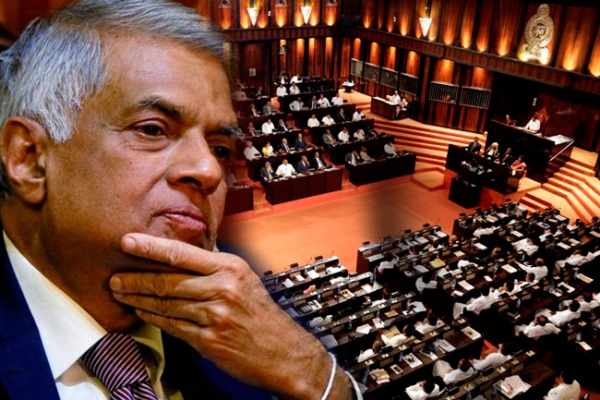
Despite jibes and invectives, Wickremesinghe may survive and hopefully deliver By P.K.Balachandran

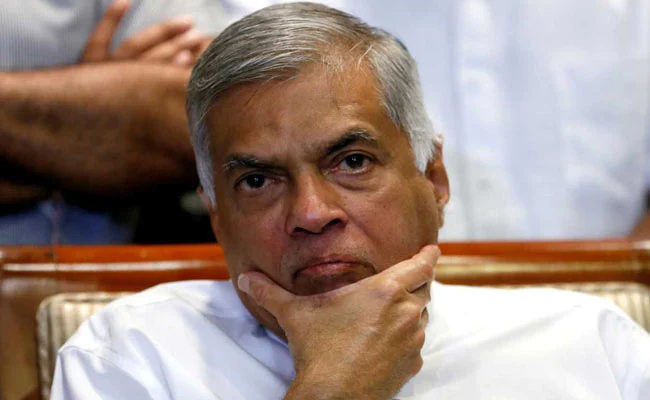
Sri Lanka’s new Prime Minister, Ranil Wickremesinghe, has been subjected to jibes and invectives from political opponents, armchair pundits and the media, both mainstream and social. But political realties being what they are, the 73 year-old sixth time Prime Minister is more likely to survive in office than be hounded out of it.

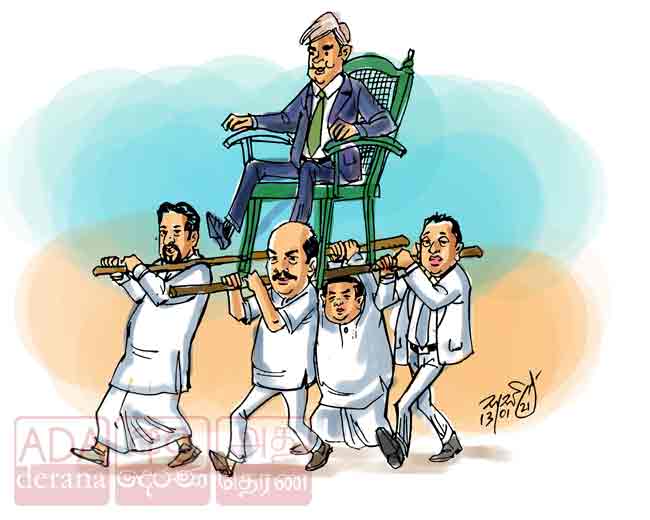
In fact, he is expected to get majority support in parliament, though his party, United National Party (UNP), has only one MP (that is himself). When his support base is tested in parliament on May 17, he might romp home with a comfortable majority. Many political parties and groups have now come round to accepting him as PM if only to have a stable government to tackle the grave economic crisis. MPs, across the board, are now realizing that the major powers of the world, who are also the donors or potential donors, are watching their antics with increasing anxiety, and the flow of funds from abroad might stop if instability continues.

Be that as it may, Wickremesinghe’s real challenge is not so much within parliament, but outside parliament, on the economic front. The country’s forex reserves continue to be abysmally low – US$ 50 million according to the Central Bank Governor Nandala Weerasinghe. But US$ 70 million is immediately required to offload a consignment of fuel which has arrived. Indian aid, now notching up to US$ 3.5 billion, is keeping the economy from sinking, but in three months’ time, that flow will come to a halt. The promised Chinese aid of US$ 2.5 billion is yet to materialize due to some conditions placed by Beijing, according to Sunday Times. Reportedly Sri Lanka immediately needs US$ 1 to billion.

The expected IMF facility will take six months to be extended, according to the Governor of the Central Bank. But once the Staff Level Agreement with the IMF is signed, the World Bank and the ADB will extend help it is said. The World Bank has already given US$ 600 million.

Western countries have not even offered bilateral or multilateral help. As a Sri Lankan academic once out, the “Americans come with a bagful of advice not money.” Japan is the only country from the Western camp which is likely to help because of its long-standing position as a leading donor. Even now, its loans to Sri Lanka are slightly more than China’s, accounting for 10.8% of the total Sri Lankan external debt of US$ 51 billion.

Wickremesinghe is keenly aware of the dire economic situation and has told the media that his first task will be to see that the public get their basic needs such as food and fuel. “I will see that every Sri Lankan has three meals a day,” he said.

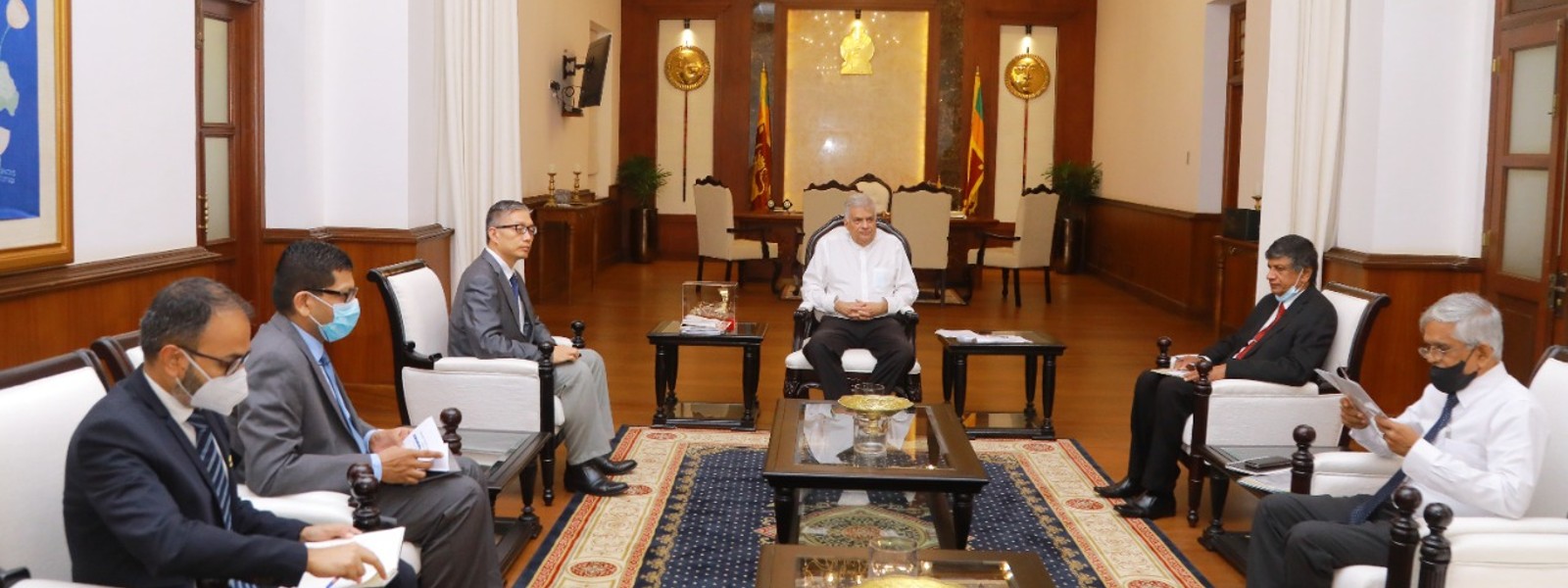
Towards this end, he has set up a small task force and held preliminary talks with the envoys of India, China, the US and Japan, which have resulted in promises of cooperation. The West and India have welcomed his appointment as Prime Minister as they view him as their friend. He is Right of Center in ideology and is pro-West, though not antagonistic China. He is a known advocate of integrating Sri Lanka’s economy with India, especially, the five South Indian States of Tamil Nadu, Kerala, Telangana, Karnataka and Andhra Pradesh. He was keen on giving the contract to build and run the Easter Container Terminal in Colombo port to India, but President Maithripala Sirisena thwarted it.

Wickremesihghe’s relations with China were frosty in the initial stages of his last stint as Prime Minister. He called a halt to the Chinese-funded and executed Colombo Port City project, but after a year and a half, entered into a deal with the Chinese, re-naming the project as the Colombo Financial City and giving them a give piece of land there for their exclusive use. He gave the Hambantota port to China on a 99-year lease for US$ 1.1 billion, terms deemed very favorable to the Chinese.

However, China appears to be a bit wary about recent developments in Sri Lanka, mainly due to the active role being taken by India with the active cooperation of the Sri Lankan government. But India stepped in partly because the Chinese were prevaricating on helping Sri Lanka. Beijing wanted Colombo to go by its advice on how to tackle the economic problem. Beijing was overlooking the fact that what Sri Lanka was facing was an economic emergency needing an urgent infusion of loads of cash. India understood the Lankans’ plight better and responded with alacrity and generously, earning the gratitude of the powers-that-be in Colombo as well as the man-in-the-street.

Eventually, China may come up with an aid package if only to keep its place in Sri Lanka which in terms of investment is substantial (over US$ 5 billion). China is especially interested in checkmating India geo-politically in the island, including the Tamil-speaking Northern and Eastern provinces. The Chinese Ambassador Qi Zhenhong had had a much publicized visit to the North. He is now eying the East, where India has a strategic interest, especially in Trincomalee.

On the domestic political front, matters are now going Wickremesinghe’s way. He has already secured the full support of the biggest party in parliament, the Sri Lanka Podujana Peramuna (SLPP). Rebels from the SLPP-led ruling alliance, who are sitting in parliament as Independents, have stated that they will support Wickremesinghe’s good policies and oppose the bad ones. The main opposition party, the Samage Jana Balawegaya (SJB) has come round to saying the same thing. The Tamil National Alliance (TNA) and the Tamil Progressive Alliance (TPA) have also joined the chorus on giving selective and principled support to tide over the economic crisis. The Sri Lanka Freedom Party (SLFP), led by former President Maithripala Sirisenam has also said that it will support the government.

Only the Janatha Vimukthi Peramuna (JVP) with 3 MPs is adamant about opposing the government as it feels that President Gotabaya Rajapaksa should not have made Wickremesinghe Prime Minister when the latter’s party had been wiped out in the last elections and Wickremesinghe himself had entered parliament only as a nominated member.

Though political circles give many reasons for President’s decision to make Wickremesinghe Prime Minister, the most cited reason is that he has entered into a deal with Wickremesinghe to run the administration smoothly and successfully so that, at a suitable time, he will be given a safe exit from power and perhaps the country itself. It is said that the President had agreed to assist the repeal of the 20 th.Amendment of 2020 which had given him dictatorial powers and substitute it with the 21 st.Amendment which will be a new avatar of the 19 th.Amendment under which the President would only be a figurehead and not a functioning Executive President. Reportedly, Gotabaya Rajapaksa had also told Wickremesinghe to take all decisions and promised to sign on the dotted line.

With the political decks cleared or about to be cleared, Wickremesinghe will be able attend to the urgent task of ensuring a steady flow of foreign exchange. He would engage in intensive diplomacy with all major powers and international financial institutions to meet the basic needs of the much deprived and helpless people of Sri Lanka and also put the derailed Lankan economy back on the rails.
Posted in Uncategorized

21A to be discussed on Monday (16)

Prime Minister Ranil Wickremesinghe says that the 21st Amendment to the Constitution will be discussed on Monday (16), and will be produced to Cabinet for approval.

Prime Minister Ranil Wickremesinghe held discussions with representatives of the World Bank and the Asian Development Bank on the current economic crisis in the country, and the discussions focused on support for drug, food and fertilizer supply issues.

The Prime Minister said in a statement that discussions have also been held with foreign representatives regarding the establishment of a foreign consortium for financial assistance to coincide with the meeting of the two international financial institutions.

Emphasizing that the talks have been positive, the Prime Minister said that the immediate challenge for the Government is to obtain the funds required to pay for the fuel requirements for the coming week.

Due to the dollar shortage in the banks, the Government is now looking at other alternatives to raise the required funds, he stated.

SLFP Takes U-Turn: Decides To Support Ranil’s Government And Accept Ministries

The Sri Lanka Freedom Party, led by former President Maithripala Sirisena, had decided to support the new government.

The SLFP has reportedly sent a letter to Prime Minister Ranil Wickremesinghe confirming their support.

Accordingly, a few ministers representing the party are likely to accept ministerial portfolios under Wickremesinghe.

The party previous said it would not extend their support to the new government. However, when the party realized that several SLFP MPs were considering to defy the party’s position, they reversed the previous position.

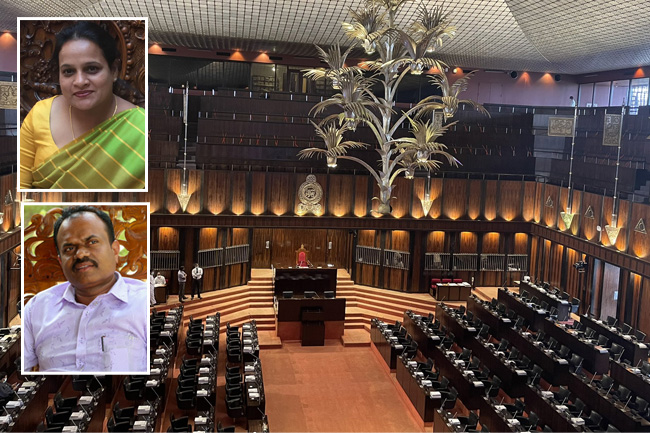
Two nominees for Deputy Speaker position

The Samagi Jana Balawegaya (SJB) has decided to nominate MP Rohini Kumari Wijerathna for the post of Deputy Speaker of Parliament.

Taking to his official Twitter handle, Opposition Leader Sajith Premadasa said MP Wijerathna is a strong activist of Women’s and Children’s.

The main opposition had previously proposed MP Imthiaz Bakeer Markar for the Deputy Speaker position.

It is reported that the senior members of the party were not aware of the nomination until last night.

Meanwhile, Sri Lanka Podujana Peramuna has decided that their nominee for the post of Deputy Speaker will be MP Ajith Rajapakse.

“We can’t pay salaries If we don’t print money” PM

Prime Minister Ranil Wickremesinghe says that with the current economic situation in the country, it is necessary to print money in order to pay salaries of government servants.

In an interview with the BBC Sinhala Service on Friday (13), the newly appointed Prime Minister said that although printing money was not his policy, with the current situation, it had to be done, if not it would not be possible to even pay salaries of public servants.

“We are facing a severe economic crisis. I do not think there was such an economic crisis even during the times of the English or the Dutch ruling the county” he said.

Wickremesinghe said that he intends to solve the economic crisis in the country by getting the support of friendly nations. He also said that due to the lack of government revenue, even the rupee income is not sufficient.

“We cannot generate foreign currency income within the country. I haven’t gone through the statistics yet, but I am told that we need about 3 billion dollars to overcome the crisis. Obtaining this will be our first challenge.” PM added.

Posted in Uncategorized

India delivers another diesel shipment to Sri Lanka

A new shipment of diesel from India, supplied under the credit line for fuel, arrived in Sri Lanka today (May 15) .

The Indian High Commission in Colombo announced the latest delivery of fuel shipment in its official Twitter handle.

This diesel shipment brings the total fuel shipments delivered by India to 12. The closest neighbour of the island nation has supplied more than 400,000 metric tonnes of fuel so far.

Posted in Uncategorized

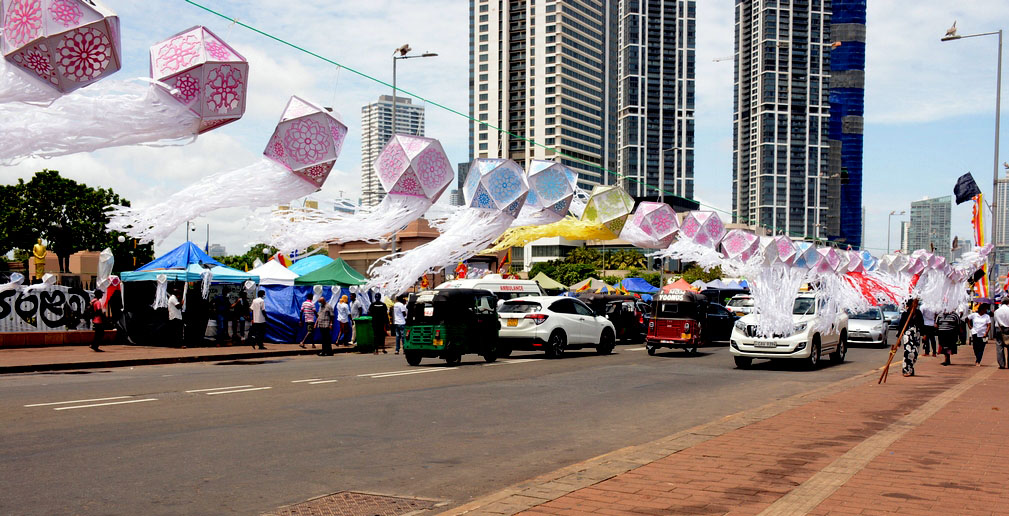
Curfew lifted for Buddhist festival in crisis-hit Sri Lanka -Reuters

A nationwide curfew was fully lifted on Sunday to allow Sri Lankans to celebrate the Buddhist festival of Vesak, while new Prime Minister Ranil Wickremesinghe assembled a cabinet to resolve the island nation’s economic and political crisis.

The curfew was imposed on May 9 after deadly clashes that forced Mahinda Rajapaksa to resign as premier, leaving his brother, Gotabaya Rajapaksa, to rule on as president.

Many public and private buildings were flying the multi-coloured Buddhist flag, while residents visited temples dressed in all-white for Sunday’s festival, which commemorates the birth, enlightenment, and death of the Buddha.

More than a month of predominantly peaceful anti-government protests turned violent at the beginning of last week when supporters of the former prime minister stormed a protest camp in Colombo, torching tents and beating protestors. The clashes, and reprisals against government figures, left 9 dead and more than 300 injured.

New prime minister Wickremesinghe, who has led the country five times previously, made his first cabinet appointments on Saturday.

As the only lawmaker from his United National Party in the country’s parliament, he is reliant on support from the Rajapaksas’ Sri Lanka Podujana Peramuna to form a government.

Saturday’s four cabinet appointments, who were all from the Rajapaksas’ party, have failed to satisfy protesters, who want the family removed from the nation’s politics.

Hit hard by the pandemic, rising oil prices and populist tax cuts by the Rajapaksa government, Sri Lanka is in the midst of its worst economic crisis since independence in 1948, with rampant inflation and shortages of fuel and other essentials.

Posted in Uncategorized

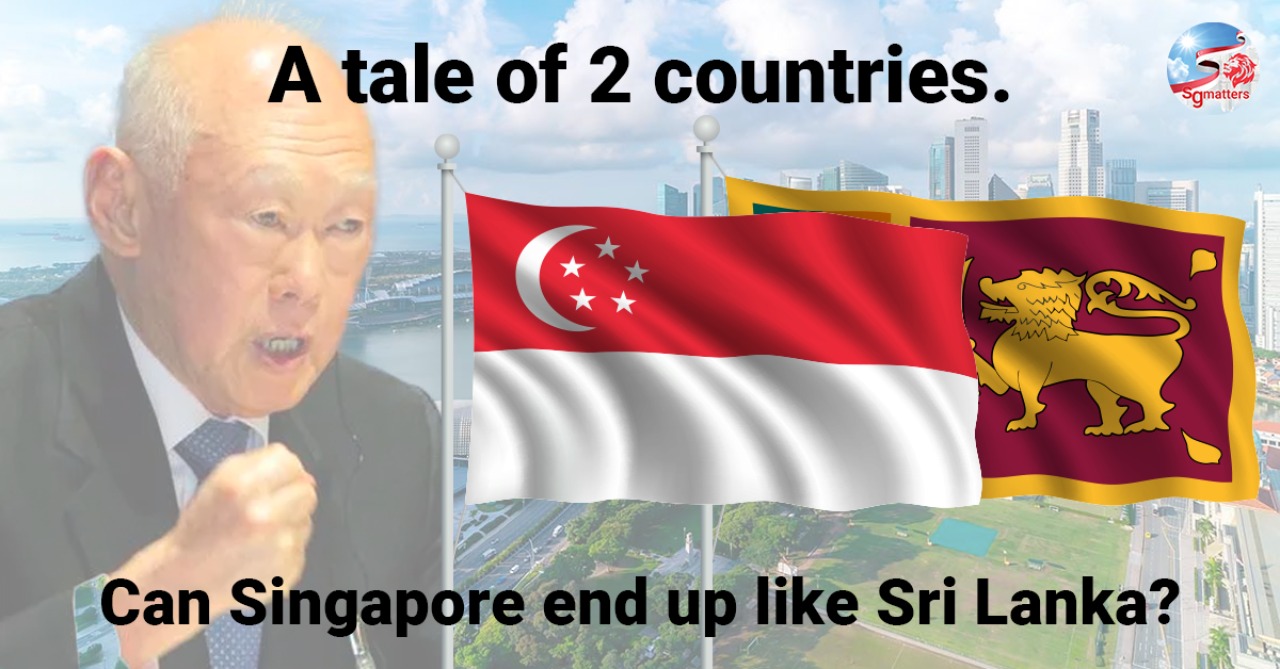
Sri Lanka – In Lee Kuan Yew’s words Bu Hasala Perera

Lee Kuan Yew’s views about Sri Lanka have been published in three books, the first is ‘From Third World to First’, the second is ‘Lee Kuan Yew -The man and his ideas’ and the third is ‘Giants of Asia – Conversations with Lee Kuan Yew’. The first is his memoir while the other two are a compilation of his speeches and interviews.

For the sake of authenticity references will be provided ‘From Third World To First’ as [1], ‘Lee Kuan Yew – Man and his ideas’ as [2] and ‘Giants of Asia – Conversations with Lee Kuan Yew’ as [3] with the corresponding page number where appropriate.

His First Impression of Sri Lanka

He states that ‘Ceylon was Britain’s model commonwealth country’ [1, pg.461] and that ‘Ceylon had more resources and better infrastructure than Singapore’ [1, pg.460], he attributes this to Lord Mountbatten’s presence in Kandy [ibid], which could be some proof to say that he had a positive outlook of Sri Lanka and wished if Singapore had the same infrastructure as Sri Lanka.

He was full of praise of the capital city Colombo when he states that ‘Colombo was a better city than Singapore’ [2, pg.14/22], and he was ‘impressed by the public buildings’ in the city [1, pg.460]. Lee Kuan Yew was aware that Sri Lanka was a country with substantial wealth when he states that ‘Sri Lanka had large Sterling Reserves’ [2, pg.14/22],

His view on its Leaders

His first visit to Sri Lanka was in 1956 which coincided with the victory of S.W.R.D Bandaranaike, he calls him a dapper little man, well dressed, articulate and a ‘Pukka Sahib’ [1, pg. 460]. During his meeting with S.W.R.D Bandaranaike he states that he was elated to have won the election mandate from a Sinhala majority and during his conversations with him he felt that he spoke to him as if he was still a member of the Oxford Union debating society [1,pg.461], but he states that three years later he was not surprised to hear about his assassination by a Buddhist monk [ibid].

His second visit to Sri Lanka was in 1966, when Dudley Senanayake was the prime minister of the Country, who he refers as a gentle, resigned and a fatalistic elderly man [1, pg.462], while playing golf together in Colombo he describes an incident where Dudley Senanayake apologized to him about the encroachment of the fairways by squatters animals and huts,as he was unable to justify people for keeping open spaces in the city, He felt that Dudley Senanayake was a weak leader and did not have control over the people of the Country.

When he visited Sri Lanka for the third time in 1970, the prime minister of Sri Lanka was Sirimavo Bandaranaike whom he believed had come through a sympathy vote [1, pg.461] but he describes her as a tougher, determined and less voluble leader than her husband S.W.R.D Bandaranaike [ibid]. He praised her policy on non-aligned ideology, however he was not in favour of her policy based decision in supporting the removal of US troops from several South East Asian Countries as he felt that Singapore can have a negative impact on it [ibid].

His meeting with President J R Jayawardena took place at a Conference held in Sydney, during this meeting he says that J R Jayawardena wanted Sri Lanka to move away from socialist policies which had bankrupted the country and wanted Singapore to get involved in the development of Sri Lanka, he was impressed by his practical approach which made him visit Sri Lanka for the fourth time in 1978 [1, pgs 463,464].

Despite the positive outlook he had on President Jayawardena as time went by he started seeing his drawbacks, Lee Kuan Yew thought that his decision to start a national airline as a symbol of progress and his decision to employ a pilot as a chairman of the newly built airline as a weakness [1, pg.464]. He finally states that J.R. Jayawardena retired as a tired man who had ran out of solutions [1, pg.465].

He calls Ranasinghe Premadasa who succeeded him a ‘Sinhala Chauvinist’ [1, pg.465] and calls his decision to remove Indian Soldiers brought down during the Jayawardena government to fight the civil war as an insensible decision [ibid].

Few years before his death he mentions about Mahinda Rajapaksa stating that “He thinks he has finished the war, I have read his speeches, I knew he was a Sinhalese extremist” [3].

His View on its Education System

He had a very positive view of the education system introduced by the British in Sri Lanka when he states that ‘It had a relatively good standard of education’ [1, pg.462], he further states that it had two universities of high quality in Colombo and Kandy that was teaching in English [ibid] and before the war they had thick layer of educated talent [2, pg. 14/22], however he was disappointed about its change of medium to local languages and the standards of the education.

During his visit to the Peradeniya University, which he calls the University of Kandy, he had inquired from the vice chancellor about the medium of instruction in the University, he replied that it is Sinhala to Sinhalese students, Tamil to students from Jaffna and English to Burgher students. [1, pg.463]

The next question Lee Kuan Yew asked from the Vice Chancellor was ‘How can three engineers educated in three different languages build one bridge?’ for which the vice chancellor simply replied ‘That sir, is a political question for the ministers to answer’ [1, pg.463]. This statement showed how qualified educationists in Sri Lanka became helpless because of the decisions made by politicians.

The vice chancellor further mentions that all the basic textbooks which were printed in English had to be translated to Sinhala and Tamil and by the time they were translated and printed, they were three to four editions old, quite naturally Lee Kuan Yew calls this translation a slow and unwieldly process [1, pg.463].

Even though he was full of praise of the Sri Lankan education system, which was initially conducted in English, after his visit to the Peradeniya University his views changed as he witnessed the switch from English to local languages and the helplessness of the academics.

Further Views

He states that the decision taken by S.W.R. D Bandaranaike to make Sinhala the national language and Buddhism the national religion was the start of the ‘Unravelling’ of Ceylon [1, pg.460] he knew that by this decision he is putting the unity of the Country at stake, he further states that the minority Tamils felt disadvantaged and disposed as a result of it [1, pg462]. He was very sympathetic towards the plight faced by the Tamils of Sri Lanka when he states that They were active and intelligent fellows who worked hard and got themselves penalised as a result of the domination of the Sinhala majority’ [2, pg.14/22], he expresses his sentiments further when he states that the ‘Sinhalese who are less capable are putting down Tamils who are more capable’ [3]. He further states the futility of Mrs. Bandaranaike’s decision to change the name of the country from ‘Ceylon’ to ‘Sri Lanka’ and making the country a republic as it did not improve the fortunes of the country, the best example he takes here is that Sri Lankan Tea is still been sold as Ceylon Tea [1, pg.463]. He further states that by changing names sometimes you could deceive gods, but you can’t deceive the people. [2, pg.15/22]

He criticized the election system of Sri Lanka when he mentions that ‘one-man-one-vote system did not solve a basic problem’ [1, pg:462]. He believed that that the present voting system did not give a fair representation when he states that ‘The majority Sinhalese could outvote the Tamils’ [Ibid].

Conclusion

Lee Kuan Yew was aware that Sri Lanka was looking at Singapore as a model and thought it was ‘flattering’ for Sri Lanka to model its Country from Singapore’ [1, pg464]. He knew that Sri Lanka can never be a Singapore and the thought itself was deceiving. He states that somebody should have told them to change the system, loosen up or break off [2, pg.14/22]. Today Sri Lankans have come on to the streets protesting against the rulers to leave and change the system. Referring to the failure of the country he states that Sri Lanka failed because it had wrong and weak leaders [2, pg.15/22].

New Lankan PM Wickremesinghe gets international backing

Sri Lanka’s new Prime Minister, Ranil Wickremesinghe, has secured the support of key countries in the world such as India, the US, Japan and China. He is expected to get majority support in parliament also, though he is the lone representative of his party, the United National Party, in parliament.

Wickremesinghe might not head a truly “national” government composed of all parties in parliament. But he might get the support enough MPs to have a majority, that is, at least 113 in the House of 225.

World’s Interest in Stability

The countries supporting Wickremesinghe have based their policy on the critical requirement of stability, as the statements put out by their envoys show.

The Indian High Commission said in its tweet, that “India hopes for political stability and looks forward to working with the Government of Sri Lanka formed in accordance with democratic processes pursuant to the swearing-in of Hon’ble Ranil Wickremesinghe as the Prime Minister of Sri Lanka.” It further said that “India’s commitment to the people of Sri Lanka will continue.”

In its first reaction to the situation in Sri Lanka after Mahinda Rajapaksa resigned as Prime Minister, India on Tuesday said that it was “fully supportive” of the island nation’s democracy, stability and economic recovery. “India will always be guided by the best interests of the people of Sri Lanka expressed through democratic processes,” said External Affairs Ministry spokesperson, Arindam Bagchi.

“In keeping with our Neighborhood First policy, India has extended this year alone, support worth over USD 3.5 billion to the people of Sri Lanka for helping them overcome their current difficulties. In addition, the people of India have provided assistance for mitigating the shortages of essential items such as food and medicine,” Bagchi added.

The Indian High Commissioner, Gopal Baglay, followed this up with a meeting with Wickremesinghe in the latter’s office on Friday. He presented the PM with a bouquet.

Later, asked by newsmen about Sri Lanka’s relations with India, its closest neighbor, Wickremesinghe said: “It will become much better.” During his previous stints as PM, Wickremesinghe had visited India on four occasions – in October 2016, April 2017, November 2017 and October 2018.

Asked about his agenda as the Prime Minister, Wickremesinghe said: “I have taken on a challenge of uplifting the economy and I must fulfill it.” Setting the economy right by meeting the forex shortage and getting for the population essential goods, is his single point agenda. And for that, political stability in the form of parliament’s support, is needed.

US Support

The US Ambassador, Julie Chung, also stressed the need for political stability for Sri Lanka to solve its grave economic problems. In a tweet she said: “Look forward to working w/ @RW_UNP. His appointment as PM, and the quick formation of an inclusive government, are first steps towards addressing the crisis & promoting stability.”

“We encourage meaningful progress at the IMF & long-term solutions that meet the needs of all Sri Lankans,” she added.

Chung met Wickremesinghe on Friday, and discussed the US TREAsury team’s visit to Sri Lanka. The Japanese Ambassador Mizukoshi Hideaki and the Chinese Ambassador Qi Zhenhong also met him. The cancelled Japanese urban rail project is likely to be revived as a result of the change in the government.

The Chinese envoy discussed financial assistance to Sri Lanka. Earlier, the Chinese Foreign Ministry spokesman had said in Beijing that China believes “that with the joint efforts of all sectors of Sri Lanka, the country will regain peace and stability as soon as possible.” Again the stress was on the need for stability.

Problems in Parliament

While Wickremesinghe has strong support from the four most important countries in its foreign relations, he is yet to fathom the level of support in parliament. He has to face parliament on May 17, when the opposition Samagi Jana Balawegaya (SJB) led by Sajith Premadasa, will be bringing in a Motion of No Confidence against his government, and also President Gotabaya Rajapaksa.

As of now, the ruling Sri Lanka Podujana Peramuna (SLPP) is with Wickremesinghe as per the wishes of President Rajapaksa and the rest of the Rajapaksa clan. The 41 MPs from the SLPP and its allies, who had rebelled and are sitting as Independents, are expected to act independently but without the objective of toppling the government.

The group’s spokesman, Wimal Weerawansa, stated that it has no intention of sabotaging the administration. It will not indulge in “hate politics” and will not allow the country to become “anarchic”, he said.

The Pivithuru Hela Urumaya (PHU) leader Udaya Gammanpila stated that as long as PM Ranil Wickremesinghe works to “rescue the country from the abyss” the Independents would extend support while remaining in the opposition. “This country needs a government. We will not make any attempt to topple it,” the former Energy minister said.

The Sri Lanka Freedom Party (SLFP), a former ally of the SLPP, has decided not to accept any portfolios or be part of a government under Prime Minister Wickremesinghe. It will decide on its stand vis-s-vis the SJB’s No Confidence Motion later on Friday after internal consultations.

Te Janatha Vimukthi Peramuna (JVP) and the Tamil National Alliance (TNA) are anti-government and are likely to vote for the No-Confidence Motion But they are small parties. The JVP has only three MPs and the TNA 10.

President asks Lankans to be resilient

In his Vesak festival message to the people of Sri Lanka on Friday, President Gotabaya Rajapaksa appealed to the people to be resilient and come out of the present dire situation through collective and resolute actions.

“Resilience is essential in difficult situations. At this juncture when the country is in dire straits, all the people’s representatives must work together immediately for a solution on behalf of all citizens. The true goal should be to reach the desired target without deviating from the primary goal,” the President said.

“We must be mindful of the current situation and unite around a program that can deliver a fair determination to all. That is the Buddhist policy.”

“May the common goal of all be to build a resilient, consensus and religious society based on principles. I wish you a Happy Vesak Poya Day,” the President said.

Posted in Uncategorized

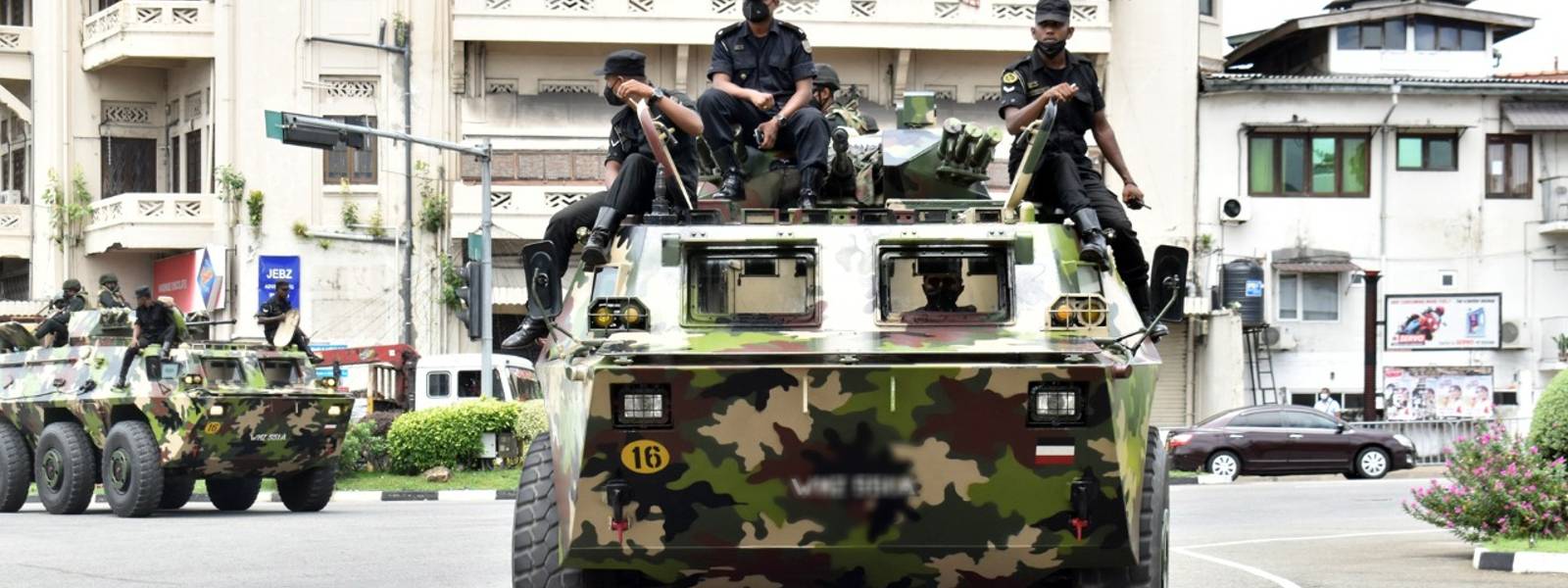
Army deploys patrols and barricades to maintain peaceful conditions

Following the imposition of the State of Emergency, the Sri Lanka Army and the Armed Forces under the full supervision of the Ministry of Defense have extended their support to the Sri Lanka Police to maintain law and order in the country as well as for the protection of the public and public property of the country, says the Tri-forces.

Therefore, in order to maintain the peaceful atmosphere, troops of the Sri Lanka Army Special Forces today (14) deployed patrols and expressway barricades in the vicinity of Colombo using Sri Lanka Army Special Armored Vehicles.