Hand country over to Tamil leaders – TELO Leader

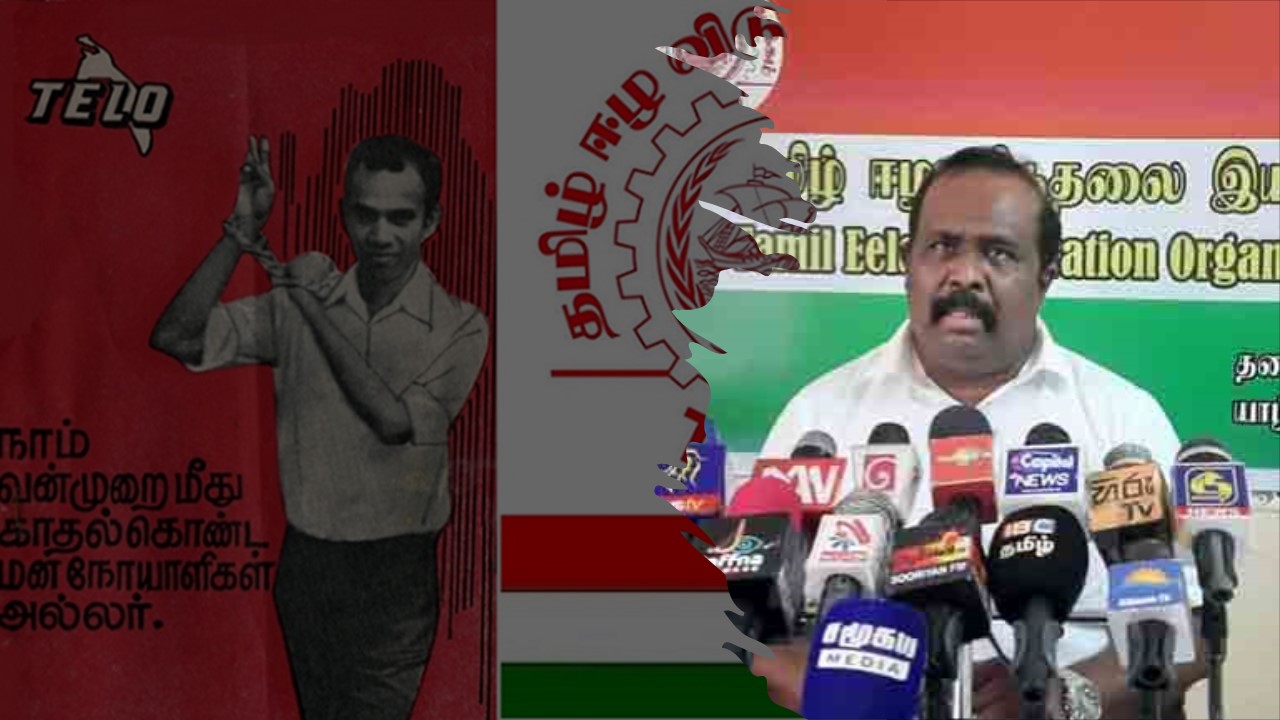
“To change and uplift the current situation of the country, give the ruling power to Tamil leaders and Tamil parties for one year,” Tamil Eelam Liberation Organisation(TELO), Leader MP Selvam Adaikalanathan said.

He said that they will provide equal services to the public without division as Tamil and Sinhala communities. For years Sinhala leaders have been ruling the country. However, with the current situation in the country, we urge everyone including the Sinhala community to support us by electing us to change the current situation in the country.

“The Tamil community did not elect President Gotabaya Rajapaksa as President of the country as they were aware that he cannot rule the country properly. Further, the Tamil-speaking people in the country are severely affected due to the ruling power of the President, as they have failed to pay attention to the concerns of the Tamil community in the country,” he said.

Further, he added that the people who will come into power in future should assure that they will provide justice for the lives of missing persons and people who have been arrested for a long period without charge under the Prevention of Terrorism Act.

Meanwhile, the Tamil National Alliance and all other Tamil parties who represent the Tamil community in Parliament should think about the state of the country and sign the No-Confidence Motion against the Government and impeaching the President.

Posted in Uncategorized

Mahanayaka Theros sound warning to Sri Lanka’s political leaders

Sri Lanka’s top Buddhist clergy called Mahanayakes on Wednesday called upon the President, Prime Minister, the Opposition Leader and all Members of Parliament to implement the proposals put forward by them on April 4, to resolve the present crisis in the country.

Issuing a joint statement, the Chief Prelates also warned that a “Sangha Convention” would be convened if the political leadership fails to act on the proposals.

The statement contains four key proposals that should be implemented by the entire political mechanism. The statement expressed regret over the failure of the government and the politicians to pay due attention to the proposals submitted by the Mahanayake Theras.

The joint statement is signed by Most Ven. Thibbatuwawe Sri Siddhartha Sumangala Mahanayaka Thero of the Malwathu Chapter, Most Ven. Dr. Warakagoda Dhammasiddi Sri Gnanarathabidhana Mahanayake Thero of the Siyamopali Maha Nikaya – Asgiriya Chapter, Most Ven. Dodampahala Chandrasiri Maha Nayaka Thero of Sri Kelayanivasa, Amarapura Maha Nikaya and Maha Nayaka Thero of the Ramanna Maha Nikaya, Most Ven. Makulewe Wimalaabhidana Thero.

The Mahanayake Theras said that as responsible citizens, determination to act without falling prey to conspiratorial machinery at this crucial juncture is an essential requirement for the country’s sovereignty and security.

The April 4 statement said: “As Mahanayaka Thera’s we are deeply saddened by the difficulties faced by the entire population of the country today due to the rising cost of living. People are suffering due to the difficulty in obtaining essential food items and medicines as well as fuel, electricity and domestic gas. As preached by the Buddha it is the duty and responsibility of the government to work for public safety by fulfilling the basic needs of the people based on the “Dasa Raja Dharmaya”.

“Therefore, we strongly believe that it is the duty of the government to avoid all unnecessary expenditure, unnecessary ministerial privileges to alleviate the economic pressure on the people at this time of trouble and to provide the necessary relief to the people expeditiously in order to fulfill the basic needs and ensure public welfare”.

The Mahanayaka Thera’s further said that they believe this massive economic crisis can only be resolved through the proper management of public finances, the elimination of corruption, the implementation of development projects based on public needs and the building of a more appropriate domestic economic model for the country based on sustainable national policies.

“The unbearable rise in the cost of living has led to the creation of unprecedented socio-economic crises in the country. In the Kutadanta Sutta it is emphasized that when the basic needs are not met, the citizen is naturally tempted to commit various unjust acts such as theft, kidnapping, corruption, fraud and murder.”

“As insensitive decision-making on public grievances exacerbates public unrest, the government must seek to win the trust of the people by intelligently understanding the aspirations of the people about the nature of the crisis, flexibly seeking expert advice, and finding solutions through a proper mechanism acceptable to the public”.

The Mahanayaka Theras further said that if such measures are not taken it will lead to new crises.

“Therefore, we believe that patience and intelligence are needed to find solutions to the various problems that have arisen in the country. We have a proud history as a proud nation that has been united and resolute in resolving various crises in the country. A case in point is the service rendered by Sri Lankans who sacrificed even their salaries to save the people from the recent global corona epidemic,” the Mahanayake Thera’s said.

UN, UK condemn violence, call for an independent investigation in to the Rambukkana killing

The UN and the UK envoys in Sri Lankan condemned the violence at Rambukkana, where the police fatally shot an unarmed protester during a protest by the residents over the recent fuel price hike and shortage of fuel.

The UN Resident Coordinator in Sri Lanka, Hanaa Singer-Hamdy in a Twitter message expressing deep concern over the violence said the violence by any party involved hinders the rights of all peaceful protestors.

“Deeply concerned by reports of harm to protestors in #Rambukkana. Violence by any party involved hinders the rights of all peaceful protestors. Restricting use of force to the minimum extent necessary is vital to protect citizens and their right to exercise fundamental freedoms,” she said.

Meanwhile, British High Commissioner Sarah Hulton condemning the violence in all forms called for retrain and an independent and transparent investigation into the shooting.

“I am deeply saddened to hear of the loss of life in protests in Rambukkana. An independent and transparent investigation is essential. I condemn violence in all forms and call for restraint. The right to peaceful protest must be protected.”

Amnesty International ‘concerned about’ reports from #Rambukkana

Global Human Rights Defender Amnesty International states that it is concerned about disturbing reports after Police opened fire at protestors in Rambukkana today (19).

Moreover, Amnesty International has emphasized that authorities must always exercise restraint and use no more force than necessary.


IMF to consider SL’s RFI request after India’s backing

The International Monetary Fund (IMF) has agreed to consider a request by Minister of Finance M.U.M. Ali Sabry (President’s Counsel) for a Rapid Financing Instrument (RFI), following representations made by India’s Minister for Finance and Corporate Affairs Nirmala Sitharaman on behalf of Sri Lanka, despite it being outside of the standard circumstances for the issuance of a RFI.

Both Finance Ministers held discussions with IMF Managing Director (MD) Kristalina Georgieva yesterday (19).

In a Tweet issued yesterday, Advisor to the Finance Minister Shamir Zavahir said that although Sabry had made a request for a RFI to mitigate the current supply chain issues, the IMF was initially of the view that it does not meet their criteria.

“However, India subsequently made representations on a RFI for Sri Lanka as well, and the IMF may consider this request due to the unique circumstances,” he added.

Meanwhile, in a press release issued yesterday, the Indian Finance Ministry said that during the meeting between Indian Minister for Finance and Corporate Affairs Nirmala Sitharaman and Georgieva on 18 April, Sitharaman had indicated that the IMF should support and urgently provide financial assistance to Sri Lanka.

“Georgieva particularly brought reference to the help India is providing to Sri Lanka during their difficult economic crisis and assured Sitharaman that the IMF would continue to actively engage with Sri Lanka.”

A statement by the Finance Ministry said that after Ali Sabry had made a request for a RFI, the IMF had informed Ali Sabry that India had also made representations on behalf of Sri Lanka about a RFI. The IMF had further informed Ali Sabry that they would consider the request, despite it being outside of the standard circumstances for the issuance of a RFI. The RFI provides rapid support for all member countries facing an urgent balance of payments related need and can be used in a wide range of circumstances.

Furthermore, Zavahir said that the negotiations with the IMF had started on a “positive note.”

“They see the recent steps taken to increase the interest rates, and calling for Requests for Proposals (RFPs) for the appointment of international financial and legal advisors, as good first steps towards a possible restructuring programme. In any event, the IMF appears to be positive towards granting an Extended Fund Facility (EFF). Ideally if this can be expedited, it can help stabilise things in the short term till long term solutions kick in,” he noted.

Minister Sabry is due to hold discussions throughout the week with other IMF officials and the World Bank.

Posted in Uncategorized

Sri Lanka crisis: Government seeks emergency financial help from IMF

Sri Lanka says it has requested emergency financial help from the International Monetary Fund (IMF) as bailout talks got under way on Monday.

The global financial organisation will consider providing the assistance after representations by neighbouring India.

Meanwhile, a leading rating agency warned Sri Lanka will see “a series of defaults” on its foreign debts after officials said it would halt payments.

It comes as Moody’s downgraded its assessment of bonds sold by Sri Lanka.

Sri Lankan officials, led by finance minister Ali Sabry, are in Washington this week for talks with the IMF as the South Asian nation faces its worst economic crisis in more than 70 years.

At a meeting, the IMF “commended on the steps already taken by [Mr Sabry] to mitigate the financial situation in Sri Lanka,” the country’s finance ministry said in a statement.

“[The] Minister of Finance has made a request for a Rapid Financing Instrument (RFI) with the IMF. IMF has subsequently informed Minister Sabry that India had also made representations on behalf of Sri Lanka for an RFI,” it added.

“It had been communicated that IMF will consider the special request made despite it being outside of the standard circumstances for the issuance of an RFI.”

A RFI is usually granted to an IMF member nation with “urgent” funding needs, because of sharp commodity price rises, natural disasters or conflicts. It does not require the country to have a plan to restructure its economy.

Last week, the Sri Lankan government said it would temporarily default on $35.5bn (£27.3bn) in foreign debt as the pandemic and the war in Ukraine made it “impossible” to make payments to overseas creditors.

On Monday, Sri Lanka’s finance ministry confirmed that it would miss $78m in interest rate payments on international sovereign bonds.

A spokesperson told the BBC this was “in line with the government policy decision” to pause foreign payouts.

If the overdue interest rate payments are not made within a 30-day grace period, it would mark Sri Lanka’s first default on its foreign debt since its independence from the UK in 1948.

Asked if payment would be made within the grace period, the spokesperson said: “A decision in this regard will be published in due course”.

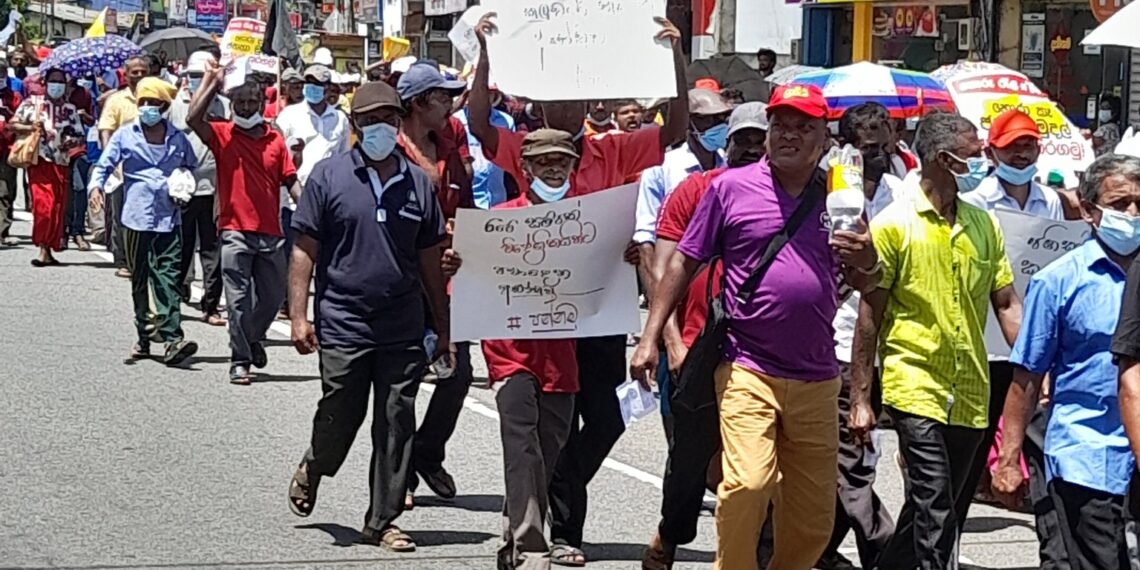
The country has seen mass protests in recent weeks as it suffers food shortages, soaring fuel prices and major power cuts as its reserves of foreign currencies are running low.

The latest rating from Moody’s suggests that overseas bonds issued by Sri Lanka are “likely in, or very near default”.

The rating agency said the country’s move to stop some payments “will lead to a series of defaults with the first coupon payments for the government’s international bonds coming due today, April 18, 2022.” A coupon is the interest payment due on a bond.

Moody’s added that the non-payment was “unlikely to be cured during the grace period”, as a debt restructuring programme with the IMF “will take time”.

Last week, two other major credit rating agencies also warned that Sri Lanka was on the brink of defaulting on its debts.

Credit ratings are intended to help investors understand the level of risk they face when buying a financial instrument, in this case a country’s debt – or sovereign bond.

International sovereign bonds make up the largest share of Sri Lanka’s foreign debt.

They are held by countries including China, Japan and India as well as major investment firms such as BlackRock, UBS and Allianz.

Meanwhile, the Colombo Stock Exchange is scheduled to remain closed all this week, due to the “present situation in the country”.

Posted in Uncategorized

‘Sri Lanka is a case study on how not to run a country’

In the backdrop of public protests in Sri Lanka, Harsha De Silva, MP of the opposition Samagi Jana Balawegaya, spoke to TOI in Colombo:

How would you sum up the crisis?
It is a political, economic and social crisis like never before.

What were the early warning signs that the government missed?
Immediately after the presidential election in 2019, ahead of the parliamentary election, they cut taxes by almost a third. The rating agencies changed their outlook from ‘stable’ to ‘negative’, but the government ignored it and started printing currency. And the downgrades kept coming. Denial was their strategy. And it blew up into this.

Did the government fail to seek the right advice?
Absolutely. While we were in an unstable macro situation, unable to control inflation and exchange rates, besides being in the middle of a pandemic, the president, against expert advice, banned import of chemical fertilisers. And now the harvest of tea, export crops, plantation crops, grains and rice are down by 50%. IMF was willing to give us reserves to try and hold the Sri Lankan rupee at 230 (against the US dollar), which they said was the level it was going to fall to. But then it kept dropping and today we are at 330. The government was utterly negligent, inconceivably idiotic. This is a case study of how not to run a country.

Why did the government delay approaching the International Monetary Fund?
I don’t understand why they delayed it. Every independent economist in Sri Lanka and abroad advised the president that he should do it (approach the World Bank). But certain people, particularly, former central bank governor Ajith Nivard Cabraal (who resigned on April 4) and Basil Rajapaksa (former finance minister) thought they had some home-grown solution. I think they misdiagnosed the problem; or they diagnosed it, but didn’t want to accept the reality. They kept saying this is a liquidity problem. There was also a liquidity problem, but the bigger problem was a solvency problem. These people have been utterly negligent.

Do you think there should be war-like action?
Yes. The only positive thing is that they have now appointed a professional as the governor of the central bank (P Nandalal Weerasinghe). The first thing he did after taking charge was to raise key interest rates by 700 basis points (7 percentage points) – a first. And, the opposition, not wanting to play politics at this time, supported him. A three-member advisory group on multilateral engagement and debt sustainability to advise the president has been constituted. It includes former governor of the central bank Indrajit Coomaraswamy, former chief economist of World Bank Shanta Devarajan and former director of the Institute of Capacity Development of the IMF Institute Sharmini Coorey.

Do you think India should help more? If so, how?
As a citizen of Sri Lanka, I must tell you the people of our country are thankful to the people of India. They have come to our help when we needed it the most. If India didn’t postpone what are called these Asian clearing union credits, that is payment for goods purchased coming due, we would have defaulted on some other loan three months ago. They have given us credit to buy food and medicine, given us credit to buy fuel. It is embarrassing for us to ask for food and medicines from anyone. It is tough for us, but we will come out of this and we will rise much faster.

Why did the opposition reject the president’s move to form a unity government involving opposition members?
The country is saying ‘Go home Gota’. How can we go against such sentiments? We said we are willing to take over the government and turn around the situation. We have the skills, the people, the connections. The way out now is by invoking the 21st amendment of the constitution to abolish the executive presidency. For this we need the support of two-thirds in parliament and a referendum. If Gotabaya agrees to that, a pathway will open to reset the economy. The referendum can happen along with a general election. Crises create opportunities. This is a good time to fulfil the promise of almost every presidential candidate since 1994 – Chandrika, Mahinda, Sirisena – to get rid of this concentration of power in one individual.

Can you give us a preview of the economic blueprint your team is working on?
First, we need to stabilise the macro-economy. We need to rein in inflation, hold the currency and have some meaningful intrastat. We should restructure jobs. We should revise taxes, rationalise expenditure, remove the stranglehold of government in the market by liberalising the trade and investment policy. We should focus on social safety banks because lower income people are getting hammered.

Posted in Uncategorized

US Report Against Human Rights Abuse in Sri Lanka

While acknowledging that Sri Lanka is a constitutional, multiparty, democratic republic with a freely elected government, the US State Department’s human rights report on the island nation for 2021 has few compliments to pay on the way it handled human rights issues. Abuses of various kinds were “significant” the report released on April 12 said.

According to the report, the government took “minimal steps” to identify, investigate, prosecute, and punish officials who committed human rights abuses or corruption. There were several reports that the government or its agents committed arbitrary or unlawful killings.

The report refers to the ‘Harm Reduction International’ to say that deaths in police custody increased during 2021. The press reported that Melon Mabula (alias “Uru Jawa”) and Dharmakeethilage Tharaka Wijesekara (alias “Kosgoda Tharaka”), were shot dead by police in May while they were in detention. The Bar Association of Sri Lanka condemned the killings.

On June 16, the Court of Appeal granted bail to former Director of the Criminal Investigations Department (CID) Shani Abeyesekera, who had been in pre-trial detention since July 2020 without charge for allegedly fabricating evidence in a 2013 case. Civil society considered his arrest in 2020 to be reprisal for his investigations into several high-profile murder, disappearance, and corruption cases involving members of the sitting government, including members of the Rajapaksa family.

Lack of accountability for conflict-era abuses persisted, the report stated. On January 11, the Attorney General’s Department (AGD) informed the Batticaloa High Court that it would not continue with the murder charges against the Tamil Makkal Viduthalai Pulikal party leader Sivanesathurai Chandrakanthan, aka Pillayan and five others for the 2005 killing of former Tamil National Alliance (TNA) member of parliament (MP) Joseph Pararajasingham. Pillayan, a former Liberation of Tamil Tigers Eelam (LTTE) cadre, had a plethora of allegations against him, but he became an ally of the Rajapaksas after the war.

On May 5, the Jaffna Magistrate Court ordered the release of six suspects in the October 2000 death of BBC Tamil reporter Mayilvaganam Nimalarajan, after the Attorney General advised the court that the government would no longer pursue the case. Nimalarajan was allegedly shot and killed by members of the pro-government Eelam People’s Democratic Party in his home in Jaffna.

On June 24, the President issued a special presidential pardon to former Sri Lanka Freedom Party (SLFP) parliamentarian Duminda Silva, sentenced to death in 2016 for the 2011 killing of fellow SLFP MP Bharatha Lakshman Premachandra during local elections. On July 16, the President appointed Silva as the chairman of the National Housing Development Authority.

Disappearances during the war and its aftermath remained unresolved. In February 2020 the Office on Missing Persons (OMP) received authorization to issue Interim Reports to the relatives of the missing and disappeared. The Interim Reports and Certificates of Absence could be used by family members to legally manage the assets of missing persons and assume custody of children. But the families of the disappeared said that issuing death certificates for the missing and disappeared, without investigation and disclosure of what happened to them, only promoted impunity.

On August 4, the Attorney General’s Department announced its intent to drop charges against former Navy Commander Adm. Wasantha Karannagoda for alleged involvement in the abduction and disappearance of 11 persons from Colombo in 2008 and 2009 as the complaint against him was allegedly politically motivated. On December 9, Karannagoda was sworn in as Governor of North Western Province.

As of December 14, 2021, there had been no progress on the trial of seven intelligence officers accused of participating in the 2010 disappearance of Prageeth Eknaligoda, a journalist and cartoonist.

Civil society organisations asserted that the government, including the courts, were reluctant to act against security forces alleged to be responsible for past abuses.

On October 21, the Supreme Court ordered the IGP to launch a criminal investigation into the allegation that former State Minister of Prisons Lohan Ratwatte threatened to kill Tamil terrorist suspects in the Anuradhapura jail on September 12. But as of October 25, Ratwatte had not cooperated with the CID.

Under the Prevention of Terrorism Act (PTA), detainees may be held for up to 18 months without charge, but in practice authorities often held PTA detainees for longer periods, some for more than 10 years. Judges require approval from the AGD to authorise bail for persons detained under the PTA. The AGD provided such approval in some cases. However, the law requires the provision of counsel for those without counsel only in cases before the High Court and Court of Appeal.

On August 25, the Inspector General of Police told the press that the government had arrested 723 individuals for alleged involvement in the 2019 Easter Sunday bombings, and that 311 individuals remained in detention. According to civil society, almost all these individuals were being held without charge under various combinations of the PTA, the International Covenant on Civil and Political Rights (ICCPR) Act, and the penal code.

On August 28, the President appointed a three-member advisory board to make recommendations on holding or releasing individuals held under PTA detention orders. According to civil society, at year’s end the government had released 16 PTA detainees on the recommendation of the board.

The government arrested five prominent Muslims in 2020 and 2021 for alleged involvement in the 2019 Easter Sunday bombings and indicted three of them on speech-related offenses under the PTA. Poet Ahnaf Jazeem was arrested under the PTA

in May 2020 for a collection of Tamil poems he published that allegedly contained “extremist” messages But Amnesty International asserted that the writings actually spoke out against extremism, violence, and war.

On September 7, the international NGO ‘Freedom Now’ filed a petition on his behalf with the UN Working Group on Arbitrary Detention, noting that “Ahnaf’s poetry should be celebrated, not condemned.” He was released on December 16.

On March 16, authorities arrested former Western Province governor Azath Salley under the PTA after he criticized the cabinet’s decision to ban polygamy at a March 10 press conference. The arrest came after a ruling government MP filed a complaint alleging Salley had “direct or indirect” links to the Easter Sunday attacks. On December 2, the Colombo High Court acquitted Salley of all charges.

Political opposition and civil society raised alarm over the government’s Presidential Commission of Inquiry (PCoI) on Political Victimisation report, which alleged the previous government had targeted members of the existing government and their loyalists with politically motivated investigations and prosecutions. It was feared that the report would be used to get many guilty ruling party men off the hook.

The attorney general filed indictments against human rights lawyer Hejaaz Hizbullah for speech-related offences under the PTA, ICCPR Act, and penal code on March 12. He remained in detention at year’s end, more than 20 months after his April 2020 arrest. The UN High Commissioner for Human Rights Michelle Bachelet in her September 13 update at the UN Human Rights Council (UNHRC) raised concerns regarding the application of the PTA, citing Hizbullah and Jazeem by name.

A Muslim businessman, Fazl Muhammed Nizar, was detained by police under the PTA for a January 9 Facebook post accusing the government of using heavy-handed tactics to govern.

There were reports of harassment and intimidation of journalists when covering sensitive issues. Reporters alleged that the authorities, sometimes in government vehicles, surveilled journalists, especially those covering protests.

The US report further said that the 20th constitutional Amendment (20A) of 2020 is marked by a “broad expansion of executive authority that activists said would undermine the independence of the judiciary and independent state institutions.” Institutions such as the Human Rights Commission and the Election Commission are subverted by granting the President sole authority to make appointments to these bodies with Parliament afforded only a consultative role.


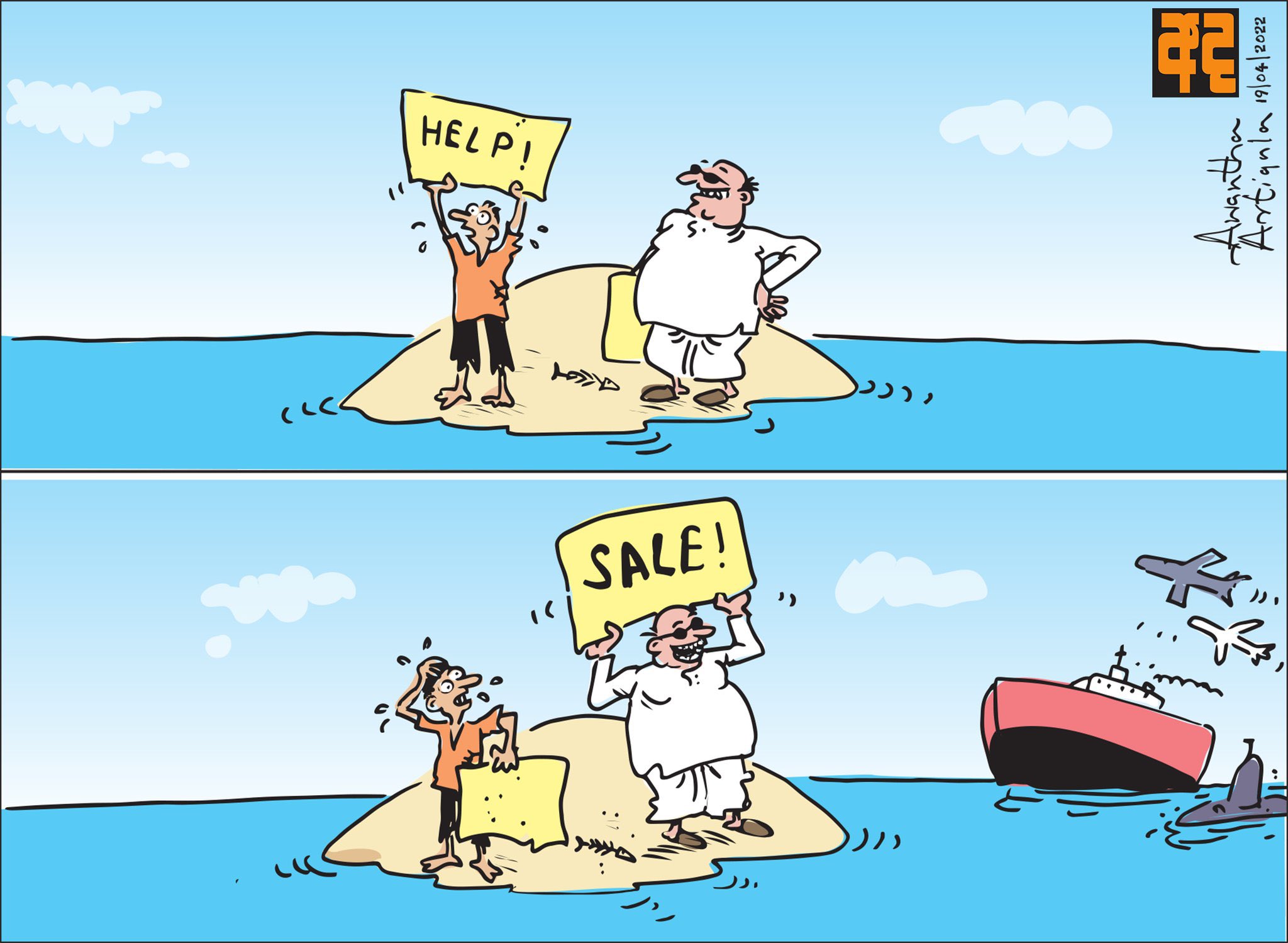
The Colombo cascade: Sri Lanka halts debt payments, raising fears it could be the first of many emerging market economies to collapse

Sri Lanka is a country which has lived through multiple catastrophes since winning its independence from Britain in 1948.

Most calamitously, there were three decades of civil war between the majority Sinhalese and the minority Sri Lankan Tamils.

Yet throughout this troubled history, the government in Colombo has never reneged on its debts.

But with protesters on the streets complaining about soaring food and fuel prices and the leadership of the ruling family, the finance ministry felt it had few other choices but to suspend payments.

It stressed the country’s uninterrupted record of paying its way through thick and thin, adding that to continue to do so ‘was no longer tenable.’

Sri Lanka is no Argentina, which has formally defaulted on its debt nine times since 1827 and twice in recent decades.

As the country seeks to deal with what IMF boss Kristalina Georgieva describes as ‘crisis on top of crisis’ – the pandemic followed by the war in Ukraine – it decided it has no other choice but to try to reshape the financial and economic landscape.

In spite of past strife, Sri Lanka with its highly talented, well-educated government elites, is not the first nation which would be thought of as sparking a global meltdown.

Its difficulties, however, mirror a huge build-up of debt, social inequality, poverty and hunger across emerging markets and the developing world during Covid.

The Western nations have been so focused on their own health and economic disruption in the pandemic that the rest of the world barely has received any attention.

A report, just compiled by the UN trade and development arm Unctad, warns ‘we are on the brink of a global debt crisis.’

Before the Ukraine war, developing countries were on average spending 16pc of export earnings on servicing debt. The figure among smaller and island states is twice that.

To place matters in perspective, Germany’s debt obligations when they were reorganised (effectively written off) by its creditors in 1953 never exceeded 3.4 per cent of exports.

Posted in Uncategorized

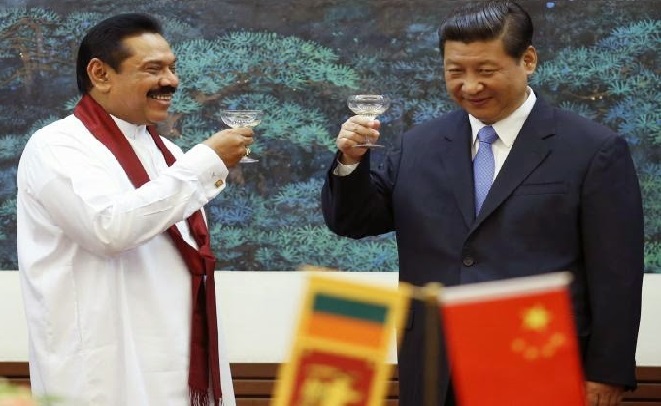
Sri Lanka crisis: China to provide emergency assistance

The Chinese government has decided to provide emergency humanitarian assistance to Sri Lanka to help the country cope with the current difficulties, news agencies reported.

The spokesperson for China International Development Cooperation Agency, Xu Wei, on Tuesday, said China had noticed Sri Lanka’s economic difficulties and was ready to help.

Wei said, “We believe that the Sri Lankan government and people will overcome the temporary difficulties and maintain economic and social stability and development.”

Sri Lanka had been in the midst of a severe economic crisis featuring shortages of foreign exchange, fuel, and other essential supplies as well as rising inflation.

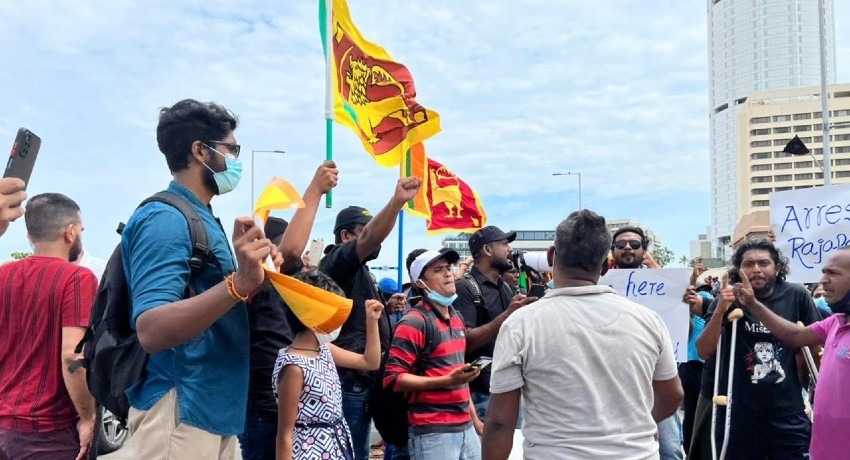
On Tuesday, protests had resumed across the country over the fuel price hike.

The protesters were demanding the resignation of President Gotabaya Rajapaksa and Prime Minister Mahinda Rajapaksa, who is the president’s brother.

The economic crisis in Sri Lanka had meant a lack of the United States dollars, which had affected imports.