49th UNHRC session: US urges GoSL to engage Tamil, Muslim parties

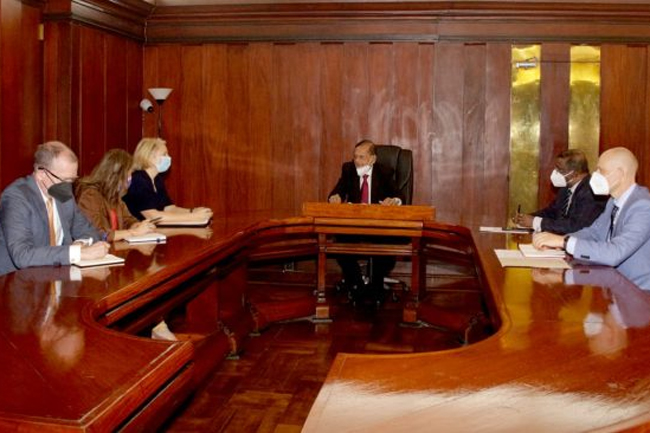
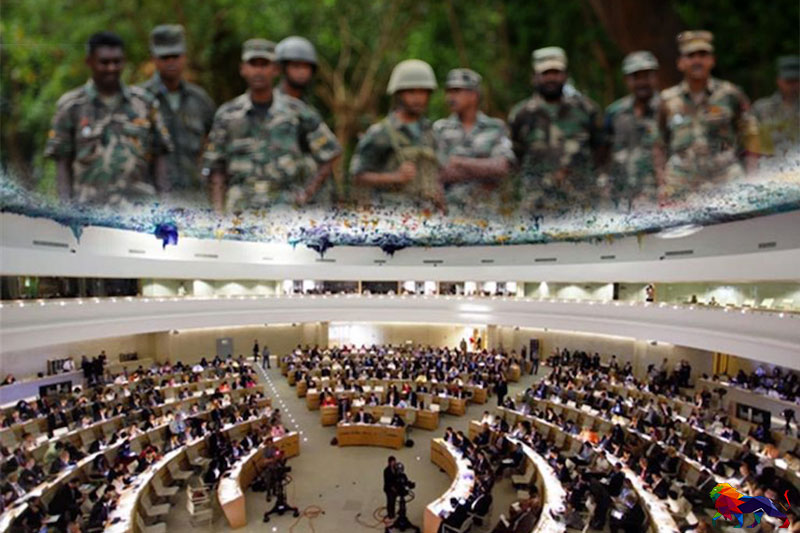
The US yesterday (7) spoke about Sri Lanka during the interactive dialogue about the country at the 49th regular session of the United Nations Human Rights Council (UNHRC), where they called upon the Government of Sri Lanka (GoSL) to engage with Tamil and Muslim parties for a “lasting political solution”.

“We call on the Government to engage with Tamil and Muslim political parties and civil society organisations to advance an inclusive, lasting political solution,” the representative for the US said in Geneva, Switzerland, yesterday.

The UK noted setbacks in “several emblematic human rights cases” and said that the “recent appointment of an individual named in a key emblematic case as a Provincial Governor is particularly worrying”. Admiral of the Fleet Wasantha Karannagoda, who was named in the “Navy 11” case with regard to the disappearance of 11 youths allegedly at the hands of the Sri Lanka Navy, was recently appointed as the North Western Province Governor. Furthermore, the UK also raised concerns of land grabbing in the Northern and Eastern (N-E) Provinces. “The UK also notes concerns of surveillance and the harassment of the civil society and the militarisation of civilian government functions,” added the UK representative.

Meanwhile, Amnesty International said that it remains deeply concerned by the “shrinking civic space and therefore, urged the Government to halt reprisals against critics and perceived critics, including those advocating for justice for the April 2019 bombings”. “Families of the disappeared continue to face obstacles and pushback from state agents while they demand their right to truth and justice, including through the State’s pursuit of court orders attempting to restrict their freedom to protest. The State’s alarming discrimination and targeting of the Muslim community continues unabated,” said Amnesty International. The organisation also called for an immediate moratorium on the PTA, echoing the call of the UN High Commissioner (HC) for HR, Michelle Bachelet in her update about Sri Lanka this year.

Representing the International Harm Reduction Association, Ambika Satkunanathan raised concerns about the militarisation of drug control and treatment in the country and its negative reprisals on the treatment, the individual, and public health. “A worrying pattern of deaths in custody of persons arrested for drug-related offences in alleged shootouts with law enforcement or while assisting law enforcement officials have been documented. The lack of investigations into these custodial deaths entrench impunity and the use of violence by state agencies,” said Satkunanathan.

In March 2021, the UNHRC passed Resolution 46/1, which recognises the importance of preserving evidence relating to violations of human rights in Sri Lanka in order to advance accountability, and as such, a call has been made to implement an “evidence preserving” mechanism in the country. It was adopted on 23 March 2021 at the UNHRC with 22 votes in favour of it and 11 votes in opposition while 14 Member States abstained from voting.

In her written update this month, Bachelet has called upon the UNHRC and its Member States to co-operate with the Office of the UNHCHR in its discharge of accountability related work under Resolution 46/1 and to provide it with the adequate human and financial resources in order to enable it to effectively deliver the full mandate given under the Resolution.

Countries such as China criticised Resolution 46/1 yesterday. “The Resolution is not in line with the principles of impartiality, non-politicisation, objectivity, and non-selectivity and nor has it been endorsed by the State in question. We call on the relevant parties to respect Sri Lanka’s sovereignty and political independence and pass human rights development of their own choice in light of their national conditions,” said China.

In a statement made yesterday, the Sri Lankan Foreign Ministry said that Sri Lanka received “overwhelming support from countries of the Global South who expressed support for the Government’s significant efforts towards reconciliation and reiterated the importance of objective and constructive co-operation as the fundamental basis for multilateral engagement”. “Addressing the UNHRC on 4 March at the commencement of the interactive dialogue, Foreign Minister Prof. G.L. Peiris, while reiterating Sri Lanka’s commitment to continuing its voluntary international undertakings on human rights and engaging with the UN, including the UNHRC, referred to serious anomalies and weaknesses in the update presented by Bachelet,” the statement noted.

Posted in Uncategorized

Sri Lanka Finance Minister instructs to turn off all street lights until March 31

Basil Rajapaksa, Minister of Finance has instructed all heads of local government bodies to turn off all street lights in the country until March 31.

In a special statement issued to all heads of local government bodies and group leaders, Finance Minister Basil Rajapaksa said that in addition to deactivating street lights, alternative ways of saving electricity should be implemented as much as possible to minimize the impact on daily life.

Hydro power plants, which contribute 30 percent of the country’s total electricity generation, have been completely shut down due to the prevailing rainless weather.

As an alternative to fill that gap, diesel and fuel power plants have to be used to generate electricity and add it to the national grid. Those power plants incur very high costs to produce a unit of electricity.

At the moment, world oil prices have risen sharply, and economists predict that oil prices will continue to rise, the Finance Minister noted. The situation is further complicated by the fact that internally the country’s dollar reserves are still limited.

The primary option for managing this situation is to use electricity sparingly on a priority basis, he explained.

In his announcement, the Minister of Finance has requested the heads of all governing bodies to turn off all street lamps until the 31st of this month to save electricity as an example.

Sri Lanka MP briefs UNHRC on anti-terror law, Easter attack, imprisoned colleague

Calling for international support, Sri Lanka opposition MP Harin Fernando briefed the 49th session of the United Nation Human Rights Council (UNHRC) in Geneva on Monday on, among other matters, the Prevention of Terrorism Act (PTA), the 2019 Easter bombings and the continued incarnation of his former parliamentary colleague Ranjan Ramanayake.

In a short address at the council session this afternoon (Sri Lanka time), Fernando said President Gotabaya Rajapksa has ignored requests including from the International Parliamentary Union (IPU) to pardon Ramanayake who is serving a four-year prison sentence for contempt of court.

The MP said Ramanayake’s civic rights have been removed over an offence that is not legally defined in Sri Lanka and cannot be appealed.

The island nation’s Supreme Court sentenced Ramanayake to four years’ rigorous imprisonment on January 12, 2021, over contempt of court charges, in connection with disparaging remarks he had allegedly made about the judiciary in August 2017. Imprisonment over contempt of court charges is legal but is increasingly seen as inappropriate and disproportionate, according to Director, Edinburgh Centre for Constitutional Law, Dr Asanga Welikala, who says many countries in the Commonwealth have introduced legislation to regulate contempt of court powers.

Fernando, a vocal critic of the government’s probes into the Easter Sunday bombings, told the UNHRC that the cries of the victims of the Easter Sunday bombings for truth and justice continue to be in vain.

“The non-prosecution of negligent high officials gives rise to the suspicion that the real brains behind the attacks are been shielded. Instead, investigator Shani Abeysekera, dubbed the ‘Sherlock Holmes of Sri Lanka’, and Senior Police officer Ravi Seneviratne are being hounded, and their lives are in danger,” he claimed.

Fernando also claimed that the government is reluctant to make meaningful changes to what he called the “draconian” PTA, Sri Lanka’s controversial counter-terror law that has been at the centre of many international deliberations on the country’s human rights record.

“The government is reluctant to make meaningful changes to the draconian PTA which facilitated arbitrary detention, torture, and convictions based solely on alleged confessions.

“Citizens exercising their freedom of expression are been harassed. Civil society activists work under severe pressure. Militarisation of the civilian administration is a characteristic of the government,” said Fernando.

Ethnic and religious minorities live in anxiety, the MP further claimed.

The MP also brought to notice of the council an alleged attack that took place against the main opposition office Monday morning by a government MP.

“Added to all this is economic mismanagement. The severe shortage of essential items, disruption of electrical supply, long queues for fuel, and the soaring cost of living are but a few of its consequences,” he said.

Sri Lanka is currently in the midst of one of the worst economic crises in its history as a result of a severe forex shortage brought about by excess money printing to keep interest rates low in a pegged exchange rate regime.

“I call upon the international community to support the people of Sri Lanka whose human rights have been threatened as never before,” the MP claimed.

Hundreds of bakeries shut in Sri Lanka after cooking gas runs out

Nearly 1,000 bakeries have closed in Sri Lanka due to a severe shortage of cooking gas, an industry association said on Monday, as the impact of dwindling foreign exchange reserves ricochets through the country’s economy.

The island nation is facing its worst financial crisis in a decade with foreign exchange reserves shrinking 70% to $2.36 billion in January, leaving the government struggling to pay for imports including food, medicine and fuel.

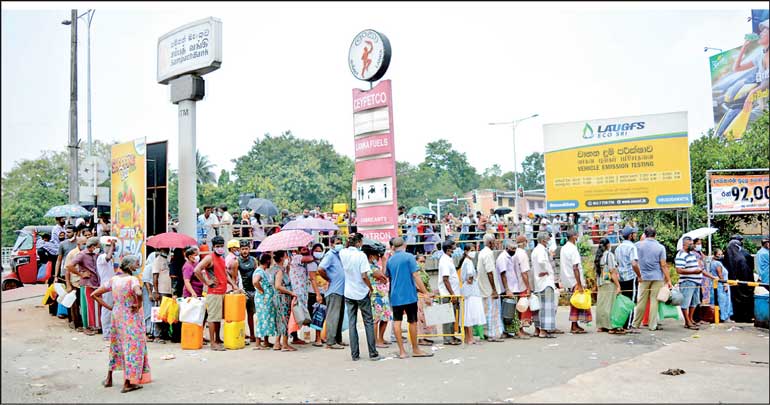
People are lining up at fuel pumps across the country and a shutdown of multiple power plants has led to rolling power cuts, sometimes lasting more than seven hours a day.

The cooking gas shortage has almost doubled bread prices to about 150 rupees ($0.75) in some urban areas, N.K. Jayawardena, chairman of the Ceylon Bakery Owners Association, said.

“If this situation lasts for one more week, 90% of bakeries will have to close. Many bakers have taken out loans, they will not be able to repay them,” said Jayawardena, whose association, the largest in the sector in the country, represents some 7,000 members. “The government must find a solution urgently.”

Two government spokesmen could not be immediately reached for comment on the bakeries but ministers have said they are working to normalise fuel distribution.

While bread products are not such a vital staple as rice, nearly every village and town would have at least one bakery supplying breads for curries and snacks to families and workers.

The gas shortage is also hitting small restaurants and households, with dozens of cooking gas retailers forced to suspend business due to lack of supplies.

“Normally we get about 100 gas canisters every two days. Since last Monday we haven’t got any,” cooking gas retail outlet owner Danusha Gunewardene told Reuters. “I had a delivery boy but now he also has no work and no way to make a living.”

A senior official at Laugfs Gas, one of Sri Lanka’s two gas suppliers, said imports were stalled because banks were declining to open letters of credit. The company typically sources about 15,000 tonnes of gas from Qatar and Oman a month worth $50 million.

“We usually issue 40,000-50,000 cylinders to retailers per month but that has now reduced to less than 2,000. Since last Friday no supplies have been released,” the official, asking not to be named because of the sensitivity of the situation.

Spokespeople for Laugfs and the other main supplier, state-owned Litro Gas, declined to comment.

Sri Lanka is due to receive two diesel shipments on Monday and another later this week, which is expected to partly ease the fuel shortage, Energy Ministry Secretary K.D.R Olga said.

“A 30,000 tonne shipment of furnace fuel has also docked and will be offloaded from tomorrow to supply thermal power plants,” Olga said.

($1 = 201.0000 Sri Lankan rupees)

UK calls on SL to engage constructively with recommendations in resolution 46/1

While raising concerns regarding the continued lack of progress on accountability and regret that there have been setbacks in several emblematic human rights cases, the United Kingdom called on the Government of Sri Lanka to engage constructively with the recommendations in resolution 46/1 and to co-operate with your Office.

The UK’s Global Ambassador for Human Rights, Rita French delivering her statement during the Interactive Dialogue on the OHCHR report on Sri Lanka, said they welcomed recent releases on bail of Ahnaf Jazeem and Hejaaz Hizbullah as a positive first step. Whilst we acknowledge initial reforms of the Prevention of Terrorism Act, these do not go far enough.

“Madam High Commissioner, The United Kingdom welcomes your update. We share your concerns regarding the continued lack of progress on accountability and regret that there have been setbacks in several emblematic human rights cases.

We welcome recent releases on bail of Ahnaf Jazeem and Hejaaz Hizbullah as a positive first step. Whilst we acknowledge initial reforms of the Prevention of Terrorism Act, these do not go far enough.

Whilst we acknowledge the NGO Secretariat move to the Foreign Ministry, we have concerns around surveillance and harassment of civil society, and militarisation of civilian governmental functions. The appointment of an individual, named in a key emblematic case, to the post of Provincial Governor, is particularly worrying.

Whilst we acknowledge ongoing work in Government institutions on reparations and missing persons, it is crucial this is accompanied by a comprehensive reconciliation and accountability process.

We note with concern that minority communities are facing increased marginalisation, with allegations of land grabs in the North and East of the country.

We call on the Government of Sri Lanka to engage constructively with the recommendations in resolution 46/1 and to co-operate with your Office,” she said.

Posted in Uncategorized

Sri Lanka’s SLFP will form new alliance, but not under former prez CBK: gen secy

Eleven constituent parties of Sri Lanka’s ruling coalition will contest a future election as a new alliance without the ruling Sri Lanka Podujana Peramuna (SLPP) but it will likely not be under the leadership of former president Chandrika Bandaranaike Kumaratunga contrary to some media reports, State Minister Dayasiri Jayasekara said.

The Sri Lanka Freedom Party (SLFP) general secretary told EconnomyNext Monday evening that the question of who will lead the alliance is not of concern at present.

“We don’t know who the leader will be. Former President Maithripala Sirisena also [figures in that discussion]. So let’s see what happens,” said Jayasekara.

Asked if the SLFP, a party increasingly at odds with the SLPP, are discussing possibilities with the recently ousted ministers Wimal Weerawansa and Udaya Gammanpila, the state minister simply said the 11 partner parties have come together.

In the event of a snap election, said Jayasekara, the parties will form an alliance and contest together.

“Definitely without the SLPP,” he said.

“There is no need to contest with them again. You know what the situation is now after contesting with them.”

The popularity of Sri Lanka’s ruling coalition, of which Jayasekara’s SLFP is a major partner, has dwindled to an all time low, as the public continues to endure severe hardships in the face of rising cost of living on top of an ongoing energy crisis.

The energy crisis in turn has been caused by a severe forex shortage brought about by excess money printing to keep interest rates low in a pegged exchange rate regime. Queues for essential items including milk powder, fuel, cooking gas, among other things, has eroded the SLPP’s popularity which secured a two-thirds majority at the 2020 parliamentary elections.

The SLFP has been critical of the government from within, though no firm decision has yet been made about quitting the alliance and sitting in the opposition. Other constituent parties in the ruling coalition have also expressed their dissatisfaction with the status quo.

Asked if the party can continue to work with the government in the midst of rising tensions, Jayasekara said: “Let’s see. That’s a decision the party has to make. I can’t make it on my own.”

Posted in Uncategorized

Sri Lanka rupee allowed to fall, expects Rs230 to dollar rate: Central Bank

Sri Lanka’s central bank said it is abandoning a 200 to the US dollar peg after printing money though multiple means which were making outflows greater than inflows, creating forex shortages and parallel exchange rates.

The central bank said “greater flexibility in the exchange rate will be allowed to the markets with immediate effect.”

“The Central Bank is also of the view that forex transactions would take place at levels which are not more than Rs. 230 per US dollar.”

The rupee is trading in the kerb market around 249 to the US dollar. Exporters have been selling unofficially around 245 to the US dollar.

It is not clear whether the 230 rate will be controlled or it will be a allowed to free float.

Devaluations are hit or miss affairs, analysts say, unlike a clean float which is followed by a steep rate hike to curb domestic credit which succeeds every time.

The current statement came after a 100bp rate hike, which is still far below inflation of 15.1 percent with the budget deficit also around 10 percent of gross domestic product.

Related

Sri Lanka has to hike rates, tourism recovery will not help end forex crisis: Bellwether

The earlier 200 to the dollar non-credible peg was only partially defended through ‘reserves for imports’ leading to forex shortages.

The central bank has surrender requirements, which can undermined the exchange rate, analysts say.

The central bank has lost reserves after record money printing to keep interest rates artificially low and the ability to defend the currency peg.

The full statement is reproduced below:

Policy package to support greater macroeconomic stability: Allowing flexibility in the exchange rate

Considering the severity of the external shocks and recent developments in the domestic front, the Monetary Board of the Central Bank of Sri Lanka announced a comprehensive policy package on 04 March 2022 with the view to counter such economic headwinds.

The Central Bank also indicated that it will continue to closely monitor the emerging macroeconomic and financial market developments, both globally and domestically, and will stand ready to take further measures as appropriate, with the aim of achieving stability in the fronts of inflation, the external sector, the financial sector, and real economic activity.

In that context, greater flexibility in the exchange rate will be allowed to the markets with immediate effect. The Central Bank is also of the view that forex transactions would take place at levels which are not more than Rs. 230 per US dollar.

The Central Bank will continue to closely monitor the developments in the domestic foreign exchange market and make appropriate policy adjustments accordingly.

Posted in Uncategorized

Pope to meet Lankans in Europe on Easter attacks

A large meeting will be held soon in Vatican City with the participation of His Holiness Pope Francis, Archbishop of Colombo His Eminence Malcolm Cardinal Ranjith, and Sri Lankans living in European countries, where bringing justice to the victims of the Easter Sunday terror attacks of 21 April 2019 will be discussed.

Well-placed sources who spoke to The Morning yesterday (6) said that this meeting would not take place during the Archbishop’s ongoing visit to Vatican City, but will probably be scheduled after April and that Sri Lankans of all faiths in Italy and nearby countries are expected to attend the meeting.

“During the Cardinal’s recent visit to the Vatican, a group of Sri Lankans there had organised a discussion, but he did not attend. Instead, he plans to meet Sri Lankans with the Pope in the near future. The exact date of the meeting is yet to be determined, but it would most likely be after April,” the sources said.

The Colombo Archbishop met with Pope Francis on 28 February at the Vatican, and the Easter Sunday terror attacks and related investigations were discussed during the said meeting.

“We have exhausted all options within Sri Lanka to find justice. Now we are discussing all avenues through which we can find justice internationally. Our last remaining solution was to seek assistance from the international community. This is not because we do not love our country. The Archbishop is meeting the Pope after two years and he is especially focusing on informing him that we need help from the international community to seek justice for the victims of the Easter Sunday terror attacks,” National Catholic Social Communication Centre Director Rev. Cyril Gamini Fernando said at a press conference held on the same day.

Following the meeting with the Pope, Cardinal Ranjith met United Nations (UN) High Commissioner for Human Rights Michelle Bachelet in Geneva, Switzerland and discussed revealing the truth behind the Easter Sunday terror attacks and bringing justice to the victims on 2 March in an approximately 45-minute discussion.

“As we have informed earlier, we have tried all possible options to reveal the truth behind the Easter Sunday terror attacks and failing that, we have gone to the international community to request help from them to reveal the truth. Therefore, as a first step, the Archbishop met with the Pope and told him all about the attacks. He requested him to mediate in order to get the truth revealed. As a second step, the Archbishop met Bachelet and held discussions on revealing the truth behind the terror attacks and bringing justice to the victims,” Colombo Archdiocese Auxiliary Bishop Rev. J.D. Anthony said in a statement issued on 2 March.

Claiming that all attempts made by the Catholic church to obtain justice for Easter Sunday terror attacks within the country have failed, Cardinal Ranjith last month said that they were currently exploring the possibilities to reach out to the international community, including the UN, seeking justice for the said terror attacks.

Pointing out that they, as the Catholic church, have links all over the world, the Archbishop said that they would also try to influence some pertinent and powerful countries that are in contact with the church. In addition, he said that in case they would be reaching out to the international community, such efforts would also be supported by his fellow cardinals around the world.

On 21 April 2019, Easter Sunday, three churches (St. Sebastian’s Church in Katuwapitiya, St. Anthony’s Church in Kochchikade, and Zion Church in Batticaloa) and three luxury hotels in Colombo (Cinnamon Grand Colombo, The Kingsbury Colombo, and Shangri-La Colombo) were targeted in a series of co-ordinated suicide bombings. Later that day, another two bomb explosions took place at a house in Dematagoda and the Tropical Inn Lodge in Dehiwala. A total of 269 people excluding the bombers were killed in the bombings, including about 45 foreign nationals, while at least 500 were injured.

India imposes tough conditions for US$ 1 billion loan

India has called for a road map from Sri Lanka on how it is going to overcome its economic crisis in the long term as well as to clear the decks for a long list of its economic cum strategic demands for implementation in the North and the East of Sri Lanka.

Till then the future of the one billion dollar emergency loan from India seems uncertain.

Finance Minister Basil Rajapaksa’s twice cancelled visit to India after securng a USD 500 million loan in December last year to clinch a further one billion dollar loan for emergency supplies of food, fuel and medicines to overcome the ongoing economic crisis in Sri Lanka is yet to be rescheduled. The December loan taken by Sri Lanka was also to be repaid this week.

The Sunday Times learns that the Indian Government is awaiting the green light from the Colombo Government on both fronts, i.e. the economic action plan aimed at long term recovery from the country’s foreign exchange and debt repayment crisis and to the Indian list of demands to start economic projects in Sri Lanka. Neither Colombo nor New Delhi has officially mentioned either so far.

The Indian demands involve a string of maritime security agreements that will strengthen India’s strategic interests, particularly around the eastern Trincomalee harbour. These include Donier surveillance aircraft for the Sri Lanka Air Force, a ship repair dock for the Sri Lanka Navy in Trincomalee and posting of a Sri Lankan Navy officer at the Intelligence Fusion Centre, a Bahrain-based intelligence sharing office which is a US Navy initiative to combat international terrorism, the narcotics trade and ensure safe maritime passage for commercial vessels in the region.

One of the key pressure-points from the Indian Government is to start a renewable energy (solar power) project in and around Sampur near Trincomalee. An earlier plan by India to begin a coal power project in joint partnership with Japan has now been abandoned as Sri Lanka announced a move away from coal plants as part of its futuristic energy policy.

The reopening of the Palay airport for commercial operations and several cultural projects in the Jaffna peninsula are also among items on the list already made public.

The Indian Government also wants to enter into the renewable energy field in the Delft islet after it scuttled a Chinese company securing the project following an Asian Development Bank ((ADB) tender procedure.

The one billion US dollar loan from India agreed to earlier in principle by the Indian Finance Ministry remains suspended for now, until guarantees are given from the Sri Lankan side, it is learnt.

The Indian High Commission said it did not want to comment on Finance Minister Rajapaksa’s visit as it was not formally announced that he was to visit New Delhi for a one billion dollar loan facility. Last week, however, the mission stated that the visit fixed for last week was rescheduled as Foreign Affairs Minister S. Jaishankar had to urgently visit Paris on official business.

Mr. Jaishankar was earlier due in Colombo on March 18, but the high commission remained tight-lipped on the visit taking place.

Posted in Uncategorized

Political rumblings: Sixteen Government MPs to go independent

Sixteen parliamentarians from 10 political parties which form the governing alliance plan to sit independently in the House from next week, The Sunday Morning reliably learns.

The decision to sit independently was reached during a 10-party party leaders’ meeting held last Friday (4), a leader of a dissident group told The Sunday Morning.

Accordingly, the group of 16 will sit separately from the Government MPs, but will remain on the Government side of the House.

It is also learnt that the Sri Lanka Freedom Party (SLFP), which has been raising a dissenting voice over the last year, will not join this move.

The move comes in the wake of last week’s Cabinet reshuffle, where President Gotabaya Rajapaksa sacked two key Cabinet Ministers – National Freedom Front (NFF) Leader Wimal Weerawansa and Pivithuru Hela Urumaya (PHU) Leader Udaya Gammanpila – who had criticised Government policies and called for a change in policy direction to avert a further crisis.