Premadasa makes ‘U’ turn on PTA

In Sri Lankan politics, changing party colours often or making ‘U’ turns on critical policies for one’s own political convenience is not something new when the ultimate goal is securing votes and retaining your seat. It could be one of the reasons why we have had only a handful of statespersons and plentiful of run of the mill politicians in our recent political history.

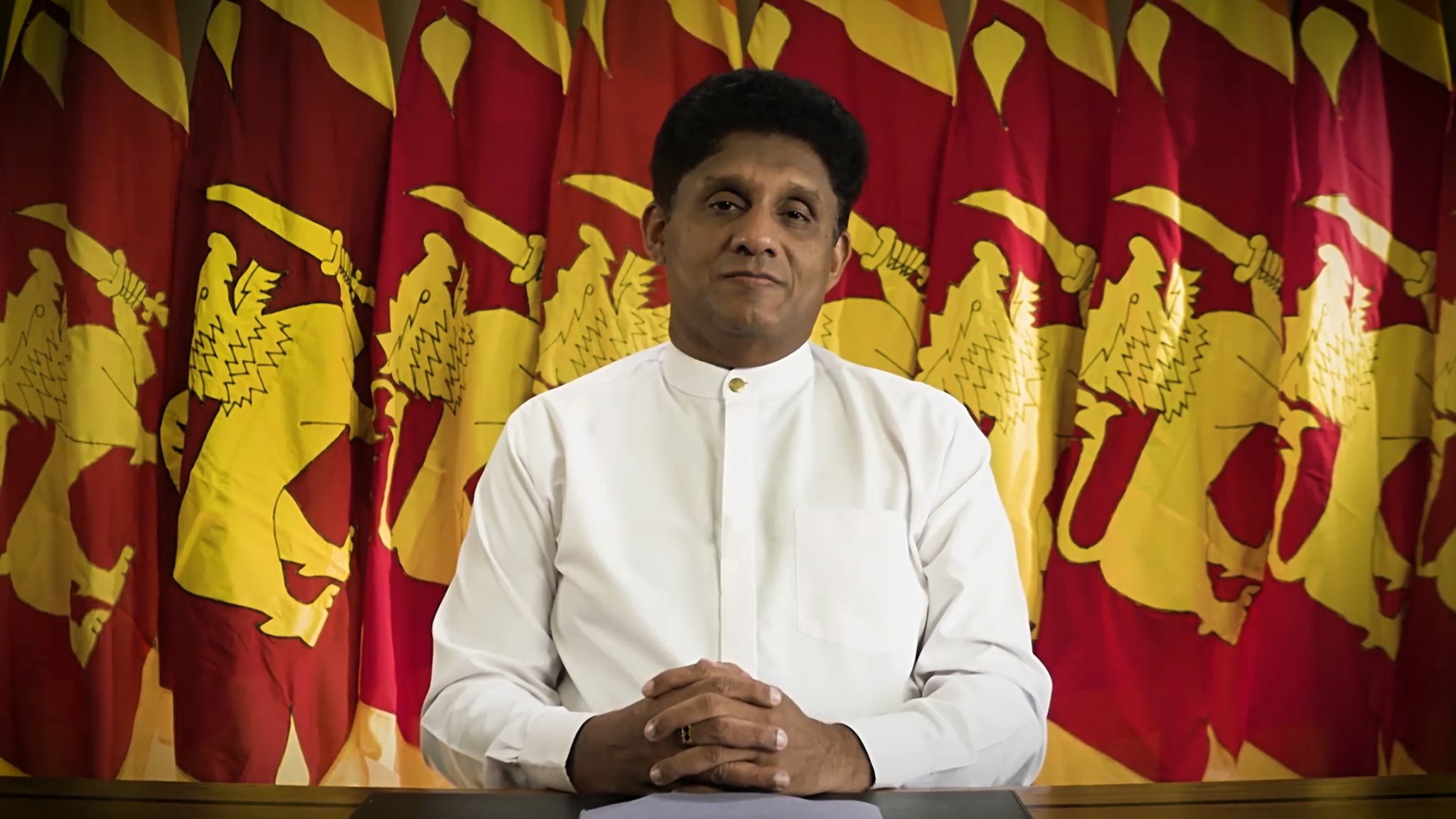
One such complete ‘U’ turn was witnessed this week when Opposition Leader Sajith Premadasa declared in a letter to Tamil National Alliance (TNA) MP M. A. Sumanthiran stating that the Prevention of Terrorism (Temporary Provisions) Act No 48 of 1979 (PTA) should be abolished completely without tinkering with the law and only making amendments to the substantive law.

Coinciding with United Nations Human Rights Council (UNHRC) sessions in the past few weeks and the report from the UN Human Rights chief on the continuous use of the PTA, the TNA is leading a country-wide campaign with progressive forces in the south to repeal the Act.

“We find that none of the many weaknesses of the PTA are addressed by the proposed amendments that have been placed on the Order Paper of Parliament. Therefore, the Samagi Jana Balawegaya (SJB) rejects the proposed amendments in total. Our position is that the PTA cannot be tinkered with. It must be repealed, and a law that accords with international standards and effectively balances public and national security, and personal liberty must replace it”, the Opposition Leader said while stressing that this law was enacted as a temporary provisions act for six months in 1979, but has remained in statute books for 43 years and 12 years after the northern insurgency came to an end.

Not so long ago, addressing a rally in Ampara weeks after the Easter Sunday attacks in 2019, Mr. Premadasa, who was then Housing Construction and Cultural Affairs Minister reiterated that the PTA must be strengthened while suggesting that the then Yahapalanaya (Good Governance) Administration in which he was a fairly prominent member should suspend the reforming process of the law by replacing the PTA with a Counter Terrorism Act (CTA).

Instead, he said; “I believe the moves taken to put forward the Counter Terrorism Act must be halted following the April 21 terror attacks which have marked the beginning of global terrorism in the country.” He emphasised that the PTA which played a supporting role in defeating terrorism which existed for three decades in the country, must be strengthened even further.

At that time, Mr. Premadasa had his own reasons to take such a stand: “The Armed Forces and the Police were able to take swift measures against those allegedly involved in the Easter Sunday attacks, because of the PTA. We can’t expect these officers to control terrorism by tying their hands behind their backs.”

In his more recent letter, the Opposition Leader also came up with recommendations as well. He is of the view that the 2016 proposals of the Sri Lanka Law Commission, a body comprising eminent members of Sri Lanka’s legal fraternity, be adopted as the starting point to repeal and replace the current PTA.

Commenting on the ‘U’ turn by the Opposition Leader, a Jaffna based political observer said the shift is clearly a political move to secure minority votes at the next Presidential polls. Whether that will be at the expense of losing the southern votes remains to be seen.
Adam’s bridge to be claimed as an Indian national heritage?

A threat of encroachment into the sovereignty of Sri Lanka is currently emerging with regard to the statements made by Dr. Subramaniam Swamy, a senior politician of the Bharathiya Janatha Party and Member of the Rajya Sabha of India.

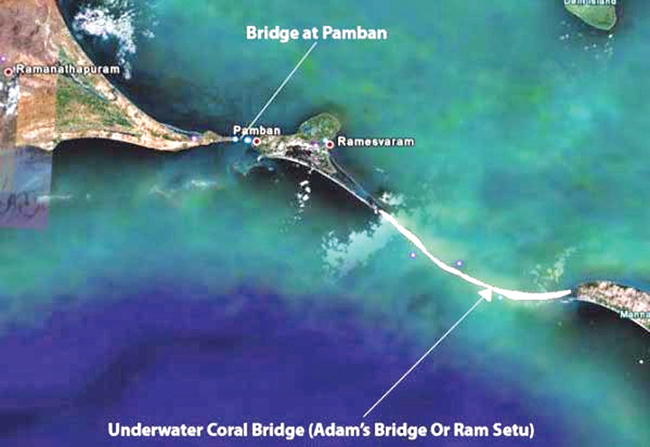
Rajya Sabha member Dr. Subramaniam Swamy stated that the Adam’s Bridge cannot be controlled by anyone, and even the Supreme Court has issued a judgement on this, as he filed two petitions with regard to this issue; first being that nobody will be able to gain control of the area, which the Supreme Court approved, and the second aiming to declare it as a national heritage, which is due to be taken up on the 22nd of March.

Dr. Subramaniam Swamy’s statement is not one that can be considered trivial, not only because he is one of the most powerful advisers to the Indian ruling party, but because he is one of the closest allies of several powerful politicians in Sri Lanka.

While the Indo-Lanka border has been clearly demarcated and enjoyed by both countries for decades, the conversion of the Ram Sethu or Adam’s Bridge, which is also part of Sri Lanka, into an Indian National Heritage Site, can be considered as an encroachment on the sovereignty of Sri Lanka.

It is no coincidence that such an unprecedented proposal comes suddenly at a time when the country is in a state of economic weakness and is borrowing from other countries to import daily necessities such as food, fuel and medicine.

On one hand, a question arises as to why the leaders of Sri Lanka are afraid to utter a word against such statements that bring the country to its knees economically and leaves it vulnerable to be plundered.

India, China and the United States are more powerful and larger countries than Sri Lanka. However, it is in the best interest of Sri Lanka and its citizens to remember that their courage is mightier than the wealth of three countries, thus should never attempt to submit to others.

Revolting rupee dip sends prices high

The sharpest depreciation of the rupee following the free float of the currency ignited across the board prices hike with cost likely to soar further if Ceylon Petroleum Corporation revises upwards its pricing whilst the Central Bank said spikes are temporary and its recent moves will usher longer-term benefits and stability.

Of the announced hikes, most centred around food on the basis that producers will incur higher prices on account of imported flour and other ingredients would be costlier following the near 30% depreciation of the rupee.

Forex markets and the private sector saw continued uncertainty as at interbank level the US Dollar was quoted at between Rs. 260 and Rs. 280. Dealers said the highest-level transactions were done at Rs. 265. However CBSL continued to quote Telegraphic Transfer rates at Rs. 249.96 (buying) and Rs. 259.99 (Selling).

Prima said that One kilogram of Wheat Flour was increased by a price between Rs. 35 to Rs. 45 whilst the other producer Serendib increased it by Rs. 35.

The All Ceylon Bakery Owners’ Association said the price of a loaf of bread has been increased by between Rs. 20-30 and a loaf would cost between Rs. 110 and Rs. 130. The price of a sweet bun has been increased by Rs. 10.

The All Ceylon Restaurant Owners’ Association said the price of a rice packet has been increased by Rs. 20; Kottu by Rs. 10 and Short Eats by Rs. 5.

Separately the Civil Aviation Authority said the price of airline tickets has increased by 27%

The Ceylon Cellular Vendors Association said due to the increase of the dollar, the price of phones and accessories will be increased by 30%.

The hikes are coming as inflation hit a record 16.8% in January with food prices up 25%.

Prices are likely to go up further as State-owned Ceylon Petroleum Corporation (CPC) under growing pressure to adjust its prices upward following global spikes. Lanka IOC revised its prices citing devaluation as well as rise in global prices. It increased diesel by Rs. 75 per litre and petrol by Rs. 50 per litre. Though losing Rs. 1,201 per litre of diesel, the CPC has avoided increases despite LIOC implementing two revisions within a month.

Even without CPC hike, three-wheelers drivers are demanding that the base fare for the first kilometre must be Rs. 80 up from Rs. 60 implemented in early this year.

Under flak from the Opposition and economists for sheer mismanagement and late decisions, Central Bank Governor Nivard Cabraal took to video and CBSL Facebook to reassure markets and the public.

“We are aware of the implications of these moves. It will be short term and greater stability will ensure long-term benefits to all,” he said.

Cabraal said that recent policy rates hike and allowing flexibility of the exchange rate (depreciation) were made in ensuring economic and financial system stability which are core responsibility of the CBSL. “These decisions are not avoidable,” he said in discharging CBSL’s duties.

Stressing that a flexible exchange regime will boost foreign exchange inflows thereby help stabilise the economy, Governor however stressed that “CBSL stands ready to meet any challenges post devaluation.”

Difficult and challenging times. Maintaining macroeconomic stability is an arduous task. CBSL initiated a host of measures amidst the COVID pandemic to cushion the impact. He said that the Russia-Ukraine war posed the biggest setback globally. In that context CBSL had to opt for new tools to ensure macroeconomic stability. They included hiking interest rates and introducing flexibility for the exchange rate.

CBSL Head of Economic Research Anil Perera said a managed exchange rate since the pandemic helped the country to mitigate the impact of global and local shocks to the economy. However support extended to the economy and the public by way CBSL actions needed to be relaxed to ensure greater stability and sustainability.

He said that reforms were required especially since the outbreak of the Russia-Ukraine war and resultant spike in oil prices. He said depreciation will cause short term challenges such as rise in prices but expected stability in the currency will help.

“Foreign inflows will increase and exchange rate flexibility will boost exports whilst discouraging imports,” Perera said, adding that the CBSL will closely monitor the behaviour of forex markets and take appropriate action to ensure further stability if necessary.

Posted in Uncategorized

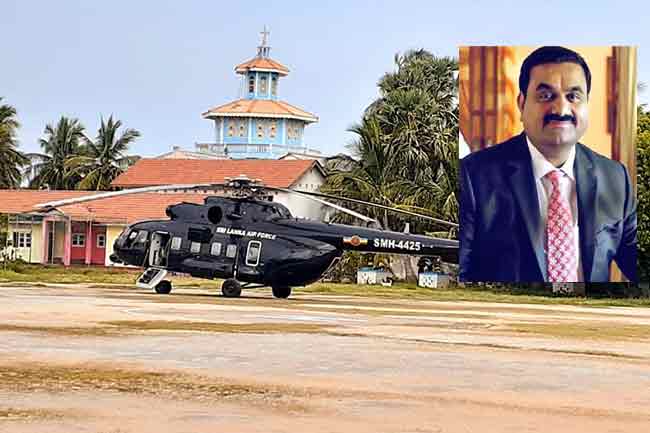
Renewable energy projects: Adani gets Mannar and Pooneryn

The Government last Friday (11) signed a Memorandum of Understanding (MoU) with India’s Adani Group allocating two large-scale renewable energy generation projects in Mannar and Pooneryn in the Northern Province to the company, The Sunday Morning learns.

The two renewable energy projects are to generate a combined capacity of an average of 500 MW while the value of both projects has been estimated at around $ 500 million.

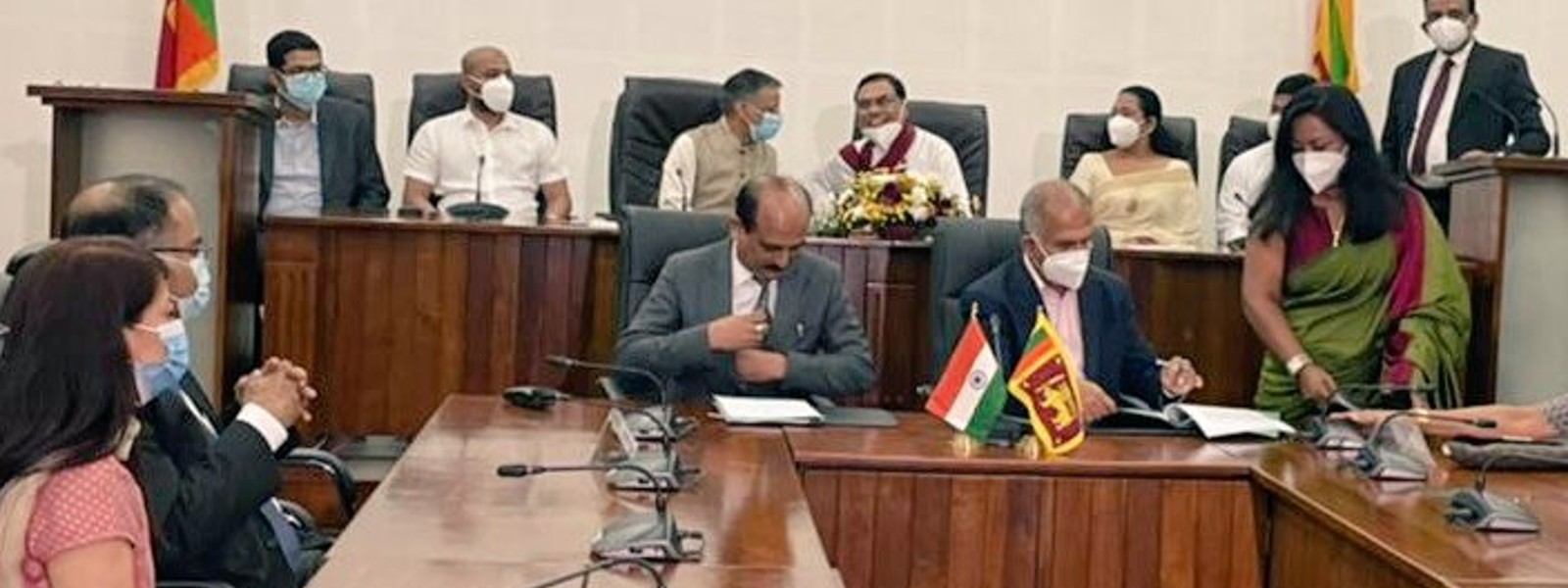
The MoU with Adani was signed last Friday at the Finance Ministry soon after the Ceylon Electricity Board (CEB) signed a Joint Venture (JV) with India’s National Thermal Power Corporation (NTPC) to set up a 50 MW solar power park in Sampur in Trincomalee.

The MoU with Adani was signed by representatives of Adani Group, CEB, the Sustainable Energy Authority (SEA), and the Board of Investment (BOI).

State Ministry of Solar Power, Wind and Hydro Power Generation Projects Development Secretary K.H.D.K. Samarakoon confirmed to The Sunday Morning that agreements for the proposed renewable energy plants in Mannar and Pooneryn were signed with the Adani Group on Friday.

However, when asked for the value of the projects and the generation capacities of the two projects, Samarakoon said he was unaware of the exact details as he was not a signatory to the document.

When contacted, SEA Chairman Ranjith Sepala told The Sunday Morning that both projects had a combined generation capacity of around 500 MW and the value of both projects had been set as $ 500 million.

It is learnt that the Adani Group has informed the Government of its intentions of completing the proposed projects within a period of one year.

The Sunday Morning on 24 October and 5 December 2021 exclusively reported that the Adani Group was to invest in renewable energy projects in the Northern Province.

However, three key renewable energy generation projects in the North and Eastern Provinces have now been assigned to Indian investments.

Sri Lanka and India sign agreement to develop a solar power plant in Sampur

On 11 March, the High Commissioner of India to Sri Lanka, Gopal Baglay attended the signing ceremony of the Joint Venture & Shareholders’ Agreement (JVSHA) for the Trincomalee Power Company Limited (TPCL) which is a joint venture between NTPC Limited from India and the Ceylon Electricity Board (CEB) for developing a 100 MW Solar Power Plant at Sampur in Sri Lanka.

The signing ceremony took place at the Ministry of Finance of Sri Lanka in presence of the Minister of Finance, Basil Rajapaksa; Minister of Power, Hon. (Mrs.) Pavithradevi Wanniarachchi; State Minister of Aviation and Development of Export Zones, D.V. Chanaka; and State Minister of Solar, Wind and Hydro Power Generation Projects Development, Duminda Dissanayake. The signatories to this tripartite document included Narinder Mohan Gupta, Head of International Business Development, NTPC; M.M.C. Ferdinando, Chairman of the CEB; and N.S. Ilangakoon, Vice-chairman (CEB) and Chairman TPCL.

may be recalled that during the visit of Minister of Finance of Sri Lanka, Hon. Basil Rajapaksa, to India last year, both sides had resolved to enhance investments from India in various sectors in Sri Lanka that would contribute to growth and expand employment. The Sampur Solar Power Project is an important step in this direction.

Signing of this JVSHA demonstrates yet again, India’s ability to respond to Sri Lanka’s priorities in a comprehensive and mutually beneficial manner. We will continue to encourage and facilitate the expedited and effective implementation of this project.

India is committed to expanding the role of renewable energy and helping build cleaner, greener and climate-resilient societies. At the international level India has provided institutional solutions such as the International Solar Alliance and the Coalition for Disaster Resilient Infrastructure for Climate Adaptation. Our cooperation with Sri Lanka in this domain will only become stronger with the implementation of the US$ 100 million Line of Credit offered by India to Sri Lanka for the development of solar power projects in Sri Lanka. Similarly, there is significant interest in the private sector on both sides for cooperation in renewable energy which is likely to increase in the coming years.

Posted in Uncategorized

India’s Western naval fleet visits Sri Lanka

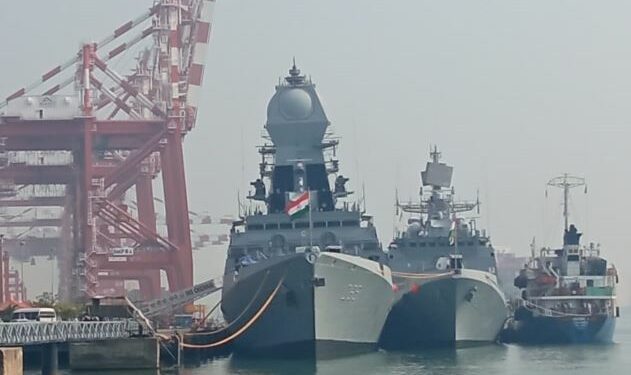
In continuation of Indian Navy’s endeavor to build ‘Bridges of Friendship’, with the Sri Lankan navy, four ships of the Western Fleet of Indian Navy under the charge of Flag Officer Commanding Western Fleet (FOCWF), Rear Admiral Sameer Saxena, visited Sri Lanka from 09-12 March.

The indigenous guided missile frigate BRAHMAPUTRA along with frigate TALWAR entered Hambantota port while the advanced indigenous destroyer INS CHENNAI and frigate TEG entered Colombo harbor.

The ships were warmly welcomed in both these places by the Sri Lanka Navy in accordance with naval traditions.

The High Commissioner of India , Gopal Baglay hosted a reception onboard INS Chennai on 10 March 2022. Foreign Minister Prof G.L Peiris represented H.E Gotabaya Rajapaksa, President and Defence Minister of Sri Lanka, at the event. Parliament Speaker Mahinda Yapa Abeyawardena also graced the occasion.

Welcoming the guests, High Commissioner Gopal Baglay highlighted the importance of oceans and how they bind the two countries to achieve common prosperity, security and also health in the present scenario. He reiterated the commitment of the Government of India to stand shoulder to shoulder with Sri Lanka in addressing these common challenges. He also highlighted that Colombo Security Conclave is a significant initiative in this field and cooperation through the forum needs to be developed further.

In his remarks, FOCWF highlighted the historic bonds of friendship between the two navies and emphasized the need for cooperative efforts to ensure Security and Growth for All in the Region (SAGAR).

Lankan Foreign Minister Prof G.L Peiris lauded Prime Minister Narendra Modi’s ‘Neighborhood First’ policy. He appreciated the fact that the Finance Minister of India had assured priority to Sri Lanka in the sphere of economic cooperation. Prof. Peiris also called for deeper people to people ties, development of ports and harbors, cooperation in oil and gas, tourism and increased investments from India. He further emphasized that the future of the world lies in Indo- Pacific and BIMSTEC region and thus, through platforms like IORA and Indian Ocean Conference, Sri Lanka will strive to establish a ‘Rule Based Order’ for continued peace in the region. He also welcomed more such visits by the Indian Navy in future.

On 10-11 March, FOCWF made courtesy calls on the Foreign Secretary, Chief of Defense Staff & Commander of Sri Lanka Army and Commander of Sri Lanka Navy. Further, the visiting ships carried out various mutually beneficial training activities with the Sri Lanka Navy and other social engagements.

The visit of the Western Fleet to Sri Lanka strengthens the close bonds of friendship between the two navies and helped achieve greater interoperability through the conduct of various activities in harbor and at sea as part of Maritime Partnership Exercise including Flying Operations, replenishment approaches and tactical manoeuvres.

Posted in Uncategorized

PM says Ranil a good friend, but no national government

Amidst rising reports that a national government was being discussed between the Rajapaksa brothers and UNP Leader Ranil Wickremesinghe which would see President Gotabaya Rajapaksa as head of state and Wickremesinghe as the new Prime Minister, Prime Minister Mahinda Rajapaksa yesterday firmly denied these reports saying such a matter was not discussed with the UNP.

In a meeting with some senior journalists at Temple Trees, Prime Minister Rajapaksa said that while Wickremesinghe and he were very good friends, their policies and political ideologies were different hence they could not work together in a joint government. Rajapaksa who was however of praise for Wickremesinghe also said that a national government, amidst the present crises, was not being discussed with any political parties and the government would resolve all the issues soon.

The Daily Mirror learns that proposals and recommendations by all political parties to address the present issues, will be discussed at an All Party Conference chaired by President Gotabaya Rajapaksa and Mahinda Rajapaksa, when they meet on March 23 at 10 pm.

All political party members have been told to attend the conference, where several issues will be discussed. Meanwhile. when questioned as to why he made a statement last week stating that the fuel shortage was artificially created, Prime Minister Rajapaksa said that at a time when former minister Udaya Gammanpila had made a public statement saying there was fuel to last only 4 days in the country, the Prime Minister had immediately telephoned the Chairman of the Ceylon Petroleum Corporation who informed him that ships with fuel had already docked at the Colombo Port.

The CPC Chairman had also informed the Prime Minister that they had the necessary funds to purchase the fuel and it was surprising that Gammanpila had made such a statement. However Gammanpila’s statement had caused panic among the public and excess buying which led to an immediate shortage at the fuel stations. He said this could have been avoided.

The Prime Minister further at the meeting yesterday said that the forex crisis was being looked into and soon the power and fuel crisis would also be resolved.

Posted in Uncategorized

Sri Lanka rupee falls to Rs. 260 against US Dollar for the first time

The Central Bank of Sri Lanka announced that the selling price of one US dollar Thursday is close to 260 rupees and buying rate is Rs. 250 per US Dollar.

Following the Central Bank’s decision to free float the value of the rupee against US Dollar, the buying and selling prices of the US dollar against the rupee are rising rapidly. Accordingly the buying price of a dollar today is 249 rupees 96 cents and the selling price is 259 rupees 99 cents.

Several of Sri Lanka’s leading commercial banks today have set a selling price of 260 rupees for a US dollar and 250 rupees for buying a dollar.

However, the Central Bank recently allowing greater flexibility in the exchange rate said expected that forex transactions would take place at levels which are not more than Rs. 230 per US dollar.

Posted in Uncategorized

SLFP will go solo at next elections : MP Nimal Siripala

Senior Vice President of the Sri Lanka Freedom Party Nimal Siripala de Silva states that the party will contest any upcoming election on its own.

Addressing the Colombo District Convention of the Sri Lanka Freedom Party, the MP stated that there was a discussion involving several professionals at the Central Committee of the Sri Lanka Freedom Party on its policies.

Accordingly, the MP stated, the SLFP central committee held discussions on the program which will be implemented if the party comes into power, solutions to the dollar crisis, solutions for the employment crisis, and solutions for the issues faced by the farming community.

Together with professionals and intellectuals, the SLFP prepared a 15-part document on this issue, he said.

“The Sri Lanka Freedom Party is not a party which initiates blind action. We, the Sri Lanka Freedom Party, will contest the next election alone. Do not have any doubts about that,” he added.

India gives US$500mn credit line, hopes to end fuel shortages

India has given effect to the a 500 million US dollar credit line using which Sri Lanka can import oil, as money printed to keep rates low, boosted imports to record levels, triggering forex shortages and made it difficult to import oil.

Sri Lanka can use the credit line to buy oil from India and also third countries, the Press Trust of India reported, following the approval of the Reserve Bank of India.

Sri Lanka has to buy 75 percent of the goods from Indian exporters and the balance from any other country.

The line of credit can be used for six months of signing the agreement and extended at the request of the borrower.

The Reserve Bank of India has said extension should not be more than 12 months, the report said.

Sri Lanka is in the habit of borrowing dollars to buy oil after money printing creates forex shortages.

State-run Ceylon Petroleum Corporation is indebted to the hilt due to past borrowings from banks to import oil.

Suppliers have now refused to give any more credit and are asking for upfront payment. Meanwhile some suppliers

The CPC has for many years got suppliers’ credit to buy oil and has ended up billion over 3 billion US dollars of loans despite market pricing oil.

It is not clear whether the 500 million dollar credit line would be used to subsidise oil, adding to the overall public debt burden.

Sri Lanka’s state economists have a habit of using borrowings and credit lines after printing money and then jumping up and crying wolf about a widening current account deficit.