Seized Indian vessels go under the hammer: Rs. 5.2mn raised

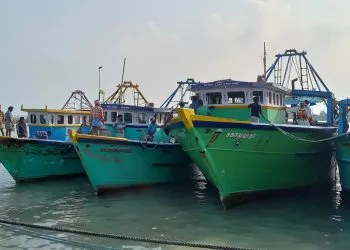
Despite India’s objections, the Fisheries Department went ahead this week with the auctioning of some 150 Indian bottom trawlers seized for poaching in Sri Lankan waters and engaging in internationally banned fishing practices.

The department issued a public notice last month calling for bidders to dispose 105 trawlers detained in Karainagar, Kankesanthurai, Kiranchi, Talaimannar, and Kalpitiya. Another 45 trawlers were also included in the auction after legal proceedings were concluded by respective courts.

At Karainagar in Jaffna alone, the department raised Rs. 5.2 million from the sale of 133 trawlers on Monday. Fishermen and scrape metal traders were among those who took part in the auction.

According to the auction directives issued by the department, a participant was required to pay Rs 1,000 to enter the auction premises and be allowed to inspect the vessels at various locations in the North and at the Kalpitiya naval base.

The buyers were required to pay twenty percent of the total amount at the conclusion of the auction and the balance should be paid within five working days.

While the auction was underway, the Indian High Commission in Colombo issued a statement on Wednesday saying a team from the Indian State of Tamil Nadu was to visit Sri Lanka to work out modalities to finalise the disposal of unsalvageable Indian fishing boats in Sri Lanka.

“At the outset, it is stressed that there is an existing bilateral understanding between the Government of India and the Government of Sri Lanka on the matter,” the statement said while pointing out that the High Commission had again sought necessary clearance from the government for the visit.

Fisheries Director General S.J. Kahawatta told the Sunday Times the Indian trawlers auctioned this week had been cleared by the respective courts.

“Most of these trawlers were partially or completely damaged and not in usable condition due to the longtime anchorage in fisheries jetties in the North. Some of them had remained submerged,” he said.

At Friday’s auction at the Kalpitiya naval base, four seized Indian trawlers were auctioned at Rs 50,000 each. These trawlers, confiscated in 2019, were relatively in a better condition than the older trawlers detained in the north, the DG said.

More than a dozen bidders from Jaffna, Kurunegala and Wariyapola participated in the auction.

P.R. Patrick, a fisherman from Eluvaitheevu, one of the Northern islets, made the highest bid for an Indian trawler after a hot bidding process at Karainagar on Monday. He secured the vessel for Rs 1,350,000. He said he was hoping to convert the trawler into a multi-day fishing vessel to engage in deep-sea fishing.

In Mannar, eight trawlers were scheduled to be auctioned on Thursday at Thalaimannar but the auction drew hardly a bidder since most of the vessels were in bad condition as they had remained submerged in the sea.

Meanwhile, an adjournment motion that was to be tabled by the Tamil National Peoples’ Front (TNPF) in parliament to discuss the “Indian fishermen’s illegal trawling in Northern waters’, was withdrawn at last minute following assurances by an Indian High Commission official.

The party said the official assured them that the Indian government was looking into the issue with urgency considering the livelihood and welfare of the fisher communities of the two countries.

Taking part in Thursday’s parliament debate on the amendments to the Prevention of Terrorism Act (PTA), TNPF leader Gajendrakumar Ponnambalam said that while the Sri Lankan Government was turning a blind eye to the welfare of the Northern fisher community, neighbouring India had given an assurance to resolve the issue.

“The Government and the Navy should be held responsible for the current plight of our fishermen. We raised the issue of bottom trawling by Indian fishermen in the northern sea at various committees formed by the Fisheries Ministry and in Parliament but little or no action was taken,” Mr. Ponnambalam said. He also claimed that the northern fishermen were not only affected by bottom-trawling Indian fishermen, but also by Sri Lankan fishermen from other districts. They also carried out the same illegal fishing practices in the northern sea.

He noted that at least 200,000 people from some 50,000 northern families were directly or indirectly involved in fishing-related work and their livelihood took a hit in recent years due to the increasing number of Indian bottom trawlers that trespassed into the Lankan territorial sea, and could be seen even at some few hundred metres away from the coast.

The issue also came up during Tuesday’s talks between Foreign Minister G.L.Peiris and India’s External Affairs Minister Dr S. Jaishankar in New Delhi.

Both sides reiterated the longstanding consensus to handle fishermen issues through a humanitarian approach and refrain from the use of violence in dealing with incidents along the International Maritime Boundary Line, said a statement issued by India’s External Affairs Ministry. It also said the two ministers agreed that bilateral mechanisms should meet early, starting with the Joint Working Group on Fisheries.

A statement issued by Sri Lanka’s foreign Ministry described the issue as a ‘flashpoint’. It said Foreign Minister Peiris pointed out that “it has become a recurring issue, assuming a different complexion. The two sides agreed on the urgent need to convene all bilateral mechanisms in this regard.”

Meanwhile, Rameswaram fishermen staged a demonstration on Friday blocking the railway tracks to protest against the auction of their trawlers. They also demanded the immediate release of Indian fishermen from prisons.

Six of the 43 Rameswaram fishermen, arrested by the Navy in December last year, returned home on Thursday. Last week, 56 Indian fishermen were released from prisons after they were handed suspended sentences by Sri Lankan courts.

Rameswaram Fishermen Association leader R. Sesu Raja said both governments should work together to resolve the issue through talks without delay. “If they fail, we are prepared to return our fishing documents to the authorities at the sea,” he warned.
Posted in Uncategorized

Hardest-hit by forex crisis $ 13 b retail industry calls for swift fix

– Warns forex crisis and the resultant import restrictions have pushed many of these businesses to the brink of collapse
– Goods for sale, raw materials and basic product availability hampered due to increasing pressure on imports
– Accounting for 23% of GDP, retail sector says hugely invested recently for development of Sri Lanka’s retail landscape
– Represents 14% of labour market with over 1.1 m people employed
– If not resolved, crisis to result in closure of stores, severely impacting livelihood of many directly and indirectly dependent
– Urges Govt. to bring about measures to alleviate crisis for industry considering wider economic impact on ecosystem
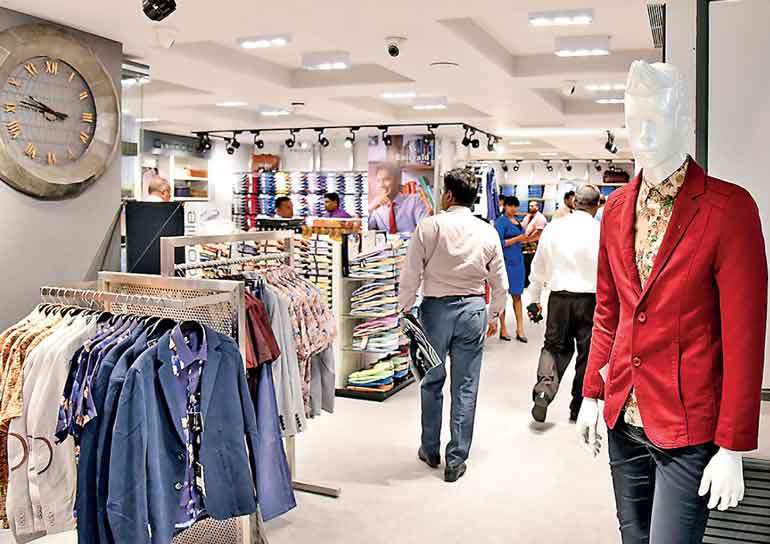
– The retail industry which constitutes 23% of the country’s GDP said yesterday it was hardest hit by the ongoing forex crisis and urged the Government to resolve it fast before putting thousands of jobs at stake.

In a statement, Sri Lanka Retailers’ Association (SLRA) said the wider ecosystem of employees, suppliers, farmers and consumers of Sri Lanka impacted by the ongoing crisis and is pushing businesses to the brink of collapse.

The retail industry has been under tremendous pressure to deliver during the past one-and-a-half years, mainly owing to closures and disruptions due to the pandemic. The situation has been exacerbated since mid-2021 due to increasing pressure on imports, which has been a core requirement for many retail businesses.

The retail industry in Sri Lanka plays a vital role in the country’s economy and it is pertinent to note that the national retail sales in Sri Lanka are approximately $ 13 billion. As a growing industry over the past years, it accounts for about 23% of the country’s GDP.

This industry also represents 14% of the labour market, with more than 1,100,000 people being employed within this sector in Sri Lanka. Additionally, the overall retail industry contributes significantly to the economic value chain of the country in many ways.

The current forex crisis and the resultant import restrictions have pushed many of these businesses to the brink of collapse. Consumer durables, clothing and related industries are a case in point where there have been product shortages regularly due to the inability to gather adequate foreign exchange through the banks to fund imports and fulfil local requirements.

The situation is moving from bad to worse, with many large entities struggling to keep their branches and facilities open due to a lack of goods for sale. If this continues, it is likely to result in the closure of stores, severely impacting the livelihood of many directly and indirectly dependent on these businesses.

Hardest…

This could eventually lead to significant job losses and impact the local economy and result in wider social issues.

Retail is an integral part of the tourism industry and building Sri Lanka as a destination of choice. Notwithstanding, the business losses to thousands of retailers and the affiliated industries such as rental properties currently occupied by these entities, logistics and related businesses providing infrastructure support to several others, such as advertising to service affiliates, would be hard-pressed to survive given the sudden drop in volumes.

Education and communication are another two key industries that have been impacted by the forex crisis and they too require essential products including computers and communication equipment, which could end up beyond the means of the average citizen both due to the short supply of these goods and increasing cost of imports.

As an industry that contributes heavily with over 25% of GDP and large numbers in employment, a preferred status should be accorded to facilitate forex requirements through the banking sector. This would be of national importance given the magnitude of the industry and its contribution toward the overall wellbeing of the economy.

The impact of the forex crisis on this industry, however, has seen an escalation of grey market activities. This escalation and the establishment of an unorganised business sector could have not only severely impacted Government coffers but create unmanned parallel imports as well.

The SLRA called on the Government and authorities to effectively bring about a system to facilitate the sector’s business continuity through a planned set of actions. One option to consider would be an allocation of forex to this sector based on what is available for a given month; thus, there is a particular element of certainty on imports and to manage the uncertainty that prevails currently, to be better. It is also imperative that authorities work out modalities to address the situation where forex availability improves soon.

The SLRA established in 2015 aims to harness the resources of the organized retail industry to a common platform to promote growth, innovation, and global outreach. It currently consists of 50 corporate members, comprising the organized sector, with over 5,000 outlets across nine sectors in the retail industry.

Posted in Uncategorized

Sri Lanka is a country that violated its Constitution since Independence: – Victor Ivan

The attack on journalist Chamuditha Samarawickrama’s residence and the arrest of Shehan Malaka Gamage, a social media activist who raised concerns regarding the Easter Sunday attack, within a span of a few hours, raised eyebrows among the public. But these incidents happen in a country that also witnessed assassinations and abductions of journalists and activists in broad daylight. Oppression and threats to freedom of expression are signs of a failed democracy and from time to time, segments of society have voiced against such undemocratic moves that often took place with state awareness. In a candid interview with the Daily Mirror, veteran journalist Victor Ivan opined that while Sri Lanka is moving towards an anarchical state, the prevailing crisis also marks the end of Sinhala-Buddhist nationalism.
Excerpts :

Q What are your observations regarding the prevailing situation in the country?

Right now we’re in a critical situation. We’re witnessing all signs of a state that is on the verge of an anarchy. Since independence we have had a history of indiscipline. We have been a country that violated the constitution ever since we gained independence. There’s no other country that has violated its Constitution this way. As such we haven’t progressed in our thinking patterns or attitudes. Even though human rights have been included in our Constitution the state apparatus has continued to violate human rights. Those who violate the human rights haven’t been given adequate punishments and those who were victimised by such incidents weren’t compensated adequately either. Hence, the judiciary, Parliament and the Executive have been backward. Journalists too are backward. I don’t see journalists getting together and working for the common good. When Lasantha Wickrematunga was assassinated in broad daylight, it wasn’t a problem for journalists. Journalists aren’t united and they have a certain ego. Recent incidents have shown that we are heading towards disaster. So far no journalist has done a comprehensive analysis on the prevailing crisis. We don’t see them or editors of media houses questioning the president when he holds press conferences or meetings. Journalists have a duty to inform the public, but we don’t see them doing that anymore. All these are signs of a backward society.

Q What do these incidents indicate about the future?

These incidents are not just the fault of the existing regime. Nobody questioned the President when he was contesting for the Presidential Election. There were allegations regarding his dual citizenship and many other lawsuits filed against him. When these cases were presented to the judiciary they had a duty to investigate; say for example about claims regarding his dual citizenship. Then this matter was presented to the Election Commission. Neither Sajith Premadasa nor Anura Kumara Dissanayake queried about this matter during their campaigns. This matter didn’t arise during the election petition. Then why should we be surprised about Shehan Malaka’s arrest or Chamuditha’s incident? There’s nothing called law and order anymore. Our intelligence services think they are not answerable to the public. But the world over, intelligence services are being monitored. The fact that their expenses, the way they get clues and the way they’re conducting investigations is done without proper monitoring is a joke. In other countries political leaders are bound by the law. But here, politicians are above the law and that is a sign of a stupid country. We are nearing the end of an era and a new era is yet to dawn. But if that era is to be a progressive one, people need to be more critical. One good thing is that people are learning. We are familiar with the breakdown of various parties, be it one that forms the government or the opposition. But we’re not familiar with the breakdown of the state. This may lead to a state of anarchy and I do not know where it would end.

Q Do you think people are misusing their right to freedom of expression?

When mainstream media don’t operate according to certain principles how can you expect social media to follow suit? I feel that social media is effective. The only issue is that there’s an overwhelming amount of information and we’re now tasked with checking the accuracy of these information. Therefore there’s the good and the bad both. Social media has sparked a debate about various topics. We too had similar incidents from Dr. Shafi Shihabdeen’s incident to infertility pills, the fertiliser issue etc. Since 1978 there existed a massive robbery of public money. Politicians flourished at the expense of the taxpayers’ money. We live in a country where people have to look after a President after he retires. When people in the North were deprived of electricity for 10 long years we chose to ignore it. But today, we’re facing the same fate they were in. One positive thing I see in this crisis is that this is the end of Sinhala-Buddhist nationalism. Even though the President scored points by taking Sinhala-Buddhist nationalism at the core of his political agenda, he has ultimately dragged the country towards a hell hole.

Q Social media has given more space for people to express their ideas. Do you think there has to be more controls on new media?

We now live in a modern society. Back in the day, one has to study a particular field be it what produces a doctor, engineer, pilot etc. Today the value of people in these professions are deteriorating. That’s the same with journalism as well. In my point of view social media is progressive. Back then, if I had been a victim of injustice, then I had to meet an editor at a media house and convince him to write the story. This is a difficult task. But as soon as Shehan Malaka got arrested he took his phone and went live on Facebook. This video has over 10,000 views. However, if not for social media the dictatorship would have aggravated further.

Q There have been no proper investigations conducted on assassinations, abductions with regards to journalists or attacks on media houses. Your comments?

Journalists report about various incidents to inform the public. However, they too are divided among themselves. We can’t only blame it on the state. If there’s no democracy and people also choose to ignore these incidents and if journalists too have no unity among themselves, what exactly is the problem?

Q Most arrests take place in the form of abductions. Shouldn’t there be a more organised way of arresting an individual?

Most wanted criminals are shot dead by the Police. Then the Police claim that the suspects attempted to open fire at them and they were killed in an encounter. If we are nurturing a society like that, there’s no point in shouting if such an incident happens to you or me.On the other hand, most journalists try to be too political. There are a few talented individuals also. But we do not know how they could sustain in the industry. However, I see that people are learning and the youth too have started to question these incidents and have developed an interest to dig deeper into various issues. That too is a positive sign.

Q These incidents take place at a time when we are going in for another UNHRC session. But the government hasn’t responded to any of these incidents. Isn’t it a black mark on the incumbent regime?

More than a black mark it shows that the rulers are stupid. Do you see the public protesting against these incidents? That also shows that we’re living in a primitive society. Even though we speak English and dress well we haven’t progressed in our thinking and attitudes.

Q The incumbent regime promised to restore national security and it was their main campaign slogan. Don’t these incidents prove the opposite?

Sri Lanka’s Presidential system is extremely corrupt. One needs to have around Rs. 3 billion in order to contest for Presidency. The incumbent President campaigned for more than a year. Now we see that those who spent on him are reaping benefits. This is why there’s a crisis in almost everything from coconut oil to fertilisers etc. In such a situation it’s difficult to escape or recover from this crisis. In that case we need to bring about a structural transformation. It’s paramount that the Sinhala, Tamil and Muslim communities live in unity and harmony. Law and order needs to be restored. The judiciary, Parliament and the Executive need to be restructured if we are to move forward.

Q What’s the role of the media in the prevailing situation?

The primary role is to inform the public about prevailing issues. Those who join media should first realise that we’re not in Europe or India for that matter. They may face certain challenges when carrying out their duties. But informing the public is important.

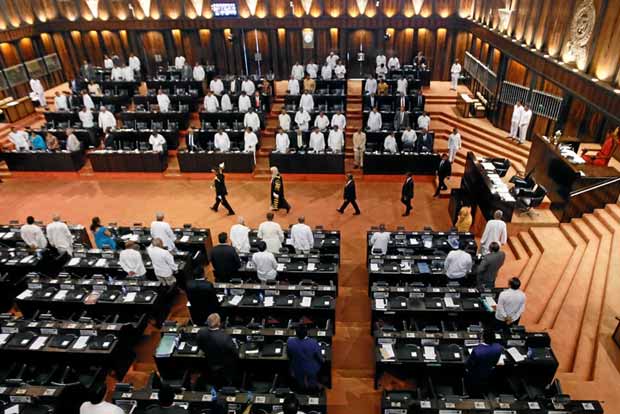
Parliament to convene from 22nd to 25th of February

The Committee on Parliamentary Business at a meeting held on Thursday (Feb. 17), decided to hold Parliamentary sessions next week from the 22nd to 25th of February, Minister Dinesh Gunawardena, the Leader of the House announced.

Accordingly, during the session on Tuesday (Feb. 22), a regulation under the Licensing of Produce Brokers Act and a regulation under the Rubber Replanting Subsidy Act are to be approved in Parliament.

On Wednesday (Feb. 23), an adjournment debate by the Opposition will be taken up.

An amendment to the Fauna and Flora Protection Ordinance and an order to gazette the Coconut Tree under the Felling of Trees (Control) Act, will be tabled in Parliament on Thursday, (Feb. 24).

Moreover, several regulations under the Imports and Exports (Control) Act and orders under the Strategic Development Projects Act will also be tabled in parliament for approval.

Posted in Uncategorized

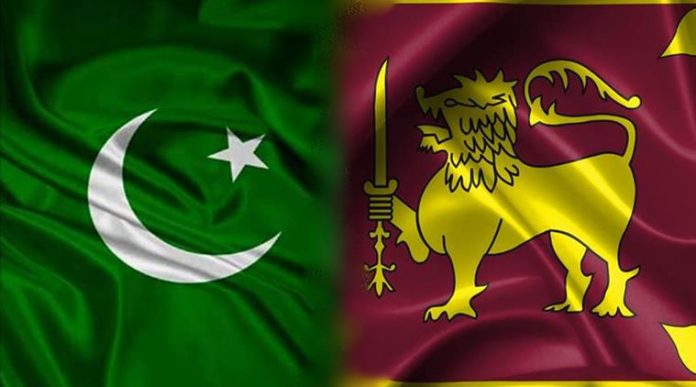
$50m defence credit line for Sri Lanka: Pakistan MoDP advised to seek approval from ECC

Pakistan Ministry of Finance (MoF) has advised Ministry of Defence Production (MoDP) to seek Economic Coordination Committee (ECC) approval for establishing Defence Credit Line Facility of $50 million for Sri Lanka before starting negotiations and finalizing terms and conditions, official sources told Business Recorder.

Pakistan and Sri Lanka enjoy cordial relations, characterized by historic affinities, geographic location and cooperation in various fields including defence and defence Industry. Sri Lanka, during last few decades, has emerged as one of the largest markets for the indigenously produced military hardware of Pakistan. However, owing to financial constraints of Sri Lanka, business between the two countries remains much below its potential.

During his visit to Sri Lanka from 23-24 February 2021, Prime Minister Imran Khan announced a Defence Credit Line of $ 50 Million for Sri Lanka to enhance bilateral Defence and Security cooperation. In pursuance of Prime Minister’s commitment with Sri Lankan Government, a draft MoU regarding Defence Credit Line facility was prepared and shared with Ministry of Foreign Affairs, Ministry of Finance and Economic Affairs Division.

Ministry of Foreign Affairs has concurred with the draft. Currently, the MoU is in process of vetting by Economic Affairs Division and Finance Division. In a recent development; however, MoDP has been advised by Finance Division to obtain principle approval of ECC/ Cabinet for opening of Defence Credit Line Facility of$ 50 million for Sri Lanka, before engaging in negotiations with the bilateral partner.

Finance Division has, itself, supported the proposal in principle. Ministry of Defence has sought principle approval of ECC for extending the Defence Credit Line Facility of $50 million to Sri Lanka in terms of Rules 16(1) d) of the Rules of Business 1973.

Posted in Uncategorized

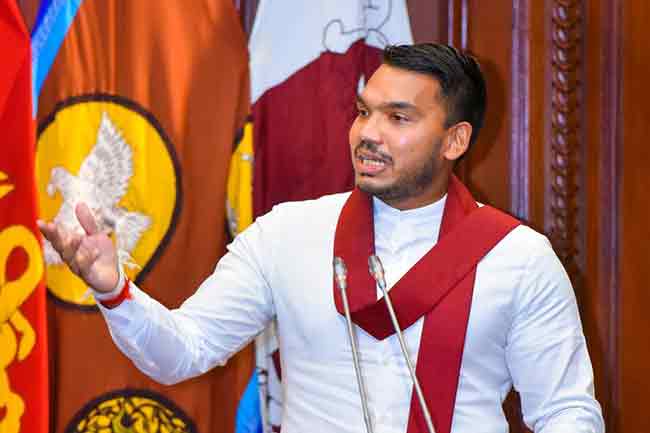
Hope for Sri Lanka: Namal launches campaign in a bid to become PM

Minister of Youth and Sports Namal Rajapaksa has decided to launch a national political campaign, it is learnt.

According to sources at Temple Trees, the campaign titled ‘Hope for Sri Lanka’ has been endorsed by Prime Minister Mahinda Rajapaksa and is expected to be implemented by mobilising all State Ministers.

It is reported that the campaign will kick off from the Southern province at the end of March. Sources said that the public will be apprised on the progress of the development programmes initiated by respective State Ministers during the last two years.

Expressing views on the ‘ Hope for Sri Lanka’ campaign, a senior Minister of the ruling coalition said that the primary objective of this campaign is to set the stage for Namal Rajapaksa to become the next Prime Minister.

The Minister further stated that Prime Minister Mahinda Rajapaksa had disclosed to close associates of his intention to retire from politics at the end of this year and also intimated his desire to hand over the Premiership to Namal Rajapaksa.

It was reported that President Gotabaya Rajapaksa had informed Namal Rajapaksa to make preparations to contest the 2024 presidential election, citing Finance Minister Basil Rajapaksa’s propensity to leave the country during times of crisis.

Namal Rajapaksa’s ‘Hope for Sri Lanka’ campaign comes in the wake of Finance Minister Basil Rajapaksa’s recent launch of an island wide development drive.

‘Ayaweyen Weda Lakshayak’ (100,000 tasks initiative) programme as envisioned by Budget 2022 covering 14,022 Grama Niladhari Divisions and 336 Divisional Secretariat Divisions was launched by the Finance Minister with the aim of securing the SLPP candidacy for the 2024 presidential elections.

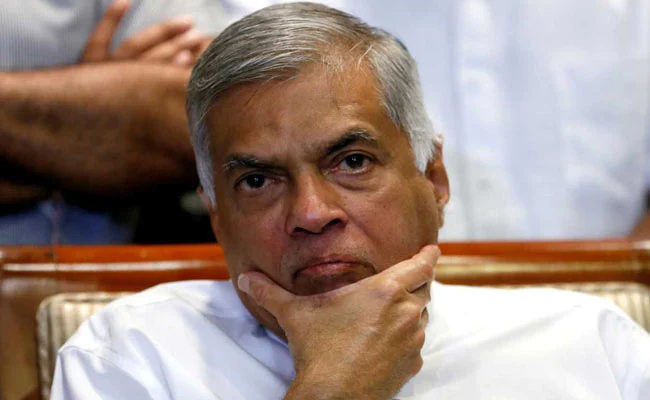
US dollar will hit Rs 300 in near future

UNP Leader Ranil Wickremesinghe yesterday (16), warned the US dollar would reach Rs 300 before the end of the year.

In a statement, he said the economy is deteriorating, while both the dollar deficit and the rupee deficit have not been resolved yet.

“Today, the real value of the rupee is actually Rs 250 to the dollar. Even more so, this way it can go up to Rs 275. If we do not stop there, it will reach Rs 300 before the end of the year,” he said.

The middle class is facing hardship, many are being pushed down the economic ladder. The agriculture sector has been destroyed. Small and big businessmen are unable to procure goods to do their work. This is the problem faced by the citizens. By June and July, we will have to repay foreign loans again. We have a total of US$ 6 billion to repay this year. We have not yet discussed the situation with the IMF. So we have to find the money to repay the loans in June and July. New problems are continuing to arise and this is why the banking system has been abandoned, Wickremesinghe said.

“Under Article 4 of the IMF’s Constitution, each member state is required to discuss and report on its economic situation once a year. The IMF team arrived in Sri Lanka last December. We know that the report will be presented next week. As soon as the Government receives that report they have to present it to Parliament. Once it is presented to Parliament we must hold a debate on it. The proposals put forth in the report must be discussed. From there, we will see if we can come to a consensus and agree to basic principles. It is our duty,” he said.

Speaking further, the UNP Leader said, “Our country just has a single resource and that is the younger generation which comprise Millennials and Generation Zs. We need to think about that group. They want to create a future, but they have lost faith. The Government has broken its trust.”

Posted in Uncategorized

Sri Lanka’s Printing Industry at the brink of collapse

Sri Lanka’s printing industry is facing difficulties to continue operations due to the shortage of raw materials.

The Book Publishers’ Association recently pointed out that the prices of paper have risen by about 150 percent amidst the prevailing shortage of US dollars to import the paper required to meet the local demand.

The rate of paper imported to Sri Lanka is now gradually declining, compared to 120,000 tonnes of paper imported to the country every month usually, a spokesperson for the National Paper Company Limited told News 1st.

The Printing Press Owners meanwhile, pointed out that there is a shortage of Ink and Toners as well in the local market.

Earlier, Sri Lankan Book Publishers warned that the book publishing process for school Exercise Books has dropped by 70%, mainly due to banks not opening Letters of Credit to import paper.

Book Publishers told News 1st that they are finding it difficult to source paper to keep up with the demand.

Due to the present economic situation, their production process which operated all week is limited to two to three days, local publishers said.

They are requesting the authorities to immediately intervene and solve the issue and warned that if this situation continues there will be a serious shortage of exercise books when schools re-open for the second term.

Sri Lanka’s Usable Foreign Reserves at Critical Level

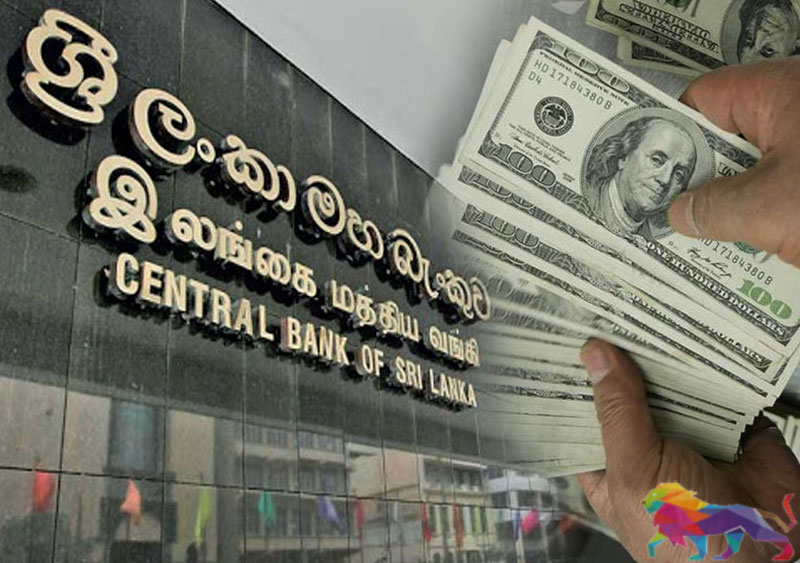
The near-term external debt servicing capacity of Sri Lanka has reached a really challenging position. Usable foreign reserves of the country have fallen to a miniscule and hence critical level of a mere US$ 100 million, sources at the Central Bank of Sri Lanka (CBSL) told Ceylon FT yesterday.

“There is yet no clear road map for managing the near-term external financing gap of the country. Currently, the Government for the most part is dependent on expensive local banking sector short-term currency swaps to finance its day-to-day external payments,” the sources said.

Sri Lanka’s total foreign currency loans, securities, and deposit obligations this year stood at US$ 6.9 billion, of which US$ 1.8 billion were due in the first three months of the year, according to the CBSL.

Hence, they point out that, in the next few weeks, the Government will inevitably have to embark on an IMF-initiated debt and economic restructuring programme.

Accordingly, the Minister of Finance Basil Rajapaksa is likely to formally initiate discussions with the IMF in the next few months, they predicted.

The final report of the IMF routine Article IV consultation group has already been submitted to CBSL and the Ministry of Finance for their observation and review.

They said the report will be submitted to the Executive Board of the IMF on 25 February 2022. The views of the Government of Sri Lanka will be included in the submission.

It is learnt that the report highlights the risk of default of its external debt by Sri Lanka together with its growing budget deficit, rising level of inflation and multiple exchange rates (Formal and informal markets).

Given the circumstances, the Government has decided to submit the IMF Article IV Report to the Cabinet this coming Monday and seek consent on the immediate steps to be undertaken in managing the economy.

CBSL sources said no other acceptable alternative solution or major foreign exchange inflow is available to significantly reverse the rapid depletion of foreign reserves of Sri Lanka.

Sources at CBSL, however, said CBSL is still in the process of securing a US$ 500-1,000 million swap facility with the State of Qatar.

Sri Lanka is eligible for IMF support under the four-year Extended Fund Facility (EFF), possibly about US$ 2 billion carrying an interest rate of less than 2 per cent.

An IMF programme will assist in restructuring the debt under the Paris Club and secure new facilities from the World Bank and enable re-entry into global capital markets.

There is a reasonable probability of achieving debt sustainability, removing import controls without facing a costly restructuring of commercial loans, economists said.

According to sources, the CBSL has requested for an extension of the US$ 400 million swap facility (under the SAARC Framework) received from the Reserve Bank of India and further deferral of the Asian Clearing Union (ACU) settlements. However, no positive response has been received so far, sources said.

A few weeks ago, the CBSL was able to defer over US$ 500 million settlements with the ACU by two months until March 2022. In recent years, the Government has taken steps to obtain several swap facilities under the SAARC Framework spanning 2019-2022. On all such occasions India has maintained that the assistance of IMF should be sought as a long-term solution.

In this backdrop, Sri Lanka has so far not been compelled to opt for an IMF-based programme due to assistance forthcoming from India on humanitarian grounds, but critics say the situation is likely to change in the future. The Government is also considering reaching more ‘bridging finance’ options through India, Japan, China and the Middle Eastern Nations to finance the day-to-day external obligations.

In this context, Japanese authorities have, however, insisted that for such a loan agreement it would be imperative for Sri Lanka to access an IMF programme.

Fitch Ratings estimates CBSL will need to arrange for some US$ 2.4 billion to help State-owned and private-sector firms in the country honour their debt obligations for 2022, over and above the US$ 4.5 billion central government debt.

The country also needs around US$ 20 billion for essential imports such as fuel, food and intermediate goods for exports.

As at end January 2022, the official gross foreign reserves of Sri Lanka was at the US$ 2.36 billion level, of which US$ 1.5 billion was derived from Chinese swap facilities that can only be used for limited import activities with China. In addition, the gross reserves included a US$ 200 million swap facility from Bangladesh and a US$ 400 million short-term swap facility with India. Sri Lanka has already deferred ACU payments worth US$ 510 million.

All major political parties struggling to remain intact

*Several MPs in the government ranks voiced their concerns and disappointment at the way they were being treated by the SLPP

*Ranawaka is already in discussions with Wickremesinghe and Welgama to form a common alliance

*Sirisena is also eying the leadership of a new alliance and is in talks with some political parties to contest a future election separately

All major political parties in Sri Lanka are presently struggling to remain intact and are likely to start splitting, with one alliance already to be named in early March signalling a split in the present government, the Daily Mirror learns.

The alliance which will be announced early March will be of 12 political parties who are presently with the government coming together as one alliance, while continuing to function with the SLPP. This includes some SLFP members and the parties led by Wimal Weerawansa, Udaya Gammanpila and Vasudeva Nanayakkara. The alliance is likely to be announced in the first week of March.

A split in the government was very evident when the co parties of the government were left out from the SLPP convention held in Anuradhapura last week. Several MPs in the government ranks voiced their concerns and disappointment at the way they were being treated by the SLPP and will now come under one separate alliance while continuing to function in the government. The second alliance under discussion is that of SJB MP Champika Ranawaka, UNP Leader Ranil Wickremesinghe and Kumar Welgama.

The Daily Mirror learns that Ranawaka has asked for the deputy leadership post from SJB Leader Sajith Premadasa who is yet to respond. Ranawaka has in the past not denied his intention to contest a future presidency and is already in discussions with Wickremesinghe and Welgama to form a common alliance. Some SLFP MPs have also agreed to join this alliance. Discussions are still underway and not finalized yet, senior political sources said.

Minority parties in the SJB have also voiced their disappointment at the SJB Leadership as they were promised the SJB would convert into a broad alliance and not function as one party, giving these MPs more recognition. However, this pledge is yet to be fulfilled by Premadasa. Some MPs representing the minority parties are now awaiting the formation of new alliances to decide their future. The third alliance in the offing is that of former president Maithripala Sirisena. Political sources said that Sirisena is also eying the leadership of a new alliance and is in talks with some political parties to contest a future election separately.