Sri Lanka plunges into a massive power crisis

Sri Lanka’s Ceylon Electricity Board (CEB) had been plunged into a deep crisis as the Ceylon Petroleum Corporation (CPC) has been unable to supply the required stock of fuel to the Kelanitissa Power Plant which has already shut down from last night due to the lack of diesel stocks resulting in possible one and a half-hour power cuts from today.

The Daily Mirror learns that the Kelanitissa Power plant generates 300 megawatts of electricity on a daily basis but due to the lack of diesel stocks, the power plant has shut down from late last night.

Highly placed sources said that till late last night, the CPC had not indicated any possible date as to when they can supply the diesel stocks to the plant due to the lack of fuel created by the forex crisis, and this may result in one-hour power cuts during the day and 30-minute power cuts in the night daily from today.

Further, from yesterday afternoon, half of the Sapugaskanda Power Plant was also forced to shut down due to the lack of supply of heavy furnace oil but due to the CPC supplying 900 metric tonnes of furnace oil urgently yesterday, half of the plant could continue to function.

However, the plant needs 600 metric tonnes of furnace oil to function daily and if the CPC fails to supply the required stock today, the Sapugaskanda Plant will also temporarily come to a complete halt.

Sources said that the CPC however has assured that they will continue to supply the stocks of heavy furnace oil to the plant till January 22. Further, the Barge Power Plant and the Uthuru Janani Power Plant which also runs on heavy fuel will receive stocks till January 22 to continue their electricity generation.

“So after January 22, if we do not get the required fuel supply to these plants and if we do not get the diesel stocks for Kelanitissa Power plant urgently today, we will be plunged into a crisis and the whole country will have to face daily power cuts,” officials said.

Officials further said that due to the lack of continuous fuel, the CEB has been forced to use water for hydropower plants, which are usually stored for the dry months of March and April.

Officials warned that if these water stocks are used up, then by March and April, Sri Lanka will have no choice but to declare an electricity supply schedule daily where limited electricity supply will be provided per day.and if water is used up from the main reservoirs for electricity generation, then this will severely hamper irrigation, resulting in a food crisis by April due to the lack of water.

Till yesterday the CPC was in severe crisis attempting to supply the required stocks to prevent an island-wide power outage, but officials now question if the country can function with an uninterrupted power supply from today.

Posted in Uncategorized

India’s “helping hand” to forex and energy-starved Sri Lanka

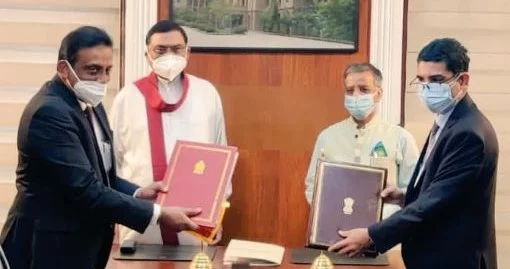
India on Tuesday extended a US$ 500 million credit to Sri Lanka for emergency purchase of petroleum products. In a tweet, the Indian High Commission in Sri Lanka tweeted to say that “a friend holds out a helping hand again.”

“Energizing bilateral economic partnership, India offers a credit line of USD 500 million to Sri Lanka for the purchase of petroleum products. Critical support by India follows a discussion between External Affairs Minister Dr.S.Jaishankar and (Lankan) Finance Minister Basil Rajapaksa,” the tweet added.

This followed an assurance made by Jaishankar to his Lankan counterpart, G.L. Peiris on January 15.

After an on-line meeting with Basil Rajapaksa on January 15, Jaishankar had tweeted to say that they had “positively noted the extension of the USD 400 million swap facility and the deferred ACU (Asian Currency Union) settlement of USD 515.2 million. They discussed the early realization of USD 1 billion term loan facility for essential commodities and of USD 500 million Line of Credit for fuel purchase.”

Jaishankar assured that India will take up with other international partners, initiatives to support Sri Lanka at this important juncture. He welcomed the progress on the Trincomalee Tank Farm which will contribute to Sri Lanka’s energy security.

The Indian External Affairs Minister also said that he and Basil Rajapaksa had considered projects and investment plans by India that would strengthen Sri Lankan economy. He “reaffirmed that India will be a steadfast and reliable partner of Sri Lanka.”

Adding to this, the Indian High Commission in Sri Lanka said that India would seek an “early operationalization of the Line of Credit” as it will “help realize one of the four pillars of economic cooperation identified during the visit of Hon’ble Minister of Finance, Mr. Basil Rajapaksa to India in December 2021.”

Power Cuts

According to the website ECONOMYNEXT, the Ceylon Electricity Board (CEB) is in talks with the Finance Ministry, the Central Bank and the Ceylon Petroleum Corporation to get fuel and foreign exchange. Power Minister Gamini Lokuge said this amid looming prospects of 2.5 hour power cuts on January 19.

The CEB is expected to run out of diesel for a combined cycle plant and several reciprocal engines and gas turbine with a total capacity of around 280 MW by January 19, unless fresh deliveries are made, according to officials at the utility. CEB Spokesperson, Andrew Navamani, said Ceylon Petroleum Corporation (CPC) has promised to give 900 metric tons of Furnace oil, which they hope to use on Wednesday to avoid power cuts.

Rolling 1.5 hour power cuts are likely to start in the daytime from 11.00 am and run until 17.00 hours in four slots if deliveries are not made. One hour power cuts are likely to start at 1730 hours and run till 2130 hours.

The CEB is facing higher demand for diesel than earlier planned because a 300MW coal plant is down. Meanwhile, the local media reported that the Lanka Indian Oil Corporation had told the authorities that it could not supply diesel to meet the emergency need because its stocks were inadequate.

President Highlights Forex Problem

“The most serious challenge we face today in economic management is the foreign exchange problem,” President Gotabaya Rajapaksa said delivering a policy speech to a new session of parliament on Tuesday.

Sri Lanka’s currency crises in the past have come from outright deficit finance, re-finance of rural credit, output gap targeting. But with commercial debt with large bullet repayments coming up for maturity which cannot be rolled over, Sri Lanka is facing a debt problem.

“When I took over the country in 2019, the country’s foreign exchange reserves were only US $ 7.2 billion. Part of it was short-term loans We had realized that under these circumstances if we fail to control our spending, there will be a foreign exchange problem in the near future. That is why we had to take unpopular decisions such as suspending the import of vehicles and restricting the import of various non-essential imported goods. In this manner, we have been able to control the total import expenditure for the last two years,” the President said.

Sri Lanka’s imports are estimated to have soared to 21.5 billion US dollars in 2021, a three year high as money flowed into areas other than vehicles and controlled items.

President Gotabaya said he expected tourism revenues to grow, and effort will also be made to boost information technology exports.

He said renewable power is being promoted and electric vehicles will be encouraged instead of fuel driven ones.

Meanwhile, Sri Lanka has paid off a 500 million US dollar sovereign bond that fell due on January 2021, according to the Central Bank Governor Nivard Cabaal.

Sri Lanka’s credit had been downgraded to ‘CCC’ and ‘CC’ by Standard and Poor’s and Fitch over risks of default.

China steps in, grants 1 million metric tons of rice to SL

The Government of China has granted 1 million metric tons of rice as a donation to Sri Lanka, says Co-Cabinet Spokesperson, Minister Ramesh Pathirana.

The consignment is expected to arrive into Sri Lanka in March.

China is making the donation to mark the 70th anniversary of the Rubber-Rice Pact signed between the two countries in 1952.

Sri Lanka Navy conducts naval exercises with German and Japanese Navy ships

Sri Lanka Navy conducted successful naval exercises with the German Navy’s FFGH (123 Class) frigate BAYERN, arrived in Colombo on 15th January 2022, and Japan Maritime Self-Defense Force (JMSDF) ships URAGA, and HIRADO which arrived in Trincomalee on 16th January, on official visits.

Having conducted these naval exercises respectively off the Western and the Eastern Coasts of the country, the ships departed the island on 18th January, the Navy said.

The Commanding Officer of the visiting German Navy frigate, Commander (Senior Grade) KALSKI Tilo called on the Deputy Chief of Staff and Commander Western Naval Area, Rear Admiral Upul De Silva at the Western Naval Command Headquarters on 17th January.

Meanwhile, Commander Minesweeper Division One of the JMSDF, Captain NOGUCHI Yasushi and two Commanding Officers of URAGA, and HIRADO conducted a virtual discussion with Commander Eastern Naval Area, Rear Admiral Sanjeewa Dias on 17th January.

During these visits, ships’ crew members took part in several programs organized by the Sri Lanka Navy, adhering to COVID-19 protocols. Those engagements also helped exchange of best practices and experience among each other.

The naval exercise between the German Navy frigate BAYERN and SLNS Sayurala was conducted in seas off Colombo whereas JMSDF ships URAGA, and HIRADO with SLNS Sagara carried out the naval exercise off the eastern coast today (18th January).

Among the exercises worked off, Divisional Tactics (DIVTACS), Station Keeping and maneuvering exercises were chief. After successful conduct of these exercises the visiting ships departed the island.

Sri Lanka busts US$664mn in ‘reserves for imports’ in two months

Sri Lanka has spent 664 million US dollars in providing ‘reserves for imports’ in November and December 2021, as the central bank tried to implement a 200 to the US dollar peg while printing money to sterilize the same dollar sales at fixed interest rate of 6.0 percent.

The central bank bought 61.7 million US dollars from forex markets where compulsory surrender rules have been imposed, creating money, and spent 372.35 million US dollars for imports in November.

In December the central bank bought 71.16 million US dollars from banks and spent 424.7 million US dollars to enforce a peg at 200 and provide ‘reserves for imports’.

A pegged central bank which tries to implement a fixed interest rate has to print money to offset such interventions, injecting new rupee reserves to the banking system as dollar sales from reserves sucks out liquidity from the banking system reflecting the transfer of real wealth out of the country.

Such an ‘unsterilized sale’ will reduce the ability of banks to give new credit and shrink reserve money driving up rates and keeping the exchange rate fixed.

However a soft-pegged central bank re-injects the money into the banking system to ‘sterilize’ the intervention, perpetuating the currency crisis by keeping both interest rate and reserve money fixed.

Central bank data showed that 113 billion rupees had been printed in November.

Sri Lanka’s foreign reserves fell in November. In December reserves were boosted with a swap.

In a remarkable development, Mercantilists and some members of the business community last week called on the central bank to continue to sell reserves which will keep the exchange rate at 200 to the US dollar and default on debt.

The call for reserve sales to enforce the peg came after many businessmen had previously said the 200 to the US dollar peg was not realistic or not market determined.

Posted in Uncategorized

Letter to Modi handed over to the Indian ambassador in Colombo

Tamil political parties representing ​​in the northern and eastern provinces of Sri Lanka have written a joint letter to the Indian Prime Minister, Narendra Modi, seeking his help in fully implementing the provisions of the 13th Amendment to the Constitution and ensuring safety of Tamils in the Island.

The letter was prepared on December 29, 2021 and updated in January 2022. The seven political parties that have signed the letter are TNA, ITAK, TELO, PLOTE, EPRLF, TMP and TNP.

The letter has been handed over to the Indian High Commissioner for Sri Lanka Gopal Baglay in Colombo today.

The letter is outlining the major problems facing the Tamil-speaking people of Sri Lanka and reminded PM Modi of the promises made by the Sri Lankan government to the Tamils ​​and said, A joint statement was issued with the then UN Secretary-General Ban Ki-moon stating that the President of Sri Lanka was working towards the implementation of the 13th Amendment to the Constitution. Talks will be held with all parties, including all Tamil parties, for the development and peace of Sri Lanka.

The points mentioned in the letter relates to the following:

1. Thirteenth Amendment and the Provincial Councils

2. Language Rights – Sixteenth Amendment

3. Demography, Land Grabbing, and De-limitation or Gerrymandering

4. Citizenship and Equality

5. Prisoners Under the Prevention of Terrorism Act

6. Enforced Disappearances

7. Electoral Reforms

9. One Country One Law Concept

Posted in Uncategorized

Sri Lanka pays USD 500 Mn for ISBs that matured on Tuesday (18)

Sri Lanka’s Central Bank Governor Ajith Nivard Cabraal on Tuesday (18) said that the country has paid the USD 500 Million International Sovereign Bond that matured.

Earlier, the Governor said that the Central Bank allocated the forex required for the $ 500 million International Sovereign Bonds (ISB) that is maturing on January 18.

Out of the 500 million dollar bond, 170 million is held by domestic investors, Cabraal had said earlier, according to media reports.

Ajith Nivard Cabraal on Twitter: Sri Lanka has paid the USD 500 million sovereign #bond that matured today (18)

Posted in Uncategorized

Sri Lanka President policy speech to parliament

Sri Lanka President Gotabaya Rajapaksa delivered a policy speech at the inauguration of a new session of Parliament on January 18, 2022.

President Rajapaksa outlined the problems faced in the past two years and called on members of parliament and the public to support efforts to improve the country and overcome challenges now facing the country.

The full text of the speech is given below

Hon. Ministers, Hon. State Ministers, Hon. Members of Parliament,

I wish you and all citizens a Happy New year.

In the democratic system, you, who are elected to this distinguished Parliament, represent the people’s voice across different political ideologies.

Therefore, all of you who are elected to this parliament are a unique group accountable to the nation.

Like you, I, who have been elected President by the people’s vote in this democratic system, am accountable to all the people in this country.There is nodifference in such accountability with regard to the people who voted for me or who did not during the election.

Therefore, as the President of this country, I urge all of you to extend your support to duly conduct the responsibilities of the governing and opposition parties both in and outside the parliament to overcome the challenges that the country faces today.

The past two years have been a challenging period for us.We too had to face the Covid-19 pandemic that affected the entire world at the same time.As a result of this pandemic, almost all developed and developing countries in the world had to face severe economic crises.Sri Lanka, with its small economy, felt the brunt of it severely.The lockdowns imposed several times in the country caused many obstacles to the country’s economic process.Key sectors which brought foreign exchange into the country such as the tourism industry, foreign labour and apparel industry were affected by the pandemic. Many businesses, self-employed and daily income earners were affected by the various restrictions imposed that were required to control the pandemic.The disruption to daily community life created a great deal of unrest in the society as well.

The Government incurred a large expenditure to safeguard the public from the Covid-19 pandemic.Each time the country was closed, we provided relief to those people who would lose their daily income.We took action to reschedule loan payments of small and medium entrepreneurs who had lost their income or had it substantially reduced due to the pandemic.We did not raise any of the reduced taxes again.None of the public servants had their salaries or allowances pruned.

Despite many economic difficulties, the government acted to bear all necessary costs,prioritizing the health of the people.Quarantine centres and treatment facilities were set up all over the country while we added about35,000 new beds to the hospital system.Every family that was home quarantined were provided with a relief package to the value of Rs 10,000/-.

We understood early that the only solution to Covid-19 pandemic was vaccination.Accordingly, we took action to import vaccines even at a large cost and vaccinate all persons above the age of 16 years.Presently, we compare favourablyto many countries in the world in terms of pandemic control.

We have been able to resume normal community life having vaccinated more than 85% of the targeted population and brought the disease situation under control.At the moment, the administering of the booster vaccination targeting the entire population is carried out successfully.

The representatives belonging to various political parties in this august assembly have various political views, policy differences.However, we all ultimately wish for the good of the country.During this difficult time of a global catastrophe, we all have a national responsibility as people’s representatives to work together and build this country.I invite all of you to join us in fulfilling this responsibility.

While successfully encountering short-term problems, our primary responsibility is to continue to implement the long-term development programme presented by us to the people of the country, and endorsed by a majority.The sustainable future of the country is built on it.

Therefore, we must not forget our priorities at any time.

We promised the people to do some definite work during a period of 5 years.Although we had to face major obstacles during the first 2 years of this period due to the Corona pandemic, we never forgot nor neglected fulfilling our prime responsibilities.

Many have forgotten that the key issue facing the people of this country when I became the President in 2019 was national security.By now, our government has secured national security.People have no fear of terrorism today.

The underworld threat had spread dangerously at that time.We witnessed a period when prison buses were fired at and its guards and prisoners were killed.We went through a period when people walking down the streets were caught in the crossfire of underworld gang violence and died.The government has been able to change this situation during the past 2 years.

Drug menace too had become a serious problem then.The country’s youth was getting addicted to drugs in a major way.Sri Lanka was becoming a hub for international drug traffickers with the emergence of drug trafficking gangs supplying drugs even to foreign countries.We took action to control this expeditiously when we came to power.This situation is largely under control today due to the action of our security services and intelligence services.We will continue the programme initiated to eradicate the drug menace.Intelligence services of neighbouring countries also provide us with the necessary information.

The police has a major responsibility in providing public security.In order to ensure a safe environment where the ordinary people can live without fear and suspicion, police should be regularly vigilant of public security.Therefore we initiated a number of reforms in the police during the recent past.

We newly established nearly 100 police stations throughout the country to make it easier for people living in any area to access the services of the police.Vehicles were provided to almost all police stations for regular inspections.In addition to infrastructure development, special attention has been paid to develop knowledge and attitudes,and training of police officers.

We reactivated the environmental police that had been inactive. To strengthen the relationship between the police and the public, we sought the engagement of the community in public security and established a new community police state ministry.

We are a nation that respects international laws and conventions.We need to correct the misconceptions that have been taken to the international community in the past regarding our human rights.I say with responsibility that during my tenure, the government did not support any form of human rights violations.We will also not leave room for any such act in the future. We do not condone such actions in any manner.

For almost three decades, nearly all sections of the community in this country suffered due to terrorism.In 2009, we were able to end this situation by defeating terrorism and bringing peace back to the country.What we need now, however, is to set aside the dark memories of the past and build a secure country where all sections of the community can co-exist in peace. We must all unite for this purpose, irrespective of ethnic, religious or political differences.

We have made a major investment to bring normalcy to community life in the war torn northern and eastern areas.

It was during my time as Defence Secretary that more than 90% of the land in northern and eastern areas used for military activities during the war was liberated. Since weare able to ensure security and maintain peace in these areas, this will enable us to liberate remaining lands in the future.

The issue of missing persons in war is not something unique to a particular group. We will do maximum justice on behalf of all such persons.

We reject racism.The present government wants to safeguard the dignity and rights of every citizen in this country in a uniform manner.Therefore I urge those politicians who continue to incite people against each other for narrow political gains to stop doing so.

I took action recently to pardon and release a group of LTTE members who have been in detention over a long period of time.We are also preparing to make relevant amendments to the Prevention of Terrorism Act that had been in force since 1978.

We are always ready to respond positively to observations made by the international community while giving priority to the country’s sovereignty and national security.

We are a free sovereign nation. We have no need tointervene in conflicts among powerful nations.While we respect our neighbours, we wish to pursue a policy of friendship with all States.

The people in the North and East who had been battered by the war for a long time wanted economic security above all else. They wanted a good education for children, job opportunities for young men and women, market access for self-employed and entrepreneurs, as well as water for drinking and agricultural purposes, housing facilities, hospitals, roads, and other infrastructure facilities.We regard government’s prime responsibility towards reconciliation as providing such facilities to these people without discrimination.

Therefore, I urge the Members of Parliament representing the people of the North and East in this Parliament to set aside various political ideologies, at least temporarily, and support the government’s efforts to improve the living conditions of the people in your areas.

I firmly believe that ensuring the rule of law and transparency is essential to strengthen democracy. Strengthening the independence of the judiciary is crucial to ensure the rule of law.Since I became President, appointments to the judiciary and the Attorney General’s Department were never politicized.Appointments were made on the basis of merit and seniority of officers in the judicial service, thereby demonstrating the commitment by my government towards an independent judiciary.

The country needs an efficient judicial system that is fair to all and not a burden to the public. However the present judicial system has many shortcomings.Even fundamental rights petitions, which the Constitution decrees must be addressed in two months, are not completed sometimes even during ten years.It takes years to punish persons who have committed crimes against minors. Often, it takes more than a lifetime to resolve land cases.In this context, it is no surprise that public confidence has eroded in the manner that the law operates.

Although a number of governments had previously recognized the need to find solutions for people suffering from law’s delays, as well asidentify necessary legal reforms to position Sri Lanka as an investment hub, the previous governments’ attempts to present a definitive programme to make necessary reforms have not been successful.

However since my government came to power, a number of significant changes have been effected based on the five point plan to increase the number of judges to end law’s delays and establish a more reliable and efficient mechanism for administration of justice, increase infrastructure in courthouses, update obsolete laws, centralized digitalization and capacity enhancement of related agencies.

Projects for the “AdhikaranaPiyasa” and digitalisation of the court system which had been planned for many years but could not be started have now begun.We are working to extend this digitalization programme to cover the entire judicial system during 2022.

After 42 years, we took action to increase the number of judges to the Supreme Court and the Court of Appeal.We have taken action to establish an efficient judicial system by increasing the number of judges in the lower courts as well, and developing infrastructure facilities.

We have taken steps to establish Investor Courts and Small Claims Courts as a solution to law’s delays.We have also taken action to strengthen the alternative mechanism for low income persons to resolve minor disputes instead of spending money and going to courts.Accordingly, laws have been enacted to establish special conciliation boards to resolve land and monetary disputes and such special conciliation boards will be established in 2022.At the same time, work has been initiated to gradually expand debt conciliation boards, previously confined to Colombo, to other areas in the country and establish them in Galle, Gampaha and Kurunegala districts.

In addition, the government has taken action to increase the cadre of the Attorney General’s Department, Legal Draftsman’s Department and Government Analyst’s Department, and to provide necessary provisions to enhance the capacity required to make the judicial system efficient.

Necessary steps are being taken to amend 98 laws under the broad reforms programme in criminal law, civil law and commercial law areas.

Over the next 3 years, we will prepare the necessary legal framework to make Sri Lanka an internationally recognized, attractive investment centre.

Governments since 1994 have, on various occasions, attempted to introduce a new Constitution but to no avail.Therefore, I appointed an Experts Committee, with the approval of the Cabinet, to study this subject in depth, broadly consult public opinion and prepare a preliminary draft for a people-friendly constitution.

I hope to submit the recommendations of this Committee to the Cabinet and the Parliament for broad discussion.

We are well aware of the need to develop infrastructure facilities for rapid and sustainable development. Therefore infrastructure development activities continued even under pandemic conditions. The 100,000 Roads Project, urban development projects, rural housing and urban apartment projects, 5,000-Bridge project, Rehabilitation of 14,000 Tanks Project, Irrigation development projects, programmes to provide electricity and drinking water to all households in the country, provision of high speed internet facilities throughout the country, flood control projects, technological villages and industrial township projects are all being implemented as planned. Year after year, when these projects get completed, people will be able to see the results of the promises we made to them.

Last week we commenced the construction of the Eastern Terminal of the Port of Colombo as promised in the Vistas of Prosperity and Splendour Policy Statement. Construction of the Western Terminal will begin shortly. By the time these projects end in 2024 and 2025, the Port of Colombo would have doubled its capacity and will be among the 15 busiest ports in the world.

Now the economic process in the country is gradually returning to normalcy.Tourists are returning.There is a clear growth in export sectors. However a number of challenges remain before us. Both short-term and long-term solutions are essential to overcome them.

The present budget has allocated a large amount of money for rural livelihood development as such short-term solution.The government hopes to assist a large number of self-employed people throughout the country through this.

We fully understand the economic difficulties facing the people today. Therefore, the government decided at the beginning of 2022 to introduce aRs 229 billion relief package to the people.Even in the midst of major economic challenges, these reliefs are being provided because the government is sensitive to the problems of the people.

Our government provided free fertilizer to farmers for the past two years.

We set a guaranteed price of Rs 50 for paddy.When the government paid 50 rupees, the private sector paid an even higher price to the farmers.Perhaps it was because of that decision taken by the government that a kilo could be sold for 60 to 70 rupees.It is unfortunate that a section of the farming community today has forgotten this.

After I became President, I stopped the import of 16 crops such as green gram, cowpea, turmeric and ginger.Today the farming community is enjoying its benefits. They get good prices for their agricultural produce. Tea, coconut and rubber also received good prices recently. This is because of the policy decisions we have made.

Today we are self-sufficient in turmeric. Producers of crops such as pepper, cinnamon and arecanut are getting good prices as re-exports were halted.Today, a good price is received for betel as well.

At that time there was a huge protest against the importof ethanol into this country. When we came to power, the import of ethanol was completely banned. Sugar factories are making a profit today due to this. Also, sugarcane farmers are getting a good income.

Today a conducivemarket has been created for dairy farmers as well. Profits of local dairy companies have increased

We had to face some problems in implementing our policy for a non-toxic green agriculture.There was a misunderstanding in this regard as our objective and plan were not properly communicated, and some practical issues in introducing the programme were politicized. The broad concept of green agriculture which was sometimes narrowed down to organic fertilizers even by responsible authorities led to the spread of misconceptions. As some decisions led to public hardships we had to make some changes to them.

However, there has been no change in our government’s policy towards green agriculture. Therefore, we hope to rectify the shortcomings and take forward these policies in a more productive manner.Our ultimate goal is to introduce modern technology to achieve higher productivity in agriculture, and to promote the use of bio-fertilizers in order to create an international market for non-toxic agricultural produce. Through this, the economy of the people who are engaged in agriculture and who provide subsidiary services can be strengthened. In this manner, we hope to make a strong contribution to the future economic development process in Sri Lanka.

2022 is a year in which we will have to make a number of decisions regarding food security. At the same time, there is aneed for an expedited programme to increase local production capacity.We must all unite and launch a cultivation effort by utilizing every cultivable land in the country. We are strengthened by the fact that a number of irrigation facilities have been developed and tanks have already been rehabilitated. I especially hope that the patriotic youth who painted wall art and cultivated barren paddy fields in the recent past will also support this.

A number of large scale projects are being constructed to provide facilities to the people under the “WariSaubhagya” programme initiated by us.

– Development of the Uma Oya Multipurpose Development Scheme which will be completed by supplying 120 MW of renewable energy to the national grid, and the development of AlikotaAra, Handapanagala and KudaOyastorage reservoirs and 300 feeder tanks.

-KumbukkanOya Reservoir Project to supply irrigation and drinking water to dry areas in Monaragala District

– Lower MalwathuOya Reservoir Project to supply irrigation and drinking water to Mannar District

-WayambaMahaEla Project to supply irrigation and drinking water to the North Western Province.

– North Central Main Canal Project to supply irrigation and drinking water to the North Central Province

– Basnagoda Reservoir Project to supply drinking water to many areas in the Gampaha District.

-Thalpitigala Reservoir Project to supply irrigation and drinking water to Uva Province.

– MundeniAru Project to provide irrigation and drinking water to Batticaloa and Mahaoya areas in the Eastern Province.

– Development of new freshwater lagoons under the “River to Jaffna” project as a sustainable solution to the irrigation and drinking water problem in the Jaffna Peninsula.

– Nilwala River Development Project which provides solutions to the water shortage in the Hambantota District and also helps in flood control in Galle and Matara Districts.

– MinipeMahaEla Reconstruction Project, MaduruOya South Bank Development Project and Mahaweli River Basin Development Project.

– Reconstruction work of 5,000 small tanks and anicuts, and 52 medium scale reservoirs throughout the island is in progress.

As a Government that recognizes the real needs of the farming community and places a high value on agriculture, I look forward to completing all 20 large scale irrigation development projects currently underway during my tenure.

The most serious challenge we face today in economic management is the current foreign exchange problem.Today we are encountering the climax of a problem for which a number of governments have failed to provide a lasting solution.

When I took over the country in 2019, the country’s foreign exchange reserves were only US $ 7.2 billion. Part of it was short-term loans.

By then, more than US $ 6 billion a year in foreign debt was to be repaid over the next two years. It is the loans taken by all previous governments from time to time that we had to repay in this manner.

We had realized that under these circumstances if we fail to control our spending, there will be a foreign exchange problem in the near future. That is why we had to take unpopular decisions such as suspending the import of vehicles and restricting the import of various non-essential imported goods. In this manner, we have been able to control the total import expenditure for the last two years.

Over the years, the country’s average annual trade deficit has been around $ 8 billion. This shortfall was offset by revenues from tourism industry and remittances from foreign workers and foreign exchange earned through foreign investment.

Of these, we had the highest hopes for the tourism industry. We had planned to increase the revenue from tourism to US $ 10 billion over a few years.

But due to the Covid-19 pandemic, which began in December 2019, the global tourism industry suffered a setback. Thus we lost about $ 4.5 billion in annual revenue flowing into the country through tourism in 2020 and 2021.

We also lost a large amount of monthly remittances sent by about 200,000 foreign workers who left their jobs and returned to Sri Lanka due to the Covidpandemic.

Due to the continuous closure of the country, we were not able to attract new foreign investments.

Our reserves plummeted and imports were severely hampered by this unavoidable process that took place beyond our control.

It is not possible to meet our import requirements without increasing our reserves.

In order to surmount this problem in the long run, we need to make great strides in our export industry through innovations, export diversification and value adding mechanisms.At the same time, there should be a major development in the areas of foreign currency attracting tourism industry, employment of skilled workers abroad, and information and communication technology. All this had been clearly stated in our policy statement. Their implementation should be expedited now.

As a small country, our country has very limited natural resources to earn foreign exchange. We do not have resources like oil, gas and coal.

Today, all countries in the world that developed without natural resources have chosen foreign investment as the solution. They used foreign investment to boost the export industry, create new jobs and support local businesses.

If one acts for purely political reasons to misinterpret and create a wrong opinion among the people about foreign investments, then such person is not doing any good to the country.

At this time we have a strong need for investment for the development of our country. Therefore, we need to make more efforts in the future to attract new investments to carefully chosen sectors. What matters is not whether they are domestic or foreign investment, but whether they are for the good of the country.

The solution to unemployment lies in job creation. At present most of the employment needs of the country are met by small and medium scale local businesses.Therefore, we must always prioritize the protection and empowerment of local entrepreneurs in various businesses. We understand the needs of the business community and will do our utmost to encourage them.

About 20% of our annual import expenditure is allocated for oil imports. When the total export earnings are less than $ 1,000 million a month, we have to spend about $ 350 million a month on oil alone.About 70% of the imported fuel is used as fuel for vehicles. It costs about 21% to generate electricity. Only 4% is used for industry.

When we allow the import of vehicles in the future, we hope to give priority to electric vehicles. Accordingly, we should plan to use renewable energy sources as much as possible when supplying electricity to vehicles.

The main problem facing industries in Sri Lanka is the high energy costs. Our country does not have fuel resources such as oil or coal. All of them should be imported. But we have rivers, seas surrounding the country, plenty of wind, and sunshine all year round. This is why renewable energy sources were prioritized under our Vistas of Prosperity and SplendourPolicy Statement. We have agreed to the target of generating 70% of the country’s energy needs through renewable energy sources by 2030.

We have already made a number of plans to meet future power requirements. In the last two years alone we have been able to add significant renewable energy capacity to the local power grid using wind and solar power.

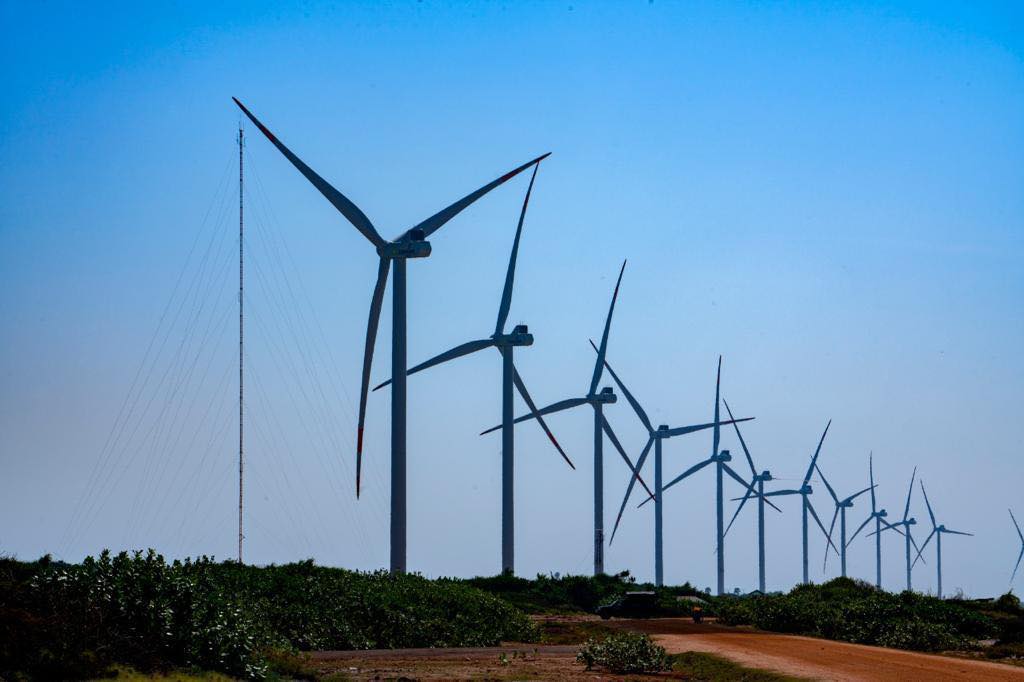
The capacity of the Thambapanni Wind Power Plant, which was commissioned last year and is now successfully operating at 100 MW, will be increased by another 50 MW this year. In addition, under the ‘GamataBalagarayak’ programme, work has commenced on the construction of 7,000 small solar power plants with a capacity of 100 kilowatts through local investors, of which 560 megawatts will be added to the power grid within the next two years.Also, the installation of Rooftop Solar panels on the roofs of government offices has commenced with a loan facility of Rs 20 billion signed with India last year.

Construction of 120 MW Uma Oya and 35 MW Broadlands Hydro Power Plant is nearing completion. Moragolla Hydro Power Plant is expected to be completed by 2023.

Our goal is to achieve the carbon neutral target by 2050. Sri Lanka is already a co-leader in the Global Compact for No New Coal Energy.
We will not approve the construction of coal power plants in the future for any reason.

I have always stated that education should play a very important role in the formulation of national policies.

We need an education system that matches with the modern world. To this end, we have paid special attention to educational reforms as well as infrastructure development.We are working to increase the number of 379 national schools by a further 1,000.We have allocated a large amount of funds for school development in this budget as well.
In the next few years, we will provide basic facilities to every school in the country to reduce the gap between schools.

We recognize the importance of technology education in creating employment and business opportunities for young people in the modern world.Therefore, in the last two years, allocations have been made to all universities to increase the number of students studying Science, Technology, Engineering and Mathematics (STEM) streams.

In addition, reforms have already been introduced to introduce courses in IT, English and Entrepreneurship for all university students, regardless of their subject stream.

We had emphasized the entitlement of every student who passes the Advanced Level to enter a university. Accordingly, steps have been taken to increase the capacity of all universities. All plans have been finalized to start 10 new City Universities covering 10 less privileged districts.

Through these reforms we have already increased the number of students admitted to universities annually by 35%. Accordingly, last year we were able to enroll 10,000 new students in addition to the 30,000 previously enrolled.We also increased the number of university staff by about 500 and allocated funds to improve their educational and welfare facilities. In addition, steps were taken to enroll 10,000 new students for technical degrees at the Open University. The courses are designed to enable these students to pursue their education while on the job from the first year.

However, less than 25% of students who qualify for university annually are still able to enroll in the state university system. Under these circumstances, and in relation to the growing population, we must realize that it is no longer a reality for the government alone to provide a high quality university education to all students who pass the Advanced Level.

Although eligible to enter a university, many young people are frustrated by the lack of space in the state university system and the lack of opportunity to even pay and pursue higher education in Sri Lanka. People with some means will even sell their parents’ properties and go abroad to study. Others become helpless.

Instead of sending money abroad for our own children’s education, we have lost the opportunity to attract foreign students to Sri Lanka through a high quality university system.

Many of the world’s top universities are non-profit, non-governmental universities. All those universities offer scholarships to talented students for free education. This model, common to many countries in the world, is not adopted in our country.

If we create a more conducive environment for university education in our country, we will have the opportunity to attract world-renowned higher education institutions of international standard to Sri Lanka. Through this, the capacity of the university system in Sri Lanka can be increased and higher education opportunities can be provided to more people.

There is no reason, other than the traditional political ideologies, not to give this opportunity to the children of the country. If the country’s legal framework needs to be changed to do this, it can only be done by this Parliament.

Therefore, I propose to this august assembly to discuss at length whether, while increasing the capacity of state universities, the establishment of high quality non-state universities in the country can be permitted.

Today the whole world is moving forward with technology. The use of technology in all fields is very important to achieve the development aspirations of our country.

Over the past two years, we have done a great deal to achieve the goal of creating a Sri Lanka that is technologically driven by a digital economy.

In coordination with all government agencies such as TRCSL, ICTA and CERT, we set up a separate Ministry of Technology to provide guidance and monitor their activities.

Internet and communication technology infrastructure is crucial for the digitization of any country. Therefore, we are expanding our FIBER and 4G networks to provide BROADBAND high speed internet access to all parts of the country.

More than 300 villages covering 8 districts have already been connected to these networks. In a very short period of time, we will expand FIBER and 4G networks to all parts of the island and provide BROADBAND high speed internet communication facilities to all schools, large and small.

During the Covid-19 pandemic, the rapidly developing infrastructure enabled people to work from home, continue their education online, and run their businesses online.

According to a recent International Telecommunication Union report, we are at the forefront of countries with the lowest communication fees.

Developed jointly by the Ministry of Education and ICTA to take the concept of free education to the digital space, e-Thaksalawa has been established as the official online education system in all schools. Completely free of internet service charges, this access is now open to the public university system as well.

The introduction of digital technology in public administration is another important step we have taken. Accordingly, the digitization process of government institutions in a number of priority areas, including health, agriculture and the judiciary, is already in full swing.

The project to introduce a digital identity card,long awaited by the public, is almost complete. The first steps in introducing this will begin this year.

During the last two years, a great deal of work has been done in the fields of education, higher education and technical education to create the necessary human resources and technological workforce for the digitization of Sri Lanka. We are working to build facilities at the national level so that young technologists can start and run businesses from anywhere in the country.Through the Digital Nomad Programme, we are working to develop the infrastructure so that not only local technologists but also technologists from abroad can be served overseas from any part of Sri Lanka.

We look forward to encouraging Sri Lankan innovation as well as bringing in foreign technology companies to Sri Lanka through the Technology Parks already under construction in Galle, Kurunegala, Kandy, NuwaraEliya and Habarana.

In line with the rapid digitization, we are also working to update the relevant legal environment. The Cabinet has already approved the Data Protection Bill for the protection of citizen’s data as well as the Cyber Security Bill for cyber security in Sri Lanka. A new legal framework to protect Sri Lanka’s submarine cable system is also being drafted.

The Government is using state-of-the-art technology in the development of infrastructure in this sector in a manner second to none in the region. We hope to transform ICT / BPM businesses into a US $ 3 billion export sector soon, thereby transforming future Sri Lanka into a technologically driven country.We also aim to create an environment where our future generation can compete with any country in the world through the use of new technology and their own creations.

We are a nation that has faced many challenges throughout history. We successfully overcame those challenges when the country had the proper leadership.

We have the ability to overcome the challenges we face even at this moment. I am ready to give the necessary leadership for it.

We are implementing the plans required to overcome the current challenges and build the prosperous country that the people expect.

Our goal is to make Sri Lanka one of the fastest growing countries in the region in the next few years. To this end, we are working to achieve definite growth in all three sectors – agriculture, industry and services

I need the support of you and the people to make our plans a success.

This country belongs to the people who live in the country today as well as in the future. We are only the present custodians of this country. The future of this country depends on how we act today. Hence we are all accountable for future generations.

Therefore, I hope that all those who love the country will extend their support at this time.

I thank you all.

TheruwanSaranai!

Sri Lanka’s new constitution: expert committee to submit recommendations

The recommendations of an experts committee on Sri Lanka’s proposed new constitution will be submitted to the cabinet of ministers as well as parliament, President Gotabaya Rajapaksa said.

The president made this announcement in his policy statement delivered to parliament Tuesday (18) morning.

“Governments since 1994 have, on various occasions, attempted to introduce a new constitution but to no avail. Therefore, I appointed an experts committee, with the approval of the cabinet, to study this subject in depth, broadly consult public opinion and prepare a preliminary draft for a people-friendly constitution,” he said.

“I hope to submit the recommendations of this committee to the cabinet and the parliament for broad discussion,” he added.

Posted in Uncategorized

Worker Remittances Down 22.7% in 2021

Sri Lanka’s largest foreign -exchange earner, Worker Remittances, declined 22.7 per cent during 2021, as migrant workers more than halved their sendings home for the fourth consecutive month, in December, due to the current situation.

According to data, released by the Central Bank of Sri Lanka, during 2021 migrant workers sent home US$ 5.49 billion, down 22.7 per cent compared to US$ 7.1 billion sent home during 2020.

Worker Remittances, which showed promise until May last year, declined for the seventh consecutive month in December last year.

In December last year, migrant workers only sent home US$ 325.2 million, down 60 per cent compared to US$ 812.7 million sent home during the corresponding month of 2020.

In November 2021, migrant workers only sent home US$ 271.4 million, down 55.6 per cent compared to US$ 611.7 million sent home during the corresponding month of 2020.

In October last year, migrant workers only sent home US$ 317.4 million, down 49.6 per cent compared to US$ 630.7 million sent home during the corresponding month of 2020.

In September last year, migrant workers only sent home US$ 353.2 million, down 49.2 per cent compared to US$ 702.7 million sent during the corresponding month of 2020.

In August last year, migrant workers sent home US$ 446.6 million, down 32.8 per cent compared to US$ 664.5 million sent the previous year.

In July last year, migrant workers sent home US$ 453.3million, down 35.4 per cent compared to US$ 702.1million sent a year ago.

In June last year, migrant workers sent home US$ 478.4 million, down 16.4 per cent compared to US$ 572.5 million the previous year.

In May last year, migrant workers sent home US$ 460 million, up 6.7 percent compared to US$ 431 million the year before.

In April last year, migrant workers sent home US$ 518 million, up 38.1 per cent compared to 375 million a year earlier.

In March last year, migrant workers sent home US$ 612 million, up 24.4 per cent compared to US$ 492 million sent a year ago.

In February last year, migrant workers sent home US$ 579.7 million, up 10 per cent compared to US$ 527.3 million sent a year ago.

In January last year, migrant workers sent home US$ 675.3 million, up 16 per cent compared to US$ 581 million sent a year ago.

Worker remittances have been Sri Lanka’s largest foreign exchange earner and the country’s balance of payment has been highly dependent on the income generated by migrant workers.

Last year, many Sri Lankans working overseas returned to the country following the Covid-19 pandemic, which shattered the global economy.

The foreign employment sector is one of the largest employment providers to address national unemployment and poverty issues prevailing in the country.

However, Sri Lanka has been witnessing a declining trend in the number of departures for foreign employment over the last few years.