Ahead of polls, big allocations for local-level projects

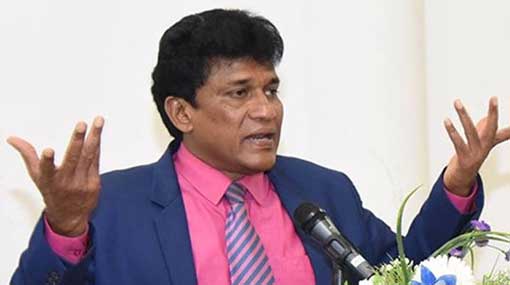
Members of Parliament presiding over District Development Committees and their deputies, former provincial council members and sitting local council members are to be allocated funds for development projects in their respective areas, Minister Gamini Lokuge told the Sunday Times.

He said that according to the proposal, an MP presiding over the District Development Committee would be allocated Rs 100 million for projects and a deputy Rs 50 million.

The move comes ahead of the local council elections scheduled for next year.

Under the proposal, former Provincial Council members representing both the ruling party and the opposition would be allocated Rs. 2 million each while Pradeshiya Sabha members from both the ruling party and opposition would be allocated Rs 4 million each, he said .

The funds would be allocated for projects which could be completed within a year.

Minister C.B. Ratnayake told the Sunday Times that former Provincial Council members were to be allocated funds on the grounds that development activities could not be carried out during their period due to lack of funds and therefore they would be given an opportunity to develop the respective area.

Meanwhile, some of the Ministers and MPs have already started discussions at Grama sevaka level to identify proposals for projects.

Under the proposal, livelihood, infrastructure development, sustainable development and social welfare projects are to be given priority.

The Sunday Times learns that al though the local elections are scheduled for early next year the polls may be delayed by few months.

Sri Lanka’s apparel industry on tenterhooks over EU trade scrutiny

Reuters – Sri Lanka’s preferential trade access to the European Union, which is the biggest market for its $5 billion apparel industry, is in doubt with an investigation into the island country’s human rights and governance concerns set to start on Monday.

The European Parliament in mid-June adopted a resolution inviting the EU to consider withdrawing Sri Lanka’s access, citing “deep concern” over the country’s deteriorating human rights situation.

A five-member delegation is scheduled to meet government and company representatives, civil society, trade unions and United Nation officials during a week-long stay and submit a report that will be presented to the European Parliament in 2022.

“The monitoring will focus on Sri Lanka’s compliance with 27 international conventions related to GSP+ (Generalised Scheme of Preferences Plus) covering human rights, labour, environment and governance to which Sri Lanka has acceded,” Colombo EU Delegation Chargé d’affairs Thorsten Bargfrede told Reuters.

Sri Lanka exported 45%, or $2.7 billion, worth of garments to the EU in the first seven months of 2021, up from $2.2 billion last year.

As much as 60% of the nation’s apparel exports to the region benefit from the EU’s GSP+ concessions, a 9.5% cost benefit, and are the country’s second highest foreign exchange earner.

Hard hit by closures and reduced sales during the pandemic, the apparel industry sees GSP+ as crucial to attracting foreign investment and helping the sector to reach its target of $8 billion earnings by 2026, a 60% increase from current levels.

Industry sources say the government has pledged to engage with the EU to retain GSP+ but stakeholders estimate a loss of about $600 million if the facility is removed.

Sri Lanka, which gained GSP+ access for the first time in 2005, has previously had it withdrawn.

The EU withdrew the facility in 2010, highlighting insufficient efforts by Sri Lanka to address human rights and reconciliation issues in the aftermath of a 27-year civil war, but it was reinstated in 2017.

The Joint Apparel Association Forum (JAAF) is worried about the threat of factory closures – particularly among small and medium manufacturers that employ 350,000 direct and 700,000 related industry employees, of which 80% are rural women.

“To retain our access, be competitive and expand our market share we must have this trade agreement. We are still very optimistic that GSP+ will continue but if it is lost, investment to this sector will be questioned,” JAAF Chairman A. Sukumaran said.

Posted in Uncategorized

No need for undue alarm over rumors of Islamic State WhatsApp group: SL Police

Sri Lanka Police say there is no need for undue alarm over the rumors circulated on social media regarding an alleged WhatsApp group affiliated with the Islamic State (ISIS)

Police Media Spokesperson SSP Nihal Thalduwa says that the notice on the relevant WhatsApp group was on an unconfirmed fact.

He further detailed that the message shared on WhatsApp is of information received by the security forces that was forwarded for further investigations.

SSP Thalduwa pointed out that such notifications are common within the Police Department, and went on to say that the facts mentioned in the relevant message have not been confirmed.

Posted in Uncategorized

Five-year visas for resident foreigners under new amendment

The Consultative Committee on Defence has given its nod to amend the Immigrants and Emigrants Act No. 20 of 1948 to increase the current visa issuance period for foreigners from two to five years, parliamentary sources said.

The decision was made during the Defence Ministry Consultative Committee meeting held at the parliamentary complex on Wednesday (22).

Accordingly the committee decided to permit the presenting of Immigrants and Emigrants (Amendment) Bill to Parliament for a second reading.

The Consultative Committee on Defence met on Wednesday with State Minister of National Security and Disaster Management Chamal Rajapaksa (in the chair) and attended by MPs Anura Priyadharshana Yapa, Pradeep Undugoda, Charles Nirmalanathan and Tiran Allas.

Officials including the Controller General of Immigration and Emigration U.V. Sarath Rupasiri joined the committee meeting via zoom.

Controller General Rupasiri said that the Section 14 of the Immigrants and Emigrants Act No. 20 of 1948 would be amended to increase the current visa issuance period from two to five years for foreigners to encourage foreign investments. The period for which visas can be granted with the approval of the Minister, would be further increased from five to ten years.

He said that these amendments will introduce a Permanent Resident Visa status and the relevant regulations will be formulated in the future.

Rupasiri said the issuance of long-term visas has a number of socio-economic benefits, including providing a safer environment for foreign investors to invest in businesses.

Posted in Uncategorized

Country likely to reopen on 1st Oct., subject to restrictions – Keheliya

Health Minister Keheliya Rambukwella has said authorities hope to re-open the country on the 01st of October 2021, subject to restrictions.

He said the final decision in this regard will be reached on September 30th,

Responding to questions raised by journalists following an inspection tour at the Nawalapitiya District Hospital, the Health Minister said the present situation is being closely monitored, adding that the prevailing situation is somewhat favorable to reopen the country.

Commenting on the COVID-19 vaccination drive, Minister Rambukwella said Sri Lanka, which was ranked among the first 10 countries for completing the vaccination of those over the age of 30-years — is now ranked among top nations that conducts its vaccination drive effectively.

He said that the vaccination of those aged between 20 to 29 is currently ongoing, while the vaccination of children in the age group of 12 to 19-years with congenital disorders also commenced yesterday (24).

According to the Health Minister, there is a reduction in the rate of COVID-19 infected patients, as well as the deaths.

Minister Keheliya Rambukwella urged the public to act in compliance of the COVID-19 health guidelines once the country opens, in order to defeat the pandemic.

Whilst pointing out that the health authorities are doing their best, he emphasized that as citizens we must also act responsibly and assist the efforts to contain the virus.

Posted in Uncategorized

Sri Lanka reports 79 Covid-19 deaths on Saturday, toll rises to 12,609

Sri Lanka Saturday reported 79 deaths due to COVID-19 after the figures were confirmed by the Director General of Health Services on Friday, September 24.

Among the deaths reported today, 41 are of males and 38 of females. The majority of deaths – 57- are of elderly people in the 60 years and above age group.

According to the data reported by the Government Information Department, the total deaths due to Covid-19 since the pandemic began last year has now risen to 12,609.

Posted in Uncategorized

Deadline to submit proposals for foreign currency term financing facility extended

Prospective lenders have been given extra time until October 05, to respond with proposals for a foreign currency term financing facility, the finance ministry said.

The extension was given because some investors requested more time to get internal approvals, Treasury Secretary Sajith Attygalle said.

The Expressions of Interest was originally expected to close on September 22.

Banks, investment houses or institutional investors could submit proposal for fixed or floating rate term loans in minimum tranches of 50 million US dollars or equivalent.

The loans will have to be a minumum of one year.

Posted in Uncategorized

Ratwatte makes a comeback at the SLPP Batticaloa meeting

State Minister of Gem & Jewellery related Industries and Former State Minister of Prison Management & Prisoners’ Rehabilitation Lohan Ratwatte made a comeback at the Sri Lanka Podujana Peramuna (SLPP) Batticaloa District Leaders’ meeting, held today (25) at SLPP’s Main Party Office in Batticaloa.

Ratwatte chaired the meeting and shared images of the meeting on his Facebook page.

“SLPP Batticaloa leaders meeting was held today at the Batticaloa main party office under the patronage of Minister of State Lohan Ratwatte” said Ratwatte on his official Facebook page.

Ratwatte resigned from his portfolio as State Minister of Prisons and Prisoners’ Rehabilitation last week further to a controversy regarding incidents which took place in Welikada and Anuradhapura prison premises earlier this month.

He maintained a low-profile since then, and this has been his first public appearance ever since the incident.

Following the accusations directed at him for allegedly storming the prison premises and threatening prisoners with a firearm, Ratwatte denied the incident ever took place, whereas stated in his resignation that he was compelled to do so further to the request by the Prime Minister.

National Issues Haunt GoSL at UNGA 2021

Sri Lanka’s long-standing problem of seeking justice for the Tamils, and Catholics after the Easter Sunday attacks, has reached the United Nations Headquarters doorstep in New York and even Geneva, amidst the coronavirus scare. The Government in its lacklustre campaign to resolve domestic affairs, has failed to grapple with those issues, despite calls to resolve national issues such as reconciliation, repealing of the Prevention of Terrorism Act (PTA) and exposing the mastermind behind the Easter Sunday attacks.

President Gotabaya Rajapaksa addressed the 76th United Nations General Assembly (UNGA) in New York amidst black flag carrying Sri Lankan Diaspora protesting outside the UN building. Some were also protesting opposite the Permanent Mission of Sri Lanka to the United Nations and this is the first time that the Sinhalese protested. There were no other protest held in New York and that brought the attention to the ‘crisis’ Sri Lanka is currently facing.

Easter Attacks need a closure

The Government was prepared for this, however. The speech by the President said it all. The fine-tuned speech by the President was well presented, and the core issues he spoke about were areas that are highly sensitive and need serious concentration in implementation. The President also highlighted some of the burning issues and how those could be solved.

Protests were held every time a Sri Lankan leader delivered a speech at such international fora in the past, but this is the first time Catholics and their clergy, from both Sinhala and Tamil communities, gathered in New York over the Easter attacks and its victims. In June 2020, the report of the three-member committee, headed by Justice Malalgoda, on the investigation into the cause and background of Easter Sunday attacks was handed over to former President Maithripala Sirisena.

Later, in February 2021, President Gotabaya Rajapaksa appointed a six-member ministerial committee headed by Minister Chamal Rajapaksa to study the report of the Presidential Commission of Inquiry that looked into the Easter Sunday attacks and the report presented to Parliament by the Sectoral Oversight Committee on National Security. The President’s Easter Sunday message of 2021 said that he will leave no room for the culprits as well as groups that are responsible for the dastardly attacks.

However, there are some suspects arrested, mostly from the Eastern Province, but still, the mastermind behind the bombings are out there, claim many of the activists, including politicians and Malcolm Cardinal Ranjith. It’s unclear whether the Government knows the mastermind, despite the Cardinal’s constant demands to arrest the main culprits. This message has gone worldwide, and the expatriates in Italy also staged a protest last week when Prime Minister Mahinda Rajapaksa attended an interfaith forum organised by an NGO.

The report on the Easter Sunday attacks is ready, but some of the chapters that are national security secrets are not divulged to the public. The masses are after the government to get to the bottom of it, and the Catholics, the largest religious community in the world, will not rest until there is a closure on the subject. The next closure, the Tamils demand is, about the last phase of the war, as well as the release of the Tamil detainees under the PTA. The Government has undertaken to do this but differently without complying with the UNHRC recommendations.

The recommendations are in fact watered down considerably compared to the previous recommendations, but the Government has given their piece of mind on how the national reconciliation will be done, how the missing persons matter will be addressed, and how the death certificates will be issued, despite the fact that these are vehemently opposed by the Tamils of the North and the East.

Who are the Tamil Diaspora the President is referring to?

In this background, President Rajapaksa invited the Tamil Diaspora to come for discussions with the Government. At a meeting last Sunday in New York, with the UN Secretary-General Antonio Guterres, before he delivered his speech at the UNGA, President Rajapaksa said, Sri Lanka issues should be resolved through “an internal mechanism” of the country. The Tamil Diaspora would be invited for discussions in this regard, he said, according to a Media release from his office. It is unclear whom he is referring to as the Tamil Diaspora, because most of the Tamils are connected to many Tamil Diaspora organisations across the world, which is a common scenario.

These organisations are run by Tamil intellectuals and politically connected to the countries where the Tamils live. They assist the Tamils in times of trouble and harmony. The Government knows that such Tamil organisations are powerful and have control over the voting patterns of Canada, the UK, France, and Australia, etc. and they are highly backed by international human rights organisations, and are well briefed on Sri Lanka.

But these organisations are banned, in fact, by the incumbent Government, which is why it has raised the eyebrows of some of those organisations as to who the President of Sri Lanka is referring to and calling for talks. This hot topic is going viral across social Media currently.

However, MP Shantha Bandara has told a local Media that the President has referred to those who fled after the 1983 ethnic riots, who were intellectuals the country lost. He said they were genuine Tamils who served the Sinhalese but, due to the riots, they had to flee. He had said, “There are those Tamil Diaspora whose members are not LTTE sympathisers. However, the Government has to be clear about what they want and whom they want to engage with, as the President has now assured the Secretary General of the UN, because these matters are getting recorded and could be pulled up when it matters”.

Some of the Tamil Diaspora that are highly influential organisations, including Tamil advocacy groups such as the British Tamil Forum, the Canadian Tamil Congress, the Australian Tamil Congress, the Global Tamil Forum, the National Council of Canadian Tamils, the Tamil Youth Organisation, and the World Tamil Coordinating Committee, were proscribed in March 2021 by the Government.

Some of the leading Tamil Diaspora groups took to emailing Ceylon Today to express their views on what exactly it means when Sri Lanka’s President invites them for talks. These Tamil Diaspora groups also have their own mandates, different from each other and recognise each other ‘differently’. But all of them are influential and can support Sri Lanka if their conditions are met, but on the other hand, it can be strongly contested by the Government of Sri Lanka and considered ‘failed talks’ as in the past.

EROS Democratic Progressive Alliance

The UK-based Leader of the EROS Democratic Progressive Alliance, Nesan Shankar Raji, who has campaigned for the incumbent Government and whose party is registered in Sri Lanka, said: “While we welcome President Rajapaksa’s move, a majority of Tamil Diaspora groups will view this announcement with caution for a number of reasons, including his failure to resolve the Tamil national question.” He also said that Sri Lanka is bankrupt and in desperate need of Foreign Direct Investment.

Any idea or expectation of the Tamil Diaspora investing in Sri Lanka, especially when the country is under severe scrutiny by the West, including the UN, over alleged human rights abuses in the run-up to and in the aftermath of the 2009 terrorist war, is simply not encouraging… The Tamil Diaspora would rather keep their investments safe in less volatile environments. “What the President needs to do is invite all Tamil political parties and stakeholders together for talks, including those organisations which have been banned by the Sri Lankan Government, i.e. TGTE, British Canadian and Australian Tamils Forum etc.” Sending his views by email, Shankar Raji said a concrete and transparent road map must be drawn up for a devolved administration in the North and East with consideration given to re-merge the Northern and Eastern Provinces as one entity as defined under the Indo-Lanka Accord.

“Only when the President first addresses the above will the Tamil Diaspora be interested in coming forward for dialogue.” He also emphasised the background of UN Secretary-General Antonio Guterres. The President also ought to know that Guterres has Timorese blood running through his veins. The former PM of Portugal and UN High Commissioner for Refugees was instrumental in helping East Timor secure independence from Indonesia and has links with relatives who were part of the armed revolutionary group FALINTIL and its current leadership, including former President of Timor-Leste Vicente Guterres.

More recently, Tamil political prisoners in Anuradhapura Prison were abused and intimidated at gunpoint by the former Minister of Prisons, Lohan Ratwatte. Again, the President has to take drastic action but this gun-toting MP is still holding another minor Ministerial portfolio. Such are the shenanigans of the current administration in power in protecting such criminals with impunity, he noted.

The GTF

In the meantime, Global Tamil Forum (GTF) spokesman, Suren Surendran, said conflicts could be resolved either through military battles or by negotiation. The GTF, from its inception, has proactively propagated a negotiated political solution as the best resolution to the conflict in Sri Lanka. Therefore, President Rajapaksa’s announcement, from New York, wanting to engage the Tamil Diaspora has to be welcomed.

“I am not sure which Tamil Diaspora organisation the President has in mind as his Ministry of Defence gazetted all recognised Tamil Diaspora organisations and over 200 Diaspora members, including myself, as terrorists only six months ago, in March 2021.” If the banning was to please his Sinhala nationalist vote base, then he has got a problem on his hand when he returns home from the US to explain to his constituency, why he now wants to talk to the same banned organisations.

What has changed in the past six months? Besides, and most importantly, R. Sampanthan, who is the leader of the largest Tamil party in Parliament, with members elected by the Tamil people of Sri Lanka, has been requesting to meet the President for many months now. The President for one reason or the other has been postponing this meeting request but now has chosen to announce that he wants to meet the Tamil Diaspora, who obviously live abroad.

That in itself raises eyebrows about his intentions. Even if we give him the benefit of doubt, isn’t this the same President who firmly believes that conflicts and issues should be resolved within Sri Lanka and through domestic means, but now wants to deal with an external international force, the Tamil Diaspora.

Another matter of contention, isn’t it? Going by past experience, there has never been a trustworthy Sinhala leader who has sincerely committed to resolving the Tamil political issues. From the time of independence, almost every leader has used Tamil political aspirations for their own benefits to gain or remain in power. This resulted in the Tamil youth taking arms to fight for our legitimate rights.

Similarly, even the last Yahapalanaya Government did exactly the same. Both the President and the Prime Minister blamed each other and ran the full term without any resolutions to their problems. Mahinda Rajapaksa, Chandrika Kumaratunga and every previous leader never had the political will to resolve the issues. Why would the President be any different? Especially going by his campaign rhetoric, his speeches, and even most of the actions he has taken during his tenure, to date, don’t give us any confidence at all.

Even if he is half sincere or serious about resolving the issues concerning Tamil people, he should immediately return to engaging the TNA for talks. As for the domestic mechanisms that the President wants to talk to us about, in transitional justice, there are judicial and non-judicial processes and mechanisms. “We will be very happy to engage and discuss the latter, but as for the former, for judicial mechanisms, in the United Nations Human Rights Council (UNHRC) Resolutions 30/1 and 46/1, which describe what exactly needs to happen,” Surendran added.

The BTC

Chair of the British Tamil Conservatives (BTC), Dr. Arujuna Sivananthan, in his email said “The Tamil Diaspora engages with all members of the Sri Lankan Diaspora who subscribe to liberal values and are committed to justice, accountability and reconciliation and that there is already close engagement with those committed to accountability and reconciliation and like-minded people. “The organisations and individuals that enjoy the protection of their respective governments or have the capability to seek legal recourse were not banned. The BTC or its members were not banned, nor were Tamils for Labour. No US organisation or individual was banned. Also, Australian individuals were not banned either.

Some of those banned are dead. Also, many of the addresses are plain wrong”. He also noted if the President of Sri Lanka is genuinely committed to reconciliation, first he must engage in meaningful talks with the Tamil people’s elected representatives who have a democratic mandate to do so. The Diaspora is diverse with a heterogeneity of views, and no one organisation or individual can claim to represent it. However, they coalesce around common issues. Over the question of using the LTTE Tiger flag used during the protest, Dr. Sivananthan pointed out that in the UK, the ‘Tamil National Flag’ is not illegal. This flag has a roaring tiger with a red background.

Only the LTTE flag is banned. “The difference is akin to the IRA’s flag and that of the Republic of Ireland. We will bring to bear every resource and strive with each sinew and fibre in our body to end the national issues and for the Tamils to enjoy their inalienable right to selfdetermination,” he added.

(amiesulo@gmail.com)

Rajapaksa’s dysfunctional regime in Sri Lanka and its impact on South Asia – ORF

Basic human rights and liberal democracy are dismissed by the autocratic leadership in Sri Lanka. Such circumstances suppress the public from exercising their democratic rights on a daily basis. The predominantly active political class of Sinhalese Buddhists, who campaigned for and elected a Rajapaksa regime and once supported autocratic sentiments now seem to be questioning the regime’s behaviour. During the Presidential election in 2019, which came in the immediate aftermath of the Easter Sunday attacks, national security was the top concern. However, at present, individual security is threatened more than ever before, owing to an economic crisis overshadowed by a pandemic. To survive within Sri Lanka’s autocratic family rule is to remain in greater fealty to the ultra-nationalistic ethos projected in no uncertain terms by the Gotabaya Rajapaksa regime. Under this repressive environment, there will be a no freedom of choice due to a deep fear that has crept into every household in the country.

Shortage of essential food items at the height of the pandemic with the highest number of deaths recorded on the island happening simultaneously, the public is battling a two-way crisis. President Gotabaya Rajapaksa declared emergency regulations by enforcing directives, and appointing former Major General MDSP Niwunhella to take over as Sri Lanka’s Commissioner of Essential Services amidst an economic emergency. It is another military appointment which pushes the quasi democracy towards a complete autocracy, expanding the regime’s militarisation programme. This was a concern also raised by the UNHRC. With the present dysfunctionality, hopefully, Sri Lanka will not see another youth insurrection from its majoritarian Sinhalese Buddhists as seen in the past in 1971 and 1989, triggered by economic failure and political injustice where thousands of innocent lives were lost. The economic emergency allows authorities to control and seize stocks of staple foods; naturally, the current food shortage reminds the Sri Lankan public of the 1970s regime of Prime Minister Sirimavo Bandaranaike ending in 1977.

The predominantly active political class of Sinhalese Buddhists, who campaigned for and elected a Rajapaksa regime and once supported autocratic sentiments now seem to be questioning the regime’s behaviour.

There is a steep devaluation of currency due to a foreign exchange crisis. The Sri Lankan rupee crossed a historical high at Rs.231 to the US dollar, while 127 billion rupees were injected. The Sri Lankan rupee has fallen 7.5 percent against the US dollar this year and its month-on-month inflation rose to 6 percent in August, with significant borrowing where 80 percent of the revenue is for debt servicing, especially with continued borrowings from China. It has also reached out to many other nations including Bangladesh, which will provide US $200 million currency swap to assist the fast-depleting foreign reserves in Sri Lanka. Assessing the economic crisis, former Deputy Governor of the Central Bank, WA Wijewardena, says the economic situation has ‘graduated from a crisis to a total catastrophe now’, a free fall of the economy. The Central Bank acts as an advisory institution under such circumstances. Therefore, a new governor of the Central Bank was appointed, former State Minister Ajith Nivard Cabraal, a close confidant of Prime Minister Mahinda Rajapaksa to help limit the situation.

Dysfunctionality and the China tilt

A few weeks before the economic emergency, President Gotabaya Rajapaksa made a surprising cabinet reshuffle of a few key ministries, including Health and Foreign Affairs. The Health Ministry was in a disastrous state with multiple interventions aimed at health professionals by the regime. Health Minister Pavithra Wanniarachchi was shuffled to bring in Keheliya Rambukwella, a vociferous defender of the regime.

Foreign Affairs Ministry was the other crucial ministry that was reset. During the time of the former Foreign Minister, Dinesh Gunawardena, Sri Lankan foreign policy lost its balance and neutral posture tilting toward China. There is no positive sign even with the experienced new foreign Minister GL Peiris to change this direction and recalibrate its China bandwagoning foreign policy. The China tilt policy was reiterated at the recent 48th UNHRC session where Sri Lanka defended China’s human rights accusations, commenting ‘external forces should not seek to interfere in Xinjiang and Hong Kong, which are integral parts of the People’s Republic of China (PRC)’.

Weeks before, the strong bilateral economic cooperation was cemented at the diplomatic meeting between a high-profile delegation of the Parliament of the PRC and Sri Lanka, which took place in August 2021. The meeting was led by Basil Rajapaksa, the new Rajapaksa brother who joined the government taking over the position of the Finance Minister; this meeting also included many other strong political weights from within the government such as the new Foreign Affairs Minister.

The China tilt policy was reiterated at the recent 48th UNHRC session where Sri Lanka defended China’s human rights accusations, commenting ‘external forces should not seek to interfere in Xinjiang and Hong Kong, which are integral parts of the People’s Republic of China (PRC)’.

The Chairman of the National People’s Congress (NPC) Standing Committee Li Zhanshu said that the “Chinese government will do its utmost to help overcome the economic challenge as well as the COVID challenge in Sri Lanka”. Foreign Minister G.L Peiris requested Chinese assistance at the international arena by saying, “China has always stood by Sri Lanka as a close friend in the international arena and that he looks forward to the continued support in the future as well.”. The Foreign Minister’s request to protect the regime at the international forum will be taken up as a priority by the Chinese leadership.

The defence of Chinese human rights violations in a global forum is another ancillary ingredient apart from China’s ‘debt trap’ and vaccine dependency towards realising the Chinese ‘strategic trap’. While the Chinese embassy projects kudos by saying, “Well done! Sri Lanka the fastest vaccination speed in the world for the past week”, China also works on the economic recovery and enlarging the Chinese debt and ‘strategic trap’ in Sri Lanka. Deborah Brautigam, a Professor at the School of Advanced International Studies at Johns Hopkins University and Meg Rithmire, an Associate Professor at Harvard Business School assess that ‘After the construction of the port in Hambantota, for example, Chinese firms and banks learned that strongmen fall and that they’d better have strategies for dealing with political risk’. Perhaps, China’s risk assessment and learning have improved over time but it is not short of the ‘strategic trap’ in Sri Lanka.

Dysfunctional states and extremist threat

The dysfunctionality and frustrations lent by the country’s mismanagement has left a fertile ground for multiple security threats to mushroom, including extremist terror. This threat is beyond borders. A month after the New Zealand Christ Church attack, Sri Lanka’s largest extremist terror attack took place. At that time, Sri Lanka’s State Minister of Defence was quick to call the Easter Sunday attack a retaliation for the Christ Church attack. Sri Lankan Easter Sunday attack is unearthing multiple new evidence. Cardinal Malcolm Ranjith, revealed at a recent press conference that a ‘Sri Lankan military intelligence officer, through a local agent and an unspecified person in Indonesia, had forced the terrorist group ISIS to claim responsibility for the Easter Sunday attacks’. These are serious findings, opening new dimensions about the attacks.

With the US exit from Afghanistan and the re-Talibanisation of the country, the regional security balance is under threat. It poses a stage for the return of extremist terrorism.

Ahamed Aathill Mohamed Samsudeen, the Sri Lankan who committed the heinous act of stabbing innocent civilians in New Zealand in September 2021, perhaps, had an indirect connection to terror cells in his own home town Kattankudy in the Eastern Province of Sri Lanka where Mohammed Zahran, the mastermind of the Easter attack preached an increasingly extremist version of Islam. In order to subvert such a movement from taking root, the current regime in Sri Lanka set the draconian Prevention of Terrorism Act, which allows arrests and surveillance in place. It employed strong bans including a ban on madrassas, ban on burqa, and forced cremations for a limited time. The consequences of these acts will predictably be the spread of islamophobia and the grooming of more extremists rather than the reverse of it.

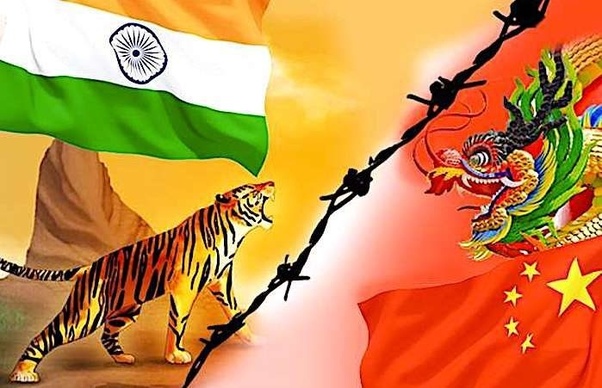
With the US exit from Afghanistan and the re-Talibanisation of the country, the regional security balance is under threat. It poses a stage for the return of extremist terrorism. The absence of US counterterror operations will not be filled by China or Russia. For China, with its close Taliban/Pakistan relations, it will be a test on Chinese leadership for maintaining balance. India faces serious security threats from all directions—from its western borders from Pakistan, northern from China, eastern from Bangladesh and the South from Sri Lanka and Maldives. According to Shivshankar Menon, former Indian National security Advisor, “Afghanistan is not a threat to us. It has to come through Pakistan”. The dysfunctional nature of many other South Asian states presents a gap in robust counterterrorism mechanisms with a multijurisdictional approach and the absence of security architecture. This gap could make way for South Asia to become a hub for the extremist terrorist threats. In the case of Sri Lanka, the absence of social security for minorities is the root cause that should be addressed. If counterterrorism mechanisms are used for arbitrary detention as explained by UN Human Rights High Commissioner Michele Bachelet from her recent update on Sri Lanka and how the strict surveillance continues to be used, it will invite dangerous security concerns to the society and the region. With the absence of a holistic mechanism, Sri Lankan prisons will become breeding grounds for extremist terrorists.

The knee jerk decisions from the important cabinet reshuffle and appointment of a new governor of the central bank to increasing military appointments and arbitrary detention are definitely not moves in the right direction. The Rajapaksa’s repressive policies overshadow everything else, including the new appointments for course correction. The crass act of the regime’s own minister of prison was a clear evidence of moral values and dysfunctionality within the government. While liberal democracy is suppressed by Rajapaksa regime, the present dysfunctionality in Sri Lanka’s political-economic environment and its pro-Chinese foreign policy will have severe security impact on the entire South Asian region.

Posted in Uncategorized