Realism to surrealism: The Government’s Geneva game – FT.LK

A recent article on Sri Lanka at the UN Human Rights Council this March, in the webzine Just Security out of the New York University (NYU) Law School, cited the new US Secretary of State Anthony Blinken’s remarks of over a decade ago, while an official of the Obama administration, on the Sri Lanka war:

“As Blinken said in a 2010 speech at the US Holocaust Memorial Museum, “We have been reminded that there can be no peace without justice…. In Sri Lanka, we know all too well the crimes committed by the Tamil Tigers… but also the thousands and probably tens of thousands of civilians killed in the final months of the war. Holding accountable those responsible is necessary…and it will speed national reconciliation.”

(The Human Rights Council Must Establish an Accountability Mechanism for Sri Lanka’s Victims – Just Security – https://www.justsecurity.org/74653/the-human-rights-council-must-establish-an-accountability-mechanism-for-sri-lankas-victims/)

His acceptance speech when he was nominated as the new Secretary of State shows just how much the Holocaust is wired into the conscious of Anthony Blinken, and why. His stepfather was one of the youngest survivors of Hitler’s death camps.

More than Myanmar-in-the-making

This article in Just Security is one in a series of five, dedicated to the subject of Sri Lanka and the UNHRC. Jake Sullivan, President Biden’s National Security Advisor, is a Board member of Just Security. Apart from NYU, Berkeley Law has also produced papers on Sri Lanka/UNHRC. The Sri Lankan issue is in the mainstream of policy discussion in the USA.

Thus, the challenge for GOSL is not merely the UN Human Rights Council session but years of interaction with a US Secretary of State widely respected for his intelligence (just as is US National Security Advisor Jake Sullivan), who has a distinct take on Sri Lanka’s war and strong views on accountability.

On 12 February (Friday) 2021, in a webinar on Sri Lanka co-sponsored by Just Security, Stephen Rapp, President Barack Obama’s appointee as US Ambassador-at-large for War Crimes, made a serious allegation about then Secretary/Defence Gotabaya Rajapaksa, purportedly quoting from what the latter had told him on his Feb 2012 visit to Sri Lanka.

Rapp headed the US State Department’s Office of Global Criminal Justice until 2015. He emphasised that the LLRC and Paranagama Reports listed crimes that were never investigated and prosecuted as recommended; the same persons against whom there are credible allegations of war-crimes are in powerful positions today; permitting them continued impunity would send the wrong signal to other places where such crimes are being committed and/or are likely to be committed, thereby triggering a global pandemic of impunity.

Rapp’s implicit logic that open-ended impunity risks proliferation of war crimes goes beyond even the credible ‘Myanmar-in-the-making’ scenario. It is likely to resonate in the corridors of power occupied once more by a liberal Democrat administration.

Regime reflexes

How is the Sri Lankan foreign policy process gearing up to respond? A public statement of the top defence official indicates the regime’s mindset:

“When I talk about the UNHR Commissioner Bachelet’s report, it is full of nonsense and I mean it. No other better word than that…As far as I am concerned, the report and statement are very pathetic…I mean the UNHRC and its Commissioner should be respectable people, and when they voice something, they should do it in a respectable manner…”

(Who Cares, I Served My Country, I am Not A War Criminal – Defence Secretary Kamal Gunaratne – Ceylon Today – https://ceylontoday.lk/news/who-cares-i-served-my-country-i-am-not-a-war-criminal-defence-secretary-kamal-gunaratne)

A collector’s item of a news story provides further clues:

“Prime Minister Mahinda Rajapaksa called on the Maha Sangha to discuss on the resolution to be presented against Sri Lanka at the next United Nations Human Rights Council (UNHRC) sessions in Geneva in March.

The purpose of this meeting held with the participation of Maha Sangha and several ministers at the Temple Trees on Tuesday evening was to seek the advice of Maha Sangha on the steps that should be taken by Sri Lanka against this resolution, the Prime Minister’s Media Division said. Ven. Bengamuwe Nalaka Thera stated that Sri Lanka must protect the freedom which was achieved through a humanitarian operation while taking into consideration the foreign policy followed by PM Sirimavo Bandaranaike and the late Lakshman Kadirgamar.

Ven. Kirinde Assaji Thera also commenting on the matter said this problematic situation is mainly based on two issues, Islamic extremism and the issue of the East Container Terminal of the Colombo Port. “Therefore, Sri Lanka needs to ask for more time from the UNHRC in connection with this resolution,” he stressed.

Ven. Dr. Medagoda Abhayatissa Thera said… “It is a crime to say that bringing an end to the war through a humanitarian operation is a crime.”

“Sri Lanka has the opportunity to work towards an effective response from the UNHRC with the support of the Mahasangha in the other Buddhist countries too, he said. Ven. Abhayatissa also expressed his appreciation to the Prime Minister for calling a meeting with the Mahasangha at such a decisive moment.

Foreign Relations Minister Dinesh Gunawardena was of the view that the High Commissioner’s Resolution against Sri Lanka is aimed at defaming the country which is in the top list of the countries that controlled the global pandemic successfully…”

(PM meets Maha Sangha to discuss UNHRC resolution | Daily News – http://dailynews.lk/2021/02/12/local/241400/pm-meets-maha-sangha-discuss-unhrc-resolution)

This is not the way foreign policy was made and external relations discussed in Sri Lanka, including by wartime President Mahinda Rajapaksa. Even in wartime, the dialogue on policy and diplomacy was rational and secular. Sri Lanka was not yet a militarist quasi-theocracy.

When I had been nominated by MR as ambassador/Permanent Representative to the UN Geneva he sent me along with Daya Perera PC, former Sri Lankan ambassador/PRUN New York, to Geneva to participate at the March 2007 session as a delegate before I took up my appointment. It was the first time I spoke at the UNHRC. Upon return we were de-briefed by the President, with Perera submitting a written note.

MR kept me back after Daya Perera left and asked whether the problematic situation of the sharply critical EU draft resolution in circulation since 2006 could be handled and we could prevail, and what my proposed strategy was. He listened approvingly and concluded “go for a vote”, suggesting however that I repair damage done to relations with the OIC by his first (short-lived) Foreign Minister, who had deviated from his assassinated iconic predecessor Lakshman Kadirgamar’s policy and antagonised Iran at the UN New York and Pakistan at the Conference on Disarmament in Geneva.

It helped that I was discussing not only with a President determined to prevail in war but also a former human rights lawyer familiar with the corridors of the UNHRC and an ex-Minister of Labour comfortable with the ILO and multilateralist Geneva culture.

I then posed President Rajapaksa the question most often asked of Yasantha Kodagoda, senior official of the AG’s Department and regular delegate to Geneva (currently and deservedly a Supreme Court Justice), by other delegations: “What is the political settlement that you are offering the Tamils?” MR immediately replied, “Tell them I will implement the 13th Amendment and create a Senate for power-sharing at the centre. So, 13 Plus!”

When I welcomed Kodagoda and his colleagues in June 2007 as Ambassador/PR, I informed them of President Rajapaksa’s reply.

‘Homegrown solution’: Voodoo diplomacy

Though the UNHRC has an inbuilt majority from the Global South, Sri Lanka went down to crushing defeats in 2012, 2013 and 2014. Our solid support of 2009 from the global South and the BRICS crumbled, with Sri Lanka shrinking to the same number of votes that the West garnered when it lost in 2009.

Despite a 2011 effort by a headless Canadian mission in Geneva to move a resolution (which Sri Lanka fended-off), Washington cannily waited for daylight between India and Sri Lanka to move for a vote. The very next year, 2012, with the same President and government in Colombo, the same Ambassador/PR in Geneva, and the same cross-regional majority from the global South in the Council, the West overran Sri Lanka’s defences.

Sri Lanka had opened the gap, showing no sign of delivering, despite repeated signals from Delhi, on the wartime/immediate postwar pledge made by President Rajapaksa on implementing the 13th Amendment (leave alone 13Plus). That enabled the West to move successfully on the other presidential postwar pledge, this time to the UN Secretary-General, to address accountability.

The postwar Sri Lankan state had undergone a tectonic shift in stance and discourse: no more talk of the 13th Amendment and a devolution-based political solution for the Tamils. Colombo’s postwar refrain, echoed in Geneva, was “a homegrown solution”, a diplomatic precursor of the ‘Dhammika paniya’. That shift to a unilateral and open-ended political outcome to the Tamil Question cost us the solid support of the most important ‘swing state’ in the international system: India. It fissured our global ‘Southern bloc’ of May 2009.

After the war ended in 2009, the Secretariat for Coordination of the Peace Process (SCOPP), headed by Professor Rajiva Wijesinha, was dismantled. Evidently there was no necessity for a postwar process of peacebuilding. Peace-building was an irrelevant concept; peace had been established through military victory.

When President MR pushed through the Northern Provincial Council election in 2013, it was too late. Even ex-‘troika’ member Lalith Weeratunga had turned on the 13th Amendment which GR, BR and he had promised Delhi to implement:

“Secretary to President at Ranbima title presentation: 13A was forced on country * Causing disruption to admin process* PCs a stumbling block to progress.

…The time has come for the people to evaluate the pros and cons of the Provincial Council system which was set up under the 13th Amendment to the Constitution without calling for a referendum,” he said. The Secretary said it is left to the people to evaluate the benefits received from the Provincial Councils which were established in 1989…” (Chaminda Perera, Daily News, 10 June 2013)

During MR’s second term, the Defence Establishment headed by the then Secretary/Defence Gotabaya Rajapaksa held one of its annual international conferences (2011). David Kilcullen, the respected advisor of the famous US Gen David Petraeus, advised the Sri Lankan defence authorities that they had a good case if only they made a truthful exposition about the real battlefield context, conditions and compulsions, instead of attempting to airbrush everything with the ‘humanitarian operation/zero-civilian casualties policy’ tale, which lacked international credibility. He was met with stony silence.

A similar conference had been held under the same auspices, during the war. One of the speakers was Gerard Chaliand, world-renowned authority and author on guerrilla warfare and national liberation struggles throughout the Third World. Drawing from his comparative studies based on his vast field experience he argued that the Tamil separatist challenge, once militarily defeated, imperatively required an autonomy-based political solution, or else secessionism would inevitably resurface in Hydra-headed form. He got the same freeze-out that Kilcullen did a few years later.

Yes, we have no Putin

As a recent column by Gwynne Dyer, critical of Vladimir Putin, admits:

“…Putin’s regime[’s] …ideology is a traditional Russian nationalism that is lightweight compared to blood-and-soil religious and racist movements like Trump’s in the United States and Modi’s in India.” (Lenin comes to town (again) – The Island – https://island.lk/lenin-comes-to-town-again/)

Mahinda Rajapaksa’s was also a “lightweight nationalism”; a traditional SLFP (not CBK) statist-nationalism, not entirely dissimilar to that of President Premadasa—though considerably less pluralist—and more akin to Putin’s than a heavy “blood-and-soil religious and racist movement” like the Gotabaya-ViyathMaga-Eliya bloc.

In 2006-7 Secretary/Defence Gotabaya Rajapaksa was on board with the 13th Amendment as the necessary price to pay for India’s support in the war. It was Basil Rajapaksa, influenced by or instrumentalising Chief Justice Sarath N. Silva, who lobbied, including at a working dinner with President MR and key SLFP Ministers, for the reversion to the district as the unit of devolution. If President Rajapaksa had not announced at the public event to celebrate victory in the East, the decision to hold elections to the Provincial Council, we wouldn’t have secured India’s support as we did during the rest of the war, especially when we came under Western pressure to halt our offensive.

Sri Lanka’s last chance for a self-respecting outcome in Geneva (dodging defeat-2014, capitulation-2015 and calamity-2021) came in 2013. Geoff Doidge, the sincerely empathetic South African High Commissioner in Colombo, friend of President Mahinda Rajapaksa, former deputy Minister and ranking ANC office-bearer worked tirelessly to end the deadlock between the Sri Lankan government and the TNA, thereby reopening the political process. At the Commonwealth Summit in Colombo in late 2013 President Jacob Zuma offered MR the facilitation of his special envoy Cyril Ramaphosa. Had it been dramatically embraced at the Commonwealth summit and acted upon, Sri Lanka (and the Rajapaksas) would have been free and clear.

President MR was blocked by Basil and Gotabaya Rajapaksa. GR went on to become President, but so did Cyril Ramaphosa, and only one of them is facing a massive moral indictment in Geneva and beyond.

Elephant vs Dragon

Basil Rajapaksa famously proclaimed that the ruling SLPP views the BJP and the CPC as its models. Not the most prudent choice when they extend their influence and rivalry to Sri Lanka.

The Rajapaksas cultivated relations with the BJP and the RSS on the delusional premise that unlike the secular Congress, an ultranationalist-majoritarian ruling party would be likeminded i.e., unattached to the 13th Amendment and devolution for the Tamils. The RSS was given free rein in the North and East, in the belief that a Hindu-Buddhist nativist bloc would be built to counteract ‘Christian-influenced’ Tamil nationalism.

There is a backlash against apparently Hindu-expansionist BJP designs on Sri Lanka. While a top BJPer has allegedly said that it intends to form governments in Nepal and Sri Lanka, it is possible that the ruling party of a Great Power further East thinks it already has a government in Sri Lanka.

Given the new Chinese doctrine of Military-Civilian Fusion (MCF) India will be unconvinced that China’s power-projects on Sri Lanka’s Northern islands aren’t usable for ‘power-projection’.

After the 2020 Parliamentary Election, Tamil commentators were lamenting political disunity and the retreat of Tamil nationalism. Now the P2P ‘Long March’ shows that: (1) Basil Rajapaksa’s electoral breakthrough has been irretrievably reversed and overturned; (2) Tamil nationalism powerfully re-generated; (3) the Government’s Tamil partners politically undermined; (4) a Tamil-speaking (Tamil and Muslim) bloc created; (5) Tamil politicians and civic currents from the North, East and Hill-country coordinated; (6) a mass movement of legitimate resistance generated, which also enables pro-LTTE signs, symbols, and sentiments (pit-stops at the Miller and Thileepan markers) to find organic entry and manifestation by osmosis; (7) credible Tamil and Muslim grievances and fears about State-sponsored Sinhala-Buddhist annexationism and religio-cultural ‘ethnic cleansing’ globally disseminated; and (8) political ammunition provided to Seeman, the pro-Prabhakaran/pro-Tiger Tamil ultranationalist star in Tamil Nadu.

All this was achieved by the Northeastern policy of President Gotabaya. What a run-up to Geneva.
Covid-19 Forced Cremations Continue in Sri Lanka – HRW

Sri Lankan Prime Minister Mahinda Rajapaksa’s announcement last week that the government would stop the forced cremation of people who died with Covid-19 appeared to end a policy that had cruelly denied Muslims their religious rights. The government has contended without any medical basis that burial in accordance with Islamic tradition poses a public health risk.

But despite the pledge, the government has continued to forcibly cremate Muslims and is backtracking by claiming the policy can only be changed following deliberations by an expert committee.

On February 11, the day after Mahinda Rajapaksa’s announcement supposedly ending the ban, Mohamed Kamaldeen Mohamed Sameem was cremated in Anamaduwa. Friends of the 40-year-old social activist say authorities initially claimed he committed suicide, but later changed the cause of death to Covid-19 and hastily cremated the body. In another case, the family of a 26-year-old physiotherapist who reportedly died suddenly in his sleep have asked the Court of Appeal to prevent a cremation after hospital authorities announced he died with Covid-19.

The cremations policy has caused intense distress to Muslims since it was implemented in March 2020. Frequently, the authorities proceed with the cremation even while families question the diagnosis and request further checks. World Health Organization (WHO) guidelines say there is no medical justification for insisting on cremation, and a committee of Sri Lankan medical experts have called for an end to the policy. It has been condemned by UN rights experts, and by the Organization of Islamic Cooperation (OIC).

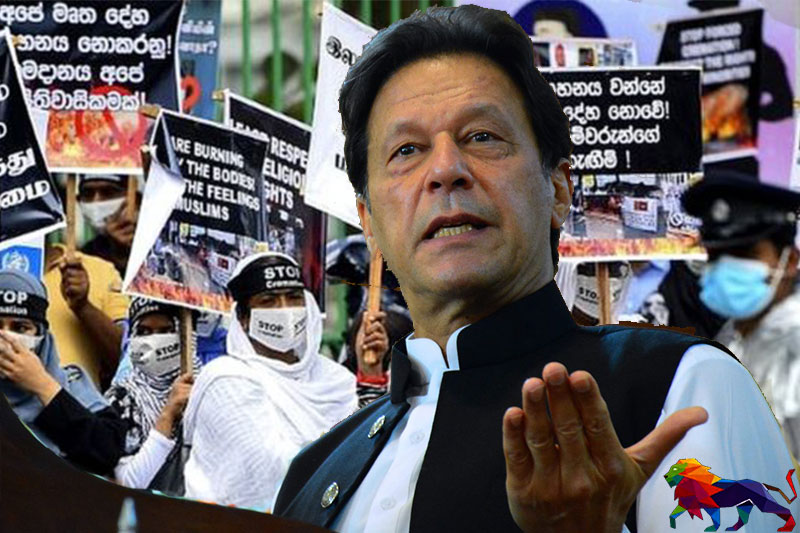
Among those who applauded the initial announcement was Pakistan’s Prime Minister Imran Khan, who is due to visit Sri Lanka on February 22. Sri Lanka is anxious to have the support of Pakistan, an OIC member, at the upcoming session of the United Nations Human Rights Council, which begins in Geneva the same day. The council is expected to consider a new resolution responding to mounting rights concerns in Sri Lanka, including over the treatment of Muslims. The government’s evident lack of empathy in addressing the heartfelt concerns of Muslims regarding forced cremations is further evidence of the need for Human Rights Council action on Sri Lanka.

Posted in Uncategorized

Will reacquire oil tanks in Trinco from India soon -Govt

Minister of Energy Udaya Gammanpila claims Sri Lanka will be able to acquire the oil tanks in Trincomalee from India, in the near future.

Speaking during an event in Kolonnawa today, Minister Gammanpila said discussions with the Indian High Commission pertaining to reacquiring the oil tanks, have been successful.

He said they forwarded several concerns raised by employees, trade unions and other stakeholders to India.

The Minister said the Indian High Commission agreed to all conditions forwarded by them.

Minister Gammanpila added that the oil tanks have not been utilised since the second world war, and they are eager to develop them.

He said since a majority of the ships that use the Trincomalee seas are from India, they will be working with the Indian Oil Company to utilise the oil storages.

The Minister said the oil tanks in Trincomalee will become a major foreign exchange revenue earner in the near future.

Posted in Uncategorized

Post-P2P, Pre-Geneva: The GR Regime’s Zero-Option Offer To The Tamils By Dayan Jayatilleka

Prof Rohan Gunaratna has long been a confidant of Gotabaya Rajapaksa. It is a relationship that goes back at least to the second-term of MR, though the latter did not give him the access to, let alone influence in the policy making process, especially the foreign-policy making process, that the (then) Secretary/Defense had suggested.

In 2018, Gotabaya Rajapaksa held a very successful second annual convention of the Viyathmaga at the Shangri-la hotel. Prof Gunaratna was the key speaker on foreign policy.

Given that relations with India are in a fluid situation, Tamil politics including in Tamil Nadu are at an inflection point, and the Government of Sri Lanka (GoSL) is facing a challenge in Geneva, it is of quite considerable importance to read the collective mind of the Gotabaya regime, through the recent statement of Prof Rohan Gunaratna, in a Sunday Observer interview of February 14th 2021.

Let me reproduce the relevant section in extenso and then take a closer look at it.

“…The background to the Accord was India providing sanctuary, financing, arming, training, and directing the LTTE. With India compelling Sri Lanka to sign the Accord, the government faced an insurrection in the south. The unhappiness was reflected when a naval rating hit Rajiv Gandhi nearly assassinating him.

The LTTE assassinated Gandhi after returning to violence having reneged on the Agreement. The reality in Sri Lanka is that any Government devolving powers to the North and East will be toppled. The historical experience is that devolution of power to the provinces will be exploited by the separatists to secede.

Tamil politicians both TNA and others are not trusted. They are either associated with the LTTE international network or with India. In February 2016, the Chief Minister of Sri Lanka’s Northern Province, C.V. Wigneswaran sought India’s direct intervention in the complete implementation of the Amendment.

Having suffered from Indian covert assistance to the LTTE and five other terrorist groups, Sri Lankans detested Indian intervention. Although India is unlikely to rearm the LTTE, Sri Lankans are suspicious of Indian designs especially, in the north and the east.

Increasingly, an opinion is building in Sri Lanka to abrogate the 13th Amendment along the lines of India revoking the special status, or limited autonomy, granted under Article 370 of the Indian Constitution to Jammu and Kashmir—a region administered by India as a state which consists of the larger part of Kashmir and which has been the subject of dispute among India, Pakistan, and China since 1947.

On August 5, 2019, the Government of India, cut off communication lines in the Kashmir Valley, a region gripped by a prolonged separatist terrorism and insurgency. Kashmiri politicians were taken into custody, including the former chief minister.

The Government is aware of the LTTE planning to harness the political freedoms in the north and the east and subvert the Tamil community. If there is a revival of the LTTE, the Sri Lankan Government will not hesitate to move in this direction.

The current strategy by the separatists is to masquerade as human rights activists and provoke Government overreaction. As such, the Government did not respond decisively to the P2P protest. However, having witnessed the detrimental impact of the protest, the Government will no longer permit a similar episode as it compromises the hard-won stability and security.

The Government is also aware of the LTTE working both on the political and terrorist fronts. In addition to plotting intermittent attacks, the LTTE network overseas is building a support infrastructure in the north and the east.

After the military defeat of the LTTE in May 2009, Sri Lankans are unwilling to devolve land, police and financial powers to the provinces. The structure implemented in the North and the East should be acceptable to all parts of the country.”

(Permitting religious cults is dangerous – Prof. Gunaratna | Sunday Observer)

Unpacked, what does this mean?

“…The background to the Accord was India providing sanctuary, financing, arming, training, and directing the LTTE…”

That is only partly true. “The background to the sanctuary, financing, arming, training and directing the LTTE” was the anti-Tamil pogrom of July’83, of which Prof Gunaratna makes no mention here. As for “directing the LTTE”, any Tamil belonging to the senior generation of the armed movement knows that the LTTE was the organization that received the least Indian training and was least penetrated by, let alone directed by India, if only because Prabhakaran was very careful not to permit it. This is why the IPKF knew little about the LTTE because the RAW had no control over it and not as much actual knowledge of its workings as it thought. Prabhakaran wiped out the TELO in 1986, accusing it of being India’s proxy. In short, India and the LTTE were not on a continuum as Prof Gunaratna implies.

“The reality in Sri Lanka is that any Government devolving powers to the North and East will be toppled.”

This is untrue. Governments not only devolved power but had an elected Provincial Council in the North and East and was not toppled. Certainly, Mahinda Rajapaksa was not defeated electorally for that reason. It is true that an excess of devolution would topple a government, which is what happened with Yahapalanaya and the new post-unitary Constitution project.

But that is not what Rohan Gunaratna says. He says “any government devolving powers…” This means any degree of devolution is taboo. This clearly means that the Gotabaya Rajapaksa Presidency will not devolve power to the Northern and Eastern Provincial Councils. Prof Gunaratna clearly does not care how this may play in Chennai and Delhi. He obviously discounts the question as to whether a government should risk the blowback.

He then says “The historical experience is that devolution of power to the provinces will be exploited by the separatists to secede.” What? Where? When? Whom? He does not say. The bulk of the evidence, from Canada through Switzerland to India and South Africa, is to the contrary. In most cases, secession is deterred or deferred precisely by the devolution of power. What matters though is that this line, by itself or taken together with one that preceded it, tells us and the world that any kind of devolution to the provinces is ruled out by the Gotabaya camp.

Prof. Gunaratna tars the TNA and Tamil politicians. “Tamil politicians both TNA and others are not trusted. They are either associated with the LTTE international network or with India.” This means that in the collective mind of the GR camp, being “associated with the LTTE international network” is on the same footing as being associated “with India”. This is indicative that India is seen as an enemy, just as is the LTTE.

This also means that in the minds of the GR camp’s thinkers, Sampanthan, Sumanthiran, Rasamanikkam etc. are not legitimate players because they are hooked up with either the LTTE or India.

What this really means is that there will be no political process, no political negotiation, no political dialogue, still less political settlement, with the TNA or Tamil politicians, so long as the GR regime is in power—because there are no legitimate interlocutors on the Tamil side.

One notes that Prof Gunaratna does not mention as exceptions, Douglas Devananda, Karuna Amman or Pillaiyan, despite the fact that they are allies of the government. Is it because none of them are willing to renounce the principle of devolution, the 13th amendment and the Indo-Lanka Accord?

Prof. Gunaratna gives a clear signal as to what comes next. “Increasingly, an opinion is building in Sri Lanka to abrogate the 13th Amendment along the lines of India revoking the special status, or limited autonomy, granted under Article 370 of the Indian Constitution to Jammu and Kashmir…”

So, the new Constitution that the Gotabaya regime is drafting will unilaterally slash the 13th amendment and reduce the quantum of devolution, if any power is devolved. This may not await a new Constitution. The regime may move an amendment in Parliament which will probably secure a two-thirds majority, and if the courts hold that a referendum is necessary, carry the referendum too.

Prof. Gunaratna makes amply clear that another P2P will not be permitted and that if it is repeated or anything like it undertaken, the regime will crack down hard:

“Kashmiri politicians were taken into custody, including the former chief minister. The Government is aware of the LTTE planning to harness the political freedoms in the north and the east and subvert the Tamil community. If there is a revival of the LTTE, the Sri Lankan Government will not hesitate to move in this direction. The current strategy by the separatists is to masquerade as human rights activists and provoke Government overreaction. As such, the Government did not respond decisively to the P2P protest. However, having witnessed the detrimental impact of the protest, the Government will no longer permit a similar episode as it compromises the hard-won stability and security.”

In short, there will no longer be space for peaceful civic protest. If undertaken it will be met with repression.

Either the regime does not care that this may trigger violent protest if not revive terrorism, or it is hopeful that it will!

Prof Rohan Gunaratna’s bottom-line can be credibly taken as the Gotabaya presidency’s bottom-line: “After the military defeat of the LTTE in May 2009, Sri Lankans are unwilling to devolve land, police and financial powers to the provinces.”

Police powers are controversial and can be introduced in phases, linked to the behavior of the Provincial Council, but what meaning can devolution possibly have without some substantive measure of the devolution of land and financial powers to the provinces?

Since the 13th amendment already devolves such powers to the provinces, does Gunaratna’s disclosure not indicate that these powers will be revoked? If they are, what will remain as the residue?

Is this not unilateralism, given that a bilateral accord, whatever its historical context, exists, as guarantee of such devolution?

What will be the response of the Tamils, India and the world community at large?

Posted in Uncategorized

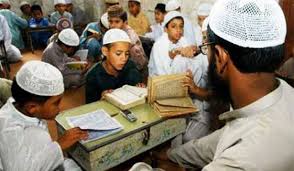
Principal of Madrasa School arrested over links to Hejaaz

The principal of a Madrasa School has been arrested over links to Attorney-at-Law Hejaaz Hizbullah.

Attorney General Dappula de Livera had earlier directed Inspector General of Police (IGP) C.D Wickremeratne to report facts and produce the Principal of the Madrasa School, Mohammed Shakeel before the relevant Magistrate’s Court for allegedly abetting Hejaaz Hizbullah on charges under section 2 (1) (h) of the Prevention of Terrorism Act (PTA) and section 3(1) of the ICCPR Act.

Accordingly, the Criminal Investigations Department (CID) arrested Mohammed Shakeel.

Earlier today, the AG directed the IGP to report facts on the case linked to detained human rights activist and Attorney-at-Law Hejaaz Hizbullah.

The AG’s Coordinating Officer State Counsel Nishara Jayaratne told Colombo Gazette that IGP C. D. Wickremeratne was further directed to produce Hizbullah before the relevant Magistrate’s Court.

Hizbullah will be presented in Court on charges filed under Section 2(1) (h) of the Prevention of Terrorism Act (PTA) and Section 3(1) of the International Covenant On Civil And Political Rights (ICCPR) Act.

The human rights lawyer has been held at the Criminal Investigation Department headquarters in Colombo since his arrest on 14 April 2020, with restricted access to his lawyers, family and wife.

Hizbullah was arrested on charges of allegedly “aiding and abetting” one of the bombers involved in the 2019 Easter Sunday terror attacks.

Many, including the European Union, Amnesty International, and nearly 150 lawyers in Sri Lanka had raised concerns over Hejaaz Hizbullah’s detention under the Prevention of Terrorism Act without sufficient evidence.

Last month, Attorney General Dappula de Livera had agreed to grant Hizbullah access to his lawyers.

Posted in Uncategorized

UK travel restriction lifted – Foreign Ministry

The temporary travel restriction introduced by the Government on travels originating from the United Kingdom to Sri Lanka, on account of the new Covid -19 Variant in the UK, has been lifted with immediate effect.

At a meeting presided by the President, it was decided to relax the restrictions on travels from UK subject to 14 days of quarantine and PCR tests determined by the Health Authorities, the Foreign Ministry said.

The tourist arrivals from the UK too will resume under the guidelines introduced by the Sri Lanka Tourism Promotion Bureau, the statement said.

Posted in Uncategorized

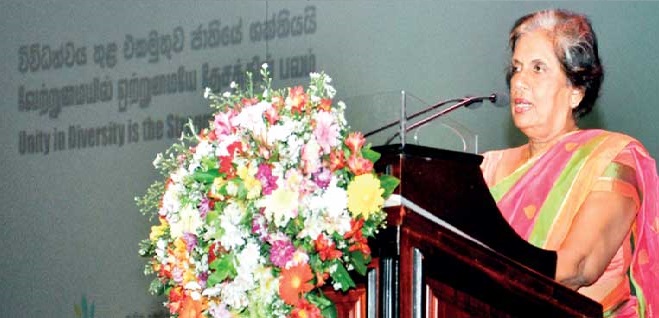
Sri Lanka has been invaded by China-CBK

Former President Chandrika Bandaranaike Kumaratunga says the country that former leaders including her built by sacrificing themselves, is now on a decline.

Speaking to media at the monument of the Former President’s husband the late Vijaya Kumaratunga to mark his 33rd death anniversary, the Former President said one can only laugh at the country’s present status.

She charged that Sri Lanka will never move forward, adding that what was once built in Sri Lanka has been destroyed.

The Former President added young, educated and corruption free politics is required in the country where public representatives are not dependant on the country.

Kumaratunga claimed that foreign relations have ruined the country and charged that Sri Lanka has been invaded by China.

While stating she has no anger towards China, she rued that everything in the country has been vested with China.

Posted in Uncategorized

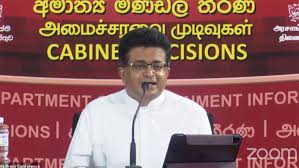
No change in the government’s decision to hand over three islands in the North to China – Co-Cabinet Spokesperson

It was reiterated that there is no change in the Government’s decision to hand over the three islands in question in the North Province to China, in the Cabinet media briefing held on Tuesday (16).

“Cabinet has approved the award of tender to a Chinese company, after a competitive bidding process”, Co-Cabinet Spokesperson, Udaya Gammanpila stated at the media briefing this morning.

“Minister of Power has not informed the Cabinet that he wants to post the decisions or cancel that decision so we think that decision prevails” he further added.

“Removing the Sri Lanka Navy Camp from the Port is out of the question since the President has held discussions with China and has granted Sri Lanka Navy the full control authority” Replying to a question posed by a journalist regarding the removal of the Naval base in the Hambantota port the Co-Cabinet Spokesperson, Udaya Gammanpila stated

Sri Lanka may ask UNHRC to set up database on wartime dead

The Sri Lankan government is discussing the possibility of asking the UN Human Rights Council (UNHRC) to set up a data base on those who were killed, or were injured or had gone missing in the last phase of Eelam War IV, according to Dr.Rohan Gunaratna, Honorary Professor at the Sir John Kotelawala Defense University and Senior Advisor to its Department of Defense and Strategic Studies.

Dr.Gunaratna said that the UN’s unsubstantiated and oft-repeated allegation that 40,000 civilians were killed by the Sri Lankan armed forces in the last phase of the war continues to be made even twelve years after the end of the war in May 2009. The baseless figure of 40,000 and other charges of war crimes are based on dubious, anonymous and unidentified sources, and blithely passed off as “credible evidence” to provide a basis for accusing the Lankan armed forces of committing “war crimes” and demanding that its personnel be dragged before the International Criminal Court (ICC) he said.

Since there could not be “accountability” in the true sense of the term without credible evidence of culpability, data will first have to be collected scientifically and transparently, Dr.Gunaratna argued. The data should be on the dead, injured and missing. The best and the most suitable institution to undertake this task will be the UNHRC itself, Dr.Gunaratna said.

“Estimates of the number of dead range widely from 7,000 to 40,000. There is therefore a crying need for authentic figures. The UNHRC should take up the responsibility to create a data base on this matter. It has the wherewithal to undertake the task as it has an annual budget of US$ 200 million and a staff of 1400,” Dr.Gunaratna pointed out.

Conjecture

On why he thinks that the death toll of 40,000 is pure conjecture, he pointed out that the UN Country Team in Sri Lanka had estimated the figure of the dead in the last phase of Eelam War IV as 7,721. And the number of injured was 18,479. “These figures pertain to the period between August 2008 and May 13, 2009.”

Accountability can be established only when the data is based on proper scientific collection. Justice cannot be rendered if the background information is flawed, he said. Further, if accountability is to be established, and LTTE cadres who had committed acts of terrorism will also have to be punished. If this is so, then, many of the 12, 847 cadres who had been given amnesty and rehabilitated by the Sri Lankan government would have to be arrested again and proceeded against, he said.

“But I would not like them to be arrested. I have interviewed them and found them to have changed completely. They are now living normally in society and happily too,” Dr.Gunaratna said.

The UNHRC and OHCHR should also realize that the LTTE had kept lakhs of civilians hostage in Mulliwaikkal and using them as a human shield in the last days of the war, he said. He then referred to a letter dated February 16, 2009 written by Tore Hattrem, the Norwegian Ambassador, to Basil Rajapaksa a Minister in the Mahinda Rajapaksa government, in which Hattrem said that when the LTTE was asked by the Norwegians to release those held hostage in Mullivaikkal, the militant outfit flatly refused.

“Both Norway and the Sri Lankan government wanted the LTTE to release the civilians, but the terrorist group seemed hell bent on using them as a human shield,” Dr.Gunaratna said.

The total population in the battle zone (Mulliwaikkal area) during the last phase of the war, who were being used as a human shield, was 399,785 as per figures given by the District Government Agents at that time.

Alluding to the allegations made in the latest report submitted by Michelle Bachelet, the UN High Commissioner for Human Rights, Dr.Gunaratna said that it contained allegations based on the geopolitical needs of some powers and information provided by the lobbyists of the LTTE in Western countries.

He maintained that the huge amount of money collected by the LTTE from the Tamil Diaspora for its war chest, still exists and is being used to lobby human rights groups, politicians and governments. Dr.Gunaratna urged governments which level charges against Sri Lanka to go after those in the Diaspora who were involved in funding, shipping, arms smuggling and other activities for the LTTE to enable its cardes back home in Sri Lanka to perpetrate atrocities against its opponents and innocent civilians of all ethnic groups, Sinhalese, Muslims and Tamils.

In this context, Dr. Gunaratna referred to a report of UNICEF’s Family Tracing and Reintegration Unit which said that, as of June 2011, 2,564 tracing applications had been received from families, out of which, 676 related to children and 1888 to adults. The tracing unit’s report further said that 64% of the applications mentioned that the LTTE had abducted their children (to serve as child soldiers). The UNHRC should extend accountability to such crimes committed by the LTTE, Dr.Gunaratna urged.

The Sri Lankan government had rejected the Human Rights High Commissioner’s report and would be rebutting it point by point. But this does not mean that the government will not pursue justice and cease to cooperate with the UN, Dr.Gunaratna maintained.

The government is pursuing accountability in its own way. It has appointed a Commission of Inquiry chaired by a Supreme Court judge to examine whether human rights violations had actually occurred (other than collateral damage which is common in war). The Prevention of Terrorism Act is being reviewed.

The government has strongly objected to the UNHRC chief’s intrusions into areas which are the exclusive domain of a sovereign, elected government. These areas do not fall into the ambit of Resolution 30/1 and goes beyond the mandate granted by Resolution 40/1. The UN Secretary General’s Report A/59/2005 had said that UN bodies must conduct themselves in a way which would not lead to loss of credibility and professionalism.

On the withdrawal of the co-sponsored resolution on Sri Lanka, the government pointed out that co-sponsorship was done behind the back of the then Executive President of Sri Lanka, Maithripala Sirisena, the cabinet and parliament. The co-sponsored resolution also “contained commitments that are constitutionally undeliverable.” The co-sponsorship as well as the resolution itself “had no public endorsement,” the government maintains.

The government regrets that the OHCHR has failed to realize the basic fact that the conflict in Sri Lanka “was between the government forces and a ruthless terrorist outfit which committed heinous atrocities against not only the armed forces and the Sinhala and Muslim populations, but also against the very community of which it claimed to be the sole representative.”

Imran Khan’s address to Sri Lankan Parliament cancelled – Daily Express

Sri Lanka has cancelled Pakistan Prime Minister Imran Khan’s address to the Parliament, scheduled for February 24, citing COVID-19 constraints. Khan is set to arrive in Colombo for a two-day visit on February 22.

Foreign Secretary Adm. Prof. Jayanath Colombage said Speaker Mahinda Yapa Abeywardena had written to the government, seeking a postponement of the event, saying that due to the COVID-19 pandemic and the virus variant, which has appeared in various parts of Colombo, he is unable to ensure full attendance in Parliament on the occasion.

According to Foreign Minister Dinesh Gunawardena, the government had agreed to a request by the Pakistan Prime Minister to address the Sri Lankan Parliament, and decided the address would be made on February 24. Indian Prime Minister Narendra Modi had addressed the Sri Lankan Parliament in March 2015.

According to unofficial but reliable sources, sections of the government had reservations about the decision to have the Pakistan Prime Minister address the Sri Lankan Parliament as it could sour relations with India. The sources believe India might apprehend the Pakistani leader would raise the Kashmir issue in his address.

Traditionally, the Sri Lankan government has been avoiding the Kashmir issue in deference to India’s sensitivity over the matter. But for Pakistan, the Kashmir issue has been the most important one, the fulcrum of the country’s foreign policy, as it were. If Imran Khan were to raise the issue in the Sri Lankan Parliament it would get him brownie points back home.

By seeking an opportunity to speak in the Sri Lankan Parliament, Imran Khan could also achieve parity with his regional rival, Indian Prime Minister Narendra Modi. But India might demur if Colombo were to equate it with Pakistan.

India-Sri Lanka relations are a bit fragile now, as India is nursing a wound inflicted on it by the sudden cancellation of a deal over the East Container Terminal in Colombo port.

According to an English language daily, the Pakistani Prime Minister is coming to Sri Lanka to strengthen ties with the only South Asian nation with which it has consistently close and good ties. It is undeniable that Sri Lanka-Pakistan relations have been cordial and strong right from the late 1940s when both got independence from Britain.

The All Ceylon Muslim League (ACML), headed by the renowned Muslim leader, the Late, T. B. Jaya, had been a firm supporter of the Pakistan movement through the 1940s. As the ACML was an ally of the then dominant United National Party (UNP), T.B. Jaya was sent to Pakistan as Ceylon’s envoy.

In the 1950s, both Ceylon and Pakistan were in the anti-communist US-led camp. The relationship remained strong even when Ceylon changed its political colour and became pro-Soviet and pro-Beijing during the premiership of Sirimavo Bandaranaike. In fact, Ceylon under Sirimavo Bandaranaike allowed Pakistani military aircraft to refuel in Colombo 174 times during the Bangladesh freedom struggle, when India had banned Pakistani aircraft from flying over its territory. To the latter’s surprise and dismay, Colombo ignored New Delhi’s objections.

Later, in the 1990s, when the West, as well as India, refused to sell or supply weapons to Sri Lanka to fight Tamil separatism and terrorism because they supported the Tamil minority’s political demands or were sympathetic to their plight from the human rights angle, Pakistan stepped into the breach and supplied much needed weaponry. Pakistan’s support had also come at some of the most critical junctures during the war. Pakistani pilots were on hand to advise the Sri Lankan Air Force, which had shifted to the offensive mode for the first time.

Pakistan (along with China and Russia) has been consistently and strongly supporting the Sri Lankan government in international forums on the issue of terrorism and separatism. It has consistently rejected the Western countries’ charge that the Lankan forces had committed “war crimes”.

Sri Lanka is eagerly waiting for Pakistan’s help to garner the support of Muslim countries in the 47-member UN Human Rights Council (UNHRC) in which a hostile resolution against it is likely to be introduced in March. The resolution is expected to call for Sri Lanka’s reference to the International Criminal Court at The Hague.

Pakistan and India are both members of the UNHRC and both can help Sri Lanka fight its case. As a result, Sri Lanka has to humour both, a delicate task.

Posted in Uncategorized