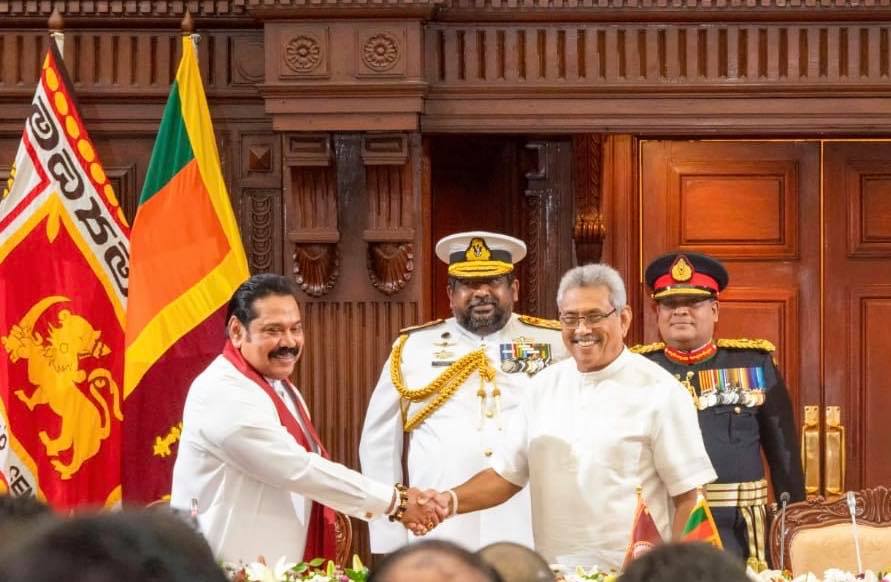
Roshan Ranasinghe appointed State Minister for Provincial Councils and Local Government Affairs

State Minister Roshan Ranasinghe has been appointed as the new State Minister of Provincial Councils and Local Government Affairs.

He previously held the portfolio of State Minister of Land Management, State Enterprises Land and Property Development.

The Polonnaruwa District MP was sworn in before President Gotabaya Rajapaksa at the Presidential Secretariat this morning, the President’s Media Division said.

Meanwhile State Minister of Production, Supply and Regulation of Pharmaceuticals Prof. Channa Jayasumana has been appointed as the Acting Cabinet Minister of Health.

He is to serve as the Acting Health Minster until Health Minister Pavithra Wanniarachchi returns to duty.

If we Sri Lankans resolve minority issues ourselves the world will support us If we Sri Lankans resolve minority issues ourselves the world will support us BY DR. JEHAN PERERA

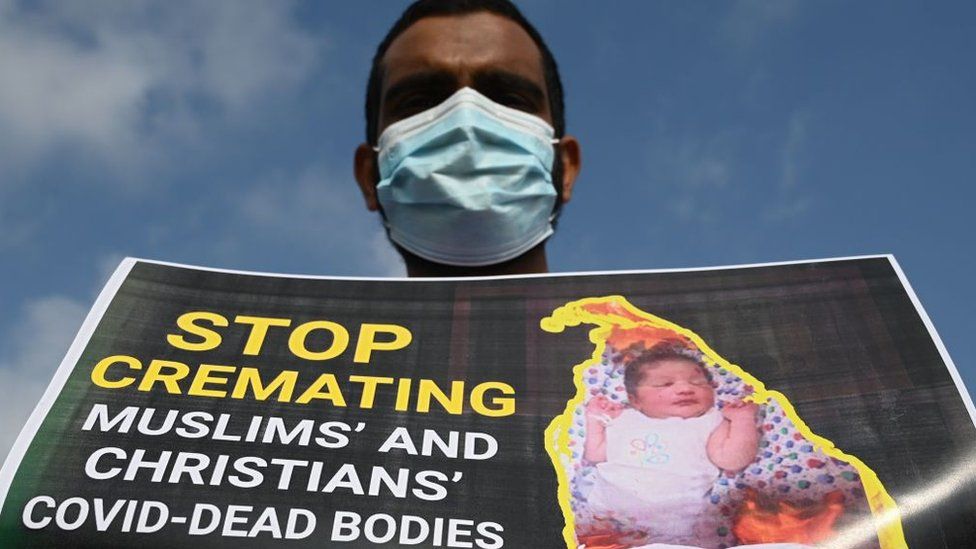
A key issue that has created internal division in the country is the cremation of those who have succumbed to the Covid virus. This policy of enforced cremations has been mostly opposed by the Muslim community for whom the burial of the dead is a part of their faith. It has also brought international disapproval to the country. The UN Human Rights Commissioner’s January report on Sri Lanka states that “The COVID-19 pandemic has also impacted on religious freedom and exacerbated the prevailing marginalisation and discrimination suffered by the Muslim community. The High Commissioner is concerned that the Government’s decision to mandate cremations for all those affected by COVID-19 has prevented Muslims from practising their own burial religious rites, and has disproportionately affected religious minorities and exacerbated distress and tensions.”

The shift away from international practices with regard to the burial of Covid victims was initially justified on the basis of science. During the early part of the pandemic when less was known about the disease and more stringent methods were adopted to halt its spread, such as the two-month-long 24-hour curfew practised in Sri Lanka, there was a real fear that the coronavirus could be spread through dead bodies and water. However, when the practice of burying those who died of Covid internationally began to be better known and scientists worldwide, and in Sri Lanka, began to downplay the significance of water transmission of the virus, Sri Lanka’s unwillingness to change its policy began to take on another dimension.

Among those who most strongly opposed the burial of Covid victims have been nationalist ideologues and religious clerics with limited knowledge of science. Many of them placed their faith in indigenous cultural practices of producing antidotes to the virus that had no basis in science. These included measures such as pouring pots of water which had been chanted over into rivers and a concoction of honey and herbs as being efficacious in protecting against infection. There have been some amongst the scientific community itself who have identified with these positions on the grounds of belief in the efficacy of indigenous knowledge. The opposition to burial also took on an anti-Muslim sentiment that had escalated following the Easter bombings of April 2019.

Opposition Support

Over the past ten months the government has come under pressure from a variety of sources to change its policy with regard to enforced cremation on both political and humanitarian grounds but to no avail. The main source of pressure has been the Muslim community within the country and their political representatives. They have been supported by sections of the Christian community to whom burial is the traditional way of farewell to the dead. The human rights organisations in the country and internationally also have made numerous appeals including a campaign of tying white ribbons on burial grounds. A further source of pressure has been the international community with governments of Muslim countries making their own representations to the government.

However, the ramping up of local and international pressure only led the government to harden its stance. It appears that a strategy of the government when it is under pressure is to rally its nationalist voter base. The election-winning platform of the government was the need to uphold national sovereignty and not to yield to either international pressure or to the ethnic and religious minorities. The electoral rejection of the leaders of the previous government who were seen as appeasing both the international community and the minorities within the country has been a lesson that has made inroads into the thinking of the main opposition parties who have been cautious in the positions they take on controversial issues. However, when Sajith Premadasa, the main Opposition leader, led a protest against enforced cremations which was also attended by civil society groups, the prospects of a bipartisan approach to resolving the problem became possible.

Prime Minister Mahinda Rajapaksa’s declaration in parliament last week that burials would be permitted even in the case of Covid victims was welcomed both locally and internationally and has not been politicized by the opposition parties. Ironically, the prime minister’s statement has been contested within the government and not been immediately operationalized. A ruling party parliamentarian had the audacity to say that the prime minister was referring to burials in general and not to Covid burials in particular. The Minister of Health has announced that the matter still needs to be assessed by a committee of experts prior to a final decision being taken. The problem is that different committees of experts have been coming to different conclusions depending on the degree of nationalism they espouse.

International Support

President Gotabaya Rajapaksa is reported to have informed ambassadors of Western countries who met him that the political decision regarding Covid burials had been taken and what remains is to implement the decision through the Health Ministry. The president is trying to find his way amongst contending powerful forces. The fact that the mainstream opposition parties are also supportive of following the WHO guidelines with regard to the option of burials would be reassuring to the government that this matter would not be politicized to its disadvantage. The problem that the government faces would be confined to an internal one which can more easily be resolved as it is in the self-interest of government members to come to a unified position on these issues.

The manner in which the Covid burial issue is being addressed suggests the way forward with regard to the issue of the upcoming session of the UN Human Rights Council in Geneva. Sri Lanka has been at the receiving end of a very strong report by the UN Human Rights Commissioner which recommends that a variety of punitive sanctions be utilized against the government leaders and those accused of human rights violations. It warns of the accelerating militarization of civilian governmental functions, a reversal of important constitutional safeguards, political obstruction of accountability, intimidation of civil society, and the use of anti-terrorism laws. The report also has several recommendations to the Sri Lankan government. Addressing the issue of the UN report and the recommendations it makes needs to be seen as a national issue in which the government and opposition work together without politicizing the issue for their own partisan advantage.

The issues being canvassed in Geneva are primarily about matters that concern the people of Sri Lanka. The recent march by Tamil and Muslim political parties and civil society groups from the east to the north highlighted issues such as the takeover of land, settling of Sinhalese and construction of Buddhist temples, the neglect of families of the missing, stopping memorials to the dead, and problems faced by cattle farmers. These are matters that are in the interests of all Sri Lankans to peacefully resolve regardless of their communities and political affiliations. Just as the opposition leadership has given its support to the practice of WHO guidelines for the disposal of Covid bodies it needs to give its support to the resolution of these issues of the past and the present. If the government and opposition leaderships are united in their resolve to address the grievances of the ethnic and religious minorities we can be assured that the international community will seek to support Sri Lanka rather than to engage in punitive measures.

Basil’s pledge to Muslim MPs revealed?

When the nationalist forces within the government led by Wimal Weerawansa opposed the 20th Amendment to the Constitution, including the clause that permitted dual citizens to hold public office, SLPP national organiser Basil Rajapaksa was able to garner the support of a group of Muslim MPs to vote in favour of the Amendment.

In this backdrop, it has now been revealed how Basil Rajapaksa was able to secure the support of Muslim parliamentarians. Members of the Sri Lanka Muslim Congress (SLMC) said that they supported the 20th Amendment to the Constitution because the government had stated their desire to allow the burial of Muslim Covid-19 victims.

SLMC MPs Faizal Cassim, H. M. M. Harees, M. S. Thowfeek and Anwer Shamed had voted in favour of the 20th Amendment.

Elaborating further, SLMC MP Faizal Cassim said,

However, leader of the SLMC, MP Rauff Hakeem, said that the party has decided to pardon the MPs who voted in favour of the 20th Amendment if they seek forgiveness from the party and the general public.

The decision to pardon the MPs subject to certain conditions was taken when the Supreme Council of the SLMC convened yesterday (14), SLMC leader Rauff Hakeem said.

Posted in Uncategorized

Sri Lanka says no move to withdraw Navy from Hambantota Port

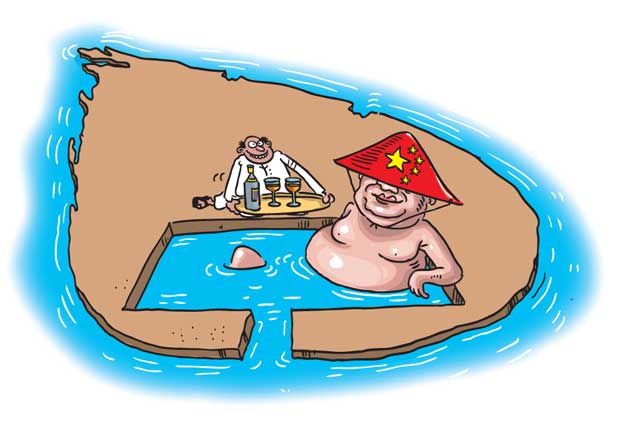
Sri Lanka says there is no move to withdraw the Navy from the Chinese funded Hambantota Port.

The Government said that President Gotabaya Rajapaksa has clearly informed China that the security of the port will be in the hands of Sri Lanka.

Cabinet co-spokesman Udaya Gammanpila, speaking to reporters at the post Cabinet virtual press conference today, said that the President had conveyed Sri Lanka’s position during talks with the Chinese Government, just after after he took office.

Following the signing of an agreement in December 2017 with China, the Hambantota port operations were handed over to Hambantota International Port Group (HIPG) and Hambantota International Port Services (HIPS).

Concerns have been raised in the past, particularly by India, over China’s involvement with the Hambantota Port.

There had been concerns the port will be used by the Chinese for military activities but the Chinese Government rejected the claims.

Canadian Tamil Vechicle Rally on Wednesday (17th) Urging Canada to Refer Sri Lanka to International Criminal Court (ICC)

Members of the Canadian Tamil Civil Society have organized a vehicle rally from Toronto and Montreal to the Parliament Hill in Ottawa, on Wednesday February 17th to urge the Government of Canada to Refer Sri Lanka to the International Criminal Court (ICC) for War Crimes, Crimes Against Humanity and Genocide Committed Against Tamil People by the Sri Lankan State.

Canada as a member of the Core – Group on Sri Lanka is currently involved in the drafting of the Resolution for the upcoming UN Human Rights Council Session.

“If Canada wants it can Refer Sri Lanka to International Criminal Court (ICC)” said one of the organizers.

“We will know whether Prime Minister Justin Trudeau’s Administration is taking Tamil’s unified request seriously”

Recently, Michelle Bachelet, the United Nation’s High Commissioner for Human Rights (OHCHR) in her Report dated 12th January 2021 urged UN Human Rights Council Member States to take steps toward the referral of the situation in Sri Lanka to the International Criminal Court (ICC).

Tamil’s in Sri Lanka and in the Diaspora have unitedly call for Sri Lanka to be referred to the International Criminal Court (ICC).

HISTORY OF FALSE PROMISES BY THE SRI LANKAN GOVERNMENT AND INTERNATIONAL CRIMES COMMITTED AGAINST THE TAMIL PEOPLE

1) Successive Sri Lankan Governments have failed to implement any of the UNHRC Resolutions, including the ones they voluntarily co-sponsored.

2) Previous Government not only failed to take any meaningful steps to implement the Resolution that it co-sponsored, on the contrary the President, Prime Minister and senior members of the Government have repeatedly and categorically stated that they will not implement the UNHRC Resolution.

3) The current new Government went one step further and officially withdrew from the co-sponsorship of the Resolutions 30/1, 34/1 and 40/1 and walked away from UNHRC accountability process.

4) Furthermore, as a snub to UNHRC, only soldier who was ever punished and sentenced to death for killing civilians including children was pardoned by the current President.

5) Also, several senior military officials who were credibly accused of committing war crimes have been given promotions and treated as “war heroes.” One officer who was named in UN reports as a suspected war criminal was promoted as a four-star General.

BACKGROUND ON INTERNATIONAL CRIMES COMMITTED IN SRI LANKA:

1) According to the November 2012 Report of the UN Secretary-General’s Internal Review Panel on UN Action in Sri Lanka, over 70,000 people were killed during the last six months of the war that ended in May 2009.

2) Several were killed when Sri Lankan forces repeatedly bombed and shelled an area designated by the Government as No Fire Zones (Safe zones). Even hospitals and food distribution centers were bombed. Several also died of starvation and bled to death due to lack of medical treatment.

3) International Truth and Justice Project (ITJP) in February 2017 handed over details to UN of Sri Lankan Military run “Rape Camps”, where Tamil women are being held as “sex slaves.”

4) According to UK Foreign and Commonwealth Office report on April 2013, there are over 90,000 Tamil war widows in Sri Lanka.

5) Thousands of Tamils disappeared including babies and children. UN Working Group on Enforced Disappearances stated that the second highest number of enforced disappearance cases in the world is from Sri Lanka.
Canadian Tamil Civil Society
CTCS
+1 416-457-1633
roytheadvisor@gmail.com

Posted in Uncategorized

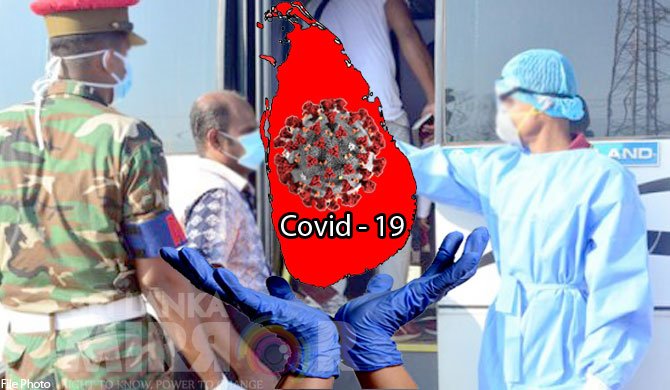
Coronavirus death toll in Sri Lanka crosses the 400 mark

The coronavirus death toll in Sri Lanka crossed the 400 mark today.

The Government Information Department said that six new deaths linked to the coronavirus were reported today.

This took the coronavirus death toll in Sri Lanka to 403 today.

Of the six victims, one is a 78-year-old man from Divulankadawala. He died while receiving treatment at the Infectious Disease Hospital (IDH).

The second victim is a 48-year-old woman from Pallethalawinna. She died while receiving treatment at the IDH hospital in Angoda.

The third victim is a 57-year-old man from Hanwella. He was transferred from the Apeksha Hospital in Maharagama to the IDH Hospital where he died.

The fourth victim is an 80-year-old man from Nugegoda. He died while receiving treatment at the IDH hospital in Angoda.

The fifth victim is a 68-year-old man from Wattala. He died at the Homagama Base Hospital.

The sixth victim is a 70-year-old man from Hunnasgiriya. He died while receiving treatment at the Kandy National Hospital.

Posted in Uncategorized

Sri Lanka- Tamil Politics after P2P Protest By N Sathiya Moorthy

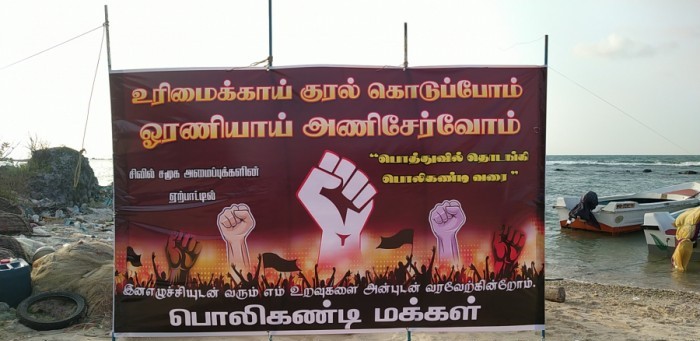
Though the so-called national media did not give it due coverage, the five-day Pothuvil-to-Polikandy multi-ethnic march of the Tamil-speaking people drew a decent crowd, recently. Equally important, it has quietly passed on the mantle of core Tamil politics from the well-entrenched older generation to the relatively younger ones, without anyone asking for it and anyone giving it. Yet, it did leave behind the North and East divide that the protest march was supposed to close as much as possible – and did do so at the level of the people, but not necessarily among the leaders.

In the forefront of the protest march were civil society organisations of the Tamil-speaking people, thus taking away at least some of the entrenched ego issues pertaining to various groups and individuals, especially from among the Northern ‘Jaffna Tamils’. History has conferred on Jaffna the self-styled title of being the ‘cultural capital’ of the Tamil-speaking people in the country. The Jaffna Vellars seem to have born with a chip on their shoulders – and that is what it took the protest march to challenge from within. It was not an issue, however, neither earlier, nor since, but it certainly was a message coming out of the march without anyone having to spell it out.

It was the first organised protest march of the kind, uniting the Tamil-speaking people of the North and the East, and traversing both regions/Provinces. The commencement-point Pothuvil is in the East, and the culmination-point Polikandy is a locality in the Northern Jaffna town. True to form, the protestors’ demands also highlighted issues affecting not only the Northern Tamils, or the larger Tamil community, but also those of the Muslims and Upcountry Tamils.

The memorandum did not stop with the usual war-induced demands like ‘disappearances’ and other war-crimes. It also included current issues of State high-handedness, including the continued deployment of the PTA (Prevention of Terrorism Act), which is a war era anachronism, and continuing ‘land-grabbing’ by the Sri Lankan State, but only of Tamil lands in the North, and none likewise from the Sinhala-Buddhist majority in the South, and so on.

For the first time ever, the protestors’ demands included the Muslim community’s call for freedom to bury their covid dead, which Sri Lanka alone has barred, citing localised health reports. Other nations, both Christian and Muslim, have allowed the burial of their dead. The all-important World Health Organisation (WHO), the UN affiliate, has approved of burial, after conducting detailed studies.

The memorandum had demands pertaining to the Upcountry Tamil estate labour, or ‘Tamils of recent Indian origin Tamils’, or simply ‘Indian Tamils’ or ‘Malayaha Tamils’. The Tamil term ‘Malayaham’ means ‘Upcountry’ or ‘Hill Country’. They have been demanding a higher wage for their labours for long, and the protestors’ memorandum demanded that they be paid LKR 1,000 as daily wages.

Initial success or what

The taste of the pudding is in eating, and some results flowing from the protests were visible – though they cannot be directly linked to the same. Of immediate interest is Prime Minister Mahinda Rajapaksa’s declaration in Parliament that from now on Muslims in the country would be allowed to bury their dead. However, a day later, a junior minister under him, Sudarshini Fernandopulle, ‘clarified’ in Parliament that a final decision would be taken only after consulting Health officials. This in turn reflected a strain within the ruling Establishment, though it was unclear, at what level.

On the wage-rise for the estate Tamils, it was again Prime Minister Rajapaksa who facilitated a tripartite agreement between the management, labour unions and Government officials. It was a poll promise of his SLPP, both before the presidential elections in November 2019 and the parliamentary elections in August 2020. To the extent, the timing was just right, and the Tamil protestors’ demand seemingly included what possibly some of the organisers thought would be coming through, any time soon.

But the same cannot be said of the core Tamil demands, rather demands of the vocal Sri Lankan Tamil (SLT) community. Those demands are as old as the war and certainly the post-war period, now nearing 12 years. The P2P march as the Pottuvil-to-Polikandy protest has come to be dubbed, only underscored most of those long-pending demands. Successive Governments in Colombo have failed to make good their promises of their times. Those promises thus remain only as promises.

At the end of it all, the mainline Opposition SJB had extended support to the P2P protest, though it came after the success became known. Post-march, the JVP has said that the protest became necessary and its success became possible only because of the Government’s continued ‘high-handedness’ against the Tamil community / communities.

Unmindful of it all, the Government withdrew special security for TNA parliamentarian M A Sumanthiran, and replaced it with a lesser security-cover. Internal Security Minister, veteran naval officer, Rear Adm Sarath Weerasekara (retd), said in Parliament that he ordered withdrawal of top level security to Sumanthiran, as it was incongruous for those personnel to be protecting a politician who was protesting against the Government, they were sworn to stand by.

Show ahead of UNHRC

Minister Weerasekara said that the protest was aimed at the upcoming UNHRC session in Geneva, which was scheduled to take up the Sri Lanka ‘war crimes’ resolution for discussion, debate, vote – and thus further action. It indeed was one though the protest-organisers did not seek to highlight the same. To them, unifying the Tamil-speaking people seemed to have been the prime agenda – hence limited achievement.

Otherwise, the protestors demands, or at least those pertaining to the SLT community, has already been reiterated together by northern Tamil polity together, in their joint memorandum to the UNHRC, copies of which have been shared with foreign missions in Colombo. If the Tamils’ memorandum to the UNHRC was the first stage in which the otherwise eternally-divided Northern polity came together, the P2P march has become the logical next step. It involved the larger population – but did not stop with the Northern Tamil population, or the larger SLT population in the North and the East, thus skipping the interim step and fast-forwarding the integration process, as much.

Is it fast-forwarding, after all? Yes and no. The fact that the protest was organised by civil society organisations did not go unnoticed. The presence of individual leaders of the TNA especially and also of Gajendra Kumar Ponnambalam’s ACTC-TNPF apart, major Tamil and Muslim parties, as organisations, did not participate. It was good in a way, as it could well have stirred hidden institutional and individualistic egos. But that is not the issue.

The real issues is that the march did not seem to have had the whole-hearted blessings of the respective party leaderships, other than Gajan Ponnambalam’s ACTC-TNPF, or so it seems. Especially, Maavai Senathirajah, president of the mainstay ITAK leader of the three-party TNA, stayed away. It would have made a difference to the optics if he had at least issued a congratulatory message on the P2P march – but he did not.

Even on the question of the Government withdrawing Sumanthiran’s special security cover, his political mentor and TNA chair, R Sampanthan, alone seemed to have called the MP and expressed his concern. Or, that is what a section of the Tamil media has reported. So did PLOTE leader D Sithardhan. Others in the TNA hierarchy have maintained stoic silence, even as SJB and Muslim leaders have flagged the issue, both inside and outside Parliament. So much for SLT, rather TNA unity!

Where from here…

Whether they planned it or not, or wanted it or not, the P1P protest has thrown up the likes of TNA parliaemntarians Shanakiyan Rajamanickam, or ‘Shan’ for short, and Sumanthiran, by now the veteran international spokesperson of the TNA, with two terms in Parliament behind him, to the forefront than already. Both stood of in Parliament recently for taking up the ‘Muslim burial issue’, and so did Gajan Ponnambalam.

The three parliamentarians put the Muslim leadership to shame on this score, as the latter was found wanting, in their submissions in the House – and outside. It was this that brought droves of Muslim youth to the P2P protests, thus indicating their willingness to work with a credible next-generation SLT leadership, devoid of the blood stains of the past that the LTTE had inflicted on the community in 1990. The moderate Tamil leadership had looked the other way then – and since.

It did not stop there, though. There was a visible attack on Shanakyan’s vehicle in Jaffna. A section of the Diaspora social media has attributed it to Ponnambalam’s party men. Others have denied it. Another group on the social media had earlier charged Shan with attempting to hijack the protest from the commencement. He was shown carrying a banner, with his face and presence, in the protest. According to the critics, Tamil for long have used only the picture of ‘Thanthai’ Selva or slain Amirthalingam – rejecting all forms of self-promotion of every kind.

Other reports claimed that once the protests entered the North, Sumanthiran & Co, too, sought to literally push Shanakyan behind, denying him a place in the forefront of the protest march – and that much of additional photo op, for the whole world to see. This report, too, has been denied, and thankfully so – but not from Shan’s side, yet.

Yet, if the protest march has made news, it is for the simple reason that it happened. Then, it had the presence of not only Tamils from the East and the North, but also Muslims. No news report has identified the presence of any Upcountry Tamil leader of any rank, or even their members – though both the East and the Vanni area in the North have the community’s substantial presence, all the same.

As is not uncommon, Christian priests were shown participating in the march. So did some Muslim community leaders. From the Tamil side, Velan Swamigal has become the first religious face of the population, though in the past, the priestly Brahmin community has lent support and backing to the Tamil cause at one time, and the militant cause another – and the LTTE, as days went by. How and how far it is going to impact the larger Tamil unity is a question for which the answers will emerge only in due course.

(The writer is Distinguished Fellow and Head-Chennai Initiative, Observer Research Foundation, the multi-disciplinary Indian public-policy think-tank, headquartered in New Delhi. email: [email protected] )


Posted in Uncategorized

Former UN High Commissioner Pillay Says It’s Time for the Human Rights Council to Act on Sri Lanka

(Editor’s Note: This is the sixth article of a series on the likely spotlight to be placed on allegations of war crimes and other abuses in Sri Lanka during the next session of the United Nations Human Rights Council, beginning Feb. 22. The series includes voices from former U.N. officials, international NGOs, human rights litigators, and researchers. The full list will appear, as installments are published, at the end of the first article, Spotlight on Sri Lanka as UN Human Rights Council Prepares Next Session.)

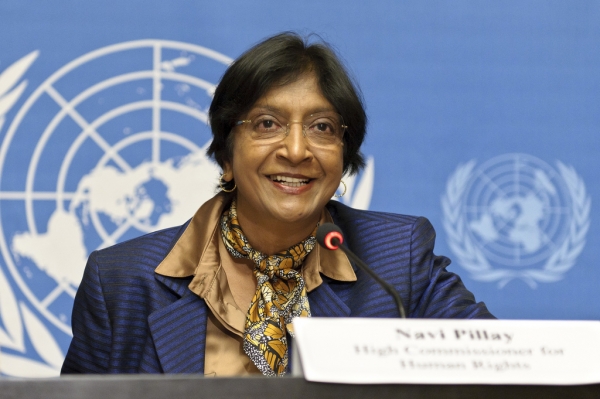
Former U.N. High Commissioner for Human Rights Navi Pillay says the Sri Lankan government has made clear it has no serious intention of pursuing accountability for alleged war crimes and crimes against humanity during the country’s civil war that ended in 2009, and that as a result, the U.N. Human Rights Council must act. Successive high commissioners have made increasingly strong statements calling for a comprehensive process of accountability, she said, based on successive U.N. reports outlining what she describes as “credible evidence that the Sri Lankan state itself committed international crimes.”

“It is time for the HRC to make a drastic departure from its customary complacency over the failures of the Sri Lankan government and hold it to account,” Pillay said.

I interviewed the former high commissioner, who served from 2008 to 2014, about the role of her office in addressing the humanitarian crisis in Sri Lanka in the final stages of the war and since that time, and her views on what the council should do at its upcoming session.

The last six months of Sri Lanka’s civil war inflicted mass numbers of civilian casualties and caused international outrage. What was your role as high commissioner in responding to this crisis?

The last six months of Sri Lanka’s civil war in 2009 were played out live on world television screens. We watched the Sri Lankan army shoot to death the alleged leaders of the terrorist group, the Liberation Tigers of Tamil Eelam (LTTE), even as they raised white flags in surrender. We watched extensive aerial bombing of Tamil civilians and destruction of their homes, hospitals, and places of refuge. The onslaught continued well after the capture and killing of the alleged terrorists. We heard the last cries for help from doctors who were treating the injured in hospitals that were being shelled.

International humanitarian law (IHL) protects the lives of civilians in armed conflict. The two firm principles of “distinction” and “proportionality” of the Geneva Conventions and Additional Protocols apply to both governments and non-state actors in all situations of armed conflict. Direct, indiscriminate, and disproportional military attacks violate the principle of proportionality where they exceed the anticipated concrete and direct military advantage. Distinction dictates that parties must distinguish between civilians and combatants.

Sri Lanka informed the international community that it was exercising its sovereign right to contain terrorism inside its territory; and so no international forum — not the U.N. Security Council, not the U.N. General Assembly, nor the Human Rights Council — addressed the situation until June 2, 2009 when, in my capacity as high commissioner for human rights, I placed the matter on the agenda of the Human Rights Council (HRC). I reported serious human rights violations to the HRC, including loss of thousands of civilian lives, rape and sexual violence against women and girls, and forced dislocation of Tamils. The HRC and U.N. bodies have a role in the protection of human rights in crisis situations. I recommended that the council establish an independent international inquiry into grave violations of International Human Rights Law (IHRL) and International Humanitarian Law (IHL).

In the absence of national investigations, international inquiries establish the facts and determine whether there is evidence of the commission of international crimes. Commissions of inquiry established by national and international bodies make critical contributions by providing independent factual accounts of events to inform international action and ensure accountability for serious human rights crimes. If international experts find evidence of crimes, then states have a duty to investigate and prosecute the perpetrators. International accountability mechanisms are considered appropriate when states are unwilling or unable to take action.

The Security Council set up commissions of inquiry in conflicts in former Yugoslavia and Rwanda before setting up the ad hoc international tribunals there, and mandated an inquiry into the Central African Republic. The General Assembly recently established the International, Impartial and Independent Mechanism (IIIM) for the conflict in Syria and the Investigative Team to Promote Accountability for Crimes Committed by Da’esh/ISIL (UNITAD) in Iraq. The HRC established numerous international commissions of inquiry, including for Gaza, Syria, DPRK, Eritrea, and Libya, and ordered investigative reports on Sri Lanka and Ukraine.

There have been numerous U.N. reports about the atrocities committed during the conflict. How have you seen these used to advance accountability mechanisms in the case of Sri Lanka?

There have been numerous fact-based reports of atrocities committed during the conflict in Sri Lanka from the U.N., as well as credible reports from international and national NGOs and journalists. The U.N. reports serve as important levers to maintain the issue on the HRC agenda and are persuasive in motivating states to take action to protect against the excesses of the Sri Lankan authorities and to advance accountability mechanisms.

The U.S. ambassador to the HRC at the time, Eileen Chamberlain Donahoe, said that, “In light of the facts that came out in the report (of the U.N. Panel of Experts) the U.S. delegation simply felt compelled to help support a process of transitional justice in Sri Lanka.” The ambassador played an influential role in securing support for the early Sri Lankan resolutions, stating, “We felt that the clear and substantial evidence of war crimes and crimes against humanity committed during the final days of the Sri Lankan civil war simply could not be ignored.”

In 2015, the Sri Lankan government co-sponsored a resolution with the U.N. Human Rights Council that laid out a comprehensive transitional justice framework for the country, including criminal prosecutions with limited international involvement. What is the role of the Office of the High Commissioner for Human Rights (OHCHR) and the council to ensure the government lives up to these kinds of commitments?

Successive high commissioners, including Zeid Ra’ad Al Hussein and the current high commissioner, Michelle Bachelet, together with independent U.N. experts, have made even stronger calls than I did in 2009, calling for a comprehensive process of accountability. All three U.N. reports on Sri Lanka (report of the UNSG’s Panel of Experts, the internal review report and the OISL report) state that there is credible evidence that the Sri Lankan state itself committed international crimes.

All of us drew attention to the failure on the part of the government of Sri Lanka to honor its own obligations and the undertakings it made to the HRC to set up any kind of judicial mechanism to prosecute international crimes, let alone a domestic process. We drew attention to growing authoritarianism, intrusion by the military into civilian activities, attacks on democratic institutions, and persisting violations of the rights of Tamils. We warned of recurrence and pressed for urgent action from the HRC.

What are the trade-offs between domestic versus international accountability mechanisms, and how have these played out in the Sri Lankan context?

The HRC has adopted the course of encouraging Sri Lanka to undertake domestic investigations and reconstruction initiatives. This is in accordance with international law, which places primary responsibility on the state concerned to undertake justice and accountability measures. The international community will only intervene when the state is unwilling or unable to comply. The 2015 HRC resolution was welcomed at the time as an example of comprehensive, domestic transitional justice, with the U.N. playing a supportive role. The resolution received the support of the Sri Lankan government, together with their repeated undertakings to comply in full.

Twelve years on from the end of the war, the Sri Lankan government has failed to make any meaningful progress towards accountability for international crimes, reparation for victims, or accountability for disappearances and land dispossessions. Only a single perpetrator was convicted — in 2015, Army Sergeant Sunil Ratnayake was sentenced for the murder of eight civilians including a 5-year-old child in 2000. Both conviction and sentence were confirmed by the Supreme Court of Sri Lanka in May 2019. Yet the president pardoned Ratnayake, in willful defiance of international law against impunity.

What do you think of the most recent OHCHR report’s recommendation to establish an international investigative mechanism for Sri Lanka to collect evidence for international or foreign prosecutions under principles of universal jurisdiction?

In her recent report, the high commissioner for human rights makes several recommendations to states to exercise collective international action. The HRC, as a subsidiary body of the General Assembly, does not have authority to make a direct request to the Security Council for a referral of the Sri Lanka situation for investigation of international crimes by the International Criminal Court. The report invites individual member states to support such a referral.

The OHCHR report also calls for the exercise of universal jurisdiction by states, and recommends the establishment of an international investigative mechanism, such as the IIIM (the International, Impartial and Independent Mechanism) and UNITAD (the U.N. Investigative Team for Accountability) established by the UNGA for Syria and Iraq. Such a body will ensure the collection and preservation of evidence for future investigations or prosecutions by states under the principle of universal jurisdiction. This is an important step in the preservation of evidence and will enable an ICC prosecution in the event of a Security Council referral, or in the event of the establishment of an international criminal tribunal or for national prosecutions. It is hoped that the threat of universal jurisdiction cases will move the Sri Lankan government to at least prosecute the emblematic cases.

We often talk about the need to end impunity, not just for victims of past crimes, but to improve human rights conditions in the present. To what extent is this what we are seeing in Sri Lanka today?

The high commissioner’s report paints a graphic picture of a rapidly deteriorating human rights situation in Sri Lanka. Whereas previous reports of high commissioners recorded failures of compliance with HRC resolutions by the Sri Lankan government, the current report goes much further in detailing not just failures to act, but active obstruction by the government of any effort to secure justice and accountability. The alarm raised by the high commissioner to dangerous trends such as “exclusionary and majoritarian discourse,” giving rise to the risk of recurrence of grave violations of the past must be heeded.

Such a dire prediction of new violations to come from the failure of accountability for the past crimes was made by Zeid and I when we were in office. It is time for the HRC to make a drastic departure from its customary complacency over the failures of the Sri Lankan government and hold it to account for its non-compliance with HRC resolutions.

The bona fides of the government, in its commitment to establish a domestic judicial process for past crimes, was always in question, but is more so now with Gotabaya Rajapaksa assuming the office of the president. He was the minister of defense and commander of the armed forces during the conflict and is named in various reports as the individual most responsible for mass violations during the final attack in 2009. In my meeting with him in 2012, he proudly laid claim to having ended terrorism in Sri Lanka. His exploits are recorded in a book about him, titled “Gota’s War- The crushing of Tamil Tiger Terrorism in Sri Lanka.” Indeed, the LTTE was responsible for a reign of terror, but now that terrorism has ended, why is “Gota’s war“ continuing to be waged against human rights defenders and democratic institutions? (A copy of the book was gifted personally by Gotabhaya Rajapaksa to a high official in the South African Foreign Ministry, who in turn passed it on to me.)

How should the HRC address Sri Lanka at the upcoming meeting?

As the world watches in awe and respect, the swift action taken by the US Congress to impeach the departing strongman for insurrection and attacks on democratic institutions, lessons can be drawn for the HRC. It should similarly act decisively and accept the recommendations made by the HC for justice and accountability in Sri Lanka, and unequivocally hold the perpetrators of grave human rights violations against the Tamils accountable. “Gota’s war” against terrorism must not be allowed to become a war against the rule of law and International standards of conduct towards defeated peoples.

What do you think the United States can and should be doing at the forthcoming HRC session, since it is not a member of the council?

I referred above to the important lead taken by the U.S. in the adoption of the first resolutions against Sri Lanka in the HRC. Although the U.S. is not a member of the HRC and does not have the right to vote, it has the right to address the council as an observer state. There is a role for the U.S. to continue to press for justice and accountability even though President Trump withdrew from the council. The Biden-Harris administration should seize the opportunity to reinforce its support for justice and accountability and make known to the world its return to values-based leadership.

Source:justsecurity.org

Posted in Uncategorized

India has its way on Chinese projects in North Sri Lanka – NewsIn

Though India failed to get the East Container Terminal (ECT) project in Colombo port, it is now well on the way to bagging the West Container Terminal (WCT) project and also three power projects in Jaffna. It has successfully convinced the Gotabaya Rajapaksa government that it will be unwise to ignore India’s interests in its relations with China.

After yielding to Sinhalese nationalist pressure not to give the ECT project to India, the Sri Lankan government offered the WCT in which the designated Indian party is to hold 85% stake. This is much higher than the stake offered to India and Japan (49%) in the case of the ECT. It also matches China’s stake in the adjacent Colombo International Container Terminal (CICT).

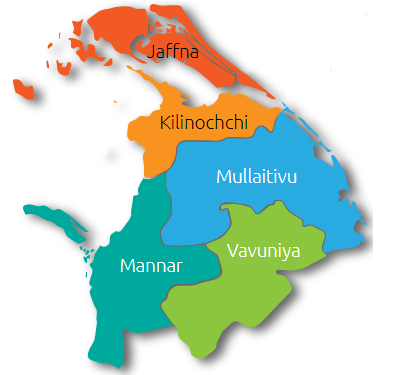
Meanwhile, another problem had arisen for India in Jaffna in Northern Sri Lanka. The Lankan government had decided to award three renewable energy projects there to a Chinese joint venture company MS/Sinosar-Etechwin. The power plants were to be set up in three islands off Jaffna, namely, Delft, Analativu, and Nainativu.The plants were to use a mix of solar, wind, and other renewables. The ADB was to give a loan of US$ 12 million for the project.

India strongly objected to the grant of the project to a Chinese company as one of the island locations was only 48 kms from Rameswaram. India feared that the Chinese would spy on India from there.

The Lankan government argued that the Chinese company was better qualified than the Indian party which had also tendered for the project, and that the ADB had sanctioned the deal and extended a loan of US$ 12 million. But this did not wash with India which continued to harp on the security threat to it.

While a section of the Lankan government felt that the India’s objection abridged Sri Lanka’s sovereignty and independence and therefore it deserved to be ignored, the dominant section felt that India’s case must be accommodated in the larger interest of having good relations with the Big Brother and only neighbor. Sri Lanka’s own security was heavily dependent on India, it was pointed out.

Indian Grant

The media on Sunday quoted Lankan Power Minister Dallas Allahaperuma as saying that the Indian High Commissioner Gopal Baglay had met him and offered an Indian “grant” of US$ 12 million for the three energy projects in Jaffna islands. India suggested that Sri Lanka could itself build the power plants with Indian collaboration of course.

Allahaperuma accepted the proposal and promised to put it up at the next weekly cabinet meeting. The minister also informed the media that the original plan to give the project to a Chinese company had not yet been put up in the cabinet.

“If we think of our citizens, receiving a grant is an advantage and it will also ease the burden on the Treasury, because if we go ahead with ADB funds, the Treasury will have to repay those in the future,” the Minister said.

On the Sri Lankan offer to get India’s help to build the West Container Terminal, there appears to be no visible movement. Sri Lankan officials and political leaders who want India-Lanka relations to be on an even keel want both the Indian and Sri Lankan governments to move quickly and start the work on the project. Any delay would activate the nationalist elements, who are basically anti-Indian, they fear. In fact, a port workers’ union leader has already told the press that the workers would go on strike if the WCT project is assigned to India.

“President Works For 15 Hours A Day: I can’t Spend Long Hours At Work As Him” – Prime Minister

Prime Minister Mahinda Rajapaksa said President Gotabhaya Rajapaksa works 15 hours a day to serve the public.

Addressing a function in Beruwala, the Prime Minister said that was why the President could travel to villages looking into issues faced by the people.

“I don’t want to lie. I can’t work long hours as the President. It is up to the people to make good use of the leaders who give their best to the public,” he added.

He also added that the government was only able to govern the country properly for four hours due to the outbreak of the pandemic.