ACJU says Muslim community in Sri Lanka unjustly demonized

The All Ceylon Jamiyyathul Ulama (ACJU) says the Muslim community in Sri Lanka and its representative organizations and institutions have been unjustly portrayed and demonized.

ACJU says this has caused the community to be viewed with suspicion resulting in irreparable harm to communal harmony.

“While living in a country with people of diverse ethnic and religious backgrounds, Muslims in Sri Lanka have co-existed and continued to co-exist with those of other communities while preserving their unique religious and cultural values,” ACJU said.

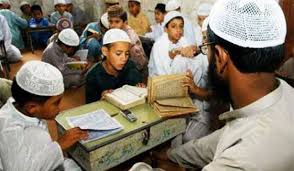
ACJU noted that institutes and systems such as Masjids, Arabic Madarasas, Quran Madarasas – Maktabs, Ahadiya, Muslim Personal Laws, Halal food consumption etc, that are prevalent in this country have facilitated the Muslims to live as good citizens of this country while preserving their religious and cultural values.

“It is a well-known fact to those who are well-informed that these organizations do not pose any threat to national security or the social coexistence of the country,” ACJU said.

The ACJU noted that the heinous Easter Sunday terrorist attacks carried out on 21/4/2019 by imposters claiming to be Muslims have been unreservedly condemned by the Muslim community and its representative organizations and institutions.

“Terrorists must be punished. Terrorism must be eliminated. But innocent persons must not be harassed or incarcerated. Muslim institutions which had served the community must not be made the scape goats for the terrorist attacks. As a consequence of this attack, the Muslim Community and its representative organizations and institutions have been unjustly portrayed and demonized causing the community to be viewed with suspicion resulting in irreparable harm to communal harmony,” ACJU said.

The ACJU urged all politicians as well as others to refrain from making false allegations and disseminating hate speech against the Muslim community in pursuance of political agendas.

“We further request politicians and others to refrain from indulging in hate campaigns against the Muslim Community by spreading misinformation in respect of Madarasas, Muslim personal laws, burial of Covid-19 Janazas (dead bodies) or any other rights enjoyed by the Muslims living in this country. We are of the view that those who are engaged in politics based on racism, shall never be able to guide this country towards prosperity,” ACJU said.

The ACJU noted that the Muslims and other citizens of this country have suffered immensely due to the despicable activities of those who seek to drive a wedge between communities by creating suspicion about each other for political reasons.

The ACJU also urged the media to refrain from providing a platform to evil forces who propagate anti Muslim sentiments among the public.
SAHR expresses concern over the timing of the Pakistan PM’s visit to Sri Lanka

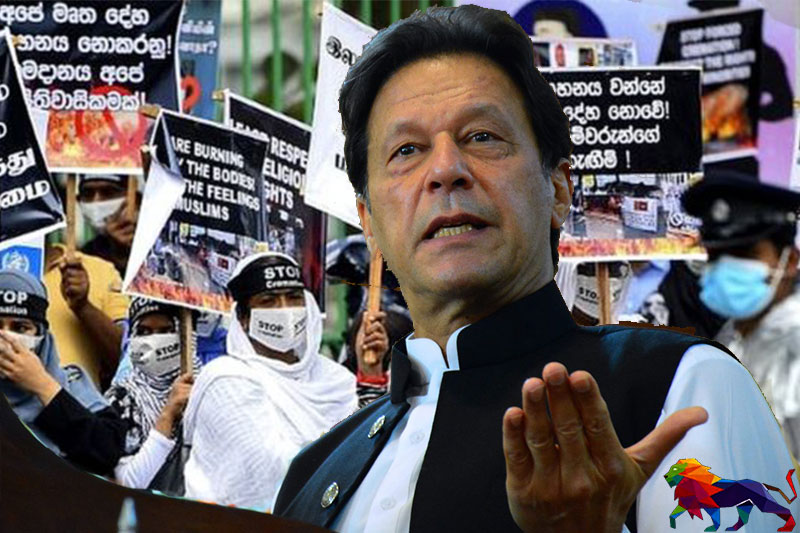
South Asians for Human Rights (SAHR), a regional network of human rights defenders, expressed concern over the timing and purpose of the Pakistan Prime Minister Imran Khan’s two-day visit to Sri Lanka on Monday.

Prime Minister Kham’s visit to Colombo from February 22-23 coincides with the virtual launch of 46th session of UN Human Rights Council (UNHRC), where it is reported that a new resolution on Sri Lanka will be discussed based on the report by the High Commissioner for Human Rights mandated by 40/1(2019).

SAHR recalls that this is also at a time when the Government of Sri Lanka (GoSL) has been criticized for forcibly cremating the corpses of COVID infected Muslim persons against WHO guidelines.

SAHR believes that the Pakistani PM’s visit is to garner support from the Organization of Islamic Cooperation (OIC) to vote against a resolution on Sri Lanka that is due to come up on 23 February 2021.

Further, Prime Minister Khan, during his visit, is expected to address the human rights concerns of Muslims and will hold talks with key government officials and party leaders.

Sri Lanka Prime Minister, Mahinda Rajapaksa’s recently made an announcement to allow burial of the bodies of COVID 19 infected Muslims, but the government later described it as merely the personal view of the Prime Minister.

“While commending PM Khan’s willingness to address the issues faced by the Sri Lankan Muslim minority during his visit, we are also apprehensive of the impact these talks would have on the Tamil minority in the country,” SAHR said in a statement.

In February 2020 the Government of Sri Lanka informed the UNHRC of the decision to withdraw its co-sponsorship of resolutions 30/1, 34/1 and 40/1, which calls for a process of transitional justice promoting reconciliation, accountability and human rights, and instead, to pursue a domestically designed and executed reconciliation and accountability process.

Support from Pakistan and other countries would permit the Sri Lankan government to deliberately bypass the proper process of transitional justice deserved by the victims who are mainly the Tamil and Muslim minorities in the country, SAHR says.

Prime Minister Khan’s visit marks a remarkable bilateral moment for the two countries but it is also important to reflect on the common human rights issues concerning Sri Lanka, Pakistan and the South Asian region Numerous restrictions on people’s freedom of expression and right to peaceful protest are common across the region, the right organization noted.

The increase in nationalism and religious extremism leading to marginalization of minorities, shrinking civic space, journalists and media personnel being specifically targeted by state and non-state authorities and activists, human rights defenders and opposition members vilified and detained without due process and persecuted through the misuse of the laws and undue influence of executive powers are rampant in South Asia. Indian climate activist Disha Ravi’s arrest is the latest example for the rapid degradation of human rights.

Moreover, there have been numerous instances of people’s rights and respect for democratic values been blatantly violated by the governments using the pandemic containment as a facade. In Pakistan as well as Sri Lanka the intensification of militarization and especially the military leading the COVID 19 containment measures as well as the civil administration, business and other aspects of civilian life have further reduced freedoms and civil liberties enjoyed by the people of South Asia. The agony and suffering faced by the minorities in Pakistan and the use of the draconian blasphemy laws have sometimes pushed them to become refugees in neighboring countries. The ruthless measures taken to curb the students’ movement and Pashtun peoples’ movement without attempting to find sustainable solutions to their problems raises concerns of PM Khan’s legitimacy to address issues of the Muslim minority in Sri Lanka.

“We believe that such bilateral occasions should not be used to address issues of one minority community while overlooking the concerns of another. Therefore, SAHR calls upon the Governments of Pakistan and Sri Lanka to respect the rights of all minorities guaranteed in the constitutions and to resolve and address their concerns while providing equal treatment to all,” SAHR says.

The regional human rights organization urged the governments of Sri Lanka and Pakistan to use this occasion to celebrate the true South Asian camaraderie while working together to address human rights concerns of all citizens in the region.

India committed to ensuring Tamil refugees in SL live with peace: Defence Minister Rajnath

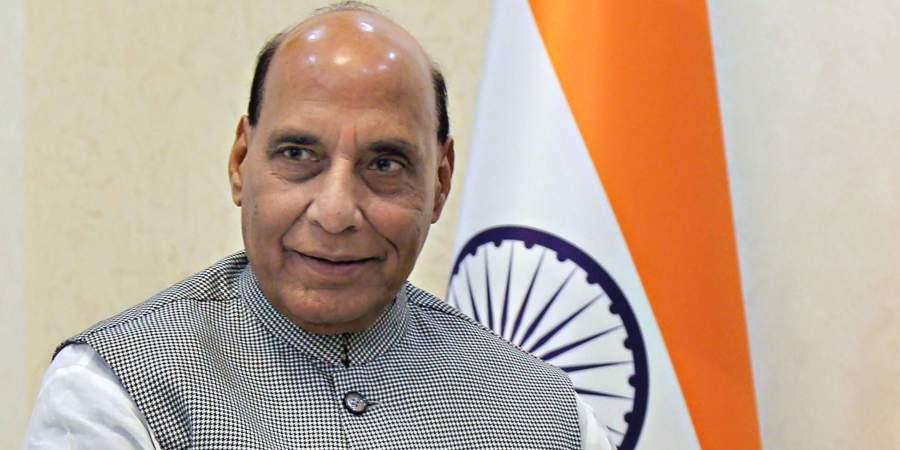
Asserting that Indian Prime Minister Narendra Modi has a “personal relationship” with Tamil Nadu, Defence Minister Rajnath Singh on Sunday said that the central government is committed to ensuring that Tamil refugees in Sri Lanka live with peace, equality and dignity, ANI news reported today.

It said, ahead of the Assembly polls in Tamil Nadu, Singh addressed Bharatiya Janata Yuva Morcha (BJYM) convention in Salem and said that he is proud to be in the land of great warriors like Rajaraja Chola and Rajendra Chola who were known for making an exemplary contribution in strengthening India’s Military and Naval capabilities.

“Former Prime Minister Atal Bihari Vajpayee made Dr APJ Abdul Kalam the President…was that not respect of Tamil Nadu? In 1974, when then Congress government left Katchatheevu island for Sri Lanka, Vajpayee condemned the decision to cede the island and spoke for moving to Supreme Court against it,” he said.

“BJP can never forget that it was Tamil Nadu’s daughter puruchi thalaivi Jaya Amma who wholeheartedly supported the first government of Atal Bihari Vajpayee,” he added.

Singh said that similar to Vajpayee, Prime Minister Modi also has a “personal relationship” with Tamil Nadu and it is reflected in his work.

“PM Modi has continuously tried for the Eempowerment of Tamil refugees in Sri Lanka. When Modi visited Sri Lanka after becoming Prime Minister in 2015, he also visited the Jaffna area and became the first Prime Minister of India to do so. New houses were given to about 27,000 Tamil brothers and sisters who had become ‘homeless’ due to the civil war there,” he said.

“Our government under the leadership of Prime Minister Modi is committed to ensuring that Tamil Refugees in Sri Lanka live with peace, equality and dignity. 1,600 fishermen have been released from Srilankan government’s custody by the PM,” he added.

Hailing the culture, tradition, poets and history of Tamil Nadu, stating that Tamil language is not only beautiful and ancient but ‘Amma’ of all the Indian languages.

Posted in Uncategorized

Sri Lanka prepared to face Core Group’s resolution at UNHRC – Dinesh

Sri Lanka is prepared to face the Core Group’s resolution to be presented at the upcoming session of the United Nations Human Rights Council, says Minister of Foreign Affairs Dinesh Gunawardena.

His remarks came during the Ada Derana ‘Big Focus’ talk show earlier today (February 20).

Issuing a statement yesterday, the Core Group on Sri Lanka – consisting of UK, Canada, Germany, North Macedonia, Malawi, and Montenegro – revealed its plans to take forward a further resolution to promote reconciliation, accountability and human rights in the island nation.

They stressed that there is an ‘ongoing importance’ of addressing Sri Lanka in the Human Rights Council.

The Core Group reiterated that more needs to be done to address the ‘harmful legacies of war’ and build sustainable peace in Sri Lanka.

Meanwhile, the facts in favor of the resolution put forward by the High Commissioner for Human Rights can never be implemented in accordance with the Constitution of this country, said Minister Gunawardena.

He mentioned this with regard to the report published by the UN Human Rights Commissioner Michelle Bachelet in late January, calling for an International Criminal Court investigation into Sri Lanka’s Tamil separatist conflict and sanctions on military officials accused of war crimes.

Gunawardena pointed out that there can be no foreign judges in the courts of Sri Lanka.

Speaking on allies who would stand with Sri Lanka to oppose such a resolution, the Foreign Minister said, “Forty-seven countries represent the Human Rights Council. Out of these 47, countries in Asia, Africa, and Latin America have given a very friendly response towards Sri Lanka. So far, the vast majority have exchanged views with us. However, we have not yet seen the final draft of this.”

15 women attended Zahran’s zealotry lessons; five killed: Police

A total number of 15 women have been attending lessons on extremism conducted by Easter Sunday suicide attack linchpin Zahran Hashim in 2018 and that five of them had been killed and the remaining women were either remanded or detained at the moment, police revealed.

The Terrorism Investigation Division (TID) on Friday arrested a 24- year-old Mohammed Ibrahim Saida from Mawanella for attending the lessons on extremism. She is being detained at the moment.

It came to light that the brainwashing lessons had been conducted by Zahran in Kaththankudy area in December 2018, Police Spokesman DIG Ajith Rohana said.

“The female suspect who is being interrogated by the TID said that 15 women along with her had attended the lessons. Out of them, five had been killed in the Sainthamaruthu bomb blast on April 26, 2019, five days after the Easter Sunday mayhem,” he said.

Another three women suspects are in the remand custody, while seven others, including the one who was arrested on Friday are being detained by the TID,” the spokesman said.

DIG Rohana said, further probing disclosed that the women took oaths at the end of the extremism lessons.

It shows that they were well prepared to launch more deadly suicide attacks at any given time as had been guided by the lessons taught by Zahran.

Posted in Uncategorized

Four Countries Will Decide Lanka’s Economic Future By Kumar David

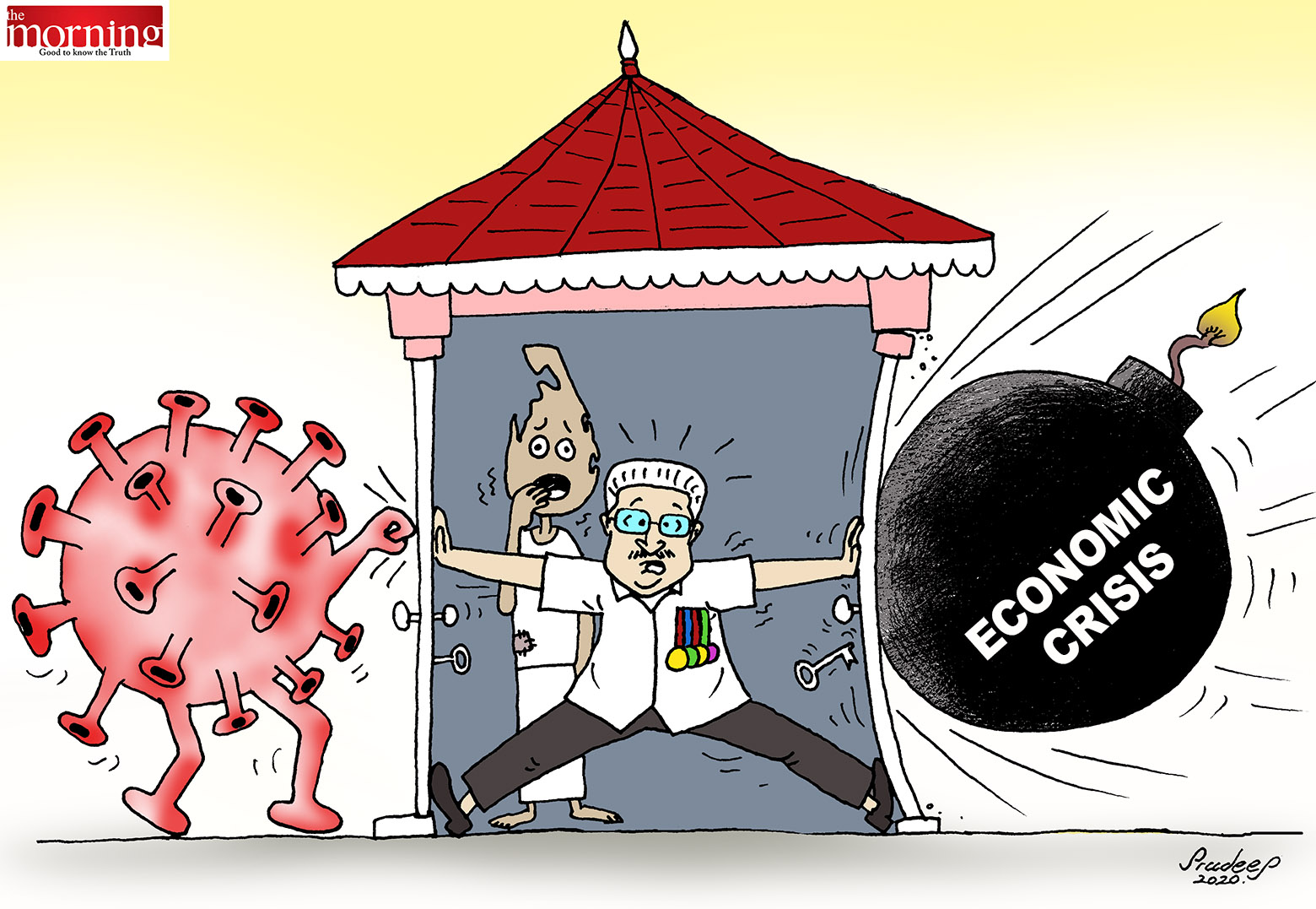
Sri Lanka’s economic predicament is more parlous than the government admits. Prof WD Lakshman of the Central Bank and other regime supporters and sections of the media conceal this obvious reality. Of course much depends on domestic policies but rather like a drowning man we are reliant on lifesavers and rescuers in the vessels around us to pull us to safety. To put it more directly, at this juncture Sri Lanka’s short and medium term economic future depends on the goodwill of others. Five players are critical and in order of importance they are India, China, America and the EU – India because it has the ability to stave us, China our patron, America and the EU are Lanka’s principal export market. In 2018 our main export markets were USA (24.2%), EU which then included UK (18%) and India (7.8%). Our imports in the same year came mainly from China including Taiwan and Hong Kong (28%) and India (23%). Singapore and Japan together provided about 13% of our imports and the EU another 13%. As always these numbers are rounded off because my objective is to sustain the political thrust of my arguments.

About half our fuel imports are from UAE and Oman and about a quarter each from India and Singapore. Though foodstuffs and pharmaceuticals account, in value terms for only about 12% of our imports from India they are vital livelihood commodities. The point I am driving is that Indian power over this Island is not only strategic as a giant neighbour whose military clout can overwhelm us, it is that if any foreigner has the power of life and death over us, it is India. China’s might in the Indian Ocean is not military, rather it is its financial potency in the littoral states scattered across the Belt & Road path. Lanka is broke, it is near to defaulting on debt, only a few can bail us out, China the most generous among them. Handouts from the IMF, America, India and Europe in addition are also welcome. Beggars can’t be choosers. This is the grim picture I am painting, the primacy of the economic crises and dependence for survival on major powers. If you disagree fundamentally about this then you won’t miss anything if you stopped reading at this point: As we enter the UNHRC arena this week what we need to fear much more than denunciation and resolutions of condemnation is that if we were to antagonise any of afore named the big-four breathing down our neck – India, China, America and the EU – it could be curtains for this country.

The economic-financial-debt side is more significant than diplomatic fall out, loss of face or strategic consequences. Re strategic matters it is my view that India is not going to blockade this Island, America doesn’t consider us worth half a battleship, China can’t spare a tugboat to defend Sri Lanka and the EU can’t even defend itself. I have said it before and I say it again, all the talk of Sri Lanka’s vital location on the world’s busiest marine highway is balderdash. Today’s massive container and tanker vessels can go half-way round the world without bunkering and nobody needs to dock here for freight transhipment. India’s concern is to thwart a Chinese stronghold in her backyard chicken coop while China needs friends on maritime routes encircling India. For all concerned it’s no matter of life and death, it’s a pirouette. That is for all concerned except us because we are broke and need alms. And China stands ready to help especially in dealing with the debt crisis in line with its own foreign policy interests. Now one more rumour is in circulation – India it seems has offered $12 million for alternative projects in the three islands off Jaffna that were said to have been pledged to China for energy projects. These are interesting times.

Having made my point let me note down a few matters on the political side. Political circles are buzzing with the following stories all of which may finally swing on way or the other. The most interesting is the Imran Khan saga; while it would be an unthinkable slap-in-the-face to withdraw the invitation to Imran to address parliament there is concern on the government side that he may be ambiguous on Muslim burials and protection for Muslims. While this is not directly related to how most Muslim member countries will vote in Geneva, things are so fluid in respect of what may happen at the sessions that inviting Imran at this moment may not produce the expected benefits or could boomerang. Frankly the Great Khan would do much better playing an invitation match at the Hambantota Stadium than dabbling in local politics. Mahinda promised the Muslims that they could bury their dead – oh yes he did – and now monks and the extremists are attempting to extricate him from a sensible decision. The obnoxious Weerawansa-Vasudeva coup to oust Mahinda and cut a path for Nandasena’s elevation too is related to the fracas in Geneva though I am not suggesting that this, not a power struggle and racist extremism, is the most significant cause underlying the alleged internal conflict. The political MR-side would like a settlement in Geneva short of a commitment to accountability while Executive and military are committed to playing hardball – see for example Kamal Gunaratne’s interview in Ceylon Today 13 Feb 2021.

All these game-plans are still open-ended and we don’t know how the cards will eventually fall in Geneva during the next four weeks. The Core Group and Sri Lanka are bargaining to arrive at a “consensus resolution” and it remains to be seen what horse-trading deal will issue at the consensus altar. I am aware that the Tamil and Muslim parties in the Island and the Tamil diaspora are burning the midnight oil in an effort to include strong accountability requirements in the resolution. Sanctions against individuals and trade and aid sanctions such as withdrawal or GSP or the recent measures announced by the Biden Administration against Burma, are up to individual or groups of countries to impose. However sanctions binding on all countries can be imposed only by the Security Council and that is not going to happen.

Posted in Uncategorized

Central Bank updates rules for export proceeds & conversion of them into Sri Lanka Rupees

The Monetary Board of Sri Lanka’s Central Bank has issued rules as published in the Gazette Extraordinary No. 2215/39 in respect of receipt of export proceeds into Sri Lanka and conversion of such export proceeds into Sri Lanka Rupees.

Accordingly, following Rules are imposed with effect from 18 February 2021 until further notice.

Every exporter of goods shall:

  1. (i) receive the export proceeds in Sri Lanka in respect of all goods exported within hundred and eighty (180) days from the date of shipment, and(ii) forthwith submit all related documentary evidence on each and every receipt of export proceeds in respect of every export of goods made, to the respective Licensed Commercial Bank or the Licensed Specialized Bank (hereinafter referred to as “Licensed bank”) that receives such proceeds in Sri Lanka.
  2. Every exporter of goods shall, immediately upon the receipt of such export proceeds into Sri Lanka as required under this Rule, convert twenty five per centum (25%) from and out of the total of the said exports proceeds received in Sri Lanka into Sri Lanka Rupees, through a licensed bank.
  3. The requirement of converting the aforesaid twenty five per centum (25%) from and out of the export proceeds received in Sri Lanka, shall continue, until any other percentage as may be determined by the Monetary Board, from time to time.
  4. All licensed banks shall be required to mandatorily monitor, strictly, the receipts of exports proceeds in Sri Lanka within the period as stipulated and the conversion of such proceeds as required in this Rule, and shall maintain all documentary evidence relating or in connection thereto.
  5. All licensed banks shall submit reports to the Director of the Foreign Exchange Department of the Central Bank of Sri Lanka as may be required from time to time and provide unencumbered access to the officers of the Central Bank of Sri Lanka as may be authorized by the Governor or the Deputy Governor, as the case may be, to inspect or examine the records maintained under the Rule, and to examine and review all actions taken by such licensed banks in securing full and strict compliance with these Rule.
  6. This Rule shall apply in respect of all goods exported and where the hundred and eightieth (180th) date from the date of the shipment and exports proceeds received to Sri Lanka on any date after 18 February 2021.
  7. These Rules shall come into force with effect from 18 February 2021.
  8. For the avoidance of any doubt, and for the purposes of these Rules, ‘Export Proceeds’ shall include such proceeds required to be repatriated, into Sri Lanka, under and in terms of the Regulations made under Section 29 read with Section 7 of the Foreign Exchange Act, No. 12 of 2017, published in the Extraordinary Gazette No. 2145/49 of the Democratic Socialist Republic of Sri Lanka dated 17.10.2019.
Posted in Uncategorized

Can’t let unqualified people act on PCoI recommendations

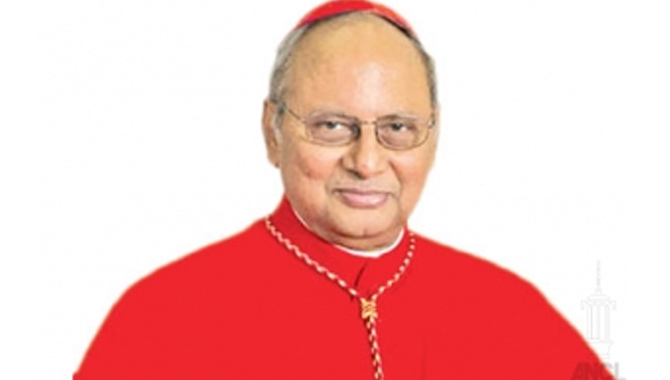
Those who don’t have even basic education shouldn’t be allowed to decide and act on the recommendations by the Presidential Commission of inquiries (PCoI) on Easter Sunday attacks, Archbishop of Colombo, His Eminence Cardinal Malcolm Ranjith said today.

Cardinal Ranjith who joined a protest staged by the Catholics of Katuwapitiya together with the clergy, said it is the Attorney General who should decide and act on the recommendations made by the Presidential commission.

“Those who have not got through the ordinary level exam cannot be allowed to make such decisions” the Cardinal said.

“The government should publish the PCoI report soon. We are suspicious as to why the government is reluctant to do so,” he added.

Cardinal Ranjith reiterated that he would have to seek the assistance of international institutions, if action is not taken against those who are responsible for the attack.

Posted in Uncategorized

A group of eminent persons calls for action to end the recurring cycle of violence in Sri Lanka

A group of eminent persons has called for immediate international action against the Gotabhaya Rajapaksa regime in Sri Lanka. ‘Sri Lanka has made its justice institutions unavailable to its own victims’, more than 20 human rights experts and world leaders have jointly stated in a statement.

They called on Member States of the UN to heed the call by the UN High Commissioner for Human Rights, Michelle Bachelet in her recent report to work with victims and their representatives to pursue justice through universal or extraterritorial jurisdiction. ‘Existing international avenues for accountability such as the International Criminal Court should be considered, in the face of Sri Lanka’s opposition to ending impunity. We also support the High Commissioner’s suggestion of imposing targeted sanctions against credibly alleged perpetrators of international crimes and strengthened monitoring and reporting by a dedicated Special Rapporteur.’

The 46th regular session of the Human Rights Council will be held from 22 February to 23 March 2021 and a new resolution on Sri Lanka is to be tabled. The elders’ group’s statement comes as UK is currently working on a new proposal in consultation with the member countries.

Sri Lanka is becoming increasingly isolated from the international community as international human rights organizations, foreign diplomats , and retired UN dignitaries issue harsh statements on the current situation in Sri Lanka.

Among the signatories to the open letter are the Chair of the ‘Elders’ Mary Robinson, the former president of Ireland and Juan Manuel Santos, the Nobel Peace Prize winning former president of Colombia. The ‘Elders’ is a grouping of eminent leaders, established by former South African President Nelson Mandela. The current Elders comprise former US President Jimmy Carter, South African freedom fighter Arch Bishop Desmond Tutu and Former UN Secretary General Banki-Moon among several others.

All the former UN Human Rights High Commissioners since the Human Rights Council was established in 2006 have signed the open letter. Louise Arbour, Navanethem Pillay and Zeid Ra’ad Al Hussein have endorsed the report and recommendations of the incumbent High Commissioner. Prominent among the other signatories are Jan Eliasson, Deputy Secretary General of the United Nations (2012-2016), Charles Petrie, former United Nations Assistant Secretary General, Head, Secretary General’s Internal Review Panel on United Nation’s Actions in Sri Lanka (2012) and Marzuki Darusman, Secretary General’s Panel of Experts on Accountability in Sri Lanka (2010-2011).

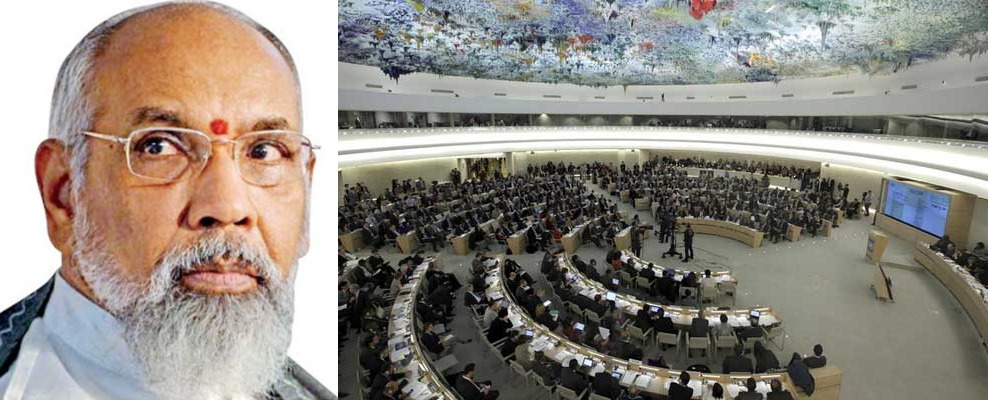
Leaders of the Core group should hang their heads in shame: Wigneswaran lambasts UNHRC draft resolution

Parliamentarian and former Northern Provincial Council Chief Minister Justice CV Wigneswaran has said that the Zero Draft circulated within Geneva Missions on Sri Lanka is very disappointing and insufficient and that it sends the opposite message to the Sri Lankan government.

“Leaders of the Core group countries UK, Canada, Germany, Montenegro and North Macedonia should hang their heads in shame”. Wigneswaran said in a statement issued today.

Criticizing “this does not auger well for the future of the UN”, he expressed his frustration that “it is a sad day for all those who care about human rights and basic decency”.

Here is the complete answer to the question released by Wigneswaran:

Question: Have you seen the Zero Draft circulated within Geneva Missions on Sri Lanka and what are your observations?

Response: Yes. I was sent a copy by email. The draft is disappointing and insufficient. It is even more so for its serious departures from the recommendations of High Commissioner Bachelet and the OHCHR. It falls far below even the standard set by Resolution 30/1, which failed due to its inadequacies. This sends the government of Sri Lanka the opposite message to that which the Tamil people deserve and the international community expects. Justice delayed is justice denied. Already six years have passed. Sri Lanka has hardly complied with what it undertook.

It is both sad and shocking to see the Core-Group on Sri Lanka for UN Human Rights Council have come up with this disappointing draft which protects mass killers, murderers and rapists. Sri Lankan leaders will be holding parties with great relief. This also gives green light to governments around the world that they can commit War Crimes, Crimes Against Humanity and Genocide without any fear. It is a sad day for all those who care about human rights and basic decency. Leaders of the Core group countries UK, Canada, Germany, Montenegro and North Macedonia should hang their heads in shame. This does not auger well for the future of the UN.

Meanwhile the P2P marches and demonstrations, both from the Tamil North and East and around the world, demonstrate renewed resolve and a growing unity among the Tamil people to agitate for a dignified political solution. To engage the Tamil victim/survivor community, whose interests and safety the resolution is apparently designed to protect, the longstanding demands of that community, must form the basis of any new resolution. I am not sure if any of our so called Tamil Leaders had a hand in playing down the seriousness of the issues involved to the Member Countries. The legitimacy of the UNHRC process regarding Sri Lanka hangs in the balance!