

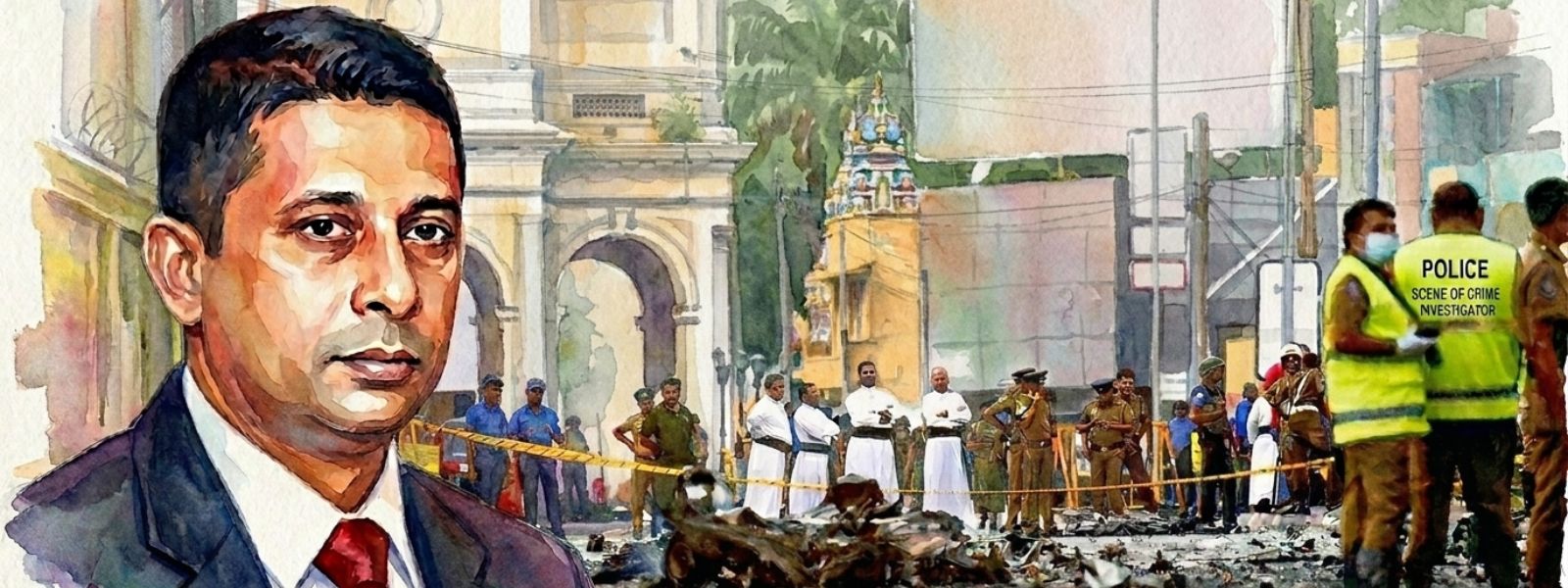
Former State Intelligence Service Director Suresh Salley, who is being detained under the Prevention of Terrorism Act in connection with ongoing investigations into the 2019 Easter Sunday terrorist attacks, has been issued a fresh 90-day detention order.
The previous 90-day detention order obtained against Sallay was due to expire today (25).
The Criminal Investigation Department (CID) has already submitted a series of findings to court relating to investigations into the former intelligence chief in connection with the Easter Sunday attacks, which killed 278 people.
Investigators have alleged that, while serving as the Head of Military Intelligence at the time, Salley maintained direct links with the group led by Zahran Hashim, who led the coordinated suicide bombings, and directly intervened to prevent the group from being detected by investigative teams.
According to investigation reports already filed before court, the CID has referred to alleged interactions between Salley and members of Zahran Hashim’s group in relation to the collection of information ahead of the attacks, as well as contacts maintained around the time the attacks were carried out.
Based on information uncovered during the investigation, Suresh Salley was arrested in Peliyagoda on February 25, 2026, and was subsequently detained under detention orders in the custody of the Criminal Investigation Department.
In a related development, the CID later sought court intervention, leading to a foreign travel ban being imposed on former President Gotabaya Rajapaksa on June 3 in connection with the same investigation.
Two days later, Salley commenced a hunger strike, and on June 7, the Criminal Investigation Department arranged for him to be admitted to hospital.
Since then, Salley has remained at the National Hospital of Colombo under the supervision of officers attached to the Criminal Investigation Department.
Responding to questions regarding the latest detention order, Cabinet Spokesman Dr. Nalinda Jayatissa suggested that investigators may not have been able to carry out the level of questioning originally anticipated due to Salley’s prolonged hospitalization.
“Of the previous 90-day detention period, I believe he spent nearly 82 days in hospital. Therefore, if investigators had expected to carry out certain aspects of the investigation while he was in detention, it is possible that those investigations could not be completed as originally planned,” Dr. Jayatissa said.
Responding to questions about reports of ongoing medical treatment and concerns that the investigation was becoming the subject of public criticism, Dr. Jayatissa stressed that decisions regarding detention periods are determined through the legal process.
“He is being detained in connection with investigations into the Easter Sunday attacks. Investigators will report to court on whether further investigations need to be carried out and how much time is required. This is ultimately a judicial process. The duration of detention orders is determined based on the facts and submissions presented by investigators before the court. Had substantial cooperation been available during the previous 90-day period, it may have been possible to cover a significant amount of information relevant to the investigation,” he said.