

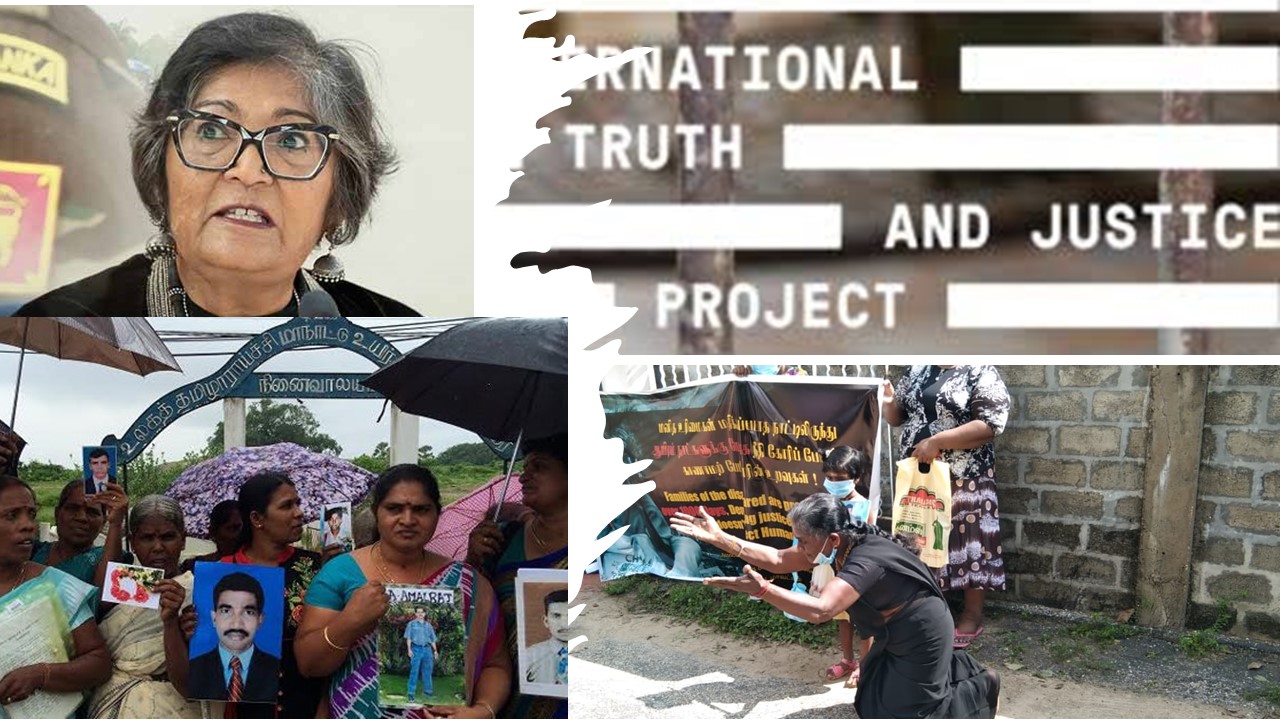
ECONOMYNEXT – More than 16 years after Sri Lanka’s brutal civil war ended in 2009, exiled Tamil survivors of conflict-related sexual violence (CRSV) in the United Kingdom continue to grapple with profound, multi-layered trauma that ripples through families and communities, a report by the International Truth and Justice Project (ITJP) said.
The report reveals through raw survivor testimonies how physical scars, psychological torment, and social ostracism persist without acknowledgment, justice, or reparations from the Sri Lankan government.
Drawing from consultations with exiled Tamils, the document—titled “Justice and Reparations Needs of Exiled Tamil Sri Lankan Survivors of Conflict-Related Sexual Violence”—exposes a continuum of suffering that demands urgent international intervention.
As President Anura Kumara Dissanayake’s administration faces scrutiny over its reluctance to confront past atrocities, the findings of the report underscore a nation’s failure to heal.
The report’s findings delve deeply into the “multi-dimensional effects” of CRSV, painting a vivid picture of individual and collective devastation.
Survivors, many of whom endured rape, gang rape, sexual torture, and humiliation at the hands of Sri Lankan security forces, describe not just bodily harm but a shattering of the spirit, it said.
One male participant illustrated his isolation in a drawing: a figure “totally isolated from people, not able to live like a normal person.”
Hard to Pass Stools
Physical repercussions include chronic pain from injuries like anal rape, with one survivor lamenting, “We continue to have problems in our body after sexual violence – it is hard to pass stools in the morning – there is pain – we worry we might have this problem forever.”
Women also reported targeted assaults on breasts, causing lingering tenderness that disrupts intimacy, while cigarette burns on visible areas like upper arms serve as constant reminders, especially when wearing traditional saris.
During Sri Lanka’s 26-year civil war (1983–2009) between government forces and the separatist Liberation Tigers of Tamil Eelam (LTTE), sexual violence against Tamils was widespread, systematic, and deliberate, primarily perpetrated by state security forces as a tool of intimidation, punishment, and control over conflict-affected populations, rights groups say.
Documented acts included rape, gang rape, sexual torture, genital mutilation, forced nudity, and other humiliations, targeting Tamil civilians, detainees, militants, and prisoners of war—both women and men, including children—in detention centers, checkpoints, and militarized zones.
The violence peaked during the war’s final phase in 2009, with mass rapes and sexual slavery amid the displacement of hundreds of thousands, and persisted post-war in the north and east, where heavy military presence fostered impunity, rights activists and survivors said.
Human rights groups like the UN and Human Rights Watch have described these as potential war crimes and crimes against humanity, disproportionately affecting
Tamils perceived as LTTE supporters, with male victims often overlooked due to stigma.
Survivors report long-term physical injuries, psychological trauma, social ostracism, and economic hardship, with the continuum of abuse linked to broader ethnic repression.
Past Sri Lankan governments and the military have consistently denied or minimized allegations of sexual violence during the civil war, often framing them as isolated incidents, propaganda by the defeated Tamil Tiger rebels, or fabrications by the Tamil diaspora.
However, they have failed to conduct credible investigations or prosecutions despite UN and international calls for accountability.
Successive administrations, including those under former Presidents Mahinda Rajapaksa and Gotabaya Rajapaksa, have stalled transitional justice mechanisms, rejected international involvement, and maintained impunity for security forces, with the military claiming only a handful of reported cases despite evidence of systemic abuse.
The current government under President Dissanayake has pledged to address “controversial crimes” and restore the rule of law, but as of early 2026, no tangible progress has been made on reparations, apologies, or holding perpetrators accountable, rights activists say.
Raped in front of Family
Psychological wounds run even deeper, manifesting as stress, fear, frustration, suicidal thoughts, “deadly nightmares,” insomnia, and a pervasive sense of powerlessness.
“I have unforgettable memories of what happened to me in terms of sexual violence – especially in the army-controlled area when we were checked and sexually abused in front of our brothers and sisters and kids and family members,” a survivor who has attended counselling for 7-8 years said.
“I am unable to forget or get rid of this for many years.”
This powerlessness, he said “is the common ground which links all of us together although we expressed about our feelings in different ways.”
The trauma extends to families: a father recounted how his son saw his scars during a bath and asked why he didn’t fight back, leaving him to cry within himself so it’s not just a scar on the body that he has, but scars deep in his heart.
Social exclusion compounds the agony, with survivors facing stigma, guilt, and denial of rights upon disclosure.
“As a result of sexual violence, families are separated. When we experience sexual violence, we are marginalised in society, and even if we attend a function or celebration we will be ostracised – others are hesitant to talk to us, and we will always be under the influence of our memories of our traumatic experience,” one survivor said.
“And we still face threats from the army, including threats to our families, and sometimes detention. We experience repeated nightmares about what happened,” he said.
“Although we were released from detention, [the Criminal Investigation Department] will question us again and again, watching our activities and tapping our phones – we face all sorts of threats.”
Even approaching the Human Rights Commission yields no proper documentation or action, amid ongoing militarization in the north that restricts free movement, survivors said.
Jobs Denied
“If you are victims of sexual violence in Sri Lanka, people refuse to give you employment. Sexual violence will directly affect our income,” another survivor said.
“Sometimes we will be forced to accept work we don’t like. I feel like I am a victim. I feel shame, and that people will not listen to my voice. Our victim’s voice will be refused, or not heard properly.”
Survivors described further victimization, including workplace abuse and militarized environments where “other people in the Tamil community try to abuse” them and do the same.
Impacts on children and marriages are profound, the report said.
“Afterwards we find we are unable to function when someone tries to be friendly or touch us in a friendly manner, we feel embarrassed or ashamed or angry as it brings back bad memories of our past experience of sexual violence,” another survivor said.
“It is difficult for us to go into a marriage – it is very hard to enter into this. Sometimes we worry we are infected with a STD as a result of the violence, and we start to think that inside us we have lost the ability to be a man anymore.”
Successive Sri Lankan governments have frequently accused Tamil survivors and diaspora members who sought asylum in Western countries of fabricating or exaggerating allegations of war crimes, including conflict-related sexual violence, to secure immigration benefits, political asylum, or to discredit the state and revive separatist agendas.
This narrative, prominent during and after the 1983–2009 civil war, portrays such claims as Tamil Tigers’ propaganda or motivated by financial gain from host countries’ welfare systems, with officials like former President Mahinda Rajapaksa and military spokespersons dismissing UN reports, videos, and survivor testimonies as “fraudulent” or “biased” attempts by “rebel sympathizers” to tarnish Sri Lanka’s image and prolong ethnic divisions.
Critics, however, argue the stance perpetuates impunity without any proper independent investigations, silences victims, and hinders reconciliation, as evidenced by stalled transitional
The report also highlights collective trauma among Tamils, rooted in betrayal by the international community and their own leaders.
“We have a long history of betrayal in our Tamil history. We were betrayed at the end of the war by the UN and other international organisations. We were even betrayed by some of our own Tamil politicians,” one participant said.
“People thought the UN would protect them from attacks and intervene. They did not; the Sri Lankan government could not have won the war unless they were supported by the rest of the world. There is a belief that the whole world united itself to defeat us. It is a big betrayal.”
Survivors’ perceptions of agency evoke frustration and disillusionment.
“There is a need to have a permanent solution to repair the damage. We also need to see the perpetrators punished as that will give us some satisfaction,” a female survivor added.
“We are working hard to punish those who are not punishable. There are many people around who could be punished. Even the small fry are not punished.”
They have said Sri Lanka’s legal system does not have a solution to our problems.
“And even when we try to make someone accountable, they find another 10 ways to escape the legal system, and perpetrators are not punished, and they have impunity.”
Survivors said there should be an independent international organisation which victims can approach and make complaints to without being afraid.
“As I am speaking openly now, the burden in my mind is being reduced. Two years ago, I attempted to do suicide three times. But now I can see changes in myself,” another survivor said.
The report warns that without transformative reparations addressing stigma and structural inequalities, healing remains impossible.
“Sexual violence is happening not only for women but also for men. More victims are in our home country than here. Here we could speak about it openly but in our home country there is no atmosphere like here,” another survivor added.