

Hurly-burly was done over the weekend, with the SLPP and the government holding two rallies in Anuradhapura and Polonnaruwa, respectively, but the propaganda brigades of the JVP/NPP and the Opposition are still clashing over crowd sizes. The SLPP and its allies are over the moon about their rally’s impressive turnout. The JVP-NPP social media activists claim that President Anura Kumara Dissanayake’s meeting had a higher crowd density.
The government declared ahead of its Polonnaruwa event that it would be a gathering of farmers and their representatives, but the SLPP made no bones about the fact that its rally would be a show of strength. The arrest and remand of NPP National Organiser Namal Rajapaksa provided the Opposition with a fresh rallying point, and former President Mahinda Rajapaksa’s participation at its rally helped the SLPP attract large crowds. The SLPP’s success in Anuradhapura will prompt the NPP to hold a bigger rally either there or elsewhere. It will also encourage the Opposition to hold more such rallies.
However, the question is whether crowd sizes are a reliable indicator of the real strength of political parties. One may recall that in 1977, the then Prime Minister Sirimavo Bandaranaike’s election rallies attracted large crowds. But the SLFP suffered a humiliating defeat at the general election that followed. It was reduced to a mere eight seats, and the UNP secured a five-thirds majority. It took the SLFP and its allies 17 years to make a comeback.
Ahead of the 2010 presidential election, common Opposition candidate and former war-winning Army Commander Gen. Sarath Fonseka held a series of huge rallies across the country, so much so that at one of them he threatened to have all members of the Rajapaksa family incarcerated immediately after securing the presidency. He lost the election, and the Rajapaksas had him thrown behind bars. Sixteen years on, the members of the Rajapaksa family and their associates are accusing the incumbent government of having launched a political witch-hunt against them.
After securing a second term in 2010, President Mahinda Rajapaksa also held a series of successful rallies across the country, and his election meetings attracted large crowds. But he lost to Maithripala Sirisena, who was widely considered a dark horse, in the 2015 presidential race.
In this day and age, crowd sizes could be deceptive. Astroturfing or creating an impression of widespread grassroots support for a party or an individual, where little such support exists, is the name of the game in politics. Some manpower agencies can be hired to bus crowds to political rallies, as Dr. Wijeyadasa Rajapaksha, who contested the last presidential election, revealed during a campaign rally, claiming that some of his rivals used paid participants to create the illusion of widespread public enthusiasm and support. The rent-a-crowd industry is said to thrive during elections.
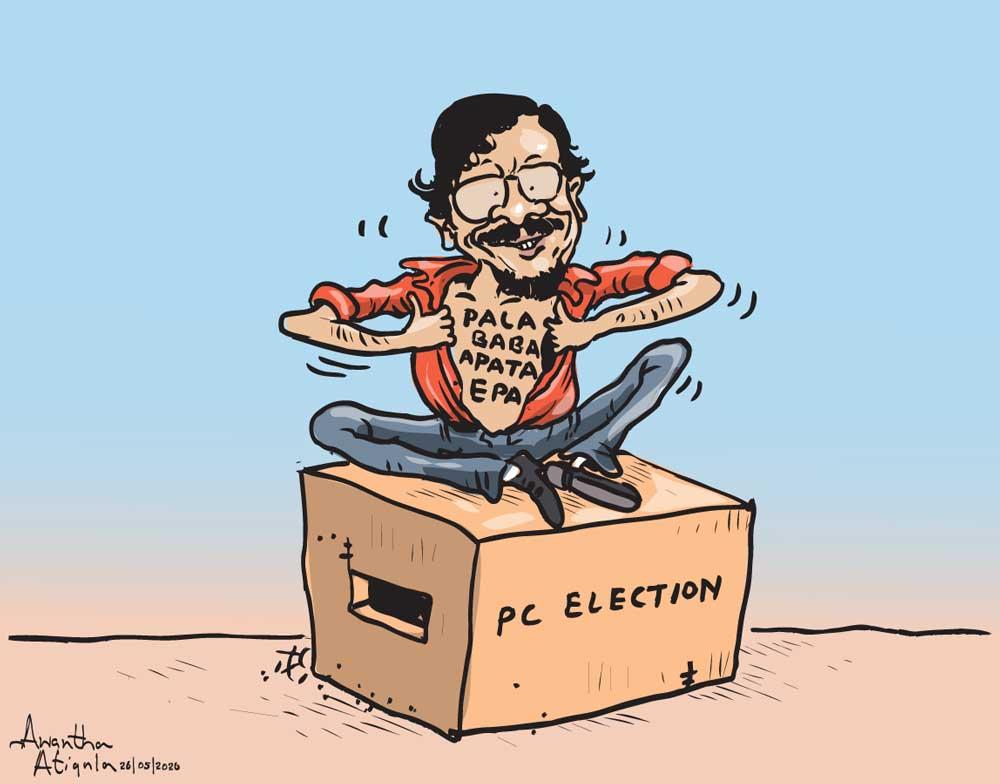
There is no better test of a political party’s strength than an election. Therefore, if the JVP-NPP government is confident that it is more popular than its political opponents, it ought to hold the much-delayed Provincial Council (PC) elections instead of using various ruses to postpone them indefinitely. Last week, it unashamedly extended the term of the Parliamentary Committee tasked with electoral reforms until December 2026, prompting the Opposition to withdraw from it. The PC polls have not been held since 2017, when the UNP-led Yahapalana government postponed them because it was wary of facing any electoral contest. The JVP, the SLFP, the SLMC, the ITAK and the Joint Opposition, which later became the SLPP, helped that administration amend the Provincial Council Elections Act and postpone the PC polls. What is needed to hold the PC elections soon is a simple amendment to the PC Elections Act to enable the Election Commission to conduct them under the Proportional Representation system. Perhaps, a string of defeats the JVP/NPP has suffered at cooperative elections may have prompted the government not to hold the PC polls.
All signs are that the government will continue postponing the PC elections until the next presidential election, with only political dog-and-pony shows in the meantime.