Sri Lanka Freedom Party rejects offer to form government with Ranil Wickremesinghe

The Sri Lanka Freedom Party has decided NOT to be part of any government led by newly appointed Prime Minister Ranil Wickremesinghe.

The SLFP will NOT accept any position in government, and will NOT be a part of the government, said Chairman of the Sri Lanka Freedom Party, & Former President Maithripala Sirisena on Friday (13).

The President and the Prime Minister have extended invitations to the Sri Lanka Freedom Party to join the new government that will be formed under the leadership of Wickremesinghe.

The Central Committee of the Sri Lanka Freedom Party had discussed the invitation and the current status of the country at length, and thereafter had reached the decision NOT to join Wickremesinghe’s government.

Ranil gets Pohottuwa support

SLPP General Secretary Sagara Kariyawasam confirmed to News 1st that the SLPP party would support the Wickremesinghe-led Government.

He added that the SLPP parliamentary group would meet The President tomorrow, at 10:00 AM.

The SLPP announcement comes in the wake of all main opposition parties announcing their decision to stay away from joining a government under Ranil Wickremesinghe’s Premiership.

This would effectively mean that Prime Minister Wickremesinghe could end up as the head of a Government solely with Pohottuwa MP’s.

SLPP Parliamentary group to meet for talks tomorrow

The Parliamentary group of the Sri Lanka Podujana Peramuna will convene tomorrow (14) under the patronage of President Gotabaya Rajapaksa.

The meeting will be held at 9am at the President’s House.

This is the first meeting of the SLFP Parliamentary group since Mahinda Rajapaksa resigned as the country’s Prime Minister.

Meanwhile, 10 political parties that declared themselves independent in Parliament have decided to unconditionally support newly appointed Prime Minister Ranil Wickremesinghe.

Posted in Uncategorized

SJB will NOT support Ranil Wickremesinghe, says Madduma Bandara

The Parliamentary Group of the Samagi Jana Balavegaya will meet on Friday (13) at the Office of the Opposition Leader to discuss the motion against the President, and also the current political situation.

General Secretary of the SJB Ranjith Madduma Bandara speaking to News 1st said the party will propose the name of Imthiaz Bakeer Markar for the post of Deputy Speaker in Parliament, which is currently vacant.

He also said that the Samagi Jana Balavegaya will NOT extend any support to Prime Minister Ranil Wickremesinghe.

Pillayan flees Sri Lanka after Mahinda’s exit

Former rebel Sivanesathurai Chandrakanthan alias Pillayan has reportedly fled Sri Lanka following the resignation of Mahinda Rajapaksa as Prime Minister.

Pillayan is reported to have fled by boat to a foreign country.

Media reports claimed that he had fled to Malaysia and was to travel to a European country from there.

Chandrakanthan was appointed last month as the State Minister of Rural Road Development.

The Attorney General had earlier indicted Pillayan with 06 other persons in the High Court of Batticaloa for offences committed under Sections 32, 102, 113[b], 140 & 146 of the Penal Code read with Section 2[1][a] , 2[i] & 3[b] of the Prevention of Terrorism [Temporary Provisions] Act No. 48 of 1979 as amended by Act No. 10 of 1982 and Act No. 22 of 1988 in connection with the killing of former Member of Parliament for Batticaloa District Joseph Pararajasingham.

Pillayan had been jailed but was released on bail after Gotabaya Rajapaksa became President.

Posted in Uncategorized

Rupee depreciates 44% against US$

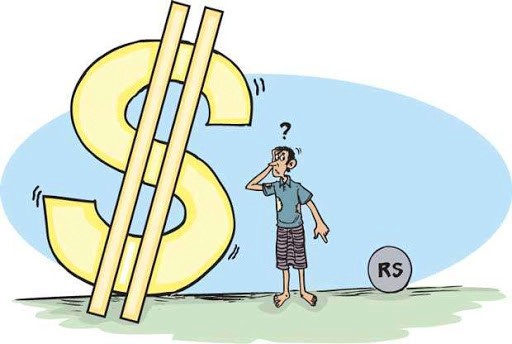
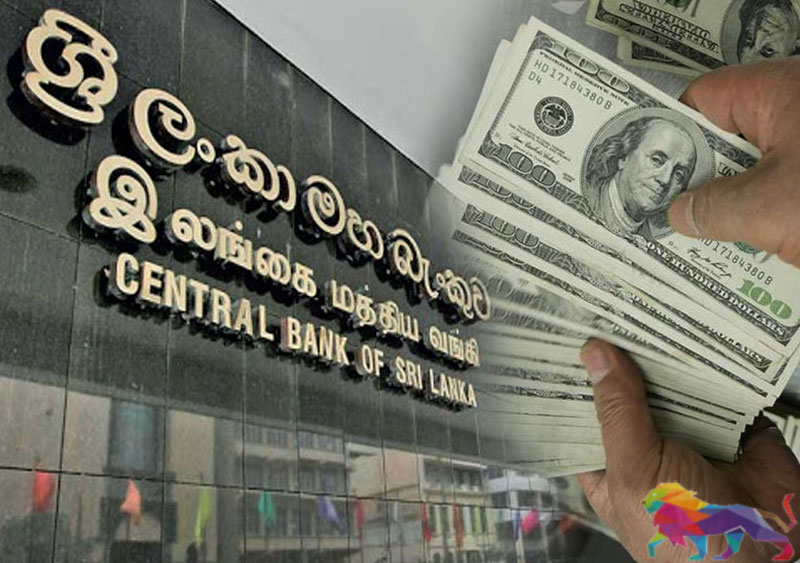
The Sri Lankan rupee has depreciated by an unprecedented 44.3 percent against the US dollar as of yesterday, following the sudden decision taken by the previous Central Bank administration to float the currency on March 7.
The Central Bank noted that rupee which was kept fixed around Rs.202-203 per US dollar till early March had recorded a substantial decline following the decision to let it go by former Central Bank Governor Ajith Nivard Cabraal.

“The subsequent market adjustment due to heightened pressure in the domestic foreign exchange market resulted in an overshooting of the exchange rate.
Accordingly,during the year up to 12 May 2022, the rupee recorded a depreciation of 44.3 percent against the US dollar,” the Central Bank said.

Meanwhile, reflecting cross-currency movements, the Sri Lanka rupee also depreciated against the euro, the pound sterling, the Japanese yen, the Australian dollar, and the Indian rupee by 40.1 percent,38.6 percent 37.2 percent, 41.8 percent and 42.1 percent, respectively as at May 12.

Posted in Uncategorized

Sri Lanka crisis: How war heroes became villains -BBC

Sri Lanka is at a crossroads as an economic crisis upends the lives of its 22 million people. The Rajapaksa brothers, hailed by many as heroes for winning the civil war, are now reviled as leaders. How did this happen and what comes next?

Since early April protesters had been demanding that President Gotabaya Rajapaksa and Mahinda, his prime minister, quit for leading the country to economic ruin – but this week saw a decisive turning point.

First, Mahinda Rajapaksa resigned after his supporters attacked anti-government protesters, triggering deadly clashes across the country. Dozens of houses of politicians were torched, including some owned by the Rajapaksas.

Mr Rajapaksa, 76, had to be evacuated from his official residence after it was besieged by angry crowds.

He’s holed up in a naval base in the north-east for his safety. A court has banned him from leaving the country – utter humiliation for a man who was twice president.

His departure has done nothing to ease the growing pressure on his beleaguered younger brother, 72.

So far the president has ignored the calls to quit, although he has now been forced to offer some concessions. He agreed to transfer some his executive powers to parliament, and has appointed political veteran Ranil Wickremesinghe as the new prime minister heading a proposed cross-party government.

But his political future is very much still on the line, and some believe it’s only a matter of time before he’s forced to go.

Sri Lanka can scarcely afford further political instability as it stares at its worst economic crisis since independence from Britain. People are seething with anger over soaring prices and shortages of food and fuel.

It’s a dramatic fall from grace for a family that has dominated Sri Lankan politics for more than a decade.

Mahinda Rajapaksa was once celebrated by the majority Sinhalese as a hero for bringing an end to nearly three decades of civil war when the Tamil Tiger rebels were crushed in 2009 during his first term as president.

At victory parades and mass public events soon after the war he was compared to Sinhala Buddhist kings.

“He was the most popular Sinhala Buddhist leader in post-independence Sri Lanka. Some even hailed him as Emperor Mahinda,” says veteran political analyst Kusal Perera.

In his 2017 book Rajapaksa: The Sinhala Selfie, Mr Perera highlights the Rajapaksa family’s role in the island’s politics and how Mahinda groomed himself for power.

His father was a parliamentarian and Mahinda gradually rose from opposition leader in parliament to prime minister in 2004.

When he became president a year later, he made Gotabaya defence secretary. It was a big career jump for the younger brother who was living a quiet life in the US after retiring from the Sri Lankan military.

Gotabaya came back for his brother’s campaign and rose to prominence, earning a reputation for ruthlessness.

Soon, other brothers and relatives joined the government. It was Mahinda, the family patriarch, who was instrumental in establishing the Rajapaksa empire.

Up to now the brothers have always stood together. But cracks started appearing recently, especially after Gotabaya asked Mahinda to “take one for the team” and heed protesters’ calls to resign.

The demand was a huge snub for a man who brought his younger brother into government – and certainly not the way he wanted to end his political career.

“He was basically pushed to the wall and forced to leave in a huge youth protest that he fumbled in handling. His age will hold against his return,” Mr Perera says.

Mahinda’s eldest son, Namal, denies the brothers have a problem.

“But definitely there is a policy difference between the president and the [former] prime minister,” he told the BBC before this week’s resignation.

He said his father had been always with the farmers and the masses, whereas Gotabaya Rajapaksa had a different approach “looking more into the floating vote rather than the masses or hardcore SLPP [governing party] vote”.

Protesters may be glad Mahinda Rajapaksa has resigned, but they remain determined Gotabaya must do so too, something his supporters rule out.

“Just because there’s chaos outside – for which there are very valid reasons, we all agree – that does not necessarily mean that he should resign,” former media minister Nalaka Godahewa told the BBC.

It’s not clear what the president will do now he has lost the support of the voters that swept him to power in 2019.

Mr Rajapaksa has reportedly told people close to him that he’s not interested in a second term but wants to lead the country out of the economic crisis.

With anti-Rajapaksa sentiment widespread in the country, his options to do that seem limited. Backed into a corner, there are concerns the president, known for his tough approach, could try to use the military to stay in power.

The Rajapaksas were hugely popular among the Sinhala masses for years, despite allegations of serious human rights abuses, ill-treatment of minorities and murderous attacks on the media, for which they were blamed. Most among the Sinhala majority did not speak out then.

But now the whole country is suffering, the cost-of-living protest has united ethnic communities and Sinhalese protesters are even voicing support for minority rights.

“The economic hardship really hit the majority community and suddenly they turned. I think the Rajapaksas who were able to get away with so much for decades were surprised to see this level of anger,” says Bhavani Fonseka, a human rights lawyer.

But the Rajapaksas will not be willing to give up control that easily. They are concerned not only about their political future, but also about their security when a new government takes over.

This might explain the appointment of veteran opposition figure Ranil Wickremesinghe as the next prime minister. He is regarded as having good relations with the Rajapaksas.

Many Sri Lankans, however, are frustrated by the president’s manoeuvring, and are losing patience.

Without stable government it will be difficult to negotiate a loan with the International Monetary Fund or restructure debt. But if the next government doesn’t do that soon, there will be more power cuts and fuel shortages.

“Regardless of who runs this country, we just need our basic needs to be met,” says Chandani Manel, who lives in Colombo.

“I have two children to feed and a family to look after. Politicians can survive with their wealth but not us,” she says.


Posted in Uncategorized

Sri Lanka will have to print money unless taxes are raised: CB Governor

Sri Lanka will have to print money to pay state worker salaries unless taxes were raised, Central Bank Governor Nandalal Weerasinghe said as the country struggles with low revenues after taxes were cut for output gap targeting.

“State workers salaries are paid by money in the Treasury,” Governor Weerasinghe said. “The reason money was printed all this time is because there aren’t enough revenues.

“So revenues have to be increased.

“If there is not enough money the central bank has to monetize it. There is no bar to that. Under the Monetary Law Act we can do it. It is something that should be done.

“If money printing is stopped and salaries are not paid there will be a bigger crisis.

Weerasinghe said interest rates have been raised and 100 percent of the money has been raised from the market in recent weeks. Essential spending included salaries, pensions and domestic debt repayment.

“In addition, if there is an urgent need, we have told the Treasury it will be monetized only if it is essential, if not to delay it,” he said. “That is why the Treasury Secretary issued a circular asking non-priority spending to be stopped.”

“I can clearly say there is no worry of paying state workers salary and pension. Because we can give money which are paid in rupees. But we should do it with some responsibility and we should not do it like it was done previously and increase the inflation to around 40 percent.”

When money is printed under a pegged exchange rate (flexible exchange rate), dollar shortages emerge in a matter of weeks as the new money moves through the credit system and ends up in the forex market as imports or other outflows.

When money is printed over a longer period, boosting domestic credit and broader money supply, domestic inflation goes up, with asset prices (stock and property) also inflating as mal-investment takes place.

In Sri Lanka large volumes of money have been printed to trigger currency crises in the past including when tax revenues were expanding, with the economy also growing, to target gilt yields through a bond auction committee.

Market bids are rejected and money is printed to repay maturing bonds issued to finance deficits of past years. In 2020 and 2021, price controls were placed on bond and bill auctions to keep Treasury bill yields around 5.2 percent.

Disbanding the bond auction committee will take away the ability of the state to to pro-cyclically inject liquidity and fire currency crises by engaging in output gap targeting (Keynesian stimulus), analysts say.
Sri Lanka’s Treasury bill yields are now around 24 percent and large volumes of money is flowing into the market.

The first beneficiaries of printed money are those who receive the money first like state workers or borrowers of commercial banks who get newly printed money from rejected Treasury bill and bond auctions.

Later recipients of the money see higher prices as the currency falls and inflation goes up.

Sri Lanka printed large over two trillions of rupees over two years, while operating an intermediate regime (soft-peg) and ran out of reserves, losing the ability to maintain the peg at that interest rate.

An attempt to shift the broken soft-peg to a clean float has so far not fully succeeded and the rupee had fallen with forex shortages persisting.

A floating exchange rate, as found in advanced nations operate without any foreign reserves, with foreign exchange inflows and outflows matching each other outside the reserve money which remains stable and unaffected from changes made through central bank purchases and sales of dollars.

Posted in Uncategorized

US, India look forward to work with new Sri Lanka PM

The envoys of the United States and India have expressed their willingness to work with Sri Lanka’s new Prime Minister Ranil Wickremesinghe and a new government.

The U.S. Ambassador to Colombo Julie Chung said the appointment of Ranil Wickremesinghe as the new PM and the quick formation of an inclusive government are the first steps to resolve the crises and she looks forward to work with the new Premier.

“Look forward to working with Ranil Wickremesinghe. His appointment as PM, and the quick formation of an inclusive government, are first steps to addressing the crisis & promoting stability. We encourage meaningful progress at the IMF & long-term solutions that meet the needs of all Sri Lankans,” Chung tweeted.

CWC offers fullest cooperation to RW to address issues

The Ceylon Workers’ Congress (CWC) has offered its fullest cooperation to Prime Minister Ranil Wickremesinghe to address critical issues in the country.

CWC General Secretary Jeevan Thondaman extended his wishes to Ranil Wickremesinghe on being appointed as the new Prime Minister.

“However, there are many issues that need to be addressed without delay and I assure the fullest cooperation of the Ceylon Workers’ Congress in your effort to overcome those issues and stabilise our nation,” he tweeted.

Wickremesinghe is the sole UNP member in Parliament.

Ranil Wickremesinghe had been sworn in as the Prime Minister of Sri Lanka on five previous occasions.

He was first appointed as PM from 1993 – 1994 after the assassination of President Ranasinghe Premadasa.

From 2001 to 2004 he was elected as the Prime Minister to lead the United National Front Government during the presidency of President Chandrika Bandaranayake.

In January 2015, he was appointed as the Prime Minister under President Maithripala Sirisena.

He was elected as Prime Minister at the Parliament election in August 2015.

In December 2018, then President Sirisena was compelled to appoint him as PM after having dismissed him in October 2018.