Several Indian investors in Tamil Nadu keen to invest in Sri Lanka

CHENNAI: Several Indian investors based in Tamil Nadu are keen to invest in Sri Lanka as they see the current economic crisis as an opportunity, said Sri Lankan Deputy High Commissioner Dr. D. Venkateshwaran in an EXCLUSIVE interview with Daily News Business.

The Deputy High Commissioner said he will also talk to major companies including pharma, motor, car component manufacturers, trade chambers, to have their future expansions, fresh investments or value-added investments in Sri Lanka. They could start manufacturing in Sri Lanka and use the FTA and re-export to the region (including Pakistan) and he got a positive feedback from them.’

“I will be visiting the southern states to woo investments into Sri Lanka. An investor forum is also being planned next month in this regard,” he said.

He said that the investor community has taken the appointment of new Prime Minister Ranil Wickremesinghe as a very positive step towards reactivating the Sri Lankan economy.

“The new PM has already taken some steps in the right direction and the Indian government is to support this initiative and have already sent fertiliser which will solve the ‘paddy fertiliser shortage issue for the Yala season’ almost immediately. I must also recall that power cuts are happening all over the world and also Indian fuel prices are more than Sri Lanka. We also see the Sri Lankan rupee stabilizing and expect some of the commodity prices to come down. It’s now time for the Sri Lankan politicians and also the business community to support the new PM to take the country back to its pre covid position. He also said that even with the escalating construction costs Sri Lanka real estate projects are far cheaper to India and Sri Lankan companies should market them to the Indian market more aggressively. With an increasing number of real estate projects getting developed, there is an oversupply of real estate inventory in Sri Lanka. With the economic crisis hitting Sri Lanka, the purchasing propensity of Sri Lankans is at its abysmal low. In this situation, Sri Lankan developers will have to explore international marketing channels for their projects and India is the best choice.

“The Sri Lanka government recently announced a new legislator to make ‘Sri Lanka’ the second home and further relaxed regulation for foreigners to purchase apartments. The Sri Lanka Real Estate sector should ‘cash’ on this and commence aggressive road shows to woo Indians to buy property in Sri Lanka. Sri Lanka being close to India is easier for Indians to invest in a second home in Colombo.

Hence, selling Sri Lankan real estate to Indians is a low hanging fruit for Sri Lankan real estate developers.”

“As per an Asia-Pacific Wealth Report, Indians were the highest investors in foreign real estate, with a 50% market share and the top destinations attracting Indians are Dubai, the United Kingdom, The Netherlands, Germany, USA, and Australia topping the charts. According to a 2019 report, over 3,000 Indian families own some of the most luxurious properties in London’s most influential addresses,” said economics, investment analyst and CEO, Inspiredge Ltd, Sumit Bothra from Chennei.

“As aspirations grow, we have noticed that the income brackets that can afford a piece of real estate abroad has also widened over the last five years,” he added.
Technical discussions with IMF to conclude on May 24: Spokesman Rice

The technical discussions between Sri Lanka and the International Monetary Fund (IMF) on a potential loan programme will come to a close on May 24, IMF Spokesman Gerry Rice said.

Rice, addressing a virtual IMF briefing on Thursday (20), said that the agency is closely monitoring the events that are unfolding in the crisis-hit island nation.

Rice affirmed that the IMF remains committed to help Sri Lanka in line with the policies of the agency and that it would engage with the stakeholders in support of a timely resolution of the crisis that is being faced.

Commenting on the status of the economy, Rice said the IMF is concerned about the current economic crisis.

“We are concerned…especially, the hardships being endured by the people of Sri Lanka and especially many of those people poor and vulnerable. So, we are clearly monitoring the political and economic developments very closely,” Rice said.

Further, Rice said an IMF team has been engaged in technical discussions on the authorities’ request for an IMF-supported programme and the IMF has asked for the programme.

Posted in Uncategorized

G7 Backs Debt Relief Efforts for Sri Lanka – Draft Communique

Written by reuters

The Group of Seven economic powers support efforts to provide debt relief for Sri Lanka, G7 finance chiefs said on Thursday in a draft communique from a meeting in Germany after the country defaulted on its sovereign debt.

The once-booming island country has suspended debt payments as it grapples with its worst economic crisis since it won independence in 1948, facing shortages of essential goods that have triggered social unrest.

G7 countries said in their statement they were committed to finding long-term solutions for the Indian Ocean nation and urged it to “negotiate constructively” with the International Monetary Fund on a potential loan programme.

“The G7 stands ready to support the Paris Club’s efforts, in line with its principles, to address the need for a debt treatment for Sri Lanka,” they said, referring to the group of mostly rich creditor nations.

The draft statement, which is to be finalised before the end the G7 finance ministers’ meeting on Friday, also called on other big creditor nations not in the Paris Club to coordinate with the group and urged them to provide debt relief on comparable terms.

G7 finance chiefs also singled out China, which has become a major creditor to low-income countries, to actively contribute to debt relief for such countries.

Chad, Ethiopia and Zambia have so far sought debt relief under a new G20 common framework, but progress has so far been slow with some officials accusing China of dragging its feet.

Sri Lanka slips into default, central bank head agrees to stay on – Aljazeera

Sri Lanka’s central bank governor says he will stay in his position given an improvement in political stability in the midst of an economic crisis, and he would not step down as he had earlier warned.

Governor P Nandalal Weerasinghe also said on Thursday that the Central Bank of Sri Lanka had nearly finalised plans to restructure the country’s debt and proposals would be submitted to the cabinet soon, possibly by Friday.

The development comes as Sri Lanka fell into default, for the first time in its history, as the government struggles to halt its economic meltdown.

The nation of 22 million people is battling a devastating economic crisis as tax cuts by President Gotabaya Rajapaksa drained government coffers, COVID-19 hit the important tourism industry and rising oil prices emptied foreign exchange reserves.

On May 11 Weerasinghe had told reporters he would resign in two weeks in the absence of political stability as any steps the bank took to address the economic crisis would not be successful amid political turmoil.

Speaking to reporters after his bank announced it was holding its key lending and borrowing rates steady on Thursday, Weerasinghe said there had been positive political developments.

“Earlier, there was no prime minister and no cabinet. Comparatively, there has been significant improvement,” he said.

“We now have fresh appointments. We have also seen that our measures are working well. I would like to see a finance minister appointed. Now we are seeing improvement, so I think on that basis I intend to continue,” he said.

Opposition parliamentarian Ranil Wickremesinghe was named prime minister last week and he has made four cabinet appointments. However, he has yet to name a finance minister.

‘We cannot repay’
As a 30-day so-called grace period to make some already-overdue bond interest payments expired on Wednesday, Sri Lanka fell into default, the government acknowledged.

“We are in preemptive default. There can be technical definitions … From their side, they can consider it a default. Our position is very clear, until there is a debt restructure, we cannot repay,” Weerasinghe told reporters.

The coupon payments, originally due April 18, were worth $78m combined on notes maturing 2023 and 2028.

The central bank held rates steady following a massive 7 percentage point increase at its previous meeting and reiterated the need for more fiscal measures and political stability in the crisis-hit economy.

Weerasinghe said proposals on debt were nearly ready and could be sent to the Cabinet by Friday for approval.

He also said inflation could rise to 40 percent in the next couple of months but it was being driven largely by supply-side pressures and measures by the bank and government were already reining in demand-side inflation.

Inflation hit 29.8 percent in April with food prices expanding by 46.6 percent year on year.

US investment bank JPMorgan backed Sri Lanka’s crisis-hit government bonds on Wednesday, saying recent political changes should gradually improve its strains and help its talks with the International Monetary Fund.

Posted in Uncategorized

Sri Lanka still rated ‘Ca’ by Moody’s after default, signaling recovery rate of 35-65-pct

Sri Lanka is still rated ‘Ca/stable’ after defaulting on a sovereign bond coupon, Moody’s Investors Service, a rating agency said after a 30 day grace period passed on May 18.

The Ca rating is typically associated with a recovery rate of 35 to 65 percent.

“For Sri Lanka, our weak recovery assumptions are driven by thesovereign’s very low foreign exchange reserve adequacy and the government’s very weak debt affordability,” the rating agency said.

“For Sri Lanka, our weak recovery assumptions are driven by the sovereign’s very low foreign exchange reserve adequacy and the government’s very weak debt affordability.”

Though gross reserves with a restricted use Chinese swap was 1.8 billion US dollars, Sri Lanka’s central bank is in debt and its net reserves are negative.

“Extensive delays to the implementation of fiscal adjustments and reforms, and the inability to secure a large, credible and secure external financing envelope from multilateral development partners may result in even lower recoveries than implied by the Ca rating,” Moody’s said.

“By contrast, any agreement with multilateral development partners that unlocks significant external financing – or prospects of such agreements – may gradually restore foreign investor confidence and crowd in private sector investment.”

With negative reserves, the central bank has been bankrolled by Asian Clearing Union payments due to the Reserve Bank of India, but monetary stability is yet to be restored with a float still to take hold.

The full Moody’s comment is reproduced below:

Government of Sri Lanka

Sovereign defaults due to missed payments on international bonds after expiry of the grace period

On 18 May, Sri Lanka (Ca stable) defaulted on its international bonds for the first time, after failing to make its coupon payments that were due on 18 April within the 30-day grace period. We expected the default given that the government had announced that it would suspend external debt-service payments as of 5pm local time on 12 April and pursue comprehensive external public debt restructuring in coordination with a potential International Monetary Fund (IMF) programme.

The current Ca rating is typically associated with a recovery rate of 35%-65%.

Our recovery rate assumptions are in line with a relatively wide range of precedents by defaulting sovereigns (see “Sovereigns – Global: Sovereign default and recovery rates, 1983-2021”, 14 April 2022). For Sri Lanka, our weak recovery assumptions are driven by the sovereign’s very low foreign exchange reserve adequacy and the government’s very weak debt affordability.

Sri Lanka’s foreign exchange reserves excluding gold and special drawing rights stood at $1.6 billion at the end of April 2022, sufficient to cover less than a one month of imports and far below the government’s external debt repayments of $4.0-$6.5 billion per year (excluding foreign-currency repayments on Sri Lanka Development Bonds and to Foreign Currency Banking Units) through at least 2025.

Without a large external financing envelope from development partners including the IMF, and in the context of a widening current account deficit because of higher global energy and food prices, Sri Lanka’s external position will remain very precarious even with the suspension of external public debt servicing.

Likewise, the government’s interest payments absorbed more than 70% of revenue in 2021, and we expect Sri Lanka’s debt affordability to remain weakest across rated sovereigns by some distance and for some time in the absence of fiscal reforms, even without the repayment of external debt. This is because revenue amounted to less than 9% of GDP, and domestic debt – which is not in scope of the government’s debt servicing suspension policy accounts for around 70% of interest payments.

We assume that Sri Lanka will eventually reach an agreement with the IMF for a funded programme. However, finalising the programme will likely take several months given the need for staff level agreement on both sides, followed by parliamentary approval in Sri Lanka and approval by the IMF’s executive board. The ongoing political and social unrest in Sri Lanka may slow the pace of negotiations, given the potential for changes in the political leadership or government. Any reluctance to implement politically difficult reforms, such as a significant and durable expansion of the government’s revenue base, which we think may be a possible programme requirement, could also delay an agreement.

Extensive delays to the implementation of fiscal adjustments and reforms, and the inability to secure a large, credible and secure external financing envelope from multilateral development partners may result in even lower recoveries than implied by the Ca rating.

By contrast, any agreement with multilateral development partners that unlocks significant external financing – or prospects of such agreements – may gradually restore foreign investor confidence and crowd in private sector investment. Combined with Sri Lanka’s tourism potential, a broadening of foreign exchange inflows may raise recovery prospects for private sector creditors.

Posted in Uncategorized

Lankan envoy seeks Indian NSA’s help to get international economic aid

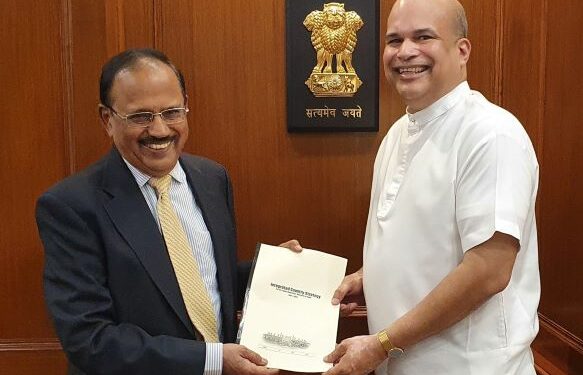
Sri Lanka’s High Commissioner to India Milinda Moragoda met the National Security Advisor of India Ajit Kumar Doval, at the latter’s office in New Delhi on Thrusday.

During the discussion a comprehensive review of the status of the bilateral relationship was carried out and priority areas for future cooperation were deliberated on.

The discussion particularly focused on the present economic crisis in Sri Lanka. The High Commissioner thanked the National Security Advisor for the support that is extended by the Government of India to Sri Lanka to manage the situation.

In this context, High Commissioner Moragoda requested India’s assistance in garnering international support for the economic recovery of Sri Lanka, to which the National Security Advisor responded positively.

Deputy National Security Advisor of India Ambassador Vikram Misri and the Deputy High Commissioner of Sri Lanka in New Delhi Niluka Kadurugamuwa participated in the meeting.

Posted in Uncategorized

MR should have retired from politics after second term as Prez: Chamal

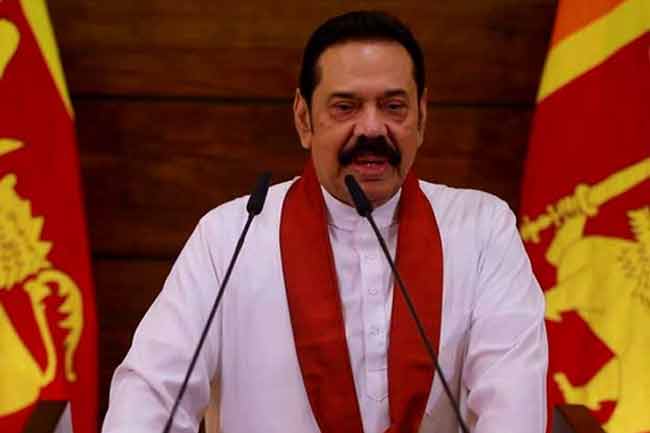
Former Prime Minister Mahinda Rajapaksa should have retired from politics when his second term as the executive President ended, MP Chamal Rajapaksa told Parliament today. “One should be prepared to give up positions,” the MP said. “Rajapaksas who have been in Sri Lankan politics for 90 years have mortgaged many of their properties. We are still to release some properties,” he added. Refering to the incident on May 9 the MP said the IGP and Defence Secretary had failed to stop those who attacked the protesters at Gallle Face and in front of Temple Trees. These people were provoked suddenly. One wonders what the IGP and Defence Secretary were doing without stopping the attackers. The common notion today is that the IGP has become PIG” he said. Also he alleged that the JVP and Frontline Socialist Party were behind the attacks on government politicians. “JVP activists were clearly present during attacks in Hambantota,” he said.

Posted in Uncategorized

Debt advisors delayed by lack of Cabinet

Sri Lanka is facing delays in its debt restructuring process, as the debt advisors required for this purpose are yet to be appointed by the Government due to the absence of a full Cabinet of Ministers, according to Former Minister of Finance and incumbent MP M.U.M. Ali Sabry (PC).

During a parliament session yesterday (18), MP Sabry stated that even though the country has finalised its Request For Proposals (RFPs) for the appointment of debt restructuring advisors to aid the ailing economy after a recent default, the final approval lies with the Cabinet of Ministers’ approval to finalise an appointment.

“The RFPs are finalised. A Steering Committee and a Technical Committee are appointed. However, the authority that appoints debt advisors is the Cabinet. But we still do not have a complete Cabinet, and therefore, the Cabinet was not able to hold a meeting,” he stated.

Sabry made this statement in response to a question raised by Samagi Jana Balawegaya MP Dr. Harsha de Silva on the status of the said appointment of debt advisors.

Sabry further stated that the Central Bank Governor and the Treasury Secretary had also noted that their recommendations on the appointment of debt advisors had been finalised, although this, too, needed Cabinet approval.

“Following Cabinet approval, we should be able to appoint the advisors. As soon as that happens, we will be able to negotiate with the bond holders and others,” clarified Sabry.

Dr. de Silva stated that Sri Lanka is facing a “hard” default for the first time in its history, with it being unable to repay its upcoming debt obligations, adding that Sri Lanka’s 30-day grace period for its first defaulted payment ended yesterday.

According to Business Standard, Sri Lanka has already said it is unable to make the coupon payments in this regard, and its 30-day grace period came to an end yesterday.

“When one debt is defaulted, it affects the repayment of the rest of the debt, creating a domino effect. In the coming 12 months, approximately, $ 5.5 billion needs to be paid,” Dr. de Silva stated.

Sabry noted that it is “extremely” difficult to settle the upcoming International Sovereign Bond (ISB) payment of $ 1 billion, as the country is dealing with national issues, both economic and political, that require immediate solutions.

He added that except for multilateral lending facilities, including ISBs, Sri Lanka had decided on 12 April 2022 to not to pay any of its debts.

“The reason behind the decision was that there is no option left. It is because by 18 April, we were due to pay $ 78 million, and another $ 105 million was due to be paid to a Chinese bank. After informing the President, the Opposition party, the Prime Minister, and even international experts, we thought it would be better to announce the default instead of making a hard default,” Sabry added.

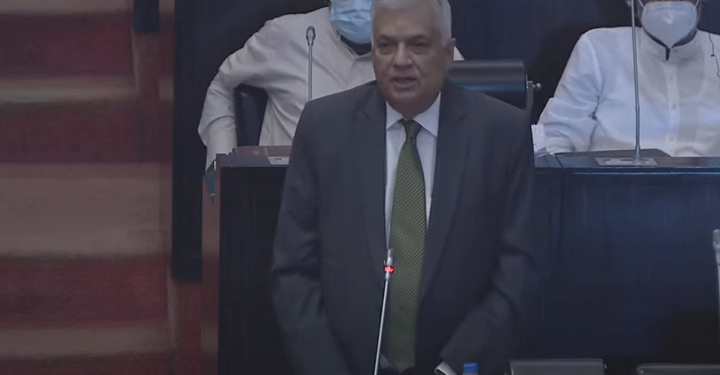
Adding to these statements, Prime Minister Ranil Wickremesinghe stated that whether debt payments amounted to $ 1 billion or $ 10 billion, not even $ 1 million is available with the Treasury to furnish these payments.

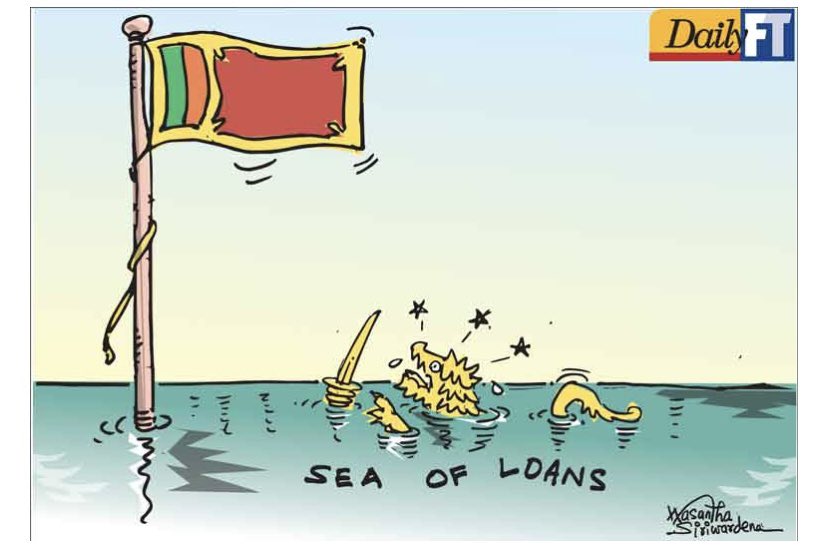
Tainting its unblemished track record of timely servicing its external financing obligations since Independence, the Sri Lankan Government on 12 April announced that it would be suspending the debt servicing of selected debts, amidst what is considered the worst economic crisis the country has ever endured.

In the defaulting statement, the Ministry of Finance stated that it would opt for an orderly and consensual restructuring of these debt obligations in a manner consistent with an economic adjustment programme supported by the International Monetary Fund (IMF).

At London vigil, UK Tamils seek justice for civil war victims

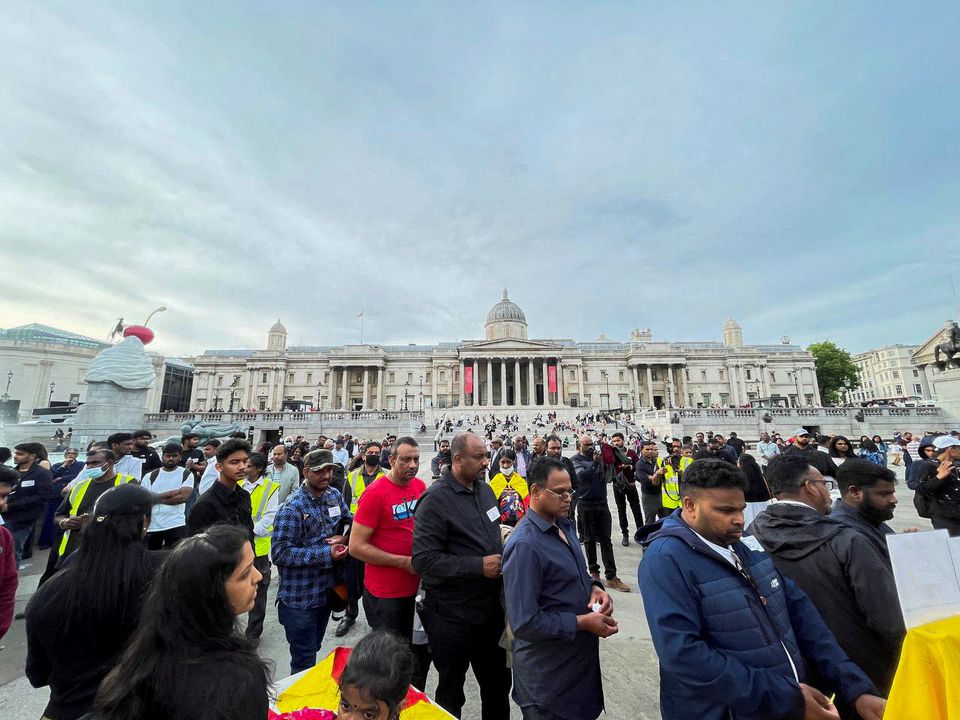
Tamils who resettled in Britain after fleeing the Sri Lankan civil war held a vigil in London on Wednesday, with some likening the island nation’s current economic crisis to the conditions they faced during the decades-long conflict.

The gathering of Tamils seeking justice for those from their community who were killed in the South Asian country during the war, coincided with Sri Lanka’s worst economic crisis since its independence in 1948 that has forced out its prime minister.

“The current crisis in Colombo reminds me of our struggles during the war. Shortage of fuel, food, medicine – the Tamil-dominated parts of Sri Lanka faced the same issues then as what the entire nation is facing today,” Thanikai, 42, who came to Britain eight years ago, told Reuters.

He is amongst the hundreds of thousands of Tamils who fled the conflict, which ended in May 2009 with the Sri Lankan government defeating the Tamil Tiger rebels.

Human rights groups have since accused the country’s military of killing civilians towards the end of the war, in which the rebels fought for a separate state for the Tamil minority.

“We need justice for all the people who were killed,” Thanikai said.

The United Nations has accused both sides of war crimes and has been given a mandate to collect evidence.

The U.N. has also warned the failure of Sri Lanka to address past violations has significantly heightened the risk of human rights violations being repeated.

“My parents and friends are still in Sri Lanka but I have been too scared to go back,” said Elilarasi Manoharan, who attended the peaceful demonstration in Trafalgar Square to mark the 13th anniversary of the end of the war.

“But now with the economic crisis and the changes we are seeing, maybe if the Sri Lankan system changes it will open up doors for us to be able to visit our loved ones.”

Sri Lanka misses payment to Asian Development Bank: Prime Minister

Sri Lanka has missed a payment to Manila-based Asian Development Bank blocking fresh funds Prime Minister Ranil Wickremesinghe said amid warnings that the currency crisis-hit country could be locked out of multilateral funding in a new blow.

The Asian Development Bank and the World Bank also continued to fund Sri Lanka by re-purposing loans after the country was cut off from capital markets when it was downgraded to CCC.

The ADB and World Bank had just promised around 160 million each to Sri Lanka, Wickremesinghe said but the loan from the Manila-based lender was blocked.

“But because we could not repay three million US dollars last month it is stuck,” Wickremesinghe said.

“We are finding money for that.”

Multilateral Warning

Sri Lanka is facing the prospect of being locked out of financial assistance from multilateral organisations if its repayments are not maintained.

“If we do not pay the IMF (International Monetary Fund) and World Bank, that money will also not come,” ex-Finance Minister Ali Sabry said.

“That is the problem. As the Prime Minister said there are some payments due to ADB. It is a very big problem.”

Sri Lanka has already suspended repayments for international sovereign bonds, commercial bank loans, Exim bank loans and bilateral loans.

But multilateral lenders, as senior creditors are excluded.

“We decided on April 12, that we would not pay ISBs and everyone else except multilateral,” Sabry said.

“We did that because we had no option. By the 18th (of April) we had to pay 78 million dollars and we had to pay 105 million US dollars to a Chinese bank. We announced and defaulted.”

Sri Lanka is now negotiating a loan with the IMF. By April 2022, Sri Lanka had to pay 106.34 million US dollars and 12.4 million US dollars had been paid so far.

“Whether the payment is a billion or 10 billion we do not have a million to pay,” Wickremesinghe said promising to provide statistics to the parliament soon.

Sri Lanka had to repay 7,139 million US dollars in the year from March 2022. In April Sri Lanka had to pay 250 million US dollars made up of 145 million US dollars of principle and 106 million in interest.

Opposition legislator Harsha de Silva said from now on there were about 5.5 billion dollars to be paid in the coming 12 months, and 2.5 billion was suspended, leaving about 3.0 billion to be repaid.

Sri Lanka’s central bank is also deep in debt, owing money to the IMF, Reserve Bank of India and swap counterparties.

Sri Lanka was hit with chronic monetary instability from 2015 to 2022 as money was printed to keep interest rates down under ‘flexible inflation targeting’ and ‘output gap targeting’ triggering three currency crises, excessive foreign borrowings and eventual default.

Sri Lanka is now facing the worst currency crisis created by its 72-year-old soft-pegged central bank.

An attempt to shift to a floating exchange rate has so far not succeeded due to a surrender rule though interest rates have been raised to slow domestic credit and halt or reduce money printing.

With monetary stability yet to be restored authorities are now chasing after 3-4 billion US dollars of ‘bridging finance’.

Money will have to be printed to pay the salaries of state workers, Prime Minister Wickremesinghe said which will likely trigger more forex shortages.

Posted in Uncategorized