

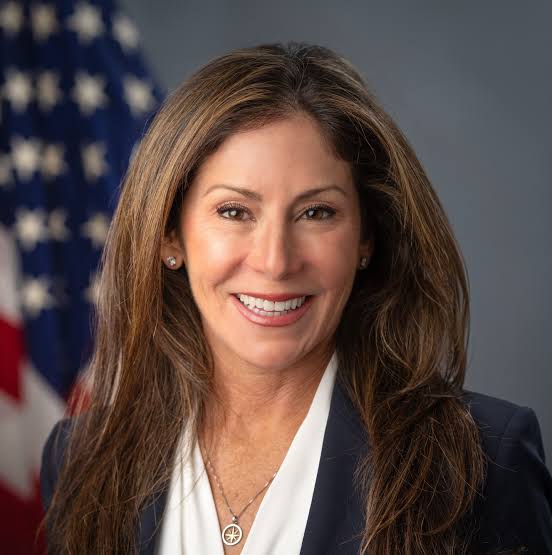
ECONOMYNEXT – Sri Lanka must establish an independent maritime regulatory body to safeguard fair competition and draw foreign investment before its current growth window closes, United States Federal Maritime Commission (FMC) Chairman Laura DiBella said.
Setting up a dedicated regulatory body — similar to the FMC — would monitor ocean carrier alliances, prevent cartel behavior, deter rate exploitation, and provide clear rules that give global investors confidence, she said.
“A clear regulatory framework de-risks the market for foreign direct investment. Capital avoids environments with arbitrary constraints or excessive risk,” DiBella told the Colombo International Maritime and Logistics Conference.
Colombo has become a critical link for American supply chains, handling approximately 500,000 containers representing 30 billion US dollars in cargo value, DiBella said.
Seaports are the foundation of economic growth, DiBella said, but warned that governments must stick to a supporting role and allow private enterprise to drive commercial expansion.
She said the FMC is ready to help Sri Lanka structure a fluid, competitive framework to keep trade lanes moving.
During an ensuing panel discussion, business leaders and regional experts warned that Sri Lanka must move beyond basic transshipment and eliminate local bottlenecks to maintain its commercial edge.
Ashraf Omar, Chief Executive Officer of Brandix Sri Lanka, pointed out that export manufacturing is rapidly shifting from forecast-driven orders to fast, demand-driven deliveries where fashion products lose value if they do not reach retail shelves on time.
“We might shave five days off factory production, only for the finished goods to sit at a port or with a freight forwarder for ten days. That waiting time wipes out every efficiency gained on the factory floor,” Omar said.
Omar urged officials to avoid distant 25-year plans and focus immediately on digital solutions that cut cargo transfer times to minutes, enabling finished goods to move directly from factory floors onto ships.
René Piil Pedersen, Managing Director of A P Moller – Maersk Singapore, said emerging hubs unlock real transformation when port terminals are combined with landside warehousing and free-trade logistics.
Citing Singapore as an example, Pedersen pointed out that Scottish distillers ship Scotch whisky into Singapore’s free trade zone, where bottles receive market-specific labels inside warehouses before being distributed to destinations like Manila or Jakarta. Singapore captures this high-margin value addition despite producing no whisky of its own, an opportunity Sri Lanka can easily replicate along its busy sea lanes, he said.
Pedersen also urged Colombo to prepare facilities to supply clean alternative marine fuels like green methanol to passing fleets.
Closing the panel, FMC Commissioner Robert Harvey called on authorities to treat the national logistics sector like a competitive commercial enterprise, stressing that transparent regulations are critical to attract private capital and advanced technology.