

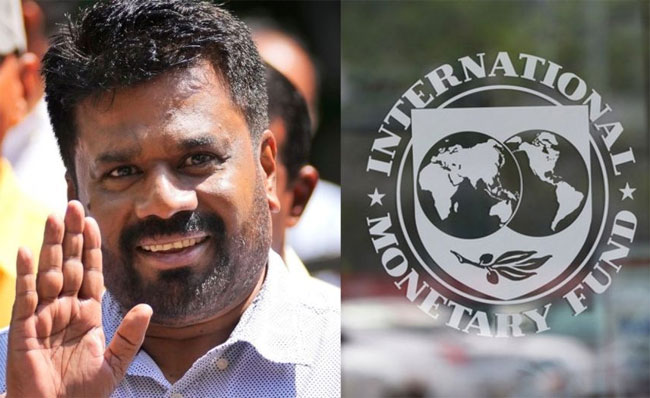
The next review of Sri Lanka’s bailout program is likely to go the executive board of International Monetary Fund for consideration in June, Mission Chief Evan Papageorgiou said.
Sri Lanka struck a staff level agreement for the next phase of the program on April 25.
“I think there’s good momentum from the authorities and everybody else’s point of view in completing the review,” Papageorgiou said in an online briefing.
“It’s a long process, as you probably know, in terms of us consulting and redrawing our numbers and our assumptions and having great confidence in the direction of policy reforms and of the outlook and everything else.
“I would say that it will take a little while, maybe a couple more months at least, in terms of finalizing the review.”
Sri Lanka has to hike electricity prices, to end losses in the utility from a tariff cut ordered by the regulator.
The Ceylon Electricity Board is yet to propose the new tariff revision. There was also an automatic price rise to be triggered under the bulk supply tariff account when cash reserves fell below a certain level.
“The BSTA, has not operated as we envisaged, and the April tariff revision that was meant to take place in, you know, for the second quarter of this year was not implemented,” Papageorgiou explained.
“Of course, we defer to the authorities and to the regulator, the PUCSL, on the exact timing for implementing these actions, these prior actions, but we urge them to do so as soon as possible, so that the utility company CEB is not incurring financial losses on a forward-looking basis.”
The IMF was also in constant touch with Sri Lanka on the possible impact of US tariffs on Sri Lanka’s exports. A team from Sri Lanka has already met US trade officials on ways to address concerns over a trade surplus with the US.
“Sri Lankan authorities, Sri Lankan government, has made great progress in establishing greater connection with bilateral trade partners, including the United States,” Papageorgiou
“We encourage more action and greater discussion in ensuring that there is a good outcome from these discussions and that the trade policy uncertainty gets resolved and there is greater sensitivity.”