

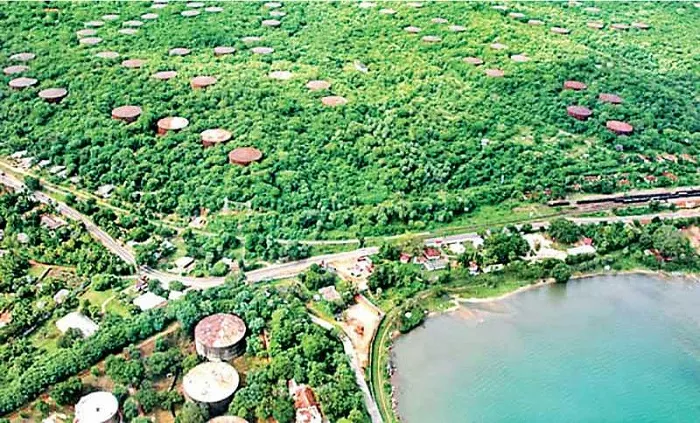
Trincomalee is poised to become a major regional hub for fuel storage, trading and bunkering, with foreign investors showing strong interest in a multi-billion-dollar energy infrastructure project centred on the port city, Managing Director of the Ceylon Petroleum Corporation (CPC) Dr. Mayura Neththikumarage said.
The project, which the government hopes will strengthen Sri Lanka’s energy logistics sector and attract long-term foreign investment, revolves around the rehabilitation and commercial operation of 29 oil tanks owned by Trincomalee Petroleum Terminal Ltd (TPTL).
Each of the tanks has a storage capacity of approximately 12,500 cubic metres, giving the rehabilitated facility a combined capacity of around 362,500 cubic metres once restored.
The refurbishment programme is expected to include repairs to the tanks’ bottom plates and riveted lap joints, abrasive blasting and repainting, upgrades to fire protection systems, and the testing and modernisation of instrumentation, bringing the decades-old infrastructure in line with international operational and safety standards.
Investors are being invited to participate through an international Request for Proposals (RFP) process, which Dr. Neththikumarage said had been designed to give all interested parties a fair opportunity to compete.
He said the appeal for investors went well beyond the restoration of ageing storage infrastructure, noting that the project offered access to one of the most strategically located petroleum hubs in the Indian Ocean, underpinned by Trincomalee’s deep-water harbour and its position close to major international shipping routes.
According to Dr. Neththikumarage, the development potential of Trincomalee as an energy and maritime logistics hub could draw investments worth billions of US dollars, though he cautioned that the final investment value would depend on the specific proposals submitted by successful bidders.
He said that the rehabilitated tanks, together with a proposed new pipeline linking the Port of Trincomalee to the tank farm, would be reserved exclusively for international fuel trading and marine bunkering, rather than being used to support Sri Lanka’s domestic fuel supply.
He also said the government would not bear the cost of restoring the tanks, with investors expected to fund the rehabilitation work themselves.
However, Sri Lanka would earn revenue through throughput charges levied on the fuel handled at the terminal, with the fee structure to be finalised during the procurement process and investors required to quote charges based on the volume of fuel handled, typically calculated on a per-metric-ton basis.
The project represents a significant opportunity for Sri Lanka to position itself as a key player in regional energy logistics, generating foreign exchange through fuel handling and related maritime services without placing additional strain on state finances.