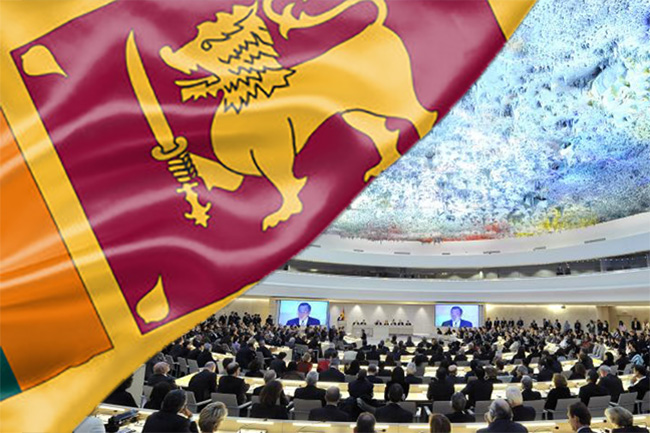
GENEVA (UN)–A report published by the UN Human Rights Office calls on the Government of Sri Lanka to acknowledge State security forces involvement in a series of horrific attacks against humanitarian and medical personnel, facilities and operations during and in the aftermath of the armed conflict between the Government and the Liberation Tigers of Tamil Eelam (LTTE).
The report, entitled “‘I died many times’: Attacks on humanitarian assistance in Sri Lanka, 20 years on”, urges the Government to issue a public apology on behalf of the State, undertake concrete measures to deliver truth and justice, and provide reparations to victims and survivors and guarantees of non-recurrence.
It says longstanding restrictions on humanitarian access in Sri Lanka intensified from 2006 and reached their most acute phase during the final military offensive in 2009. Aid workers were killed, and supplies of food, fuel, medicine and other essential goods heavily restricted. During 2006 and 2007, at least one humanitarian worker was killed or subjected to enforced disappearance almost every month.
The LTTE also put humanitarian workers at risk, says the report, notably through preventing them from leaving areas under its control and exposing them to shelling and gunfire.
Drawing on more than a decade of UN investigations and consultations with people involved in humanitarian operations at the time, the report analyses four emblematic incidents for which accountability remains elusive. These include the August 2006 killing in Muttur of 17 national staff members of Action contre la Faim (ACF), a French NGO – at the time the deadliest single attack on humanitarian workers globally; the disappearance of seven staff members of the Tamil Rehabilitation Organisation on 29 and 30 January 2006; the obstruction and shelling of a UN aid convoy; and the shelling of Puthukkudiyiruppu Hospital in early 2009.
The report underlines that two decades after the killings in Muttur, and more than 17 years after the end of the armed conflict in Sri Lanka, no one has been held criminally responsible for any of the grave incidents of violence examined in this report. Such continuing impunity risks normalising violations of international humanitarian and human rights law and emboldening other perpetrators elsewhere.
“Twenty years later, accountability for these serious violations of international law remains largely absent,” says the report.
It identifies patterns behind this prolonged lack of accountability, among them recurring official denials and deflections of responsibility, investigations that frequently stalled, if opened in the first place, coupled with failures to protect victims and witnesses, and the device of commissions of inquiry being used as an inadequate substitute for criminal investigation and prosecution.
The report acknowledges the incumbent Government’s stated commitment to advancing accountability and the publication of six commission of inquiry reports in May 2026, but points out that public evidence of any progress in investigations or prosecutions about the incidents examined continues to lag.
At a time when attacks on humanitarian personnel and denials of assistance have become widening features of contemporary armed conflicts, many of those consulted for the report stressed that Sri Lanka is not a closed chapter and that, instead, the failure to confront what happened and the impunity that followed have had consequences well beyond the island country.
The report says formal State acknowledgment and apology must be accompanied, even at this late stage, by meaningful, prompt, independent and impartial investigations and prosecutions of those suspected of responsibility for grave violations, including at command level. It also calls for effective remedies and reparations for victims and survivors, and measures to prevent the recurrence of such violations.
It calls on other States to cooperate in the investigation and prosecution of those alleged to have committed crimes under international law in Sri Lanka, including under accepted principles of extraterritorial and universal jurisdiction.