

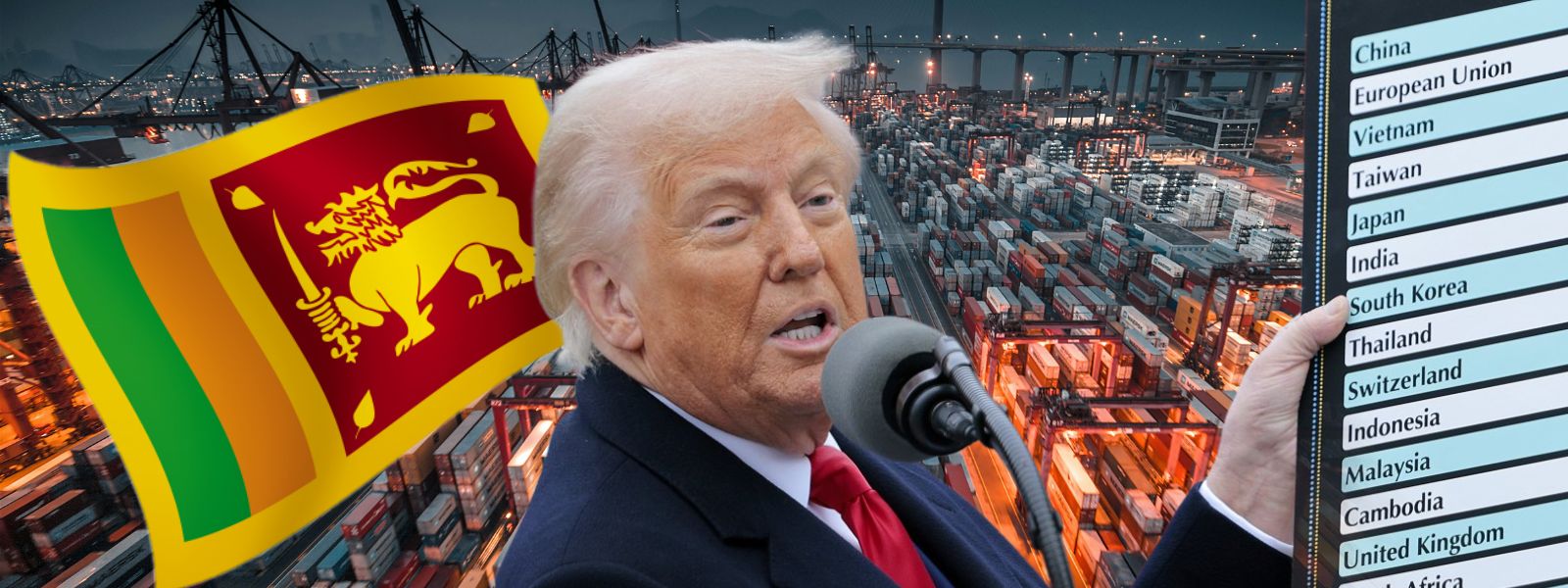
The United States has proposed imposing additional duties of 12.5 per cent on imports from Sri Lanka, after the country was found to have failed to enforce a prohibition on goods made with forced labour, in the latest escalation of Washington’s sweeping trade offensive against dozens of economies worldwide.
The proposal, announced by the Office of the United States Trade Representative (USTR), places Sri Lanka among 45 countries facing the steeper 12.5 per cent levy under a Section 301 unfair trade practices investigation, a legal mechanism that allows Washington to act unilaterally against trading partners deemed to be engaging in practices that burden American commerce.
What the USTR found
According to the trade agency, Sri Lanka has failed to impose and effectively enforce a forced labour import prohibition.
The USTR concluded that this failure constitutes an unreasonable act or policy that restricts United States commerce, triggering the proposed punitive tariff.
US Trade Representative Jamieson Greer said in a statement that the failure of trading partners to address imports of goods made with forced labour was “unacceptable,” adding that it placed American workers at a competitive disadvantage in global markets.
60 countries targeted
The proposal covers 60 economies in total.
Fifteen countries, including Canada, Britain, the European Union, Mexico, Bangladesh, Pakistan, Malaysia and Cambodia, face a lower additional duty of 10 per cent, while the remaining 45, including Sri Lanka, face the higher 12.5 per cent rate.
The announcement is the latest move by the Trump administration to rebuild its tariff framework following a significant legal setback.
In February, the US Supreme Court struck down emergency tariffs imposed under the International Emergency Economic Powers Act.
A temporary 10 per cent levy, introduced on the same day as the court ruling, is due to expire on 24th July.
Textiles in the frame
Of particular concern for Sri Lanka will be the USTR’s proposal of a textile mechanism that would allow a certain volume of apparel and textile imports to enter the United States at a reduced tariff rate.
Sri Lanka’s garment and textile sector is one of the country’s most important export industries and a significant source of foreign exchange earnings, making any shift in US trade policy deeply consequential for the economy.
Details of the reduced rates and allowable volumes under this mechanism have not yet been disclosed.
What happens next
The USTR has opened a public comment period on the proposed tariffs, with submissions accepted until 6th July and a public hearing scheduled for 07 July.
Final decisions on the duties are expected to follow.
The trade agency is also expected to release findings from another major Section 301 investigation into excess industrial capacity across 16 trading partners, including China, in the coming weeks.