

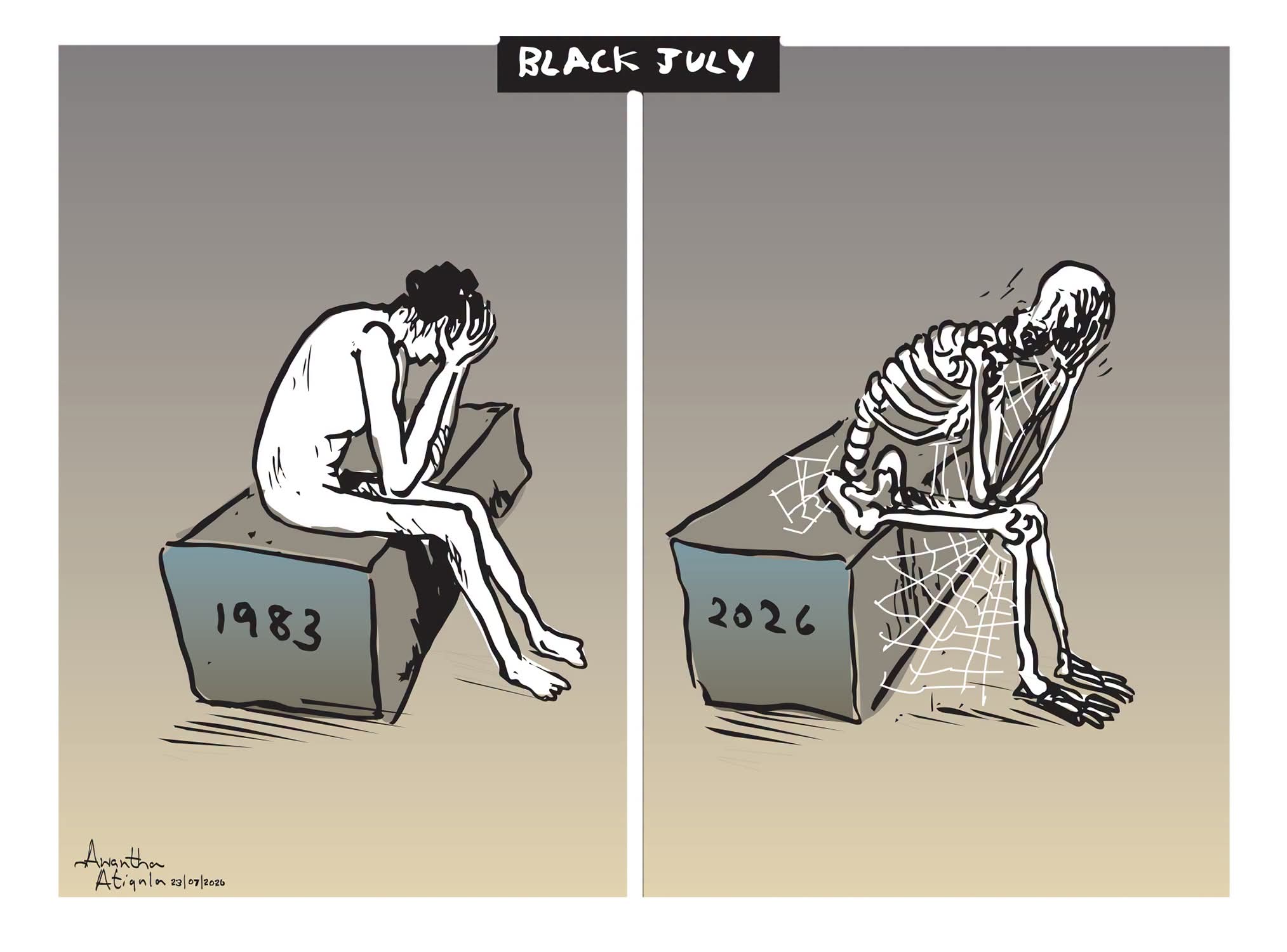
Rights activists in Sri Lanka organized a rally seeking justice for the families of some 2,000 Tamil people killed in the Black July massacre 43 years ago, saying without reconciliation, the country cannot achieve lasting peace.
Some 200 people participated in a street campaign in Colombo on July 23, the eve of the ethnic pogrom’s 43rd anniversary, raising slogans and distributing leaflets to raise awareness on the issue.
They also collected signatures on a petition they plan to submit to the government to deliver full truth about the incident and ensure accountability for the crimes, allegedly carried out by majority Sinhalese mobs.
Lahiru Weerasekara, a leader of the Movement for Equal Rights, which organized the public program, said no one has been held accountable for the planned violence that selectively killed the Tamils.
“No justice has been served, and no compensation has been given to the victims to date,” he said, adding that those accused of involvement in the massacre continue to be active in national politics.
Politicians and party activists of the then-ruling United National Party were accused of organizing or encouraging attacks in certain areas. However, these allegations were never comprehensively investigated or prosecuted, activists say.
The United National Party was later split, and the Samagi Jana Balawegaya (SJB or United People’s Power) was formed, which is currently the main opposition party.
Both parties “must be held accountable for their links to the massacre,” he said.
The week-long massacre that started on July 24, 1983, targeting the Tamil community also destroyed 23,000 homes and businesses, and displaced 150,000 civilians.
Some estimates put the death toll at 3,000, but the government’s official estimate puts it at only 400 people.
The program has links with the Liberation Tigers of Tamil Eelam (LTTE), formed in 1976, to demand a separate homeland for the ethnic Tamils in the northern areas, where they are concentrated.
The anti-Tamil massacre began a day after the LTTE ambushed an army patrol near northern Jaffna city, killing 13 Sri Lankan soldiers. That ambush is considered the beginning of a 22-year-long armed struggle that was crushed in 2009.
The civil war killed more than 100,000 people, displaced 800,000, and set development back by decades in the Indian Ocean nation of 22 million people.
Velauthan Sinthiya, whose father’s business in Colombo was burned during Black July, said the family managed to save itself by escaping with whatever clothes they had on.
The family moved to Tamil-dominated Vavuniya town and her father died of a heart attack that year, still grieving the destruction of his property and unable to support his children’s education, she told UCA News on July 24.
The collective wounds of the community remain unhealed even after 43 years, she said.
Father Marimuttu Sathivel, an Anglican priest and rights activist, demanded justice for those murdered and forcibly disappeared during the week-long violence.
Thusara Sadun, 49, a rights activist from Moratuwa, said Sri Lanka needs political devolution, demilitarization, accountability, and credible mechanisms to address victims’ grievances stemming from ethnic violence.
Sinhalese form some 74 percent of Sri Lanka’s 23 million people, with 15.1 percent Tamils and Sri Lankan Moors, mostly Muslims, forming some 10 percent.
William J. Grimm M. M.
Publisher