SJBs Chaminda Wijesiri Quits Parliament

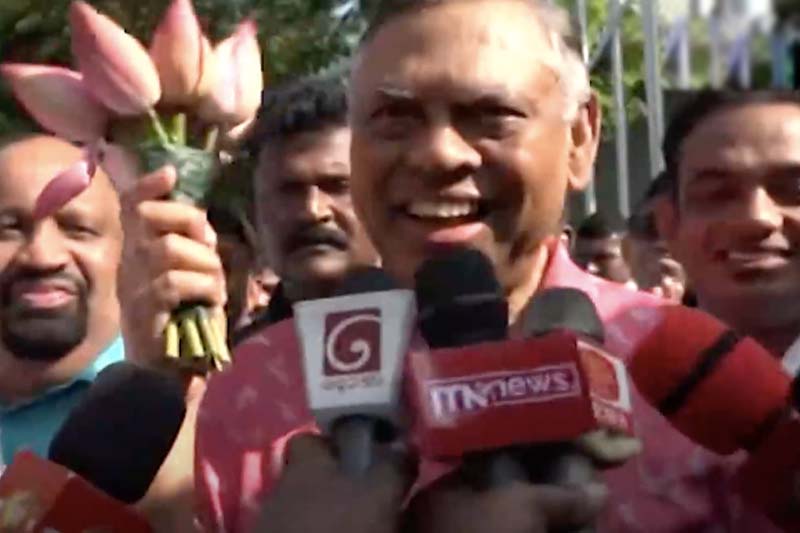
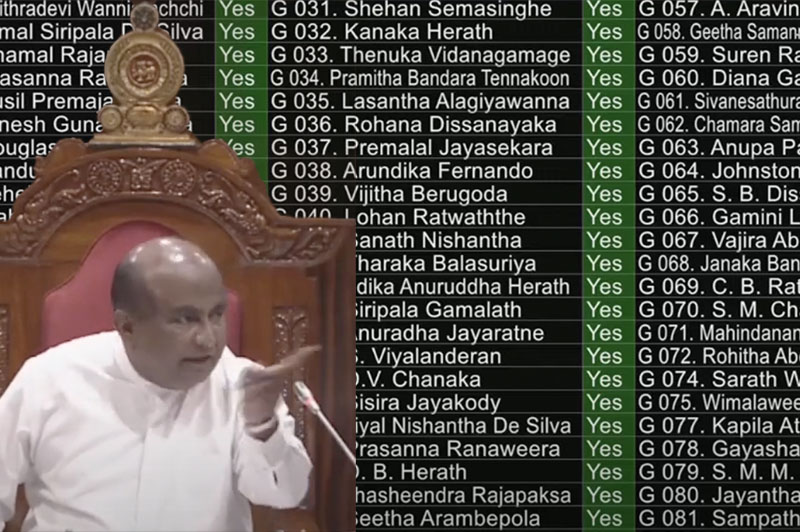
In a surprise move, Sri Lankan opposition lawmaker Chaminda Wijesiri tendered his resignation from Parliament, effective Tuesday, January 9, 2024.

Chaminda Wijesiri represents the Samagi Jana Balavegaya in Parliament.

Wijesiri, delivered a statement to the Parliament, formally announcing his decision and requesting Mahinda Yapa Abeywardena to accept his letter of resignation.

MP Wijesiri said he is giving up active politics as well. “I don’t have any issue with SJB, though I am going out of politics,” he also said.

Posted in Uncategorized

If 13-A is good, Mr President, do it now, why and how! By N Sathiya Moorthy

In northern Jaffna ahead of the annual Tamil harvest festival of ‘Thai Pongal’, President Ranil Wickremesinghe promised the full implementation of the India-facilitated 13th Amendment as the way forward to restore ethnic peace in full. Coming as it did after his none-too-distant uttering that he was for ‘13-A minus police powers’, he has to clarify what he meant this time.

If Wickremesinghe is all for 13-A, why should he delay full implementation? After all, 13-A has been in the statute book for over 36 years, since 1987, when Parliament passed it. It was aimed at giving a constitutional accent to the Indo-Sri Lanka Accord earlier in the year, by President J R Jayewardene for Sri Lanka and Prime Minister Rajiv Gandhi of India.

The Accord was an expression of the larger Indian neighbour to help usher in ethnic peace, hence prosperity, in the island-nation. After all, India was not a domestic stake-holder, but by signing the Accord, New Delhi was also sending a clear message not only to the SrI Lankan State but also to the Sri Lankan Tamil community, whose case it had taken up with Colombo in every which way.

It had become clear that neither the LTTE, claiming to be the ‘sole representative’ of the SLT community would sign what was otherwise an agreeable agreement, nor would it allow other militant and moderate Tamil groups to sign the document. Having shepherded the negotiations between the government and the LTTE from the start, neither the Indian State, nor Rajiv Gandhi as Prime Minister could allow the opportunity to slip by.

That’s if the Tamils were to get their due within a unified Sri Lanka sans separation as the LTTE was campaigning, through its three-pronged attacks, politically, militarily and through unending acts of terrorism. The LTTE targeted fellow-Tamil leaders at tangent with its leadership than any new ideology as much as the Sri Lankan State and symbols of the Sinhala-Buddhist majority like renowned Buddhist temples.

Diluting the spirit

Today, President Wickremesinghe seems convinced that 13-A is workable (but not functional). Successive governments since 1987 have diluted the spirit by side-stepping 13-A in key aspects of power-devolution by creating ‘national schools’ and ‘national hospitals’, which the Tamils naturally resented. The truth is that like 13-A with its universal applicability these national institutions that aimed at improved quality and services were set up also in non-Tamil areas.

If anything, more of these institutions cropped up outside the Tamil areas. It was because of the LTTE war that delayed development in the Tamil areas. It has remained so to the present, 15 years after the conclusion of the ethnic war.

If only a (unified) North-East Tamil Province was in existence, it could have argued for the diversion of federal funds that went into creating national schools and national hospitals to the provincial administrations, for them to build and operate them. They could have also ‘educated’ and ‘united’ the seven provincial administrations, elected under the 13-A in the Sinhala South, to take a unified stand in the matter.

Today, there is no knowing if the once-touted if the association of the provincial councils have met in recent years. With no elected administration in any of them, the association has become defunct. It is another instance of the federal administration arrogating to itself the powers vested in the provinces under the Constitution – dissolving them at whim all at once and not holding what should have been once-in-five-year periodic elections.

Specific restrictions

Any improvement to the 13-A, as sought by the divided Tamil polity, should include specific provisions specifying the powers of the federal centre to interfere with the administration of provincial councils, dissolve them and order fresh elections – but within a specific time-slot. If nothing else, at every such extension, like the monthly extension of emergency powers required, a parliamentary vote should be taken.

A majority/majoritarian government / leadership could do it without effort. Yet, the idea of a parliamentary vote by the month, or every quarter, could bring the issue back to the national platform, where TV debates and social media discourses could embarrass the polity and political administration enough to order early polls.

In specific cases, government leaderships that were delaying provincial council polls for fear of losing them may soon find that the unjustified delays themselves would be the top reason for their losing it, whenever held. President Wickremesinghe should get the credit or discredit for delaying PC polls almost indefinitely since his days as Prime Minister under the government of President Maithripala Sirisena, who was in power from 2015-2019.

Local economy

In Jaffna, Wickremesinghe told the local business leaders thus: “If we examine the provisions of the 13th Amendment, there is ample authority to establish a robust local economy. We pledge not to intervene in those affairs. I am encouraging you to take the initiative.”

As Wickremesinghe pointed out, the Western Province with capital Colombo at its politico-economic centre, is the sole region capable of substantial independent -spending, while others are financially dependent on it, he said. “This situation warrants reconsideration. By utilising the powers within the 13th Amendment, each province can chart its course to development. It’s time to put these powers into action,” he said.

When the Western Province is the only one that is economically viable, what does Wickremesinghe intend doing to mid-wife the other eight to achieve self-sustainability. Tamil political and social leaders, including those that trigger them from the confines of their more comforting Diaspora settings overseas, should give a deep thought to it all, if they want not to be left out – either as a people or province or political entities.

Innocent victims

The Tamil leadership missed the bus at least once earlier in the post-war period, they cannot afford to miss it again and again and bemoan later that they had committed a mistake again (‘meendum pizhai vittom’). That was when the TNA caused the government to walk out of well-advanced talks post-war, by aligning with the US and diverting national and global attention away from a political solution to war crimes. A decade later, the Tamils have neither.

Already, the post-war generation, including those who were then below ten and who had suffered the horrors of the horrendous war without being a part of it in any which way other than as innocent victims, has a life of its own to live. They are already living it.
The more the war moves away from them in calendar years, the greater this gap will be. In the same house, the grandparents would still be talking about SJV and Amirthalingam, the parents still sympathetic to the LTTE constantly evaluating and re-evaluating as to what (all) went wrong, Gen X, Y and Z, amusedly looking at one another as to what their (fossilised?) family elders were talking about.

The present-day Tamil political and social leaderships have already lost credibility even among their own generation. The newer generation(s) has/have utter contempt for them, if not worse. Both sections demonstrated their distrust for their otherwise divided political leadership even when they gave a joint call late last year, first for a human-chain and later for a day-long ‘hartal’ or ‘shut-down’ on the ‘Judge Saravanarajah’ issue.

Both the human-chain and substitute hartal failed miserably, sending out a clear message from the Tamil people to their own leaderships. The latter’s connectivity to issues real and/or imaginary were exposed when credible doubts were raised about the truthfulness of Saravanarajah’s resignation and exit from the country. It turned out that the hon’ble judge might have faked the issues, fully or partially, to create sympathy for himself and the larger Tamil cause, for exiting the job legally and then leaving the country – which he seemed to have organised early on.

Selfish but…

Even if Wickremesinghe were to look at his current promise on 13-A from a selfish stand-point, he only needs to take real initiatives whose effects can be felt on the ground, for him to win over a substantial section of Tamil votes. With that and similar initiatives viz the Muslims and Upcountry Tamils, he may have a majority of the ‘minority votes’ in his pocket.

As calculations have shown, nearly 25 per cent of the 42-per cent of the votes that went to the losing Sajith Premadasa, then in Ranil-led UNP, came from the minorities. If Ranil could woo them back through substantive measures that those voters can touch and feel in time for the presidential poll, he may have to work only for another 25-30 per cent votes from the Sinhala South to make the grade in the presidential polls later this year – and retain the presidency.

There is a catch. The post-war regime of Mahinda Rajapaksa having made major progress in talks with the TNA, including freedom for the Tamil province to seek and obtain direct foreign funding, loans and investments, Ranil only needs to put that into practice. Given that every nook and corner of the country can do with those extra dollars, the freedom should be made operational and extended to every Province.

But for all this, to begin with, the President has to set the date for nation-wide PC polls, here and now, even if it is later in the year, after the presidential polls and before or after the parliamentary elections, which again he has promised for the year. He cannot continue to build castles in the air and expect the people to believe that they are living in them already.

That will still leave behind two major issues. One, re-merger of the North and the East, as the Tamil polity wants. That may have to wait until after the presidential, parliamentary and even provincial council elections. Possibly, the younger generation may not be too keen on them, as they may not share the emotional attachment that SJV instilled after he had to shift base from the North to the East when he lost the 1952 parliamentary polls from his native Kankesanthurai constituency in the North.

Barking up the wrong tree

The second issue is about police powers for the provinces. It has made some progress when the government was talking to the TNA, post-war. In his stalemated rounds of talks with the Tamil parties and with all the rest, Wickremesinghe indicated that he was ready to move on with 13-A minus police powers.

For the Tamils, it would be a letdown. For the Tamil polity it would have been worse as the entire LTTE war in a way was for police powers and re-merger. Yet, if Wickremesinghe was serious, even about 13-A minus the police powers, he should have begun it somewhere. By implication, it needed only executive order(s) to put 13-A into practice. He has not done it either.

Yet, for all that he has been promising the Tamil people and polity, including his address to the Jaffna business community, Ranil or Wickremesinghe or Ranil Wickremesinghe is barking up the wrong tree. He should have begun with the southern provinces and southern polity, to tell them how 13-A had provisions that would make them all economically strong, self-reliant and independent, even if over the years and decades.
That is, if they had begun in 1987, they all would have become prosperous by now, and would have helped the country to become more prosperous than what alone a stand-alone Western Province has been supposedly shouldering and failing, successively, since Independence, and before. That being the case, is economic prosperity of the nation that the Buddhist clergy is denying the people, that too at this critical hour, in the name of wanting a ‘unitary State’ structure without understanding, hence appreciating, the economic nuances of the 21st century.

Maybe in public, maybe not, but the government, whoever is in power, has to engage the Buddhist clergy, including the prelates, in an economic discourse, as a part of the burgeoning possibilities and problems of a resilient nation that the present generation has to leave behind for the future, near and distant. Well, it can begin now. An element of defiance, when put into practice, can also show the benefits of 13-A for the people from across the country to touch, feel and benefit from – and which in turn can silent, if not stupefy, all sections that are opposed to it, under wrong notions and influences.
It has to begin there, begin there early, here and now.

(The writer is a Policy Analyst & Political Commentator, based in Chennai, India. Email: sathiyam54@nsathiyamoorthy.com)

Presidential poll between 18 September and 18 October, claims Gammanpila

Pivithuru Hela Urumaya Leader and MP Udaya Gammanpila yesterday tipped that the Presidential election will be held any day between 18 September and 18 October.

He made this speculation during a briefing to the media on current issues.

“A lot of opinions have been expressed about the timing of the Presidential election. Unfortunately, these opinions are based on political predictions, not based on the law. Constitutionally, the Presidential election shall be held between 18 September and 18 October. Where does it say so?” Article 31(3) of the Constitution says.

“The poll for the election of the President shall be taken not less than one month and not more than two months before the expiration of the term of office of the President in office,” said Gammanpila.

He said that as President Gotabaya assumed office on 18 November 2019, the term of five years will end on 18 November of this year. Not less than one month means before 18 October and not more than two months mean after 18 September. Therefore, Gammnapila said the Presidential election shall be held between 18 September and 18 October according to the Constitution.

He also said that the Presidential Election Act specifies the dates for nominations and declaration of the election by the Election Commission. According to our calculations, the Election Commission shall declare the election and nomination dates any date between 17 July and 4 September.

France makes nuclear energy proposal to Sri Lanka: Minister

Electricity De France, the French power utility, had made a proposal on nuclear energy to Sri Lanka, Power and Energy Minister Kanchana Wijesekera said following a meeting with the French envoy to discuss potential energy sector investments.

“We also discussed regarding a proposal by EDF (Electricity De France) on nuclear energy and possible partnerships in the future,” Wijesekera said on X (twitter), after meeting the French ambassador to Colombo Jean-Francois Pactet.

Wijesekera had also briefed the ambassador on Sri Lanka’s nuclear energy integration plans, policy on renewable energy, smart grid development and energy efficiency plans, he said.

France is a global leader in nuclear energy.

Russia was among countries that had offered nuclear power technology but Sri Lanka was not yet ready to accommodate nuclear plants, Minister Wijesekera told parliament last November.

“We need a legal framework before we go into a process,” he said.

“We will be calling EOIs once the legal framework is ready and we have an understanding of what our requirements are.”

Posted in Uncategorized

Japan urges early signing of debt MoU between Sri Lanka and creditors

Japan restated the importance for early completion of signing of a Memorandum of Understanding (MoU) between Sri Lanka and creditor nations on debt restructuring, after an agreement was reached in principle late last year.

It also emphasised the need to ensure transparency and comparability in agreements with creditors outside the Official Creditor Committee (OCC), according to a statement dated Friday.

Japan, along with France and India, co-chair the committee of 15 creditor nations.

Battling its worst financial crisis since independence in 1948, the South Asian island nation is trying to restructure deals with creditors after soaring inflation, currency depreciation and low foreign reserves sent its economy into free fall, forcing it to default on foreign debt in May 2022.

Sri Lanka and its creditors said in November they reached an agreement in principle on debt restructuring that would cover approximately $5.9 billion of outstanding public debt and consisted of a mix of long-term maturity extension and reduction in interest rates.

China, Sri Lanka’s largest bilateral creditor, has struck its own deal with the island nation, but has not joined OCC as a formal member.

Sri Lanka’s total external debt is estimated at $36.4 billion, which includes $10.81 billion of bilateral debt, according to data released by its finance ministry in September.

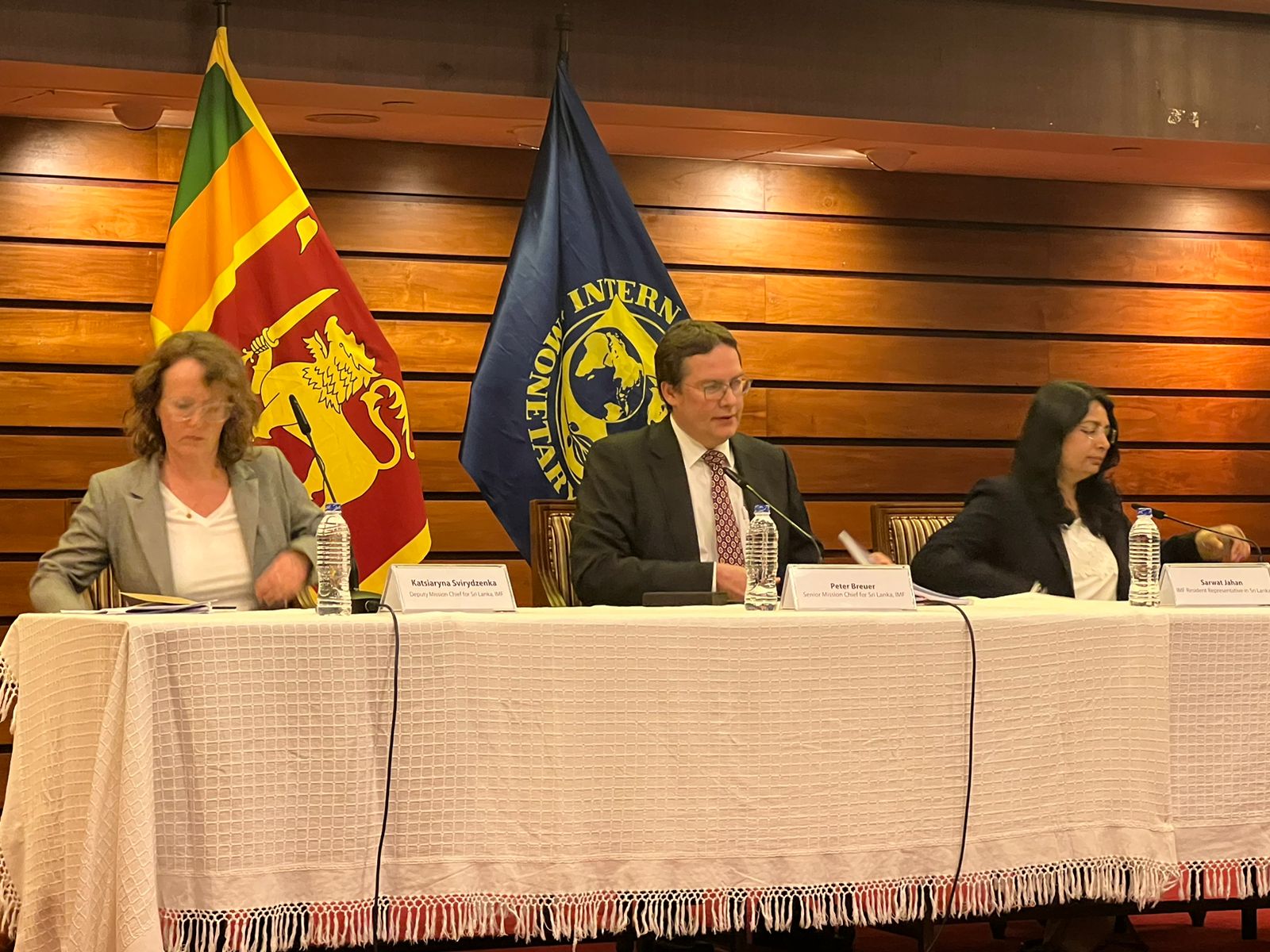
Sri Lanka needs to secure debt restructuring agreements with both bilateral creditors and bondholders, possibly by March, to complete the second review of a $2.9 billion bailout from the International Monetary Fund.

Source: Reuters

Posted in Uncategorized

Lasantha’s kids speak out, 15 years since his murder

Today marks 15 years since the brutal murder of iconic journalist Lasantha Wickrematunge with none brought to justice. To mark the occasion Lasantha’s kids Avinash, Ahimsa and Aadesh issued the following statement which will be read out today at Lasantha’s graveside memorial at the General Cemetery Kanatte.

Fifteen years ago today, our father Lasantha Wickrematunge was assassinated in cold blood in a defining moment of loss that shook the spirit of Sri Lanka and broke the hearts of all those who love and value peace and democracy.

Our father was a peacemaker and a valiant crusader for change. Today, his name has become synonymous with the fight for human rights and press freedom and the pursuit of social justice and equality.

To us, we knew him only as our kind and dedicated father, our loving support system who was devoted to our family, selfless to a fault and lived his life for others. We grieve for him every time our family gathers and there is an empty seat at our table. We miss him every day.

Sri Lanka has faced dark times since his demise. Our father would have been proud of the Aragalaya and those who marched on in the tradition of his message and in his spirit, resisted tyranny at the risk of their own safety.

Our family thanks all those who continue to love our father and have supported us in the pursuit of justice over the years. Though our father is no longer here with us today it is important that we direct our grief and our anger into meaningful action and continue his work that remains incomplete.

Let us honour our father and carry his torch and fulfil his vision of transparency, impartiality, tolerance and liberty in our motherland.

Sri Lankan democracy: No legal barrier to hold Prez polls before LG: EC

There is no barrier to hold another election before the indefinitely postponed Local Government (LG) Elections, the Election Commission (EC) said yesterday (7).

However, in the event that the Presidential Election is held without holding the LG Elections, citizens may question as to how provisions that cannot be made for the latter elections would be made for the former, the EC’s Chairman opined.

While the LG Elections, which were scheduled to be held in March 2023, have been postponed indefinitely due to the Finance Ministry and Treasury not releasing the required funds, President and Finance, Economic Stabilisation, and National Policies Minister Ranil Wickremesinghe recently said that both Presidential and Parliamentary Elections would be held this year (2024).

The Daily Morning contacted EC Chairman R.M.A.L. Rathnayake on whether they could hold the presidential or any other election without holding the LG elections, and he said that there was no issue in holding the Presidential Election until the required funds are received for the LG elections. “The LG elections have been postponed as we have not received funds. If we receive it, we can hold it. However, the Presidential Election must be held this year. The necessary funds for it have been allocated through the budget. So we can hold it.”

The EC has requested funds for the said two elections separately, he said, adding that the Presidential or LG Elections would therefore be held upon the receipt of the funds. “In case the Presidential Election is held and LG Elections remain postponed, the people will question how funds can be released for one election and not for the other. That is a different story, but there is no legal barrier to holding any other election until funds for the LG elections are received.”

Rathnayake recently said that the Presidential Elections must be held before 16 October 2024, and expressed his confidence in receiving the relevant financial provisions.

Posted in Uncategorized

HRCSL concerned over alleged human rights abuses in ’Yukthiya’ Operation

The Human Rights Commission of Sri Lanka (HRCSL) has expressed deep concern over alleged human rights abuses in the recent ‘Yukthiya’ Operation conducted by the Sri Lanka Police and the Ministry of Public Security.

In a release, it said the Commission is particularly disturbed by reports of cruel, inhuman, or degrading treatment during search operations, prompting an immediate inquiry into these claims.

The statement is as follows;

The ‘Yukthiya’ Operation, launched with the objective of combating drug trafficking and organized crime, has reportedly led to the arrest of over 20,000 suspects in just a two-week span from December 17 to December 31, 2023. While acknowledging the importance of addressing organized crime and narcotics trafficking, the Human Rights Commission has received numerous complaints of torture, inhumane treatment, arbitrary arrests, and detentions associated with the operation.

The Bar Association of Sri Lanka has also expressed serious concerns about the operation, and the Commission notes that the operation’s association with reports of widespread injustice contradicts its very title, ‘Yukthiya,’ meaning ‘justice’ in Sinhala.

The Commission emphasizes that every person in Sri Lanka has a fundamental right to be free from torture, cruel, inhuman, or degrading treatment or punishment under Article 11 of the Sri Lankan Constitution. This right is considered absolute and inalienable, and police officers are expected to uphold this right by treating suspects with dignity at all times.

The backdrop of these reports is a broader context where the Human Rights Commission has received over 200 complaints of torture in 2023 alone. Complicating matters, individuals accused of torture continue to hold office despite recent Supreme Court pronouncements finding them responsible and ordering compensation for victims.

On December 21, 2023, the Human Rights Commission wrote to the Honorable Attorney-General urging the prosecution of these officers. In response, dated December 28, 2023, the Attorney-General assured the Commission that “necessary steps have been taken by [the Attorney-General’s] Department” in cases where the Supreme Court directed action against those responsible for acts of torture.

Sri Lanka’s Japanese firms hit most badly by fuel shortages, currency depreciation: survey

Sri Lanka based Japanese firms were most badly hit by fuel shortages and currency depreciation, following an economic crisis, according to an annual survey by the Japan External Trade Organization.

About 80 percent of the firms said operations had been adversely affected (up 13.3 percent from 2022), while 13.3 percent said they had not been affected, in a survey conducted between August and September 2023.

“The impact of the economic crisis on Japanese companies in Sri Lanka was more serious than initially assumed,” JETRO said in a statement.

Top blows came from ‘petrol/fuel shortages’ (82.6 percent) followed by ‘currency depreciation’ (60.9 percent).

Central bankers and the IMF generally advocate both depreciation and currency volatility (flexible exchange rate), but businesses and their customers dislike it as it makes planning difficult (businesses).

The third biggest hit came from ‘electricity shortages/power cuts’ (60.9 percent) and ‘income tax and other tax increases’ (60.9 percent).

Businesses were now seeing a gradual recovery from the crisis.

Among the surveyed companies, 33.3 percent said their business had ‘improved’ from last year, 50 percent said it had remained unchanged and 16.7% said it had ‘worsened’.

Specific factors contributing to the improvement included the ending of petrol and fuel shortages (75.0 percent), ‘power cuts have been eliminated’ (75.0 percent), ‘logistics problems have been resolved’ (37.5 percent) and ‘price increases have settled’ (37.5 percent).

“It should be noted, however, that few respondents answered an improvement in ‘exchange rate recovery’ (12.5 percent) or ‘financial settlement’ (0.0%).

Though the rupee appreciated from 360 to 330 the currency had been volatile under the unstable ‘flexible exchange rate’ moving from 322 to close to 330 within a few weeks, busting confidence.

Meanwhile customers are impoverished, triggering social unrest.

Japanese firms were still willing to stay in the country, despite the problems.

“With regard to business development plan over the next 1-2 years, no companies responded that they would relocate to a third country or withdraw,” the statemen aid.

About 28.1 percent (+ 2.5-ct from 2022) had said they were planning an ‘expansion’ and 65.6 percent (+ 11.8 percent from 2022) said they were ‘remaining the same’.

Only 6.3% (- 20.1 % from 2022) responded saying they planned a ‘reduction’.

Sri Lanka was pushed in the worst currency crisis in the history of the central bank in 2022, after the central bank aggressively targeted ‘potential output’ with rate cut, on the back of two currency crises in 2015/16 and 2018 as well as 2012, which pushed up foreign borrowings.

At the time printing money for potential output targeting was illegal. Several economic bureaucrats including two central bank governors as well as key politicians have been faulted by courts for their part in triggering the crisis.

Printing money for growth has been legalized in a new IMF backed monetary law.

The central bank has also been given a license by political authority to create up to 7 percent of inflation with no questions asked.

Sri Lanka begins railway line upgradation with India’s assistance

Minister of Transport, Highways and Mass Media Bandula Gunawardena and High Commissioner of India to Sri Lanka Santosh Jha ceremonially launched track rehabilitation work at Galgamuwa Railway Station commencing upgradation of railway line including ancillary works from Maho to Anuradhapura on Sunday (Jan. 07).

The upgradation of the from Maho to Anuradhapura on the mainline is the second phase of a Line of Credit project for track rehabilitation from Maho- Omanthai (128Km) which was undertaken by an Indian Public Sector company, IRCON, under an Indian Line of Credit (LOC) of USD 318 million, the Indian High Commission in Colombo said in a statement.

The cost of the entire project is USD 91.27 million of which the second phase of rehabilitation from Maho-Anuradhapura is scheduled to be completed in a period of six months, it mentioned.

State Minister of Mass Media Shantha Bandara and senior officials from the Sri Lankan Ministry of Transport were also present at the event, according to the Indian High Commission in Sri Lanka.

Speaking during the event, Minister of Transport Bandula Gunawardena expressed gratitude to India for the support extended to Sri Lanka, especially in the transport sector. Appreciating the work carried out by IRCON in Sri Lanka in the past few years, he also called for greater Railway cooperation between the two countries.

The High Commissioner expressed happiness that as a long-standing development partner of Sri Lanka, India had executed projects for development and rehabilitation of Sri Lanka’s Northern and Southern Railway line over the past several years, in line with the priorities and requirements of the Government of Sri Lanka. He underscored the importance of modernization of Railways in enhancing mobility of goods and services in Sri Lanka thereby boosting economic activity.

Railways has been one of the priority sectors for Government of India’s assistance to Sri Lanka, the statement said, adding that till date, India has executed projects of over USD 1 billion in the Railways sector under 5 Indian LOCs.

India’s public sector company, IRCON, started its operations in Sri Lanka in March 2009 and has contributed towards modernization of Sri Lanka Railways by reconstructing the entire railway line network in Northern Province (253 Km) and upgradation of Southern line (115 km). It has also contributed to ensuring safety and reliability through a modern signaling & telecommunication system on 330 km stretch of Railway line, it added.

Furthermore, the Indian High Commission in Colombo mentioned it is notable that India’s support to Sri Lanka under its various LOCs has continued despite the debt standstill announced by the Government of Sri Lanka in April 2022.

In September 2023, the Ministry of Transport and Highways of Sri Lanka and IRCON International signed a new Contract for design, installation, testing, and commissioning of a Signalling system for Sri Lanka Railways, from Maho to Anuradhapura at a cost of USD 14.90 million under an Indian LOC, it added