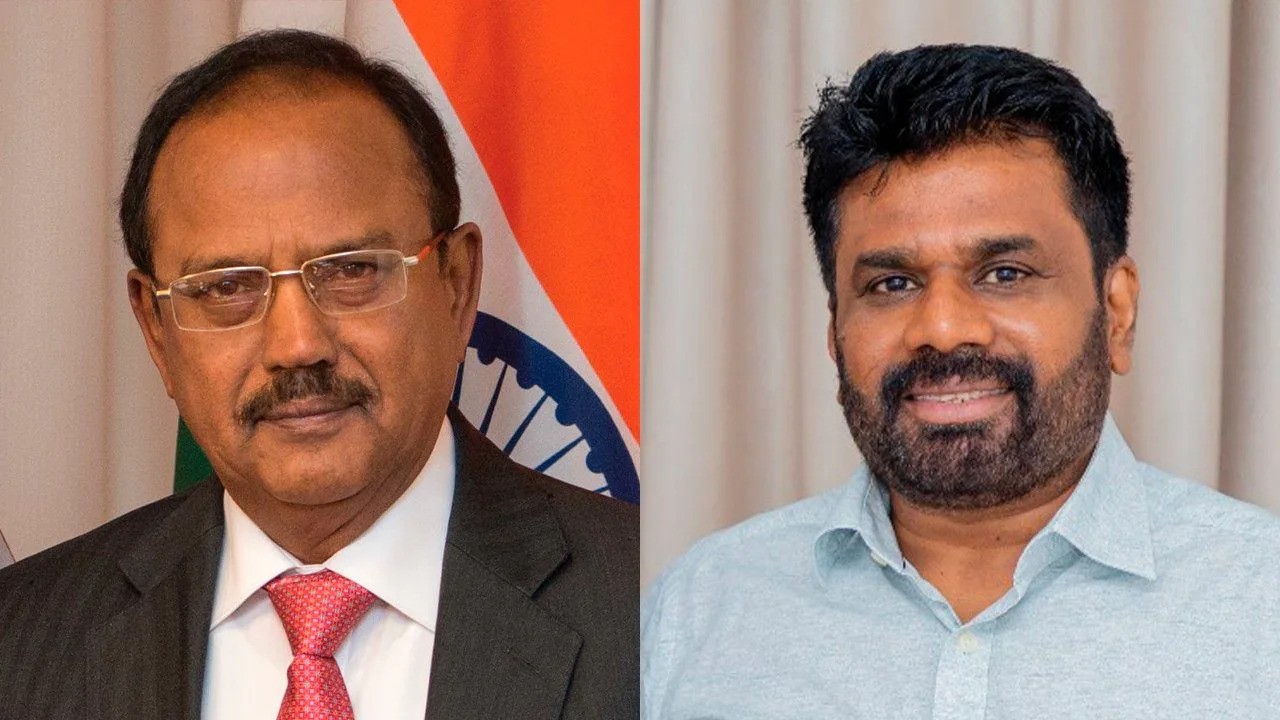
For the uninitiated in Sri Lanka, AKD in politico-strategic circles in the neighbouring India’s capital, New Delhi, refers to Ajit Kumar Doval, the nation’s all-important National Security Advisor (NSA). For counterparts in India, who are even less initiated, the initials stand for Anura Kumara Dissanayake, leader of the centre-left Janatha Vimukthi Peramuna (JVP), now wanting to be known by its relatively recent name or that of its coalition, National People’s Power (NPP). Anura is also the party’s presidential candidate, and his nomination was announced a year or more before elections that are due by the upcoming October.
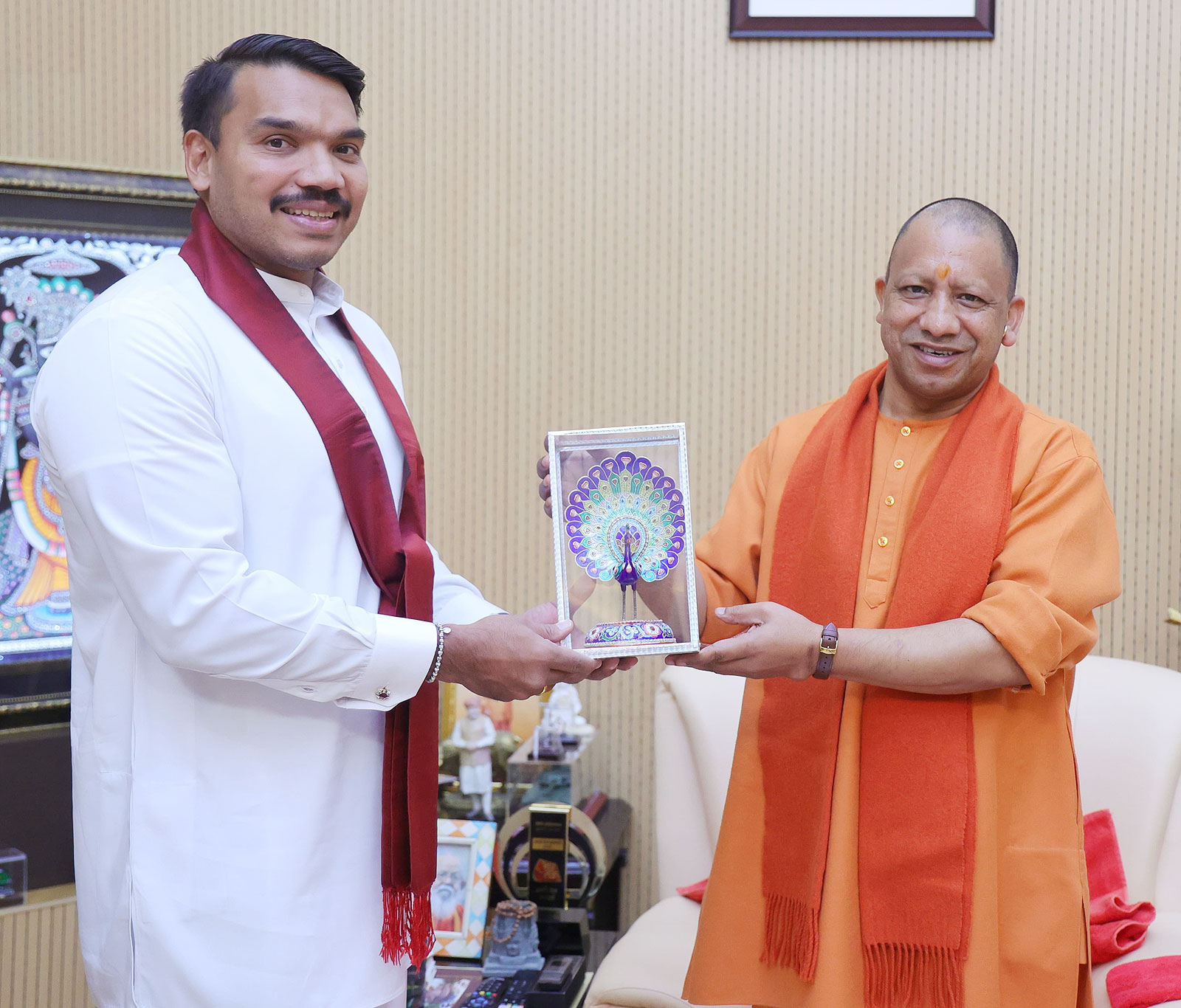
At the invitation of the Indian government, AKD met AKD in New Delhi. So did the Sri Lankan AKD and his team met India’s Minister for External Affairs (EAM), Subhramanyam Jaishankar and Foreign Secretary, Vinay Mohan Kwatra. They also visited the west Indian states of Gujarat and Kerala, for first-hand understanding of developments in farm and allied sectors, starting with animal husbandry, as NPP’s National List parliamentarian, Harini Amarasuriya told the interviewer of a Colombo TV channel.
Gujarat is the home state of Prime Minister Narendra Modi – but that is beside the point. The important and immediate point is that Gujarat is home to ‘Amul’ cooperative milk society in a town called Anand. It is the largest and the most efficient one of its kind in South Asia. The Anand/Amul model of dairy farming and processed, packaged milk marketing has been an inspiration and role model for both the public and private sectors across India and elsewhere in the Third World.
Likewise, Kerala, of course, has a leftist government. That again is beside the point – or, again a coincidence. The fact is that Kerala has tea and rubber estates, and also coconut palm along its hill ranges. Their farming and marketing methods are said to be advanced, even relative to Sri Lanka.
Heavy price
Given that Sri Lanka is an agrarian economy and has been neglecting its cash crops over the past several decades and wantonly killed its domestic dairy industry in the name of shamelessly unsustainable imports, especially in the aftermath of the Economic Reforms of 1978, the current economic crisis may be an opportunity to revive both, so as to replace forex-spending with forex-earnings.
Self-discredited President Gotabaya Rajapaksa had the right idea in this regard, but did not have the knowledge, expertise or patience to go through the mill. Simply put, he did not know that he did not know. Hence he allowed himself to be driven by a cabal, inside and outside the government, inside and outside the country. They too did not know, and did not know that they did not know. The nation has paid a heavy price for their ignorance.
Now that certain opinion polls have been consistently putting AKD’s name as the nation’s first choice even if not with the required 50-per cent plus vote-share, they seem wanting to know more than they thought they knew. Having stayed in the Opposition for much of the party’s 60 years, they need a better mental make-up to realise and recognise that it is their job to find solutions to the nation’s problems. Like they have been doing all along, they just cannot blame the rest of them all, both within Parliament and outside, and believe that they had done a good job of it.
Shrugging off the past
The India visit thus comes as an occasion for the JVP leadership to know what lies outside of their confined political and intellectual space. It may have taken years for the AKD leadership to shrug off its own past even in the party’s post-insurgent democratic avatar since the early nineties.
Thankfully, their spokespersons have now begun talking about the modern world, where IT and computer-driven economy are realities in more ways than one. This does not mean that they have to do a complete make-over. As parliamentarian Amarasuriya implied, they acknowledge that the world is inter-connected and they need to know how the world works and how Sri Lanka is working with the other – for them to understand the dynamics to make the desired changes that goes with their basic premises and policies.
Maybe, at some point, they may end up having to revisit the basics to make them relevant to the contemporary world. It is because the world has changed through the Cold War and beyond, and is in the IT-AI era, which is a world by itself, in terms of technology, global and globalised thinking, down to job-creation for Sri Lankan youth, both nearer home and afar.
Indian ‘hegemony’
The JVP has a long way to go and they have just begun. Their India visit is only a part of this learning process. They are now ready to acknowledge that India is a regional power with which Sri Lanka has a lot to do. Since the days of slain party founder Rohana Wijeweera’s ‘Five Classes’ with perceived and unquestioned ‘Third Class’ that centred on what he had concluded without evidence was ‘Indian hegemony, the JVP has been attacking everything Indian.
There were thus Indian goods, including essential food items and medicines, which the JVP wanted, banned – or, banned it themselves in areas where they had the muscle power to do so. In more modern times, they have been highly critical of every development project funded by India.
This went on until or even during the economic crisis, when India and India alone was the one nation to rush aid. They did not take the government to local courts for non-payment of price for organic fertilizer unsuited to the country, as China did, for instance. India also did not talk about war crimes and human rights in the UNHRC even during those horrible days for the nation and its people as the entire West did.
This was not the first time that realisation of the kind had dawned on them. Post-tsunami, 2004, India was the first nation to rush help for rescue, relief, rehabilitation and restoration – even before being asked. This was when India was still assessing how much it had lost in human lives and property, and where all. Subsequently, when the West offered assistance to India, too, New Delhi very clearly told them to send their assistance to nations that needed it, like Sri Lanka.
It was not that all. The JVP leaders saw for themselves how the Indian soldiers pressed into relief work did a professional job of it all, and did not get involved in local politics of any kind. Better still, once the work was done, they packed up and left. The Indian effort also showed them, how India did not require a military base in the country as imagined and could operate out of their own land territory – during war and peace, and peace and peace, to be precise.
This did change their perception of India as a hegemon, but they had not been conditioned as yet to accept the ground reality. Now with the nation’s leadership hanging like a fruit that they can touch, feel and take, their ideas are beginning to change.
At least there is a new way of thinking that the old needs to be reviewed. Rohana’s might have been gospel in his time – which it was not – but it is not so any more. Not after the JVP had left its militant mental make-up to embrace democracy as the acceptable path to serve their people even better.
Learning curve
For India, too, interacting with the JVP leadership is a learning curve. Burdened by the past, New Delh too had found relative comfort in staying away from the JVP. Today, Sri Lanka is changing and there is the need for knowing whom the Sri Lankan people think they know enough to trust them with the risky job of governance, more so in these risky times.
From a purely Indian perspective, there may be more to it than meets the eye – or, so it seems. In common neighbour Maldives, where again India has a lot at stake, both in terms of development funding and security concerns, yes, centred again on China, the overnight emergence of Mohamed Muizzu as President of people’s choice has left the international community confused. Possibly, India too did not want to be caught unawares if Sri Lanka voted AKD and the NPP to power.
India is no exception. A PhD holder in structural engineering from a reputed British university, Muizzu was Works Minister for seven long years (2012-18) and Male city mayor for two years until elections last September, but the Maldivian system did not encourage overseas partners to side-step the leader and establish personal working relationship with the other.
That comfort of facelessness seemed to have worked in his favour. Truth be acknowledged, he is conditioned by the script that he has inherited, from wherever, and his visible anti-India stance on issues of consequence more for the Maldivian people than even for India. The absence of education in foreign policy is showing by the hour, by the day.
In its turn, Sri Lanka has issues of politics and governance, which is its task. Sri Lanka has even more problems still on the economic front. Strategically located in the Indian Ocean all along, more than any time in the past, including the Cold War era, the nation is being made aware of this prime fact. In the past, nations had complained that Sri Lanka, beginning with its days as Ceylon, was using its location-advantage to play the global and/or regional Peter against Paul.
In more recent times, Colombo is beginning to recognise that it’s not as simple as in the past, and not as simple as they had thought all along. The JVP is also in the learning curve all along, only that they are recognising the reality only when the post-Aragalaya public mood purportedly shook them off from their ideological past into a pragmatic present to a performance-centric future.
Nothing against nations
Whatever they may have seen and discussed in Gujarat and Kerala on what needed doing to revive the nation’s economy the JVP way over the medium and long terms, the JVP is aware that the short-term alone takes them there. The short term is about both politics and economics nearer home. It is also about the outside world, what the world thought about Sri Lanka on issues that mattered to both – not just to one side, as parties like the JVP had all along thought.
Thus in New Delhi, the JVP /NPP leadership could have expectedly exchanged views on multiple issues concerning their two nations. With Minister Jaishankar and Secretary Kwatra, they could have exchanged views on multiple bilateral issues, including trade, investment and the ethnic issue. With India’s AKD, Sri Lanka’s AKD could have discussed mutual perceptions of regional security, yes, involving China, too, and Sri Lanka’s own role, position, current posturing, and possibly future possibilities.
As Amarasuriya, MP, implied, the JVP has not changed its views on the Indo-Sri Lanka Accord and 13-A being pushed down the nation’s throat without proper debate in Parliament or elsewhere. But in another context, she also clarified that they had nothing against any nation. Their reservations were only about the Sri Lankan leadership of the time.
Of course, there are critics and critics in the country who have taken exception to AKD’s India visit this time. They did not seem to have any such queries for him when he toured the US not very long ago, or the party conceded that they had to do business with the IMF after all, if elected to power. In the former case, there was no news of their meeting American officials in America. In the latter, they have been claiming that they will re-negotiate the IMF deal, implying that the present rulers did not do enough.
Modern idiom
In her television interview, Harini Amarasuriya described the NPP) as a ‘progressive party that believes in social justice, equal opportunity’ – and indicated that they were fishing for inputs that could translate the ideology in modern idioms and conditions. That is a good beginning, but either way, they do not have too much time and leisure to pull everybody’s present to the past of their comfort. It is easier and cheaper in terms of the ‘price’ the nation would have to pay, for them to travel to the present and take it to the future – that is, if the voters too want them to do it.
It was President Mahinda Rajapaksa who reportedly explained why he thought of sending MPs from his impossible coalition that had the leftist JVP and the rightist JHU, for the second round of failed talks with the LTTE overseas: ‘They need to come out of their cocoon and comfort zones, and see the world for themselves, and what the war has cost the nation and its people in terms of development and prosperity. Then (alone) they would agree that a negotiated settlement is the only way out.’ It did not happen that way, yes, but a decade and a half after the successful conclusion of the war, the nation is worse off than where it had begun before the war.
In the present context, centre-right JHU leader Udaya Gammanpilla, who had broken away from the parent JHU long ago, put the JVP situation so succinctly and effectively. Welcoming Team AKD’s India visit, Gammanpilla had this to say: ‘The JVP has been critical of everything Indian other than Buddhism.’ Now, it is changing and for the good– or, so he seemed to imply.
(The writer is a Chennai-based Policy Analyst & Political Commentator. Email: sathiyam54@nsathiyamoorthy.com)