Lohan Ratwatte prison incidents: Prisons Ministry releases Judge’s probe report

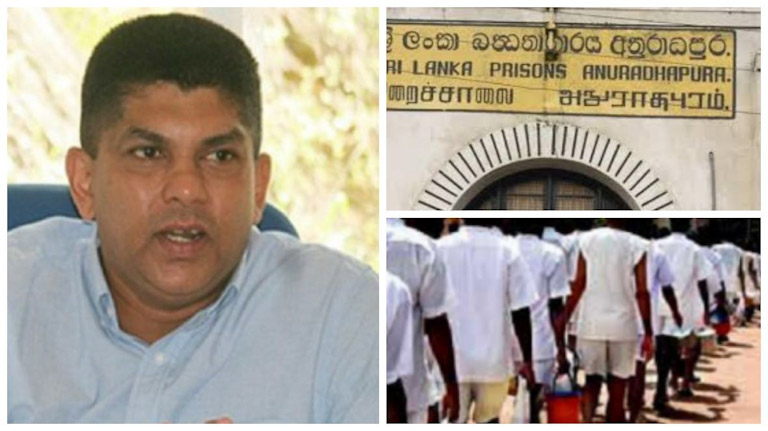
Complying with the order of the Right to Information (RTI) Commission, the Justice, Prisons Affairs, and Constitutional Reforms Ministry has released a committee report on the incidents of then-State Minister of Prisons Management and Prisoners’ Rehabilitation and incumbent State Minister of Plantation Industries Lohan Ratwatte having allegedly forcibly entered two prisons and intimidated several inmates in 2021, following the receipt of the Attorney General’s (AG) instructions regarding the same.

Speaking to The Daily Morning, journalist Tharindu Iranga Jayawardhana, representing the Research Team of the Centre for Society and Religion (CSR), which had filed the appeal with the RTI Commission based on which the relevant order was issued, said that the Ministry had released the report on Monday (20). A letter sent to the CSR by the Ministry’s Information Officer M.M. Aliff, along with a copy of the relevant report, stated that the Ministry had received the AG’s instructions.

The RTI Commission on 2 February ordered the Ministry to release the report of the one-member committee comprised of retired High Court Judge Kusala Sarojini Weerawardena appointed to investigate the incidents in question, before 23 February 2023, thereby concluding the hearing of an appeal filed by the Research Team of the CSR.

However, the Ministry had not taken steps to release the report on the said date, and Ministry Secretary Wasantha Perera said that they had sought the AG’s instructions regarding the matter.

Against this backdrop, the CSR had requested the RTI Commission in writing to initiate an inquiry into the Ministry’s non-compliance with the relevant order, and to file cases at the relevant Magistrate’s Court against the relevant Information Officer of the Ministry, the officials who prevented the report from being released, and the Ministry, under the RTI Act, No. 12 of 2016.

On 12 September 2021, it was alleged that an inebriated and pistol-brandishing Ratwatte had flown in a helicopter to the Anuradhapura Prison, where he had summoned a group of Tamil political prisoners detained under the Prevention of Terrorism (Temporary Provisions) Act (reports state between 8-16 such prisoners), ordered them to kneel, and proceeded to threaten two of them at point blank range, telling them to accept their offence/s and to submit to authority. It was also alleged that prior to this incident, on 6 September 2021, Ratwatte had, together with a group of friends, under the influence of liquor, forcibly entered the Welikada Prison premises after 6 p.m. and proceeded to view the gallows.


SC lifts travel ban on MR, BR over FR on mismanagement of economy

The Supreme Court today announced that the travel ban imposed on former Prime Minister Mahinda Rajapaksa and former Finance Minister Basil Rajapaksa would not be effective any further in connection with the Fundamental Rights petitions filed over financial irregularities and mismanagement of the Sri Lanka economy.

IMF bailout not a silver bullet for Sri Lanka: Moody’s Analytics

Sri Lanka has a difficult road ahead irrespective of how much funding it receives from multilateral and global financial agencies, a senior economist at Moody’s Analytics told Reuters on Tuesday.

Moody’s Analytics is independent of Moody’s Investors Service, the rating agency.

The International Monetary Fund (IMF) approved a nearly $3 billion bailout for Sri Lanka on Monday and the country’s presidency said the programme will enable it to access up to $7 billion in overall funding.

“It (the IMF support) is definitely not like the silver bullet they think,” said Katrina Ell, senior economist at Moody’s Analytics.

“The exuberance that has been reflected in the financial markets will really fade unless we see some significant improvements from the government as also in Sri Lanka’s growth prospects”.

The economist said all additional funding that the country receives in coming months is good news but fiscal prudence and debt sustainability will be key.

“We need to keep in mind that it’s still going to be a difficult road no matter how much potential funds or support is being thrown at Sri Lanka,” Ell said.

Source: Reuters

Posted in Uncategorized

Sri Lanka’s Social Safety Net programs suffer from poor targeting – IMF

The International Monetary Fund on Tuesday (21) said that the Extended Fund Facility (EFF) arrangement for Sri Lanka sets a minimum spending floor by the government on the social safety net program.

The International Monetary Fund (IMF) Executive Board on Monday (20) approved SDR 2.286 billion (about US dollars 3 billion) under the Extended Fund Facility (EFF) to support Sri Lanka’s economic policies and reforms.

The IMF report on the EFF noted that Social Safety Net (SSN) programs in Sri Lanka are fragmented, with several implementation agencies, which has led to a lack of ownership and widespread inefficiencies in delivery of SSN programs.

Masahiro Nozaki, the IMF Mission Chief for Sri Lanka said the EFF program said that Sri Lankan authorities have committed to SSN spending of Rs. 187 billion (0.6 percent of GDP) in 2023.

Sri Lanka’s SSN programs monitored under the EFF-supported program comprise the Samurdhi program (largest poverty-targeted cash transfer program in Sri Lanka), as well as assistance to the elderly (over 70 years), allowance for disabled people, and financial support for kidney patients.

Masahiro Nozaki highlighted that Sri Lanka’s Social Safety Net program suffer from poor targeting.

“Right now the social safety nets cover about 40% of poorer households, that should be significantly increased and some social safety net spending is going towards relatively rich families. Around 10% is spent on the rich segment of Sri Lankan society. So that should be corrected,” he told reporters.

The IMF Mission Chief said that reforms for Social Safety Nets will be done throughout 2023.

He also noted “The IMF disbursement is not tied to specific spending, that is the difference with other programs or project loans from other international creditors or lenders. In the case of IMF, this amount is used by the government and it doesnt attach to specific spending.”

He also said that the Sri Lankan government commits to introduce anti-corruption legislation in line with UN convention against corruption and that includes both asset declaration and asset recovery.

“The asset deceleration part is going to be addressed in the near term, with the anti-corruption law. The asset recovery part takes a little bit more time, and it will be addressed by March 2024,” he said.

The IMF report also noted that authorities are also undertaking far-reaching institutional reforms to improve efficiency, coverage, and targeting of SSN programs.

These reforms include the following:

– Operationalizing the Welfare Benefit Board (WBB).

– Developing a new Social Registry (SR) and eligibility criteria.

– Introducing a new Welfare Benefit Payment Scheme.

US calls on Sri Lanka to conclude debt restructuring agreements

The United States has called on Sri Lanka to conclude debt restructuring agreements to ensure the IMF program and the economy stay on track.

The US Ambassador to Sri Lanka Julie Chung welcomed the approval of Sri Lanka’s IMF package saying it was great news and an important step on the road towards economic recovery.

“The govt of SL will need to continue reforms and conclude debt restructuring agreements to ensure the program – and the economy – stay on track. Structural & lasting reforms that address good governance & transparency are critical to ensure all citizens of SL can prosper,” the Ambassador said in a tweet.

The Executive Board of the International Monetary Fund (IMF) yesterday (Monday) approved a bailout package for Sri Lanka.

The Executive Board of the IMF approved a 48 month extended arrangement under the Extended Fund Facility (EFF) with an amount of SDR 2.286 billion (395 percent of quota or about US$3 billion).

The EFF-supported program aims to restore Sri Lanka’s macroeconomic stability and debt sustainability, mitigate the economic impact on the poor and vulnerable, safeguard financial sector stability, and strengthen governance and growth potential.

Posted in Uncategorized

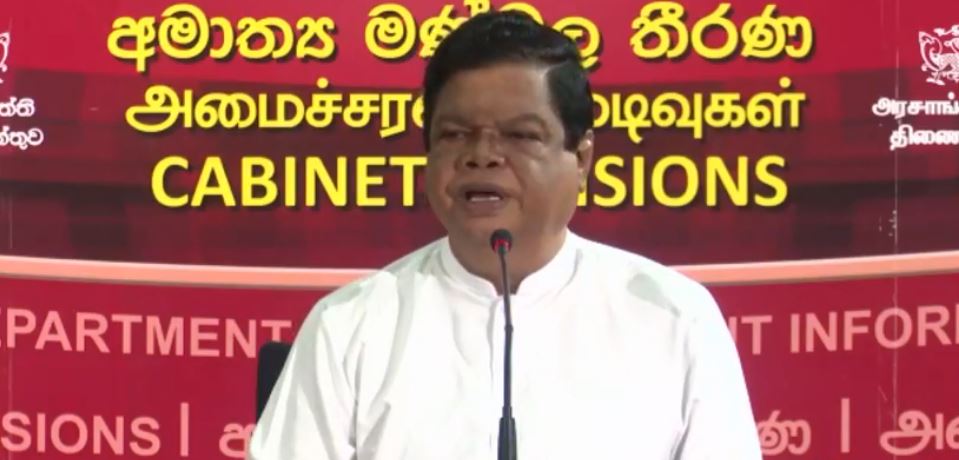
‘We cheated the IMF 16 times before…we have nothing to hide’ – Bandula

Cabinet Spokesman Minister Bandula Gunawardena has assured that facts about the Extended Fund Facility (EFF) received from the International Monetary Fund (IMF) will not be hidden from the public, emphasizing that a transparent procedure will be followed.

Speaking at the Cabinet briefing this morning (21 March), the Minister said that President Ranil Wickremesinghe too, has assured that once the IMF agreement is signed, all related matters will be presented before the Parliament.

Commenting on the EFF approved by the IMF to Sri Lanka last night (20 March), Gunawardena explained that as per the agreement, regardless of who comes into power within the next 48 months, the relevant Government must act in accordance with the terms of the agreement, despite being surrounded by political opinions, and must implement the programme.

“We have cheated the IMF 16 times before this by not acting in accordance with the conditions we agreed upon. If that happens again this time, the country will fall into a bigger abyss. Therefore, I believe that it is important to focus on creating a national consensus on working in compliance with the programme, as opposed to working in line with political agendas”, he said.

Moreover, the Minister also said that it is of his personal opinion that those political parties who are against the IMF deal propose their alternative suggestions and potential solutions in this regard before the Parliament, after which it can be debated or voted upon.

Posted in Uncategorized

Sri Lanka must present debt restructuring strategy by end of April – IMF

Sri Lanka, with the help of its legal and financial advisors, must present a debt restructuring strategy before the end of April 2023 in order to reach the International Monetary Fund’s targets to achieve debt sustainability, Peter Breuer, the IMF Asia & Pacific Department’s Senior Mission Chief for Sri Lanka said today.

Addressing a special virtual press briefing this morning, Breuer pointed out that for the IMF to lend to a country, it usually requires a sustainable debt situation.

However, in Sri Lanka’s case, debt is not sustainable yet, but with financial assurances provided by its creditors, it is seen to be sustainable on a forward-looking basis, Breuer said further.

Using this strategy, Sri Lanka should set up talks with its creditors for negotiations on debt restructuring in order to reach the targets set by the IMF, Breuer said, explaining that this it would mean that the island nation’s debt is sustainable.

Joined by IMF’s Senior Mission Chief for Sri Lanka, Peter Breuer and Mission Chief for Sri Lanka, Masahiro Nozaki, the press briefing focused on the IMF-supported 48-month extended arrangement under the Extended Fund Facility (EFF) program of SDR 2.286 billion (approximately USD 3 billion) for Sri Lanka.

As the executive board of the International Monetary Fund green-lighted this extended arrangement on Monday (March 20), Sri Lanka will immediately receive an initial disbursement of USD 333 million (amounting to SDR 254 million) from the EFF arrangement, which is expected to catalyze new external financing including from the ADB and the World Bank.

According to Breuer, the first tranche of the loan is expected to be released in the next couple of days and the disbursements would be subjected to reviews that take place every 6 months.

Posted in Uncategorized

Sri Lanka seeks 10-year debt moratorium – AFP

Cash-strapped Sri Lanka is seeking a 10-year moratorium on its foreign debt, President Ranil Wickremesinghe’s office said yesterday on the eve of a desperately needed US $ 2.9 billion International Monetary Fund (IMF) bailout.

Wickremesinghe’s office quoted him as saying the widely expected IMF rescue “will only give us a breathing space where they will say we are no longer bankrupt”.

“All the money we have to repay this year, I hope we will be given at least 10 more years to repay it,” Wickremesinghe told a meeting of students in Colombo on Sunday.

He did not give details of his plans to restructure Sri Lanka’s US $ 46 billion external debt.
Sri Lanka defaulted on its foreign debt in April 2022 as the country plunged into its worst economic crisis, running out of cash to finance even the most essential imports and causing massive social unrest.

Widespread protests over economic mismanagement, acute shortages of food, fuel and medicines and runaway inflation forced Wickremesinghe’s predecessor Gotabaya Rajapaksa to flee the country and resign in July.

The IMF’s executive board was expected to sign off on Colombo’s bailout application later yesterday after a long delay in securing financial assurances from China, Sri Lanka’s largest bilateral lender.

Beijing had said this year it was offering a two-year moratorium on its loans to Sri Lanka but the concession fell short of the IMF expectations for the sustainability of the island’s debt.

Wickremesinghe had said after China agreed to restructure its loans that he expected the first tranche of the US $ 2.9 billion IMF package would be made available within the month.

Officials involved in the negotiations said the terms of debt restructuring must be finalised and agreed by all parties before June, when the IMF was expected to review the bailout programme.

“Sri Lanka will not be able to draw down the second tranche unless a debt restructuring plan is agreed with all creditors,” said one of the officials, who asked not to be identified.

Colombo is also banking on the IMF deal to unfreeze billions of dollars in foreign aid for projects suspended since Sri Lanka defaulted on its loans last year.

The government has already doubled taxes, increased energy tariffs threefold and slashed subsidies in an effort to meet the preconditions of the IMF bailout.

The austerity measures have sparked widespread protests and led to strikes that crippled the health and logistics sectors last week.

Wickremesinghe has said he had no alternative but to go with an IMF programme.

Sri Lanka’s economy shrank by a record 7.8 percent last year, as it grappled with its worst foreign exchange crisis since independence from Britain in 1948.

Posted in Uncategorized

Wickremesinghe delivers IMF deal for Sri Lanka despite public mistrust

When Ranil Wickremesinghe took over as Sri Lanka’s president in July after a popular uprising ousted his predecessor, the South Asian island nation was engulfed in its worst economic meltdown in 75 years.

Since then, Wickremesinghe has managed to a keep a lid on mass protests, improve supplies of essentials and on Monday, secured a nearly $3 billion bailout from the International Monetary Fund (IMF) that opens the door to restructuring about $58 billion of debt and receive funding from other lenders.

He has done that despite a deeply unpopular government, his own party commanding just one seat in the 225-member parliament and having to rely for support on the party of the man he replaced.

Hours-long power cuts and queues for fuel that led to the downfall of former President Gotabaya Rajapaksa are gone, thanks partly to a fuel rationing system. Tourists are returning, remittances are recovering and foreign exchange reserves are rising, though the economy is still contracting.

But due largely to significant hikes in income taxes and power tariffs that were needed to get the IMF on board, the government of the 73-year-old is no favourite of the people.

According to a “Mood of the Nation” poll run in February by private think-tank Verité Research, the government’s approval rating was 10%, the same as in October but higher than an all-time low of 3% in June, when Rajapaksa was in power. Only 4% were satisfied with the way things were going in Sri Lanka, down from 7% in October but higher than 2% in June.

There are no known approval ratings for Wickremesinghe as president.

“He’s ready to face the people’s anger in the short term, to ensure long-term stability and growth in the country,” said Dinouk Colombage, Wickremesinghe’s director of international affairs.

“Even though the president only has one seat in parliament, him carrying forward his agenda, bringing forth the reforms, once the results start showing, I think the people will come out in open support of him.”

Born into a prominent family of politicians and business-people with large interests in the media, the lawyer and six-time prime minister has little support beyond wealthy urban voters. His ability to make policy depends to a great extent on the support of the Sri Lanka Podujana Peramuna party, largely controlled by the Rajapaksa family.

For now, Wickremesinghe is enjoying that support, and he said on Sunday that his country was on the right track.

“There’s fuel now, there’s electricity, there’s fertiliser and by April, there will be enough rice and other foodstuff,” he said at an event in Colombo.

“We will no longer be declared a bankrupt nation, but a nation that can restructure its debts.”

The bailout is expected to catalyse additional external support, with funding expected from the World Bank and the Asian Development Bank to the tune of $3.75 billion, the IMF said in a statement.

APOLOGY WHERE NEEDED

In recent months, Wickremesinghe successfully negotiated economic support from top lenders China, India and Japan, culminating in the IMF bailout.

He flew to Japan in October to apologise for the cancellation of Japanese-funded projects under Rajapaksa, which convinced Tokyo to back Sri Lanka’s request for the IMF bailout.

The Paris Club of creditors, which includes Japan, earlier this year gave financing assurances to support the IMF deal.

A Japan-funded $1.8 billion light-railway project, which was suspended in 2019, is among infrastructure projects that Sri Lanka is now trying to restart.

But Sri Lanka still needs to renegotiate its debt, a potentially drawn-out process where Wickremesinghe, who is also the finance minister, will have to deal with demands from China, India and other creditors.

He still has to turn around the economy, which shrank 7.8% in 2022 and is expected to contract by 3% this year.

Implementing further reforms under the IMF programme, reducing record-high interest rates and controlling inflation will also continue to pose challenges for Wickremesinghe, who has faced trade union strikes after the tax and power hikes.

Critics say Wickremesinghe’s economy-first approach ignores political and systemic reforms – like stronger anti-corruption measures and more transparency in government decision-making – as demanded by mass protesters who banded together as the “Aragalaya” movement last year.

“One year on, there is no real structural change in governance or system change,” said Bhavani Fonseka, senior researcher at Colombo-based Centre for Policy Alternatives.

“The president does take this line that his priority is addressing the economy over everything else, but you can’t have that silo-ed approach and think people are going to be okay with it.”

A crisis-weary public may still have to absorb years of continuing hardship as Sri Lanka tries to fix its economy during the four-year IMF programme, warned Jayadeva Uyangoda, a senior political analyst.

“Wickremesinghe has managed to neutralise the Aragalaya and that was a major success, but the economic and social crisis goes on,” he said.

“Economic stability will take at least another couple of years.”

Reuters (Source)

Never recommended postponing LG elections – IMF

The International Monetary Fund (IMF) today said that it did not interfere in the Local Government election processes and had never recommended postponing those elections in Sri Lanka.

Speaking during a press briefing, IMF Mission Chief for Sri Lanka Masahiro Nozaki said that the first tranche of the loan would be released in the next couple of days.

He also said that the disbursement could be converted into rupees and could be used to repay Government loans and other expenditures.