Sri Lankan parliament green lights high defense expenditure By P.K. Balachandran

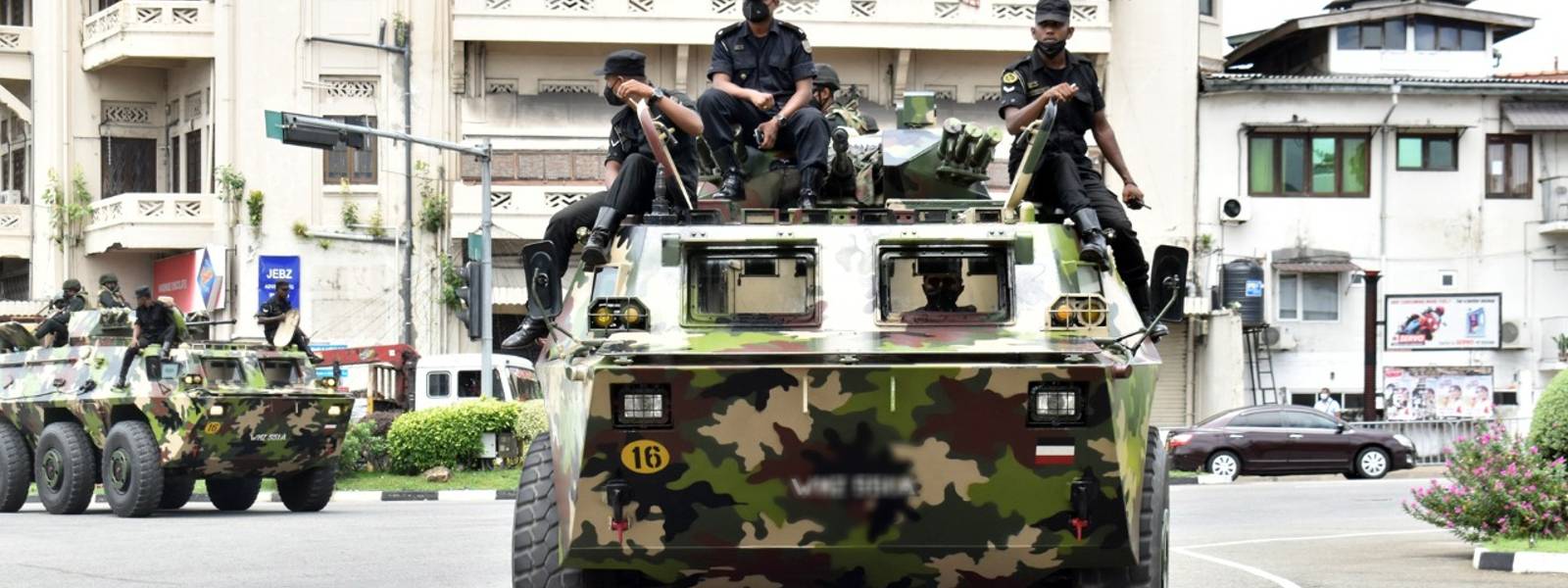
Despite criticisms both inside and outside the House, the Sri Lankan parliament on Thursday passed a high defense and national security budget amounting to US$ 1.46 billion for 2023. It was passed by a majority of 81 votes, with 91 MPs voting in favor and 10 voting against.

President Wickremesinghe, who is also Finance and Defense Minister, had allocated 539 billion rupees (US$ 1.46 billion) for both defense and public security while allocating 322 billion rupees (US$ 868 million) for health and 232 billion (US$ 629 million) for education.

Justifying the high allocation for defense and national security (police) he told parliament: “We might have to increase our naval force by around 2030. The army numbers may come down, but more requirements might come from the air force. We may need drones by 2030-40.”

He further said that the expenditure on the military cannot be reduced in 24 hours. Military personnel cannot be thrown out at once. Although the number of troops has decreased, promotions have increased, he explained.

On using the personnel, he said: “We have now deployed the army in food security programs. Also, we get a lot of income from military farms. I have told them to use the army as much as necessary for the transportation of those goods.”

“We need to look at the future of the army. We are working according to the Security 2030 report for that. We must plan our defenses.”

Reacting to contention that after the end of the separatist war in May 2009, Sri Lanka faces no security threat to necessitate high defense expenditure, Wickremesinghe said: “It is impossible to say that there is no threat. Conditions are changing. We may not have the threats of 1971 and those of the 1980s (both insurgencies), or the Easter Sunday incident of 2019 (suicide bombings), but such threats happen in different ways.”

“Geopolitics has made us the center with all the big powers getting involved. We need to look at the Indian Ocean. We should see how we should act with all these other powerful forces. I wish we could manufacture a new warship in Sri Lanka. We have that power. Only the money has to be found.”

“Those who leave the army should have the opportunity to contribute to society. Today, professionals are leaving this country. That gap can be filled by training our armed forces personnel and sending them to occupy those places. We have to think anew.”

On internal security, Wickremesinghe said that there are many problems like drug trafficking and human trafficking today. “We have to move forward in solving all these issues. We are getting a report called Public Security Report to find out how to improve the police in the next 10 years.”

On the increasing violence-prone civil disobedience incidence, the President said: “ I also want to protect human rights. But human rights cannot be used to create violence and anarchy. Those who cause violence in the name of human rights cannot be protected.” He would have no compunction about using the army to quell violence, the President added.

However, the President admitted that Sri Lanka needs to reduce its defense expenditure to maintain it at 3%-4% of the GDP and for that, Sri Lanka’s economy has to grow at 8%.

Distortions in Defense Expenditure

Daniel Alphonsus in his paper entitled: Sri Lanka’s Post-War Defence Budget: Overspending and Underprotection (South Asia Scan, Issue No. 15 (Singapore: Institute of South Asian Studies, November 2021), said that despite the radically altered strategic environment since the defeat of the LTTE in May 2009, defense expenditure rose from US$1.71 billion to US$1.824 billion to make it 2.4% of the GDP by 2021. US$ 1.46 billion has been allocated for 2023.

However, the main reason for the high defense allocation is the high cost of paying personnel in terms of salaries and pensions, Alphonsus pointed out.

“The share of government pension expenditure accruing to military personnel has risen from 14.5 per cent to over 17 per cent in just three years,” he says. “Sri Lanka spent around US$1 billion on pensions, so military pensions cost the taxpayer approximately US$ 170 million per year,” he adds. “In the entire Asian continent, only Nepal and Tajikistan spend a greater share of their defense spending on personnel,” Alphonsus points out.

Another reason for the higher expenditure on personnel, according to the scholar, is that Sri Lanka does not have military reservists

“The world average for reserves contribution to total (military) manpower is over 60 per cent. In Sri Lanka’s case, reserves are less than four per cent of manpower strength. This may explain why Sri Lanka, the 58th largest country in the world by population, has the 24th largest army in the world.”

Sri Lanka has been spending a lot on the army but not at all enough on the Navy and Air Force. Sri Lanka had not grasped the fact that it is an island in the strategic Indian Ocean. Terrorists, smugglers of drugs and humans, pirates and illegal fishers are the new threats emanating from the sea around the island. Though there is also a vast Exclusive Economic Zone to safeguard, the navy is ill-equipped to face these threats, Capt. Rohan Joseph SLN, has said in his writings.

Making Defense part of Sustainable Economic Development

President Wickremesinghe is looking into these aspects. All these aspects had been highlighted in the 2019 report on Sustainable Sri Lanka 2030 Vision and Strategic Path edited by Mohan Munasinghe.

Taking a holistic view of security, the report said that Lankans should be safeguarded from physical security threats and also from economic, social and environmental threats.

“In its approach to enhancing national security, Sri Lanka should invest in R&D initiatives to forecast the strategic future of the country. This will help to identify short, medium and long-term threats, so that we are better prepared to address the challenges such threats pose,” the Munasinghe report said.

It is essential to curb the radicalization of the youth, the report said. “Radicalization is an emerging global threat and therefore, Sri Lanka must mitigate its effects locally, so as to prevent xenophobia. In this regard, dignity and respect for all ethnicities, cultures and religions must be taught on an educational level in Sri Lanka.”

“In the 2025-2030 time-frame, the following are the potential threats we could expect Sri Lanka to address in the future: economic information warfare, cyber warfare (biometric authentication and privacy concerns), bio-war, agri-terrorism, radicalization and ethnic identity, and geo-political strategic concerns. A comprehensive Defense and Security Policy should be in place by 2025, drafted through a participatory mechanism with input from think tanks, the Parliament and other relevant stakeholders.”

“By 2030, Sri Lanka would have achieved Indian Ocean hub status as a financial, maritime and services transitory point in the geo-political context. On this trajectory, Sri Lanka must navigate its position in the Indian Ocean between China and India and balance all strategic interests in the country. The World Economic Forum has predicted that by 2030 the world will be multi-polar and thus it is crucial that Sri Lanka incorporates this balancing-act into its foreign policy in the long term.”

Attending to all these involves a lot of expenditure for which money will have to be found. But if defense expenditure is so defined that it is part of a long-term program of sustainable national development, a high amount allocated for it may not be in vain.

France contributes EUR 500,000 to help Sri Lankan children at risk of malnutrition

The United Nations World Food Programme (WFP) in Sri Lanka welcomed a contribution of EUR 500,000 (approximately LKR 190 million) from France towards its emergency response for children and families affected by the country’s worst economic crisis in decades.

Around 9,000 families facing high levels of food insecurity will receive nutritious foods to help them feed their under-five children.

Each family will receive a food basket – valued at LKR 15,000 (approximately EUR 40) and consisting of eggs, rice, fresh milk, red lentils and other protein-rich pulses – every fortnight over a period of one year.

“France stands in solidarity with Sri Lanka in the current crisis,” said Mr. Jean-François Pactet, Ambassador of France in Sri Lanka. “Today, food security is a major global challenge and France is committed to promote international cooperation to respond to it. The French contribution to WFP in Sri Lanka will bolster the resilience of the most vulnerable populations and help fight malnutrition among under-five children.”

According to the WFP-FAO Crop and Food Security Assessment Mission (CFSAM) carried out in June-July this year, nearly 30 percent of the country’s population – 6.3 million people – are food insecure. WFP’s latest surveys indicate that nearly seven out of 10 households are using negative coping strategies, such as skipping meals, limiting portion sizes and eating less nutritious food.

“Parents are cutting back on what they eat to be able to feed their children,” said Abdur Rahim Siddiqui, WFP Sri Lanka Representative and Country Director. “Steep food price increases, loss of jobs and reduced incomes are pushing nutritious meals out of reach for millions of people. We are grateful for this timely contribution from France. It will enable us to provide critical food assistance to young children to stave off malnutrition.”

WFP will work in partnership with the Sri Lanka College of Paediatriciansto reach children in areas where malnutrition rates are high. In collaboration with the Family Health Bureau and the Sri Lanka Red Cross Society, children who require nutritional support will be identified by medical officers and midwives at child welfare clinics. Working together, the partners will track child health standards by monitoring their progress over a one-year period.

This contribution from France is in line with its International Strategy for Food Security, Nutrition and Sustainable Agriculture (2019-2024) and its recent commitments in the framework of the “Nutrition for Growth” (N4G) initiative to ensure healthy, nutritional and sufficient food for all and enable populations to regain their food autonomy.
France joins global efforts to support WFP’s emergency operation in Sri Lanka. Launched in June, the operation aims to provide food and nutrition assistance to 3.4 million people in the coming months, and nearly 900,000 people have already received cash, vouchers and food assistance to date.

Photo caption:H.E. Jean-François Pactet, Ambassador of France in Sri Lanka, met with Abdur Rahim Siddiqui, WFP Sri Lanka Representative and Country Director, to discuss plans for improving food and nutrition security in the country.

Posted in Uncategorized

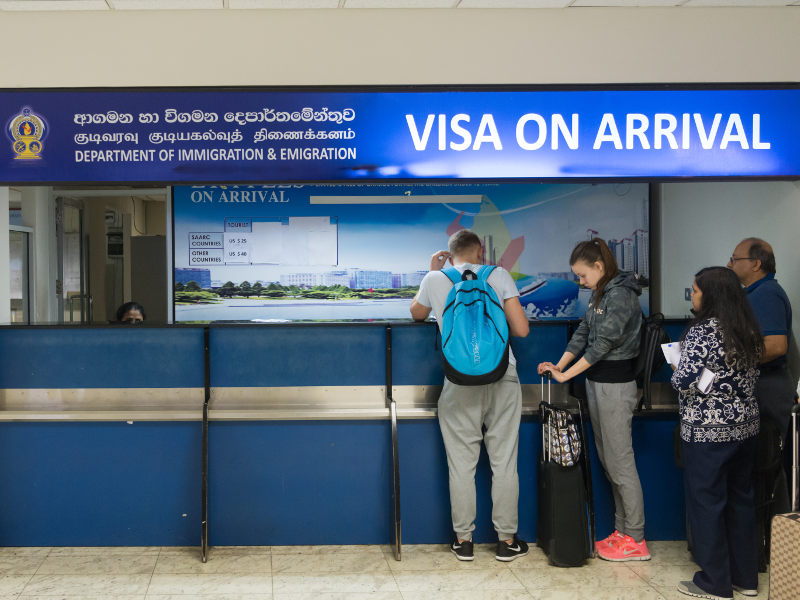
Sri Lanka raises visa, other fees from December 1

As per the 2023 budget proposal, the Immigration and Emigration Department has decided to increase the fees of visas, and other charges with effect from December 1.

A special notice in this regard has been issued by the Department’s Controller-General.
Accordingly, the fee for issuing dual citizenship has been amended to USD 2,000, the Department said in a notice.

The fee for issuance of dual citizenship to a spouse or child under 22 years of age who is entitled to dual citizenship has been amended to USD 500.

The fee for obtaining certified copies of certificates issued under Citizenship has been increased to Rs. 2,000. The administrative fee related to the bond signed by merchant seamen on landing was amended to USD 25.

The fee for obtaining electronic travel authorization online for tourists will be USD 50 and for businesses will be USD 55.

The fee for obtaining electronic travel authorization on arrival will be USD 60 for tourists and USD 65 for businesses. The fee for the issuance of a visa under the “My Dream Home Visa” program will be USD 200.

The fee for the issuance of a visa under the Resident Guest Scheme (RGS) Visa program will be USD 200.

The fee for the issuance of a visa for an appearance before the court will be USD 200.

The age group is not taken into account when charging a fee for the issuance of a visa for children of Sri Lankan parents with foreign passports, which will be USD 150.

Even the age group is not taken into account for the issuance of a visa for children who are dependents on a non-Sri Lankan spouse, and the fee will be USD 150.

China assures Sri Lanka of continued support

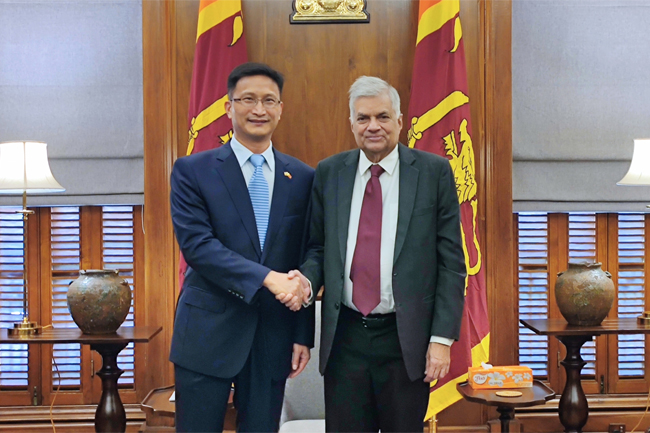
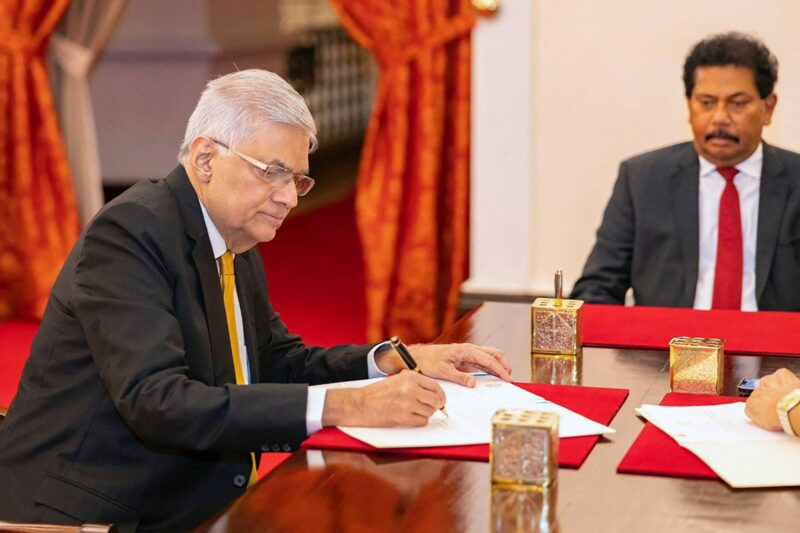
Chinese Ambassador Qi Zhenhong today assured President Ranil Wickremesinghe that China would continue to extend its support to overcome the current challenges faced by Sri Lanka.

They reviewed the progressive bilateral & multilateral negotiation on the debt issue of Sri Lanka and denounced misinformation by foreign media on #China.

Posted in Uncategorized

UK provides £880,000 to help Sri Lankan fishing community

The United Kingdom through the Food and Agriculture Organization of the United Nations (FAO) is providing GBP 880,000 (USD 1,043,395) to strengthen the food and nutrition security of marginal fishers in Tangalle, Negombo, Colombo, Kalutara, Galle, Matara, Puttalam, Chilaw, and Mannar.

In light of World Fisheries Day (21 November) being celebrated this week, the British High Commissioner to Sri Lanka, Sarah Hulton OBE announced the support stating “We recognize that the fisheries sector in Sri Lanka has been going through a very difficult period. The UK is contributing £880,000 to help address some of the challenges faced by those working in this industry. The support will focus on increasing access to nutritious food and other essentials for families.”

FAO will utilize the contribution of the British government to support over 5,000 small-scale marine artisanal fishers using non-motorized traditional boats, who have traditionally been amongst the poorest within the fishing community. Eligible fishers will receive 47 USD per month for a period of 3 months in unconditional cash transfers to help affected households meet their essential needs, including immediate food and livelihood requirements.

The Minister of Fisheries, Douglas Devananda appreciated the support extended to the fisheries community “Fish has traditionally been a primary source of protein and a major source of foreign exchange earnings for the country. We must stand with the fishing community during these times to ensure they can continue their valued work which contributes to the food security and financial stability of the country. I thank the British government and FAO for supporting the community.”

Speaking on the initiative FAO Representative for Sri Lanka and the Maldives, Vimlendra Sharan stated “Small-scale fishers have been faced with multiple challenges this year. Reduced fishing days a week, decreased fish catch, and reduced demand due to the fall in purchasing power in rural areas have all significantly impacted this group. As FAO we are committed to protecting the livelihoods of vulnerable fishers during this crisis and thank the United Kingdom for extending their support for the fisheries community.”

Together with its partners, FAO in Sri Lanka is addressing urgent food security needs, protecting the livelihoods of vulnerable farmers and fishers in the most affected districts while promoting agriculture, including in urban settings.

Posted in Uncategorized

Chinese cruise ships to visit Sri Lanka after travel restrictions relaxed

The Sri Lanka Embassy in Beijing says that it is actively exploring the possibility of Chinese cruise ships and yachts visiting Sri Lanka with a view to attracting more Chinese tourists to the island nation.

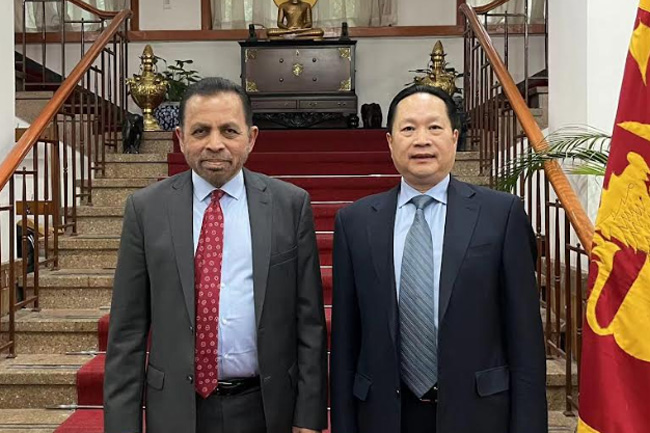
Sri Lankan Ambassador, Dr. Palitha Kohona has had a very successful virtual meeting with the Vice President of the China Cruise and Yacht Industry Association (CCYIA), Zheng Weihang, on 23 November 2022.

Vice President Zheng said that Sri Lanka will be promoted as a new market for Chinese cruise ships.

On 15 November, he had attended a conference of Chinese cruise ship operators, where he formally proposed that Sri Lanka be designated as a destination for cruise ships after the travel restrictions are relaxed.

He had proposed creating four/five Sri Lankan cruise itineraries. Ships will dock at Sri Lanka’s ports for a day and give the passengers the option of taking tours in the region close to the port thus engaging land operators as well. He specified that the CCYIA will work with the Embassy to promote Sri Lanka at cruise-related conferences.

Sri Lankan Ambassador responded that the Embassy will also assist with these goals actively.

Sri Lanka has three well-established ports for cruise ships: Colombo, Galle, and Trincomalee. Dr. Kohona stated that there were many cruise visitors from Europe before the pandemic, and recently welcomed the Cruise ship VIKING MARS with 900 tourists on board.

He highlighted that other European cruise ships are scheduled to call at Sri Lanka ports in the coming weeks. The Ambassador suggested that tourists could experience not only the coastal cities but also the Buddhist sites of the island, like the Temple of the sacred Tooth Relic in Kandy, or the lush green forests, home to the biggest concentrations of wild elephants and leopards in Asia.

Vice President Zheng added that CCYIA plans to organize exhibitions of Sri Lankan products in Shanghai (Nov 2023), Shenzhen (Nov 2023), and Haikou (Apr 2023) and the association will also organize exhibitions and sales outlets on Chinese cruise ships to promote Sri Lankan gems, tea, artifacts and other products.

Ambassador Dr. Kohona said that the Embassy successfully participated in the last CIIE, with two National Pavilions (Food and Beverages, Gem and Jewelry).

He opined that collaboration with CCYIA will benefit both Sri Lanka and the cruise industry. The Ambassador extended an invitation to Vice President Zheng and the team of CCYIA to participate in the upcoming Sri Lanka Tourism Promotion Event which is to take place in mid-December at the Embassy.

Posted in Uncategorized

‘Will go to the IMF in January 2023 if December doesn’t work’

The Governor of the Central Bank of Sri Lanka Nandalal Dr. Weerasinghe says the government will go to the International Monetary Board in January 2023 if they misses the December timeframe.

Speaking to media today (24), Governor Weerasinghe said “most probably meeting the IMF target is too optimistic but if we miss that we still have time till January”.

The CBSL Governor said Sri Lanka is also hopeful of reaching an agreement with creditors as well.

He said “We should get the assurance from our bilateral creditors in the next couple of weeks. We are very confident on that with the way discussions are going on.”

The Governor also stated that money printing has drastically reduced in the first ten months of 2022 in comparison to the entirety of 2021.

Weerasinghe said the Central Bank printed money amounting to Rs.341 billion in 2021 while between January to October this year the sum reduced to Rs.47 billion.

Furthermore, the Governor condemned claims by politicians that he receives a monthly salary of Rs.2.5 million and a pension from the IMF.

Refuting the charges Weerasinghe said he receives the pension entitled to a retired CBSL official and privileges entitled to the Governor.

Meanwhile, the Governor was questioned over allegations levelled by former CBSL Governor Ajith Nivard Cabraal who released a book recently that claimed that Governor Weerasinghe is also responsible for the present economic crisis.

The Governor said he saw the cover of the book posted on social media, adding that he only reads the comments on the post which will depict the true story.

Posted in Uncategorized

Financial partners should support basic needs in SL-HRW

Human rights organisation Human Rights Watch has urged Sri Lanka’s major foreign creditors, including China, Japan, and India to help restructure debt.

In a report by South Asia Director, Meenakshi Ganguly, the New York-based human rights watch dog stated that to stabilise the economy, international creditors should agree to restructure Sri Lanka’s debt so the country could secure final approval for an International Monetary Fund (IMF) loan and financing from other global agencies.

Full report:

The dramatic fuel shortages that accompanied mass protests in Sri Lanka earlier this year may have eased, but for millions of Sri Lankans the economic crisis is worse than ever.

This month, the United Nations renewed a humanitarian appeal, stating that 28 percent of the population faces food insecurity and that the poverty rate this year has doubled.

Food price inflation was over 85 percent in October, and acute shortages of foreign currency mean that many imports, including essential medicines, are scarce or unobtainable. Meanwhile, authorities have cracked down on peaceful protest. President Ranil Wickremasinghe has suppressed demonstrations and has used the notorious Prevention of Terrorism Act (PTA) to detain student activists. Wickremasinghe has even warned that he will again declare a state of emergency and deploy security forces in the event of major protests.

Without respect for human rights, including the right to peacefully protest, Sri Lankans cannot hold politicians accountable, whether for mismanagement or corruption. It is essential that Sri Lanka’s international partners, including the United States and European Union, press the government to fulfill its human rights obligations as an essential step towards addressing the crisis.

Sri Lankan economists fear the economic situation could deteriorate rapidly without action by foreign creditors, placing the basic needs of millions of people in further jeopardy. To stabilize the economy, international creditors should agree to restructure Sri Lanka’s debt so the country can secure final approval for an International Monetary Fund (IMF) loan and financing from other global agencies.

In April, Sri Lanka defaulted on over US$50 billion in debts to international creditors, and in September it reached a staff-level agreement with the IMF for a four-year, $2.9 billion bailout. The first tranche of that bailout would ease the crippling shortage of foreign exchange and unlock access to other funding, including from the World Bank and Asian Development Bank, which cannot provide new funding until the IMF agreement is completed.

Sri Lanka’s major foreign creditors, including China, Japan, and India, should urgently mitigate the adverse human rights impacts of the economic crisis. The IMF should use its procedures to make needed funds available as soon as possible, putting into place safeguards to protect people’s economic and social rights.

And the Wickremesinghe administration should respect fundamental rights, including to peaceful protest.

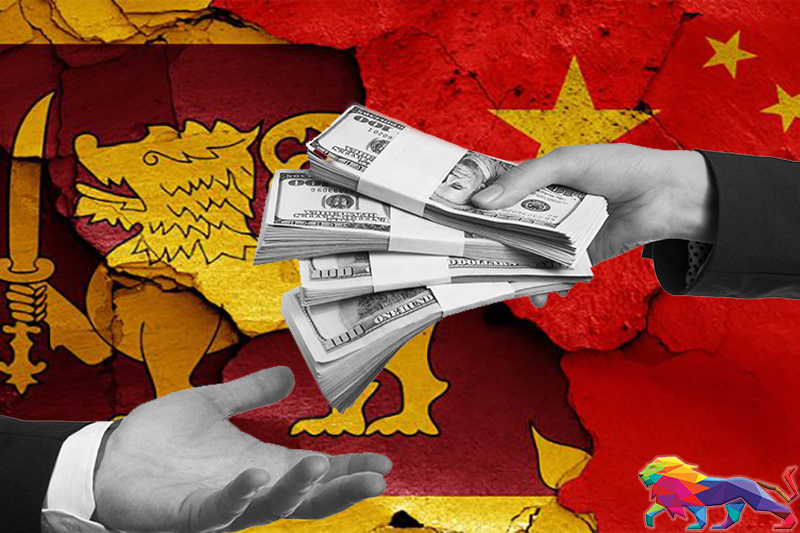
Dollar volatility cuts China’s swap in Sri Lanka reserves by $100 mln – Cenbank

Dollar variation has reduced the worthiness of Chinese swap in Sri Lanka’s reserves by $100 million, Central Bank Governor Nandalal Weerasinghe said.

China’s 10 billion yuan by the end of last year helped to boost the island nation’s reserves by $1.5 billion and this swap has been in the foreign currency reserves since then.

“The gross official reserves are estimated at US dollars 1.8 billion as at end September 2022, including the swap facility from the People’s Bank of China, equivalent to around US dollars 1.4 billion, which is subject to conditionalities on usability,” the central bank said in its monetary policy statement.

Central Bank Governor Nandalal Weerasinghe said the decline was due to dollar strengthening. The Chinese yuan has depreciated to 7.15 per dollar as of Thursday from 6.36 when the swap deal was done in December last year.

“It is in Chinese currency yuan. The US dollar variation will have an impact on that,” Weerasinghe told reporters at the post-monetary policy media briefing.

Sri Lanka President ends import ban that raised an ugly stink

Sri Lanka President Ranil Wickremesinghe has ended a ban on the import of beauty care products and deodorants, slapped amidst the worst currency crisis in the history of the island’s intermediate regime central bank.

Sri Lanka’s beauty care industry sector had warned that it received a body blow from the import ban at a time when demand from customers were anyway hit and they were forced to shed staff.

Other small and medium industries also said they had run out of inputs and spares due to import bans.

From November 22, deo-odorants, anti-perspirants, shampoo, toilet waters and dental floss could be imported. Wigs and hair dryers were also allowed.

Sri Lanka’s economists got the power to print money in 1950 when a soft-pegged (intermediate regime) central bank styled after Argentina’s BCRA was set up.

In 1969 mostly after printing money for rural credit, economists misled the politicians in to enacting an import control law instead of tightening the monetary law of the country to prevent mis-targeting of interest rates.

Economists also caused politicians to enact draconian exchange controls, crimininalizing attempt to protect their savings from expropriation, instead of retraining their powers to suppress rates through open market operations.

In the 1970s, the entire economy was closed. In 1977 the economy was re-opened but the central bank was not restrained.

Three years before the Mercantilist import control law was enacted, J R Jayewardene who was instrumental in setting up the Latin America style central bank in 1950, hired the best classical economist in South Asia, BR Shenoy to give advice to the country’s economic bureaucrats.

“..[T]he Balance of Payments difficulties cannot be solved by intensifying the rigorous of exchange control and import restrictions; nor by extending the schemes for expanding domestic production to substitute import goods — the so called measures for “economising” on foreign exchange,” Shenoy wrote in 1966.

“Intensification of the rigorous of exchange control and import restrictions may reduce the
quantum of import goods flowing into the market.

“It cannot reduce the flow of moneys seeking to purchase goods, either for consumption or for investment. This flow of money is determined by the national product and the inflationary part of the Net Cash Operating Deficit.”

Over half a century later the same controls and the same money printing has continued.

Adhesive sheets, wooden planks, parquet, bags, trunks, mitten gloves, sails, brake linings, crucibles, refractory bricks, freezers and milk chillers would also be allowed.

Posted in Uncategorized