Police to quiz some politicos over secret plot to overthrow govt

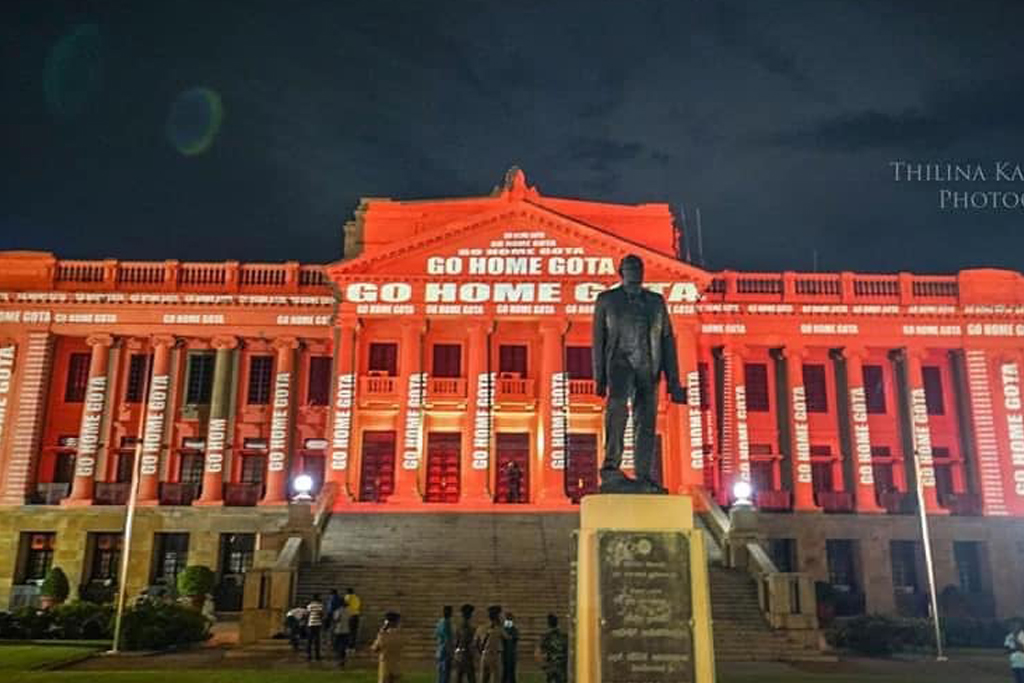
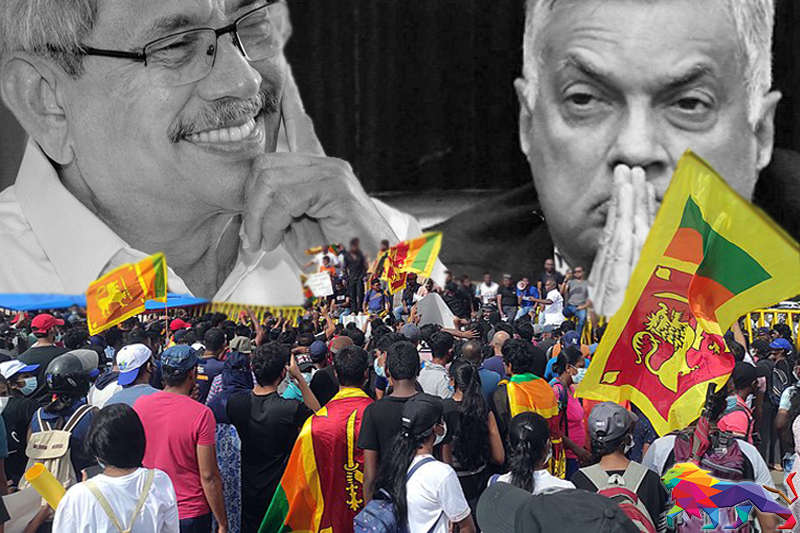
The police have launched extensive investigations over the involvement of some politicians who had encouraged some ‘protester’ groups to overthrow the government by forcefully occupying Parliament and preventing a vote to elect a new President following the resignation of former President Gotabaya Rajapaksa in July.

Highly placed sources told Daily Mirror that these politicians had even brokered talks with the parties involved and investigations are being carried out into their actions.

The Daily Mirror learns that despite reports that last week’s gazette declaring high-security zones in Colombo will be reversed,the government will brief the Supreme Court in the coming days over the purpose of why the HSZ’S are required and why the sites listed need to be protected.

Sources said that according to information received by the investigators which will be communicated to the Supreme Court is the second phase of the ‘operation’ following the July 9 public protest.

This was by a group posing themselves as protesters, and that was to surround and take over Parliament to prevent the MPS from electing a new President following the forceful exit of Gotabaya Rajapaksa.

Investigators were informed that the group had also planned to surround the Supreme Court.

It was based on this information that the security authorities had recommended the setting up of HSZS in several key areas including the Supreme Court.

However as the Supreme Court had not been consulted in the process, the relevant authorities will now consult the Supreme Court and seek its advice over the establishment of these HSZS to ensure an unhindered administration, sources said.

Some of the areas declared as HSZS by President Ranil Wickremesinghe include the Parliament Complex, Supreme Court Complex, High Court Complex – Colombo, Magistrate Court Complex – Colombo and Attorney General’s Department, Temple Trees, Presidential Secretariat, the Prime Minister’s Office, and the Army Headquarters.

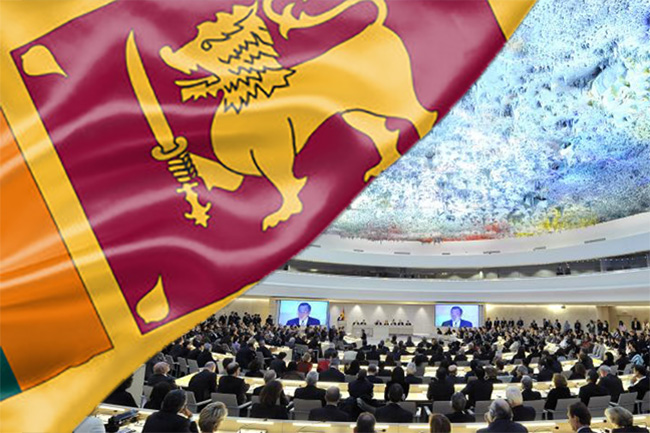
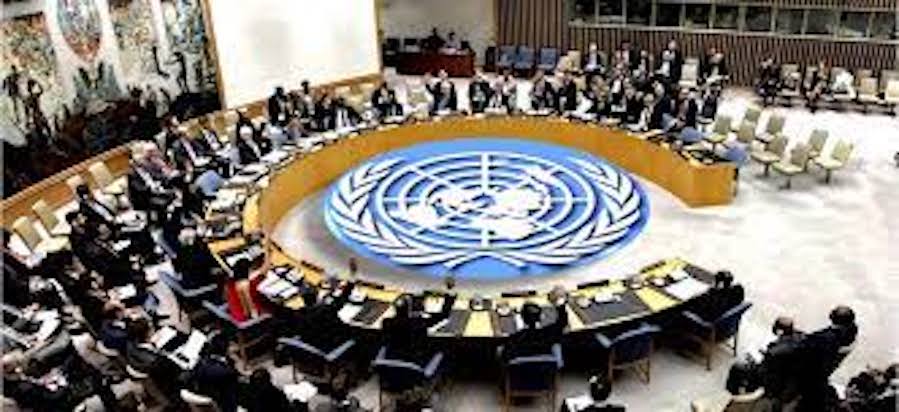
UNHRC resolution vote on 6 October

The resolution by the United Nations Human Rights Council (UNHRC) Core Group of countries on Sri Lanka will be taken up for voting on 6 October, while the final day for submitting resolutions is scheduled for tomorrow (28).

The informal session on the Core Group resolution was held on 23 September, and the revised version of the recommendations was made public.

The resolution on Sri Lanka is co-sponsored by the Core Group of countries, which consists of countries such as the US, the UK, Canada, Germany, North Macedonia, Montenegro, and Malavi.

As the main point, the resolution called on the Government of Sri Lanka to fulfil its commitments on the devolution of political authority, which is integral to reconciliation and the full enjoyment of human rights by all members of its population, and encouraged the Government to respect Local Government authorities through the holding of elections for Provincial Councils (PCs), and to ensure that all PCs, including the Northern and Eastern PCs, are able to operate effectively, in accordance with the 13th Amendment to the Constitution of Sri Lanka.

The importance of a comprehensive approach to dealing with the past, incorporating judicial and non-judicial measures to ensure accountability, to serve justice to provide remedies to victims and to avoid the recurrence of violations of human rights, and to promote healing and reconciliation were also emphasised.

Posted in Uncategorized

Sabry meets UN Sec-Gen in NY

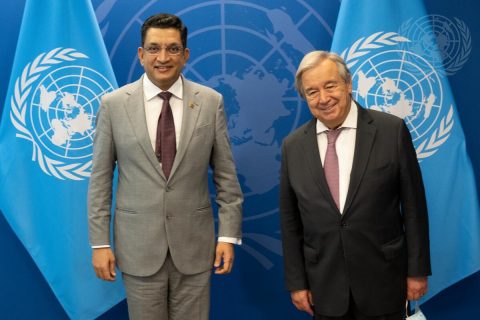
Minister of Foreign Affairs Ali Sabry called on Secretary-General of the United Nations António Guterres and briefed him on the steps being taken by Sri Lanka to overcome current challenges.

The discussion also focused on further UN assistance to Sri Lanka.

Foreign Minister Ali Sabry on Saturday (24) sought for cooperation and support of the international community including the United Nations for Sri Lanka’s new resolve to “build back better” with political, economic, and social reforms following the unprecedented crisis faced by the country.

Addressing the UN’s 77th General Assembly in New York, Sabry said measures include a review of the present procedures, the strengthening of the institutional framework of democratic governance, and the adoption of urgent measures to restore long-term economic stability.

Private airline to launch international flights from Sri Lanka

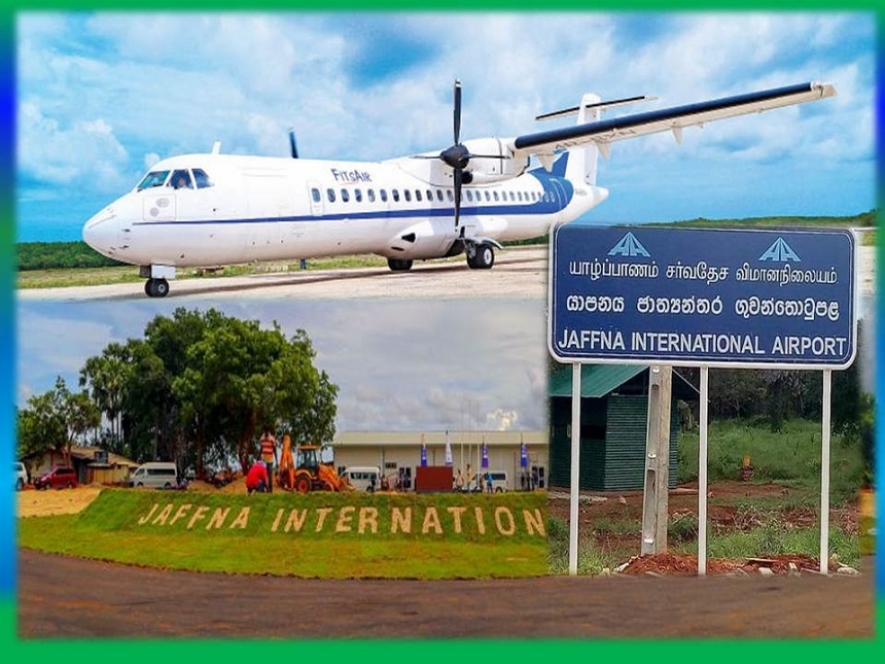
A private airline, FitsAir, today announced the launch of international flights from Sri Lanka.

FitsAir, promoted by Fits Aviation, a member of the Aberdeen Holdings group, said that commercial operations will commence from 5th October.

The privately-owned airline, operating A320-200 aircraft, has opened bookings for its international flights, connecting Colombo to Dubai, Male and Trichy.

Top aviation expert Peter Hill, the Vice President, Passenger Operations, FitsAir, said that the airline also hopes to launch flights from Ratmalana to Jaffna and from Jaffna to India.

“FitsAr will cater to the needs of the modern Sri Lankan traveller who wants competitive fares, an in-flight service that is efficient without any ‘frills’ combined with options of baggage allowance, where you do not pay for the weight of baggage which you carry – where there is no obligation to pay the full fair if your baggage is less in weight” explained Peter Hill, Vice President, Passenger Operations.

The premise is that we do not want to waste a passenger’s time, money or energy in the process of travelling,” added Hill, who went on to note that FitsAir, due to its pricing competitiveness, will make air travel a viable option for many Sri Lankans.

“However, in true Sri Lankan hospitality, all passengers will get a complimentary refreshment pack, although substantial meals, beverages and snacks will be available for purchase on board plus pre-bookings.”

A free checked-in baggage allowance of 30kgs will be provided to all customers, and a free carry-on bag of 7 kgs. FitsAir will also offer reduced fares for baggage of no more than 20 kgs. Passengers can purchase excess baggage at the airport, subject to space availability.

The airline has been operating through its predecessor, Expo Aviation, predominantly in the cargo sector for the past 25 years. A year ago, the owners decided on the scheduled regional passenger market and now have a fleet of three Airbus A320-200 aircraft in its fleet.

Posted in Uncategorized

Sri Lanka President likely to revoke High Security Zone Gazette – sources

Sri Lanka President Ranil Wickremesinghe is likely to revoke a gazette he declared High Security Zones (HSZ) in the commercial heart of Colombo, two government sources who are aware of the process said.

The Bar Association of Sri Lanka has raised concern over the latest HSZ, citing that using Official Secret Act to declare HSZ was legally wrong.

“The president has sought Attorney General’s advise on this. If the legal basis is wrong, then the president is likely to revoke the gazette,” a source who has seen the official documents on the process told EconomyNext.

Another source also confirmed the move.

The second source said the president signed the gazette on the facts and recommendations submitted by “top officials of the ministry of public security”.

There had been adverse impact on the economic activities due to the recent declaration of HSZ. Economists have briefed the president on the impacts due to his HSZ declaration, the sources said.

“They (economists) showed the impact due to the HSZ is far worse than the impacts of often protests by anti-government protesters. They also said there could be different issues due to the new gazette,” the first source said.

The President has urged the Ministry of Public Security and relevant authorities to replace the HSZ with a special security plan with the coordination of intelligence unit and with the advice of the Attorney General, Wickremesinghe is likely to revoke the gazette once he comes back from Japan visit, sources said.

Wickremesinghe on Friday (23) declared war-time high security zone (HSZ) in capital Colombo after months of protests in those areas ousted his predecessor and previous government.

The move came amid fears that some groups could start protests against the government amid worsening economic conditions with reports of higher cost of living and food prices have left many to cut down foods and other essentials.

Wickremesinghe through a gazette extraordinary declared the following areas as the HSZ: Presidential Palace, Presidential Secretariat, Parliament, Supreme Court, High Court, Colombo Magistrate Court, Attorney General’s Department, Prime Minister’s official residence Temple Trees, Prime Minister’s office, Ministry of Defence, Head Quarters of Army, Navy, Air Force, and Police. and Official Residences of Defence Secretary and Commanders of Army, Navy, and Air Force.

All these areas were declared as HSZ during the island nation’s 26-year civil war ended in 2009. Since then successive governments gradually removed the HSZ to facilitate economic activities led by tourism as many of these areas are located in the commercial heard of capital Colombo.

The area around Presidential Secretariat was the center of Sri Lanka’s youth-led protest which finally forced former president Gotabaya Rajapaksa to flee the presidential palace before stepping down from the post after he went to Singapore via Maldives in mid July.

Later protesters occupied Presidential Palace, Presidential Secretariat, Prime Minister’s official residence Temple Trees, and Prime Minister’s office before they were forced out by the security authorities after Wickremesinghe became the president through a parliamentary election on July 20.

Posted in Uncategorized

Sri Lankan fishermen oppose Chinese exploitation of their maritime resources

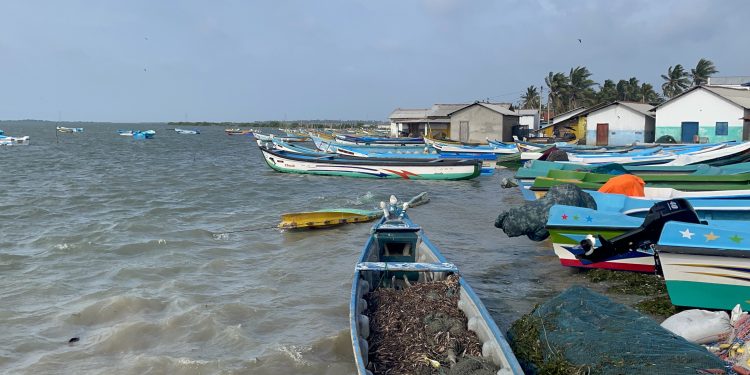
Local Sri Lankan fishermen in the northern part of the island nation come forward to oppose the Chinese exploitation of maritime resources in their waters.

Led by several Chinese corporations and entities, Beijing has launched a campaign to gain dominance in the sea near Sri Lanka, according to Mawrata News.

Beijing appears to be eyeing the cultivation of sea cucumbers, which is one of the island nation’s primary economic activities, the report said.

Media reports indicate that Sri Lanka shipped approximately 336 tonnes of sea cucumbers to China, Singapore and Hong Kong in 2021.

“Consequently, breeding and exporting the aquatic creature like a sausage that is considered a delicacy in China and Southeast Asia is a profitable market for Chinese businesses,” the report said.

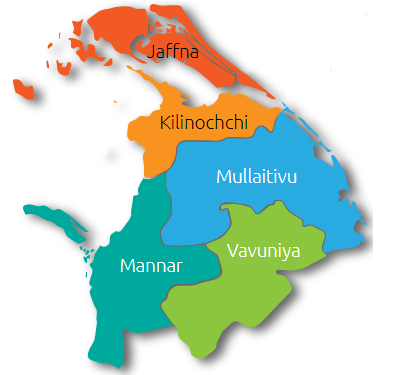
This comes as Colombo is pursuing a Cabinet-authorised plan for large-scale commercial sea projects in Jaffna, Mannar, Kilinochchi, and Kilinochchi.

After the Sri Lankan cabinet plans were made public, a Macau-based Chinese firm offered to establish a large-scale sea cucumber farming operation in the Puttalam and Jaffna districts.

According to Mawrata News, this 10-year project looks to include more than 36,000 acres of water to yield 8.6 million kilograms of sea cucumber.

Due to fear of possible marine depletion, locals are reportedly opposed to the project under discussion.

Annalingam Annarasa, the President of the Jaffna Fisheries Federation, was quoted as saying in local media that the proposed project will bring more harm than benefit to locals.
Even as Sri Lankan government continues to promote these sea projects, the fishermen believe that this would lead to lasting damage to the local marine ecology and hurt their livelihoods in the long run.

Earlier, a similar Chinese project in the Kilinochchi district faced stiff opposition last year from local fishermen who objected to the fencing of the land adjoining the sea.
(ANI)

Posted in Uncategorized

Wiggy proposes regional councils at provincial level

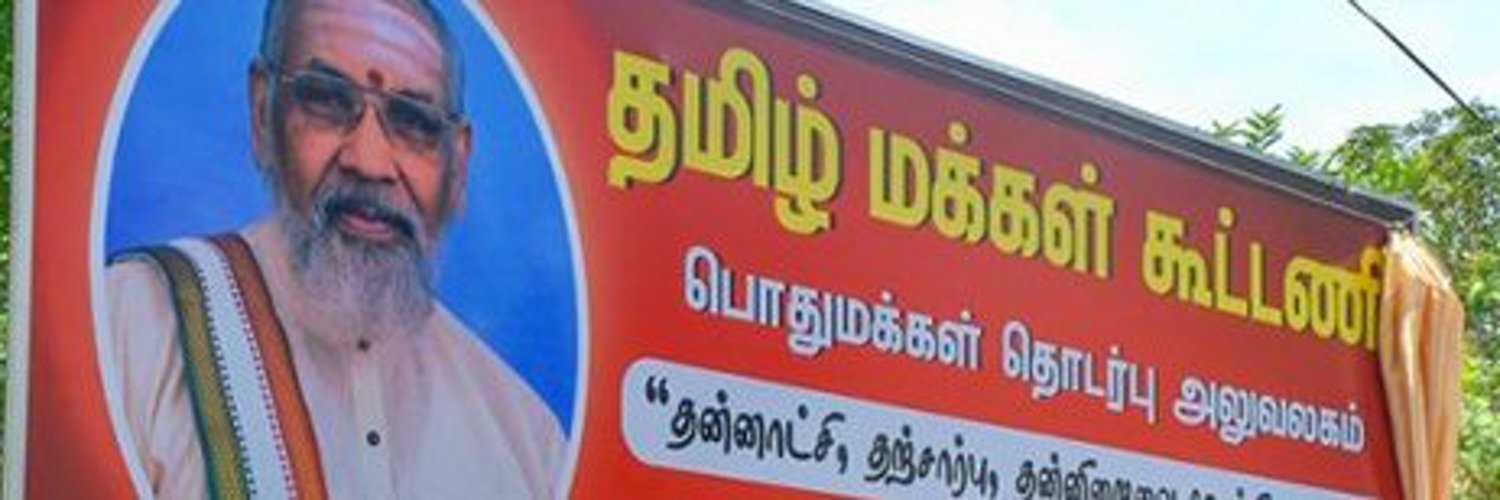
hamil Makkal Thesiya Kuttani (TMTK) Leader and Jaffna District MP C.V. Wigneswaran said yesterday (26) that he had requested Prime Minister Dinesh Gunawardena to constitute Regional Councils for each province since every province has different issues.

Speaking to The Morning, Wigneswaran said that since the problems in the North are different to those in the South, he had therefore suggested to Gunawardena to establish regional councils in every province. “Our problems in the North are different to those of the South. I suggested that we have Regional Councils for each province,” he added.

When queried on his role if any in the newly established National Council, Wigneswaran stated that he had not consented to be a part of the National Council. However, following a meeting with Prime Minister Gunawardena, his name appeared in the list of members.

“Since Gunawardena wanted to see me with others in his office in Parliament, I went and met him. He wanted us to join the Council. I said that it would be difficult for me to attend meetings as I have to travel continuously for seven to eight hours from Jaffna, and because there is no point in me attending as the Council would deal with matters of importance to the South,” he added.

He also noted that he had suggested that Prime Minister Gunawardena visit the North to ascertain the problems there and seek solutions.

“The Prime Minister should visit us and find out about our problems and seek solutions to them,” he noted.

Wigneswaran stated that Gunawardena can also give a report of his observations in the North to President Ranil Wickremesinghe.

“I suggested to the Premier to visit the North and examine the issues there. He could give a report to the President asking him to implement his proposals after having discussions with us. He agreed to discuss this suggestion with the President,” he added.

Wigneswaran noted that following the above conversations with the Prime Minister, he saw his name in the membership list of the National Council.

Commenting further on the National Council, he said: “So far, we have not been told anything in detail except to say that we should share our views on important political and economic matters that are coming up.”

Wigneswaran also said: “Let me wait until the Prime Minister informs us of the decision taken by the Government in relation to my suggestion. Our role as such would be advisory, I believe. The Government may not be obliged to accept our views.”

Posted in Uncategorized

Northern families forced to give up children to foster care

Due to the severity of the economic crisis and the lack of household finances, there has been an increase in the number of children being admitted by their families to children’s homes in the Northern Province.

Statistical data provided by the Child Care and Probation Department of the Northern Province has revealed that as of June 2022, some 246 children have been sent to children’s homes in the Northern Province as a result of the ongoing economic crisis, which has left parents grappling with financial instability, rendering them unable to provide for their children.

Speaking to The Morning yesterday (26), Northern Province Commissioner of Child Care and Probation Guruparan Rajendran said that the economic crisis functions as both the direct and indirect factor behind children in the North being sent to children’s homes, since their parents are no longer capable of providing for them.

He also noted that the provincial funds allocated for child care and probation had not been released from the General Treasury due to the financial challenges faced by the Government.

“There is inadequate funding to support and maintain these children and therefore, the Child Care and Probation Department has had to opt for the option of sending them to homes,” he added.

Due to the severity of the economic crisis, mothers are heading abroad to work in foreign countries. There is no security for the children, especially girl children, and therefore, there has been an increase in the numbers of children being admitted to homes, he noted.

Rajendran stated that when parents lose their jobs, they are prone to financial difficulties and are unable to maintain their children.

He noted that under the National Alternative Care Policy, children are supported and maintained if their biological families are unable to do so.

This policy was formulated based on the Convention on the Rights of the Child and the Constitution of Sri Lanka. It states that sending children to homes should be the final option, he elaborated.

“The institutionalisation of children and sending them to homes should be the last option. But we are sending children to homes as the first option due to the lack of funds,” he explained.

He further added that an allocation from the Provincial fund would normally be provided for child care and probation through the General Treasury, but the sudden economic crisis has affected this procedure, affecting the availability of funds.

“We do not want our first resort to be sending children to a home, as it should be the final option. We use the Provincial funds to prevent the institutionalisation of children and to assist families to provide for their children,” he added.

This fund is also allocated for the reunification of children with their families, he noted.

“Since there have not been allocations provided to the Northern Province, we are facing difficulties in providing for the children. It is a tremendous challenge for us to prevent the institutionalisation of children,” he added.

According to the current statistical data provided by the Child Care and Probation Department of the Northern Province, there are 1,529 children in 37 registered child development centres, while 689 children are cared for by guardians as they are orphans.

Security Council: SL to back bids of India and Japan for permanent member status

President Ranil Wickremesinghe on Tuesday said Sri Lanka government will back the bids of India and Japan for permanent member status at the UN Security Council.

President Wickremesinghe is currently in Japan to attend the state funeral of the former Japanese prime minister Shinzo Abe.

During a meeting with Japanese foreign minister Yoshimasa Hayashi on Tuesday, Wickremesinghe “appreciated the support extended by Japan (to Sri Lanka) on the international stage and expressed the government’s willingness to support both Japan’s and India’s campaign to become permanent members of the UN Security Council, the President’s office said in a press release.

India has been at the forefront of the years-long efforts to reform the Security Council saying it rightly deserves a place as a permanent member of the UN body, which in its current form does not represent the geo-political realities of the 21st century.

At present, the UNSC comprises five permanent members and 10 non-permanent member countries which are elected for a two-year term by the General Assembly of the United Nations.

The five permanent members are Russia, the UK, China, France and the US and these countries can veto any substantive resolution. There has been growing demand to increase the number of permanent members to reflect the contemporary global reality.

India is currently halfway through the second year of its two-year term as an elected non-permanent member of the UN Security Council.

India’s tenure at the Council will end in December when the country will also preside as President of the powerful UN organ for the month.

On Saturday, External Affairs Minister S Jaishankar, addressing the General Debate of the 77th session of the UN General Assembly, emphasised that India is prepared to take up greater responsibilities.

The call for reformed multilateralism with reforms of the Security Council at its core enjoys considerable support among UN members, he said.

“It does so because of the widespread recognition that the current architecture is anachronistic and ineffective. It is also perceived as deeply unfair, denying entire continents and regions a voice in a forum that deliberates their future,” Jaishankar said.

Meanwhile, President Wickremesinghe’s office said Japan has expressed willingness to take a lead role in Sri Lanka’s debt restructuring, which is vital for the island’s bid to gain a bailout facility from the International Monetary Fund.

The IMF had expressed readiness to enter a staff-level agreement with Sri Lanka conditional to debt restructuring.

In mid-April, Sri Lanka declared its international debt default due to the forex crisis. The country owes USD 51 billion in foreign debt, of which USD 28 billion must be paid by 2027.

The IMF does not lend to countries whose debt is deemed unsustainable, requiring Sri Lanka to undertake an upfront comprehensive debt treatment.

Both India and Japan are major creditors of Sri Lanka, besides China and the Asian Development Bank (ADB).

Sri Lanka is banking on Japan to organise a debt restructuring conference on its behalf.

Wickremesinghe has also indicated that he was keen to revive halted Japanese projects in Sri Lanka, officials said.
(PTI)

“As Western Countries helped Ukraine-India Should Help Tamils, Including At UN to Refer Sri Lanka to ICC” Tamil Students

“Even Though India is a Member of the UN Human Rights Council, the Self-Appointed Core-Group on Sri Lanka Kept India Out of Their Group”

“India was actively involved in Tamil issues for decades & have deep knowledge of our plight more than any other country in the world, including Sri Lanka. Indira Gandhi took Tamil Issue to UN in 1983”— Tamil Students

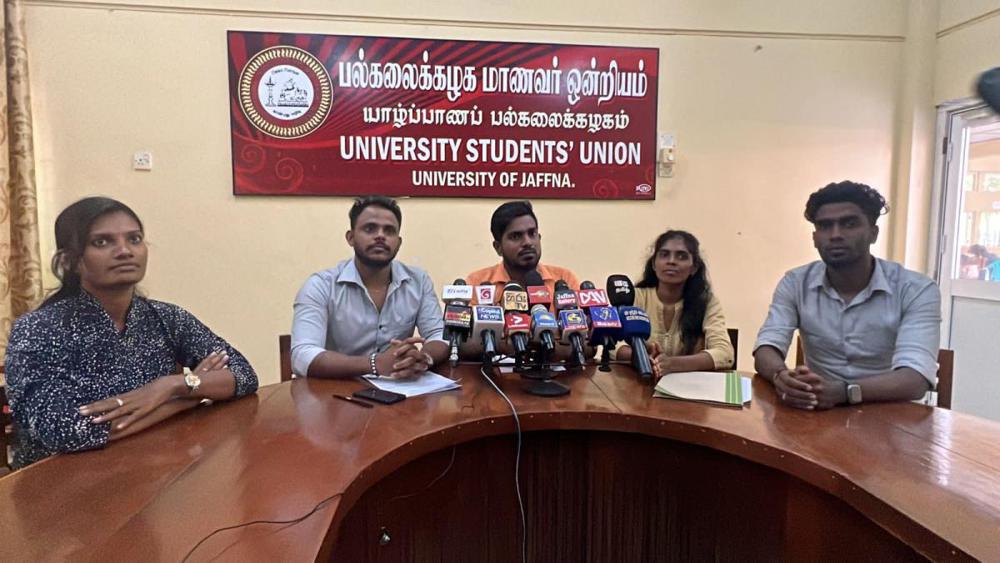
In an urgent press conference, Jaffna University Student union urged India’s help to Refer Sri Lanka to the International Criminal Court (ICC) at the current Session of the UN Human Rights Council. “India is not only a current Member of the UN Human Rights Council, it is also our powerful and important neighbor, as well as a Regional Super Power.”

The current Sri Lanka Resolution was drafted by the self appointed “Core-Group on Sri Lanka”, which consists of United Kingdom, United States of America, Canada, Germany, Montenegro, North Macedonia and a lone non-western county Malawi. Even though India is a member of the Council, the “Core – Group on Sri Lanka” kept India out of their group.

“As our neighbor, we urge India to take a leadership role at UN and other international forums. If Western countries can take the lead in taking Ukraine-Russia war issue to International Criminal Court (ICC) and to International Court of Justice (ICJ), then India have all the right to take Sri Lanka issue to ICC and ICJ.”

India was actively involved in our Tamil issues for decades and have very good knowledge and understanding of our plight more than any other country in the world, including Sri Lanka.

When we face abuses, it is India that first come for our aid.

For example, after the mass killing of Tamils and rape of Tamil women in 1983, hundreds of thousands of Tamils fled in small boats to India for protection. Even now there are tens of thousands of Tamil refugees still living in India. India continues to provide to Tamil refugees-even after forty years – food, shelter, education, employment and security.

Not only India gave us protection, India under the leadership of Prime Minister Indira Gandhi, took Tamil issue to the United Nations General Assembly in New York in 1983 and brought our desperate situation to the attention of the world in order to get protection for Tamils.

We again need India’s help at the UN. This is directly connected to our Safety and Security.

The issue we need India’s help is to help Refer Sri Lanka to International Criminal Court for mass killings of Tamils and sexually assaulting and raping hundreds of Tamil women and girls by the Sri Lankan Security forces.

As a member of the UN Human Rights Council, India have the right and authority to take steps to pass a resolution to Refer Sri Lanka to International Criminal Court (ICC). As a Regional leader India have more understanding and credibility than any any other country, from distant places, who have no clue about our plight.

There is a draft resolution on Sri Lanka currently being circulated at the UN Human Rights Council, drafted by the self-appointed “Sri Lanka Core-Group”.

But this draft resolution did not include the recommendation by the UN High Commissioner for Human Rights calling to Refer Sri Lanka to the International Criminal Court (ICC) and this recommendation was endorsed by all previous UN High Commissioners for Human Rights, nine former UN Special Rapporteurs all of whom have visited Sri Lanka and wrote reports and all the members of UN Panel of Experts on Sri Lanka.

We, Jaffna University Students Union joined Tamil political parties, Members of Parliament and Civil Society groups jointly wrote a letter to the Core group of countries about the importance of Referring Sri Lanka to ICC in the resolution. But our request have been ignored by the Self Appointed Sri Lanka Core – Group of countries, who have no knowledge or understanding of our continuing plight.

Here was our request: As a Mark of Urgency Several Segments of Tamil Community Unitedly Urge UN to Refer Sri Lanka to Int’l Criminal Court ICC.

https://www.einpresswire.com/article/588451342/as-a-mark-of-urgency-several-segments-of-tamil-community-unitedly-urge-un-to-refer-sri-lanka-to-int-l-criminal-court-icc


Posted in Uncategorized